两会行情

Search documents
策略周报:中东硝烟未散,两会定调落地-20260308
HWABAO SECURITIES· 2026-03-08 10:58
Group 1: Bond Market Insights - The bond market remains favorable, awaiting a correction for positioning. The net financing scale of government bonds in March is slightly lower than in February, with limited impact from increased trading days. Historically, bond yields tend to decline after the Two Sessions, supported by increased demand for bond allocation due to widening loan-to-deposit growth differentials and uncertainties in the Middle East [1][12] - The current 10-year government bond yield is around 1.79%, with limited short-term upside risk. It is expected to maintain a range-bound fluctuation. If yields rise to 1.82%-1.83% due to short-term disturbances, it may present a slight positioning opportunity [1][12] Group 2: Stock Market Analysis - The stock market is expected to adopt a steady approach, favoring large-cap cyclical stocks. Based on historical trends from the Two Sessions, growth-style sectors may face increased profit-taking pressure, while large-cap blue-chip and cyclical styles are likely to perform better in stabilizing the index [2][14] - The geopolitical risks in the Middle East are expected to suppress global market risk appetite until they ease. In the short term, attention should be given to sectors such as non-ferrous metals, chemicals, energy, and high-dividend stocks from Hong Kong central enterprises. From mid-March to mid-April, the focus may shift back to sectors with high earnings certainty, such as AI hardware, semiconductors, electric power grids, and new energy [2][14] Group 3: Economic Indicators and Government Policies - The government work report released on March 5 sets the economic growth target for 2026 at 4.5%-5% and aims for a consumer price increase of around 2%. The policy tone is more pragmatic, emphasizing high-quality development [8][9] - The report outlines ten key tasks for 2026, including building a strong domestic market, fostering new growth drivers, accelerating technological self-reliance, and enhancing risk prevention and safety capabilities [9]
徐洪才:A股上涨的大逻辑与小风险
和讯· 2026-03-04 09:31
Group 1 - The article discusses the recent performance of the A-share market, highlighting a collective rise in major indices and significant gains in raw material sectors such as chemicals, oil and gas, steel, and non-ferrous metals [2] - Predictions indicate that the market may enter a "two sessions market" characterized by "oscillating upward" trends starting from March 4, with sectors related to commodities, consumer demand, AI computing, and infrastructure beginning to gain momentum [2] Group 2 - The article presents data from the National Bureau of Statistics showing that in January 2026, the Consumer Price Index (CPI) rose by 0.2% month-on-month and year-on-year, while the Producer Price Index (PPI) increased by 0.4% month-on-month but decreased by 1.4% year-on-year [3] - The analysis indicates that while consumer demand is recovering, the core CPI's mild increase reflects ongoing challenges in stabilizing domestic demand [3][4] Group 3 - The article emphasizes that rising prices signal a boost in demand, which can enhance corporate operating rates and stimulate investment expectations, thus serving as a positive signal for listed companies [5] - It is noted that persistent low PPI can dampen corporate investment enthusiasm, despite nominal interest rates being lowered, as actual financing costs remain high, affecting future expectations [12] Group 4 - The article outlines the need for proactive fiscal policies to drive demand, suggesting that fiscal spending should focus on public services and shortfall areas, while monetary policy should ensure relative liquidity [13][14] - It highlights the importance of increasing income levels for low-income groups to enhance consumption capacity, particularly through social security reforms [19] Group 5 - The article discusses the challenges of investment decline, attributing it to factors such as deep adjustments in the real estate sector, overcapacity in low-end manufacturing, and insufficient investment in high-end manufacturing [20] - It suggests that improving the business environment and encouraging private investment are crucial for reversing negative investment growth trends [20] Group 6 - The article mentions that the capital market's core attractions for 2026 lie in sectors driven by domestic demand, artificial intelligence, and new infrastructure, with a structural opportunity emerging from a new wave of technological innovation [22] - It notes that the recent bull market was driven by policy guidance and corrections of unreasonable pricing, with institutional investors playing a stabilizing role [22]


3月A股:步入“两会”行情,以“稳”为主要特征
HUAXI Securities· 2026-03-01 09:42
Market Review - After the Spring Festival, the Wind All A Index saw a significant increase, breaking through the high point of January 26, indicating a reduction in post-holiday cautious sentiment. The financing balance returned to approximately 2.65 trillion yuan, with a net financing inflow of 77.6 billion yuan over the first three trading days after the holiday. Resource products and computing hardware sectors benefited from price increase logic, with steel, non-ferrous metals, and chemical indices rising over 7%. Since February, precious metals and crude oil prices have generally risen due to geopolitical risks and differing expectations regarding Federal Reserve policies. The US dollar index fluctuated around 97, while the offshore RMB continued its appreciation trend, recently surpassing the 6.9 mark [1][2][3]. Market Outlook - As the "Two Sessions" approach, the A-share market is characterized by stability. The escalation of overseas geopolitical conflicts may trigger short-term global risk aversion and inflation trading, with the duration of these conflicts being a key variable affecting the market. Domestically, the upcoming "Two Sessions" will focus on expanding domestic demand and new productive forces, which may become annual priorities. Historical data shows that the market tends to operate steadily during the "Two Sessions," with an increased probability of market gains following the conclusion of the sessions. Key areas of focus include the impact of geopolitical tensions in the Middle East, which may drive short-term global risk aversion and inflation expectations, benefiting sectors like crude oil and non-ferrous metals [2][3]. Focus on "14th Five-Year Plan" Direction - The A-share market will enter the "Two Sessions" period, emphasizing the direction of the "14th Five-Year Plan." Historical analysis from 2019 to 2025 indicates that the market's performance tends to decline during the "Two Sessions," likely due to some funds cashing out during the meetings. However, the performance of the Shanghai Composite Index and Wind All A Index tends to improve in the seven trading days following the sessions. Sectors highlighted during the sessions often continue to perform well throughout the year, such as the power sector after the mention of "carbon neutrality" in 2021 and the AI sector after the introduction of "AI+" in 2024. This year marks the beginning of the "14th Five-Year Plan," and the review of its draft will likely anchor mid-to-long-term industry directions [3][4]. Economic Focus for 2026 - The key tasks for economic work in 2026 include expanding domestic demand and fostering new productive forces. The economic growth target for 31 provinces is set around 5%, reflecting a pragmatic approach of "seeking progress while maintaining stability." The Central Political Bureau emphasized the continuation of a more proactive fiscal policy and moderately loose monetary policy, indicating a supportive and expansionary stance for 2026. The focus on expanding domestic demand and new productive forces is underscored by President Xi Jinping's article outlining eight key tasks, with the first two emphasizing the importance of domestic demand and innovation-driven growth [4][5]. Valuation and Risk Premium - From a valuation perspective, the latest Wind All A price-to-earnings (P/E) ratio, excluding negative values, stands at 18.58 times, which is at the 80th percentile of historical highs since 2010. However, approximately 40% of industries still have valuations below the median since 2010. The latest equity risk premium (ERP) for the CSI 300 is 5.26%, close to the median over the past decade, indicating that A-shares are relatively reasonably valued. In the medium to long term, the current "slow bull" market still has room for further development. Industry allocation should focus on sectors benefiting from inflation expectations, such as oil transportation, non-ferrous metals, and petrochemicals, as well as new productive forces supported by industrial policies, including military, computing, energy storage, and commercial aerospace [5].

策略周报:两会前后市场如何演绎?-20260228
Guoxin Securities· 2026-02-28 09:26
Core Conclusions - Historical data indicates a high probability of market gains before and after the Two Sessions, with cyclical industries showing stronger performance [2][19] - Market performance around the Two Sessions is closely tied to policy expectations, which significantly influence market trends [3][24] - The spring market rally is expected to continue, supported by multiple positive factors, with a balanced allocation strategy recommended, particularly emphasizing AI applications and sectors like resources, real estate, and liquor [1][28] Market Performance Analysis - Since mid-December last year, the spring market rally has gradually unfolded, with a notable increase in trading volume post-holiday. The Shanghai Composite Index has seen a rise of 3.7% from February 3 to the present, with the CSI 300 and the Wind All A Index increasing by 2.3% and 5.2%, respectively [1][13] - Historical analysis from 2005 onwards shows that the market tends to rise significantly in the 20 trading days before the Two Sessions, with probabilities of 76.2% for the Shanghai Composite Index and 85.7% for the Wind All A Index [19][20] Style and Sector Performance - Before the Two Sessions, small-cap stocks outperform, with an 85.7% probability of gains, while post-Two Sessions, the performance of large-cap stocks improves [20][22] - Cyclical sectors tend to perform better before and after the Two Sessions, with resource sectors like steel and non-ferrous metals showing high probabilities of gains [20][22] Policy Influence - The Two Sessions serve as a critical window for observing economic policy directions, with expectations for stable growth policies to rise before the meetings, leading to increased trading activity [3][24] - Post-Two Sessions, as policies are clarified and implemented, there is often a seasonal uptick in high-frequency data, which can enhance optimistic market expectations [3][24] Investment Opportunities - The report suggests a balanced investment approach, focusing on cyclical sectors and real estate, alongside technology driven by AI applications. The resource sector is expected to benefit from domestic policies and global liquidity conditions [28][29] - The real estate sector is highlighted as having a 76.2% probability of gains post-Two Sessions, with recent policy changes in major cities indicating a recovery in the housing market [20][29]
2月最后一个交易日 沪指“精准”收于本月新高!什么信号?
Mei Ri Jing Ji Xin Wen· 2026-02-27 07:37
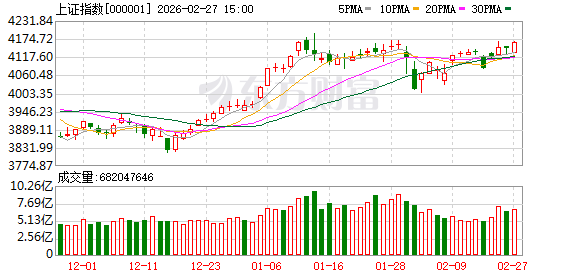
Market Overview - The three major indices showed mixed results, with the Shanghai Composite Index rising by 0.39% and the ChiNext Index falling by 1.04% [2] - Rare metal stocks experienced a surge, while sectors like steel, gas, coal, electricity, and environmental protection saw significant gains. In contrast, cloud computing, AI applications, and computing power leasing were active, while computing hardware, semiconductors, and commercial aerospace stocks adjusted [2] - In February, the Shanghai Composite Index recorded a cumulative increase of 1.09%, showing a "high after narrow fluctuations" trend, achieving three consecutive monthly gains. The Shenzhen Component Index rose by 2.04%, while the ChiNext Index fell by 1.08% [2] Trading Activity - Daily trading volume exceeding 1 trillion yuan has become the norm, with the market remaining active post-Spring Festival, as the Shanghai and Shenzhen stock exchanges recorded over 2 trillion yuan in trading volume for four consecutive trading days [2] - The latest closing point for the Shanghai Composite Index reached 4162.88, marking a new high for the month and the second-highest this year, just below the January 12 high of 4165.29 [2] Key Indicators - The Wind All A and average stock price indices both reached new highs recently, indicating a positive market sentiment [4] - The average stock price for the All A index was reported at 30.43, reflecting a slight increase of 0.37% [6] Future Expectations - The market is anticipated to enter a "Two Sessions market," with expectations of policy shifts and increased capital inflow from foreign and domestic sources, which could bolster the spring market [7] - Analysts suggest focusing on structural opportunities, particularly in AI technology stocks, while also considering defensive allocations and stocks benefiting from "anti-involution" trends [7] Sector Performance - The rare metals sector has shown the largest cumulative gains this week, driven by price increase logic, although it has also experienced fluctuations [9] - The electricity sector has demonstrated a consistent upward trend, providing better feedback for investors compared to other sectors [11] - Recent reports indicate that China's AI usage has surpassed that of the U.S., with implications for electricity and computing power demand, particularly given China's lower electricity costs [12]
招商策略:历史上两会前后A股风格如何演绎?
Sou Hu Cai Jing· 2026-02-24 14:29
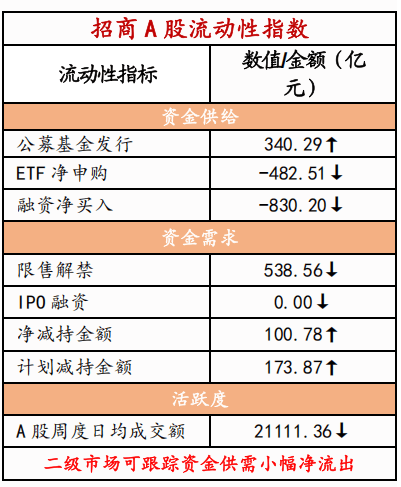
Market Performance - Historically, A-shares perform well in the two weeks leading up to the Two Sessions and slightly worse during the sessions, with an increased probability of rising post-sessions [2][9] - The small-cap style dominates both before and after the Two Sessions, with the CSI 500 and CSI 1000 indices benefiting from expectations of stable growth policies and industrial policies [2][11] - After the Two Sessions, cyclical sectors are expected to perform better, with higher average returns [2][11] Monetary Policy and Interest Rates - The central bank's net injection in the open market was 23,969 billion yuan last week, with a future injection of 22,524 billion yuan in reverse repos and 3,000 billion yuan in MLF [2][18] - Money market rates are declining, with the R007 and DR007 rates down by 18.4 basis points and 14.0 basis points respectively [2][18] Fund Supply and Demand - In the last week, there was a slight net outflow of funds in the secondary market, with a net sell-off of 830.2 billion yuan in financing [3][23] - The issuance of public funds increased by 340.3 billion units, while ETF saw a net outflow of 482.5 billion yuan [3][23] Market Sentiment - Financing trading activity weakened, with a decrease in the proportion of financing transactions in A-share turnover to 8.6% [3][28] - The VIX index fell, indicating improved risk appetite in overseas markets [3][33] Industry Preferences - The only sectors with net inflows were media and building materials, while significant outflows were seen in sectors like electronics and power equipment [3][35] - The highest net inflow was in the media sector (+15.1 billion yuan), while the largest net outflow was in power equipment (-97.3 billion yuan) [3][36] Industry Performance Post-Two Sessions - Post-Two Sessions, industries such as real estate, building materials, and consumer electronics are expected to see higher probabilities of price increases as stable growth policies are confirmed [2][15]
A股跳水原因!2013年科技牛重演?
天天基金网· 2025-03-07 11:03
Core Viewpoint - The A-share market experienced a sudden drop in the afternoon, with the ChiNext index falling over 1%, while the robotics sector rose against the trend, and AI chips and semiconductors declined. The market's performance is influenced by two main factors, raising questions about the sustainability of the tech rally [1][2]. Market Performance Analysis - The A-share market saw a trading volume exceeding 1.8 trillion yuan, with the robotics sector benefiting from positive news, while AI chips and semiconductors faced notable pullbacks [1]. - The afternoon drop was attributed to a significant decline in the Hong Kong stock market, with the Hang Seng Index and Hang Seng Tech Index turning negative, alongside a collective downturn in data and information security sectors across Asia-Pacific markets [2]. External Influences - Analysts noted that external uncertainties remain strong, particularly due to fluctuating policies from former President Trump, which have created discomfort in global markets [4]. Company-Specific News - The recent surge in the AI application Manus was interrupted by news of its account being frozen on the X platform, leading to a decline in related stocks. Manus' co-founder clarified that the company has no ties to any cryptocurrency projects, and legal actions are being taken against impersonators [5]. Future Market Outlook - According to Huabao Securities, the market style is shifting towards large-cap stocks during the "Two Sessions," with expectations for a second wave of tech growth post-meeting. Historically, the period during the Two Sessions often sees profit-taking in tech and small-cap stocks, with a potential focus on technology sectors like AI, robotics, computing, electronics, communications, and media around mid-March [6]. - The market is drawing parallels to the tech bull market from 2013 to 2015, with some analysts suggesting that the current market conditions may lead to a similar performance trajectory [9][10]. Comparative Analysis with 2013 - The current market environment shares similarities with 2013, including strong policy support for emerging industries and a favorable liquidity environment. The overall market valuation remains low, with expectations for better performance than in 2013 [11][12][13]. - The structural opportunities in the TMT sector are seen as advantageous, with the potential for a tech rally that may not exhibit the same level of divergence from the overall index as in 2013 [13]. Investment Recommendations - A selection of funds related to large-cap and technology sectors has been compiled for investors to consider, emphasizing the importance of balanced allocation to mitigate risks and seize opportunities during market fluctuations [7][8].

市场风向急转直下了?丨智氪
36氪· 2025-03-02 07:00
Core Viewpoint - The recent significant decline in the Chinese equity market is primarily attributed to overheated trading conditions and external factors such as increased tariffs on Chinese imports by the U.S. [2][4] Market Performance - On the last trading day of February, the Shanghai Composite Index fell by 1.98%, while the ChiNext Index dropped by 3.82%. In the Hong Kong market, the Hang Seng Index decreased by 3.28%, and the Hang Seng Tech Index fell by 5.32%. The AI and robotics sectors, which had previously seen substantial gains, also experienced significant pullbacks, while dividend and consumer sectors remained relatively stable [3][4]. Reasons for Market Correction - The market correction was triggered by President Trump's announcement of an additional 10% tariff on Chinese imports, compounding an existing 10% tariff, totaling a 20% increase. This announcement was more rapid than anticipated by foreign institutions, leading to a risk-averse response from investors [5]. - The AI and robotics sectors had seen substantial gains, with indices rising over 20% since February, prompting profit-taking among investors. Valuations in these sectors reached over the 90th percentile of the past three years, indicating a high turnover rate and a return to more cautious sentiment in the market [5]. Market Dynamics - The overall market trend in February was upward, with both the Wind All A and Wind All A (excluding finance and petrochemicals) indices rising around 5%. The average daily trading volume in A-shares was 1.84 trillion, higher than January's 1.2 trillion but slightly below the 2 trillion average in October and November 2024. The influx of retail investor funds was a significant driver of this trend [6]. - The Hang Seng Tech Index saw its rolling P/E ratio rise from 21 to a peak of 25, with its valuation percentile increasing from 20% to 45% in early February. This valuation adjustment has led to a more cautious market outlook, although the index is not expected to experience a significant downturn due to its relatively low valuation [6]. Upcoming Events and Market Outlook - The upcoming Two Sessions in March will set the economic development framework and macro policy direction for 2025, which is crucial for investment decisions throughout the year. Historical data indicates that market performance tends to weaken as the Two Sessions approach, but the probability of market gains increases significantly beyond ten trading days from the event [8][9]. - Investment strategies should focus on sectors likely to benefit from Two Sessions policies, including consumer-driven initiatives and cyclical sectors. Additionally, attention should be given to high-growth technology sectors, particularly those related to AI and renewable energy, which are expected to rebound despite uncertainties in long-term growth [10].