
主板

Search documents
富士康:与HCL印度合资半导体封装厂动工 多基地布局完善全球供应链
Zhong Guo Qi Che Bao Wang· 2026-02-27 10:41
Group 1 - Foxconn and HCL have officially commenced construction of a semiconductor packaging plant in Uttar Pradesh, India, marking a significant milestone in India's semiconductor assembly and testing initiative [1] - The joint venture has a total investment of 370 billion rupees (approximately 40.78 billion USD), with a planned monthly production capacity of 20,000 wafers, set to begin commercial production in 2027 [2] - The factory will primarily produce display driver chips, with an expected monthly output of around 36 million units, significantly enhancing India's semiconductor packaging capabilities [2] Group 2 - Foxconn's semiconductor strategy is characterized by a "China-centric, multi-regional collaboration" model, with its Chinese base serving as the core for technology development and capacity [3] - The Qingdao facility in China has seen continuous investment, with a total of over 330 million yuan in capital increases planned for 2024 and 2025, focusing on advanced packaging for various high-tech applications [4] - In Vietnam, Foxconn has invested over 3.2 billion USD since entering the market, with plans for further investment to enhance capacity and technological strength [5][6] Group 3 - The establishment of the semiconductor packaging plant in India complements Foxconn's global supply chain strategy, which integrates advanced packaging in China, manufacturing in Vietnam, and local production in India [7] - This multi-base collaboration not only strengthens Foxconn's core competitiveness but also aligns with global tech firms' strategies to diversify production and mitigate supply chain risks [7]
印度想接中国制造的班?根本没戏,工业大门已经彻底焊死了
Sou Hu Cai Jing· 2026-02-16 07:15
Group 1 - China has become the largest holder of AI patents globally, accounting for 60% of the total, which has shocked India and raised concerns about its manufacturing ambitions [1] - The Indian government has approved a significant electronic components manufacturing project worth 418.63 billion rupees (approximately 4.64 billion USD) to reduce dependence on China and reshape the global electronic supply chain [1][3] - India's electronic product exports are projected to reach 38.56 billion USD in the fiscal year 2025, making it the country's third-largest export item, with multinational companies establishing factories in India [3] Group 2 - Despite the growth in manufacturing, India remains heavily reliant on Chinese core components, with nearly 40% of electronic components sourced directly from China, and over 56% when including goods routed through Hong Kong [3][5] - India's manufacturing sector is primarily engaged in assembly work, earning only minimal profits while lacking core manufacturing capabilities, leading to an increasing dependency on Chinese parts [5] - The report highlights India's weaknesses in infrastructure, talent pool, and business environment, ranking sixth among 11 Asian economies, far behind China, Malaysia, and Vietnam [5][6] Group 3 - High logistics costs, complex tax compliance, and corruption issues significantly undermine India's competitiveness, with foreign investments deterred by lengthy project approval processes averaging 18 months [6] - The Indian rupee is projected to depreciate by about 5% by 2025, nearing 90 rupees to 1 USD, which will further weaken the price competitiveness of Indian exports [8] - In contrast, China is advancing its industrialization through AI and robotics, establishing competitive barriers that are difficult for other countries to overcome [8][11] Group 4 - China's technological upgrades are driven by the need for high-quality development in manufacturing, aligning with global technological revolutions and industrial transformations [11] - The application of AI and robotics aims to enhance production efficiency and optimize industrial structures, transitioning from scale-based to quality-based manufacturing [11] - India's ambition to decouple from China may lead to isolation and missed opportunities, emphasizing the need for India to address its shortcomings and focus on core technologies to compete effectively in the global manufacturing landscape [11]


小米申请主板电池及电子设备专利,提高电池容量
Jin Rong Jie· 2026-01-17 05:21
Group 1 - The core viewpoint of the news is that Beijing Xiaomi Mobile Software Co., Ltd. has applied for a patent related to battery technology, specifically for a system that connects the battery cell directly to the motherboard, enhancing safety and efficiency [1]. Group 2 - The patent application, titled "Mainboard, Battery, and Electronic Device," was published under CN121332118A and was filed on July 2024 [1]. - The technology involves a motherboard that connects directly to the battery cell via tabs, incorporating a battery protection chip and peripheral circuits for primary safety protection [1]. - The design eliminates the need for a battery protection board, allowing for increased battery capacity, reduced heat generation, and cost savings while still meeting safety certification standards [1]. Group 3 - Beijing Xiaomi Mobile Software Co., Ltd. was established in 2012 and is primarily engaged in software and information technology services, with a registered capital of 148.8 million RMB [2]. - The company has made investments in four enterprises, participated in 149 bidding projects, and holds approximately 5,000 patent records along with 123 administrative licenses [2].

PC市场,迎来最艰难一年?
虎嗅APP· 2026-01-10 03:35
Core Viewpoint - The semiconductor industry is facing unprecedented price increases across all hardware components, driven primarily by the surge in AI demand, leading to a supply chain crisis that affects consumer electronics significantly [4][10][12]. Price Increases and Market Dynamics - The average price of PCs is expected to rise by 4% to 8%, with major manufacturers warning of potential price hikes between 15% and 20% due to ongoing memory shortages expected to last until 2027 [4][10]. - The price of storage chips, particularly DRAM and NAND Flash, has skyrocketed, with contract prices increasing by 80% to 100% by December 2025, largely due to AI data centers' demand for high-bandwidth memory (HBM) [6][12]. - Graphics cards are also seeing price increases, with AMD and NVIDIA planning to raise prices starting in January and February 2026, respectively, due to rising costs of GDDR memory [7][12]. Impact on Hardware Components - The motherboard market is experiencing a significant decline in sales, with offline channel sales dropping over 50% due to high installation costs, leading to a "one-time price increase" strategy for new laptops [8][12]. - The overall PC market is at a crossroads, with a mix of urgent upgrade needs due to the end of Windows 10 support and rising semiconductor costs creating a "perfect storm" for the industry [10][11]. AI's Influence on Semiconductor Allocation - AI's unprecedented demand is reshaping the semiconductor industry's resource allocation, with a shift from consumer electronics to high-value AI chips, resulting in reduced supply for standard consumer-grade components [12][13]. - The global HBM market is projected to grow by 300% by 2025, as major manufacturers redirect DRAM capacity to meet the needs of AI chip producers like NVIDIA and Google [13][14]. Industry Responses and Strategies - Companies like Lenovo are increasing memory inventory to navigate shortages, while larger PC brands leverage their supply chain power to mitigate impacts [18]. - Upstream storage giants are adopting varied strategies, with Samsung shifting some HBM capacity to general DRAM production, while Micron focuses on the data center market [18][19]. - Some manufacturers are implementing flexible product strategies, such as offering "quasi-systems" without memory modules to transfer cost risks to consumers [20]. Future Outlook - The PC industry is entering a prolonged adjustment period, with 2026 expected to be particularly challenging as the market adapts to high costs and low growth [20]. - The current trend of "reduced volume, increased prices" is likely to persist until the AI demand's impact on advanced capacity diminishes, making it a new normal for the industry [20].



日本开始限购显卡,中国也要涨价了?
Guan Cha Zhe Wang· 2025-12-29 09:15
Core Viewpoint - The memory shortage is causing a ripple effect in the market, particularly affecting the availability and pricing of high-memory graphics cards in Japan's Akihabara district [1][5]. Group 1: Supply Chain Issues - Retail stores in Akihabara are experiencing shortages of high-memory graphics cards, with some stores already running low on stock [1][3]. - The staff at various stores have expressed concerns about the difficulty in restocking high-capacity graphics cards, indicating that while there is still some inventory, future availability is uncertain [5]. Group 2: Pricing Trends - Reports suggest that the prices of graphics cards, particularly those from NVIDIA and AMD, are expected to rise in 2025 due to increased procurement costs for their partners [5][6]. - AMD graphics card prices may start increasing from January, while NVIDIA's price hikes are anticipated to begin in February [5]. Group 3: Market Impact - The shortage of DRAM, which affects both memory and graphics cards, is expected to lead to a significant increase in DRAM contract prices, with projections of a 45-50% increase in Q4 2025 [6]. - Major PC manufacturers like Dell have already announced price increases for commercial PCs, with hikes ranging from 10% to 30% [6][7]. - The DIY market is particularly impacted, with motherboard sales dropping by 40% to 50% compared to the previous year due to rising DDR5 prices, leading potential customers to adopt a wait-and-see approach [7].

合肥:科创之城 攀高向“新”
Yang Zi Wan Bao Wang· 2025-10-09 02:10
Group 1: Economic Transformation and Development - Hefei has transformed from an inland city with no natural resources into a "net celebrity city" by focusing on technology and industrial upgrades, showcasing a strong development momentum [1] - The city has achieved a GDP growth that has crossed seven trillion yuan milestones, entering the "trillion club" and becoming one of the most popular cities for young people in the Yangtze River Delta [6] Group 2: Low-altitude Economy - Hefei is a pioneer in the low-altitude economy, with over 300 companies in the sector and more than 200 operational routes for drone logistics and urban air transport [3] - The city plans to build over 30 eVTOL takeoff and landing points within three years, creating a comprehensive urban air transport network [3] - The low-altitude economy in Anhui is projected to reach approximately 55 billion yuan by 2024, supported by a 1 billion yuan industrial fund [3] Group 3: Smart Manufacturing - Hefei emphasizes smart manufacturing as a key direction for industrial transformation, leveraging its advantages in scale and comprehensive industrial systems [4] - Lenovo's manufacturing base in Hefei has become a global hub, achieving an industrial output value of 105.7 billion yuan last year [5] - The city has seen a significant increase in new energy vehicle production, with over 1.35 million units produced last year, marking an 81% growth [5] Group 4: Investment and Innovation - Hefei has developed a unique "investment-driven" model to attract social capital for technological innovation and industrial development, exemplified by investments in projects like BOE and NIO [7] - The city is focusing on quantum industries, with nearly 70 companies in the quantum supply chain and significant achievements in quantum communication and computing [8] - Hefei ranks second globally in the quantum information field, showcasing its strength in both research and industrial development [8]

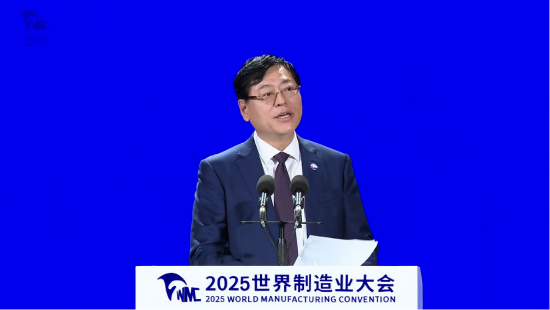
杨元庆:联想合肥制造基地上半年逆势增长,产值出口双跃升
Xin Lang Ke Ji· 2025-09-20 06:48
Group 1 - Lenovo's Hefei manufacturing base has become a key hub for global manufacturing, achieving an industrial output value of 105.7 billion yuan in the previous year [1] - The Hefei base has maintained a leading position in personal computers and smart terminal sectors, while also expanding into servers and motherboards, as well as emerging fields like embodied intelligence [3] - The base has achieved over 100 billion yuan in both industrial output and revenue for five consecutive years, contributing an average of 14 billion yuan annually to the industrial output and creating nearly 100,000 jobs [3] Group 2 - In the first half of this year, despite multiple macroeconomic challenges, the Hefei manufacturing base experienced a year-on-year industrial output growth of 27% and an export growth of 38% [3] - This growth reflects the resilience, vitality, and competitiveness of manufacturing in Anhui province [3]

特朗普首个“美国制造”成果曝光,但不是iPhone
Feng Huang Wang· 2025-06-11 02:10
Group 1 - The "Made in America" strategy promoted by President Trump is set to achieve its first victory with Foxconn expanding AI server production in the U.S. [1] - Foxconn plans to shift a significant portion of its GPU modules and motherboards production to the U.S., currently over 90% of these components are manufactured in Taiwan [1][2] - The expansion in Texas is crucial for Foxconn to enhance supply chain resilience amid geopolitical uncertainties [1] Group 2 - Foxconn and Wistron are the only two suppliers producing critical components for NVIDIA's AI servers, which require substantial engineering resources [2] - Over 1,000 engineers at Foxconn are dedicated to supporting NVIDIA's AI system development, covering various production stages [3] - Other suppliers like TSMC and SK Hynix are also expanding their operations in the U.S. to support the AI server supply chain [3][4]
宁波波导股份有限公司2025年第一季度报告
Shang Hai Zheng Quan Bao· 2025-04-29 08:04
Core Viewpoint - The company reported a significant decline in revenue and profits for the year 2024, indicating challenges in its core business operations and potential risks of delisting due to financial performance issues [9][10]. Group 1: Company Overview - Ningbo Baidu Co., Ltd. primarily engages in the research, production, and sales of mobile phones and mainboards, with recent expansions into IoT module processing and vehicle control board equipment [5][7]. - The company’s traditional mobile phone business has faced a decline in sales due to limited investment in R&D and market expansion, alongside increased competition [5][6]. Group 2: Financial Performance - For the year 2024, the company achieved operating revenue of CNY 360.61 million, a decrease of 13.62% year-on-year [9]. - Operating profit was CNY 7.50 million, down 65.50% from the previous year, while net profit attributable to shareholders was CNY 5.11 million, reflecting a 63.37% decline [9]. - The company reported a net profit of CNY -13.98 million after deducting non-recurring gains and losses, indicating financial distress [10]. Group 3: Market Context - In 2024, China's smartphone shipments reached 314 million units, marking an 8.7% increase year-on-year, driven by deeper 5G network coverage and consumer subsidy policies [5]. - The global smartphone market is projected to recover, with shipments expected to reach 1.24 billion units, a year-on-year growth of approximately 6.4% [5]. Group 4: Risk of Delisting - The company is at risk of delisting as it has reported a negative net profit and operating revenue below CNY 300 million, which triggers delisting risk warnings under the Shanghai Stock Exchange rules [10].

一季度四川宜宾外贸进出口同比增长12.1%
Xin Hua Cai Jing· 2025-04-28 08:07
Group 1 - In the first quarter of this year, Yibin City achieved a total import and export value of 8.79 billion RMB, a year-on-year increase of 12.1% [1] - The export value reached 7.243 billion RMB, ranking third in Sichuan Province, with a growth of 29.4% [1] - Sichuan Kubi Communication Equipment Co., Ltd. completed an output value of 700 million RMB in the first quarter, reflecting a year-on-year growth of 15% [1] Group 2 - Yibin's 110 private enterprises achieved an import and export value of 7.46 billion RMB in the first quarter, a year-on-year increase of 19.6% [2] - Yibin has expanded its trade relationships with 155 countries and regions, increasing its trading partners by 17 compared to the same period last year [2] - Exports to countries and regions involved in the Belt and Road Initiative reached 4.681 billion RMB, a growth of 10.9%, accounting for 53.3% of total exports [2] Group 3 - Exports of "new three items" such as new energy vehicles, lithium batteries, and photovoltaic products reached 1.612 billion RMB, a staggering increase of 3418.8% [3] - Lithium-ion battery exports amounted to 947 million RMB, while photovoltaic product exports were 636 million RMB [3] - Traditional industries also saw growth, with yarn product exports at 446 million RMB, a 5.3% increase, and agricultural product exports at 141 million RMB, a 100.4% increase [3]