
多晶硅现货

Search documents
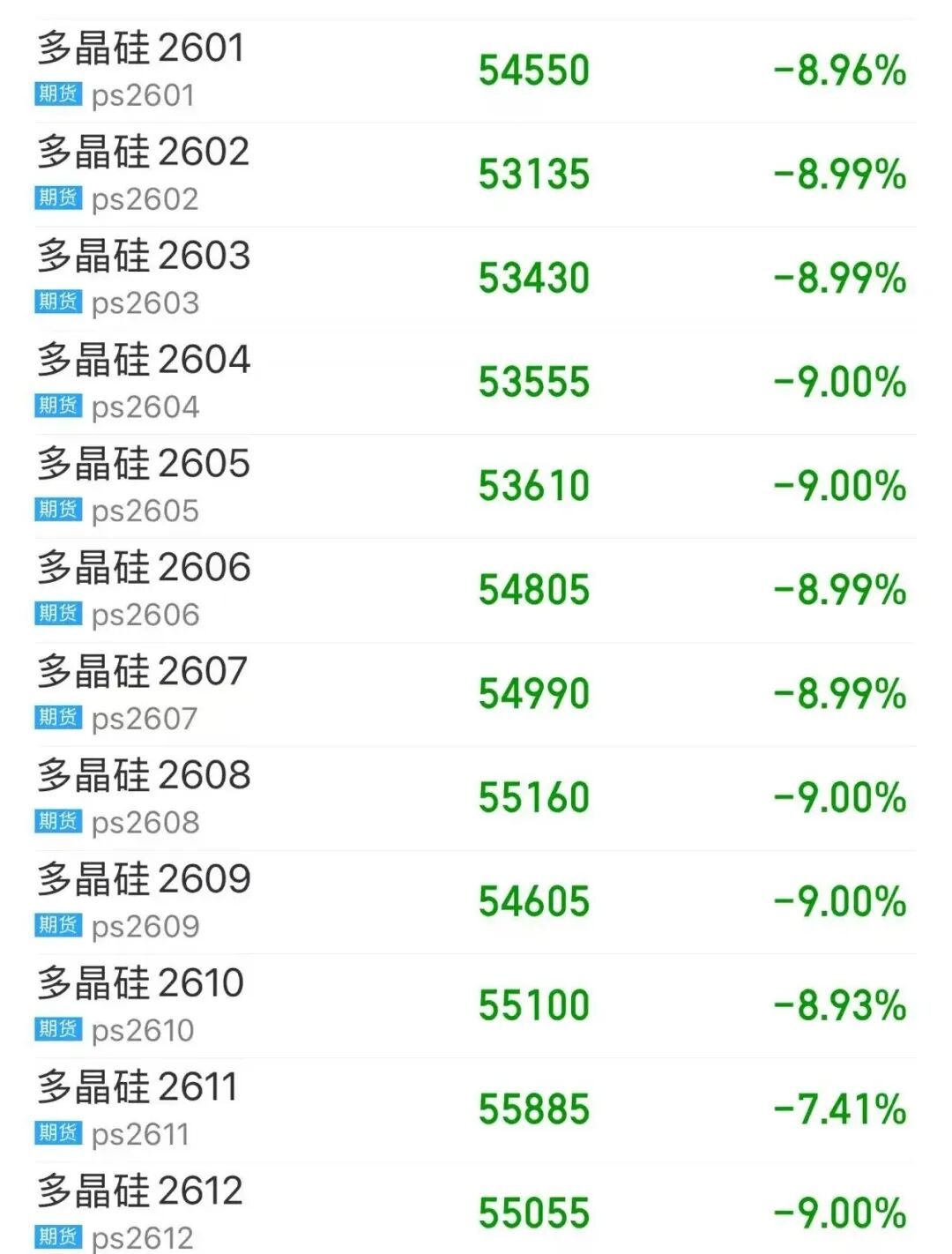
“弱现实”压力仍在 多晶硅期货多个合约跌停
Qi Huo Ri Bao· 2026-01-09 00:34
Core Viewpoint - The recent decline in polysilicon futures prices is attributed to a combination of fundamental and sentiment factors, with industry insiders expressing concerns over potential production cuts and regulatory scrutiny impacting the market [1][3]. Group 1: Market Dynamics - Polysilicon futures prices have shown a significant downward trend, with prices for various contracts dropping between 7.41% to 9.00% [1]. - The current market sentiment is bearish, influenced by weak fundamentals and negative news, leading to rapid price declines [4]. Group 2: Production and Regulatory News - Reports indicate that leading polysilicon companies may have plans to reduce production, which could negatively impact prices if confirmed [3]. - The State Administration for Market Regulation has reportedly held discussions with the China Photovoltaic Industry Association and several companies regarding monopoly risks and required corrective actions, which could disrupt existing price support mechanisms [3]. Group 3: Supply and Demand Analysis - The market is currently experiencing an oversupply situation, with January polysilicon production estimated at 107,000 tons against a demand of less than 80,000 tons, leading to inventory pressure [5]. - Despite a slight recovery in spot prices, the overall market atmosphere remains subdued, with analysts noting that the supply-demand imbalance persists [4][5]. Group 4: Future Outlook - Analysts suggest that unless production cuts are implemented, polysilicon prices may continue to face downward pressure, potentially leading to a repeat of the severe price declines seen in early 2025 [3][5]. - The willingness of upstream companies to maintain price levels is strong, but the market dynamics indicate that prices may continue to be under pressure in the short term [5].

伊朗大范围断网!特朗普:如再有人员死亡,将对伊进行“严厉打击”!“美国可能正准备世界大战”!油价大涨
Xin Lang Cai Jing· 2026-01-08 23:47
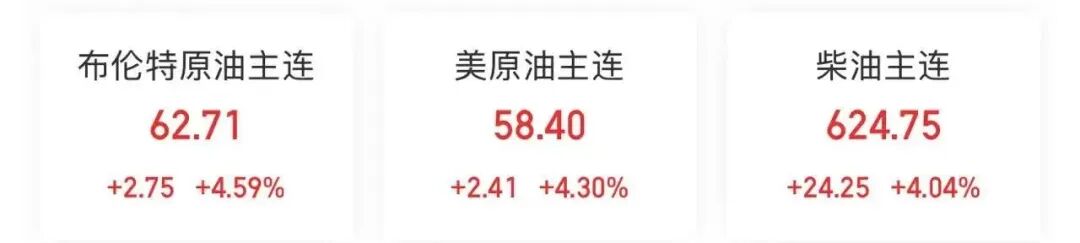
Geopolitical Risks and Oil Prices - President Trump threatened severe retaliation against Iran if further deaths occur during ongoing protests, indicating heightened geopolitical tensions [5][16] - Following these developments, international oil prices surged, with Brent crude futures rising over 4.5% and WTI crude futures increasing by 4.3% [6][18] Precious Metals and Margin Requirements - CME announced an increase in margin requirements for precious metals, marking the third such adjustment in a month, effective January 9 [8][19] - This adjustment reflects the ongoing volatility and market conditions surrounding precious metals trading [19] Silicon Market Dynamics - Multiple contracts for polysilicon futures experienced significant declines, with the main contract dropping 9% to 53,610 yuan/ton [21][24] - Analysts attribute the price drop to a combination of weak fundamentals and market sentiment, indicating a supply-demand imbalance [12][25] - Recent reports suggest potential production cuts from leading polysilicon companies, which could impact pricing dynamics if confirmed [10][23] Current Market Conditions - The polysilicon market is characterized by excess supply, with January production estimated at 107,000 tons against a demand of less than 80,000 tons, leading to inventory pressures [12][25] - Despite a slight increase in spot prices for polysilicon, the overall market sentiment remains subdued, with analysts cautioning about future price movements [11][24]

刚刚,伊朗大范围断网!特朗普:如再有人员死亡,将对伊进行“严厉打击”!“美国可能正准备世界大战”!油价大涨
Qi Huo Ri Bao· 2026-01-08 23:40
Group 1: Geopolitical Risks and Market Reactions - The recent geopolitical tensions have led to a significant increase in international oil prices, with Brent crude futures rising over 4.5% and WTI crude futures up 4.3% [4] - The U.S. President Trump has threatened severe actions against Iran if there are further casualties during the ongoing unrest, indicating a potential escalation in geopolitical risks [1][3] - Iran has implemented nationwide internet restrictions amid the protests, which may further impact market perceptions and stability in the region [3] Group 2: Precious Metals and Margin Adjustments - The Chicago Mercantile Exchange (CME) has announced a third increase in margin requirements for precious metals futures, affecting gold, silver, platinum, and palladium [5][6] - This adjustment reflects the ongoing volatility and heightened trading activity in the precious metals market, which may influence investor strategies [5] Group 3: Silicon Market Dynamics - Multiple contracts for polysilicon futures experienced a significant drop, with the main contract falling by 9% to 53,610 yuan/ton, indicating a bearish sentiment in the market [8][9] - Analysts suggest that the decline in polysilicon prices is a result of both fundamental and sentiment factors, with oversupply and weak demand contributing to the downward pressure [12][13] - There are rumors of major polysilicon producers planning production cuts, which could impact future pricing dynamics if confirmed [10][11]
多晶硅:风控措施密集,情绪溢价压缩
Wu Kuang Qi Huo· 2025-12-29 01:03
1. Report Industry Investment Rating - Not provided in the content 2. Core Viewpoints of the Report - The polysilicon futures are currently transitioning from sentiment-driven pricing to fundamental-based pricing. The strong risk control measures by the Guangzhou Futures Exchange (GFEX) have effectively curbed irrational trading, creating conditions for prices to return to industry logic. At the industry level, attempts to cut production and raise prices are reshaping the price system, but their sustainability depends on end - user acceptance and the implementation of production cuts by enterprises. In a strongly regulated environment, futures prices are more likely to fluctuate around spot transaction prices. If spot transactions continue to recover, futures prices may maintain a limited premium above the spot; if the spot market weakens again, futures prices are at high risk of decline. Overall, the futures market will shift from the "story - telling" stage to the "accounting" stage, with the volatility center moving from expectations to reality [1][20] 3. Summary by Relevant Catalogs 3.1 Market Situation and Regulatory Actions - In mid - December, the polysilicon futures盘面 rose rapidly in a short time, with the weighted contract breaking through the 62,000 yuan/ton mark and the near - month contract reaching 63,000 yuan/ton. However, the spot price increase was slower, resulting in a temporary deviation between futures and spot prices. In response, the GFEX introduced a series of risk control measures [5] - The risk control measures include increasing the minimum order quantity for opening positions, raising trading fees, and tightening trading limits. These measures cover multiple aspects of trading, showing a systematic adjustment. The regulatory rhythm is faster, and the tools are more diverse compared to historical practices, suppressing market activity [6][7] 3.2 Industry Reality and Price Increase Logic - In the context of industry self - discipline, the supply side of the polysilicon industry has shifted from "passive over - supply" to "active adjustment." Silicon material enterprises, after long - term losses due to price drops, are more inclined to control production to stabilize prices. Reducing the operating rate can ease supply - demand contradictions and increase costs, providing support for price increases [14] - Recently, there have been attempts to raise prices in various links of the industrial chain. Most silicon material enterprises have raised new order quotes to over 65,000 yuan/ton, and the domestic polysilicon transaction price has increased slightly. Silicon wafer, photovoltaic cell, and component prices have also been raised. This price increase is driven by multiple factors, including cost increase, the need to stabilize expectations, and cost - conduction. However, the actual implementation of price increases depends on end - user acceptance [15] 3.3 Pricing Regression after Sentiment Fading - The component link is crucial in determining the height of price recovery. If component prices are accepted in terminal bidding and delivery, the price - increase logic of upstream silicon materials will be verified; otherwise, the upward space of upstream prices will be restricted. Component acceptance of price increases depends more on terminal demand and return expectations rather than silicon material prices. The implementation of production cuts will directly affect the stability of polysilicon prices [19]
年内涨幅68%!多晶硅期货溢价空间凸显,光伏上游反内卷见效?
Hua Xia Shi Bao· 2025-12-17 11:19
Core Viewpoint - The recent surge in polysilicon futures prices is attributed to multiple factors, including supply contraction, rising costs, and policy expectations, rather than an increase in downstream demand [2][4][8] Group 1: Price Movements - Polysilicon futures reached a high of 61,235 CNY/ton on December 17, with a cumulative increase of 68% this year [1] - The current price of polysilicon N-type dense material is around 50 CNY/kg, while N-type re-investment material is approximately 51.5 CNY/kg [4] - The market is experiencing a disconnect between futures and spot prices, with spot prices remaining stable despite the rise in futures [4][8] Group 2: Supply and Demand Dynamics - Domestic polysilicon production dropped to about 115,000 tons in November, a decrease of approximately 14% month-on-month, primarily due to proactive production cuts by leading companies during the dry season [2] - The average operating rate in the polysilicon industry has fallen to 40%, with many second and third-tier companies halting production [6] - High inventory levels exceeding 300,000 tons are putting pressure on the market, with weak demand from downstream sectors [6] Group 3: Market Expectations and Policies - A recent meeting among 11 leading manufacturers emphasized production control and price stabilization, reinforcing market expectations for industry self-discipline and the establishment of a storage platform [2][3] - The establishment of a capacity integration acquisition platform is seen as a second wave of market sentiment boost, although details remain unclear [3][7] - The market is closely monitoring the potential announcement of a "debt-for-equity" acquisition and flexible capacity plans, which could further influence sentiment [7][9] Group 4: Trading Strategies - Current high premiums suggest strategies such as "selling futures and buying spot" or "registered warehouse delivery" to lock in basis profits [9] - Investors are advised to reduce leverage and implement strict stop-loss measures due to increased volatility in polysilicon futures [9]
多晶硅期货破6万!多头诛杀空头,光伏高管每人赚了几千万!这是一个怎样的资本局?
Ge Long Hui· 2025-12-04 20:47
Core Insights - The price of polysilicon has surpassed 62,000 yuan per ton, reaching a historical high on December 3, 2023, with a significant drop in trading volume, indicating a potential market imbalance [1][2] - The disparity between futures and spot prices has raised concerns, with the futures price being approximately 14.9% higher than the average spot price, suggesting a structural issue in the market [3][4] - The current situation is attributed to a narrow design of deliverable products, concentrated warehouse receipts, and a significant imbalance between positions and deliverable resources, leading to extreme price movements [5][6][7] Market Dynamics - The trading volume for the PS2512 contract on December 3 was only 114 tons, a stark contrast to the 115,200 tons traded on July 31, indicating a drastic reduction in market activity [1] - The price increase of polysilicon futures has resulted in a price return of 87.7% since June 25, with margin trading yielding returns as high as 877% for informed traders [2] - The market has seen a significant concentration of deliverable resources, with only a few companies controlling the majority of the registered brands, raising concerns about market manipulation [9][10] Delivery and Warehouse Issues - The design of the delivery mechanism is overly restrictive, with only a limited number of brands eligible for delivery, which has led to a scarcity of deliverable products [11][12] - The actual volume of standard deliverable products is estimated to be only about 20% of total production, creating a mismatch between market supply and futures contracts [11][12] - Strict time constraints on warehouse receipts, including a 90-day production period and a 6-month validity, exacerbate the delivery challenges, especially during peak trading months [14] Speculative Behavior and Market Manipulation - The market has been influenced by speculative behavior, with some traders profiting significantly from the volatility, while others have faced substantial losses due to a lack of understanding of the delivery rules [17][18] - Reports of coordinated trading activities among industry insiders suggest potential manipulation, with some individuals reportedly making millions from trading polysilicon futures [18][19] - The prevalence of misleading information and rumors in the market has contributed to price volatility, with regulatory scrutiny needed to address these issues [20][21][22] Regulatory Considerations - The current market dynamics highlight the need for regulatory adjustments, including potential modifications to the delivery and warehouse receipt systems to prevent extreme price fluctuations [29][30] - There is a call for thorough investigations into the dissemination of misleading information that has coincided with significant market movements, to restore confidence in the trading environment [31] - The overall goal is to ensure that the polysilicon futures market serves its intended purpose as a risk management tool for the solar industry, rather than becoming a platform for speculative excess [28][30]
降息,突变!白宫发出警告!美政府“停摆”有望结束?
Qi Huo Ri Bao· 2025-11-09 23:45
Group 1: Federal Reserve and Interest Rates - The core prediction from Bank of America is that the Federal Reserve will not lower interest rates again during Powell's term, which ends in May 2026 [1][2] - The Federal Funds Rate is expected to remain in the range of 3.75% to 4.0% until the second half of 2026, when a new chair may initiate rate cuts [2] - Powell's cautious remarks after the October rate cut indicate that the threshold for a December rate cut has been raised, requiring data to justify such a move [1][2] Group 2: Economic Impact of Government Shutdown - The ongoing government shutdown has lasted for 40 days, with estimates suggesting it has reduced the U.S. GDP by 1.5% [2] - If the shutdown continues, it could negatively impact consumer spending during the upcoming holiday season, potentially leading to a contraction in Q4 economic growth [2] - Treasury Secretary has indicated that prolonged shutdown could halve the economic growth forecast for Q4 [2] Group 3: Market Reactions and Predictions - The market is currently in a "data vacuum" due to the delay in key economic data releases, such as the October CPI [1] - Alternative data suggests a cooling labor market without severe deterioration, providing the Fed with justification to pause rate cuts [1] - The probability of a 25 basis point rate cut in December is estimated at 66.5%, while the likelihood of maintaining current rates is 33.5% [3] Group 4: Silicon Market Dynamics - The photovoltaic market is experiencing weak supply and demand dynamics, with multi-crystalline silicon prices under pressure [7][8] - Current inventory levels for multi-crystalline silicon are high at 301,000 tons, indicating an oversupply situation [8] - Analysts suggest that without substantial progress on "stockpiling" initiatives, prices will remain under pressure due to weak demand and high inventory levels [9]
有色金属衍生品日报-20251021
Yin He Qi Huo· 2025-10-21 12:00
Group 1: Report General Information - The report is a daily report on non - ferrous metals dated October 21, 2025, focusing on various non - ferrous metals including copper, alumina, electrolytic aluminum, etc. [2] Group 2: Report Industry Investment Rating - Not provided in the content Group 3: Core Views - **Copper**: Macroeconomically, Sino - US trade relations ease, and the 4th Plenary Session of the 20th CPC Central Committee is being watched. Fundamentally, copper mine supply disturbances increase. SMM expects a decrease in electrolytic copper production in October. Consumption shows "peak season without peak". The recommended trading strategies are long on dips, continue to hold inter - market positive spreads, and wait on options [2][4][5]. - **Alumina**: The supply - demand surplus will become more significant after downstream electrolytic aluminum plants complete their stockpiling. Some small - scale production cuts and maintenance have started, and more are expected in November. The price is expected to bottom out around 2800 yuan. Strategies include short - term low - level consolidation and waiting on spreads and options [11][12][13]. - **Electrolytic Aluminum**: Macroeconomic factors will drive the price this week. The consumption resilience in the fundamentals provides support. The strategy is to be bullish on dips and cautious on chasing highs [17][18]. - **Cast Aluminum Alloy**: Macroeconomic factors drive the price. High social inventory and warehouse receipts may limit the upside. The price is expected to be strong in the short - term. Strategies include being bullish on dips and waiting on spreads and options [24][25]. - **Zinc**: The import zinc ore loss widens, and domestic processing fees decline. The supply of refined zinc may increase, and consumption may weaken. The price shows an external - strong and internal - weak pattern. Strategies include waiting on all trading types [27][31][33]. - **Lead**: Downstream lead - storage enterprise orders improve, but production may increase in mid - to - late October, and the price may fall. Strategies include holding short positions and selling out - of - the - money call options [38][39]. - **Nickel**: The macro - environment fluctuates, and there is cost support, but the supply - demand surplus restricts the upside. The price is expected to oscillate widely with a downward center. Strategies include shorting at the upper limit of the oscillation range and selling a wide - straddle combination [43][45][46]. - **Stainless Steel**: The price is below the cost, and the terminal demand is not optimistic. It may keep a weak oscillation pattern. Strategies include weak oscillation and waiting on spreads [51][52]. - **Tin**: Sino - US trade tensions ease, and the Fed may cut interest rates. The supply of tin ore is tight, and demand recovers slowly. The price may oscillate around the integer level. Strategies include waiting on options [58][59][60]. - **Industrial Silicon**: Polysilicon production cuts in November are bearish for demand. The price is under short - term pressure but may not fall deeply. Strategies include waiting for a full correction [63][64][65]. - **Polysilicon**: The supply - demand balance will improve in November. The short - term correction space is limited. Strategies include buying on dips, holding reverse spreads, and adjusting option strategies [70][71][72]. - **Lithium Carbonate**: Inventory and warehouse receipts decrease, indicating strong demand. The price's oscillation center moves up. Strategies include being bullish on the oscillation, waiting on spreads, and selling out - of - the - money put options [74][75]. Group 4: Summary by Metals Copper - **Market Review**: The futures price of Shanghai copper 2512 rose 0.16% to 85400 yuan/ton, and the index position decreased by 2 lots. The spot price showed different trends in different regions [2]. - **Important Information**: The 4th Plenary Session of the 20th CPC Central Committee is held, and Japan, Spain, and South Korea express concerns about copper processing and refining fees [2]. - **Logic Analysis**: Macroeconomic and fundamental factors affect the market, and the export window may open again [2]. - **Trading Strategies**: Long on dips, hold inter - market positive spreads, and wait on options [5]. Alumina - **Market Review**: The futures price of alumina 2601 fell 6 yuan to 2810 yuan/ton, and the position decreased. The spot price decreased in most regions [6]. - **Related Information**: There are procurement, production adjustment, inventory, and import - export data [7][8][9][10]. - **Logic Analysis**: The supply - demand surplus becomes more obvious, and production cuts are expected [11]. - **Trading Strategies**: Short - term low - level consolidation, wait on spreads and options [12][13]. Electrolytic Aluminum - **Market Review**: The futures price of Shanghai aluminum 2512 rose 35 yuan to 20965 yuan/ton, and the position increased. The spot price rose in different regions [15]. - **Related Information**: There are meetings, trade talks, inventory, and economic data [15][16]. - **Trading Logic**: Macroeconomic and fundamental factors support the price [17]. - **Trading Strategies**: Bullish on dips, cautious on chasing highs [18]. Cast Aluminum Alloy - **Market Review**: The futures price of cast aluminum alloy 2512 rose 60 yuan to 20460 yuan/ton. The spot price was stable in most regions [20]. - **Related Information**: There are meetings, trade talks, warehouse receipt, inventory, and import - export data [20][21][23]. - **Trading Logic**: Macroeconomic factors drive the price, and supply - demand factors affect the upside [24]. - **Trading Strategies**: Bullish on dips, wait on spreads and options [24][25]. Zinc - **Market Review**: The futures price of Shanghai zinc 2512 rose 0.39% to 21970 yuan/ton, and the index position decreased. The spot market was weak [26]. - **Related Information**: There are inventory, production, and import - export data of zinc mines and refined zinc [27]. - **Logic Analysis**: The import loss of zinc ore widens, and the supply of refined zinc may increase [31]. - **Trading Strategies**: Wait on all trading types [33]. Lead - **Market Review**: The futures price of Shanghai lead 2512 rose 0.2% to 17155 yuan/ton, and the index position increased. The spot price rose, and downstream procurement was active [35]. - **Related Information**: There are inventory and import - export data [36][37]. - **Logic Analysis**: Downstream demand improves, but production may increase [38]. - **Trading Strategies**: Hold short positions, wait on spreads, and sell out - of - the - money call options [39]. Nickel - **Market Review**: The futures price of Shanghai nickel NI2512 rose 460 to 121380 yuan/ton, and the index position decreased. The spot premium was stable [41]. - **Important Information**: There are import - export, production, and consumption data [42]. - **Logic Analysis**: The macro - environment fluctuates, and the supply - demand surplus restricts the upside [43][45]. - **Trading Strategies**: Short at the upper limit of the oscillation range, wait on spreads, and sell a wide - straddle combination [46][47][48]. Stainless Steel - **Market Review**: The futures price of stainless steel SS2512 rose 55 to 12665 yuan/ton, and the index position decreased. The spot price was in a certain range [50]. - **Important Information**: There are import - export and procurement price data [51]. - **Logic Analysis**: The price is below the cost, and demand is not optimistic [51]. - **Trading Strategies**: Weak oscillation, wait on spreads [52]. Tin - **Market Review**: The futures price of Shanghai tin 2511 rose 1920 yuan/ton or 0.69% to 280870 yuan/ton, and the position increased. The spot price rose, and demand recovery was weak [55]. - **Related Information**: There are meetings, cooperation agreements, and mobile phone market data [56][57]. - **Logic Analysis**: The supply of tin ore is tight, and demand recovers slowly [58]. - **Trading Strategies**: Oscillate around the integer level, wait on options [59][60]. Industrial Silicon - **Important Information**: Polysilicon production cuts are expected in November [63]. - **Logic Analysis**: The price is under short - term pressure but may not fall deeply [64]. - **Strategy Suggestions**: Wait for a full correction, no arbitrage and option strategies for now [65][66][67]. Polysilicon - **Important Information**: Polysilicon production cuts are expected in November [69]. - **Logic Analysis**: The supply - demand balance will improve, and short - term correction space is limited [70]. - **Strategy Suggestions**: Buy on dips, hold reverse spreads, and adjust option strategies [71][72]. Lithium Carbonate - **Market Review**: The futures price of lithium carbonate 2601 fell 200 to 75980 yuan/ton, and the index position decreased. The spot price rose [73]. - **Important Information**: There are production plan changes, import - export, and new energy vehicle production data [74]. - **Logic Analysis**: Inventory and warehouse receipts decrease, indicating strong demand [74]. - **Trading Strategies**: Bullish on the oscillation, wait on spreads, and sell out - of - the - money put options [75]. Group 5: Price and Related Data - There are daily data tables for various non - ferrous metals including copper, alumina, aluminum, zinc, lead, nickel, tin, industrial silicon, polysilicon, and lithium carbonate, showing price, spread, profit, and inventory data [76][77][78][79][80][81][82][83][84][85] - There are also various graphs showing price trends, spreads, and inventory changes of different non - ferrous metals [87][90][94][98][105][107][110][117][119][124][126][130][132][138][142][146][150][154][157][162][165][170][174]
多晶硅期货价格涨势为何“急刹车”
Qi Huo Ri Bao· 2025-10-20 23:58
Core Viewpoint - The recent decline in polysilicon futures prices is attributed to the fading of policy expectations, shifting market focus towards fundamental supply and demand dynamics [2][3]. Supply and Demand Dynamics - The polysilicon market is currently experiencing an oversupply situation, with increasing inventory pressures. Weekly production is maintained at 31,000 tons, with October production expected to exceed 130,000 tons [2]. - Analysts predict that the southwestern production areas may reduce or halt production due to the dry season, while some northern manufacturers may increase or resume production. October is anticipated to be the peak production month for the year, with a subsequent decline expected [2][3]. - Polysilicon inventory has risen to 289,340 tons, indicating a lack of substantial improvement in the supply-demand balance, which limits the support for current spot prices [2]. Price Trends and Market Sentiment - As of October 20, the main contract PS2511 closed at 50,340 yuan, down 3.66%. The mainstream market price for N-type dense polysilicon is reported to be between 47 to 53 yuan/kg [2]. - There is a significant divergence in market sentiment, with some analysts suggesting that if inventory continues to accumulate in November, prices may face downward pressure. Others believe that reduced production during the dry season could provide some support for prices [3]. - The market remains in a state of uncertainty, influenced by the interplay between strong policy expectations and weak fundamental realities, necessitating a rational approach to market fluctuations [3].
多晶硅期货强势涨停,再创历史新高,专家解读来了
2 1 Shi Ji Jing Ji Bao Dao· 2025-09-05 11:29
Group 1 - The core viewpoint of the article highlights the strong performance of polysilicon futures, which reached a record high of 56,735 yuan/ton, driven by favorable policies and price recovery in the photovoltaic industry [1][2] - The A-share market for silicon materials and wafers saw collective gains, with notable increases in stocks such as Daqo Energy (up 8.86%) and Tongwei Co. (up 6.18%) [1] - The Ministry of Industry and Information Technology and the State Administration for Market Regulation issued a plan to promote high-quality development in the photovoltaic sector, aiming to eliminate low-price competition [1][2] Group 2 - Analysts indicate that the price control measures, including the Price Law, have led to polysilicon prices being maintained above production costs, providing a supportive floor for futures prices [2] - Recent price increases in downstream products like silicon wafers and battery cells are attributed to rising polysilicon costs and recovering overseas demand [2] - The current spot market for polysilicon has also seen price increases, with quotes rising from 35,000 yuan/ton to 47,000 yuan/ton in July, and further increases noted in August [2] Group 3 - The operating rate of polysilicon enterprises has improved, currently at 40%, reflecting a 6 percentage point increase from the previous month [3] - Despite the positive trends, there are concerns about supply-demand imbalances as production is expected to increase by approximately 7,000 tons in September [3] - The market is sensitive to policy developments, with potential for futures prices to continue rising if the "anti-involution" policies are effectively implemented [3]


