
征程6芯片

Search documents
中国智驾产业变迁:从封闭交付到普惠生态
雷峰网· 2025-12-25 09:24
Core Viewpoint - Over the past decade, China's intelligent driving industry has transitioned from a closed chain to an inclusive ecosystem, driven by technological advancements and collaborative efforts among local companies [1][36]. Group 1: Industry Evolution - In 2011, Tesla's CEO Elon Musk dismissed BYD as a competitor, highlighting the significant gap in technology and product appeal between Chinese automakers and Tesla at that time [2][3]. - By 2024, Chinese automakers like BYD and Geely have surpassed Tesla in sales, becoming part of the top ten global car manufacturers, showcasing the rapid evolution of the industry [4]. - The core of Tesla's sustained optimism lies in its self-developed chips and intelligent driving capabilities, which have spurred a wave of research and development in China's intelligent driving sector [4]. Group 2: Key Players and Partnerships - The critical turning point for China's intelligent driving industry occurred between 2019 and 2020, marked by the emergence of companies like Horizon Robotics and Momenta, which began to establish themselves in the market [6]. - The collaboration between Changan Automobile and Horizon Robotics exemplifies how local companies are building flexible and open supply chain systems, enhancing their control over core technologies [10][12]. - The partnership between Li Auto and Horizon Robotics allowed for rapid development and deployment of advanced driving features, demonstrating the importance of open collaboration in overcoming technological challenges [13][17]. Group 3: Technological Advancements - The shift from Mobileye's closed delivery model to more open and collaborative approaches has catalyzed the development of local intelligent driving technologies, enabling companies to gain autonomy over their systems [9][18]. - Horizon Robotics' introduction of the Journey 5 chip, which offers high performance and supports advanced driving needs, has positioned the company to compete in the high-end intelligent driving market [23][24]. - The "HSD Together" model proposed by Horizon Robotics aims to enhance collaboration across the supply chain, significantly reducing development costs and time to market for automotive companies [27][28]. Group 4: Market Accessibility and Inclusivity - The evolution of intelligent driving technology is making advanced features more accessible to a broader range of consumers, breaking down price barriers that previously limited adoption to high-end vehicles [30][31]. - BYD's upcoming "Heavenly Eye" system, powered by Horizon Robotics' Journey 6 chip, aims to provide advanced driving capabilities across its entire model range, including lower-priced vehicles [30]. - The introduction of Horizon Robotics' HSD full-scene driving assistance system is set to make high-level intelligent driving features available in mid-range vehicles, promoting inclusivity in the market [31][33].


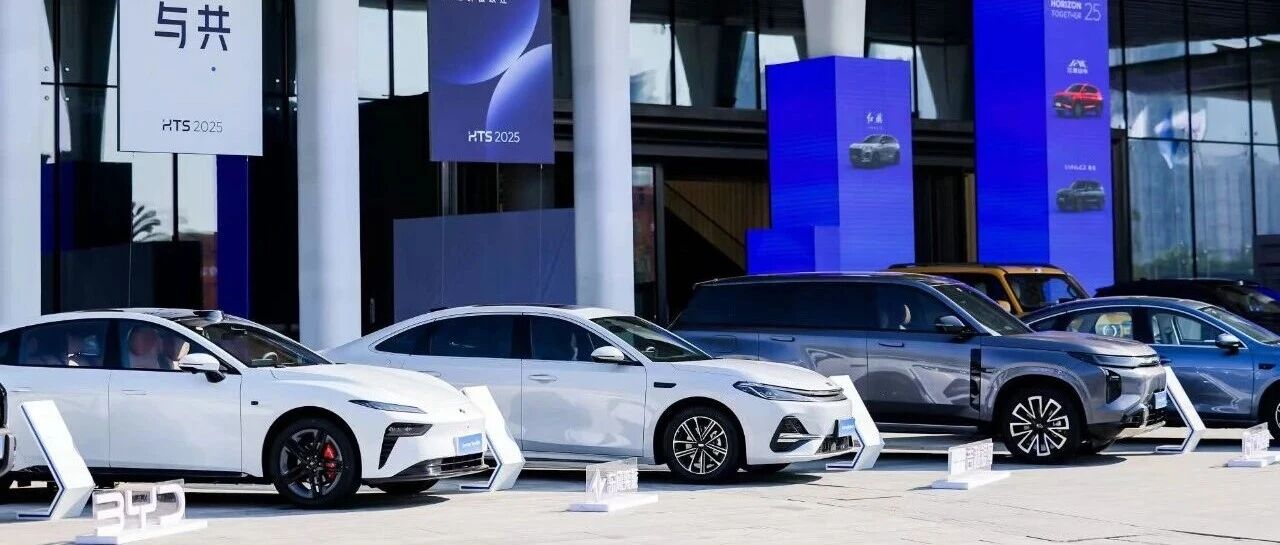
“凯式布道”和“苏式焦虑”背后 地平线的野心是什么?
Xin Lang Cai Jing· 2025-12-17 14:19
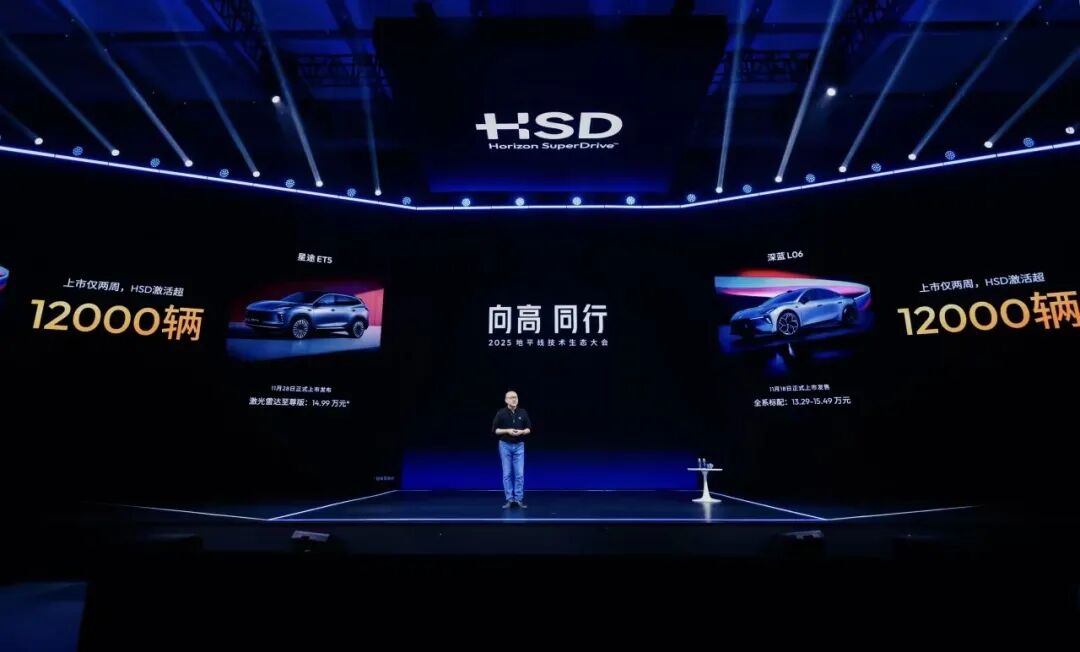
Core Insights - Horizon Robotics, led by CEO Yu Kai, aims to solidify its position in the smart technology sector through its first technology ecosystem conference, showcasing its ADAS and AD solutions [2][15] - The company is transitioning from a chip supplier to an integrated technology service provider, emphasizing the importance of ecosystem collaboration over in-house development by automakers [3][16] Group 1: Company Strategy and Vision - Yu Kai's vision includes making advanced driving technology accessible to the mass market, with the goal of integrating smart driving into vehicles priced under 150,000 yuan [18] - Horizon Robotics has launched the HSD (Horizon City Driving) system, achieving over 12,000 activations within two weeks of its launch, indicating strong market demand [18] - The company plans to expand its ecosystem by offering a full-stack solution that includes chips, algorithms, and reference designs, which can significantly reduce development cycles for automakers [19][20] Group 2: Technological Developments - The HSD system's mass production marks a significant step towards Yu Kai's vision of becoming a foundational player in the robotics era, likening the company to a "Wintel" for the robotics industry [19] - Horizon Robotics is focusing on three technological pillars: BPU, compilers, and algorithms, with the fourth-generation BPU architecture and compiler serving as the foundation for both smart driving and general robotics [19] - The introduction of the "HSD Together" model aims to alleviate challenges faced by automakers, such as high training costs and talent shortages, by allowing them to build on Horizon's validated algorithms [20][25] Group 3: Market Position and Competition - Horizon Robotics is positioning itself to capture a significant share of the market by targeting vehicles priced at 130,000 yuan and below, with plans to enter the 100,000 yuan national car market [21][26] - The company views Tesla as its primary competitor, with the upcoming release of Tesla's FSD V12 expected to set a new standard in the industry [23] - The automotive ecosystem is becoming increasingly competitive, with various players, including Huawei, also vying for dominance in the smart driving space [17][26] Group 4: Industry Challenges and Collaboration - The industry faces significant challenges, including high costs of AI training, scarcity of top talent, and imbalanced iteration speeds, which Horizon aims to address through collaborative ecosystem models [20][25] - There is a consensus among industry players that building a collaborative ecosystem is essential for overcoming the technological and scalability gaps in smart driving [25][27] - The shift in supplier roles is evident, with companies like Horizon Robotics moving from behind-the-scenes support to defining technology routes and participating in standard-setting [27]
AI沦为暗线?从商业航天入手“十五五”投资机会!
Ge Long Hui A P P· 2025-12-16 10:24
Core Viewpoint - The article discusses the ongoing AI bubble concerns and the impact of various negative news on the AI technology sector, while emphasizing that the fundamental logic and trends of the global AI industry remain unchanged in the long term [2][5]. Group 1: Investment Opportunities in Key Technology Directions - Commercial Space: The "strong nation in space" goal in the 14th Five-Year Plan, along with policies, demand, and technology, creates a robust investment opportunity in commercial space [2][3]. - Demand for low-orbit satellite resources is urgent, with China's GW and Qianfan constellations planning over 10,000 satellites, of which less than 1% are currently in orbit [3]. - The successful launch of the Zhuque-3 and the upcoming Long March 12 rocket are expected to significantly reduce launch costs, which is crucial for satellite networking [3]. Group 2: Specific Technology Areas - Autonomous Driving: The recent approval of L3 autonomous vehicle licenses marks a critical transition from testing to commercialization, with a projected market size of 270 billion for Robotaxi by 2030 [5]. - Nuclear Fusion: While still in the experimental phase, nuclear fusion is recognized as a future key industry, with significant investment opportunities tied to technological breakthroughs [6]. - Artificial Intelligence: The focus has shifted from speculative investments to practical applications, with the 14th Five-Year Plan promoting AI integration across various industries [6][7]. Group 3: Market Dynamics and Trends - The commercial space sector has shown resilience despite recent launch delays, indicating strong market recognition and investment potential [9][11]. - The core logic of commercial space revolves around the urgent need for satellite networking and decreasing costs, with various companies positioned to benefit from this trend [11]. - The article highlights the importance of selecting the right sectors and companies for sustained investment, particularly in the context of the 14th Five-Year Plan's long-term technological focus [15].




AI沦为暗线?从商业航天入手“十五五”投资机会!
格隆汇APP· 2025-12-16 09:44
Core Viewpoint - The article discusses the ongoing trends in various technology sectors, particularly focusing on the AI industry, commercial aerospace, autonomous driving, nuclear fusion, and quantum technology, emphasizing the long-term potential despite short-term market fluctuations [5][6][10][13][16]. Group 1: Commercial Aerospace - The Chinese government has prioritized commercial aerospace in its strategic goals, establishing a dedicated department and action plans, indicating strong policy support [8]. - The demand for low-orbit satellite resources is urgent, with plans for thousands of satellites, and recent technological advancements in reusable rockets are expected to significantly reduce launch costs [8][20]. - Key players in the commercial aerospace sector include China Satellite, which leads in satellite manufacturing, and various companies involved in rocket manufacturing and satellite components [20][22]. Group 2: Autonomous Driving - The autonomous driving sector is entering a critical commercialization phase, supported by government policies and technological advancements, with a projected market size of 2.7 trillion by 2030 for Robotaxi services [10]. - The recent approval of L3 autonomous vehicle models marks a significant step towards commercial deployment [10]. Group 3: Nuclear Fusion - Nuclear fusion is recognized as a future clean energy source, but it remains in the experimental stage, with significant breakthroughs needed before commercialization [11][12]. - Current investments are focused on technological milestones, making it a long-term investment opportunity [12]. Group 4: Artificial Intelligence - The AI sector is transitioning from speculative investments to practical applications, with a focus on real-world implementations that enhance efficiency and reduce costs [13]. - The emphasis is on AI applications across various industries, including manufacturing and healthcare, rather than on speculative infrastructure investments [13]. Group 5: Robotics - The development of embodied intelligence and humanoid robots is a key focus area, with increasing demand in manufacturing due to labor shortages and rising costs [14]. - Companies like Tesla are advancing humanoid robot production, while domestic firms are achieving significant progress in core components [14]. Group 6: Semiconductor Industry - The semiconductor sector is a priority for domestic self-sufficiency, with a focus on overcoming key technological challenges [15]. - Domestic wafer manufacturers are expanding production, and there is a growing demand for domestic semiconductor components [15]. Group 7: Quantum Technology - Quantum communication is positioned as a strategic priority for national security, with ongoing efforts in standardization and pilot projects in financial and governmental applications [16]. - Companies in the quantum sector are beginning to secure significant contracts, indicating a move towards commercialization [16][24]. Group 8: Market Trends and Investment Strategy - The article suggests that commercial aerospace is currently the most promising sector for investment, driven by policy, demand, and technological advancements [26]. - It also highlights the importance of focusing on sectors with clear policy support and performance validation, such as AI applications and robotics, while recognizing the long-term potential of quantum technology and semiconductor advancements [26].

地平线HSD打破智驾“豪门游戏”,中国车企迎来智能化跃升时刻
Mei Ri Jing Ji Xin Wen· 2025-11-26 10:44
Core Insights - The Chinese automotive industry is transitioning from "leading in electrification" to "winning in intelligence," facing challenges in smart driving technology development due to high investment and long cycles [1][4] - Horizon HSD (Horizon SuperDrive) is changing the competitive landscape by transforming urban auxiliary driving from a high-end option to a standardized feature [1][3] Industry Overview - The global automotive industry is rapidly integrating "electrification + intelligence," with China leading in the first half of electrification due to its complete industrial chain and continuous innovation [4] - From January to July this year, new passenger cars with L2-level combined driving assistance functions in China reached 7.76 million units, with a market penetration rate of 62.58% [4] Consumer Behavior - Consumer perceptions are shifting, with smart driving experience becoming the third most important factor in car purchasing decisions, following quality and performance [4] - Consumers are increasingly focused on the real-world performance of smart driving features, such as smoothness, adaptability to complex traffic, and human-like decision-making [4] Market Performance - The launch of the Deep Blue L06, priced from 132,900 yuan, showcases strong market demand for high-cost performance smart driving solutions, with over 20,000 orders within an hour of its release [5] - Despite the anticipated "smart driving equality" in 2025, high-level smart driving features are predominantly found in vehicles priced above 300,000 yuan, while lower-priced models lack such features [5] Competitive Landscape - Tesla's FSD has set a global benchmark in smart driving, but Horizon HSD's rapid mass production offers a more practical path for Chinese automakers to compete [3][7] - Horizon's business model focuses on providing standardized smart driving capabilities, allowing automakers to concentrate on user experience rather than redundant R&D [8] Technological Advancements - Horizon HSD has achieved rapid mass production, with over 10 vehicle models equipped with the system, and has become a leader in the domestic smart driving technology market with a 32.4% share [8][12] - The HSD system's success is attributed to its efficient integration of hardware and software, optimizing performance and energy efficiency [9] Future Outlook - Horizon aims to produce 10 million units of HSD within the next 3-5 years, leveraging China's unique advantages in complex driving scenarios [8][12] - The transition of high-level smart driving from luxury to standard features is redefining the global automotive competitive landscape, with Horizon's approach serving as a model for industry transformation [12]

10月港股金股:震荡上行中
Soochow Securities· 2025-10-12 09:32
Group 1 - The report indicates that despite short-term adjustments in the Hong Kong stock market, it remains in a trend of oscillating upward with a solid bottom [1] - The report maintains a positive outlook on AI technology, suggesting that while US tech giants may influence the trading rhythm of Hong Kong's AI sector, the acceleration of China's AI progress offers recovery potential for leading tech stocks in Hong Kong [2] - The report emphasizes a focus on cyclical recovery, with the market awaiting guidance from the Fourth Plenary Session and the 15th Five-Year Plan, suggesting tactical trading in cycles and consumption [2] Group 2 - The report lists a selection of "golden stocks" for October, including Alibaba, Kuaishou, Xiaopeng Motors, and others, with detailed financial metrics such as market capitalization, EPS, and PE ratios for 2026 and 2027 [2][6] - Alibaba is highlighted for its strong cloud business growth driven by AI, with significant investments in AI infrastructure expected to enhance its competitive edge and maintain high margins [9][10] - Kuaishou is recognized for its advancements in AI video generation technology, positioning it as a leading player in the domestic market [16][17] Group 3 - Xiaopeng Motors is projected to achieve substantial revenue growth, with expected revenues of 830 billion, 1494 billion, and 2229 billion RMB for 2025, 2026, and 2027 respectively, alongside a path to profitability by 2026 [23] - The report discusses the strategic focus of Xiaopeng Motors on building a platform-based technology foundation to enhance its competitive advantage in the electric vehicle market [27] - The report anticipates that the Robotaxi business of Cao Cao Mobility will benefit from the ongoing transformation of the ride-hailing market, with projected revenues of 206.7 billion, 262.4 billion, and 323.7 billion RMB for 2025 to 2027 [30] Group 4 - Horizon Robotics is noted for its leadership in automotive intelligent driving solutions, with a significant market opportunity as the penetration of high-level autonomous driving increases [35] - The report highlights the commercial potential of the pharmaceutical company Kelun-Biotech, with ongoing clinical trials and product registrations expected to drive growth [41] - The report emphasizes the robust pipeline and financial health of Hutchison China MediTech, with expectations for revenue growth driven by successful commercialization of existing products [51][52] Group 5 - China Petroleum & Chemical Corporation is positioned to benefit from regulatory changes aimed at standardizing and scaling the refining industry, with expectations for improved cash flow and dividend yield [70][74] - The report discusses the food and beverage company Guoquan's strategic expansion into rural markets, with plans to open 1,000 new stores, reflecting a strong growth trajectory [78][79]
公司深度 | 地平线机器人:国产智驾方案龙头 迈向高阶新征程【民生汽车 崔琰团队】
汽车琰究· 2025-06-05 01:09
Core Viewpoint - Company has transformed into a leading supplier of intelligent driving solutions over the past decade, focusing on full-scene intelligent driving solutions and achieving significant revenue growth with a CAGR of 72.2% from 2021 to 2024 [2][36]. Company Overview - Company has established a comprehensive technology stack covering algorithms, dedicated processing architecture (BPU), and development toolchains, positioning itself as a "chip + software" system-level intelligent driving company [4][9]. - The company has formed a complete layout of intelligent driving chip solutions covering levels L2 to L4, with over 310 models targeted by the end of 2024 [4][12]. - The company has built a large and high-quality customer base, including over 40 cooperative automakers and covering more than 290 models [4][36]. Business Segments - The company's revenue is primarily derived from automotive solutions, which accounted for 97% of total revenue in 2024, with product solutions contributing 27.9% and authorized service business contributing 69.1% [28][36]. - Non-automotive solutions, which focus on smart home applications, accounted for 3% of total revenue in 2024 [28][36]. Financial Performance - The company's revenue increased from 467 million RMB in 2021 to 2.384 billion RMB in 2024, with a CAGR of 72.2% [36][41]. - The gross margin has remained stable around 70%, increasing to 79% in 2024 due to the higher contribution from high-margin authorized service business [36][41]. - Operating losses have been controlled, with losses around 2 billion RMB, and the company is expected to achieve breakeven in the coming years as revenue increases and costs are managed [37][41]. Industry Trends - The intelligent driving market is expected to accelerate penetration, with 2025 anticipated to be a pivotal year for "intelligent driving equality," as traditional automakers ramp up their intelligent driving strategies [3][54]. - The price of high-level intelligent driving packages is decreasing, making advanced driving features more accessible to consumers [3][54]. - The integration of intelligent driving technology into mainstream vehicles is expected to become a standard feature, with major automakers like BYD and Xpeng leading the charge [3][54].

专家访谈汇总:两月涨幅超30%的核聚变,能引发能源革命吗?
阿尔法工场研究院· 2025-03-30 10:14
Group 1: Industry Insights - The drug regulatory authority has introduced a new data protection policy for drug trial data, granting 6 years of protection for innovative drugs and 3 years for improved and first-generic drugs [3] - The policy aims to accelerate the development of innovative drugs through faster approval processes and supportive pricing and reimbursement policies, particularly for differentiated innovative drugs [3] - The performance of major drug varieties is expected to accelerate, with significant growth anticipated for PD-1/IL-2 drugs by 2025 [3] Group 2: Automotive and Chip Industry - Local governments are promoting the implementation of L3 autonomous driving, particularly in cities like Beijing and Wuhan, supported by legal frameworks [4] - The cost of intelligent driving systems is significantly decreasing, with expectations that models priced above 150,000 yuan will standardize high-level intelligent driving systems [4] - Horizon Robotics, a leading domestic intelligent driving chip manufacturer, is expected to ship over 10 million units of its chips by 2025 [4] Group 3: Nuclear Fusion Industry - The nuclear fusion sector is attracting significant investment and participation from various companies, with strong government support for its development [5] - The U.S. is constructing the world's first commercial nuclear fusion power plant, with notable advancements in plasma confinement and fusion power output from international facilities [5] - The advantages of nuclear fusion power include stability and minimal greenhouse gas emissions, which are driving interest in the sector [5] Group 4: Chemical Industry - The demand structure for chromium salts is changing, with significant growth expected in the aerospace sector due to the material's properties [6] - Global gas turbine orders are projected to increase from 40 GW/year in 2023 to 80 GW/year by 2026, driving demand for chromium salts [6] - The chemical sector is anticipated to enter a restocking cycle as inventory levels are low and demand is expected to rebound [6]
计算机行业点评报告:地平线机器人:2024年业绩创纪录,软硬一体生态优势凸显
Huaxin Securities· 2025-03-25 07:32
Investment Rating - The report maintains a "Buy" recommendation for Horizon Robotics (9660.HK) [1] Core Insights - The automotive industry is experiencing rapid growth driven by favorable policies and high demand, creating an ideal market environment for Horizon Robotics. The deployment of urban NOA solutions and the expansion of highway NOA are contributing to the company's increasing market share and average selling price (ASP). The number of L3 autonomous vehicles is expected to rise from 1.9747 million in 2024 (8.62% penetration) to between 5 million and 6 million in 2025 (30% penetration) [6][9] - Horizon Robotics achieved record performance in 2024, with revenue reaching 2.384 billion yuan, a year-on-year increase of 53.6%, and a three-year compound growth rate of 72.19%. Gross profit for the year was 1.841 billion yuan, up 68.3%, with a gross margin improvement from 70.88% in 2021 to 77.3% in 2024 [6][9] - The company holds over 40% market share in the ADAS market and has established partnerships with leading global companies to promote autonomous driving solutions. Product delivery reached 2.9 million units in 2024, with a cumulative total of 7.7 million units [7][9] Summary by Sections Market Performance - The report highlights the strong performance of the computer industry, with a 12-month increase of 21.4% compared to the Shanghai and Shenzhen 300 index [2][4] Revenue Structure and Growth - Horizon Robotics' revenue structure continues to optimize, with significant growth in both volume and profit. The smart driving solutions segment saw a revenue increase of 57.2% to 2.312 billion yuan, while the non-automotive solutions market generated 72 million yuan in its first year [6][9] Technological Advancements - The company has built a technological moat with its "Journey 6 chip + Tiangong toolchain + Tagger middleware," achieving an energy efficiency ratio of 5.6 TOPS/W. This positions Horizon Robotics as a key player in the realization of equitable autonomous driving [9][10] Investment Recommendations - The report suggests that investors should focus on Horizon Robotics' further developments in the smart driving sector, as well as the potential growth driven by major tech companies in AI and cloud computing, specifically mentioning Google and Microsoft [10]