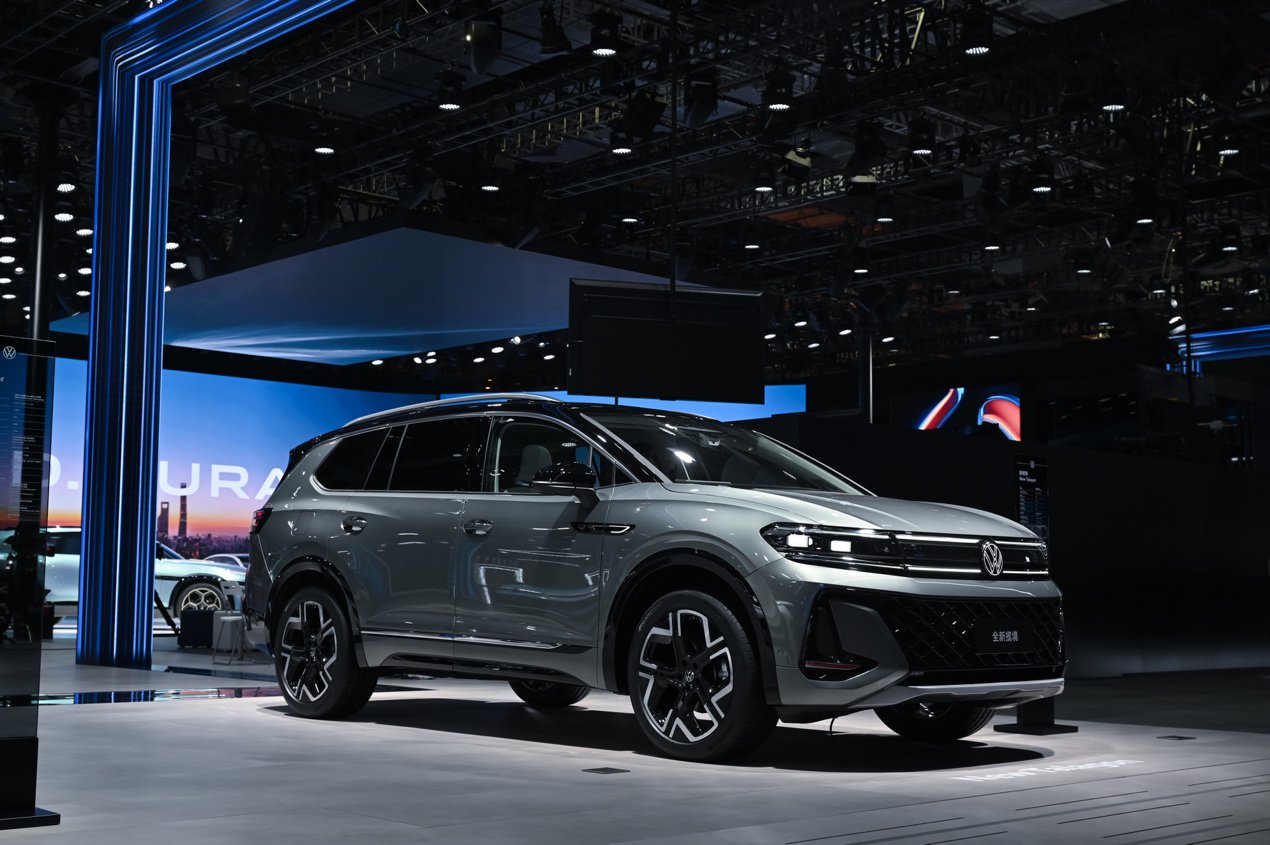
揽巡

Search documents
一汽-大众三大品牌13款新车力拼“智电”起势
Zhong Guo Qi Che Bao Wang· 2026-01-28 02:13
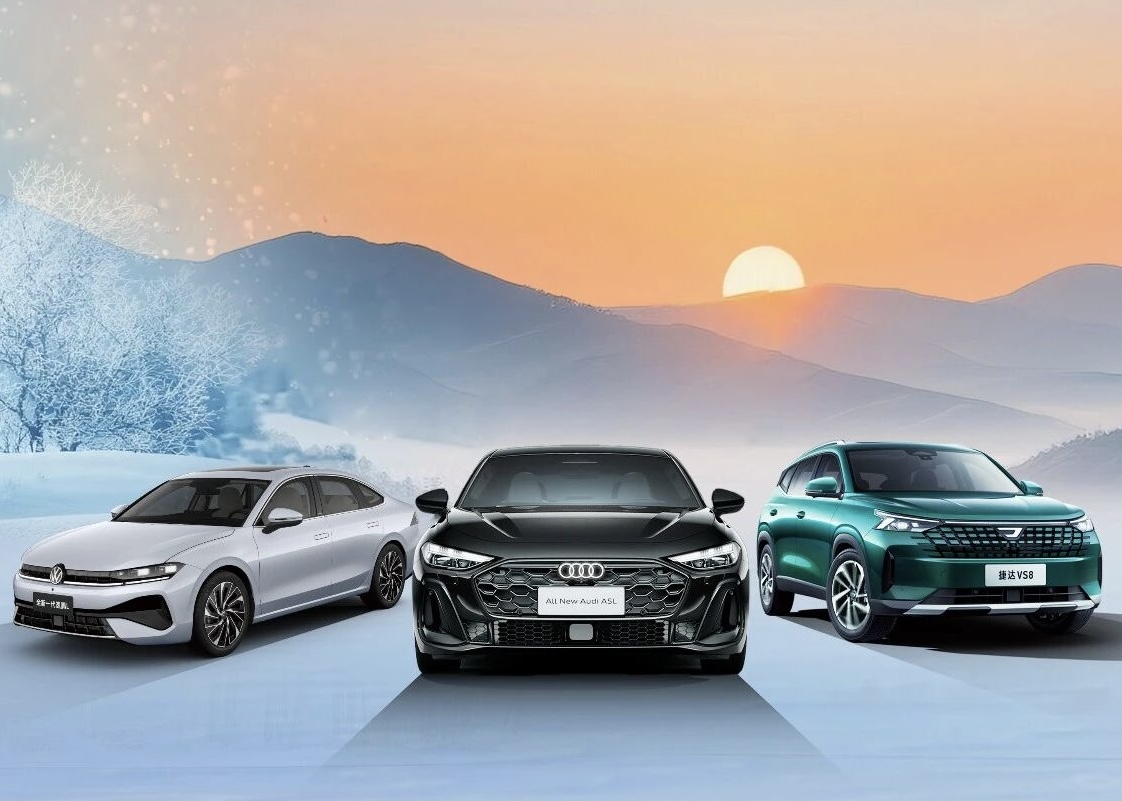
Core Insights - In 2025, FAW-Volkswagen achieved annual sales of 1.587 million vehicles, maintaining its position as the top-selling joint venture automaker in China for seven consecutive years and becoming the first domestic passenger car company to surpass cumulative production and sales of 30 million vehicles, demonstrating strong resilience and systemic strength during the industry's transformation period [1] Group 1: 2026 Strategy and Product Launches - 2026 marks the beginning of the "14th Five-Year Plan" and the 35th anniversary of FAW-Volkswagen, with a strategic focus on "stabilizing the foundation, strengthening smart electric vehicles, and forging a new situation," planning to launch 13 new models across its three brands, including 6 fuel vehicles and 7 new energy vehicles [3][4] - The new models include the all-new Sagitar S, which aims to redefine the value standard for "national family cars," and the new Audi Q5L, which has already been launched, enhancing Audi's competitiveness in the luxury fuel vehicle market [5][9] Group 2: New Energy Vehicle Initiatives - FAW-Volkswagen plans to accelerate its electric transformation, targeting a 60% share of new energy vehicle sales by 2030, with a significant push for new energy products starting in the second half of 2026 [7][9] - The company will introduce a comprehensive range of new energy vehicles across all brands, including the Passat PHEV, Tayron PHEV, and the new energy model J01 from the Jetta brand, ensuring coverage from mainstream to luxury segments and from hybrid to pure electric vehicles [9] Group 3: Technological Advancements - FAW-Volkswagen has intensified its focus on self-research and development, launching 155 innovation projects in the past 12 months, with 50 results successfully integrated into mass production, enhancing its capabilities in fuel, hybrid, and pure electric vehicles [10] - The company has developed a high-integrated 6-in-1 electric drive solution, achieving 170 kW power and 90% efficiency, leading the industry in its class, and has implemented advanced technologies in thermal management to improve performance [11] Group 4: Customer-Centric Approach and Global Expansion - FAW-Volkswagen emphasizes a customer-centric approach, aiming to enhance product quality and customer experience, ensuring that every product meets high standards of equipment, intelligence, and reliability [12] - The company plans to expand its overseas operations through a CBU+SKD model, establishing a marketing system and after-sales service network to achieve efficient regional collaboration [12]

推出油电混8款全新车型 一汽-大众大众品牌将迎来“新商品大年”
Zhong Guo Zhi Liang Xin Wen Wang· 2026-01-26 06:49
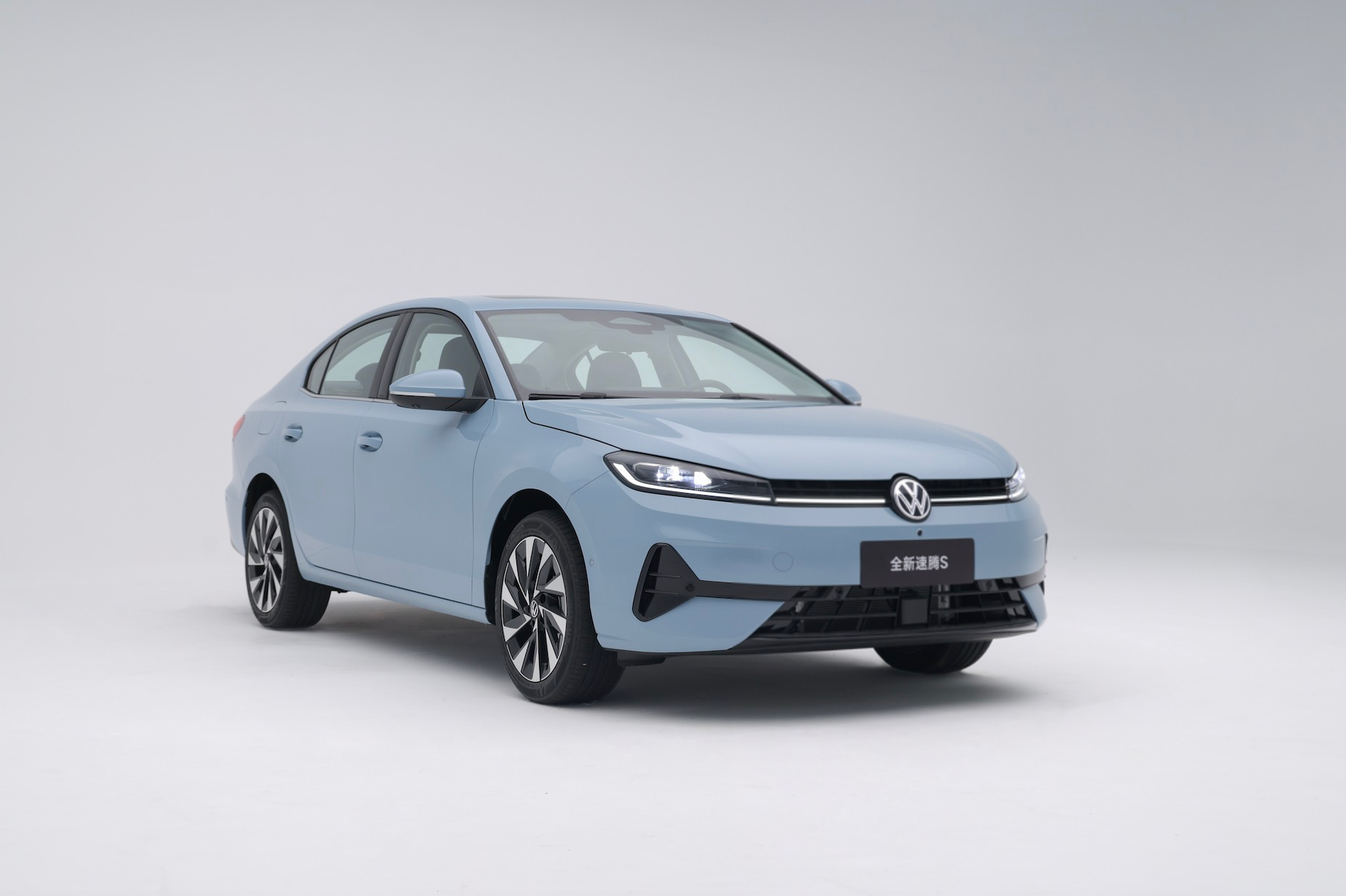
Core Insights - In a competitive landscape, FAW-Volkswagen achieved total sales of 1.587 million vehicles in 2025, with the Volkswagen brand selling 902,000 vehicles and increasing its fuel vehicle market share by 0.6 percentage points [1] - In 2026, the Volkswagen brand will launch eight new models as part of its "oil-electric hybrid" strategy, aiming to create the most comprehensive and competitive product matrix in its history [1] - The brand will focus on customer-centric value marketing, emphasizing ten value standards that cover the entire customer journey [1] New Energy Strategy - In 2026, the Volkswagen brand will fully innovate in the new energy sector, introducing two pure electric models and two PHEVs, marking the start of the New Energy 2.0 era [2] - The new models will integrate German engineering with Chinese insights, utilizing a new technical platform and advanced driving assistance systems [2] - The marketing system will engage 12 months in advance to ensure products meet market demands and customer preferences [2] Product Launches - FAW-Volkswagen will hold its first spring launch event in early 2026, featuring five new vehicles, including the new Sagitar S and the new ID.4 [3] - The Sagitar has maintained a monthly sales figure of 20,000 units, with cumulative sales reaching 4.5 million since its introduction in China [3] - The new product lineup aims to meet diverse customer needs through faster iterations and a more varied family matrix [3] SUV Development - The new ID.4 is designed for "new lifestyle adventurers," featuring a robust design, efficient powertrain, and advanced driving assistance systems [5] - The vehicle's design and technology aim to enhance customer experience and broaden the brand's appeal in the SUV market [5] Value Marketing Approach - FAW-Volkswagen is entering a new phase of rational competition, focusing on creating value for customers rather than engaging in price wars [6] - The company has established ten new value marketing standards to enhance customer experience throughout the vehicle lifecycle [6] - The marketing strategy includes various customer engagement initiatives, from product design to after-sales service, fostering long-term relationships with customers [6] Commitment to Trust - In 2025, FAW-Volkswagen maintained its position as a leader in fuel vehicles while preparing to strengthen its presence in the new energy market [7] - The brand aims to be the most trusted choice for millions of Chinese customers by delivering exceptional products and services [7]
燃油车市占率创历史新高 一汽-大众大众品牌2025年交出高质量答卷
Zhong Guo Jing Ying Bao· 2026-01-02 05:45
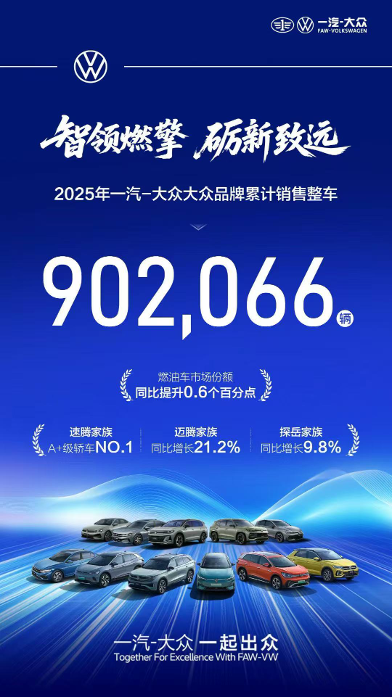
Core Insights - FAW-Volkswagen achieved a total vehicle sales of 1,587,065 units in 2025, maintaining its position as the top joint venture automaker and leading in fuel vehicle sales, with a market share increase of 0.9 percentage points year-on-year, reaching a historical high [1] Sales Performance - The Volkswagen brand sold 902,066 vehicles in 2025, with a year-on-year market share increase of 0.6 percentage points, solidifying its position in the domestic fuel vehicle market [1] - The A+ class sedan, the Sagitar family, sold 251,918 units, ranking first in the A+ class fuel sedan segment [2] - The Magotan family, a mid-to-high-end sedan, achieved sales of 215,861 units, reflecting a year-on-year increase of 21.2% [2] - The Golf, an A-class hatchback, sold 35,269 units, maintaining its champion status in the segment [2] - The high-end mid-size SUV, the Tayron family, sold 187,142 units, with a year-on-year growth of 9.8% [3] Product Innovation - New models such as the Tayron L and the new generation Sagitar L were launched, featuring advanced design, space, power, and intelligence, equipped with the IQ. Pilot enhanced driving assistance system [3][4] - The IQ. Pilot system was validated through a 24-hour endurance challenge, demonstrating its practicality and reliability [4] Customer Experience - The "Craftsmanship Service" brand was upgraded to enhance customer service and experience, establishing a comprehensive value service system [5] - A "Lifetime Warranty" policy was introduced for all fuel SUVs, ensuring peace of mind for customers [5] - The "Volkswagen Old Friends" customer brand was launched, focusing on customer engagement throughout the vehicle lifecycle [5] Marketing Strategy - Volkswagen implemented a dual evolution of marketing and channels, focusing on "customer-centric" and "product-driven" strategies [7] - The "AI digital + all-staff marketing" approach was adopted to create an agile and efficient market communication and customer flow operation system [7] - The "Hundred Stores Thousand Families" plan was executed to enhance channel coverage, especially in third and fourth-tier cities, with over 1,000 authorized dealers [7] Future Outlook - In 2026, Volkswagen plans to continue its "oil-electric hybrid" strategy, accelerating its transition towards intelligence and electrification, aiming for high-quality development and competitive product offerings [8]
燃油车市占率创历史新高 一汽-大众大众品牌全年交付超90万
Xin Jing Bao· 2026-01-02 03:52
Core Insights - FAW-Volkswagen achieved a total vehicle sales of over 1,587,065 units in 2025, securing the title of both joint venture and fuel vehicle sales champion, with a market share increase of 0.9 percentage points year-on-year, reaching a historical high [1] - The Volkswagen brand delivered 902,066 vehicles, with a year-on-year market share increase of 0.6 percentage points, maintaining its position among the top players in the domestic fuel vehicle market [1] Segment Performance - The Volkswagen brand's main models demonstrated strong competitiveness across various segments, with the A+ class sedan, the Sagitar family, selling 251,918 units, leading the A+ class fuel sedan market [3] - The Magotan family, a leader in the mid-to-high-end sedan segment, sold 215,861 units, reflecting a year-on-year increase of 21.2%, supported by the collaboration of the Magotan 3000 million selection and the 2026 Magotan [5] - The high-end mid-size SUV, the Tayron family, achieved sales of 187,142 units, a year-on-year growth of 9.8%, bolstered by the launch of the new Tayron L [5] Technological Advancements - The Volkswagen brand's core models, including the new Tayron L and the new generation Sagitar L, incorporated the IQ.Pilot enhanced driving assistance system, covering 95% of urban road conditions and 100% of highway scenarios in China [7] - The successful completion of the "world's first fuel vehicle high-speed NOA 24-hour endurance challenge" demonstrated the reliability and durability of the system, reinforcing Volkswagen's leading position in the fuel vehicle sector [7] Customer-Centric Strategies - Volkswagen implemented a comprehensive upgrade of its service system, introducing a "dual lifetime warranty" policy for its entire fuel SUV lineup, setting a new service benchmark [8] - The brand launched the "Volkswagen Old Friends" customer program, enhancing emotional connections with users through five major benefit areas and a customer care fund [8] - The marketing and organizational structure underwent a transformation to improve market responsiveness and customer operation efficiency [8] Market Positioning - The increase in fuel vehicle market share amidst rising penetration of new energy vehicles provides a solid case study for observing market dynamics, driven by the reputation and product strength of models like the Sagitar and Magotan [10] - The integration of the IQ.Pilot system into fuel vehicle offerings addresses consumer expectations for reliable quality and cutting-edge technology, showcasing the brand's ability to adapt in a competitive market [10] - Volkswagen's focus on high-value, high-quality travel solutions remains a cornerstone for success in the diverse Chinese automotive market [10]
从0到3000万 一汽-大众用技术沉淀与完善体系重塑中国乘用车市场
Zheng Quan Ri Bao Zhi Sheng· 2025-10-16 03:47
Core Viewpoint - FAW-Volkswagen has achieved a significant milestone by producing its 30 millionth vehicle, marking a critical transition in the Chinese automotive industry from scale expansion to quality enhancement, showcasing the successful integration of German manufacturing systems with the Chinese market [1] Group 1: System Strength and Achievements - FAW-Volkswagen's success is attributed to its comprehensive value chain, including R&D, production, supply, service, and marketing, all working in harmony to enhance customer experience [1][4] - The company employs rigorous testing standards, such as over 10 million door open-close tests and extreme conditions for vehicle durability, ensuring high quality [3] - Production facilities utilize advanced technologies, achieving micro-level precision and high automation rates, significantly exceeding industry standards [3][4] Group 2: Innovation and Market Strategy - FAW-Volkswagen has established a diverse ecosystem of suppliers to ensure stable supply chains, which has led to an industry-wide upgrade in collaboration [3][4] - The company is innovating its distribution channels to reach a broader customer base, with plans to exceed 1,000 outlets by year-end [4] - Marketing strategies focus on customer-centric approaches, driving internal organizational changes to enhance responsiveness and innovation [4][6] Group 3: Future Outlook and Technological Leadership - The company aims to maintain steady sales growth through continuous optimization of its systems and the introduction of smarter production platforms [6] - FAW-Volkswagen is positioned as a leader in technological innovation, having successfully transitioned from traditional fuel vehicles to electric and intelligent driving solutions [8][11] - The introduction of advanced platforms and electronic architectures will enhance the capabilities of future models, integrating AI and advanced driving assistance technologies [9][11] Group 4: Commitment to Quality and Customer Trust - FAW-Volkswagen emphasizes its commitment to quality and safety, with high-strength steel making up 81% of its vehicles, ensuring robust protection for users [11][12] - The company launched a "Thank You" campaign for its 30 million customers, offering a chance to win a year of free vehicle use, reflecting its dedication to customer satisfaction [12] - The trust built over 30 million vehicles reinforces FAW-Volkswagen's leadership in the fuel vehicle market and highlights the importance of quality and user benefits in maintaining competitive advantage [12]
中国汽车流通协会:自主品牌保值率表现不一 乐道L60保值率于纯电动中型SUV市场排名第一
智通财经网· 2025-10-10 07:56
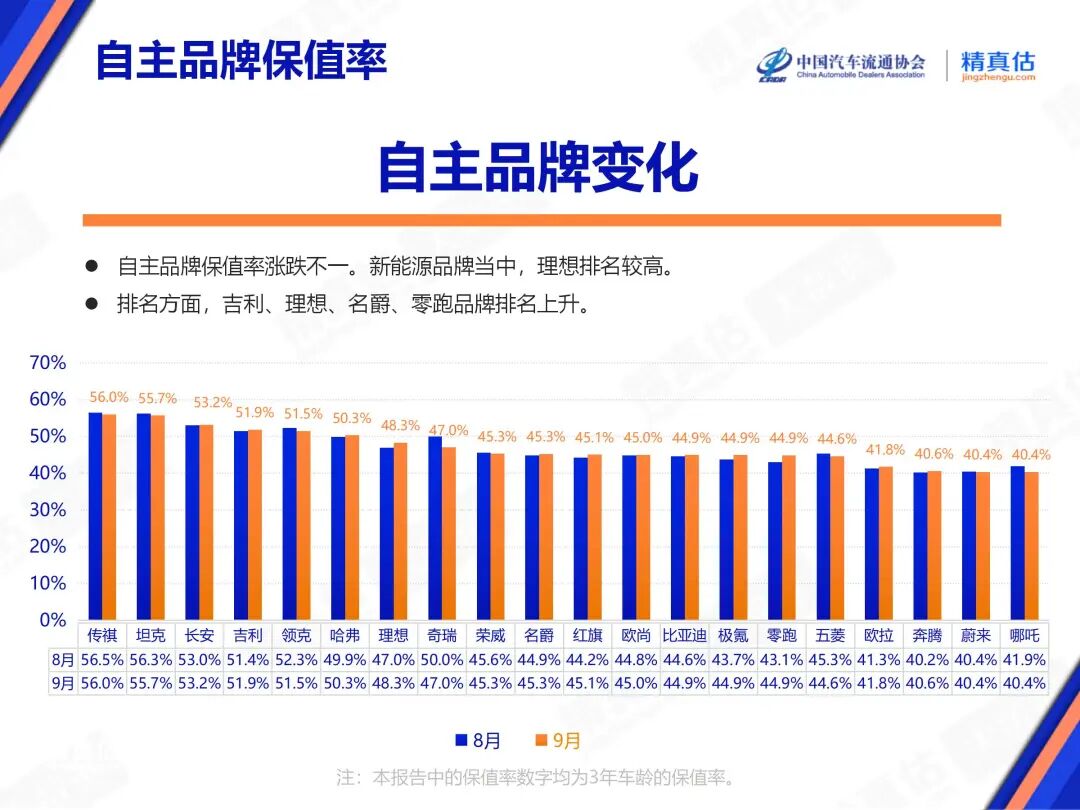
Core Insights - The report highlights the varying residual values of domestic automotive brands in China, with traditional strong brands like GAC and Geely maintaining stability, while brands like BYD show robust performance due to rapid electrification [1] - The shift from "market for technology" to "technology creates value" is emphasized as domestic brands evolve [1] Group 1: Electric SUVs - The pure electric mid-size SUV market is highly competitive, characterized by intense high-end battles and mainstream acceleration, with the Leado L60 achieving the highest residual value [3] - Tesla Model Y and ZEEKR 7X follow closely in the residual value rankings, indicating strong market acceptance [3] - In the compact electric SUV segment, the "Matthew effect" is evident, with top models like Song PLUS, AION Y, and Yuan PLUS establishing significant advantages due to technology and market reputation [7] Group 2: Plug-in Hybrid SUVs - In the plug-in hybrid compact SUV market, BYD's Song Pro and Song PLUS dominate the residual value rankings, showcasing the strength of BYD's DM technology [12] - The plug-in hybrid mid-size MPV market sees GAC's E9 leading in residual value due to its luxurious features and advanced battery management [16] Group 3: Compact Cars - In the popular compact car market, the Volkswagen Lavida ranks first in residual value, followed by the Volkswagen Sagitar and Audi A3, reflecting the strong foundation of German brands in China [17] Group 4: Mid-size SUVs - The domestic mid-size SUV market has established a stable value hierarchy, with GAC's GS8 leading in residual value due to its spaciousness and luxury features [21] - The competitive landscape in the mainstream joint venture mid-size SUV segment is dominated by German and American brands, with SAIC Volkswagen's Teramont achieving the highest residual value [23] Group 5: Japanese Brands - The price decline of Japanese brands like Toyota, Honda, and Nissan indicates a convergence in product quality, negatively impacting their residual values in the new energy era [25] - The increase in residual value for Volkswagen brands is attributed to strong contributions from their sedan products, while French brands face significant declines due to ongoing price wars [25]

被“玩坏”的终身质保能帮车企重拾份额吗?
Zhong Guo Qi Che Bao Wang· 2025-06-17 01:15
Core Viewpoint - The Chinese automotive market continues to show positive growth, with production and sales increasing by 12.7% and 10.9% respectively in the first five months of the year, despite ongoing price competition revealing underlying issues in the industry [2] Group 1: Industry Trends - The China Automotive Industry Association reported that from January to May, the production and sales of automobiles reached 12.826 million and 12.748 million units respectively, indicating a strong market performance [2] - The ongoing price competition has prompted industry leaders to call for a reduction in "involution" among companies, encouraging a shift towards value-added services rather than price cuts [2] - Several automakers have begun implementing policies to counteract price competition by offering lifetime warranty services, aiming to enhance customer value and service rather than engaging in price wars [2][3][4] Group 2: Company Initiatives - GAC Toyota has introduced a lifetime warranty for its entire lineup, covering key components such as the engine and transmission, valued at approximately 8,000 yuan [2] - FAW-Volkswagen has also launched a lifetime warranty policy for its flagship SUVs, covering major systems without mileage or time limits, and has seen a significant increase in orders for its models [3] - Li Auto has rolled out a "lifetime warranty relay plan" for its Li ONE owners, allowing for the transfer of warranty benefits to new vehicle purchases [4] Group 3: Consumer Perception and Challenges - While lifetime warranties are seen as beneficial for both companies and consumers, there are concerns regarding the stringent conditions attached, such as requiring maintenance at authorized dealerships [8][9] - Some consumers have reported discrepancies between the advertised lifetime warranty and the actual coverage, leading to dissatisfaction and perceptions of misleading marketing [9][10] - The automotive industry is facing challenges in effectively implementing customer-centric policies, with many companies struggling to transition from traditional pricing models to value-based pricing [10]

“双终身”真能省心又保值?一汽
Zhong Guo Zhi Liang Xin Wen Wang· 2025-05-15 07:57
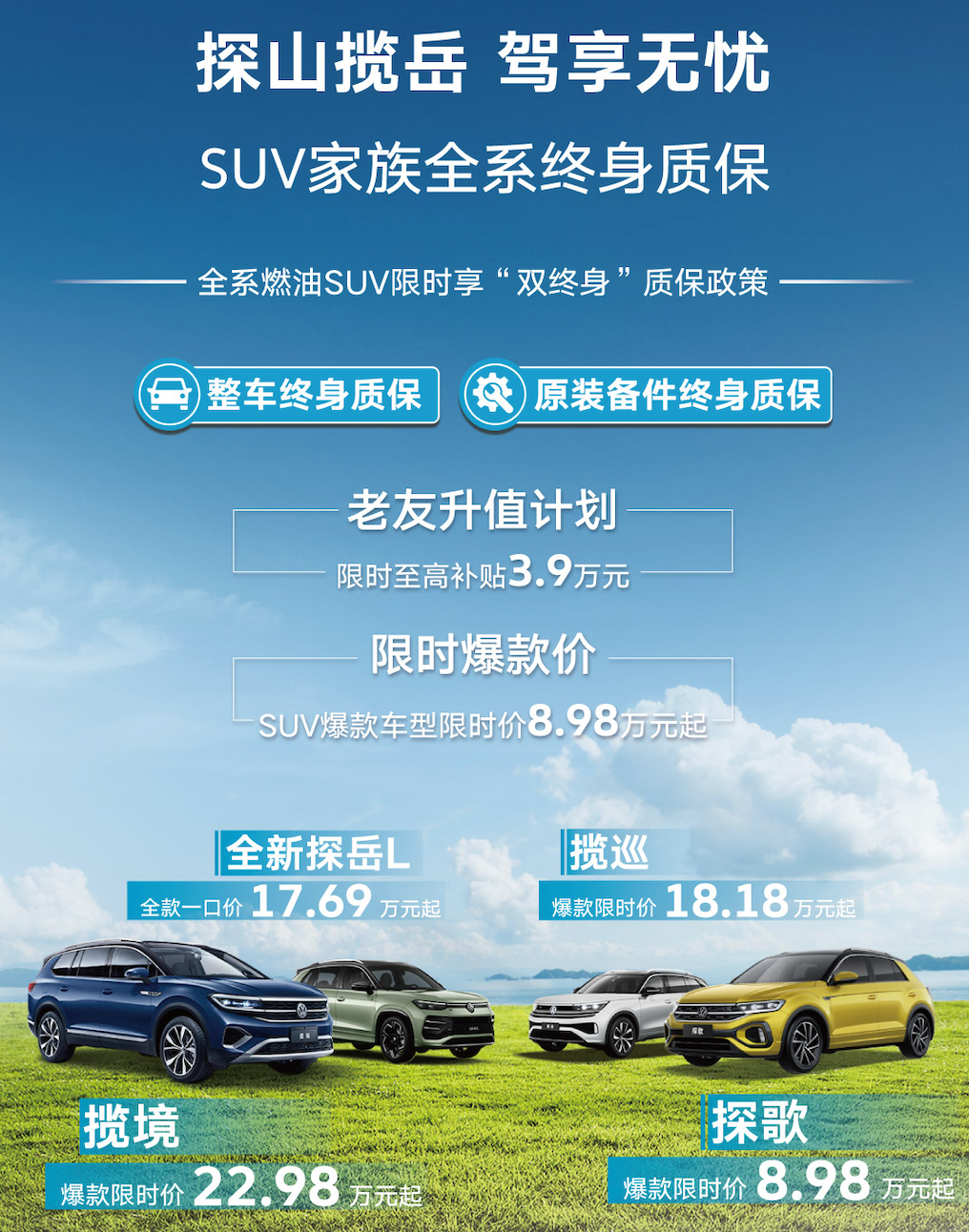
Core Viewpoint - The introduction of the "Double Lifetime Warranty" policy by FAW-Volkswagen aims to address consumer concerns regarding high maintenance costs, repair worries, and rapid vehicle depreciation, providing comprehensive coverage for both the vehicle and original parts [1][3][15] Group 1: Policy Details - FAW-Volkswagen has expanded its "Double Lifetime Warranty" from a pilot program to cover all fuel SUVs, including flagship models, with warranties on key systems such as the engine, transmission, and chassis, without limitations on time or mileage [1][3] - The warranty period for certain models extends until June 30, 2025, while others are covered until December 31, 2025 [1] - The maintenance cycle has been extended to 1 year or 10,000 kilometers, effectively halving the frequency of required maintenance [3] Group 2: Cost Reduction and Value - The introduction of a 6-time maintenance package at a 30% discount allows for a single maintenance cost of only 470 yuan for models like the Tayron, making the original service warranty cost comparable to the aftermarket [3][4] - The "Old Friend Appreciation Plan" offers subsidies for customers who trade in their vehicles, offsetting maintenance costs and promoting the idea that "the more you maintain, the more you save" [4] Group 3: Service Quality and Network - FAW-Volkswagen emphasizes a high standard of service quality, with nearly 18,000 service personnel, 40% of whom have over 10 years of experience, ensuring professional and reliable technical support [6][13] - The company has established a comprehensive service network with nearly 900 dealerships, providing nationwide support and ensuring consistent service quality across different regions [6][8] Group 4: Customer-Centric Approach - The "Heartfelt Journey 2.0" service brand upgrade introduces 15 customer benefits, extending care from maintenance to the entire vehicle ownership cycle, including free vehicle inspections and 24-hour roadside assistance [8][10] - FAW-Volkswagen's commitment to transparency in service costs and maintenance history is evident through public maintenance records and clear communication of parts sourcing [10][11] Group 5: Quality Assurance - The foundation of the "Double Lifetime Warranty" is supported by a low average failure rate, attributed to FAW-Volkswagen's rigorous manufacturing processes and testing systems, ensuring vehicle reliability [13][15] - The company employs advanced manufacturing techniques and conducts extensive testing under extreme conditions to validate vehicle performance and durability [13]
品质自信与服务升级 一汽-大众“双终身”质保“卷”对了方向
Zhong Guo Zhi Liang Xin Wen Wang· 2025-05-13 03:09
Core Viewpoint - The "Double Lifetime" warranty policy by FAW-Volkswagen aims to eliminate user concerns regarding the entire lifecycle of vehicles, offering a significant advantage over the common "3 years or 100,000 kilometers" warranty by extending it to a lifetime coverage [2][9]. Group 1: Warranty Policy Features - The warranty covers all ten core systems of the vehicle, including the engine, transmission, and chassis, with lifetime coverage applicable to all FAW-Volkswagen models, including both fuel and electric vehicles [2]. - The policy has no hidden conditions, specifying "no limit on years, no limit on mileage, and nationwide support," applicable to non-commercial vehicles, first owners, and those who maintain regular servicing at authorized dealers without any binding consumption or harsh terms [2]. - A network of nearly 900 authorized dealers provides standardized services, addressing the issue of "difficulties in maintenance across regions" [2]. Group 2: Cost Transparency and Maintenance - For example, the average vehicle replacement cycle is calculated at 8 years, with the first maintenance free; users only need to pay for 7 maintenance services, and with a 30% discount package for 6 services, the cost per service is reduced to 470 yuan, comparable to chain repair shops [4]. - FAW-Volkswagen emphasizes transparent service costs to ensure users experience "worry-free vehicle usage" [4]. Group 3: Quality Assurance and Testing - The commitment to a "lifetime warranty" stems from FAW-Volkswagen's absolute confidence in quality, with German engineering integrated throughout the entire process from stamping to assembly and testing [4][6]. - The stamping process utilizes six-stage forming and an 8100-ton press, with all models using galvanized steel plates thicker than 0.7mm, enhancing corrosion resistance; the welding process relies on the German MQBA2 platform with over 85% automation [4]. - Each vehicle undergoes extensive testing, including 1.93 million kilometers of road testing and 45 weeks of durability testing, validated in extreme conditions ranging from -40°C to 60°C [4]. Group 4: Industry Impact and Competitive Dynamics - The "Double Lifetime" policy not only upgrades user rights but also reshapes industry competition, raising service standards across the sector [7]. - This initiative may trigger a chain reaction, prompting more automakers to adopt "lifetime warranties," shifting competition from price to service and reliability, thereby compelling the entire supply chain to enhance technical standards and service quality [7]. - Following the policy announcement, market response has been enthusiastic, with many users transitioning from skepticism to acceptance, leading to a notable increase in sales of the entire fuel SUV lineup, particularly models like the Tayron family, Horizon, and Tourer [9].
全系燃油SUV“双终身”质保 一汽
Zhong Guo Zhi Liang Xin Wen Wang· 2025-05-09 04:09
Core Viewpoint - FAW-Volkswagen has introduced a lifetime warranty policy for certain vehicle models, reflecting its commitment to customer-centric long-termism and altruism in a competitive automotive market [1][10]. Group 1: Warranty Policy - The new policy allows customers to enjoy a lifetime warranty on the vehicles purchased from authorized dealers until December 31 for the models of "Langjing" and "Langxun," and until June 30 for the new "Tayron" series [1]. - This initiative demonstrates FAW-Volkswagen's confidence in product reliability and quality [1][3]. Group 2: Manufacturing Excellence - FAW-Volkswagen's confidence in offering a lifetime warranty stems from 34 years of accumulated strength and commitment to product and service quality [3]. - The company employs advanced manufacturing techniques, including a six-stage forming process and a large 8100-ton press, ensuring precision in stamping parts [3]. - The welding workshop utilizes the German MQB A2 platform with 1268 robots achieving an 85% automation rate, enhancing the strength of welds by 30% compared to standard spot welding [5]. Group 3: Rigorous Testing Standards - Each vehicle undergoes extensive testing, including high-temperature, high-altitude, and high-cold conditions, as well as over 100,000 door opening and closing tests to ensure component safety and reliability [5][7]. - The vehicles are subjected to a total of 1,930,000 km of high-intensity road testing across various conditions to validate durability [7]. Group 4: Service and Brand Development - FAW-Volkswagen emphasizes a shift in mindset from "users" to "customers" and from "products" to "goods," aiming to provide comprehensive value chain services [8]. - The company has launched the "Craftsmanship Service" initiative and the "Heart Journey 2.0" action plan to enhance service quality throughout the vehicle lifecycle [10]. - FAW-Volkswagen has received the China Automotive Golden Wrench Award 18 times, gaining the trust of over 20 million users [11].