特斯拉Model 3/Y

Search documents
「华舟魔」三强之一,加速迈向物理AI
雷峰网· 2026-03-25 10:05
Core Viewpoint - The article discusses the recent $100 million funding round for Qianzhou Zhihang, emphasizing its strategic shift towards physical AI and the development of advanced technologies in autonomous driving and general physical AI [2][3][4]. Group 1: Funding and Strategic Shift - Qianzhou Zhihang completed a Series D funding round of $100 million, with investors including leading domestic automotive manufacturers and various investment funds [2]. - The company plans to enhance its research in world models and reinforcement learning, which are crucial for advancing physical AI technologies [3][4]. Group 2: Importance of Physical AI - AI can be categorized into digital AI, which processes information, and physical AI, which interacts with the physical world. The latter is still in its early stages, particularly in autonomous driving [4][5]. - The CEO of Qianzhou Zhihang highlighted that autonomous driving is the best entry point for physical AI, with the potential for significant opportunities in the next 5-10 years [5][6]. Group 3: Technological Development - The company aims to leverage structured data from autonomous driving to develop a robust world model, which is essential for understanding physical interactions in complex environments [7][9]. - The integration of world models and reinforcement learning is seen as a solution to the challenges faced in the unpredictable physical world, allowing for proactive decision-making in autonomous systems [9][10]. Group 4: Market Position and Production Scale - Qianzhou Zhihang has achieved a production scale of over 1 million vehicles equipped with its autonomous driving system, positioning itself among the top players in China's intelligent driving sector [12][13]. - The company plans to expand its model offerings significantly by 2026, with a focus on urban navigation assistance (NOA) capabilities [13][14]. Group 5: Competitive Landscape - The competitive landscape includes major players like Huawei and Momenta, each adopting different strategies to penetrate the market. Qianzhou Zhihang focuses on maximizing the efficiency of single-chip solutions for urban NOA [16][17]. - The company aims to target the price segment of 100,000 to 200,000 yuan, which represents a significant portion of the Chinese new energy vehicle market [17][18]. Group 6: Technological Integration and Future Plans - Qianzhou Zhihang's approach emphasizes standardization and compatibility across different vehicle models, allowing for rapid adaptation and deployment of its technologies [20][21]. - The company plans to showcase its latest technological advancements at the Beijing Auto Show in April 2026, highlighting its transition from L2 to L4 autonomous driving and general physical AI [24].

今日新闻丨特斯拉2025年全球销量下滑8.6%!红旗新能源2025年销量14.9万辆!
电动车公社· 2026-01-03 16:06
Core Insights - Tesla's global sales in 2025 are projected to be 1.636 million units, representing a year-on-year decline of 8.6% [2][5] - Tesla's production for 2025 is estimated at 1.654 million units, down approximately 6.7% compared to the previous year [2][5] - BYD has surpassed Tesla with a sales figure of 2.25 million units in 2025, becoming the top seller of pure electric vehicles [3][5] - Hongqi's new energy vehicle sales are expected to reach 149,229 units in 2025, marking a year-on-year growth of 29.8% [4][5] - The cancellation of the $7,500 tax credit for electric vehicle purchases in the U.S. in September has negatively impacted Tesla's fourth-quarter deliveries, which fell by 16% to approximately 418,000 units [3][5] - Hongqi's electrification strategy is showing initial success, with new product lines and a focus on electric and hybrid vehicles [7]


大跳水!特斯拉,痛失“销冠”
证券时报· 2026-01-03 05:27
Core Viewpoint - Tesla has lost its title as the "global electric vehicle sales champion" for the first time, being surpassed by Chinese automaker BYD in 2025 [2][10]. Group 1: Sales Performance - In 2025, Tesla delivered 1.636 million vehicles globally, a decrease of approximately 8.6% year-over-year, while BYD's pure electric vehicle sales reached 2.2567 million, marking a nearly 28% increase [2][10]. - Tesla's fourth-quarter deliveries in 2025 were over 418,000, down about 16% compared to the same quarter in 2024, with production also declining by 5.5% year-over-year [9]. - The decline in Tesla's sales is attributed to the U.S. federal government's early termination of electric vehicle incentives on September 30, which prompted manufacturers to accelerate sales in the third quarter [9]. Group 2: Market Dynamics - Tesla's sales in Europe fell by 39% in the first 11 months of 2025, while BYD's registrations in Europe surged by 240% [11]. - The overall electric vehicle market in Europe grew, accounting for approximately 16% of all new car sales in 2025 [11]. - Tesla faces increasing competition not only from BYD but also from other Chinese manufacturers like Xiaomi and Geely [12]. Group 3: Financial Performance and Future Outlook - Despite the decline in vehicle sales, Tesla's stock price has shown resilience, increasing by 40% in Q3 2025 and reaching an all-time high in December, with a market capitalization exceeding $1.6 trillion [5][13][16]. - Tesla's energy storage business continues to grow rapidly, with 14.2 GWh of storage products deployed in Q4 2025, a significant increase from 12.5 GWh in 2024 [17]. - Analysts suggest that Tesla's future valuation is increasingly tied to its advancements in autonomous driving and robotics, rather than just vehicle delivery numbers [15][17].

特斯拉(TSLA.US)Cybertruck喜获大金主! ?SpaceX大单传闻引爆“赛博风电动皮卡”增长叙事
Zhi Tong Cai Jing· 2025-12-19 02:15
Core Insights - SpaceX has emerged as a significant buyer of Tesla's Cybertruck, reportedly purchasing millions of dollars worth of vehicles, which could enhance Tesla's valuation and market sentiment towards the stock [1][3][7] - Initial production targets for Cybertruck were ambitious, with estimates of annual production reaching 250,000 units, but current projections for 2024 suggest only about 39,000 units will be sold, indicating potential inventory accumulation [2][3] - Analysts are beginning to view Cybertruck as a niche product rather than a high-volume vehicle, with expectations for modest sales growth in 2025 and beyond [2][3] Group 1 - SpaceX's potential purchase of over 2,000 Cybertrucks, each priced above $80,000, indicates a long-term commitment to the vehicle, which could provide crucial support for Tesla's delivery expectations and inventory management [1][2] - The anticipated IPO of SpaceX in 2026, projected to raise over $30 billion and achieve a valuation of approximately $1.5 trillion, could further bolster Tesla's market position if funds are allocated towards purchasing Cybertrucks [4][5] - The synergy between Tesla and SpaceX, particularly in the context of SpaceX's ambitious projects, may serve as a catalyst for Tesla's stock valuation, as investors look for exposure to Musk's broader vision [7] Group 2 - Analysts suggest that the increasing association between Tesla and SpaceX could be a key driver for Tesla's long-term valuation, as milestones achieved by SpaceX often positively influence market sentiment towards Tesla [7] - The narrative surrounding SpaceX's IPO and its implications for Tesla could attract new investors, drawn by Musk's innovative vision and the potential for significant technological advancements [7] - The ongoing developments in AI and space exploration, as proposed by Musk, may further enhance the attractiveness of Tesla as an investment, positioning it as a unique opportunity in the market [6][7]

BBA在华销量失守 加速布局纯电赛道
2 1 Shi Ji Jing Ji Bao Dao· 2025-10-13 23:17
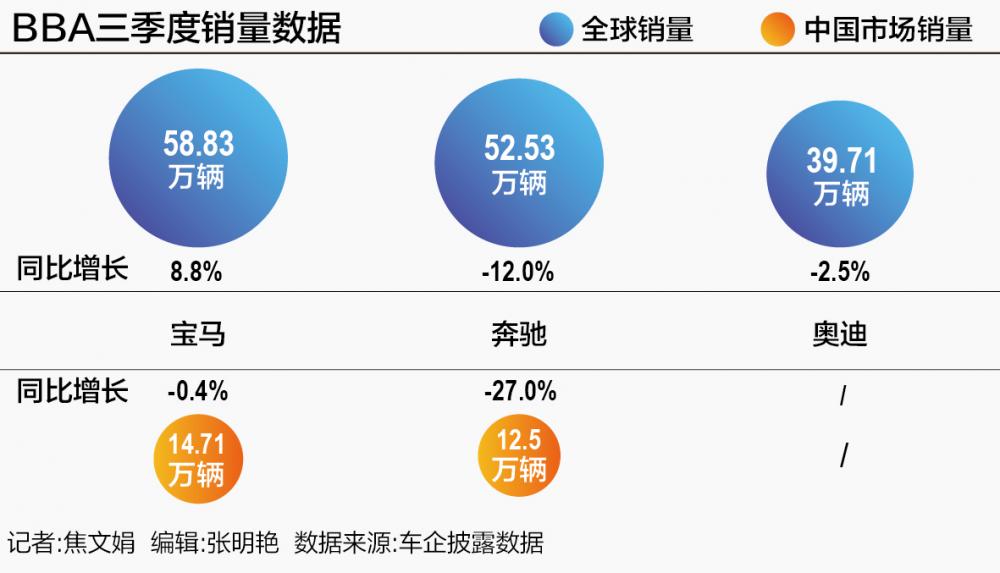
Group 1: Market Dynamics - The luxury car market is undergoing a significant adjustment, with BBA (BMW, Mercedes-Benz, Audi) showing a differentiated trend: BMW is leading, Mercedes-Benz is under pressure, and Audi is catching up [1] - BMW is the only company among BBA to achieve positive sales growth, with global deliveries reaching 588,300 units in Q3, up 8.8% year-on-year, and a total of 1,795,900 units in the first three quarters, up 2.4% [1] - In contrast, Mercedes-Benz's Q3 global sales fell to 525,300 units, down 12% year-on-year, with a total of 1,601,600 units in the first three quarters, down 9% [1][3] - Audi's Q3 global sales were 397,100 units, a decrease of 2.5%, with a total of 1,191,100 units in the first three quarters, down 4.8% [1] Group 2: Challenges in the Chinese Market - The Chinese market poses a significant challenge for BBA, with BMW's Q3 deliveries in China slightly declining by 0.4% to 147,100 units, and a cumulative drop of 11.2% to 464,000 units in the first three quarters [3] - Mercedes-Benz faced a more severe decline, with Q3 deliveries in China plummeting 27% to 125,000 units, and a total drop of 18% to 418,000 units in the first three quarters [3] - Audi's sales in China showed signs of recovery, with its joint venture reporting a 13.5% increase in sales to 58,000 units in the first three quarters [3] Group 3: Pricing and Competitive Pressure - The pricing structure of BBA is under pressure, particularly in the 200,000 to 400,000 RMB price range, where local brands are challenging entry-level models [4] - In the 200,000 to 300,000 RMB segment, brands like Zeekr and Tesla are eroding BBA's market share with better performance and value [4] - BMW has revised its profit forecast for 2025, expecting a pre-tax profit "slightly below" last year's 10.97 billion euros (approximately 90.98 billion RMB) due to increased tariff costs and support for local dealers [4][5] Group 4: Electrification Strategies - BBA's electrification strategies are diverging, with BMW leading, Mercedes-Benz aggressively pushing forward, and Audi taking a more pragmatic approach [6] - BMW's electric vehicle sales reached 323,000 units in the first three quarters, up 10% year-on-year [7] - Mercedes-Benz is launching a significant product offensive, with plans to introduce at least 40 new models by the end of 2027, including the new electric GLC targeting the Chinese luxury electric SUV market [8] - Audi is adjusting its electric strategy, focusing on a balanced approach between long-term electric goals and flexible product offerings, with new models like the Q6L e-tron [9] Group 5: Current Market Trends - The hybrid market remains a crucial support for BBA, with BMW's hybrid vehicle sales growing 8% to 152,000 units in Q3 [9] - The pure electric market is outpacing hybrids in China, with a year-on-year growth of 32.4% in September, indicating a shift in consumer preference [9] - As BBA collectively intensifies its focus on electric products, a competitive battle for market share in the future landscape is unfolding in China [9]

BBA失守中国市场,奔驰三季度交付量大跌27%
2 1 Shi Ji Jing Ji Bao Dao· 2025-10-13 14:54
Core Insights - The luxury car market is undergoing significant changes, with BBA (BMW, Mercedes-Benz, Audi) showing a divergence in performance: BMW is leading, Mercedes-Benz is under pressure, and Audi is catching up [1] Group 1: Sales Performance - BMW is the only company among BBA to achieve positive sales growth, with global deliveries reaching 588,300 units in Q3, a year-on-year increase of 8.8%, and a total of 1,795,900 units for the first three quarters, up 2.4% [1] - Mercedes-Benz's Q3 global sales were 525,300 units, down 12% year-on-year and 4% quarter-on-quarter, with a total of 1,601,600 units for the first three quarters, a decrease of 9% [1] - Audi's Q3 global sales were 397,100 units, a year-on-year decline of 2.5%, with total sales for the first three quarters at 1,191,100 units, down 4.8% [1] Group 2: Market Challenges in China - BMW's sales in China fell by 0.4% in Q3 to 147,100 units, with a cumulative decline of 11.2% to 464,900 units for the first three quarters, making China the only market where BMW experienced a downturn [3] - Mercedes-Benz faced a significant drop in China, with Q3 deliveries plummeting 27% to 125,000 units and a total decline of 18% to 418,000 units for the first three quarters, marking China as its largest market decline [5] - Audi's sales in China showed signs of recovery, with its joint venture reporting a 13.5% increase in sales for the first three quarters [5] Group 3: Competitive Landscape - The market share of German brands has decreased from 18.4% in January 2025 to 14.3% in September 2025, indicating increased competition from local brands [5] - In the 200,000 to 300,000 yuan price range, local brands are challenging BBA's entry-level models, while in the higher price segments, brands like NIO and Li Auto are competing for core customers [6] Group 4: Profit Outlook - Due to the impact of the Chinese market, BMW revised its full-year profit forecast, now expecting a pre-tax profit "slightly lower" than last year's 10.97 billion euros (approximately 90.98 billion yuan) [6] Group 5: Electrification Strategies - BMW leads in electrification, with 323,000 electric vehicle deliveries in the first three quarters, a 10% increase [8] - Mercedes-Benz is launching a major product offensive in the electric vehicle sector, with plans to introduce at least 40 new models by the end of 2027 [9] - Audi is adjusting its electrification strategy, focusing on a balanced approach between long-term electric goals and flexible product offerings [11]

BBA失守中国市场,奔驰三季度交付量大跌27%
21世纪经济报道· 2025-10-13 14:21
Core Viewpoint - The luxury car market is undergoing a significant adjustment, with BBA (BMW, Mercedes-Benz, Audi) showing a differentiated performance: BMW is leading, Mercedes-Benz is under pressure, and Audi is catching up [1]. Group 1: Sales Performance - BMW is the only company among BBA to achieve positive sales growth, with global deliveries reaching 588,300 units in Q3, a year-on-year increase of 8.8%, and a total of 1,795,900 units for the first three quarters, up 2.4% [1]. - Mercedes-Benz's Q3 global sales were 525,300 units, down 12% year-on-year and 4% quarter-on-quarter, with a total of 1,601,600 units for the first three quarters, a decrease of 9% [1]. - Audi's Q3 global sales were 397,100 units, a decline of 2.5% year-on-year, with a total of 1,191,100 units for the first three quarters, down 4.8% [1]. Group 2: Market Challenges - The Chinese market has become a common challenge for BBA, with BMW's Q3 deliveries in China slightly decreasing by 0.4% to 147,100 units, and a cumulative decline of 11.2% to 464,900 units for the first three quarters [3][4]. - Mercedes-Benz faced a significant drop in China, with Q3 deliveries plummeting 27% to 125,000 units and a total decline of 18% to 418,000 units for the first three quarters, marking it as the largest market decline for the brand [5]. - Audi's sales in China showed signs of recovery through its joint ventures, with a 13.5% increase in sales for the first three quarters [5]. Group 3: Pricing and Competition - The pricing structure of BBA is under pressure, particularly in the 200,000 to 400,000 RMB price range, where domestic brands are challenging BBA's entry-level models [6]. - In the 200,000 to 300,000 RMB segment, brands like Zeekr and Tesla are offering better performance or value, while in the higher segments, NIO and Li Auto are competing for core customers [6]. - BMW has adjusted its profit forecast for 2025, expecting a pre-tax profit "slightly lower" than last year's 10.97 billion euros (approximately 90.98 billion RMB) due to higher-than-expected tariff costs and financial support for local dealers [6]. Group 4: Electrification Strategies - BBA's electrification paths are diverging, with BMW leading, Mercedes-Benz aggressively pushing, and Audi taking a pragmatic approach [8]. - BMW's electric vehicle deliveries reached 323,000 units in the first three quarters, a year-on-year increase of 10% [8]. - Mercedes-Benz is launching a major product offensive with its new electric GLC targeting the luxury electric SUV market in China, while also building a cooperative ecosystem for intelligent driving [8][9]. - Audi is adjusting its electric strategy, focusing on a balanced approach between long-term electric goals and flexible product offerings, with plans for new electric models [11]. Group 5: Market Trends - The hybrid market remains a crucial support, with BMW's hybrid vehicle sales increasing by 8% to 152,000 units in Q3, while Mercedes-Benz delivered 96,000 hybrid vehicles, up 10% [8]. - The pure electric market is growing rapidly, with a year-on-year increase of 32.4% in September, surpassing hybrid and extended-range vehicles [8].

美国电动车价格战升温,通用汽车复活雪佛兰Bolt 定价2.9万美元起
Feng Huang Wang· 2025-10-09 22:38
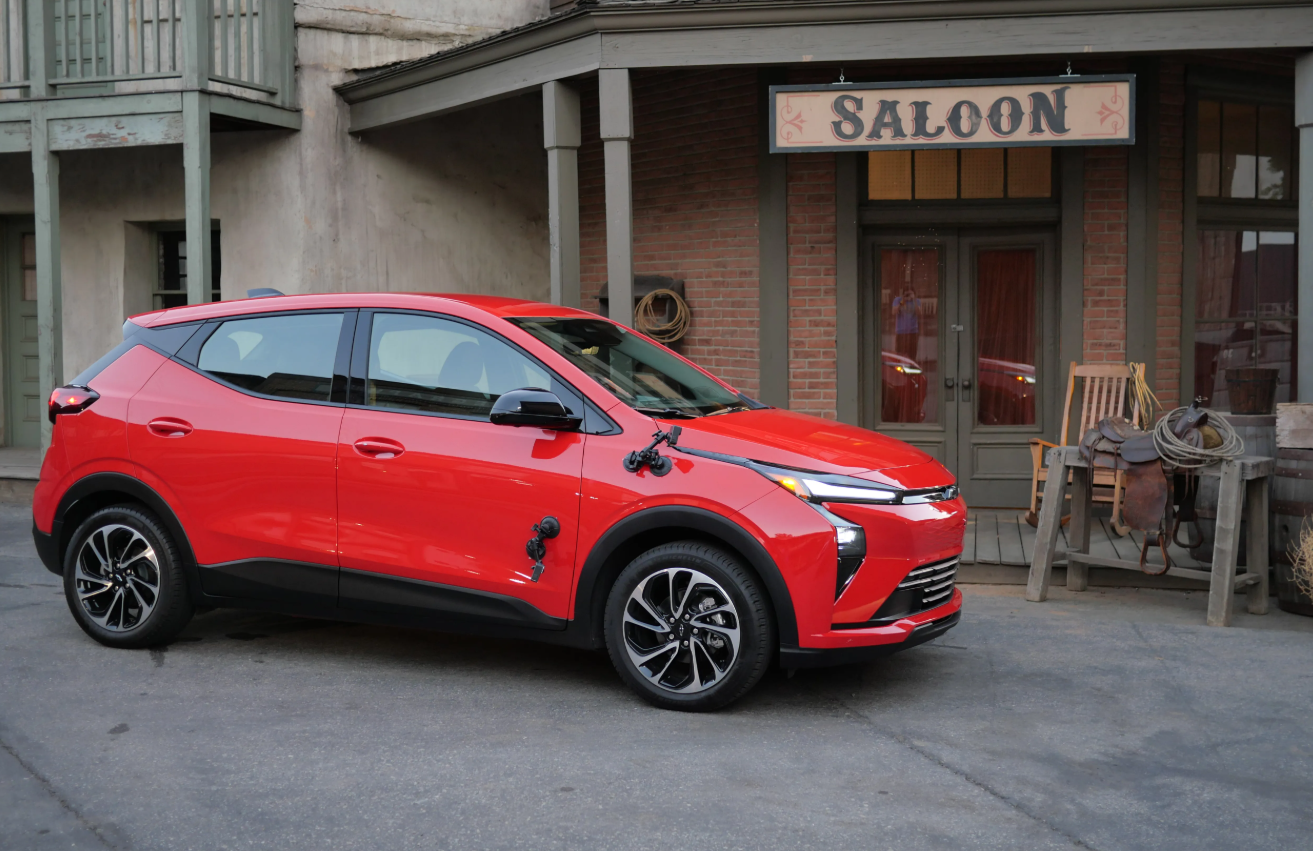
Core Insights - The article discusses the intensifying price war in the electric vehicle (EV) market following the expiration of the $7,500 EV purchase subsidy in the U.S. at the end of September. General Motors (GM) is set to launch a new Chevrolet Bolt EV with the lowest pricing in the U.S. market, aiming to compete with Tesla's recent price cuts on the Model 3/Y [1][4]. Group 1: Pricing and Competition - The new Chevrolet Bolt will have a starting price of approximately $32,000 for the RS Sport version and $29,990 for the LT Comfort version, with the base LT version expected to start at $28,955. These prices include about $1,000 in shipping fees, representing the total cost to consumers [1]. - Nissan's 2026 Leaf model is positioned to challenge the Bolt's pricing, starting at $29,990 (excluding $1,495 shipping). Ford is also reportedly developing an electric pickup truck priced around $30,000 [3]. Group 2: Product Features and Upgrades - The new Bolt will utilize a 65 kWh lithium iron phosphate battery supplied by CATL, marking a significant upgrade from the previous generation's LG battery cells. GM's Ultium Cells is upgrading its U.S. factories to produce these new batteries [4]. - The new Bolt supports a maximum charging power of 150 kW, allowing for a 10% to 80% charge in just 26 minutes. It is compatible with Tesla's NACS charging interface and can also use the CCS charging network through an adapter [4]. - The new battery provides a range of 255 miles (approximately 410 kilometers). The vehicle is expected to have a 0-60 mph time in the 6-second range, powered by a motor that outputs 210 horsepower [5]. Group 3: Future Plans and Market Positioning - GM has indicated that the new Bolt is a "limited-time return," suggesting potential future plans for entry-level electric vehicles. The company emphasizes maintaining affordability as a core value in its product line [5].

美股飘红,热门中概股走强,极氪涨超3%,网易、蔚来涨超2%
21世纪经济报道· 2025-10-08 14:46
Core Viewpoint - The article discusses the recent performance of the U.S. stock market, the rise in gold prices, and notable movements in specific companies, particularly in the tech sector, while also analyzing the historical performance of the Chinese stock market post-holidays. Group 1: U.S. Stock Market Performance - The three major U.S. stock indices opened higher and showed slight gains as of 22:05 [1] - Gold stocks experienced a rise, with companies like Hecla Mining and Harmony Gold increasing over 3% as spot gold surpassed $4040 and New York futures crossed $4070 per ounce, marking a daily increase of 1.66% [3] Group 2: Gold Investment Insights - Renowned investor Ray Dalio recommended an overweight position in gold, suggesting that investors should allocate 15% of their portfolios to gold due to its superior safe-haven attributes compared to the U.S. dollar [5] Group 3: Tech Sector Developments - NVIDIA's CEO confirmed an investment in Elon Musk's startup xAI, expressing excitement about the deal [6] - AMD shares surged nearly 5% following a Morgan Stanley report indicating a partnership with OpenAI, with AMD expected to deploy 6GW of AI computing capacity over several years, involving an investment exceeding $100 billion [6] Group 4: Chinese Stock Market Trends - The Nasdaq Golden Dragon China Index rose by 0.16%, with several Chinese concept stocks, including Zeekr and NIO, showing gains of over 2% [8] - Historical data indicates that the Shanghai Composite Index and Shenzhen Component Index have a 70% probability of rising on the first trading day after the National Day holiday, with overall positive performance in the following five trading days [9][10] Group 5: Sector Performance Post-Holidays - Over the past decade, sectors such as computer, communication, and electronics have shown over 50% probability of rising in the week following the National Day holiday, with banking and automotive sectors also demonstrating strong performance [12]

现货黄金涨破4000美元大关,国内金饰克价突破1160元
21世纪经济报道· 2025-10-08 02:32
Core Viewpoint - The article discusses the recent surge in gold prices, with spot gold surpassing $4000 per ounce and a year-to-date increase of over 52%, driven by factors such as the U.S. government shutdown, expectations of multiple rate cuts by the Federal Reserve, and ongoing geopolitical conflicts [1][6]. Gold Price Trends - Spot gold reached $4000.025 per ounce, with a daily increase of 0.39% [2]. - COMEX gold also saw a rise, closing at $4019.9 per ounce, reflecting a similar daily increase of 0.39% [3]. - The highest price recorded for COMEX gold was $4020.9 per ounce [3]. Market Predictions - Goldman Sachs raised its gold price forecast for December 2026 to $4900 per ounce, up from a previous estimate of $4300 [6]. - UBS predicts a bullish trend in the gold market, forecasting a price of $4200 per ounce by mid-2026, citing factors like a weaker dollar and increased central bank purchases [6]. Central Bank Activities - The People's Bank of China (PBOC) has increased its gold reserves for the 11th consecutive month, with a total of 74.06 million ounces as of the end of September, reflecting a month-on-month increase of 40,000 ounces [9][11]. - The pace of gold reserve increases has slowed, with September's addition being the lowest since November 2024, indicating a balance between optimizing reserve structure and controlling acquisition costs [11]. Investment Recommendations - Experts suggest that gold should be viewed as a long-term investment and a hedge against inflation, with a recommended allocation of 5% to 10% in balanced investment portfolios [7][6]. - The article emphasizes the importance of gold in diversifying international reserves and enhancing the credibility of sovereign currencies, particularly in the context of ongoing geopolitical uncertainties [12].