空调压缩机

Search documents
北特科技:所有业务经营均一切正常
Zheng Quan Ri Bao· 2026-02-10 13:37
Core Viewpoint - Beite Technology is actively engaged in the automotive parts manufacturing sector, ensuring compliance with regulatory standards and maintaining normal business operations [2] Group 1: Business Overview - The company specializes in three main business segments: chassis components, aluminum lightweighting, and integrated thermal management systems [2] - All business operations are reported to be functioning normally, indicating stability within the company [2] Group 2: Regulatory Compliance - The company emphasizes its commitment to adhering to all regulatory requirements and standards [2] - It has stated that it will fulfill its information disclosure obligations as long as its business activities comply with relevant regulations [2]


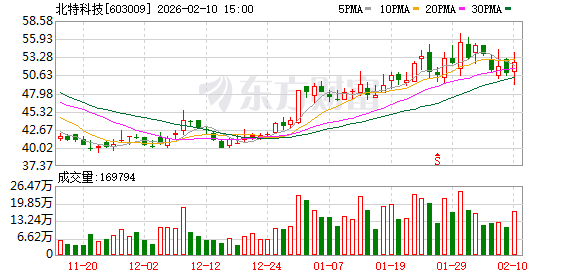
受益规模效应北特科技2025年净利预增60% 核心产品供应比亚迪博世
Chang Jiang Shang Bao· 2026-01-27 08:57
Core Viewpoint - Beite Technology (603009.SH) has achieved rapid growth in operating performance, with projected net profit for 2025 expected to reach between 115 million to 125 million yuan, representing a year-on-year increase of 60.98% to 74.98% [1] Financial Performance - For 2023 and 2024, Beite Technology reported operating revenues of 1.881 billion yuan and 2.024 billion yuan, with year-on-year growth rates of 10.30% and 7.57% respectively [1] - The net profit attributable to shareholders for 2023 and 2024 was 50.87 million yuan and 71.44 million yuan, showing year-on-year growth of 10.72% and 40.43% respectively [1] - The projected net profit for 2025 indicates a continued acceleration in growth following two years of increases [1] Industry Context - The automotive industry in China is expected to achieve record production and sales in 2025, with 34.53 million vehicles produced and 34.40 million sold [1] - Beite Technology's growth is attributed to the collaborative development of its business segments and the release of scale effects, alongside ongoing internal management optimization and cost control [1] Business Segments - Beite Technology operates in three main segments: chassis components, aluminum lightweighting, and air conditioning compressors [2] - The chassis components segment holds a dominant position in the steering gear rack and damper piston rod industries, while the air conditioning compressor segment maintains a leading position in the commercial vehicle sector [2] - Key clients include major global automotive suppliers and well-known domestic joint venture and independent brand automakers [2][3] Client Relationships - The core business of chassis components serves clients such as BYD, ZF, Bosch, and Cummins [3] - The aluminum lightweighting segment primarily serves clients like BYD and ZF [3] - The air conditioning compressor segment includes clients such as Foton Motor, FAW, and Xugong Group [3]
北特科技(603009):2025年净利润大幅增长,看好丝杠成为公司增长新动能
CSC SECURITIES (HK) LTD· 2026-01-27 08:49
Investment Rating - The report assigns a "Buy" rating to the company, indicating a potential upside in the stock price [6]. Core Insights - The company is expected to achieve a significant increase in net profit for 2025, with projections of RMB 120-130 million, representing a year-on-year growth of 61.0%-75.0%. The adjusted net profit is forecasted to be RMB 100-110 million, with a growth of 89.2%-107.4% [7]. - The automotive market is recovering, with total sales in China reaching 34.4 million units in 2025, a year-on-year increase of 9.4%, which is expected to drive growth in the company's chassis and lightweight business segments [9]. - The company is actively developing its planetary roller screw product line, with small-scale deliveries already made and positive customer feedback received. New production bases are being established in Shanghai, Jiangsu, and Thailand to enhance capacity and meet global customer demands [9]. Financial Summary - The company forecasts net profits of RMB 1.2 billion, RMB 1.7 billion, and RMB 2.7 billion for the years 2025, 2026, and 2027, respectively, with year-on-year growth rates of 71%, 42%, and 57% [9]. - Earnings per share (EPS) are projected to be RMB 0.4, RMB 0.5, and RMB 0.8 for the years 2025, 2026, and 2027, respectively, with corresponding price-to-earnings (P/E) ratios of 140, 99, and 63 [9]. - The company’s revenue is expected to grow from RMB 2.4 billion in 2025 to RMB 3.8 billion in 2027, reflecting a strong upward trend in sales [11].
北特科技:2025年净利润大幅增长,看好丝杠成为公司增长新动能-20260127
CSC SECURITIES (HK) LTD· 2026-01-27 08:24
Investment Rating - The report assigns a "Buy" rating to the company, indicating a potential upside in the stock price [6]. Core Insights - The company is expected to achieve a significant increase in net profit for 2025, with projections of RMB 120-130 million, representing a year-on-year growth of 61.0%-75.0%. The adjusted net profit is forecasted to be RMB 100-110 million, with a growth of 89.2%-107.4% [7]. - The company is actively developing its planetary roller screw products, which are anticipated to become a new growth driver. Production facilities are being established in Shanghai, Jiangsu, and Thailand to support this initiative [9]. - The earnings forecast for 2025, 2026, and 2027 has been revised upwards, with expected net profits of RMB 120 million, RMB 170 million, and RMB 270 million respectively, reflecting year-on-year growth rates of 71%, 42%, and 57% [9]. Company Overview - The company operates in the automotive industry, with a current A-share price of RMB 50.68 and a market capitalization of RMB 17.15 billion [2]. - Major shareholders include Jing Kun, holding 31.57% of the shares [2]. - The company has shown a stock price increase of 16.3% over the past month and 8.1% over the past three months [2]. Financial Performance - The company reported a net profit of RMB 51 million in 2023, with projections of RMB 71 million in 2024 and RMB 122 million in 2025, indicating a strong growth trajectory [11]. - The earnings per share (EPS) is expected to rise from RMB 0.14 in 2023 to RMB 0.36 in 2025, with a significant increase in the price-to-earnings (P/E) ratio from 364.5 in 2023 to 140.4 in 2025 [11]. Market Position - The company has a strong market presence in the automotive sector, with its product mix heavily weighted towards automotive chassis (64.1%) and air conditioning compressors (27.5%) [3]. - The automotive market in China is recovering, with total sales expected to reach 34.4 million vehicles in 2025, a year-on-year increase of 9.4% [9].
家电巨头,宣布成立新能源事业部!
鑫椤锂电· 2026-01-21 08:19
Core Insights - The article discusses the establishment of a new energy division by Midea Group, focusing on energy storage, heat pumps, and AI technologies, led by Executive President Wang Jianguo [1] - Midea Group has a strategy of not manufacturing complete vehicles but concentrating on components, having previously acquired Hunan Sanxiang Bus in 2004, which ceased production in 2008 [1] - Midea's subsidiary, KUKA Robotics, highlights the company's strength in the industrial robot sector, essential for automotive manufacturing [2] - Midea's Weiling components have begun supplying major automotive companies like Li Auto, XPeng, and NIO, with strategic collaborations for high-voltage fast charging technology [2] - The company is also expanding its collaboration with NIO to develop components such as air conditioning compressors and vehicle refrigerators [3] Market Insights - The article mentions a report on the global lithium battery application market trends and competitive strategies from 2025 to 2029, indicating a focus on future market dynamics [4]

稀土博弈烧到华盛顿!日本“断粮”危机下的疯狂反击
Sou Hu Cai Jing· 2026-01-11 11:50
Group 1 - Japan's industry is facing a severe supply chain crisis due to China's restrictions on rare earth exports, impacting key sectors such as defense, automotive, and electronics [1][3] - A leaked document from Japan's Ministry of Economy, Trade and Industry indicates that 92% of the 1,328 items under Chinese control are directly related to Japan's core industries, with rare earths accounting for 68% [3] - The production of critical components, such as lithium battery packs for submarines, has been halved, leading to increased costs and extended production timelines [3] Group 2 - Japan's Finance Minister is attempting to forge a "democratic supply chain" with the US and Europe to counter China's influence, but past efforts in the US to boost domestic rare earth production have been largely unsuccessful [5] - European companies express skepticism about replicating China's rare earth supply chain, as they heavily rely on Chinese imports for essential materials [5] - China's new export control measures have limited global rare earth exports to 150,000 tons annually, complicating Japan's attempts to source materials from alternative countries [5] Group 3 - Japan's Defense Minister is exploring nuclear submarine cooperation with the US, linking it to the rare earth supply chain issue, which may indicate Japan's military ambitions [7] - The US is more interested in using Japan as a rare earth transit point rather than genuinely supporting its military industry, highlighting Japan's strategic vulnerabilities [7] - Japan's historical role in controlling rare earth patents has come back to haunt it, as it now faces similar tactics from China [7] Group 4 - The ongoing rare earth conflict is seen as a political performance rather than a viable solution, with G7 countries also dependent on Chinese rare earths [9] - The potential for Japan to enter a dangerous arms race due to its nuclear submarine ambitions raises concerns about regional stability [9] - The outcome of this geopolitical struggle will significantly influence the future dynamics of the Asia-Pacific region [9]

“不出海,就出局”:浦东高端制造的全球化生存逻辑
21世纪经济报道· 2025-12-23 13:20
Core Viewpoint - The article emphasizes that "going global" has become a necessity for Chinese manufacturing companies due to geopolitical fluctuations and supply chain challenges, with a focus on innovative practices in Shanghai's Pudong district that exemplify a new path for globalization [1][2]. Group 1: Industry Trends - The restructuring of global supply chains has made supply chain security a critical consideration for decision-making, while high margins in overseas markets are accelerating the international expansion of high-end manufacturing sectors [3]. - Companies like Shanghai Haier Electric, a leading air conditioning compressor manufacturer, are leveraging opportunities from WTO membership, with over 40% of their business being export-oriented [3]. - The automotive supplier Kaizhong has been expanding overseas to meet customer demands for supply chain security, with a focus on North America and Europe, and has recently achieved profitability at its Mexican facility [4][10]. Group 2: Company Strategies - Haier Electric has established a strong presence in the air conditioning sector, with its products serving clients in 165 countries, and is enhancing its international certification capabilities to facilitate exports [12][14]. - Kaizhong has strategically built factories in Mexico and Morocco to optimize production costs and meet local market demands, with plans for further expansion in Europe and Africa [10][11]. - Milkwell, a leading intelligent supply chain service provider, is capitalizing on the growing demand from domestic chemical companies expanding overseas, offering end-to-end services and digital solutions [5][17]. Group 3: Government Support and Ecosystem Development - The Pudong New Area has initiated innovative programs to support local enterprises in their internationalization efforts, including establishing a comprehensive service center to assist with market research, investment facilitation, and risk management [20][21]. - Government agencies have shifted from being mere regulators to enablers, providing tailored services that significantly reduce the institutional costs for companies venturing abroad [21][22]. - The establishment of a global service network by the Pudong New Area aims to create a supportive ecosystem for high-end manufacturing companies, facilitating their entry into international markets [21][22].

“不出海,就出局”:浦东高端制造的全球化生存逻辑
2 1 Shi Ji Jing Ji Bao Dao· 2025-12-22 11:08
Core Insights - The restructuring of global supply chains has made "going abroad" a necessity for survival rather than an option for Chinese manufacturers, driven by geopolitical fluctuations and compliance challenges [1][3][15] - Shanghai's Pudong Jinqiao industrial cluster is leveraging "marginal innovation" to transition from single product exports to a collaborative ecosystem, showcasing a new path for globalization [1][16] - The shift from "product output" to "system capability output" reflects a significant upgrade in China's manufacturing, providing a model for emerging economies to enhance their industrial competitiveness [1][16] Company Summaries - Shanghai Haier Electric Co., a leading air conditioning compressor manufacturer, has expanded its overseas presence, establishing factories in India and Thailand to adapt to local market demands and production requirements [3][8] - Kaizhong Co., a supplier in the automotive sector, has initiated overseas production to meet customer demands for supply chain security, with a focus on North America and Europe, and has achieved profitability in its Mexican operations [4][7] - Milkwell, a comprehensive supply chain service provider, is capitalizing on the growing demand from both global chemical giants and emerging Chinese companies, offering end-to-end services and digital solutions to enhance supply chain efficiency [5][11] Industry Trends - The trend of "going abroad" is increasingly driven by the need for supply chain security and the pursuit of higher profit margins in overseas markets, particularly for high-end manufacturing sectors [3][4] - The impact of the U.S.-China trade war has prompted companies to establish overseas production to mitigate rising tariffs, with firms like Kaizhong adapting their strategies to maintain competitiveness [5][15] - The establishment of the Pudong New Area's comprehensive service center for enterprises going abroad is facilitating international expansion by providing a range of support services, including market research and compliance assistance [15][16]


“不出海,就出局”:浦东高端制造的全球化生存逻辑丨出海观察
2 1 Shi Ji Jing Ji Bao Dao· 2025-12-22 11:01
Core Viewpoint - The article emphasizes that "going global" has become a necessity for survival in the context of global supply chain restructuring, with Chinese high-end manufacturing in Pudong, Shanghai, leading the way through "marginal innovation" and collaborative ecosystems [1][2]. Group 1: Industry Trends - The global trade landscape is shifting, with supply chain security becoming a critical consideration, while high margins in overseas markets are accelerating the international expansion of high-end manufacturing sectors [3]. - Companies like Shanghai Haier Electric, a leading air conditioning compressor manufacturer, have benefited from WTO membership, with over 40% of their business being international [3]. - The automotive supplier Kaizhong has been expanding overseas, with a focus on North America and Europe, driven by customer demands for supply chain security and market opportunities [4][6]. Group 2: Company Strategies - Haier Electric has established overseas factories, including one in India and a flexible production line in Thailand, adapting to local investment policies [3]. - Kaizhong's overseas strategy includes building a factory in Mexico, which has recently achieved monthly profitability, and a factory in Morocco set to begin production by the end of 2026 [4][6]. - Milkwell, a leading intelligent supply chain service provider, is capitalizing on the demand from both global 500 companies and rapidly growing domestic chemical firms, offering end-to-end services and digital solutions [5][12]. Group 3: Regulatory and Compliance Challenges - The U.S.-China trade war has significantly increased tariffs on Kaizhong's products, prompting the company to establish overseas production to maintain competitiveness [6][7]. - Haier Electric's recent achievements in obtaining international certifications enhance its compliance capabilities and facilitate smoother entry into global markets [8][9]. Group 4: Ecosystem and Government Support - The Pudong New Area has initiated various support programs, including a comprehensive service center for companies going global, which provides market research, investment project support, and risk management [13][14]. - Government agencies have shifted from being regulators to enablers, offering tailored services that reduce institutional costs for companies venturing abroad [14][15].

美国对印关税大幅降至15%,中国纺织出口迎来强劲对手?
Sou Hu Cai Jing· 2025-11-22 04:15
Core Insights - The US and India are nearing a significant bilateral trade agreement, aiming to reduce tariffs on Indian goods from 50% to 15%-16%, which is a major step towards achieving a $500 billion trade target between the two nations [1][4] - This trade breakthrough is expected to reshape global supply chains and has implications for the trade dynamics involving China, the US, and India [1][6] Trade Agreement Details - The agreement includes substantial tariff reductions, with the US eliminating a 25% punitive tariff on Russian oil imports from India and reducing overall tariffs to the 15%-16% range, impacting sectors like textiles, gems, leather, and machinery [4] - India will gradually decrease its imports of Russian oil and ease restrictions on non-GMO corn and soybean meal imports from the US, opening up a market worth billions [4] Economic Implications - The trade deal is seen as a dual negotiation of political will and market dynamics, with the US benefiting from expanded energy and agricultural export channels while enhancing its economic influence in India [4] - The agreement is also viewed as a strategy for the US to create a supply chain backup to China, leveraging India's cheaper labor [4][5] Challenges for India - While the tariff reductions may boost Indian exports, the increased import of US agricultural products could disrupt local agriculture, and the reduction of Russian oil imports may raise domestic energy costs [5] - India's manufacturing sector remains heavily reliant on Chinese imports, making a quick transition away from China challenging [5] Impact on China - The US-India trade agreement poses three direct pressures on China: potential loss of market share in labor-intensive products, tighter technology restrictions in semiconductor and critical mineral sectors, and intensified competition for global resource pricing [6] - However, these external pressures may drive Chinese companies to enhance technology development and market diversification, reducing reliance on single markets [6] Textile Industry Focus - Indian textile companies may gain a competitive edge against Chinese exports due to lower tariffs and labor costs, prompting the need for Chinese textile firms to innovate and enhance their high-end product offerings [9] - The ongoing global supply chain adjustments highlight the complexity of "decoupling" from established trade relationships, emphasizing the importance of maintaining a robust industrial chain and technological innovation in China [9]