红利股

Search documents
每日钉一下(长期资金,都是如何做投资的?)
银行螺丝钉· 2025-12-31 14:10
Group 1 - The article emphasizes that funds are suitable investment options for ordinary people [2] - It suggests that new investors should consider specific types of funds and investment strategies [2] - A free course is offered to help beginners understand fund investment from scratch [2] Group 2 - Long-term funds can be categorized into several types, including "national teams" like central financial institutions that invest heavily in index funds [7] - Pension funds, insurance institutions, and university endowment funds are characterized by their long-term capital and regular cash flow needs [9][10] - Institutions with a long-term value investment philosophy, such as Berkshire Hathaway, buy and hold assets they believe in, adjusting their portfolios based on market valuations [12]


资管机构2026年展望:债市分歧加大、对股市更乐观
2 1 Shi Ji Jing Ji Bao Dao· 2025-12-30 01:36
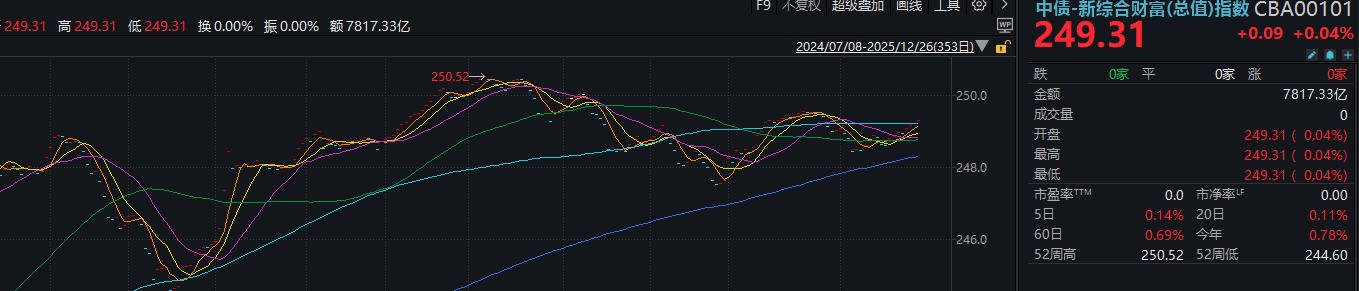
Group 1: Market Outlook for 2026 - Asset management institutions have mixed views on the bond market for 2026, with many being more optimistic about the stock market [1][2] - The A-share market structure may change slightly in 2026, with technology stocks likely to continue leading, but differentiation is expected [1][8] - The domestic capital market is anticipated to show a pattern of stock and bond resonance upward in 2026 [8] Group 2: Bond Market Insights - There is significant divergence in opinions regarding the bond market, with some institutions believing that the space for bonds in 2026 is limited [2] - The 30-year government bond futures have dropped by 7.39% since July 2025, raising concerns about risks associated with long-term bonds [4] - The bond market is expected to experience low volatility with a slight upward trend in the 10-year bond yield to around 1.8% [4] Group 3: Stock Market Insights - The external environment for the stock market is favorable, with the U.S. Federal Reserve restarting its rate-cutting cycle, potentially providing additional liquidity to the Chinese stock market [7] - The continued low interest rates may drive a shift in wealth allocation from real estate to equities among residents [7] - The financial regulatory authority has eased restrictions on insurance capital entering the stock market, which may enhance investment activity [7] Group 4: Investment Strategies - Investment strategies for 2026 are still being defined, with a focus on stable products and dividend stocks, while higher-risk products may target technology stocks [8] - There is a potential for consumer blue-chip stocks to gain attention as their valuations have become attractive amid a recovering consumption growth [8] - The market is expected to benefit from a combination of U.S. rate cuts and domestic policy support, with bonds likely to return to a focus on fundamental recovery [8]
浙商证券李超:2026年“直观云帆济沧海”,牛市可期
Xin Lang Zheng Quan· 2025-11-28 08:22
Core Insights - The 2025 Analyst Conference highlighted the importance of high-quality development in China's economy for 2026, as articulated by Li Chao, the chief economist of Zheshang Securities [1] - Li Chao introduced a "Four-Level Analytical Framework" to understand China's economic policies and developments, emphasizing the need to consider multiple factors beyond mere economic growth [3] Group 1: Four-Level Analytical Framework - The first level focuses on the US-China rivalry, which is a primary consideration for decision-making [3] - The second level emphasizes social stability as the foundation for economic development [3] - The third level addresses structural transformation, which is the core path to high-quality development [3] - The fourth level pertains to maintaining reasonable economic growth under the previous three considerations [3] Group 2: Market Outlook for 2026 - Li Chao expressed optimism for the capital market in 2026, suggesting that liquidity will drive a potential bull market [4] - Historical global trends indicate that even during economic downturns, stock markets can experience bullish trends due to liquidity easing, which boosts asset valuations [4] - Confidence in the market has been gradually improving since 2025, and this trend is expected to continue into 2026, indicating a forthcoming bull market [4] Group 3: Investment Strategy - The primary investment focus should be on sectors benefiting from declining interest rates, particularly technology and dividend stocks [5] - Technology stocks are expected to see increased valuations as investors become more willing to price long-term cash flows in a low-interest environment [5] - Dividend stocks will serve as attractive alternatives when bond yields are low, providing stability and value appreciation [5] - A clear investment strategy is to allocate to dividend stocks during US-China tensions and to technology stocks during cooperation, as the dynamics of US-China relations significantly influence market risk preferences [5]


险资红利策略2.0
HTSC· 2025-10-24 05:24
Core Insights - The insurance capital's dividend strategy has accelerated, with an increase in allocation to dividend stocks exceeding 320 billion RMB in the first half of 2025, surpassing the total allocation for the previous year [1][4] - The insurance capital is increasingly reliant on dividend stocks to maintain cash investment returns due to declining cash yields, but rising valuations and decreasing dividend yields pose challenges to this strategy [2][13] - The estimated under-allocation of dividend stocks in the insurance sector is between 0.8 to 1.6 trillion RMB, which may be completed in the next two to three years [4][41] Group 1: Dividend Strategy Transition - The insurance capital's dividend strategy is transitioning from a "buy and hold" phase to a more selective "picking the best" phase, focusing on balancing stable cash returns and minimizing capital loss risks [2][13] - The focus on dividend stocks is driven by the need to maintain cash yields amidst high fixed liability costs, with the average net investment yield for listed insurance companies dropping to 3.0% in the first half of 2025, nearing the fixed liability cost of around 3% [14][33] - The selection criteria for dividend stocks have narrowed, with three main standards: stable dividends per share (DPS), low capital loss probability, and meeting a certain dividend yield threshold [3][15] Group 2: Market Dynamics and Stock Selection - The potential pool of dividend stocks has significantly decreased, particularly in the Hong Kong market, where the free float market capitalization of potential dividend stocks dropped from 3.4 trillion HKD to 1.6 trillion HKD [3][17] - In contrast, the number of potential dividend stocks in the A-share market remains stable at 57, with a total free float market capitalization of 3.8 trillion RMB [17] - The insurance capital's focus on bank stocks as a key component of its dividend strategy has led to a notable increase in stock prices and valuations since early 2024, although the correlation between DPS stability and stock price movements is not strong [5][16] Group 3: Future Outlook and Recommendations - The insurance sector is expected to continue increasing its allocation to high-yield stocks, with an estimated annual increase of 300 to 500 billion RMB in the next few years to address the cash yield gap [4][41] - The report recommends focusing on resilient balance sheets and balanced growth companies such as Ping An Insurance, China Pacific Insurance, China Life Insurance, and China Reinsurance [1][9] - The overall investment ratio in dividend stocks for the insurance industry is projected to be suitable at over 5%, indicating a need for further allocation to meet this target [41][43]




以静待时
China Post Securities· 2025-06-30 11:22
Market Performance Review - In June, major stock indices all rose, with the Shanghai Composite Index increasing by 2.29%, the Shenzhen Component Index by 3.37%, and the ChiNext Index by 6.58% [13] - The financial and growth styles led the market, while the stable style declined by 0.36% [13] - The TMT and financial sectors showed significant gains, with the communication sector rising by 11.97% and non-bank financials by 8.84% [17] Market Sentiment Analysis - Since the market rally began on September 24, 2024, retail investor sentiment has played a dominant role, but this sentiment has declined since May 2025 [4][20] - The report suggests that retail sentiment will remain within a normal fluctuation range, and a rally driven by retail investors is not expected in the near term [4][20] Future Outlook and Investment Strategy - The report emphasizes the importance of waiting for the outcome of the US tariff negotiations, which will set the tone for July [5][27] - If the US does not reach an agreement with other countries, the A-share market may focus on internal fundamentals [5][27] - The recommendation is to hold dividend stocks while waiting for uncertainties to resolve, rather than making premature investments [6][28] - If the US reaches an agreement at the expense of Chinese interests, defensive dividend stocks will remain a preferred choice [6][28]
长城基金投资札记:A股震荡,红利资产仍有吸引力
Xin Lang Ji Jin· 2025-06-13 05:38
Group 1: Market Overview - The market is expected to enter a phase where macro factors become less disruptive, with domestic policies emphasizing a "stable and active capital market" [1] - The macroeconomic environment is likely to remain stable, with reduced uncertainties from overseas factors, particularly regarding U.S. tariff policies [1][2] - The market is anticipated to maintain a range-bound fluctuation, with dividend stocks being a preferred choice for low-risk investors [1][3] Group 2: Sector Insights - The AI healthcare sector shows resilience, with ongoing positive developments despite a weak correlation with the broader healthcare market [2] - The innovative drug sector has seen unexpected strength, but there is an anticipated increase in market scrutiny regarding the fundamentals of these companies [3] - The military industry, particularly upstream targets, may experience a valuation shift due to improved recognition of domestic and foreign demand for advanced weaponry [4][5] Group 3: Investment Strategies - Focus on identifying structural opportunities within cyclical sectors, such as rare metals and agriculture, which may show fundamental changes [6] - High-dividend assets remain attractive in a liquidity-rich environment, with expectations of declining insurance policy rates and increasing dividend payout ratios [7] - The market may stabilize in June, with potential risks from external factors, but the focus will remain on sectors with independent growth logic [8][9]
A股:不用等明天!行情已经明牌!下周一,大盘走势分析
Sou Hu Cai Jing· 2025-05-25 15:28
Group 1 - The current market sentiment is pessimistic, leading to losses for many investors who fail to manage their strategies effectively [3][5] - The market is characterized as a game of counterparties, where those lacking independent thinking and trading systems are likely to incur losses [3][5] - Investors who are overly pessimistic at market lows may miss out on gains and subsequently chase prices at market highs, resulting in losses [3][5] Group 2 - Large funds are not exiting the market but are instead consolidating, with significant market capitalization in bank stocks showing low trading volumes [5][6] - The upward movement of the market index is primarily driven by heavyweight industries rather than the remaining 5,000 companies [5][6] - The Shanghai Composite Index is statistically driven by market capitalization, with bank stocks heavily influencing its performance [5][6] Group 3 - The Shanghai Composite Index is expected to experience a slow upward trend, with a focus on large-cap stocks rather than individual stock selection [6][8] - The market is anticipated to remain in a bottoming phase, with a potential for gradual recovery rather than a sharp increase [6][8] - Holding the Shanghai Composite Index may yield positive returns, with potential gains of 5-10% through ETF quantitative strategies [6][8] Group 4 - Many investors overestimate their ability to outperform professional investors, lacking self-awareness regarding their investment capabilities [8] - Acknowledging one's limitations in stock selection can lead to a more realistic investment approach [8]