
NAND 闪存

Search documents
每日市场观察-20260311
Caida Securities· 2026-03-11 02:07
Market Performance - On March 10, the three major indices rebounded, with the Shenzhen Component Index rising over 2% and the ChiNext Index increasing by over 3%[3] - The Shanghai Composite Index closed up 0.65%, the Shenzhen Component Index up 2.04%, and the ChiNext Index up 3.04%[3] - The total trading volume in the Shanghai and Shenzhen markets reached 2.4 trillion yuan, a decrease of over 200 billion yuan compared to the previous trading day[1] Sector Trends - The leading sectors included 5G communication, semiconductors, optical communication, and PCB, with over 4,500 stocks rising in the two markets[1] - Main capital inflows were observed in communication equipment, components, and semiconductors, while IT services, chemical raw materials, and power grid equipment saw capital outflows[3] Economic Indicators - In the first two months of 2026, China's goods trade exports reached 4.62 trillion yuan, a year-on-year increase of 19.2%[4] - The total value of imports and exports was 7.73 trillion yuan, with a year-on-year growth rate of 18.3%[4] Industry Developments - The AI industry is entering a rapid development phase, with NAND storage demand increasing significantly; Samsung Electronics raised NAND flash prices by approximately 100% in Q1 2026[2] - The supply-demand gap for HBM/DDR5 remains substantial, indicating a focus on the storage chip industry as a critical component of AI computing[2] Regulatory Updates - The State Administration for Market Regulation approved a batch of important national standards, including 24 standards in emerging fields such as semiconductors and robotics, aimed at promoting the development of new-generation information technology[5][6] Fund Dynamics - In February, the number of newly registered private equity funds increased by 151.57% year-on-year, with 1,366 funds registered compared to 543 in February 2025[11] - A new Sci-Tech Innovation Board ETF has been approved, contributing to a total of 81 Sci-Tech Innovation Index funds with a combined scale of 25.8 billion yuan[12]
年度业绩快报密集发布,北证50上涨0.77%
Soochow Securities· 2026-02-26 00:55
Market News - Shanghai has initiated the first major relaxation of housing purchase restrictions in 2026, implementing a "new seven measures" to lower barriers for non-local buyers and improve housing loan conditions[6] - The new policy is expected to stimulate demand in the real estate market, leading to a "volume increase and price stability" trend in Shanghai's housing market[7] Industry News - Short-seller Citron Capital has taken a short position against SanDisk, citing cyclical pressures in the NAND industry and increased competition from Samsung, causing SanDisk's stock to drop over 8%[9] - During the recent Spring Festival holiday, sales of home appliances and digital products exceeded 5.1 million units, marking a 21.7% increase compared to last year[11] Market Performance - As of February 25, 2026, the North Exchange 50 index rose by 0.77%, while the ChiNext index increased by 1.41% and the A-share index rose by 0.73%[12] - The average market capitalization of the 294 constituent stocks in the North Exchange is 3.214 billion, with a trading volume of 18.656 billion, an increase of 2.277 billion from the previous trading day[12] Company Announcements - Companies such as Thunder God Technology and Haidaer have released their annual performance reports, with Thunder God reporting a revenue of 3.042 billion, a year-on-year increase of 2.93%[23] - Haidaer reported a revenue of 371 million, a decrease of 11.15% year-on-year, with a net profit decline of 20.21%[33] Risk Warning - There are risks of individual stock earnings falling short of expectations, intensified industry competition, and potential trade frictions impacting market stability[36]
未知机构:SNDK周二有活动是否可能与HBF有关-20260224
未知机构· 2026-02-24 04:20
Summary of Conference Call Notes Company and Industry Involved - **Company**: SNDK (SanDisk) - **Industry**: High Bandwidth Flash (HBF) and Memory Sector Core Points and Arguments - **High Bandwidth Flash (HBF) Research**: The ongoing research into HBF is a key reason for the positive outlook on SNDK, supported by long-term and cyclical tailwinds from data center spending, as well as structural tailwinds from Engram and NVDA's Bluefield and HBF [1][1] - **Comparison with Competitors**: Acknowledgment that Kioxia has a higher exposure in the data center and enterprise market compared to SNDK, and awareness of potential supply from China coming online [1][1] - **Investment Potential**: The less crowded nature of SNDK compared to competitors like Micron or SK Hynix presents a significant upside potential, especially with the shift from enterprise to data center revenue [2][2] - **HBF Architecture**: HBF is described as a new memory tier that positions NAND flash physically closer to GPUs, akin to how HBM positions DRAM near GPUs. The architecture involves stacking 16 NAND chips, each with 128-256 layers, on a custom base chip, providing a capacity of 512GB per HBF stack [2][2] - **SNDK's Leadership in HBF**: SNDK is positioned as a pioneer in HBF technology, with expectations that HBF1 will be realized by 2027, and the first AI inference devices with HBF samples will be available in early 2027 [3][3] - **Collaboration for HBF Development**: The need for strong collaboration in the supply chain is emphasized, particularly with SNDK's long-term agreement with Phison to advance KV caching, which aligns with the development of HBF [3][3] - **Profitability Outlook**: HBF is expected to bring lower commoditization and higher profit margins, similar to HBM, adding new dimensions to demand [3][3] - **Risk-Reward Assessment**: The pessimistic scenario sets a price target of $500 per share (5x earnings of $100), while the optimistic scenario targets $1000 per share (10x earnings), indicating a significant range of potential valuations [4][4] Other Important Content - **Market Dynamics**: The transition narrative from purely cyclical to structural/long-term tailwinds in the memory sector is highlighted as a reason for favoring Samsung as well [2][2] - **Risk Management**: Emphasis on the high difficulty of trading SNDK and the necessity for appropriate risk management strategies [4][4]
公募基金指数跟踪周报(2026.01.26-2026.01.30):全球流动性巨震,盈利修复值得期待-20260202
HWABAO SECURITIES· 2026-02-02 12:04
Report Investment Rating - No specific investment rating for the industry is provided in the report Core Viewpoints - Last week (2026.01.26 - 2026.01.30), the A - share market was volatile and differentiated, with high trading volume, extreme differentiation, and rapid rotation. The market's driving logic shifted from macro - cycle trading to micro - performance verification, and it's advisable to focus on mid - stream industries with profitability repair and ROE improvement [2][3][11][12][13] - The bond market was volatile last week, and the current environment is favorable for the bond market. The 10 - year Treasury yield is expected to gradually decline towards 1.80%. In the context of increased volatility in the equity market, the relative value of bond coupon allocation has increased [4][14] - The China Securities Regulatory Commission released a draft for public comments on amending the information disclosure rules for public funds, aiming to guide the industry to focus on the concepts of "long - term investment and value investment" [5][17] Weekly Market Observation 1.1 Equity Market Review and Observation - Last week, the Shanghai - Shenzhen 300 rose 0.1%, the CSI 500 fell 2.6%, and the ChiNext fell 0.1%. The market was characterized by extreme differentiation and rapid rotation under high trading volume, with more stocks falling than rising [2][11] - Market funds were in a fierce game between inflation trading and the technology growth theme. "Price trends" were the guiding principle in the first half of the week, and later, policies and performance became the main drivers of style switching. The annual performance forecast disclosure was a key factor for individual stock trends [3][12] - The market's driving logic shifted from macro - cycle trading to micro - performance verification. Funds tended to seek more balanced and performance - supported allocations, and it's recommended to focus on mid - stream industries [13] 1.2 Pan - Fixed - Income Market Review and Observation - Last week, the bond market was volatile. The 1 - year Treasury yield rose 1.80BP to 1.30%, the 10 - year yield declined 1.86BP to 1.81%, and the 30 - year yield rose 0.19BP to 2.29%. The 10 - year yield is expected to gradually decline towards 1.80% [4][14] - The current environment is favorable for the bond market. The central bank maintains stable liquidity, and the cautious economic growth targets in many places ease the market's expectations of strong fiscal stimulus. The bond market sentiment is gradually improving [4][14] - Last week, the U.S. Treasury yield curve steepened. The 1 - year yield declined 5BP to 3.48%, the 2 - year yield declined 8BP to 3.52%, and the 10 - year yield rose 2BP to 4.26%. The appointment of Kevin Warsh as the Fed Chairman affected the U.S. Treasury yield curve [15] - The CSI REITs Total Return Index rose 0.47% last week, with municipal environmental protection and highways leading the gains. Ten new public REITs made progress in the primary market [15] 1.3 Public Fund Market Dynamics - On January 30, 2026, the China Securities Regulatory Commission released a draft for public comments on amending the information disclosure rules for public funds. The new rules require adding the medium - to - long - term performance of the past 7 and 10 years, no longer disclosing the past 1 - month performance, and adding disclosure requirements such as fair trading, employee fund - holding, and trading unit leasing [5][17] Fund Index Performance Tracking 2.1 Equity Strategy Theme - Based Index - **Active Stock Fund Selection**: The index selects 15 funds each period, with equal - weight allocation. The core positions select active equity funds based on performance competitiveness and style stability, and balance the style according to the CSI Equity - Oriented Fund Index. The performance benchmark is the CSI Equity - Oriented Fund Index [21][22] 2.2 Investment Style - Based Index - **Value Stock Fund Selection**: It selects 10 funds of deep - value, quality - value, and balanced - value styles. The performance benchmark is the CSI 800 Value Index [25] - **Balanced Stock Fund Selection**: It selects 10 relatively balanced and value - growth style funds. The performance benchmark is the CSI 800 [25][26] - **Growth Stock Fund Selection**: It selects 10 funds of active - growth, quality - growth, and balanced - growth styles. The performance benchmark is the 800 Growth Index [29] 2.3 Industry Theme - Based Index - **Pharmaceutical Stock Fund Selection**: It selects 15 funds with an average purity of no less than 60% in the pharmaceutical industry. The performance benchmark is the pharmaceutical theme fund index [32][33] - **Consumer Stock Fund Selection**: It selects 10 funds with an average purity of no less than 50% in the consumer industry. The performance benchmark is the consumer theme fund index [33][34] - **Technology Stock Fund Selection**: It selects 10 funds with an average purity of no less than 60% in the technology industry. The performance benchmark is the technology theme fund index [37] - **High - End Manufacturing Stock Fund Selection**: It selects 10 funds with an average purity of no less than 50% in the high - end manufacturing industry. The performance benchmark is the high - end manufacturing theme fund index [42][43] - **Cyclical Stock Fund Selection**: It selects 5 funds with an average purity of no less than 50% in the cyclical industry. The performance benchmark is the cyclical theme fund index [45][46] 2.4 Money - Market Enhancement Index - **Money - Market Enhancement Strategy**: The index aims for liquidity management, pursues a curve that exceeds money - market funds and is smoothly upward. It mainly allocates money - market funds and inter - bank certificate of deposit index funds. The performance benchmark is the CSI Money - Market Fund Index [48] 2.5 Pure Bond Index - **Short - Term Bond Fund Selection**: It selects 5 funds with stable long - term returns, strict drawdown control, and significant absolute - return ability. The performance benchmark is 50% * Short - Term Pure Bond Fund Index + 50% * Ordinary Money - Market Fund Index [52] - **Medium - and Long - Term Bond Fund Selection**: It selects 5 medium - and long - term pure bond funds with both return and drawdown control, and adjusts the duration and the ratio of credit bond and interest - rate bond funds according to the market [54] 2.6 Fixed - Income + Index - **Low - Volatility Fixed - Income + Selection**: The equity center is 10%. It selects 10 funds with an equity center of less than 15%. The performance benchmark is 10% CSI 800 Index+90% ChinaBond New Composite Full - Price Index [57] - **Medium - Volatility Fixed - Income + Selection**: The equity center is 20%. It selects 5 funds with an equity center between 15% - 25%. The performance benchmark is 20% CSI 800 Index+80% ChinaBond New Composite Full - Price Index [60] - **High - Volatility Fixed - Income + Selection**: The equity center is 30%. It selects 5 funds with an equity center between 25% - 35%. The performance benchmark is 30% CSI 800 Index+70% ChinaBond New Composite Full - Price Index [63] 2.7 Other Pan - Fixed - Income Index - **Convertible Bond Fund Selection**: It selects 5 convertible bond funds based on an evaluation system from multiple dimensions. The sample space requires a high proportion of convertible bond investment [66] - **QDII Bond Fund Selection**: It selects 6 QDII bond funds with stable returns and good risk control based on credit and duration [69] - **REITs Fund Selection**: It selects 10 REITs funds with stable operation, reasonable valuation, and certain elasticity based on the underlying asset type [70]
算力即国力:如何看待算力基础资源通胀投资机遇?
Changjiang Securities· 2026-01-30 13:58
Investment Rating - The industry investment rating is "Positive" and maintained [7] Core Insights - Since 2025, the technology sector has seen price increases in various segments of computing power resources, recently spreading to the midstream cloud computing sector in overseas markets. The demand for AI, coupled with tight capacity in core segments, has shifted industry pricing towards "supply-demand pricing + value reassessment." Some segments are still in the early stages of price increases, which are expected to gradually transmit to the domestic market, suggesting investment opportunities in domestic computing power resources [2][5] Summary by Relevant Sections - **Price Trends**: Since the second half of 2025, there has been a significant upward trend in prices for storage and other computing power resources. For instance, memory prices surged by 171.8% year-on-year in Q3 2025, with expectations of further increases of 40% to 50% in Q1 2026 and around 20% in Q2 2026. Major companies like Samsung have raised NAND flash contract prices by over 100% starting January 2026 [10][13] - **Market Dynamics**: The AI demand is robust, and the competition among tech giants for computing power resources is intensifying. For example, Meta's capital expenditure for 2026 is projected to reach $135 billion, significantly exceeding Wall Street's expectations. This surge in AI-related demand is creating a substantial supply-demand gap, particularly in storage chips, which is expected to lead to further price increases across various segments [10][13] - **Investment Recommendations**: The report recommends focusing on key domestic leaders in computing power resources, including AI chips (e.g., Haiguang Information, Cambricon), CPUs (e.g., Haiguang Information), and cloud service providers (e.g., Kingsoft Cloud, Capital Online). Additionally, it suggests monitoring other quality stocks with strong fundamentals and high correlation within the industry chain [5][10]




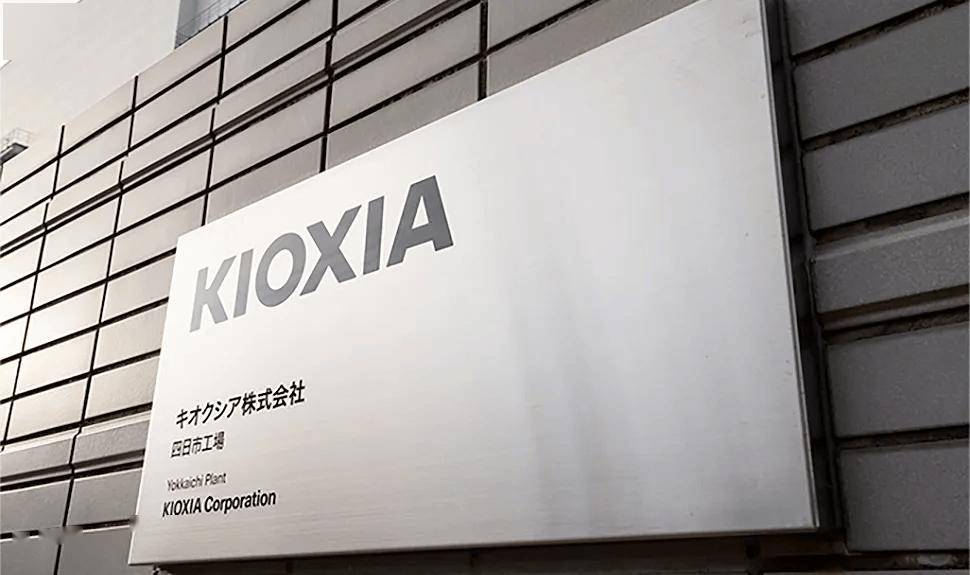
铠侠换帅:63岁半导体老将出任CEO
Sou Hu Cai Jing· 2026-01-29 08:39
Group 1 - The core point of the article is the appointment of Hiroo Oota as the new CEO and President of Kioxia, aimed at expanding its influence in the growing storage chip market [1][3] - Hiroo Oota, aged 63, will succeed 70-year-old Nobuo Hayasaka, who will transition to a senior executive advisor role, with the change expected to be approved at the annual shareholders' meeting in June [3] - Following the announcement, Kioxia's stock price reversed its previous decline, rising approximately 2%, and has increased over 12 times since its IPO at the end of 2024 [4] Group 2 - Kioxia, a spin-off from Toshiba, is benefiting from the surge in demand and prices for storage chips driven by the AI infrastructure boom, with its high-performance storage solutions becoming essential for companies competing in the AI race [4] - Hiroo Oota has spent his career in the semiconductor industry, joining Toshiba in 1985 and previously holding engineering positions at Toshiba Memory Corporation, which later became Kioxia [4] - Omdia analyst Akira Minagawa highlighted the challenges of leading a storage company due to the cyclical nature of the market, emphasizing the need for precise timing in investments and a keen awareness of customer sentiment [4] - Kioxia's board believes that the timing for this leadership transition is appropriate, coinciding with the company's first anniversary as a public entity and the increasing demand for storage chips driven by AI [4]

先进封装观点更新及AI-Agent沙箱化对CPU的影响
2026-01-26 02:49
Summary of Conference Call Records Industry Overview - The NAND flash contract prices have been raised for the second time in 2026, with an increase exceeding 100%, significantly higher than the market's previous expectation of 20% in November last year [1][2] - The DRAM price increase has also been revised, but it has received less attention due to already high expectations [1][2] - The storage price increase cycle is expected to continue until the third quarter of 2026, benefiting related design, equipment, and module companies [1] Key Companies and Investment Opportunities - **Chip Design Companies**: Companies like Junzheng, Zhaoyi Innovation, and Purun are expected to benefit from downstream storage price increases [3] - **CSP Manufacturers**: Chip Source Co., as a leading player in the domestic computing power sector, is anticipated to see significant performance growth due to ASIC chip demand driven by CSPs [5] - **Advanced Packaging Companies**: Longji Technology and Tongfu Microelectronics are highlighted for their 2.5D packaging capabilities, with the latter's business expected to grow in the first quarter of 2026 [6][10] - **Emerging Companies**: Companies like Xiyin Electronics and Baiwei Storage are noted for their advancements in advanced packaging technology [6][12] Market Dynamics - The storage market is experiencing a confluence of three major cycles: technological upgrades, financing cycles for the two storage companies, and AI-driven price cycles [2] - The overall packaging industry is being driven by AI cloud and terminal penetration, storage super cycles, and the expansion of mature processes [8] - The capacity utilization rate in the packaging industry is expected to improve significantly, with projections for 2026 indicating a more robust state [8] Advanced Packaging Developments - Longji Technology is focusing on high-performance computing and storage terminals, with a projected capacity utilization rate of nearly 80% by the third quarter of 2025 [9] - Tongfu Microelectronics has been collaborating with overseas clients since 2019, achieving a competitive level in advanced packaging technology [10] - Yongxi Electronics aims to increase its market share in advanced packaging, focusing on high-end products and maintaining high investment in 2.5D packaging and AI-related technologies [11][14] Impact of AI and Sandbox Technology on CPU Sector - The implementation of sandbox technology for Agent applications is expected to create additional demand for CPU servers, benefiting companies like AMD, Intel, and Haiguang Information [15][16] - The sandboxing approach allows for a controlled environment for executing code, which is crucial for managing risks associated with Agent operations [15] Conclusion - The storage and advanced packaging sectors are poised for growth driven by technological advancements and market dynamics, with several companies identified as key players for investment opportunities. The integration of AI and sandbox technology is also expected to create new demand in the CPU market, presenting further investment potential.


中原证券晨会聚焦-20260126
Zhongyuan Securities· 2026-01-26 00:21
Core Insights - The report highlights the ongoing recovery and growth in various sectors, particularly in the AI, automotive, and renewable energy industries, driven by policy support and technological advancements [8][17][26]. Domestic Market Performance - The Shanghai Composite Index closed at 4,136.16 with a slight increase of 0.33%, while the Shenzhen Component Index rose by 0.79% to 14,439.66 [3]. - The average price-to-earnings ratio for the Shanghai Composite and ChiNext indices stands at 16.88 and 53.36 respectively, indicating a favorable long-term investment environment [9][10]. International Market Performance - Major international indices such as the Dow Jones and S&P 500 experienced declines of 0.67% and 0.45% respectively, reflecting a mixed global market sentiment [4]. Industry Analysis - The photovoltaic battery sector is leading the market, with significant upward momentum observed in A-shares [5]. - The aerospace and semiconductor industries are also showing strong performance, contributing to the overall market stability [5][10]. Key Data Updates - The report notes a significant increase in the export of pet food, with a year-on-year growth of 15.49% in December 2025, indicating a robust demand in the pet food sector [16]. - The semiconductor industry is experiencing a strong upward trend, with a 45.07% increase in the sector's index for 2025, driven by rising global demand and technological advancements [37]. Investment Recommendations - The report suggests focusing on sectors such as AI, renewable energy, and electric vehicles, which are expected to benefit from ongoing policy support and market trends [19][26][32]. - Companies with strong supply chain capabilities and those involved in the production of new energy technologies are highlighted as potential investment opportunities [19][32].
格林大华期货早盘提示:全球经济-20260123
Ge Lin Qi Huo· 2026-01-23 01:06
Report Industry Investment Rating - Not provided in the given content Core Viewpoints - The global economy has passed its peak and is starting to decline due to the continuous wrong policies of the United States [4] - The United States' return to the Monroe Doctrine and its global contraction will have a profound and disruptive impact on major asset classes such as the global economy, US bonds, US stocks, the US dollar, precious metals, and industrial metals [3] Summaries by Related Catalogs Global Economy - Huang Renxun stated that AI will bring the largest infrastructure construction boom in history, driving trillions of dollars in new investments [1] - South Korea's semiconductor exports in the first 20 days of this year reached $10.73 billion, a year - on - year increase of over 70%, indicating strong global semiconductor demand [1] - AI is driving a "K - shaped" recovery in the semiconductor industry, with upstream AI storage chip manufacturers benefiting and downstream PC and mobile phone manufacturers facing cost - transfer pressure [1] - The US is causing global political and economic uncertainties through actions like attempting to control Venezuelan oil and investigating the Fed Chair. The Fed's uncertainty is expected to peak from July to November 2026, potentially leading to a "flight from US assets" [2] - The Fed cut interest rates by 25 basis points in December and is buying $40 billion in short - term bonds monthly, expanding its balance sheet [2] - The decline in Las Vegas gambling revenue is similar to the early warning signals before the 2008 financial crisis [2] - The US is adjusting its economic relationship with China and aiming to revitalize its economic autonomy [2] - Consumer K - shaped differentiation in the US is intensifying, with high - income consumers maintaining spending and middle - and low - income families tightening their belts [2] - Japan's central bank raised interest rates by 25 basis points, and the 10 - year Japanese government bond yield rose to 2.18% [2] - Google plans to double AI computing power every six months and achieve a 1000 - fold increase in the next 4 - 5 years to meet AI service demand [2] - TSMC's capital expenditure in 2026 is estimated to be between $52 billion and $56 billion, a year - on - year increase of 27% - 37%, signaling the continuation of the AI boom [2] Other - Wall Street's re - calibration of storage giants' valuations is driving the rise of the US stock storage sector, with many brokerages raising target prices for SanDisk and Micron [1] - Musk is advancing SpaceX's IPO plan, aiming to complete it by July this year, and China's first offshore liquid rocket launch and recovery test platform is under construction in Shandong [1] - JPMorgan CEO warns that Trump's proposed credit card interest rate cap could cause an "economic disaster" [1] - Temu's global market share has soared from less than 1% to 24%, matching Amazon, and Chinese cross - border e - commerce is breaking through with "full -托管 mode" and supply - chain advantages [1] - Trump is looking for a candidate for a position who can lower long - term borrowing costs, with Rieder and Waller being strong choices [1]
行业景气观察:12月社零同比增幅持续收窄,存储器价格持续走强
CMS· 2026-01-21 15:37
Group 1: Overall Industry Trends - The growth rate of social retail sales in December continues to narrow, primarily due to high base effects, weak overall demand, and the preemptive effects of previous consumption expansion policies [2][22] - In December, the total retail sales of consumer goods reached 501.202 billion, with a year-on-year growth rate of 0.9%, down from 1.3% in the previous month [14][22] - The retail sales growth in first-tier cities turned negative at -5.0%, significantly dragging down overall performance, while new first-tier, second-tier, third-tier, fourth-tier, and fifth-tier cities also experienced a slowdown [14][22] Group 2: Consumer Demand Insights - Essential consumption categories mostly slowed down, with year-on-year growth rates for staple food, beverages, and clothing declining to 3.9%, 1.7%, and 0.6% respectively, while the decline in tobacco and alcohol sales narrowed to -2.9% [18][22] - Optional consumption showed some improvement, with cosmetics growth expanding to 8.8% and daily necessities turning positive at 3.7% [18][22] - The online retail sales of physical goods grew at a rate higher than the overall retail sales, indicating a continued advantage for channels like instant retail and live streaming [22][23] Group 3: Information Technology Sector - The Philadelphia Semiconductor Index and DXI Index increased, indicating a positive trend in the semiconductor sector [3][8] - Prices for DDR5 and DDR4 DRAM memory continued to rise, while NAND index also showed an upward trend [3][8] - In December, the production of integrated circuits saw a year-on-year growth rate narrowing, while smartphone production experienced a reduced decline [3][8] Group 4: Midstream Manufacturing Sector - The automotive production and sales in December turned negative year-on-year, with a three-month rolling growth rate narrowing to 4.26% [6][8] - The price index for photovoltaic products increased, while prices for upstream products in the new energy sector mostly declined [6][8] - The production of industrial robots saw a narrowing year-on-year growth rate, and the production of metal cutting machine tools turned negative [6][8] Group 5: Resource Sector Trends - The average transaction volume of construction steel declined, and prices for rebar also decreased [4][10] - Coal prices showed mixed trends, with some prices rising while others fell, and overall coal inventory increased [4][10] - The Brent crude oil price increased, while the chemical product price index showed a mixed performance [4][10]