
Di Yi Cai Jing

Search documents
一周主力丨煤炭板块获资金青睐 中际旭创遭抛售超百亿元




Di Yi Cai Jing· 2026-02-08 15:09
(本文来自第一财经) 按申万一级行业来看,本周(2月2日至2月6日)五个交易日内,煤炭、综合板块获得主力资金青睐。电 子、有色金属、通信、传媒、计算机、机械设备、国防军工等板块遭净流出额居前。其中电子板块遭抛 售近360亿元。 个股方面,本周宁德时代获净流入16.23亿元居首,周涨幅达5.46%。美的集团、中超控股主力净流入分 别为14.66亿元、9.76亿元。净流出方面,中际旭创、新易盛、蓝色光标分别遭抛售108.44亿元、79.41亿 元、67.17亿元。 ...
赛力斯拟剥离重要资产
Di Yi Cai Jing· 2026-02-08 15:03
2月8日晚间,赛力斯(601127.SH)发布《关于签署合作协议的公告》,公告称,赛力斯于2026年2月8 日与重庆市沙坪坝区人民政府签署《合作协议》。 蓝电汽车业务"出表"。 第一财经记者发现,赛力斯并未在财报中提及"蓝电"作为独立产品线或独立业务板块的详细经营数据, 也未单独披露其营业收入、净利润或销量等财务指标,仅作为赛力斯下属子公司列示于企业集团构成表 中。 分析人士指出,作为年销量在2万至3万辆区间的新创品牌,蓝电汽车的财务数据若能"出表"(即不再并 入赛力斯上市公司主体的合并报表),或有助于提升赛力斯上市公司报表的利润率水平和盈利表现。 赛力斯也在公告中称,本次合作剥离存量资产旨在优化公司资产结构。值得注意的是,这次合作仍存在 较大不确定性,包括投资人的最终出资金额、公司出资资产和估值、对赛力斯经营业绩的影响等。 事实上,赛力斯与沙坪坝区政府的深度合作也早有端倪。2025年9月,赛力斯和重庆市沙坪坝区国资委 已经合资注册成立了重庆蓝电汽车科技有限公司,赛力斯持股比例为35%,重庆市沙坪坝区国资委控股 的两家企业合计持股65%。 这家合资公司100%持股重庆凤凰技术有限公司,后者业务范围涵盖人工智能 ...

本周最活跃个股名单出炉,55股换手率超100%
Di Yi Cai Jing· 2026-02-08 14:59
从一周涨跌幅来看,本周换手率超过100%的个股中,民爆光电、泽润新能、巨力索具涨幅居前。 按照申万一级行业分类看,本周换手率100%以上的个股中,所属电力设备、基础化工、传媒等行业的 个股居多。 本周共有55只个股换手率超过100%。其中,泽润新能排名居首,周换手率达到233.68%,C世盟周换手 率226.91%,天地在线周换手率192.93%。 ...
李亚鹏直播带货连连破亿
Di Yi Cai Jing· 2026-02-08 14:23
Core Insights - Li Yapeng's recent live-streaming sales have exceeded 100 million yuan, with a peak of over 180 million yuan on January 30, showcasing a significant turnaround in his public image and commercial success [1][2] - The surge in Li Yapeng's popularity is attributed to his genuine engagement in philanthropy, particularly following a video addressing the potential closure of a children's hospital due to unpaid rent, which resonated with the public [1][2] - The phenomenon reflects a broader trend in the "flow economy," where authentic emotional connections can lead to substantial commercial benefits, as seen in other cases like Wang Hao and "Dai Dai" [2][3] Sales Performance - Li Yapeng's live-streaming event on February 7 attracted 16.96 million viewers and generated over 100 million yuan in sales within 5 hours and 44 minutes [1] - This event marked the third instance in ten days where his live-streaming sales surpassed 100 million yuan [1] Audience Engagement - Li Yapeng's social media following increased by 5 million in one month, reaching a total of 11 million followers, indicating a strong fan engagement and loyalty [1] - The emotional appeal of his philanthropic efforts led to significant online and offline donations, with many fans expressing their support for the children's hospital [1][2] Broader Implications - The success of Li Yapeng and similar figures illustrates the potential of genuine emotional narratives in driving commercial success in the digital age [2][3] - The contrast between authentic engagement and manipulative tactics in the flow economy highlights the importance of maintaining ethical standards in content creation and audience interaction [4]
崔东树:1月新车平均降价3.7万元
Di Yi Cai Jing· 2026-02-08 14:08
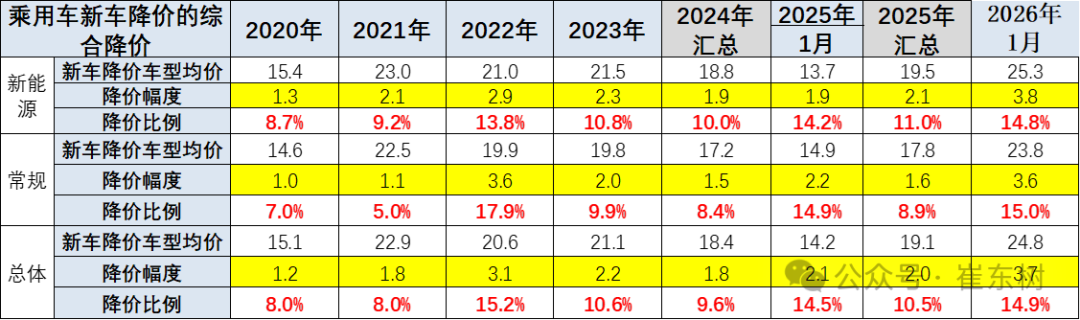
1月车市降价幅度达到14.9%。 值得注意的是,这一波降价潮中,市场呈现出"油电同降"的现象。2026年1月共有17款新车降价,较同期增加9款。其中燃油车10款,较同期增加5款;增 程式混合动力1款,较同期多1款;纯电动车型6款,较同期增加3款。 乘联分会秘书长崔东树提供的最新数据显示,2026年1月份,总体乘用车市场中,新车降价车型均价24.8万元,降价力度算术平均达到3.7万元。细分来 看,新能源车降价车型的均价为25.3万元,平均降价3.8万元,降幅为14.8%;常规燃油车降价车型均价为23.8万元,平均降价3.6万元,降幅达到15%。 从降价幅度来看,当月国内乘用车新车降价车型的总体降幅高达14.9%,环比上升2.5个百分点,同比上升0.4个百分点。 1月份,无论是降价绝对金额还是降幅比例,2026年1月的数据均较2025年全年平均水平(降幅10.5%)有明显提升。 第一财经注意到,1月份的新能源车型降价幅度超过了过去6年(2020~2025)的年度平均水平。过往6年中,即使是在降价力度最高的2022年,年度平均 降价幅度也只有13.8%。 | | 乘用车新车降价的综 | 2020年 | 2021年 ...

提振居民消费:从政策驱动到内生动力的转型之路
Di Yi Cai Jing· 2026-02-08 13:25
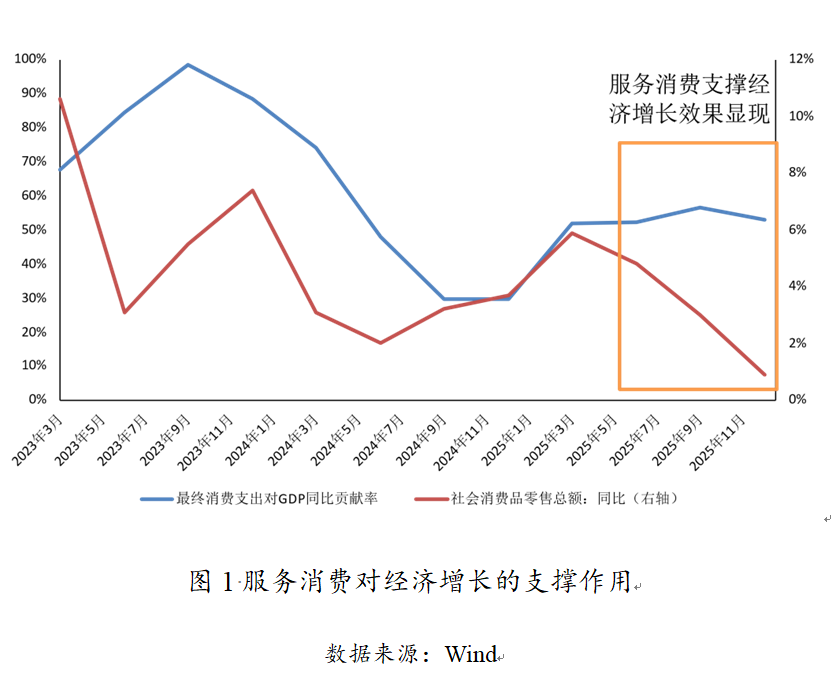
现阶段我国居民消费市场呈现出结构升级与驱动乏力并存的鲜明阶段性特征。 《中共中央关于制定国民经济和社会发展第十五个五年规划的建议》(下称《建议》)明确重提"居民消费率明显提 高",该表述清晰传递出未来五年我国着力提振居民消费、释放消费潜力的核心政策导向,为消费市场高质量发展划定 核心主线。相较于笼统表述或者具体量化目标,本次目标设定更具科学性与务实性——既充分兼顾我国经济转型升级 阶段的客观实际,避免设定过高过急的发展任务;又保留充足的任务约束性,倒逼各项促消费政策落地见效、形成协 同发力格局。 当前,我国居民消费提振正处于历史性关键转折期,消费增长驱动模式正逐步脱离以往依赖国补、消费券等短期刺激 性政策拉动的传统路径,转向培育收入支撑、消费意愿、场景供给等内生动力的长效发展模式。这一转型的核心是通 过分配端改革,破解居民"不敢花、不愿花、没钱花"的深层制约,最终实现居民消费从"被动响应"向"主动参与"、 从"不敢花"向"放心花、愿意花"的根本性跨越。 居民消费率由居民平均消费倾向(居民消费支出占可支配收入的比重)与居民可支配收入占GDP比重两大核心维度共 同决定,两大维度相互关联、互为支撑、缺一不可——前者 ...
“中国屏”“中国AI” 在米兰冬奥批量出圈,冰雪体育营销加码
Di Yi Cai Jing· 2026-02-08 13:15
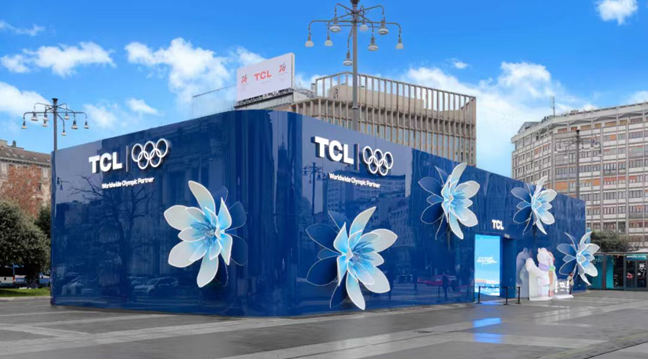
Core Insights - The 2026 Winter Olympics in Milan and Cortina is showcasing an increasing presence of Chinese technology products, positioning it as a "golden window" for Chinese manufacturing to demonstrate its technological strength globally [1] - Chinese brands, including TCL, Alibaba, and Anta, are actively participating as sponsors, reflecting their competitive strength and aggressive marketing strategies in the global market [1] Group 1: Chinese Technology Empowerment - TCL has joined the ranks of global partners for the Winter Olympics, integrating its technology and products into the event's operations and user experience [3] - The "Snow Velvet Wonderland" exhibition by TCL at Milan's central train station features innovative products like TVs, air conditioners, and AR/AI glasses, showcasing future technology [3][4] - TCL's "Olympic Screen Universe" initiative includes providing hundreds of large-screen TVs and digital signage for broadcasting, enhancing the viewing experience for athletes and spectators [4] Group 2: AI and Smart Solutions - The Winter Olympics is noted as the "smartest" in history, with Alibaba's AI model enhancing operational efficiency for national Olympic committees across 11 countries [5] - AI technology is also being utilized for high-precision reconstruction of snowy scenes during broadcasts, improving the clarity of fast-paced sports action [5] Group 3: Sports Marketing and Brand Promotion - TCL has signed Chinese freestyle skier Gu Ailing as its global brand ambassador and is sponsoring top athletes, leveraging the Olympics to promote its brand [6] - Other Chinese brands, such as Changhong and Midea, are also increasing their presence in winter sports marketing, with Changhong partnering with the International Ski Federation [7] - Chinese apparel brands are gaining visibility, with teams from various countries wearing outfits from brands like Li Ning and Anta during the opening ceremony [8] Group 4: Athlete Endorsements - Sports stars are becoming popular choices for brand endorsements, with Gu Ailing securing numerous deals post-2022 Beijing Olympics, highlighting the effectiveness of athlete endorsements over entertainment figures [9] - The marketing strategies of Chinese brands are evolving, with a need for more creativity and storytelling in their campaigns to enhance global appeal [9]

人民币稳定币境外发行被禁
Di Yi Cai Jing· 2026-02-08 13:09
被市场称为虚拟货币领域"史上最严"的监管新规近日正式落地。 2月6日,央行联合八部门发布《关于进一步防范和处置虚拟货币等相关风险的通知》(下称《通 知》),再次重申虚拟货币相关业务活动属于非法金融活动,并首次明确任何单位和个人不得在境外发 行挂钩人民币的稳定币。 与此同时,证监会同步发布具有实操意义的附件《关于境内资产境外发行资产支持证券代币的监管指 引》(下称《指引》),首次正面定义现实世界资产(RWA)代币化,并确立"境内严禁、境外严 管"的监管原则。 八部门协同发力联合绞杀非法金融活动,由此形成了对虚拟货币全链条的严格管控。 在此次新规对境内主体赴境外开展虚拟货币业务实施严监管、明确境外发币红线的背景下,北京大成律 师事务所高级合伙人肖飒认为,从现实落地的角度,内地重申加密资产监管态度,意味着内地大型企业 会继续审慎,科技巨头未来可能不会继续申请稳定币牌照。 不过肖飒也提出,从制度看,内地企业的海外控股公司不能发行虚拟货币,但合作公司是否可以参与发 行稳定币,值得探讨,并未被完全封死机会。同时,虽然不能直接发币,但不意味着海外控股公司不能 参与WEB3.0的基础设施建设和科技赋能服务。 从香港稳定币牌照 ...
更好发挥央国企扩投资作用,国常会锚定新兴产业等重点领域
Di Yi Cai Jing· 2026-02-08 13:07
Core Viewpoint - Central state-owned enterprises (SOEs) are increasingly focusing on effective investment to stabilize economic growth and enhance development momentum, with specific targets and measures being established for investment expansion [1][2]. Group 1: Investment Policies and Measures - The State Council, led by Premier Li Qiang, has emphasized the importance of effective investment policies, particularly in infrastructure, urban renewal, public services, and emerging industries, to support long-term development and competitive advantages [1]. - The National Development and Reform Commission (NDRC) has organized the early release of a list of key projects and central budget investment plans for 2026, with a funding scale of approximately 295 billion yuan [6][7]. - The government is focusing on enhancing investment efficiency and promoting both physical and human capital, with a significant portion of projects directly benefiting people [7][8]. Group 2: Role of Central SOEs - Central SOEs are recognized as a crucial force in stabilizing investment, with recent meetings highlighting the need for increased investment in key areas to support national economic goals [2][3]. - The National Grid plans to invest 4 trillion yuan in fixed assets during the 14th Five-Year Plan period, marking a 40% increase compared to the previous plan [2]. - The average annual growth rate of investment in emerging industries by central SOEs has exceeded 20% during the 14th Five-Year Plan, with a projected investment of 2.5 trillion yuan in strategic emerging industries by 2025 [3]. Group 3: Emerging Industries and Future Investments - The establishment of a special fund for strategic emerging industries, initiated by the State-owned Assets Supervision and Administration Commission (SASAC), aims to support sectors such as artificial intelligence, aerospace, and quantum technology, with an initial scale of 51 billion yuan [4]. - Central SOEs are expected to optimize the layout of state-owned economies by accelerating the transformation of traditional industries while increasing investments in emerging sectors like commercial aerospace and renewable energy [3][5]. - The National Investment Fund has focused on strategic emerging industries, with cumulative investments exceeding 200 billion yuan, indicating a strong commitment to future-oriented sectors [3].
管涛:沃什重返美联储影响几何
Di Yi Cai Jing· 2026-02-08 12:45
特朗普政府提名沃什出任美联储主席,仅是本轮贵金属价格下跌的催化剂。 确认下一任美联储主席人选是美国总统特朗普第二任期内最重要的人事安排之一。1月30日,特朗普宣 布提名凯文·沃什出任美联储主席,提名消息引发金融市场震荡,贵金属价格出现急跌。那么,如何看 待沃什的政策主张,及其对贵金属价格的影响?本文拟就此展开分析。 按照程序,美联储主席提名需要经过参议院确认。尽管针对鲍威尔的刑事调查一事可能导致提名确认过 程一波三折,但提名最终获得确认仍是大概率事件,沃什最早在今年6月份议息会议之前上任,其政策 立场是全球关注焦点。 沃什过去的货币政策立场以鹰派著称,2017年因其鹰派立场和资历尚浅,在特朗普第一任期不敌鲍威 尔,错失美联储主席提名机会。不过,近年来尤其是在本轮美联储主席遴选过程中,沃什与特朗普的政 策立场逐渐趋同,屡次批评美联储拒绝降息,并指责美联储过度依赖数据、滥用资产负债表、存在职能 蔓延等问题。 结合近年来沃什的公开表态,可以将其政策主张归纳为以下三个方面。 第一,支持美联储降息。在公布美联储主席提名之前,特朗普曾在媒体采访中表示,将快速降息视为挑 选美联储主席的"试金石"。因此,包括沃什在内的四位候 ...