
Jing Ji Guan Cha Bao

Search documents
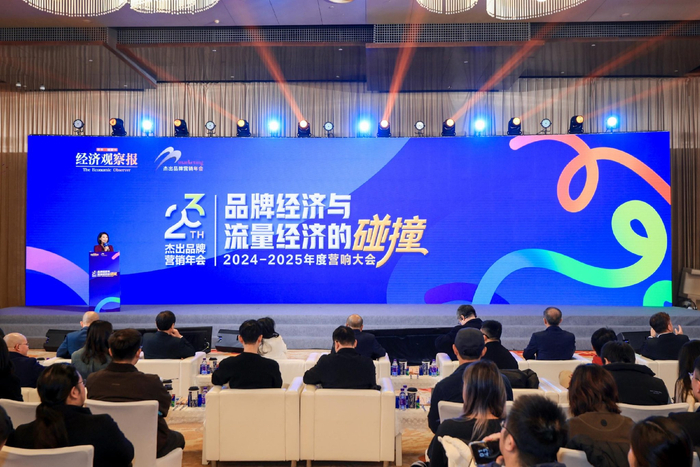
品牌经济与流量经济的碰撞——2024-2025年度营响大会暨(第二十三届)杰出品牌营销年会圆满举行
Jing Ji Guan Cha Bao· 2025-12-11 10:24
Core Insights - The conference emphasizes the shift from short-term profit-driven marketing to long-term brand value as the core competitive advantage for companies in a changing media landscape [3][5][24] - The importance of deep emotional connections and cultural significance in branding is highlighted, as brands must evolve to maintain relevance and consumer trust [5][19][24] Group 1: Brand Value and Strategy - The president of the China Advertising Association stresses that brands are the most critical competitive asset, requiring long-term accumulation rather than short-term marketing tactics [5] - Companies are encouraged to focus on the deeper values of their brands, including product quality, craftsmanship, and customer service, rather than just traffic and exposure [3][5] - The transition from "traffic" to "retention" is deemed necessary, as the essence of brand-user connection remains unchanged despite technological advancements [11][24] Group 2: Content and Consumer Engagement - The rise of "slow content" through podcasts is noted as a response to information overload, providing a unique emotional connection that AI cannot replicate [7] - Brands are urged to create meaningful interactions and emotional narratives that resonate with consumers, moving beyond mere transactional relationships [19][21] - The integration of traditional culture with modern consumerism is highlighted as a way to deepen brand engagement and emotional ties with consumers [19] Group 3: Market Trends and Innovations - The apparel industry is showcased as an example of how brands can leverage functionality, aesthetics, and emotional storytelling to build a new pricing structure [13] - The sports sector is identified as a key area for emotional resonance, with brands using events to create natural consumer connections [15] - The evolution of domestic brands in response to new consumer trends is discussed, emphasizing the importance of brand value and innovation in maintaining market leadership [17][24] Group 4: Cross-Industry Perspectives - A roundtable discussion reveals insights from various industries on brand growth variables and the changing consumer psyche, emphasizing the need for long-term asset building [23] - The importance of aligning brand values with consumer expectations and societal responsibilities is reiterated across different sectors [23] - The conference concludes that the future of brand competition lies in establishing genuine relationships and cultural connections with consumers [24]

在抗战烽火中存续中华文脉,纪录片《抗日烽火中的李庄》首播
Jing Ji Guan Cha Bao· 2025-12-11 09:08
(原标题:在抗战烽火中存续中华文脉,纪录片《抗日烽火中的李庄》首播) 12月11日,纪录片《抗日烽火中的李庄》首播仪式在北京举行。这部聚焦"四大抗战文化中心"之一李庄 的大型纪录片,于当日起在央视纪录频道(CCTV-9)播出,带领观众走进一段波澜壮阔的历史。 中央党史研究室原副主任张树军,新华社总经理室原副总经理、党组副书记武清月,中国社会科学院经 济研究所纪委书记、副所长张鼐,清华大学建筑历史研究所党支部书记、中国营造学社纪念馆特聘研究 员李路珂,北京大学人文社会科学研究院院长助理、教授韩笑,以及梁思成外孙女于葵,李济孙女李 宁,罗哲文儿子罗杨等嘉宾出席首播仪式。总制片人余虹介绍了该纪录片制作情况及内容,总导演池建 新分享了创作初衷和拍摄历程中的感人故事。 《抗日烽火中的李庄》首播仪式现场,受访者供图 作为纪念中国人民抗日战争暨世界反法西斯战争胜利80周年的重磅之作,《抗日烽火中的李庄》全面、 深入地呈现了这段非凡的历史。同时,该纪录片结合学者们在李庄坚持学术报国、师生们治学救国等内 容,讲述了这份民族大义和家国情怀产生的深远影响。 据悉,该纪录片由中共宜宾市委宣传部、宜宾李庄古镇景区管理委员会、中共宜宾市 ...
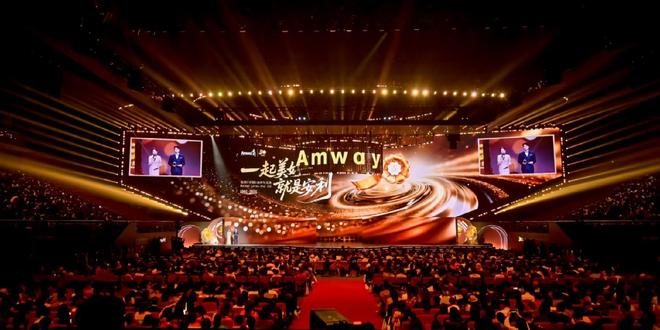
安利中国本土化创新:从一粒“种子”到“美好生活”之花
Jing Ji Guan Cha Bao· 2025-12-11 07:27
Core Viewpoint - Amway (China) celebrates its 30th anniversary and the opening of the "Amway Beautiful Life Plaza" in Guangzhou, marking a significant milestone in its development in China [2][21]. Group 1: Innovation and Research - Amway has established the largest plant variety resource library in the industry, with over 200 types and 900 varieties of plants, including 304 varieties of lotus and 131 varieties of blueberries [5]. - The company collaborates with prestigious institutions like the Chinese Academy of Traditional Chinese Medicine and the Nanjing Institute of Soil Sciences, achieving breakthroughs in plant nutrition research [5]. - Amway's plant research center has completed the whole genome sequencing of chrysanthemum, filling an international gap, and has been awarded the "International Contribution Award for Traditional Chinese Medicine" for its pioneering work in plant DNA molecular identification technology [5]. Group 2: Sustainable Agriculture and Localized Production - Amway is investing in a new organic farm in Sichuan, China, which will focus on the cultivation of traditional Chinese medicinal herbs and aims to enhance the quality and safety of its product raw materials [6]. - The company operates over 2,500 hectares of its own farms in the U.S., Mexico, and Brazil, and has 134 certified organic farms globally, emphasizing organic and sustainable planting methods [6]. Group 3: Market Strategy and Product Development - Amway has transitioned from "follow-up localization" to "leading localization," establishing China as a key market and innovation engine, with localized product development and production [11]. - The company has launched several successful products based on traditional Chinese medicine, such as Ginkgo Biloba tablets, which have generated over $3 billion in sales globally [12]. - Amway's Guangzhou production base supports 55% of its global product sales and serves over 50 countries, becoming a crucial hub in its global supply chain [12][14]. Group 4: Investment and Future Plans - Amway announced a five-year investment plan of 2.1 billion RMB, which includes 700 million RMB for upgrading its Guangzhou production base and 400 million RMB for enhancing digital infrastructure [21]. - The investment also allocates 500 million RMB for research and development, including projects on organic farm construction and plant anti-aging research [21]. Group 5: Community Engagement and Social Responsibility - Amway is recognized as a "strategic partner" in Guangzhou's "City Partner" initiative, focusing on health promotion, ecological friendliness, and community building [19]. - The company aims to integrate its resources with community efforts to create a vibrant and warm urban environment, reflecting its commitment to social responsibility [19][23].
小盘高价的希迪智驾:263港元是否透支了赛道空间?
Jing Ji Guan Cha Bao· 2025-12-11 05:44
Core Viewpoint - The IPO of Hedi Zhijia at a price of 263 HKD raises concerns about whether the valuation is overstretched given the current market conditions and the company's financial performance [1][2][3] Company Summary - Hedi Zhijia plans to issue 5.4 million shares, with only 270,000 shares available for public offering, leading to a market capitalization of over 11.5 billion HKD and expected fundraising of approximately 1.42 billion HKD [1] - The company has reported continuous losses over the past three years, with adjusted net losses of 159 million, 138 million, and 127 million HKD respectively, indicating a lack of sufficient financial support for its high valuation [2] - The company's business model relies heavily on engineering delivery, resulting in significant cash flow volatility and long-term working capital pressure, with an unclear path to profitability [2] Industry Summary - The mining autonomous driving sector is characterized as a "can land, but cannot grow fast" market, with long project cycles, dispersed regions, and limited scalability, making it difficult to sustain high growth expectations typical of tech companies [2] - Hedi Zhijia ranks sixth among all smart driving commercial vehicle companies in China (including Hong Kong, Macau, and Taiwan) with a market share of only 5.2%, indicating that growth relies more on expanding engineering projects rather than productization [2] - The small issuance structure, with only 5.4 million shares and a concentrated public offering, raises concerns about the high pricing, as it allows underwriters to push the price to the upper limit, reducing the trading space in the secondary market [2]
四川“十五五”规划建议:加快发展低空经济、新材料等新兴产业
Jing Ji Guan Cha Bao· 2025-12-11 05:44
(原标题:四川"十五五"规划建议:加快发展低空经济、新材料等新兴产业) 经济观察网 近日,中共四川省委关于制定四川省国民经济和社会发展第十五个五年规划的建议发布。 其中提出,培育壮大新兴产业和未来产业。推动战略性新兴产业集聚成势,实施产业创新工程,推进产 业新赛道争先竞速行动,着力打造新兴支柱产业。做强生物医药、轨道交通装备、节能环保等国家战略 性新兴产业集群,壮大新型显示、集成电路、无人机、核技术应用等省级战略性新兴产业集群,加快发 展人工智能、低空经济、新能源、新材料、智能网联汽车、核医疗、激光装备、增材制造等新兴产业。 加快建设西部商业航天港、航空动力科创区,推进航空航天强省建设。前瞻布局发展未来产业,聚焦第 六代移动通信、量子科技、生物制造、氢能和核聚变能、深空深地、脑机接口、具身智能、前沿半导体 等领域,加快突破前沿关键核心技术,建设一批未来产业孵化器和先导区。推动新技术新产品新场景应 用示范,完善产业生态,建设新场景推广应用中心,建立未来产业投入增长和风险分担机制,加快新兴 产业规模化发展。促进中小企业专精特新发展,培育瞪羚企业、独角兽企业。 中共四川省委关于制定四川省国民经济和社会发展第十五个五 ...
漆彩绚丽、纹饰芳菲:流传至日本的宋元明髹饰工艺
Jing Ji Guan Cha Bao· 2025-12-11 02:15
Core Viewpoint - The article discusses the rich history and cultural significance of the traditional Chinese lacquerware craftsmanship, particularly during the Song, Yuan, and Ming dynasties, and its influence on Japanese lacquerware [2][3][4]. Group 1: Historical Context - China is recognized as the earliest country to use natural lacquer, with evidence of lacquerware dating back to the Neolithic period [3]. - The lacquer craftsmanship in China reached a high level during the Warring States period, and by the Song dynasty, it had become both practical and aesthetically pleasing [3][6]. - The term "Japan" is associated with lacquerware due to the significant export of Japanese lacquer products to Europe during the Edo period, contrasting with the more prominent export of Chinese porcelain [3]. Group 2: Cultural Exchange - Chinese lacquerware has profoundly influenced Japanese culture, with Chinese styles being treasured by the Japanese imperial family since the Tang dynasty [3][4]. - The craftsmanship of lacquerware in Japan can be traced back to Chinese techniques, particularly those from the Song, Yuan, and Ming dynasties, which are highly valued in Japan [3][4]. Group 3: Techniques and Styles - The article details various lacquer techniques such as "suqi" (plain lacquer), "carved lacquer," "gold inlay," and "mother-of-pearl inlay," which reflect the sophistication of lacquer craftsmanship during the Song to Ming periods [6][8]. - "Suqi" emphasizes simplicity and texture, while "carved lacquer" involves layering different colors and intricate designs, showcasing a more complex aesthetic [6][7]. - "Gold inlay" became particularly popular during the Ming dynasty, enhancing the visual appeal of lacquerware through the contrast of gold against the lacquer surface [7]. Group 4: Exhibition Information - The "Red and Green Compete in Bloom: Treasures of Song, Yuan, and Ming Lacquerware" exhibition is a collaboration between the Shanghai Museum and the Tokyo National Museum, featuring over a hundred cultural treasures from both countries [9]. - The exhibition will conclude on November 23, 2025, providing a rare opportunity to view these lacquer masterpieces that have returned to their homeland [9].
不唯大模型论 企业级 AI Agent 落地的关键到底是什么?
Jing Ji Guan Cha Bao· 2025-12-10 13:13
Core Insights - The essence of AI Agents is described as "the super brain of large models + agile automated hands," emphasizing their capabilities in tool invocation, task planning, and autonomous execution [1] - The rise of AI Agents by 2025 is attributed to the maturity of large models, supply of computing power, open-source ecosystems, and real industry demands [1] Group 1: Transition in AI Expectations - Companies' expectations of AI have shifted from "demonstrative showrooms" to "production-ready factories," indicating a move towards end-to-end workflow automation [2] - AI Agents are evolving from merely answering questions to completing entire processes, such as invoice recognition and reimbursement [2] Group 2: Misconceptions about Large Models - A common misconception is that simply integrating a powerful general large model will lead to enterprise intelligence; however, large models are merely "engines" and not complete solutions [3] - The successful implementation of AI requires a deep understanding of industry pain points, customer logic, and business processes, highlighting the importance of "Know-How" [3] Group 3: Implementation Framework - The "Four Quadrant Digital Employee" model categorizes AI Agents based on industry knowledge depth and process complexity, providing actionable implementation paths for enterprises [4] - The deployment of AI Agents in specific tasks has shown significant efficiency improvements, such as a 70% reduction in bid document generation time and a 50% increase in knowledge retrieval efficiency [4] Group 4: Trust and Data Dynamics - For AI Agents to penetrate core business functions in large enterprises, they must pass six critical tests: stability, scalability, usability, system integration, security compliance, and controllability [5] - The concept of an "AI Data Flywheel" is introduced, where each interaction with clients, systems, or knowledge bases generates valuable data that enhances model iteration and execution precision [6] Group 5: Evolution of Organizational Management - AI Agents are expected to evolve into valuable assets within companies, becoming more sophisticated with use, thus transforming organizational management from addressing human uncertainties to optimizing collective intelligence [6] - The emergence of AI Agents signifies a shift in enterprise intelligence from "assisting humans" to "collaborating with humans" and even "autonomous execution," enhancing organizational efficiency and process optimization [7]
瑞银胡一帆:预计2025年中国经济增速在4.9%至5%区间
Jing Ji Guan Cha Bao· 2025-12-10 13:13
Economic Outlook - UBS expects China's economic growth in 2025 to be between 4.9% and 5%, with better-than-expected performance in the first three quarters and a slowdown in the fourth quarter [1] - The growth target for 2026 is likely to be set at 4.5% to 5%, supported by existing policy measures [1] Consumption and Investment - Consumption growth is projected to be in the range of 3% to 4% in 2026, while investment is expected to recover with an increase in growth rate [1] - Exports are anticipated to show strong resilience, with an average growth rate of 5% in 2025 and a forecasted growth of 2% to 3% in 2026 [1] Capital Markets - The capital market is expected to maintain a stable outlook in the short and medium term, benefiting from profit growth and liquidity support [1] - Technology stocks are anticipated to perform well, with a projected 30% increase in 2025 following a 20% rise in 2024, and current valuations are 30% lower than US stocks [1] Monetary Policy - A reduction in reserve requirement ratios by 50 to 100 basis points and interest rate cuts of 20 to 30 basis points are expected in 2025 [2] - The USD/CNY exchange rate is projected to stabilize around 7 by the end of 2025, with a potential decline to approximately 6.9 in the second half of 2026 [2] Artificial Intelligence Sector - Global capital expenditure in the AI sector is expected to reach $350 billion in 2025, increasing to $500 billion in the following year, driven by real market demand [2] - By 2030, revenue in AI-enabled sectors is projected to reach $3.1 trillion, with a compound annual growth rate of 30% [2] Investment Recommendations - UBS recommends focusing on AI, longevity economy, and structural trends in electricity and resources within diversified stock portfolios [3] - AI is expected to significantly enhance global revenue and productivity, with potential automation of one-third of tasks in the labor market [3] - The integration of AI in healthcare presents substantial market growth opportunities across various sectors, including pharmaceuticals and diagnostics [3]

中国新贵崛起 另类投资占比翻倍,黄金成新晋标配资产
Jing Ji Guan Cha Bao· 2025-12-10 12:27
Core Insights - The UBS report indicates a structural shift in wealth creation and asset allocation among billionaires, with the number of billionaires projected to increase by 8.8% to 2,919 by 2025, and total wealth reaching a record $15.8 trillion, a 13% increase [1] - The Asia-Pacific region is expected to see a significant rebound, with the number of billionaires rising from 981 to 1,036, marking the highest growth globally [1] - A notable change in asset allocation among Chinese billionaires is observed, with alternative investments doubling from around 10% to over 20% of their portfolios [1][2] Wealth Distribution and Investment Trends - The report highlights a shift from concentrated wealth in publicly traded companies, particularly in technology and consumer sectors, to a more diversified asset allocation including alternative investments [2] - Infrastructure investments are becoming a key focus, with 35% of global billionaires indicating increased exposure, particularly among Chinese clients, as these assets provide stable cash flows of 5%-6% [2] - The trend of increasing gold investments is evident, with 32% of billionaires planning to increase their holdings in gold and precious metals, significantly higher than levels seen in 2022-2023 [2][3] Behavioral Changes and Wealth Management - The behavior of billionaires is influenced by national actions, with many closely monitoring central bank gold purchases, leading to a historical high in global official gold reserves [3] - Gold is increasingly viewed as a core defensive asset rather than a short-term speculative investment, integrated into family trusts and long-term wealth pools to hedge against currency devaluation and political uncertainty [3] - The profile of new Chinese billionaires is characterized by youth, entrepreneurial spirit, and a focus on wealth inheritance, with 60% planning to regularly update wills and trust structures [4] Future Wealth Transition - An estimated $135.3 billion wealth transfer is expected in mainland China over the next 15 years, prompting new billionaires to seek professional structures for investment, education, and philanthropy [5] - The shift from high-growth pursuits to building diversified portfolios signifies a transition from "wealth creators" to "wealth managers" among Chinese billionaires [5] - This transformation is closely linked to China's macroeconomic narrative, with billionaires' wealth rooted in industrial upgrades and technological innovation, reflecting the integration of the Chinese economy into the global landscape [5][6] Capital Flow and Global Investment Landscape - The changing investment strategies may reshape capital flows, directing more funds into alternative investments that support the real economy, innovative technologies, and global infrastructure [6] - As Chinese billionaires become active participants in shaping risk-return profiles through asset allocation, they are expected to play an increasingly critical role on the global wealth stage [6]
尊重孩子和溺爱孩子的界限在哪里?
Jing Ji Guan Cha Bao· 2025-12-10 08:51
(原标题:尊重孩子和溺爱孩子的界限在哪里?) 一、 可以说,80后90后的父母,是开始觉醒的父母。我们小的时候,大都是被我们的父母用简单粗暴又传统 朴实的方法教育的。 简单说,就是做错事情要挨骂甚至挨打,被要求"一定要乖,要听大人的话",被灌输"爸爸妈妈为了你 好辛苦,你长大了一定要孝顺和报答父母"诸如此类的观念。 成为父母之后,我们开始学习和自省,明白了"孩子是独立的个体,也应该被我们尊重"等道理。不过, 你真的懂得如何"尊重"孩子吗? 你带五岁的儿子打预防针,虽然事先铺垫鼓励,打的时候,他却还是哭得惊天动地。打完针留观的半小 时里,他依然哭哭啼啼,你耐着性子百般劝慰"好了好了不疼了啊",他都还在抽抽嗒嗒,时不时还高一 声抽泣。 一位妈妈发朋友圈说:"如今做妈妈太难了,我是尊重孩子,却被亲朋好友指责是溺爱。请哪位大神告 诉我,什么样的爱是溺爱?" 其实,为人父母谁没有这样的困惑?严厉了,怕孩子变得胆小怕事。松懈了,又担心调皮得无法无天。 就这样陷入两难之境… 旁人对你侧目,你觉得尴尬,开始不耐烦。你皱着眉头说:"行了行了,打个针该有多疼呢?男子汉勇 敢一点啊。"孩子不买账,你继续说:"看看人家女孩子都比你坚 ...