
Xin Jing Bao

Search documents
通州将围绕安贞医院通州院区、环球度假区等“量身定制”交通配套
Xin Jing Bao· 2026-01-30 09:20
Group 1 - The Beijing sub-center's "14th Five-Year" plan focuses on enhancing transportation infrastructure, with the Pinggu Line expected to be operational by the end of this year [1][2] - The sub-center will customize transportation support around key areas such as Anzhen Hospital's Tongzhou branch and the Universal Resort [1][3] - The plan includes the acceleration of M101 and Yizhuang lines, as well as the construction of additional stations to expand the rail network [2][3] Group 2 - The sub-center aims to strengthen interconnectivity and create a transportation model for the Beijing-Tianjin-Hebei region, addressing road bottlenecks and enhancing major road networks [2] - There will be a focus on optimizing traffic organization in the Grand Canal Business District and improving service capabilities in the southeast manufacturing corridor [3] - The initiative includes the development of a comprehensive bus connection system, introducing micro-circulation routes and "short, frequent, fast" lines to enhance last-mile connectivity [3]
证监会公布网站年度报表:全年发布信息上万条,访问超155亿次
Xin Jing Bao· 2026-01-30 09:07
新京报贝壳财经讯(记者胡萌)1月30日,证监会公布政府网站工作2025年度报表。数据显示,全年证 监会官网总访问量高达155.49亿次。 根据报告,证监会在2025年共发布信息总数12415条。其中,信息公开目录信息更新量最多,达8990 条,政务动态信息更新量和概况类信息更新量分别为2331条、1094条。 在互动交流方面,证监会2025年共收到留言24842条,办结留言24727条,平均办理时间为1.39天。 在移动新媒体方面,2025年证监会发布微博、微信各666条,前者关注量为596.6万,后者关注量为 169.58万。 从解读回应来看,全年证监会发布解读信息27条,回应公众关注热点或重大舆情数量20次。 从办事服务来看,全年证监会办件量总数达3991件,其中法人办件量3720件,自然人办件量271件。 ...
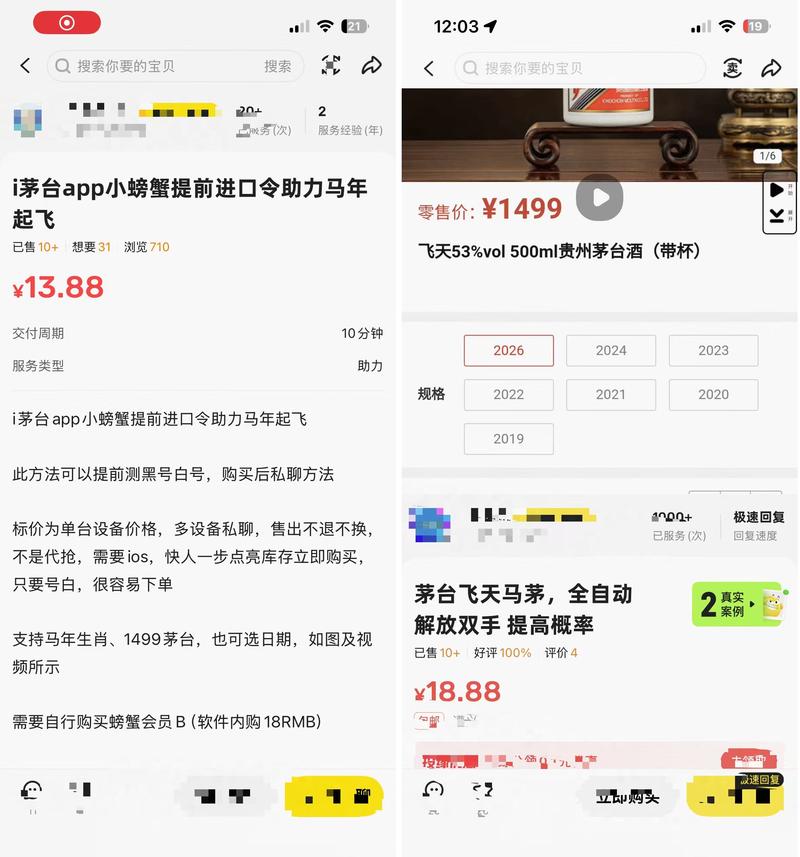
专家:用外挂在i茅台买飞天涉嫌犯罪,还可能泄露身份证等信息
Xin Jing Bao· 2026-01-30 08:57
Core Viewpoint - The rise of illegal "外挂" software for purchasing tickets and products like "i茅台" during peak consumption seasons poses significant risks to consumers and market integrity [1][2][10]. Group 1: Illegal Software Sales - Numerous sellers on second-hand platforms are offering "外挂" software claiming to enhance the success rate of purchasing "i茅台" [2][5]. - The software, such as Storm Sniffer, is marketed as capable of automating the purchase process, but sellers do not guarantee successful transactions [5][6]. - "i茅台" has issued a statement condemning the sale of such software, highlighting its negative impact on market order and potential legal violations [2][6]. Group 2: Security Risks - Experts warn that the "外挂" software does not possess genuine automated purchasing capabilities and may compromise user data security [8][12]. - Users of these software face risks of personal information leakage, financial loss, and potential legal consequences due to the use of illegal scripts [12][13]. - The software can capture sensitive data, making users vulnerable to further scams and identity theft [13]. Group 3: Legal Implications - The sale and use of "外挂" software violate multiple laws, including the Anti-Unfair Competition Law and the Consumer Rights Protection Law in China [6][7]. - Serious violations may lead to criminal charges, including penalties for providing tools for illegal access to computer systems [7][6]. - Legal experts suggest that users suffering financial losses from using such software can seek legal recourse through complaints or lawsuits [13].


卫生巾新国标全解读:尺寸用料从严要求,不达标小厂面临淘汰
Xin Jing Bao· 2026-01-30 08:53
Core Viewpoint - The newly released national standard for sanitary napkins (GB/T 8939-2025) addresses consumer concerns regarding length, experience, and safety, tightening requirements for various indicators compared to the old standard, and is set to be implemented on January 1, 2027 [1][18]. Group 1: New Standards and Requirements - The new standard reduces the allowable length deviation from "±4%" to "≥-2.0%" to better protect consumer rights [3][21]. - The new standard introduces stricter requirements for physical performance, including adhesive peel strength, absorption speed, and backflow volume, enhancing user comfort [4][6]. - Chemical safety indicators have been added, including limits on phthalates, heavy metals, and carcinogenic dyes, aligning with standards for infant products [9][10][11]. Group 2: Industry Impact - The new standard is expected to lead to increased R&D investment by sanitary napkin manufacturers, reducing low-quality competition and addressing issues of false labeling and substandard products [1][22]. - It is anticipated that approximately 30% of non-compliant small manufacturers may be eliminated from the market due to the new regulations [21][22]. - The overall market for sanitary napkins and pads is projected to reach approximately 589.8 billion yuan in 2024, showing slight growth but a significant slowdown in growth rate compared to previous years [21]. Group 3: Consumer Concerns and Market Dynamics - Recent safety incidents have heightened consumer awareness and concern regarding the quality of sanitary products, leading to a shift towards "medical-grade" products [12][18]. - The new standard aims to raise the safety baseline for consumer sanitary products, addressing the previous laxity in the old standards [21][22]. - The industry is experiencing a dichotomy in quality, with leading brands outperforming the old standards while smaller manufacturers struggle with quality issues [21].

智驱新程·芯动未来:L3级自动驾驶将怎样重塑汽车生态?
Xin Jing Bao· 2026-01-30 08:39
新京报社党委副书记、总编辑李海在论坛致辞中表示,中国汽车产业正经历从"量"的跨越到"质"的跃 升,全面驶入以"智驱"为核心的新阶段。汽车的价值内核加速向"移动智能终端、储能单元和数字空 间"三位一体演进,成为"新质生产力"的核心载体。 李海表示,新京报贝壳财经2025年入选中宣部全国6家主流财经媒体之一,成为国家经济宣传重点媒体 库,始终致力于以专业、深度的调查报道记录并推动产业变革。本次以"智驱新程·芯动未来"为主题的 第二十届超级汽车论坛,旨在汇聚行业智慧,洞察未来趋势,为推动中国汽车产业的高质量发展贡献思 想动力。 中国汽车产业正迎来动能转换的深刻变革,全面驶入以智能网联为核心的"智驱"新阶段。 2026年1月30日下午,"智驱新程·芯动未来"新京报第二十届超级汽车论坛举办。中国汽车工程学会名誉 理事长、中国汽车人才研究会名誉理事长付于武,同济大学汽车学院教授、汽车安全技术研究所所长朱 西产做主旨演讲。深蓝汽车软件开发总监余龙、北汽研究总院智能驾驶资深工程师张洋、对外经济贸易 大学保险法与社会保障法研究中心研究员李至柔,围绕"自动驾驶挺进L3,带来怎样的改变?"热点话题 展开圆桌对话,分享他们的真知灼见 ...
智驱新程 芯动未来:L3级自动驾驶将怎样重塑汽车生态?
Xin Jing Bao· 2026-01-30 08:26
中国汽车产业正迎来动能转换的深刻变革,全面驶入以智能网联为核心的"智驱"新阶段。 2026年1月30日下午,"智驱新程芯动未来"新京报第二十届超级汽车论坛举办。中国汽车工程学会名誉 理事长、中国汽车人才研究会名誉理事长付于武,同济大学汽车学院教授、汽车安全技术研究所所长朱 西产做主旨演讲。深蓝汽车软件开发总监余龙、北汽研究总院智能驾驶资深工程师张洋、对外经济贸易 大学保险法与社会保障法研究中心研究员李至柔,围绕"自动驾驶挺进L3,带来怎样的改变?"热点话题 展开圆桌对话,分享他们的真知灼见。 同时,2025年度超级汽车系列名单在论坛上发布,10款年度车型、10家年度企业产生。 在这场汇聚了产学研的论坛中,L3级自动驾驶成为焦点话题。它不仅是一个技术节点的跨越,更是一 场牵动责任界定、安全伦理、保险法律与产业协同的深刻变革。 L2到L3,不是一次简单的软件升级 2025年"十四五"收官之际,中国汽车产业迎来振奋人心的消息,年产销量均超3400万辆,再创历史新 高,连续17年稳居全球第一。新能源汽车产销量突破1600万辆,连续11年位居全球第一。 新京报社党委副书记、总编辑李海在论坛致辞中表示,中国汽车产业正经历 ...
自动驾驶挺进L3,改变之下车企要闯几道关?
Xin Jing Bao· 2026-01-30 08:26
随着L3级车型的获批准入,中国汽车产业驶入"智驱"新阶段。"智驱新程 芯动未来"新京报第二十届超 级汽车论坛1月30日下午举办,邀请嘉宾参与《车圈圆桌派》,探讨"自动驾驶挺进L3,带来怎样的改 变?"这一热门话题。 余龙 深蓝汽车软件开发总监 张洋 北汽研究总院智能驾驶资深工程师 李至柔 对外经济贸易大学保险法与社会保障法研究中心研究员 责任之变:主体转移下的风险控制 新京报贝壳财经:从辅助驾驶到L3级有条件自动驾驶,有哪些技术难点? 余龙:一是系统可靠性,二是功能安全和预期功能安全的提升,三是人机接管的边界,四是运行设计域 精细化管理。 L2跨越到L3的本质是辅助驾驶到有条件自动驾驶的突破,意味着责任主体的转移。L2阶段驾驶员是责 任主体,L3阶段责任主体可能是主机厂、系统供应商等。技术难点在于责任主体转移过后,如何把风 险控制到最低。此外,AI决策模型的确立性和可解释性需进一步突破。 张洋:责任归属上,在L2级,责任主体始终是人。而到了L3的限定场景下是系统担责,需要驾驶员介 入时,驾驶员要及时接管车辆,这种责任主体的切换是一个动态、场景化的复杂过程。长尾场景泛化, 在极端天气、道路施工、突发障碍物等低概 ...
深蓝汽车余龙:L3级普及到消费端,需跨过成本与保险两道关
Xin Jing Bao· 2026-01-30 08:17
Core Insights - The transition from L2 to L3 autonomous driving represents a shift from driver assistance to conditional automation, indicating a change in responsibility from the driver to manufacturers and system suppliers [2][4] - The Ministry of Industry and Information Technology announced that Changan Automobile's Deep Blue brand and BAIC's Arcfox received the first licenses for L3 conditional autonomous driving vehicles in China, marking a new phase from technology validation to mass production [2] Group 1 - The key points for the transition from L2 to L3 include system reliability, functional safety, human-machine takeover boundaries, and refined operational design domain management [2] - The establishment of AI decision-making models needs further breakthroughs in terms of reliability and interpretability [2] - L3 vehicles may not have a single entity responsible for safety; it requires a combination of technical reliability, regulatory standards, and insurance resources to mitigate risks [2][3] Group 2 - L2 and L3 vehicle insurance will differ significantly, with L2 insurance primarily protecting the owner's rights, while L3 insurance may innovate to cover system suppliers and manufacturers [3] - Challenges for promoting L3-specific insurance include pricing, data barriers among manufacturers, and the profitability potential for insurance companies [3] - L3 vehicles are expected to rapidly advance in the To B operational sector by Q1 2026, with L2 systems penetrating approximately 150,000 models [4] Group 3 - The introduction of L3 vehicles is anticipated to positively impact China's intelligent connected vehicle industry by enhancing industry standards and accelerating development through improved user experience [4] - Four areas are identified for collaborative efforts to ensure the healthy development of autonomous driving: policy collaboration, standardization, industry chain collaboration, and consumer education [4]

万辰集团旗下好想来品牌门店扩张中频现短斤少两问题
Xin Jing Bao· 2026-01-30 08:15
Core Viewpoint - The brand "Hao Xiang Lai," under Wancheng Group, has been rapidly expanding its stores but has faced frequent complaints regarding issues like "short weight," which directly harms consumer interests [1] Group 1 - "Hao Xiang Lai" is a brand under Wancheng Group that has seen significant store expansion in recent years [1] - The rapid expansion of the brand has been accompanied by reports of consumer complaints about "short weight" practices [1] - The issue of "short weight" indicates a direct detriment to consumer interests, raising concerns about the brand's business practices [1]
智能网联新能源汽车锦标赛启动,将聚焦全固态电池、具身智能领域
Xin Jing Bao· 2026-01-30 08:15
Core Viewpoint - The 2026 National Disruptive Technology Innovation Competition for Intelligent Connected New Energy Vehicles has been launched in Beijing, aiming to enhance the competitiveness of the Beijing-Tianjin-Hebei region in this sector within 3 to 5 years [1] Group 1: Competition Overview - The competition will focus on cutting-edge areas such as all-solid-state batteries, automotive-grade chips, and embodied intelligence, aiming to discover disruptive technologies with breakthrough potential [1] - The event will utilize a closed-loop system of "competition selection - innovation incubation - industrial landing" to promote the transformation of technological innovations in the Beijing-Tianjin-Hebei region [1] Group 2: Strategic Goals - The competition is part of a broader strategy to elevate the technological and industrial capabilities of the region to a world-class level [1] - The National Technology Innovation Center of Beijing-Tianjin-Hebei will focus on upgrading the competition in key areas to facilitate technology transfer and enhance industrial clusters [1]