Hua Xia Shi Bao

Search documents
谁将是溶瘤病毒王者?滨会生物携全球首个III期HSV-2药冲港交所,亏损扩大能否突破商业化迷雾|创新药观察
Hua Xia Shi Bao· 2025-10-18 12:33
Core Insights - The IPO journey of Wuhan Binhui Biotechnology Co., Ltd. is seen as a critical test for the clinical value of oncolytic virus therapies in China, transitioning from a "research concept" to "clinical value" [2] - Binhui Biotechnology has a differentiated advantage with its HSV-2 oncolytic virus candidate BS001, which is the first of its kind to enter Phase III clinical trials globally [2][3] - The global oncolytic virus market is projected to reach $7.5 billion by 2030, but Binhui faces challenges such as ongoing losses, commercialization capabilities, and increasing industry competition [2] Company Overview - Founded in 2010, Binhui Biotechnology focuses on innovative cancer immunotherapy, with a pipeline that includes oncolytic viruses, nucleic acid therapies, and protein biologics [3] - The company is led by Liu Binlei, a core member of the first FDA-approved oncolytic virus drug development team, and has developed BS001, which is currently in Phase III trials for melanoma and other indications [4] Clinical Development - BS001 is undergoing simultaneous Phase III trials in China, the U.S., and Europe, with overall survival as the primary endpoint [4] - The company also has another significant asset, BS006, which targets difficult-to-treat solid tumors and has received clinical approval in China [4] Financial Performance - Binhui has raised over 1.5 billion RMB through 13 rounds of financing, with a valuation of 3.22 billion RMB post-2023 financing [5] - The company reported revenues of 981,000 RMB in 2023, with projections of 1.73 million RMB in 2024, but a significant drop to 140,000 RMB in the first half of 2025 [5][6] - The net loss for 2023 was 110.1 million RMB, increasing to 113.1 million RMB in 2024, with cumulative losses exceeding 270 million RMB over two and a half years [6][7] Cash Flow and Funding - As of June 30, 2025, Binhui held 166 million RMB in cash, while facing a net loss of 113.1 million RMB for 2024, indicating a potential cash flow crisis [7] - The funds raised from the IPO are intended for global Phase III trials of BS001, pipeline development, and commercialization capacity building [8] Commercialization Challenges - Binhui acknowledges limited experience in drug commercialization, which poses a risk to revenue realization [9] - The company faces challenges in building a sales network and educating the market about oncolytic virus therapies, which require specialized knowledge [9][10] - The competitive landscape includes established players like Beijing Anuo Biopharmaceuticals, which has a significant market share and a mature commercialization team [10]


非银存款连续两个月同比少增,存款搬家正在潮落
Hua Xia Shi Bao· 2025-10-18 05:56
Core Insights - The transfer of bank deposits to non-bank financial institutions can be described as a "tide rising and falling" phenomenon, where deposits move to wealth management and bond funds when deposit yields are lower than bond market returns [2] - In the first half of this year, there was a significant increase in non-bank deposits due to a wealth effect from rising capital markets, but the growth rate began to decline in August and September [2][3] - The latest data from the central bank indicates a decrease of 1.06 trillion yuan in non-bank deposits in September, with a year-on-year reduction of 1.97 trillion yuan [2] - In contrast, non-bank deposits increased by 1.18 trillion yuan in August, showing a year-on-year increase of 0.55 trillion yuan, but a month-on-month decrease of nearly 1 trillion yuan [2] - The trend of deposit migration peaked in July, with a notable increase in non-bank deposits, but this trend has started to slow down in August and September [3] Deposit Trends - In the first three quarters of this year, non-bank financial institution deposits increased by 4.81 trillion yuan, compared to an increase of 4.5 trillion yuan in the same period last year, indicating a slowdown in growth in the third quarter despite a strong first half [3] - Household deposits increased by 12.73 trillion yuan in the first three quarters, while non-financial enterprise deposits rose by 1.53 trillion yuan, a significant improvement from a decrease of 2.11 trillion yuan last year [3][4] - The increase in enterprise deposits is attributed to government bond issuance and local governments' efforts to clear overdue payments to businesses, which has improved corporate financial conditions [3][4] M1 and Investment Behavior - M1 has shown continuous improvement for five months, indicating an increase in demand deposits, which are primarily held for further investment rather than for earning interest [4] - The phenomenon of "deposit migration" reflects a reallocation of assets by residents in response to changes in asset return rates, indicating a broader risk appetite [4] - The growth of non-bank financial institution deposits is also linked to the increased regularization of non-bank deposits and a rise in interbank certificates of deposit [4][5] Regulatory Impact - In December 2024, new regulations aimed at curbing fund circulation will affect non-bank interbank deposit rates, but the current data suggests that the impact on non-bank deposits has been limited [5] - The sudden decrease in non-bank deposits in September indicates a potential shift in investor risk preferences, as rational investors may begin to move back towards deposit markets or fixed-income markets as capital markets reach certain heights [5]
太平基金高层“地震”:总经理、副总经理双双卸任,人事动荡暴露保险系公募困局?
Hua Xia Shi Bao· 2025-10-18 05:17
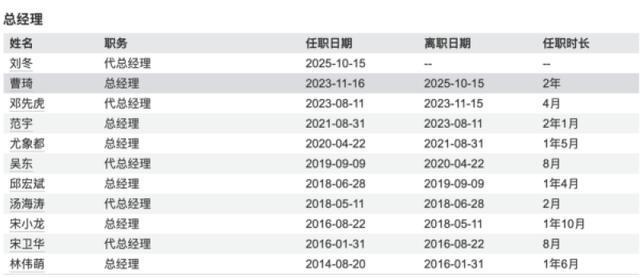
Core Viewpoint - The recent management changes at Taiping Fund highlight ongoing instability within the company's leadership, raising questions about underlying issues affecting its performance and strategic direction [2][3]. Management Changes - Taiping Fund announced the resignation of General Manager Cao Qi and Deputy General Manager Deng Xianhu, effective October 15, 2025, with Chairman Liu Dong taking over as acting General Manager [3][4]. - The company has experienced frequent changes in its general manager position over the past several years, with a history of leadership turnover since August 2014 [4]. Company Performance - As of June 30, 2025, Taiping Fund's total management scale was 59.41 billion, ranking 99th among 192 companies in the industry, indicating a struggle to leverage shareholder resources into competitive market strength [6]. - The fund's product mix is heavily weighted towards bond funds, which account for nearly 80% of its total scale, with only 2.68 billion in equity funds [6][7]. - Despite the challenges, the company's net assets have shown stable growth, increasing from 0.76 billion at the end of 2014 to approximately 57 billion by the end of 2021, indicating a gradual but steady development trajectory [8].
中小银行再撤退,广州银行撤回证券基金托管资格申请
Hua Xia Shi Bao· 2025-10-18 01:55
Core Viewpoint - The recent withdrawal of fund custody qualification applications by Guangzhou Bank and Chengdu Rural Commercial Bank reflects the impact of increased regulatory entry barriers set by the China Securities Regulatory Commission (CSRC) [2][5]. Group 1: Regulatory Changes - The CSRC raised the entry threshold for banks applying for fund custody qualifications, increasing the net asset requirement from 20 billion yuan to 50 billion yuan [5]. - The revised regulations also require institutions to have a regulatory rating of at least level 2 for commercial banks or A for securities companies over the past three years [5]. - As of October 10, only two institutions, Mengshang Bank and Dongwu Securities, remain in the queue for fund custody qualification applications [3][4]. Group 2: Market Dynamics - A total of 68 institutions currently hold fund custody qualifications, with 36 being banks, including 6 state-owned banks, 12 joint-stock banks, and 11 city commercial banks [3]. - The fund custody market is dominated by a few large banks, with the top 15 institutions holding a combined market share of 87.89% [7]. - The fund custody business is crucial for banks as it provides non-interest income, helping to optimize revenue structures and reduce reliance on traditional interest income [6][8]. Group 3: Financial Performance - Guangzhou Bank's net commission income has been declining since 2021, with a year-on-year decrease of 8.13%, 2.79%, and 13.59% for 2022, 2023, and 2024, respectively [6]. - The specific income from "custody and other entrusted business commissions" has also seen a significant drop, with a 44.65% decrease from 2023 to 2024 [6]. - Despite meeting regulatory asset size and rating requirements, Guangzhou Bank's public fund sales retention scale did not rank in the top 100 as of mid-2025 [5].

格林美放弃海外重要工厂控股权,新股东用镍资源换股份
Hua Xia Shi Bao· 2025-10-18 01:36
Core Viewpoint - Greeenme's strategy to address global trade changes involves equity restructuring and forming alliances to mitigate geopolitical risks [2][5][6]. Group 1: Company Strategy - Greeenme's wholly-owned subsidiary in Indonesia, Qingmei Energy, will initiate a capital increase to attract strategic investors, which may lead to the company losing control over Qingmei Energy [2][5]. - The company aims to bind interests together in an alliance to respond to geopolitical influences, ensuring that all investments in Indonesia undergo strict political scrutiny [2][6]. Group 2: Market Position and Financials - Greeenme's battery materials are its largest revenue source, with projected sales of 189,000 tons of ternary precursor materials in 2024, generating revenue of 16.075 billion yuan, capturing 15% of the global market share [4]. - The nickel resource price has doubled since 2020, significantly impacting Greeenme's core business profitability [3]. Group 3: Investment and Resource Integration - The capital increase will involve local Indonesian nickel miners, downstream battery customers, and international investors, with Greeenme's stake in Qingmei Energy dropping from 100% to 29.59% [5][7]. - Qingmei Energy will gain 12,630 tons per year of nickel resource MHP product rights, valued at approximately $109.26 million, which will enhance its operational capacity [7]. Group 4: Operational Challenges - Greeenme's gross margin was 12.48% in the first half of 2025, indicating historical lows, with revenue and profit under pressure due to temporary production halts from adverse weather conditions [9].

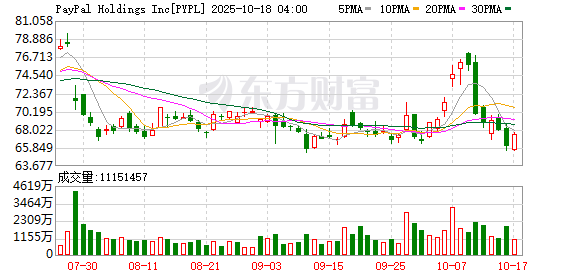
史诗级乌龙!PayPal稳定币发行方误铸300万亿美元 稳定币市场警钟炸响
Hua Xia Shi Bao· 2025-10-18 01:30
Core Insights - Paxos, the issuer of PayPal's stablecoin PYUSD, accidentally minted 300 trillion PYUSD, valued at over $300 trillion, which is more than twice the global GDP [2][4] - The incident highlights the need for enhanced risk management and technical security in the cryptocurrency industry, emphasizing the importance of smart contract safeguards and real-time monitoring [2][5] - The event led to a temporary freeze of PYUSD trading on the Aave lending protocol due to the sudden supply surge, indicating the interconnected risks within decentralized finance (DeFi) [4][6] Group 1 - The erroneous transaction amount exceeded the entire cryptocurrency market's size, with Tether's USDT valued at approximately $180.6 billion and the total crypto market at around $3.8 trillion [4] - Following the incident, PYUSD maintained its dollar peg, with only a brief price drop of about 0.5% [4] - Paxos stated that the minting error was due to an internal technical mistake and not a security breach, assuring that customer funds were safe [5][6] Group 2 - The incident set a record for the largest token burn in cryptocurrency history, with Paxos quickly destroying the erroneously minted tokens within about 30 minutes [5][6] - Experts noted that if the error had not been corrected swiftly, it could have led to significant market panic and questioned the stability of PYUSD's peg [6][8] - The transparency of blockchain technology allowed for real-time tracking of the incident, showcasing both the advantages and vulnerabilities of centralized stablecoin issuance [6][9] Group 3 - The event raised concerns about the centralized nature of stablecoin issuance, where operational errors can have amplified consequences [9][10] - Historical precedents of operational errors in the crypto space, such as Tether's $5 billion USDT misissue in 2019, underline the ongoing risks in the industry [8][9] - The cryptocurrency market experienced a downturn following the incident, with Bitcoin dropping below $106,000 and significant liquidation events occurring [10][11]
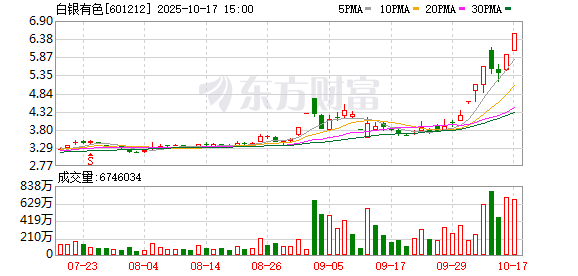
沾“银”就涨?白银有色7天5板 上半年净亏超2亿 信披、资产事项显管理挑战
Hua Xia Shi Bao· 2025-10-18 01:28
Core Viewpoint - After the "Double Festival" holiday, the stock price of Baiyin Nonferrous Metals Group Co., Ltd. (referred to as "Baiyin Nonferrous") experienced rapid increases, achieving five trading limits in seven days, indicating strong market interest in the company amid a bullish trend in the nonferrous metals industry [2][4]. Company Summary - Baiyin Nonferrous has a diverse business layout, with silver accounting for a small proportion of its operations. The company announced plans to invest 1.5 billion yuan to establish a gold subsidiary, aiming to cover the entire gold industry chain [2][4]. - The company has significant production capabilities, with annual outputs of 400,000 tons of copper, 400,000 tons of lead and zinc, 15 tons of gold, and 500 tons of silver [5]. - Baiyin Nonferrous has faced management issues, including significant declines in profits, with a net profit of -217 million yuan in the first half of 2025, a decrease of 1859.82% year-on-year [2][9][10]. Industry Summary - The nonferrous metals market has been performing strongly this year, with copper prices rising due to supply disruptions and silver prices experiencing significant increases, outperforming gold [6][8]. - The demand for silver is driven by its industrial applications in sectors such as photovoltaics and electronics, highlighting its stronger commodity attributes compared to gold [6][8]. - The overall market for precious metals is bullish, with silver prices rising over 80% this year, making companies like Baiyin Nonferrous attractive to investors [6][8].

培育钻石板块成A股“明星赛道” 力量钻石、黄河旋风等月涨超10% 年内翻倍股有哪些?
Hua Xia Shi Bao· 2025-10-18 01:27
Core Viewpoint - The cultivated diamond sector has emerged as a standout performer in the A-share market, driven by improving fundamentals and favorable policies, leading to significant price increases in key stocks [2][4]. Group 1: Market Performance - As of October 16, the cultivated diamond sector index rose from 1851.15 points to 2002.93 points, reflecting a notable increase despite a slight pullback on October 17 [2]. - Key stocks such as Power Diamond, Sifangda, and Yellow River Wind have seen monthly gains exceeding 10%, while some companies like *ST Yazhen, Chaohongji, and Hengsheng Energy have experienced over 100% annual growth [2][11]. Group 2: Policy Impact - On October 9, the Ministry of Commerce and the General Administration of Customs announced export controls on superhard materials, effective November 8, which has created a protective barrier for the domestic superhard materials industry and heightened market expectations for scarcity and performance certainty [4][5]. - The export controls are expected to lead to a shift in order structures towards domestic demand and non-restricted specifications, enhancing the competitive edge of domestic companies in high-end segments [5]. Group 3: Company Analysis - Power Diamond, Sifangda, and Yellow River Wind are leading the market, with their revenue figures showing fluctuations; Power Diamond's revenue is projected to decline by 17.03% in 2023 and 8.74% in 2024, while Yellow River Wind's revenue is expected to drop by 34.67% and 17.36% in the same years [8][9]. - Research and development expenditures for these companies in the first half of 2025 were 30.44 million, 28.72 million, and 39.16 million respectively, with R&D spending as a percentage of revenue being highest for Power Diamond [9]. Group 4: Future Outlook - The cultivated diamond sector's growth is attributed to a combination of policy support and a rebound in market conditions, with expectations for continued interest in the sector due to its performance potential [11][12]. - The market may experience a phase of differentiation, where stock prices will increasingly depend on fundamental factors such as order volume and profit margins [12].


调查|“本升专”的时代里 他们靠微专业拿到了大厂offer
Hua Xia Shi Bao· 2025-10-18 01:24
Group 1 - The article discusses the rising popularity and significance of "micro-specialties" in higher education, which are designed to meet job market demands and enhance students' employability [4][11][18] - Micro-specialties differ from traditional majors by offering flexible course structures that emphasize practical skills and interdisciplinary knowledge, aligning closely with industry needs [4][8] - The Ministry of Education has initiated the "Double Thousand" plan to establish 1,000 micro-specialties and 1,000 vocational training courses nationwide, aiming to address the skills gap in emerging industries [18][19] Group 2 - The article highlights the success stories of students who have benefited from micro-specialties, such as those in artificial intelligence and live-streaming marketing, showcasing their improved job prospects and practical skills [5][9][12] - Universities like Anhui Engineering University and East China Normal University have reported high enrollment and completion rates for micro-specialties, indicating strong student interest and industry relevance [8][9][12] - The article notes that the current job market is characterized by a mismatch between employment opportunities and the skills of graduates, prompting educational reforms to better prepare students for the workforce [11][19]
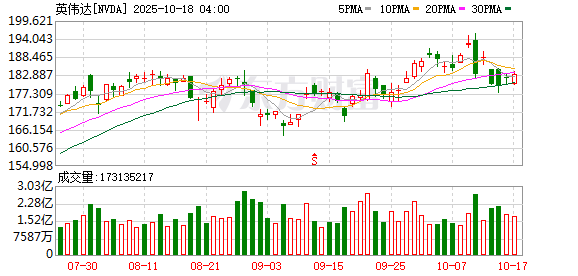
黄仁勋:英伟达在华市场份额从95%降到0% 伤害中国的事情往往也可能伤害美国
Hua Xia Shi Bao· 2025-10-18 01:22
在近日美国城堡证券(Citadel Securities)举办的活动上,英伟达CEO黄仁勋称,英伟达在中国的市场 份额从95%降到0%,目前英伟达100%离开了中国市场。 今年8月,英伟达发布2026财年第二季度财报,财报显示,该季度英伟达营收467.43亿美元,其中来自 中国市场的收入27.69亿美元,相比2025财年第二季度中国市场收入36.67亿美元,缩水近9亿美元。 黄仁勋表示,AI是一项新技术,在采取行动之前,必须深思熟虑如何最终监管它。美国当然希望赢得 AI竞赛,(美国)决策者都想做正确的事,希望美国获胜。"然而,重要的是,要记住,伤害中国的事 情,往往也可能伤害美国,甚至更严重。所以,在急于推出对他人有害的政策之前,或许应该退后一 步,反思一下哪些政策对美国有益。" 黄仁勋在上述活动上表示,美国的政策导致美国失去了世界上最大的市场之一。黄仁勋还提到中国在 AI领域的实力,他表示,中国拥有全球约50%的AI研究人员,有出色的学校,对AI有极大的关注和热 情。 黄仁勋认为,问题的核心在于,如何在"保持技术领先"和"确保世界建立在美国技术上"之间取得平衡? 需要有细微的策略,而不是非黑即白。应该形成一 ...