Zhong Guo Neng Yuan Wang

Search documents
中银国际投资公司增资至20亿,增幅约233%
Zhong Guo Neng Yuan Wang· 2025-12-04 02:33
来源:中国能源网 中银国际投资有限责任公司成立于2009年5月,法定代表人为于君,经营范围为投资管理、股权投资、 投资咨询。股东信息显示,该公司由中银证券(601696)全资持股。 天眼查工商信息显示,近日,中银国际投资有限责任公司发生工商变更,注册资本由6亿人民币增至20 亿人民币,增幅约233%。 ...

乘风而起,行业业绩与信心共振 | 投研报告
Zhong Guo Neng Yuan Wang· 2025-12-04 02:03
Core Insights - The wind power equipment industry in China is expected to see significant growth during the "14th Five-Year Plan" period, with annual new installed capacity projected to be no less than 120GW, including at least 15GW from offshore wind [1][2] - The global wind energy market is anticipated to grow substantially, with a forecasted addition of 367GW in onshore wind capacity (excluding China) from 2025 to 2030, reflecting a compound annual growth rate (CAGR) of 12.4%, and offshore wind at a CAGR of 15.8% [1][3] Group 1: Domestic Wind Power Market - The domestic wind power demand is stable, supported by the dual carbon goals and the plan to reach 3.6 billion kilowatts of wind and solar capacity by 2035 [2] - New installed capacity in China is expected to reach 86.99GW in 2024, with a cumulative addition of 272.1GW from 2021 to 2024, significantly higher than the 145.5GW added during the "13th Five-Year Plan" [2] - The signing of industry self-discipline agreements and optimization of bidding rules are expected to alleviate the price war pressures on wind turbine manufacturers, leading to a 9% increase in the average bidding price for onshore wind projects from 2024 [2] Group 2: Offshore Wind Potential - The offshore wind sector in China has substantial growth potential, with a rich reserve of projects expected to maintain high installation levels during the "14th Five-Year Plan" [2] - The domestic offshore wind market is poised for growth, with significant project reserves and a favorable policy environment [2] Group 3: International Market Expansion - Domestic wind turbine manufacturers are accelerating their international expansion, with a total of 19.28GW of overseas orders secured by seven major manufacturers in the first three quarters of 2025, marking a new high [3] - The average price of overseas orders is higher, contributing to improved profitability for manufacturers, especially as these orders enter a concentrated delivery phase [3] - The European offshore wind auction volume is expected to reach a historical high in 2024, with companies like 大金重工 becoming leading suppliers in the European offshore wind market [3]

亨斯迈MDI装置意外停车,己内酰胺减产逐步落地价格拉涨 | 投研报告
Zhong Guo Neng Yuan Wang· 2025-12-04 02:03
Industry Overview - The chemical sector's overall performance ranked 13th this week (2025/11/24-2025/11/28) with a change of 2.98%, positioned in the upper-middle of the market. The Shanghai Composite Index rose by 1.40%, while the ChiNext Index increased by 4.54%. The Shenwan Chemical sector outperformed the Shanghai Composite by 1.58 percentage points but underperformed the ChiNext by 1.56 percentage points [1]. Key Insights - The chemical industry is expected to continue its trend of divergence in 2025, with recommendations to focus on synthetic biology, pesticides, chromatography media, sweeteners, vitamins, light hydrocarbon chemicals, COC polymers, and MDI [1]. Synthetic Biology - A pivotal moment for synthetic biology is anticipated, driven by energy structure adjustments. Traditional chemical companies will face competition based on energy consumption and carbon tax costs. Companies that adopt green energy alternatives and leverage integrated and scaled advantages are likely to reduce energy costs and expand into larger overseas markets. The demand for bio-based materials is expected to surge, leading to potential profitability and valuation increases. Key companies to watch include Kasei Bio and Huaheng Bio [1]. Refrigerants - The implementation of quota policies is expected to usher in a high-growth cycle for third-generation refrigerants. Starting in 2024, the supply of these refrigerants will enter a "quota + continuous reduction" phase, while second-generation refrigerants will be phased out more rapidly. The demand for refrigerants is projected to grow steadily due to the development of heat pumps, cold chain markets, and the expansion of the air conditioning market in Southeast Asia. Companies with high quota shares, such as Juhua Co., Sanmei Co., Haohua Technology, and Yonghe Co., are expected to benefit significantly [2]. Electronic Specialty Gases - Electronic specialty gases are critical to the electronics industry and represent a core component of domestic industrialization. The domestic market is experiencing rapid upgrades in wafer manufacturing, but there is a mismatch with the fragmented and insufficient capacity of high-end electronic specialty gases. Companies that establish high-end capacity and possess substantial technical reserves are likely to seize opportunities for growth. Demand is driven by integrated circuits, displays, and photovoltaics. Key players include Jinhong Gas, Huate Gas, and China Shipbuilding Gas [3]. Light Hydrocarbon Chemicals - The trend towards light raw materials in the global olefin industry has been significant over the past decade, with a shift from heavy naphtha to lighter low-carbon alkanes like ethane and propane. This transition is characterized by shorter processes, higher yields, and lower costs. Light hydrocarbon chemicals also align with global low-carbon and energy-saving initiatives. Companies in this sector, such as Satellite Chemical, are expected to see their values reassessed [4]. COC Polymers - The industrialization of COC/COP (cyclic olefin copolymer) is accelerating in China, driven by domestic companies achieving breakthroughs after years of R&D. The shift of downstream industries, such as consumer electronics and new energy vehicles, to domestic sources is increasing the demand for these materials. The market is currently constrained by high prices, but domestic companies are expected to break through and expand market space. Key company to watch is Acolyte [5]. Potash Fertilizers - Potash fertilizer prices are expected to rebound as the industry enters a destocking cycle. Canpotex has withdrawn new quotes, and Nutrien has announced production cuts, leading to a short-term decline in supply. The termination of the Black Sea Grain Export Agreement has increased the prices of wheat and corn, boosting the demand for potash fertilizers. Companies like Yara International, Salt Lake Potash, and Zangge Mining are positioned to benefit from this trend [6]. MDI Market - The MDI market is characterized by oligopoly, with demand steadily improving due to the expansion of polyurethane applications. The global MDI production capacity is concentrated among five major chemical giants, which account for 90.85% of total capacity. Despite current price fluctuations, MDI remains a high-margin product. Companies like Wanhua Chemical are expected to benefit from a favorable supply structure as demand recovers [7]. Price Tracking - The top five price increases this week included methanol (East China) at 6.27%, NYMEX natural gas (futures) at 5.90%, and caprolactam (East China CPL) at 5.49%. The top five price decreases included liquid chlorine (East China) at -7.82% and propylene oxide (East China) at -5.85% [8]. Supply Side Tracking - This week, 168 chemical enterprises had their production capacities affected, with 9 new repairs and 3 restarts reported [9].
原油、干散货吞吐量承压,集装箱吞吐量高增 | 投研报告
Zhong Guo Neng Yuan Wang· 2025-12-04 02:03
信达证券近日发布航运港口2025年11月专题:2025年1~10月,原油进口量实现4.71亿吨,同比增长 3.1%,其中,来源地为中东7国、俄罗斯、马来西亚同比增速分别为-1.23%、-8.03%、-1.25%,占比分 别为42.45%、17.66%、11.9%。2025年1~10月,主要原油接卸港口企业原油吞吐量实现3.29亿吨,同比 下滑3.25%。 以下为研究报告摘要: 本期内容提要: 一、综述:全国进出口总额及货物吞吐量情况 进出口总额:2025年1~10月,全国进出口总额实现37.31万亿元,同比增长3.6%,其中,全国进口总额 实现15.19万亿元,同比持平,全国出口总额实现22.11万亿元,同比增长6.2%。 外贸货物吞吐量:河北、山东、江苏、上海、浙江、广东同比增速分别为-0.2%、4.7%、5.6%、6.1%、 3.1%、3.2%,占比分别为9.36%、23.06%、4.43%、9.54%、13.83%、16.18%。 二、集装箱:集运运价及集装箱吞吐量情况 集运运价:2025年11月28日,CCFI收于1121.8点,同比下滑23.58%,环比2025年11月21日下滑0.09%, 其中, ...
AI用电的“困”与“破” | 投研报告
Zhong Guo Neng Yuan Wang· 2025-12-04 02:03
Core Insights - The report by Jinyuan Securities highlights the significant energy consumption associated with training advanced AI models, particularly GPT-4, which requires approximately 38.2 GWh over a training period of 95 days [1][2]. Group 1: AI Model Training Energy Consumption - The maximum rated power consumption of a single GPU can reach 1000 watts [2]. - GPT-4's training energy demand translates to an average daily consumption of about 0.40 GWh, equivalent to the daily electricity usage of approximately 40,000 households [1][2]. Group 2: Data Center Energy Consumption Trends - Global data center electricity consumption is projected to reach 415 TWh in 2024, accounting for about 1.5% of the world's total electricity consumption, with the US, Europe, and China collectively responsible for 85% of this total [2]. - In the US, data center electricity consumption is expected to grow at an annual rate of approximately 12% from 2015 to 2024, resulting in an increase of about 250 TWh, with 2024 consumption estimated at 180 TWh [2]. Group 3: Future Projections - By 2030, global data center electricity consumption is forecasted to double to approximately 945 TWh, representing nearly 3% of global electricity consumption, with the US market projected to consume about 420 TWh, a 130% increase from 2024 [2]. Group 4: Power Infrastructure Challenges - The mismatch between the manufacturing cycle of power infrastructure and the demand cycle for AI presents significant challenges [3]. - Solar energy and gas turbines are currently the only reliable power sources that can be developed in a short timeframe to meet data center demands, but solar energy's intermittent nature poses challenges for continuous operation [3]. Group 5: Energy Storage Systems - A complete electrochemical energy storage system consists of battery packs, battery management systems (BMS), energy management systems (EMS), and storage inverters, collectively referred to as "3S" [4]. - The global inverter market is projected to reach approximately $129.2 billion in 2024, with the battery energy storage system (BESS) market expected to grow at a compound annual growth rate of 18.5% from 2024 to 2030, reaching $23.3 billion by 2030 [4]. Group 6: Power Device Market Insights - The IGBT and silicon-based MOSFET markets are significant, with the IGBT market projected to grow from approximately $8.887 billion in 2024 to $16.151 billion by 2030, reflecting a compound annual growth rate of 10.47% [5]. - The market for silicon carbide (SiC) devices is also expected to grow significantly, with a combined market size projected to increase from $2.967 billion in 2024 to $9.520 billion by 2030, at a compound annual growth rate of 21.45% [5]. Group 7: Related Companies - Companies involved in this sector include SDIC (603290.SH), Yangjie Technology (300373.SZ), ChipLink Integration-U (688469.SH), Silan Microelectronics (600460.SH), and Dongwei Semiconductor (688261.SH) [6].


建筑建材行业内需之重下稳中求进 | 投研报告
Zhong Guo Neng Yuan Wang· 2025-12-04 02:03
Investment Summary - The construction and building materials industry is expected to face demand challenges in 2025 due to declining infrastructure and manufacturing investment, alongside a significant drop in real estate investment [1] - Local governments are stabilizing debt management and maintaining high growth in refinancing special bonds, with infrastructure investment (excluding electricity) expected to see a negative year-on-year growth rate [1] - The real estate sector has experienced a continuous decline in fixed asset investment for 40 months, with the drop in new construction, construction, and completion areas showing signs of narrowing [1][2] Economic Impact - The negative cycle of the real estate sector continues to impact overall economic demand, although the intensity of this impact is weakening [2] - The new commodity housing price index has decreased by 11.77% from its peak in September 2021 to October 2025, while the second-hand housing price index has dropped by 20.31% in the same period [2] - Government revenue from land sales has seen a significant reduction, but general revenue has turned positive year-on-year [2] Policy Direction - The focus for 2026 will be on expanding domestic demand to counteract the negative effects of the real estate sector, with policies aimed at stabilizing the housing market and improving housing demand [3][4] - Infrastructure projects will prioritize modern infrastructure systems and effective project implementation through special bonds and long-term national bonds [3] - The government aims to enhance consumer spending and promote new consumption patterns, including the expansion of service consumption and the removal of unreasonable consumption restrictions [3] Investment Strategy - Companies in the building materials sector are expected to see improvements in profitability due to the "anti-involution" policy, which is set to optimize supply and stabilize product prices [4] - There is a growing opportunity for traditional industries to expand internationally, leveraging China's competitive advantages and the favorable conditions for overseas development [4][5] - The release of new demands driven by technological advancements and the maturation of the industrial system is anticipated to create opportunities in new materials [5]
光伏高质量发展的储能“答案”
Zhong Guo Neng Yuan Wang· 2025-12-04 01:36
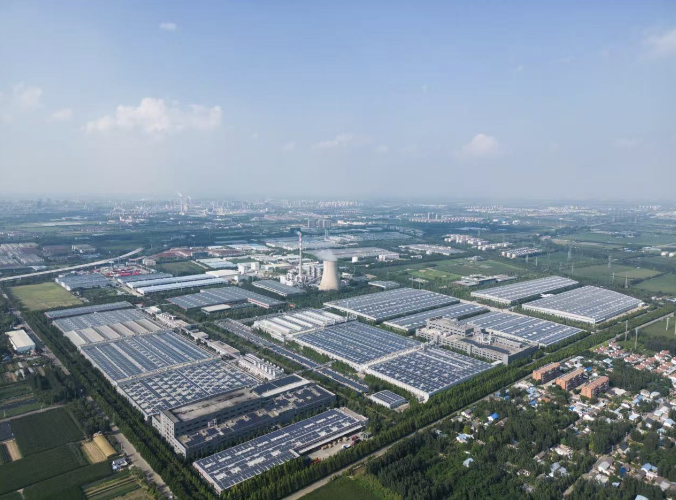
Core Viewpoint - The rapid expansion of renewable energy in China, particularly solar power, faces significant challenges related to grid absorption and low profitability, necessitating innovative solutions like energy storage to enhance efficiency and sustainability [1][2][4][5]. Group 1: Renewable Energy Expansion - China's renewable energy installed capacity is approaching 2.2 billion kilowatts, with wind and solar power exceeding 1.7 billion kilowatts combined [2]. - In the first three quarters of this year, 31 million kilowatts of new renewable energy capacity was added, a year-on-year increase of 47.7%, accounting for 84.4% of all new installations, with solar power contributing 24 million kilowatts [2][4]. Group 2: Challenges in the Industry - The rapid growth in installed capacity is putting immense pressure on the grid's ability to absorb this energy, while policy changes and market dynamics are compressing profit margins for projects [4][5]. - The introduction of the "136 Document" emphasizes market-oriented electricity trading and strengthens the responsibility for renewable energy absorption, challenging the traditional "full grid access" model [4][5]. Group 3: Energy Storage as a Solution - Energy storage is identified as a critical solution to the challenges of solar energy absorption and profitability, transitioning from an optional configuration to a necessary component in renewable energy projects [5][12]. - The implementation of a 30MW/60MWh energy storage system at Huqin Group's industrial park has significantly improved solar energy utilization, increasing self-consumption rates from 80% to 92% and reducing electricity costs by 10 million yuan annually [7][11]. Group 4: Importance of Quality in Energy Storage - The choice of high-quality energy storage systems, such as those from CATL, is crucial for ensuring long-term reliability and safety, as the storage systems must endure frequent charge and discharge cycles [8][11][12]. - The industry consensus highlights that energy storage should not be viewed merely as an add-on but as an integral part of the energy management system, enhancing the overall economic viability of solar projects [12][14]. Group 5: Future Trends in the Industry - The integration of energy storage with solar power is expected to redefine the role of solar companies, shifting them from being solely solar providers to comprehensive energy service providers [8][12][14]. - The successful implementation of energy storage solutions at Huqin Group serves as a replicable model for over 500 similar industrial parks across the country, showcasing the potential for broader industry transformation [8][12].


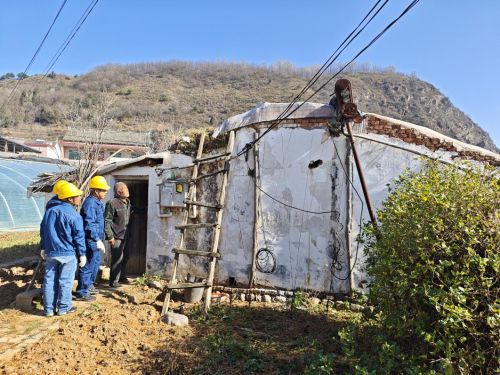
洛南公司:电力护航冬季果蔬“温暖过冬”
Zhong Guo Neng Yuan Wang· 2025-12-03 08:17
Core Viewpoint - The company is actively addressing the electricity needs of local agricultural producers during winter, ensuring stable power supply for greenhouse operations to prevent crop damage and support farmers' income [3][6]. Group 1: Electricity Supply and Safety Measures - The company has included agricultural greenhouse electricity in its winter priority guarantee list, organizing special visits to provide services to farmers [3]. - A dedicated team conducted inspections on heating equipment, irrigation systems, and safety devices, identifying and rectifying two safety hazards related to temporary wiring [5]. - The company has established individual electricity usage files for farmers, creating tailored solutions and quick response plans for power outages [5]. Group 2: Service Enhancement and Community Support - The company is increasing inspection frequency before peak electricity demand and adverse weather conditions, responding promptly to farmers' needs [6]. - A total of 13 greenhouses in Donghe Village have undergone comprehensive inspections, eliminating six types of electricity hazards and distributing over a hundred informational materials [6]. - Future plans include optimizing rural power grid operations, enhancing emergency response capabilities, and regularly providing on-site services to promote safe electricity usage [8].
新疆屯富热电有限责任公司机组灵活性及节能降碳改造攻坚记
Zhong Guo Neng Yuan Wang· 2025-12-03 07:53
Core Viewpoint - The transformation of Xinjiang Tunfu Thermal Power Co., Ltd. is a significant response to the energy revolution and green development, focusing on flexibility and energy-saving carbon reduction to ensure sustainable operations and adapt to new energy demands [1][6]. Group 1: Challenges and Decisions - Traditional thermal power companies face the dual challenge of providing reliable energy while meeting environmental goals, with Tunfu Thermal Power being the sole heat source for Beitun City [1][2]. - The company recognized the necessity of transformation, with internal debates on whether to change or maintain the status quo, ultimately deciding that without change, survival was at risk [2][3]. Group 2: Collaborative Efforts and Technical Challenges - The renovation project was a race against time, requiring synchronization with regular maintenance tasks and upgrades across multiple systems, emphasizing the need for precise coordination [3][4]. - Technical teams provided critical data to design a flexible system, ensuring that the renovation was based on real operational characteristics rather than assumptions [3][4]. Group 3: Efficiency and Sustainability - The flexibility upgrade is expected to significantly enhance operational capabilities, allowing for better heat supply and grid stability, with minimum output targets set to improve from 60% to 40% during heating periods [5][6]. - Energy-saving measures are projected to save 3,542.8 tons of standard coal and 19,500 tons of water annually, reducing carbon emissions by approximately 8,832 tons, thus contributing to environmental commitments [6]. Group 4: Strategic Insights and Corporate Responsibility - The transformation exemplifies how a state-owned enterprise can evolve amidst industry changes, demonstrating a commitment to reform and internal improvement while aligning with national energy strategies [6].
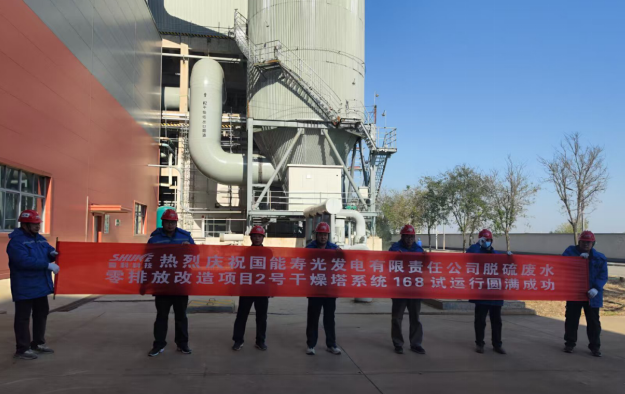
国能寿光电厂实现脱硫废水零排放,树立煤电清洁化转型新标杆
Zhong Guo Neng Yuan Wang· 2025-12-03 07:26
Core Viewpoint - The Shouguang Power Plant has successfully implemented a zero discharge system for desulfurization wastewater, setting a new benchmark for the clean transformation of coal-fired power generation [1][7]. Group 1: Project Breakthroughs - The zero discharge project has a processing capacity of 20m3/h, sufficient to meet the wastewater treatment needs of two 1010MW units [3]. - Over 80% of water resources can be recovered during the flash evaporation process, which is then reused in the desulfurization water system, achieving water resource recycling [3]. - The project innovatively addresses the conflict between deep peak regulation of coal power and the operation of environmental facilities, maintaining a treatment capacity of 1.8m3/h even at 30% load [3] [5]. Group 2: Key Challenges - The project team overcame multiple construction challenges over nearly nine months, including site constraints, extreme weather, and complex integration of new and old systems [5]. - A dedicated team was formed to ensure quality and progress, utilizing a self-developed eccentric switch-type electric isolation door to achieve zero gas leakage [5]. - The introduction of a thermal automation system enabled automatic control of the entire process, significantly reducing the workload of operators [5]. Group 3: Industry Significance - The project exemplifies a practical approach to pollution reduction and carbon emission control in the power industry, meeting stringent national and local environmental regulations [9]. - Data from the China Electricity Council indicates that by 2024, nationwide emissions of sulfur dioxide and smoke from thermal power will have decreased by over 90% compared to 2014 [9]. - The project not only reduces pollutant emissions but also lowers fresh water consumption through wastewater recycling, achieving dual benefits of pollution reduction and carbon emission control [9]. Group 4: Future Outlook - The implementation of the 14th Five-Year Plan will continue to optimize China's energy structure, with a focus on achieving peak carbon emissions and reducing coal consumption [12]. - The role of coal power is shifting from a primary energy source to a regulatory power, emphasizing clean, efficient, and flexible capabilities [12]. - The success of the Shouguang project validates the feasibility of deep environmental upgrades while maintaining energy security, providing a reliable technical pathway for the transformation of traditional thermal power in the new power system [12].