
Zhong Guo Jing Ying Bao

Search documents
赣锋锂业涉内幕交易案被移送审查起诉
Zhong Guo Jing Ying Bao· 2025-12-30 03:38
Core Viewpoint - Ganfeng Lithium has been indicted for insider trading related to its transactions involving Jiangte Electric, with ongoing operations unaffected by the legal proceedings [1] Group 1: Legal Proceedings - Ganfeng Lithium received a notice from the Yichun Public Security Bureau regarding the indictment for suspected insider trading, which has been forwarded to the prosecution for review [1] - The case follows an administrative penalty from the Jiangxi Securities Regulatory Bureau, which included the confiscation of illegal gains amounting to 1.1053 million yuan and a fine of 3.3159 million yuan [1] Group 2: Insider Trading Details - The insider trading involved Ganfeng Lithium purchasing 15.6777 million shares of *ST Jiangte (now Jiangte Electric) between June 23 and July 2, 2020, for a total investment of 26.4838 million yuan [1] - The company sold all shares between July 8 and July 9, 2020, realizing a profit of 1.1053 million yuan from these transactions [1] Group 3: Company Operations - Ganfeng Lithium stated that all production and operational activities remain normal and orderly despite the ongoing legal matters [1] - The insider trading case is characterized as a historical event that has already been disclosed by the company [1]


腾讯旗下财付通小贷获批注册100亿元ABN
Zhong Guo Jing Ying Bao· 2025-12-30 03:34
Group 1 - The core point of the article is that Shenzhen Qianhai Financial Technology Co., Ltd. (referred to as "Qianhai Small Loan") has been approved to register a targeted asset-backed note (ABN) product with an amount of 10 billion yuan, contributing to a total issuance of nearly 40 billion yuan across two products [1] - From 2024, Qianhai Small Loan has been approved for an asset-backed securities (ABS) product with a quota of 10 billion yuan and an ABN product with a quota of 35 billion yuan, indicating significant growth in its development [1] - Qianhai Small Loan ranks among the top two small loan companies in terms of registered capital, with a current registered capital of 10.5 billion yuan, second only to Douyin Group's Shenzhen Zhongrong Small Loan Co., Ltd. with 19 billion yuan [1] Group 2 - Tencent's financial technology and enterprise services revenue has shown a steady increase from 101.36 billion yuan in 2019 to 211.96 billion yuan in 2024, with the revenue contribution percentage fluctuating around 27% to 33% during this period [1] - The gross profit from financial technology services and enterprise services reached 26.4 billion yuan in the 2024 annual report, with a gross profit margin of 47% [2] - Although consumer loan services have contributed to Tencent's revenue growth, there are currently no independent consumer loan products displayed on Tencent's official financial technology service platform [2]

推动城市高质量发展 佛山南海打造“好房子”示范
Zhong Guo Jing Ying Bao· 2025-12-30 03:32
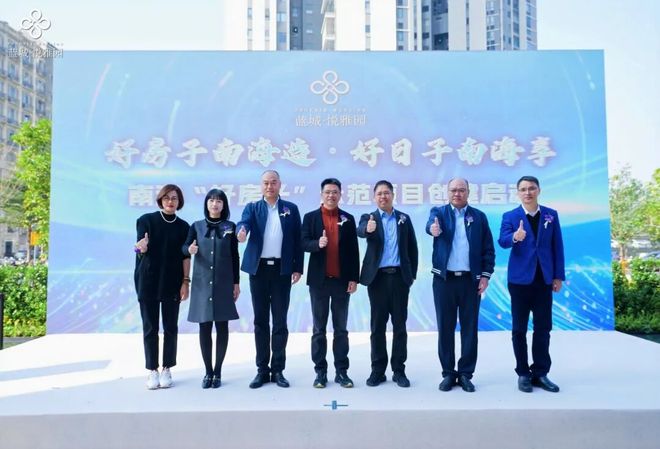
边志民从安全性、实用性、舒适性、宜居性、智能化五大维度,对《设计指引》作出深度解读,并明确 后续将以"蓝城·悦雅园"为起点,在全区新建商品住宅项目中全面推广实施。 相关负责人介绍,这是南海区系统性推进"好房子"建设、推动人居品质升级的标志性节点,宣告着"好 房子南海造"正式迈入标准化、具象化的实践新阶段。 "作为扎根南海的区属国有企业,南海产业集团始终将推动城市高质量发展作为核心使命。"南海产业集 团总经理刘冠勋在活动中表示,悦雅园项目是践行"以好房子回应城市期待"理念的实践,更是两大集团 携手深耕品质、共筑行业标杆的标志性成果。 "这份指引不是空洞的口号,而是聚焦群众关切、回应时代需求的实招硬招。"南海区住建水务局局长边 志民表示。 中经记者 陈靖斌 佛山报道 "南海国资以高品质供给引导市场预期,全力推动房地产市场稳定健康发展,蓝城・悦雅园的落地是南 海国资以品质为导向打造雅致人居的崭新实践,更是为广大人民群众建设安全、舒适、绿色、智慧'好 房子'的有力举措。"12月28日,南海区国资局局长李永添在南海"好房子"示范项目创建启动仪式上表 示。 《中国经营报》记者了解到,蓝城・悦雅园生活美学馆由南海产业集团与 ...

12天12板!胜通能源股价狂飙213.97%,今起停牌核查
Zhong Guo Jing Ying Bao· 2025-12-30 03:32
Core Viewpoint - The stock of Victory Energy (001331.SZ) has experienced an unusual increase, leading to a suspension for investigation starting December 30, with a maximum expected duration of three trading days [1] Group 1: Stock Performance - From December 12 to December 29, the stock price of Victory Energy surged by 213.97%, hitting the daily limit for 12 consecutive trading days [1] - As of December 29, the stock closed at 46.31 yuan per share, with a static price-to-earnings ratio of -773.81 and a price-to-book ratio of 8.63, significantly higher than the industry averages of 18.20 and 1.95 respectively [1] Group 2: Control Change - The unusual stock price movement may be related to a potential change in control, as the controlling shareholder signed a share transfer agreement with Seven Teng Robotics Co., Ltd. and its concerted parties on December 11 [1] - The completion of this control change is subject to regulatory review and compliance confirmation, introducing uncertainty regarding its finalization [1] Group 3: Business Operations - Victory Energy's main business remains focused on the procurement, transportation, and sales of liquefied natural gas, with no significant changes reported [1]
汇丰银行刘晶:预计2026年中国将降准50BP
Zhong Guo Jing Ying Bao· 2025-12-30 03:32
Core Viewpoint - HSBC forecasts stable global economic growth by 2026, with a slowdown in trade export growth, while strong investments in artificial intelligence will support investment and trade growth in the next two years [1] Group 1: Economic Outlook - HSBC's Chief Economist for Greater China, Liu Jing, indicates that a series of easing policies implemented since Q4 2024 will support economic activity, allowing China to achieve a target economic growth of around 5% for the full year of 2025 [1] - The year 2026 marks the beginning of the "14th Five-Year Plan," during which China's economy is expected to continue structural transformation and maintain reasonable growth, with domestic demand, including consumption and investment, becoming the main driver of growth [1] Group 2: Fiscal Policy - The Central Economic Work Conference has proposed to maintain a necessary fiscal deficit, with HSBC estimating that China's fiscal deficit target for 2026 may remain at a relatively high level of 4% [1] - The issuance scale of local government special bonds and special treasury bonds is expected to be comparable to that of 2025 to support consumption and major project investments [1] - New policy financial tools are likely to continue playing a "quasi-fiscal" role [1] Group 3: Monetary Policy - There may still be room for a further interest rate cut of 20 basis points in 2026, along with a potential reserve requirement ratio cut of 50 basis points [1]

步长制药子公司起诉捷迈上海公司,涉案6.52亿元
Zhong Guo Jing Ying Bao· 2025-12-30 00:09
Core Viewpoint - The lawsuit filed by Shanghai HePu Medical Technology Co., Ltd., a subsidiary of BuChang Pharmaceutical, against JEM International Trade (Shanghai) Co., Ltd. involves a contract dispute over an amount of 652 million yuan, primarily concerning unsold inventory and financial losses [1][2]. Group 1: Lawsuit Details - Shanghai HePu has initiated legal action against JEM Shanghai for a contract dispute, claiming an amount of 652 million yuan [1]. - The lawsuit arises from a distribution agreement where Shanghai HePu was an authorized distributor for JEM Shanghai, which is a subsidiary of the well-known orthopedic consumables company JEM [1]. - The lawsuit requests JEM Shanghai to repurchase approximately 556 million yuan worth of remaining inventory and return a prepayment of 3.2078 million yuan, along with compensation for interest losses and other costs [1]. Group 2: Inventory and Financial Implications - Shanghai HePu has around 550 million yuan worth of inventory that has not been transferred to a new authorized distributor, with no clear plan for the transfer [1]. - There is a risk of inventory impairment for the 550 million yuan worth of stock, which could impact the company's current and future profits, although the exact financial impact remains uncertain [2].


专访中国社科院杜江:建好“四张网”,让低空经济从“能飞”到“飞得更高”
Zhong Guo Jing Ying Bao· 2025-12-29 17:21
Core Viewpoint - The development of the low-altitude economy is being emphasized as a new engine for productivity and strategic emerging industries, driven by national policies and technological advancements [1][3][4]. Group 1: Background and Strategic Importance - The low-altitude economy is recognized as a new space resource and growth point, with national strategies focusing on its development [3][4]. - The rapid development of low-altitude economy is supported by advancements in key technologies, which have crossed the commercialization threshold, enabling scalable operations [4][5]. - Social changes and the demand for real-time services are driving the need for low-altitude services in various sectors, including emergency response and logistics [5][6]. Group 2: Government and Capital Involvement - Local governments are encouraged to take the lead in establishing rules and infrastructure to foster local growth in the low-altitude economy [7]. - The current policy environment provides a "window period" for capital investment, although investors remain cautious about the commercial viability of projects [8][9]. - There is a significant market potential for the low-altitude economy, but assessments often overlook operational realities, leading to potential over-optimism [9]. Group 3: Infrastructure and Operational Challenges - The construction of the low-altitude economy's infrastructure requires overcoming systemic barriers and ensuring comprehensive project support [10][11]. - The "four networks" (infrastructure network, air network, flight route network, and service network) are essential for the development of the low-altitude economy, with specific challenges identified in each area [10][11]. - Establishing a governance framework that integrates construction, approval, management, operation, and compensation is crucial for the successful implementation of low-altitude projects [10][11].
中国制造“十四五”成就展开幕 七腾机器人全景展示智能巡检新矩阵
Zhong Guo Jing Ying Bao· 2025-12-29 17:17
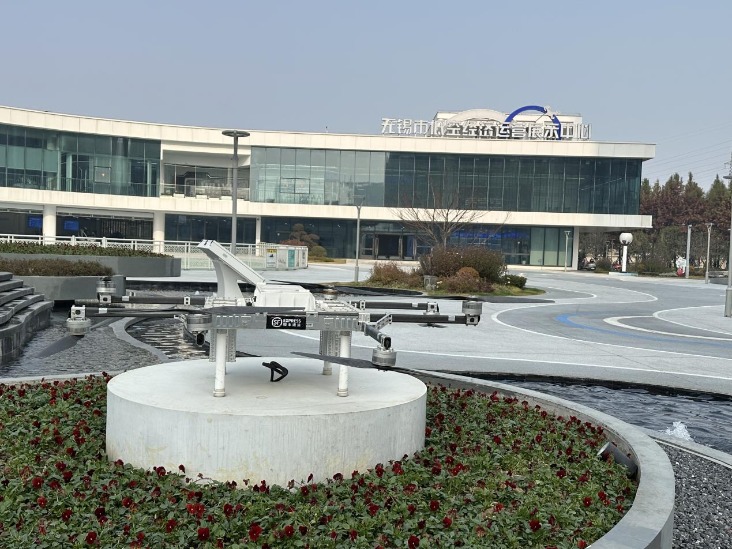
Core Viewpoint - The exhibition "Building a Strong Nation Road - Achievements of China's Manufacturing during the 14th Five-Year Plan" showcases significant advancements in China's manufacturing sector, highlighting the achievements of companies like Qiteng Robotics in the field of special robots [1][3]. Group 1: Company Achievements - Qiteng Robotics presented the world's first mass-produced explosion-proof quadruped robot, X3 Stable, which has overcome technical barriers in explosion-proofing and lightweight design, breaking the long-standing monopoly of Europe and the U.S. in high-end special robot joint technology [1][2]. - The company has achieved a transformation from "follower" to "leader" by seizing policy opportunities, earning accolades such as "Digital Era Special Forces" and recognition in the "2024 New Quality Productivity Annual Case" by the Central Radio and Television Station [2]. - Qiteng Robotics holds 310 patents and has participated in the formulation of over 40 national and industry standards, successfully delivering products to more than 4,000 enterprises domestically and internationally, solidifying its position in the inspection robot segment [2]. Group 2: Technological Innovations - The company's products have a self-research and development rate of over 90%, featuring an in-house AI industrial control machine that provides computing power of 100 TOPS to 200 TOPS, ensuring stable operation in high-temperature and hazardous environments [2]. - Qiteng Robotics has launched the first industrial-scale large model in the industry, integrating over 500 intelligent algorithms to enhance real-time analysis and decision-making capabilities in complex scenarios [2]. Group 3: Future Directions - Looking ahead to the 15th Five-Year Plan, Qiteng Robotics aims to focus on humanoid and quadruped robot technologies, advancing in areas such as industrial inspection, embodied intelligence, and multimodal large models [3]. - The company plans to expand its industrial layout into sectors such as liquor, disaster response, energy, border defense, security patrol, logistics, and cold chain, translating more technological achievements into industrial development [3].

北京市2025年上半年专利转让许可次数同比增长7%
Zhong Guo Jing Ying Bao· 2025-12-29 17:17
Core Insights - The Beijing Intellectual Property Bureau aims to enhance the transformation of patent achievements into productive forces by establishing a long-term mechanism, with a target of a 7% year-on-year increase in patent transfer and licensing by the first half of 2025 [1] Group 1: Patent Development and Utilization - As of June 2023, Beijing has achieved a high-value invention patent ownership of 171.8 per 10,000 people, leading the nation, with a total of 695,000 effective invention patents and an annual growth rate of 17.9% [1] - The number of valid trademark registrations in Beijing reached 3.282 million, with an annual growth rate of 9.7% [1] - The city has cultivated 170 enterprises for patent industrialization, with over 89 billion yuan in loans issued by major domestic banks as of Q3 2025 [2] Group 2: Financial Innovations in Intellectual Property - Haidian District has pioneered the issuance of patent licensing intellectual property securitization products and established a risk compensation fund for intellectual property pledge financing [4] - The district has implemented policies such as "pay after use" for patents and open licensing trials to support innovation joint ventures between enterprises and research institutions [4] Group 3: Legal and Regulatory Framework - The Beijing courts are enhancing their specialized adjudication capabilities to provide robust judicial protection for the development of new productive forces, addressing issues related to AI-generated content and algorithm patents [3] - Haidian District has established a collaborative protection mechanism for intellectual property, integrating judicial, administrative, arbitration, and industry self-regulation [5] Group 4: Focus on Emerging Technologies - The district is focusing on protecting intellectual property in emerging fields such as artificial intelligence, with initiatives including the release of the first group standard for intellectual property in generative AI [5] - Key industries receiving patent navigation services include synthetic biology, gene therapy, and brain-computer interfaces, among others [5]
“引领者”蜕变 盘点2025中国汽车行业关键词
Zhong Guo Jing Ying Bao· 2025-12-29 17:15
Core Insights - The Chinese automotive industry is undergoing a profound structural transformation in 2025, shifting from price competition to value competition, driven by market forces rather than policies, and evolving from a "follower" to a "leader" on the global stage [1] Group 1: Price Competition - The price war in the automotive sector has cooled down, marking a transition from vicious competition to rational competition, with average industry profit margins at 4.5% and 55% of dealers facing losses [4] - Regulatory measures, including a self-discipline agreement among major car manufacturers and compliance guidelines from the State Administration for Market Regulation, are promoting a market order focused on quality and value [4] Group 2: New Energy Vehicles - In 2025, new energy vehicles (NEVs) achieved a domestic market share of 53.6% from January to November, marking a significant shift to market-driven growth [6] - The consensus of "oil and electricity at the same price" has emerged, with Chinese brands leveraging core technologies to dominate the domestic NEV market [6] Group 3: Intelligent Driving - 2025 is recognized as the year of large-scale popularization of intelligent driving, with L2-level assistance penetration reaching 64% and L3-level models being trialed in designated areas [8][9] - The cost of hardware for intelligent driving has decreased by approximately 50%, facilitating broader access to advanced driving features [9] Group 4: Supply Chain and Payment Terms - A "payment revolution" is underway, with major car manufacturers committing to reduce payment cycles for small suppliers to within 60 days, addressing long-standing issues in the supply chain [10] - This initiative aims to restore credit systems within the supply chain and foster a collaborative ecosystem, moving from a zero-sum game to a win-win situation [10] Group 5: Export Growth - Chinese automotive exports are expected to exceed 6.8 million units in 2025, maintaining the top position globally for the third consecutive year, with NEV exports doubling to 2.315 million units [13] - The export model has evolved from simple product trade to localized industry chain and technology ecosystem output, enhancing China's role as a global technology solution provider [13] Group 6: Charging Infrastructure - By the end of November 2025, the total number of electric vehicle charging facilities in China reached 19.322 million, a 52% increase year-on-year [15] - The introduction of integrated solar-storage-charging stations is transforming NEVs into flexible distributed energy storage units, enhancing the synergy between energy and transportation [15] Group 7: Safety Standards - Safety has become a central theme in the industry, with new regulations addressing issues related to intelligent driving and battery safety, including the strictest global standards for battery thermal runaway [18] - The focus on safety is pushing the industry to prioritize technical upgrades and ensure that safety is a fundamental aspect of development [18] Group 8: Domestic Brands - Chinese automotive brands have achieved a historic milestone, with a market share of 70% in passenger vehicles, becoming a key driver of market growth [20] - These brands are breaking the monopoly of joint ventures in mature markets, reshaping the global automotive competitive landscape [20] Group 9: Industry Consolidation - The automotive market is experiencing a bifurcation, with a significant concentration of resources towards leading companies as weaker brands exit the market [22] - This marks the end of the first round of industry reshuffling, indicating a transition to a more mature and regulated market [22] Group 10: Value Reconstruction - The industry is moving towards high-quality development, shifting focus from scale expansion to technological innovation, global layout, and user experience [24] - The collaboration across the supply chain and the increase in domestic chip production are strengthening the foundation for a self-controlled industry ecosystem [24]