
Zhong Guo Chan Ye Jing Ji Xin Xi Wang

Search documents
国内首个跨海大桥桩基防护工程顺利通过交工验收
Zhong Guo Chan Ye Jing Ji Xin Xi Wang· 2025-07-11 04:52
Core Viewpoint - The successful completion of the East China Sea Bridge pier scour protection project marks a new stage in China's offshore bridge pile foundation protection technology, providing a solid guarantee for the long-term operational safety of the bridge [1][5]. Group 1: Project Overview - The East China Sea Bridge, spanning approximately 32.5 kilometers, has 205 bridge pier foundations that required systematic protection against excessive scour [1][2]. - The project team overcame various technical challenges, including complex underwater geology and high-precision underwater filling, and developed specialized equipment for scour protection [1][3]. Group 2: Technical Innovations - The project involved extensive research on scour mechanisms, protection design, and specialized construction equipment, leading to innovative protection solutions such as "bagged gravel, bagged concrete, and edge soft fabric protection" [3][5]. - A new underwater monitoring system was developed to ensure precise placement of materials, reducing placement errors to within 10 centimeters and enhancing safety during operations [3][4]. Group 3: Project Achievements - The project was completed 25 days ahead of schedule, demonstrating efficient resource allocation and management [4]. - The successful implementation of the project has provided a replicable "Chinese solution" for coastal bridge scour protection, contributing to the development of a systematic technology framework [5][6]. Group 4: Future Prospects - The project team aims to promote successful experiences and apply related technologies in more coastal bridges, offshore wind power, and other marine engineering projects, driving equipment manufacturing and industry upgrades [6].
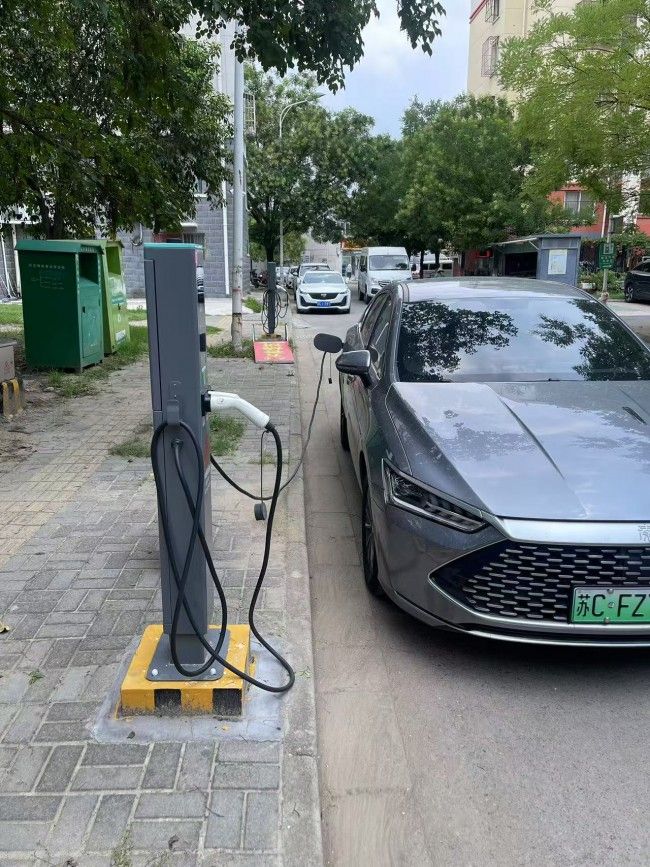
京联充专注于发展智慧社区充电桩,其市场优势是什么
Zhong Guo Chan Ye Jing Ji Xin Xi Wang· 2025-07-11 04:19
Core Insights - The article emphasizes the market advantages of Jinglian Charging, focusing on its positioning in smart communities and addressing specific community needs [1] Group 1: Addressing Community Needs - The service offers convenience with "home charging," covering nighttime parking scenarios (10 PM to 8 AM), aligning with the 6-8 hours of idle time for private cars, thus alleviating "range anxiety" for mainstream electric vehicles with a range below 500 km [1] - It overcomes community power limitations with a power range of 7 kW to 22 kW, minimizing impact on the grid and adapting to older residential electrical systems through smart load balancing technology [1] Group 2: Low-Cost Expansion and User Retention - The business model involves light asset deployment, collaborating with property management for revenue sharing, and utilizing existing parking spaces without the need for new construction [2] - High user retention is achieved by binding users to "home charging scenarios," with an average monthly charging frequency exceeding 20 times, compared to less than 4 times for fast charging station users [2] - Customer acquisition costs are significantly low, with costs under 10 yuan per person, compared to the industry average of 50-100 yuan [2] Group 3: Technological Adaptation - Safety features include IP54 rating for water and dust protection, overcharge protection, and electronic locks for charging guns to reduce community safety disputes [3] - An intelligent operation and maintenance system allows for remote monitoring and self-diagnosis of faults, reducing manual inspections and ensuring repair response times under 4 hours [3] - Power adjustment during peak usage times helps maintain grid stability, enhancing cooperation with property management [3] Group 4: Profit Model Integration - The revenue model focuses on basic electricity fees and service fees, leveraging low off-peak electricity prices (below 0.3 yuan/kWh) and service fees ranging from 0.4 to 0.8 yuan/kWh, with average monthly revenue per charging station between 800 to 1500 yuan [4] - Additional community value-added services include integrating online retail with charging incentives [4] Group 5: Policy and Competitive Barriers - Policy incentives include mandatory installation of charging facilities in new residential buildings in various regions, along with subsidies for upgrading older communities [5] - Defensive barriers are established through exclusive partnerships with leading property management companies, securing community resources [5] - High switching costs for users who have developed habits make it difficult for competitors to attract customers without offering substantial subsidies [5] Group 6: Core Value of Community Slow Charging - Jinglian Charging positions itself as a "community energy steward," facilitating low barriers to entry, high usage frequency, and ecosystem integration to capture the "last mile" scenario for electric vehicle owners [6] - In the short term, the focus is on capitalizing on the policy-driven construction phase to scale coverage in communities; in the long term, the goal is to integrate charging stations with community energy storage, solar power, and V2G (vehicle-to-grid) systems to build regional microgrid networks [6]

河南实施五大行动助力制造业加"数"跑
Zhong Guo Chan Ye Jing Ji Xin Xi Wang· 2025-07-11 01:28
Core Viewpoint - The Henan Province is accelerating digital transformation to promote high-quality development in its manufacturing sector, leveraging its comprehensive industrial system and aiming to enhance its modern industrial framework's support capacity for quality growth [1][2]. Group 1: Digital Transformation Actions - The first action focuses on comprehensive digital transformation, providing tailored solutions for companies that have not yet implemented digital upgrades and promoting the establishment of smart workshops and factories for those that have [1]. - The initiative aims to harness opportunities from generative artificial intelligence, driving the construction of industrial large models and establishing centers for AI industry empowerment and hardware-software adaptation [1]. Group 2: Traditional Industry Upgrading - The second action targets quality enhancement in traditional industries such as steel, non-ferrous metals, chemicals, building materials, and food, aiming to improve the competitive advantage across the entire industry chain [2]. - Support will be provided for traditional manufacturing sectors to delve into niche markets, incubate new technologies, explore new avenues, and cultivate new industries [2]. Group 3: Advanced Manufacturing Clusters - The third action is focused on cultivating advanced manufacturing clusters, specifically enhancing the scale and technological level of national clusters in superhard materials and modern agricultural machinery [2]. - There is a strong emphasis on supporting the creation of national advanced manufacturing clusters in new power equipment, modern food, and smart terminals [2]. Group 4: Development Zone Enhancement - The fourth action aims to elevate the capabilities of development zones by attracting upstream and downstream enterprises and supporting service institutions to build clear leading industries and complete industrial chains [2]. - Efforts will be made to improve management service efficiency in development zones, deepen reforms, and optimize operational models to enhance public services and market-oriented operations [2]. Group 5: Quality Enterprise Cultivation - The fifth action focuses on nurturing quality enterprises, strengthening leading companies, and enhancing their resource allocation capabilities [2]. - Support will be provided for cross-regional mergers and acquisitions, accelerating vertical integration across the entire chain, and aiming to create a batch of national chain-leading and pioneering enterprises [2].
四川推进千亿级优势特色农业产业建圈强链
Zhong Guo Chan Ye Jing Ji Xin Xi Wang· 2025-07-11 01:20
Group 1 - Sichuan Province has launched a "dual cultivation" action to strengthen its agricultural industry, with a total investment of 199.4 billion yuan across 465 projects [1] - The focus is on key industrial chains, with 329 projects highlighted at the launch, amounting to an investment of 107.26 billion yuan [1] - Sichuan is one of the top 13 grain-producing provinces in China, with 13 agricultural products consistently ranking first in national output [1] Group 2 - The province aims to build 24 livestock industry clusters, targeting a total output value of over 1 trillion yuan in the next 3-5 years [2] - Sichuan is the largest producer of quality silkworm cocoons in the country, with plans to support the development of four major industrial chains related to silkworm production [2] - The tea industry in Sichuan ranks third nationally in terms of area, output, and comprehensive value, with plans to enhance the potential of specific tea ecological zones [2]
深圳出台措施支持半导体与集成电路产业发展
Zhong Guo Chan Ye Jing Ji Xin Xi Wang· 2025-07-11 01:16
Core Viewpoint - Shenzhen has officially implemented measures to promote high-quality development in the semiconductor and integrated circuit industry, establishing a total fund of 5 billion yuan to support the optimization and quality enhancement of the entire industry chain [1][2] Group 1: Industry Overview - Shenzhen is a key hub for China's integrated circuit industry, home to notable companies such as HiSilicon, Memory Technology, ZTE Microelectronics, and BYD Semiconductor, covering critical areas like design, manufacturing, equipment, and materials [1] - The scale of Shenzhen's integrated circuit industry reached 142.4 billion yuan in the first half of this year, marking a historical high with a year-on-year growth of 16.9% [1] Group 2: Specific Measures - The newly introduced measures focus on three core goals: strengthening, stabilizing, and supplementing the industry chain, with ten specific support initiatives aimed at breakthroughs in high-end chip products, enhancing chip design support, and accelerating the application of EDA tools [1][2] - Companies are encouraged to develop high-end general-purpose chips such as CPUs, GPUs, DSPs, and FPGAs, as well as specialized chips for artificial intelligence and edge computing to meet diverse market needs [1] - The measures emphasize the importance of local EDA tool development and application to enhance self-sufficiency [2] Group 3: Funding and Investment - The "Saimi Industry Private Equity Fund," with a total scale of 5 billion yuan, aims to invest in key projects and leading companies in Shenzhen's semiconductor and integrated circuit sectors, focusing on building a localized supply chain [2] - The fund is designed to support projects that significantly contribute to the improvement of the industry chain, promoting a collaborative and efficient development mechanism [2]
重塑汽车竞争力:供应链价值跃迁与伙伴关系重构
Zhong Guo Chan Ye Jing Ji Xin Xi Wang· 2025-07-11 01:09
Core Insights - The demand for intelligent transformation in the new energy sector is driving technological innovation across the supply chain, with companies like CATL, Huawei, and Horizon becoming key players [1] - The relationship between automakers and suppliers is evolving from a traditional buyer-supplier dynamic to a partnership model, emphasizing the importance of a stable supply chain for market competitiveness [1][3] - SAIC Volkswagen has been a significant influence in optimizing supply chains and fostering technological upgrades in the automotive industry over the past 40 years [2][3] Supply Chain Dynamics - The structure of electric vehicles is more centralized compared to traditional fuel vehicles, leading to a reshaping of the automotive supply chain [3] - Traditional suppliers are actively transforming, while innovative suppliers are emerging, particularly in the fields of power batteries and intelligent driving [3] - The collaboration between automakers and suppliers is evolving into a comprehensive cooperative mechanism that spans research, manufacturing, and service [3] Market Competition - The stability of the supply chain is crucial for the quality of the final product and overall market competitiveness, especially in the context of intense price wars [4] - The Chinese automotive industry is facing challenges from price wars that threaten supply chain stability, as highlighted by the China Association of Automobile Manufacturers [4] SAIC Volkswagen's Strategy - SAIC Volkswagen emphasizes the importance of a stable supply chain as a foundation for development, ensuring product quality consistency through rigorous supplier management [5][6] - The company has achieved significant sales milestones, with over 1.2 million units sold in 2024, and a 15.1% year-on-year increase in June sales [6] - SAIC Volkswagen's reputation for quality has led to a perception of its approved components as "exempt from inspection" by other manufacturers [7] Technological Partnerships - SAIC Volkswagen has formed strategic partnerships with leading technology companies to innovate and provide new intelligent mobility solutions [7] - The company is set to launch new models, including the ID.ERA and upgraded versions of popular models, as part of its multi-brand strategy [8]

解构“中场答卷” 五大因素影响钢市基本面
Zhong Guo Chan Ye Jing Ji Xin Xi Wang· 2025-07-11 01:08
Group 1: Manufacturing Sector Trends - The manufacturing sector in China is showing positive signs, with the June PMI at 49.7%, a 0.2 percentage point increase, indicating a recovery in both production and new orders [1] - The manufacturing demand for steel is expected to increase as more policies are implemented to stabilize and boost the economy, including the issuance of special bonds and urban renewal projects [1] Group 2: Monetary Policy and Global Economic Conditions - There is a widespread optimism regarding the Federal Reserve's potential interest rate cuts, with expectations of three rate cuts in the second half of the year, which could enhance global liquidity and improve steel export conditions for China [2] - The depreciation of the US dollar is significant, with the dollar index dropping below 96.50, raising concerns about the dollar's future and potentially leading to increased demand for steel in developing countries [3] Group 3: Trade Relations and Real Estate Market - The trade relationship between China and the US is expected to improve, reducing the intensity of the tariff war, which could positively impact China's steel market [4] - The real estate sector is showing signs of recovery, with policies aimed at stabilizing the market and increasing housing sales, which will likely boost steel demand [5]
钢价指数再回90点上方
Zhong Guo Chan Ye Jing Ji Xin Xi Wang· 2025-07-11 01:08
Core Insights - The domestic steel price index in China showed a slight increase during the week of June 30 to July 4, with both long and flat steel price indices rising, and the long steel price index experiencing a greater increase [1] Price Index Summary - The China Steel Price Index (CSPI) reached 90.53 points, up 1.02 points week-on-week, representing a 1.14% increase; however, it decreased by 6.94 points or 7.12% compared to the end of last year, and by 13.01 points or 12.57% year-on-year [1] - The long steel price index was at 92.60 points, with a week-on-week increase of 1.32 points (1.45%); it fell by 7.62 points (7.60%) from the end of last year and by 13.36 points (12.61%) year-on-year [1] - The flat steel price index stood at 88.70 points, increasing by 0.94 points (1.07%) week-on-week; it decreased by 6.85 points (7.17%) from the end of last year and by 13.12 points (12.89%) year-on-year [1] Regional Price Index Summary - All six major regions in China saw a week-on-week increase in steel price indices, with the Northwest region showing the largest increase and the Central South region the smallest [2] - The North China steel price index was 89.47 points, up 0.97 points (1.09%) week-on-week, but down 13.60 points (13.19%) year-on-year [2] - The Northeast region's index was 89.19 points, up 0.91 points (1.03%) week-on-week, with a year-on-year decrease of 13.49 points (13.14%) [2] - The East China index was 91.22 points, up 1.19 points (1.32%) week-on-week, down 12.97 points (12.45%) year-on-year [2] - The Central South index was 92.08 points, up 0.84 points (0.93%) week-on-week, with a year-on-year decrease of 13.28 points (12.60%) [2] - The Southwest index was 91.05 points, up 0.97 points (1.08%) week-on-week, down 11.78 points (11.46%) year-on-year [2] - The Northwest index was 91.39 points, up 1.24 points (1.37%) week-on-week, down 13.70 points (13.04%) year-on-year [2] Price Changes by Product - Compared to the end of May, prices for all eight major steel products increased, with rebar showing the largest increase and hot-rolled seamless pipes the smallest [3] - The price of 6mm high wire was 3295 CNY/ton, up 52 CNY/ton (1.60%) from the end of May [3] - The price of 16mm rebar was 3100 CNY/ton, up 49 CNY/ton (1.61%) from the end of May [3] - The price of 5 angle steel was 3298 CNY/ton, up 35 CNY/ton (1.07%) from the end of May [3] - The price of 20mm medium-thick plate was 3417 CNY/ton, up 15 CNY/ton (0.44%) from the end of May [3] - The price of 3mm hot-rolled coil was 3303 CNY/ton, up 47 CNY/ton (1.44%) from the end of May [3] - The price of 1mm cold-rolled sheet was 3747 CNY/ton, up 26 CNY/ton (0.70%) from the end of May [3] - The price of 1mm galvanized sheet was 4168 CNY/ton, up 43 CNY/ton (1.04%) from the end of May [3] - The price of 219mm×10mm hot-rolled seamless pipe was 4240 CNY/ton, up 11 CNY/ton (0.26%) from the end of May [3] Cost Analysis - In May, the average import price of iron ore was 96.24 USD/ton, down 1.86 USD/ton (1.90%) month-on-month [4] - The domestic iron concentrate price was 839 CNY/ton, down 4 CNY/ton (0.47%) from the end of May [4] - The price of coking coal was 1175 CNY/ton, down 14 CNY/ton (1.18%) from the end of May [4] - The price of coke was 1162 CNY/ton, down 5 CNY/ton (0.43%) from the end of May [4] - The price of scrap steel remained stable at 2337 CNY/ton, unchanged from the end of May [4] International Market Overview - In June, the CRU international steel price index was 188.1 points, down 7.0 points (3.6%) month-on-month [5] - The CRU long steel price index was 194.2 points, down 1.4 points (0.7%) month-on-month [5] - The CRU flat steel price index was 184.8 points, down 10.1 points (5.2%) month-on-month [5] - The North American steel price index was 235.1 points, down 9.9 points (4.0%) month-on-month [5] - The European steel price index was 212.9 points, down 10.1 points (4.5%) month-on-month [5] - The Asian steel price index was 146.7 points, down 3.7 points (2.5%) month-on-month [5] Market Outlook - The Chinese steel price index is currently showing a strong performance, rebounding above 90 points; however, the market is in a low-demand season, making a fundamental shift in demand unlikely in the short term [6] - Steel production has slightly decreased, and spot prices for major products have risen, while raw material prices continue to decline slightly [6] - Overall, steel prices are expected to remain volatile in the short term due to seasonal demand factors [6]
中国医药企业破浪扬帆加速全球化
Zhong Guo Chan Ye Jing Ji Xin Xi Wang· 2025-07-10 23:25
Core Viewpoint - The Chinese pharmaceutical industry is experiencing positive changes driven by policy optimization and innovation, with a focus on internationalization and high-quality development [2][3]. Group 1: Industry Development - China's pharmaceutical industry has become a global leader in the production of active pharmaceutical ingredients (APIs) and small to medium-sized medical devices, playing an increasingly important role in the global pharmaceutical landscape [1][2]. - The industry is transitioning from exporting intermediates and APIs to a comprehensive export of innovative products, marking a significant shift in the internationalization of Chinese pharmaceuticals [2][3]. Group 2: Policy and Regulatory Environment - Recent reforms in drug and medical device regulation have enhanced the safety and effectiveness of products while stimulating innovation within the industry [4][5]. - The acceleration of drug review and approval processes, along with China's membership in the International Council for Harmonisation (ICH), has created a "fast track" for innovative drugs to enter international markets [2][3]. Group 3: Market Strategies and Internationalization - Companies are encouraged to adopt differentiated and refined market entry strategies by analyzing regional market characteristics, disease profiles, payment capabilities, and competitive landscapes [3][4]. - Successful case studies highlight the importance of collaboration, local production, and building partnerships to penetrate target markets effectively [5]. Group 4: Challenges and Future Directions - Despite the progress, the industry faces various internal and external challenges that require modernization of the regulatory system and governance capabilities to ensure high-quality development [3][5]. - The industry must maintain confidence and focus on enhancing innovation capabilities and quality control to navigate complex international environments and competition [5].


四川省教育融媒体联盟成立
Zhong Guo Chan Ye Jing Ji Xin Xi Wang· 2025-07-10 23:02
Core Viewpoint - The establishment of the Sichuan Provincial Education Media Alliance aims to enhance the effectiveness of education publicity and address challenges in the current media landscape, focusing on resource integration and collaborative content creation [1][2][3] Group 1: Alliance Formation and Objectives - The Sichuan Provincial Education Media Alliance was officially established on July 8, 2023, with participation from 12 central and provincial mainstream media outlets, along with 112 universities and 16 municipal members [1] - The alliance seeks to resolve issues related to the fragmentation of accounts and homogenization of content in the education publicity system, promoting a collaborative mechanism centered on platform co-construction, content co-creation, resource sharing, and talent cultivation [1][2] Group 2: Strategic Focus and Implementation - The alliance will focus on building a strong educational public opinion platform through a combination of policy advocacy, positive messaging, and public sentiment monitoring, aiming to produce impactful educational content [2] - The initiative will leverage advanced technologies such as general artificial intelligence and AIGC content generation to transform education communication from a one-way output to an interactive model, enhancing the effectiveness of publicity services [2] Group 3: Long-term Development and Goals - The alliance aims to create a sustainable development mechanism that fosters innovation and establishes a positive growth model, contributing to the construction of a strong education province and improving public satisfaction with education [3]