
Zhong Guo Qi Che Bao Wang

Search documents
又一家新势力倒下!
Zhong Guo Qi Che Bao Wang· 2025-12-03 01:19
又一家美国造车新势力关门了! 行业寒冬:美国造车新势力的集体溃败 Bollinger的倒下并非孤例,而是美国造车新势力破产潮的最新注脚。自2023年以来,洛兹敦、Proterra、菲斯克、Canoo、尼古拉等一众初创车企相继 退场,曾经火热的美国新能源造车赛道,如今一片狼藉。这场集体溃败的背后,是资本退潮、政策转向与自身短板共同作用的必然结果。 遗憾的是,这次转型最终并未能成功挽救Bollinger,多重危机接踵而至。今年3月,创始人罗伯特・博林格在离开公司后,对母公司穆伦汽车提起了 诉讼,诉讼缘由是他此前给公司提供的一笔约1000万美元的个人贷款。他在诉讼中还提及公司当时财务状况已陷入绝境。尽管穆伦最终偿还了款项,但信 任危机已然爆发,Bollinger遭到蒂森克虏伯等多家供应商起诉,同时因拖欠员工工资引发诉讼。此外,由于未能完成承诺的就业目标,Bollinger面临偿还 密歇根州300万美元拨款的压力。多重危机叠加下,这家曾被视为潜力股的企业走向了终结。 "这是一个时代的终结,但你们都应该为此感到非常自豪。"Helen Watson 在告别邮件中写道。尽管Bollinger Innovations(穆伦与 ...


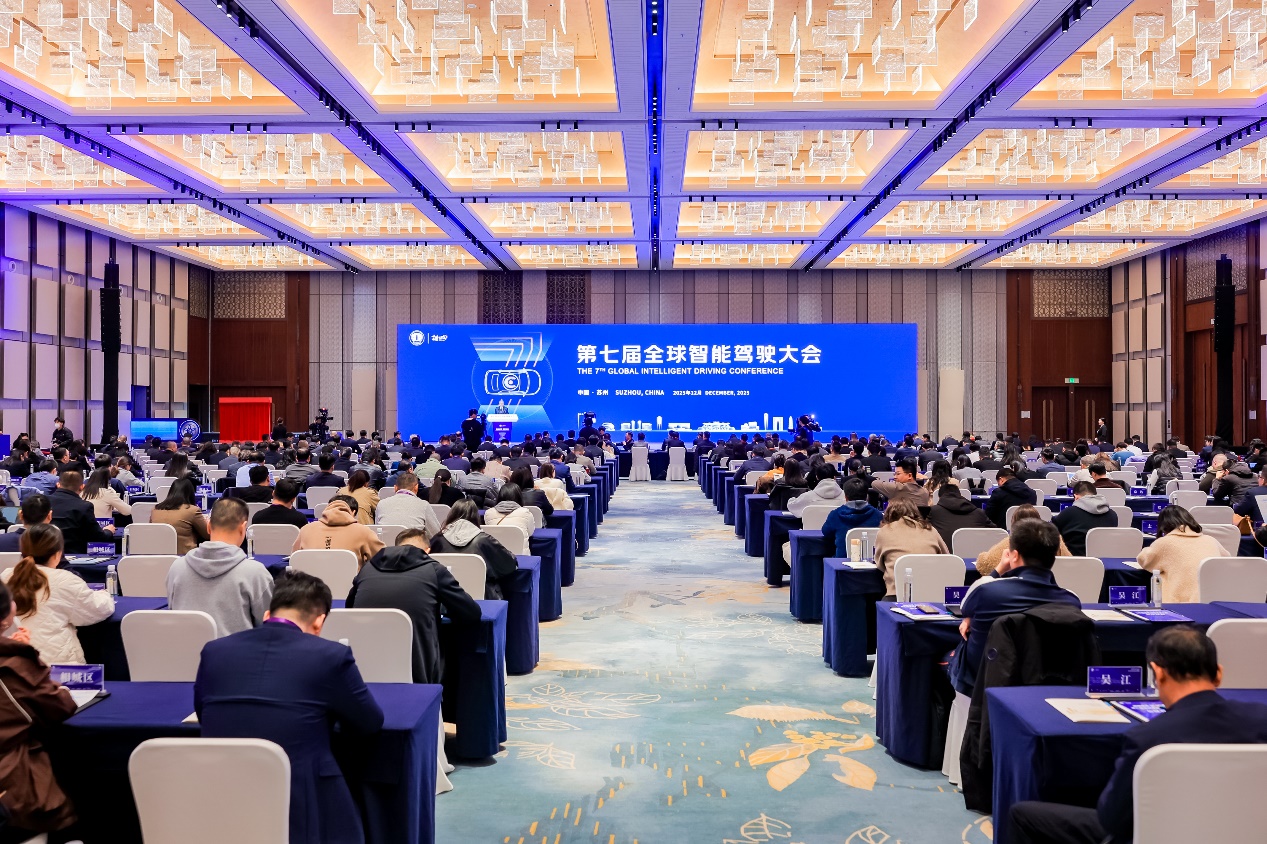
把握代差机遇,共建汽车智能化出海新生态——第七届全球智能驾驶大会召开
Zhong Guo Qi Che Bao Wang· 2025-12-03 00:45
Core Insights - During the "14th Five-Year Plan" period, China's automobile exports increased from less than 2 million to nearly 6 million, achieving a leap in both quantity and quality through collaborative industry chain development [1] - The global smart driving conference highlighted new opportunities and challenges for China's automotive intelligence development, emphasizing the need for a robust export strategy [3] Group 1: Opportunities in Smart Automotive Export - The transition to smart connected vehicles is a global consensus, with significant advancements in China's smart connected vehicle industry, evidenced by a 62.6% penetration rate of L2 passenger cars and a 60.5% 4G/5G installation rate [4] - China's automotive intelligence export is shifting from "single entity export" to a "system export," encompassing smart vehicles, supply chains, and digital services [4][5] - Chinese automotive hardware and software are superior, leading to better user experiences, with L2+ driving assistance penetration reaching 20% [5] Group 2: Challenges in Smart Automotive Export - The export of smart vehicles faces challenges such as complex regulations, consumer awareness of innovative technologies, and limited brand influence [7] - Key deficiencies in China's smart connected vehicle development include unrecognized product safety, suboptimal business models, and a lack of influential enterprises [7][8] - The automotive industry must address localization issues, data security compliance, and cultural adaptation to succeed in international markets [8][9] Group 3: Collaborative Strategies for Export - Industry collaboration is essential for exploring innovative paths for vehicle and supply chain exports, transitioning from competition to cooperation [10] - Establishing a global unified platform for hardware and algorithms, along with enhancing international talent decision-making, is crucial for building a supportive global environment [10] - The launch of the "Smart Connected Vehicle Special Export Action Initiative" aims to create an open and collaborative service ecosystem for high-quality exports [12]
加特兰发布白皮书提出多毫秒方案 UWB技术迎来新进化
Zhong Guo Qi Che Bao Wang· 2025-12-02 10:44
Core Insights - The core viewpoint of the articles highlights the advancements and challenges of Ultra-Wideband (UWB) technology, particularly in the automotive sector, with a focus on the recent innovations by the company Gatlan, including the Dubhe CAL110X series chip and the release of a white paper on multi-millisecond UWB ranging technology [2][6]. Group 1: UWB Technology and Automotive Applications - UWB technology has emerged as a leading solution for precise ranging applications, particularly in automotive digital key systems, with expectations of a penetration rate of nearly 50% in the automotive sector by 2035 [3][5]. - Current automotive digital key experiences face challenges such as limited sensing distance (around 10 meters), poor environmental adaptability, and insufficient ranging accuracy, which affect user experience [5][6]. Group 2: Multi-Millisecond UWB Technology - Gatlan's white paper introduces multi-millisecond (MMS) UWB technology, which enhances signal transmission and reception by allowing for the accumulation of signal energy over a longer time window, improving the overall performance of UWB systems [6][8]. - The MMS UWB technology can significantly improve link budget by 10-20 dB, extending effective ranging distances and enhancing multi-path resolution in complex environments [8][9]. Group 3: Future Prospects and Standardization - Gatlan actively participates in the development of the new UWB standard IEEE 802.15.4ab, proposing various operational modes for MMS UWB, including narrowband-assisted and BLE-assisted configurations, which offer distinct advantages for commercialization [9][10]. - The BLE-assisted MMS UWB approach is expected to enhance UWB's performance while minimizing additional hardware costs, leveraging the existing BLE ecosystem widely adopted in consumer electronics [10].

观车 · 论势 || “反向代工”:从“体力”到“脑力”的全球化输出
Zhong Guo Qi Che Bao Wang· 2025-12-02 09:27
"反向代工"现象背后,是供给侧、需求侧发生的质变,也是中国车企形成可输出价值的体现。从供给侧 看,近年来,中国车企在汽车电动化核心技术领域实现了从起跑到领跑的跨越,"换道超车"已见成效。以动 力电池为例,中国企业在技术研发和产品品类上不断创新,实现了安全性、能量密度、循环寿命、快充等性 能的持续提升。这些在电动化、智能化等方面的技术进步与推广成效,以及由此形成的智慧经验与实力积 累,成为中国车企输出价值的坚实底气。 在需求侧,部分海外品牌车企由于种种原因存在产能闲置的情况。据报道,此次将为广汽代工的麦格纳 格拉茨工厂,曾是欧洲豪华品牌的重要代工工厂,但近年来却出现了订单逐渐减少、产能利用率持续下降的 状况,而产能闲置也造成企业运营成本的增加。雷诺巴西工厂、通用沈阳北盛工厂不同程度地面临类似问 题。中国车企"反向代工"带来新订单,不仅有助于合作方应对产能闲置、缓解成本压力,也将为当地新能源 汽车市场和经济发展注入新的活力。这一供需结构的再匹配,反映出中国车企通过自主创新实现技术输出与 合作主导,进而推动从"重资产"到"轻输出"的战略升级。 汽车代工领域,出现新风向。 日前,广汽集团与全球知名汽车代工厂商麦格纳联 ...

2025年交通安全日:长沙交警、懂车帝共同开展文明交通进校园活动
Zhong Guo Qi Che Bao Wang· 2025-12-02 09:19
Core Viewpoint - The article highlights the importance of promoting traffic safety awareness among university students through interactive and immersive activities, emphasizing the theme "Civilized Traffic, Courtesy Worldwide" for the National Traffic Safety Day on December 2, 2025 [1]. Group 1: Event Overview - The main event took place at Central South University, with over 300 university students participating in activities aimed at enhancing traffic safety awareness [3]. - The event included a "Civilized Traffic 'One Warning, Three Courtesies' Live Lane Simulation Teaching Open Class," which utilized experiential teaching methods to educate students on common uncivilized behaviors in traffic [3]. Group 2: Educational Initiatives - The collaboration between Dongchedi, Changsha Traffic Police, and Central South University involved setting up a "Traffic Safety Theme Exhibition" to promote safe driving concepts through scientific programs [3]. - Dongchedi has invested in producing public welfare science content related to traffic safety, including scenarios like "Truck Collision" and "Highway Intelligent Driving Accident Simulation," to visually present the dangers of reckless driving behaviors [3]. Group 3: Student Engagement - Students from Central South University, Hunan University, and Changsha University of Science and Technology participated in traffic safety promotion through original dance, rap performances, and interactive games [5]. - The "Automobile Traffic Safety Science Base" at Changsha University of Science and Technology held an open day event for elementary school students, fostering early awareness of traffic safety [5]. - A solemn pledge was made by representatives of the civilized traffic volunteers from Central South University, committing to lead by example in practicing civilized traffic principles [5].

协同破局 龙蟠科技赋能汽车产业链高质量出海
Zhong Guo Qi Che Bao Wang· 2025-12-02 09:04
Core Viewpoint - Longpan Technology is expanding its global footprint through its two core businesses: new energy materials and lubricants, effectively participating in the global competition of the Chinese automotive industry [1][2][14]. Group 1: New Energy Materials - Longpan Technology's subsidiary, Asia-Pacific Lithium Source, signed a long-term supply agreement with CATL to provide 157,500 tons of high-performance lithium iron phosphate cathode materials from Q2 2026 to 2031, ensuring capacity digestion and enhancing brand influence in overseas markets [2][3]. - The company has established the largest overseas lithium iron phosphate cathode materials factory in Indonesia, leveraging the region's rich lithium, nickel, and cobalt resources to meet the growing local supply demands [2][3]. - The Indonesian factory's output aligns with CATL's overseas bases, creating a cross-regional supply chain that reduces logistics costs and trade barriers, showcasing a unique advantage of China's new energy industry in global competition [3][14]. Group 2: Lubricants Business - Longpan's lubricants business serves as a stable foundation for its overseas expansion, with a market presence in over 20 countries, establishing a strong image for Chinese lubricant brands [4][8]. - The company tailors its lubricant products to meet local climate and operational conditions, such as producing high-performance lubricants for extreme temperatures in Kazakhstan and high-sulfur diesel environments in Zambia [8][9]. - In Southeast Asia, Longpan showcased its products at an automotive exhibition, emphasizing its adaptability to the region's high-temperature and high-humidity conditions, which garnered significant attention from local dealers and consumers [9][10]. Group 3: Industry Trends - The Chinese automotive industry is experiencing significant growth in exports, with a 15.7% year-on-year increase in total vehicle exports and a 90.4% surge in new energy vehicle exports in the first ten months of 2025 [11]. - The restructuring of global new energy trade dynamics presents historical opportunities for Chinese enterprises to shift from traditional export models to localized overseas operations, particularly in emerging markets like Southeast Asia [11][14]. - Longpan Technology's global strategy, termed "Very 7+1," focuses on building competitive advantages through market, capacity, talent, capital, vertical integration, product differentiation, and corporate culture, with ESG as a foundational support [13][14].


吉利汽车集团设立每年12月为“吉利安全月”
Zhong Guo Qi Che Bao Wang· 2025-12-02 07:48
2025年12月2日是第14个全国交通安全日,吉利汽车集团正式宣布将每年12月正式设立为"吉利安全月"。此举是吉利积极履行守护公域安全企业责任的 关键举措,为用户的年终出行筑起一道前瞻性的安全防线。吉利此次将"全国交通安全日"从一日的公众倡导扩展为更持续更深度的安全系列行动,也是践 行"用户至上、安全第一"的造车核心价值观的进一步体现。全新落成的吉利全球全域安全中心也将在12月12日正式启用。作为规模更大、测试功能更多的汽 车安全试验中心,将同步向全行业开放共享,标志着吉利将以持续进化的全域安全技术体系,更高更完善的智能汽车安全标准,为用户履行"安全伙伴"的长 期承诺。 ...


海外销量显著增长 LANDKING产品深受全球用户青睐
Zhong Guo Qi Che Bao Wang· 2025-12-02 03:08
在全球商用车市场加速转型的背景下,潍柴新能源商用车海外业务持续向好。截至10月,其海外销量实现同比增长71%,展现出强劲的国际拓展 势头。近日,旗下LANDKING品牌发布了新一代产品矩阵,30款新品集中亮相,充分体现了其在新能源商用车领域的技术实力与产业布局。 作为潍柴集团全资子公司,潍柴新能源商用车依托集团覆盖150多个国家及地区的网络资源与近2000家服务站点,构建了从动力总成到整车的全 链条技术体系。产品线涵盖中、轻、小、微型卡车以及Van类车型,总重覆盖2.5吨至24吨,并布局混动、纯电、氢燃料等多种新能源路线,满足多样 化运营场景。 为应对全球复杂运营环境,LANDKING持续推进本地化开发。例如,针对中东高温优化热管理,面向东南亚、独联体及美洲等高湿、高盐环境 升级防腐技术,并为多山地区研发专用车型,显著提升产品适应性与场景穿透力。 此次发布的新一代产品包括轻卡、微卡及VAN类车型,覆盖X7新能源及燃油版、X1纯电小卡及全新新能源大VAN。其中,X7新能源轻卡配备 2120mm超宽驾驶室与200kW·h大容量电池,搭载L2+智能驾驶系统,续航与安全性能领先。X1纯电微卡拥有1650mm宽体驾驶室 ...


广东“街车”:广本雅阁的荣耀大本营
Zhong Guo Qi Che Bao Wang· 2025-12-02 02:53
Core Insights - The Guangzhou Auto Show highlighted the popularity of the Honda Accord, which has become a symbol of quality living in Guangdong, often referred to as the "省车" or "省钱车" [1][3] Sales and Market Presence - The Honda Accord has achieved cumulative sales of over 3.5 million units in China, with a significant presence in Guangdong, where it is commonly seen on streets and in parking lots [5] - In Guangdong, there are over 700,000 Accord vehicles that are more than 15 years old still in operation, showcasing the vehicle's reliability and long-lasting quality [5] Product Features and Technology - The new Accord features the Honda Architecture, utilizing high-strength steel with a tensile strength exceeding 1500 MPa, ensuring safety and durability [5] - It offers diverse powertrain options, including a turbocharged version and a plug-in hybrid, catering to both performance enthusiasts and environmentally conscious consumers [5] - The vehicle is equipped with Honda's latest fourth-generation i-MMD dual-motor hybrid system, which provides excellent fuel economy and class-leading performance [8] - The Accord's chassis tuning benefits from Honda's racing experience, enhancing its handling and stability during high-speed driving and cornering [8] - The HondaCONNECT 4.0 smart connectivity system allows for advanced features such as voice control for navigation, music, and climate settings, making driving more convenient and intelligent [8] Brand Reputation and Future Outlook - The Honda Accord's strong reputation is reflected in its high ownership rate and customer satisfaction, making it a preferred choice for many consumers in Guangdong [6][8] - The vehicle is positioned not just as a car but as a lifestyle choice, symbolizing quality living and future aspirations for its owners [8]

电动化浪潮中的运动孤勇者,型格如何用硬核技术破局
Zhong Guo Qi Che Bao Wang· 2025-12-02 02:53
Core Viewpoint - The article emphasizes that true sports performance in vehicles requires a deep collaboration of chassis, power, and handling, rather than just fast acceleration figures, as demonstrated by the GAC Honda model, Xingge, amidst the electric vehicle trend [1][17]. Group 1: Performance Technology - The modern sports car's core is the linearity and controllability of power output, with the Xingge 1.5T gasoline version featuring a wide torque platform from 1700 to 4500 rpm, achieving a 22% optimization in shift damping for the manual version [3][7]. - The Xingge e:HEV hybrid version utilizes a fourth-generation i-MMD system with a thermal efficiency exceeding 41%, maintaining 203 horsepower while achieving an 80% share of pure electric drive [3][7]. - The CVT transmission in Xingge employs variable steering ratio technology, achieving a passing speed of 78 km/h in the moose test, significantly surpassing the class average [5][8]. Group 2: Chassis and Structure - The high rigidity and lightweight low center of gravity chassis is fundamental for performance, with the Xingge using Honda Architecture and 1500MPa hot-formed steel, enhancing torsional rigidity by 8% while keeping the vehicle weight between 1350-1500 kg [8][12]. - The rear multi-link suspension of Xingge, combined with aluminum components, provides precise lateral support during cornering, achieving a steering ratio of 2.25 turns for versatile driving experiences [10][12]. Group 3: Intelligent Features and Comfort - The Xingge is equipped with a comprehensive safety suite, including 10 airbags and Honda SENSING system for advanced driver assistance, enhancing safety during sporty driving [13][17]. - The high-end version features a Bose 12-speaker audio system with active noise cancellation, maintaining a cabin noise level of 62 decibels at 120 km/h, which is lower than competitors [15][17]. - The Honda CONNECT 4.0 system supports dual connectivity options and includes features like a 9-inch central control screen and wireless phone charging, improving comfort during performance driving [17]. Group 4: Market Positioning - The Xingge is positioned to meet a wide range of consumer needs, from driving enthusiasts to daily commuters, with current market discounts ranging from 30,000 to 40,000 yuan, redefining the value standard of sports performance through robust technology [17].
