
Qi Huo Ri Bao Wang

Search documents
全球大豆供应链稳定性面临挑战
Qi Huo Ri Bao Wang· 2025-07-30 01:39
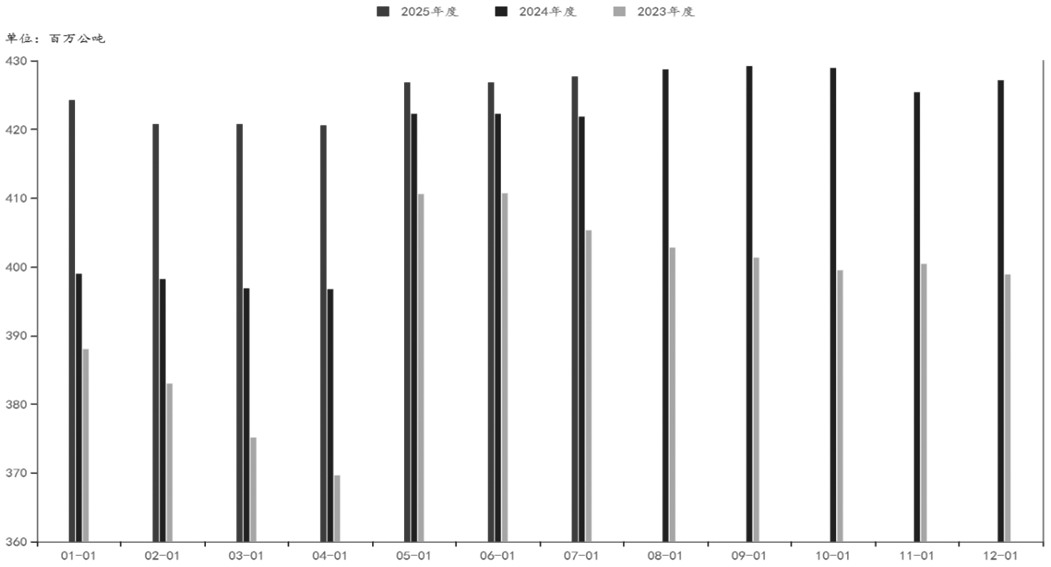
多因素交织 现阶段,全球大豆市场正处在复杂的博弈状态:一方面,在巴西大豆产量创下新纪录且持续保持高出口量的背景下,全球大豆供应格局呈现宽松态 势;另一方面,由于中美贸易谈判存在不确定因素,中国大豆在四季度仍存在庞大的采购缺口,其采购节奏依然会对美豆期价产生阶段性影响。此 外,8月,北美大豆进入生长关键期,天气的不确定性会继续影响美豆的产量前景。多种因素相互交织,使得美豆期价仍然面临诸多不确定性以及潜 在的价格波动风险。 图为全球大豆产量预估 图为巴西大豆压榨厂库存 图为美国大豆期末库存 图为阿根廷大豆期末库存 图为港口大豆库存 A全球大豆产量过剩且库存不断 现阶段,全球大豆市场整体呈现产量过剩且库存不断攀升的格局。德国行业刊物《油世界》发布的报告显示,2024/2025年度全球大豆产量有望达到 创纪录的4.184亿吨,较上一年度的3.953亿吨高出2310万吨,产量超出需求1100万吨,全球大豆库存消费比攀升至31.82%。此外,在产量增加的推动 下,全球大豆主产国的库存也在同步上升,其中,巴西大豆期末库存为4750万吨,同比增加23.5%;美国大豆期末库存为1060万吨,同比增加13.7%; 阿根廷大豆期末 ...

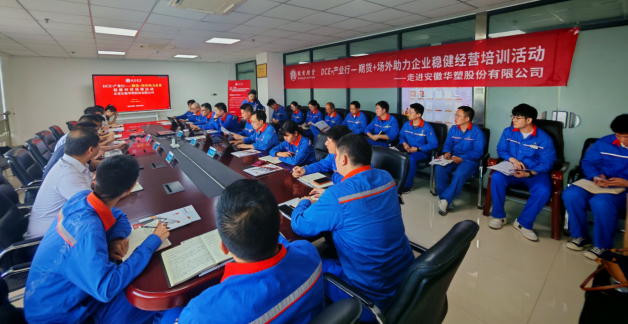
“DCE·产业行”——徽商期货走进上市公司专场培训成功举办
Qi Huo Ri Bao Wang· 2025-07-30 01:36
Group 1 - The event "DCE·Industry Action: Futures + OTC Empowering Stable Operations for Enterprises" was successfully held to address the risk management needs of the chlor-alkali chemical industry, aiming to enhance the operational capabilities of enterprises [1][3] - The training featured three senior experts who provided insights tailored to the actual needs of enterprises, focusing on the current supply-demand dynamics and future price trends of the PVC market [1] - The event facilitated face-to-face communication to accurately diagnose the actual risk management needs of enterprises, effectively delivering knowledge on applicable financial derivative tools [3] Group 2 - The training included detailed discussions on key aspects of hedging operations, supported by practical case studies to clarify core issues and strategies in hedging [1] - The event emphasized the importance of futures companies in supporting the real economy, with a commitment to exploring new service models to inject strong financial momentum into the sustainable development of the real economy [3] - The training provided clear guidance on the specific processes and operational points of PVC futures delivery, helping enterprises manage delivery risks effectively [1]
近期利率全面上升
Qi Huo Ri Bao Wang· 2025-07-30 01:19
Core Viewpoint - The domestic funding market interest rates have risen across the board due to increased demand for funds and expectations of future funding needs driven by government infrastructure projects [1] Group 1: Interest Rate Movements - As of July 29, the Shanghai Interbank Offered Rate (Shibor) for various terms has increased, with overnight, 1-week, 2-week, 1-month, 3-month, 6-month, 9-month, and 1-year rates reported at 1.366%, 1.545%, 1.631%, 1.55%, 1.56%, 1.613%, 1.632%, and 1.644% respectively, showing increases of 4.9, 8.3, 8, 2.1, 1.1, 2.2, 2, and 2.3 basis points compared to July 22 [1] Group 2: Central Bank Operations - The central bank has 16,563 billion yuan in reverse repos maturing this week and has conducted 9,450 billion yuan in reverse repo operations in the first two working days to inject liquidity into the market [1] - On July 25, the central bank had 2,000 billion yuan in Medium-term Lending Facility (MLF) maturing and rolled over 4,000 billion yuan, injecting 2,000 billion yuan into the market [1] Group 3: Future Outlook - The funding market interest rates are expected to exhibit a "short-term decline and long-term rise" trend, with short-term rates under pressure due to a decrease in demand at the beginning of the month [1] - The frequent introduction of proactive fiscal policies may lead to a continued slight increase in long-term rates [1]
国内成品油调价年内第三次搁浅
Qi Huo Ri Bao Wang· 2025-07-30 00:49
Core Viewpoint - The latest round of domestic refined oil price adjustments will not take place due to minimal fluctuations in international oil prices, reflecting a stable domestic pricing mechanism [1][2] Group 1: Price Adjustment Details - The new price adjustment window for refined oil opened on July 29, with no changes to gasoline and diesel prices as the adjustment amount was less than 50 yuan per ton [1] - The average price of crude oil from July 15 to July 29 showed a change rate of -0.57%, indicating a potential decrease of 25 yuan per ton for gasoline and diesel, which is below the adjustment threshold [1] - This marks the third time this year that domestic refined oil price adjustments have been suspended, highlighting the limited volatility in international oil prices [1] Group 2: Market Outlook - The current market focus includes potential U.S. sanctions against Russia, which could impact Russian oil exports and drive prices higher [2] - OPEC+ is expected to maintain significant production increases, with a new meeting scheduled for early August, potentially advancing their production targets [2] - Seasonal demand for fuel is expected to remain strong due to the summer travel peak in the U.S., although uncertainties surrounding U.S. tariff policies continue to create cautious market sentiment [2]
郑商所调整部分期货合约交易手续费
Qi Huo Ri Bao Wang· 2025-07-30 00:49
Core Viewpoint - The Zhengzhou Commodity Exchange has announced adjustments to trading fees for specific futures contracts, effective from July 30, 2025, during night trading sessions [1] Group 1: Trading Fee Adjustments - The trading fee for the glass futures contract (2509) will be adjusted to 10 yuan per lot for intraday closing positions [1] - The trading fee for the soda ash futures contract (2509) will be set at 0.04% of the transaction amount for intraday closing positions [1] - The trading fees for the caustic soda futures contract (2509) will be adjusted to 0.02% of the transaction amount for both regular trading and intraday closing positions [1]
农业农村部:强化金融政策支持 促进农产品消费
Qi Huo Ri Bao Wang· 2025-07-30 00:46
Group 1 - The core viewpoint of the news is the introduction of the "Implementation Plan for Promoting Agricultural Product Consumption," which aims to boost consumption through 23 specific measures across nine areas, focusing on optimizing supply, innovating circulation, and activating the market [1] - The Ministry of Agriculture and Rural Affairs plans to enhance rural tourism and purchasing integration, supported by financial policies from the People's Bank of China and the Ministry of Agriculture, to promote agricultural product consumption [1] - Financial support will be directed towards enterprises, cooperatives, and collective economic organizations, with a focus on leisure agriculture and advantageous regions [1] Group 2 - The Ministry will deepen regional cooperation to promote consumption, utilizing various platforms to market specialty agricultural products from designated assistance counties [2] - Financial institutions will be encouraged to innovate in loan services, such as order and accounts receivable pledges, to support agricultural marketing and promotion [2] - The Ministry will push for innovations in cold chain logistics through financial policy support, including updating old facilities and enhancing financing models for comprehensive cold chain logistics [2]

践行中央八项规定精神 共筑期货强国之路
Qi Huo Ri Bao Wang· 2025-07-29 18:22
Core Viewpoint - The implementation of the Central Eight Regulations has initiated a significant transformation in the conduct of the Party and the financial industry, emphasizing the importance of integrity and service to the economy [1][2]. Group 1: Importance of the Central Eight Regulations - The Central Eight Regulations aim to eliminate formalism, bureaucratism, hedonism, and extravagance, thereby reshaping the relationship between the Party and the people [2]. - The spirit of the regulations embodies the eternal pursuit of being "people-oriented, pragmatic, and clean," reflecting a self-revolutionary spirit [2]. - The financial sector, particularly the futures industry, is encouraged to integrate the spirit of the regulations into its operations to achieve high-quality development [2]. Group 2: Service to the Real Economy - The futures industry must focus on serving the real economy, translating the requirement of "close contact with the masses" into practical actions [2]. - The "insurance + futures" project exemplifies how the industry can provide targeted financial support to agricultural sectors [2]. - Continuous innovation in service models and the development of risk-hedging tools are essential for supporting enterprises through economic cycles [2]. Group 3: Risk Management and Compliance - The futures market is inherently associated with risk, necessitating a rigorous adherence to the principles of the Central Eight Regulations to mitigate risks [3]. - The industry must establish a robust risk management system and ensure compliance to maintain market stability [3]. Group 4: Corporate Culture and Integrity - The Central Eight Regulations are deeply embedded in the corporate culture of Huatai Futures, guiding its practices and client relationships [4]. - Trust is fundamental in finance, and Huatai Futures prioritizes client interests while adhering to principles of transparency and fairness [4]. - Talent development is crucial, with a focus on integrity and professional capability, supported by partnerships with educational institutions [4]. Group 5: Promoting Integrity in Partnerships - Huatai Futures actively promotes a culture of integrity in its partnerships, requiring all collaborators to sign anti-corruption agreements [5]. - These agreements serve as a commitment to uphold market integrity and protect legal rights [5]. Group 6: Continuous Improvement in Conduct - The futures industry faces challenges in fully implementing the Central Eight Regulations, necessitating ongoing efforts to strengthen compliance and ethical standards [7]. - Continuous education and training on the importance of conduct and the regulations are essential for all industry participants [7]. Group 7: Institutional Framework and Supervision - Establishing a comprehensive system of integrity norms is vital for the futures industry, clarifying acceptable and unacceptable behaviors [8]. - A multi-faceted supervision framework is necessary to ensure compliance and accountability within the industry [8]. Group 8: Building a Collaborative Integrity Community - Collaboration among regulatory bodies, industry associations, and market participants is essential to create a robust integrity framework in the futures industry [9]. - The commitment to integrity and ethical conduct is a long-term goal for the industry, requiring collective efforts from all stakeholders [9].
大连着力打造东北亚大宗商品资源配置基地
Qi Huo Ri Bao Wang· 2025-07-29 16:27
Core Viewpoint - Dalian aims to establish itself as a Northeast Asia commodity resource allocation hub through a three-year action plan from 2025 to 2027, leveraging its industrial and geographical advantages to enhance commodity trade and market integration [1][2]. Group 1: Geographical and Industrial Advantages - Dalian's unique geographical position, with a natural deep-water port and extensive land transportation network, facilitates efficient distribution of commodities like soybeans and iron ore, making it a key logistics hub in Northeast Asia [2]. - The city has over 100 international shipping routes and significant deep-water berths, enhancing its capabilities in petrochemical and iron ore trade, particularly with Japan and South Korea [2]. Group 2: Strategic Development Plans - The action plan focuses on three key industrial clusters: agricultural products, metal minerals, and energy chemicals, with Dalian being a major base for oil refining and chemical industries in China [3]. - The plan proposes the establishment of a commodity trading park for energy chemicals, supported by major projects like the Hengli Petrochemical and the Hengli New Materials Technology Industrial Park, which involves a significant investment of 50 billion yuan [3]. Group 3: Innovative Development Framework - The framework "one core, two wings, and three zones" is designed to enhance Dalian's free trade zone and integrate various industrial parks to foster innovation and collaboration [4]. - The core area is the Dalian Free Trade Zone, with wings including the Shakoukou District for commodity trading and the Taiping Bay for processing and storage [4]. Group 4: Role of the Futures Market - The futures market is identified as a critical component for resource allocation, providing price signals that guide the flow of capital and resources [6]. - The plan emphasizes the importance of training enterprises in futures operations to enhance their understanding and utilization of these financial instruments [6]. Group 5: Collaboration and Talent Development - Dalian is fostering collaboration with leading enterprises and educational institutions to develop talent in commodity trading and risk management, with initiatives like the "Hundred Schools and Ten Thousand Talents" program [9]. - The partnership with universities aims to create specialized courses in commodity trading and financial management, ensuring a steady supply of skilled professionals [9]. Group 6: Market Integration and International Trade - The acceleration of the futures market's opening is expected to create new opportunities for Dalian to expand its international trade, particularly with Northeast Asian markets [10].
上半年期货公司整体经营情况改善
Qi Huo Ri Bao Wang· 2025-07-29 01:41
Core Insights - The overall performance of futures companies in China has improved in the first half of the year, with a total revenue of 18.68 billion yuan and a net profit of 5.07 billion yuan, reflecting a year-on-year growth of approximately 3.89% and 32% respectively [1][2] Group 1: Business Performance - In June, the total revenue of 150 futures companies reached 3.43 billion yuan, with a net profit of 990 million yuan [1] - The growth in performance is attributed to the continuous optimization of business structure, with a diversification of income sources reducing reliance on traditional brokerage services [1] - The increase in trading volume in the futures market has effectively offset the impact of declining commission rates [1] Group 2: Market Trends and Future Outlook - The recent rebound in prices of black commodities and new energy materials like industrial silicon and lithium carbonate is expected to further activate market transactions [2] - The favorable market conditions in July are anticipated to continue, providing a positive start for the second half of the year for futures companies [2] - The focus for futures companies in the second half will be on leveraging innovative services to support the stabilization and improvement of the real economy [2] Group 3: Challenges Ahead - The futures industry faces challenges such as complex global economic conditions and ongoing geopolitical conflicts, which introduce significant uncertainties in the commodity market [2] - The competitive landscape is increasingly polarized, with leading firms expanding their scale while smaller companies experience transformation pains and heightened survival pressures [2] - Stricter regulatory requirements and increased compliance costs are expected to raise operational management demands for futures companies [2]
金桥化工:创新贸易模式 重塑甲醇产业生态
Qi Huo Ri Bao Wang· 2025-07-29 01:11
Core Viewpoint - The traditional trading model of buying low and selling high is evolving due to compressed profits and intensified competition in the methanol industry. Jiangyin Jinqiao Chemical Co., Ltd. is pioneering a sustainable development path through "financial empowerment of the real economy and transformation driven by futures and spot markets" [1] Group 1: Industry Challenges - The profit margins for upstream and downstream in the industry are low, squeezing the profit space for intermediaries, making it difficult for them to profit directly from trading [2] - The transparency of market information has diminished the advantages of information asymmetry that traders previously relied on, necessitating a shift in trading models and the search for better tools [2] Group 2: Company Strategy - Jinqiao Chemical began exploring the integration of futures and spot markets since the launch of methanol futures, implementing hedging strategies to stabilize sales and reduce costs [2][3] - The company has seen a significant increase in methanol trade volume, with imports reaching 1.762 million tons and domestic trade at 3.676 million tons in 2024, up from 504,000 tons and 2.116 million tons in 2022, respectively [2] Group 3: Risk Management and Financial Tools - The company utilizes various financial instruments, including futures, options, and swaps, to hedge against price fluctuations and stabilize operational costs [3] - Jinqiao Chemical has developed a comprehensive risk management system and a professional team to implement a "hedging + arbitrage + basis trading" framework, transitioning from a traditional trader to a risk management service provider [6] Group 4: Innovative Trading Models - The company promotes innovative trading models, such as point pricing, to minimize friction losses and ensure stable procurement and sales for upstream and downstream partners [5] - Jinqiao Chemical is actively pushing the methanol industry from passive risk avoidance to proactive risk management, aiming to establish dual advantages of "price resilience + technological barriers" in the context of energy transition and global competition [6]