
Qi Huo Ri Bao Wang

Search documents
上半年金融期权市场活跃度分化明显
Qi Huo Ri Bao Wang· 2025-07-18 01:11
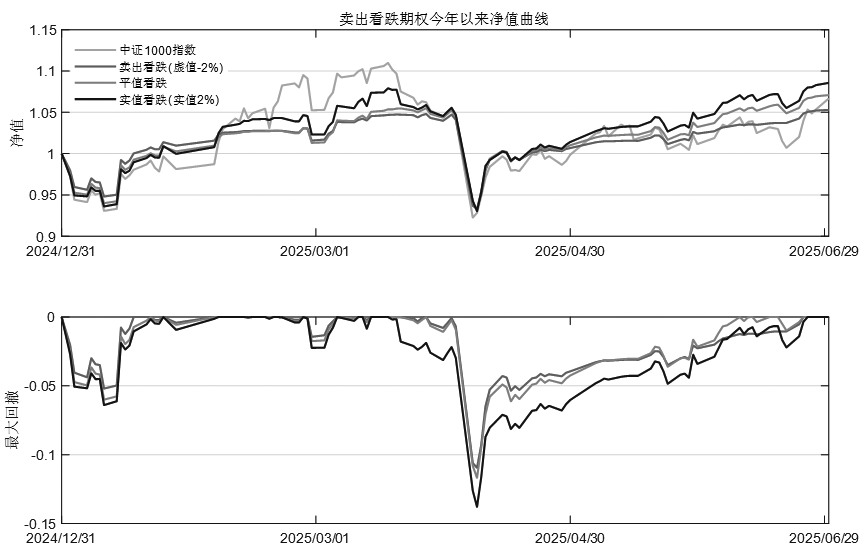
Core Insights - The overall financial options market showed a total trading volume of 690 million contracts in the first half of 2025, with a daily average trading volume of 6.39 million contracts and a total trading value of 589.44 billion yuan, reflecting a mixed performance compared to the same period in 2024 [1] Trading Volume and Market Share - The trading volume of options related to small and mid-cap indices, such as the CSI 1000 Index options and the Huatai-PineBridge Innovation 50 ETF options, saw significant increases, with the latter experiencing a daily average trading value growth of 42.09% compared to 2024 [2] - The CSI 1000 Index options market share rose to 36.13%, while the Southern CSI 500 ETF options followed with a 22.12% share, indicating a market preference for trading small-cap index options due to their higher elasticity [2] Volatility Trends - Implied volatility for options generally trended downward in the first half of the year, with notable spikes following the imposition of "reciprocal tariffs" by the U.S. in early April, where IO and MO options reached highs of approximately 50% and 70% respectively [3] - The implied volatility for the CSI 300 Index and CSI 1000 Index options has dropped to historical lows of 13% and 18%, respectively, indicating a low volatility environment, but with a premium over historical volatility still above 3% [4][9] Strategy Performance - Selling put options yielded positive results, with absolute returns of 7.08% and 8.56% for at-the-money and in-the-money options, respectively, outperforming the CSI 1000 Index by 0.39% and 1.87% [5] - The dual selling strategy of simultaneously selling out-of-the-money call and put options showed stable performance, with absolute returns of 8.99% and 5.95% for IO and HO options, although both strategies faced significant drawdowns post-Qingming Festival [7][9] Market Dynamics - The liquidity in the financial options market showed a noticeable decline in the second quarter compared to the first quarter, with a clear preference for trading small-cap index options [9] - The potential for a resurgence in volatility is anticipated, particularly during significant events such as the Central Political Bureau meeting and U.S.-China tariff negotiations, suggesting that option sellers should remain vigilant [4][9]

关于期货和现货业务融合的几点思考
Qi Huo Ri Bao Wang· 2025-07-18 01:03
Core Viewpoint - The article discusses how companies can effectively utilize futures and derivatives to manage price and cost risks amid a volatile global economic environment influenced by trade tensions and geopolitical conflicts [1] Group 1: Integration of Futures and Spot Business - Futures and derivatives are increasingly important for risk management and stabilizing operations, evolving from simple risk management to integrated supply chain finance [2] - Companies must plan their futures and spot business strategically, considering their production, raw materials, products, channels, and financial status to understand risk exposure and business needs [2] - It is essential to maintain the principle that futures serve the spot market, setting appropriate hedging ratios to prevent unlimited risk exposure [2] Group 2: Transaction Process Control - Companies should establish management systems and business processes to mitigate market, transaction, credit, and compliance risks [3] - Clear responsibilities must be assigned for various transaction stages, including contract signing and payment processes [3] - Hedging plans should be approved by the board and kept within the annual operational plan limits [3] Group 3: Trading Strategy Control - Companies need to have clear hedging objectives, which can include cost control, revenue protection, and market expansion [4] - A thorough analysis of the correlation between hedging tools and underlying projects is crucial for effective risk management [4] - Dynamic balance and effectiveness testing of positions should be conducted regularly [4] Group 4: Opening and Closing Position Control - Proper management of opening and closing positions is critical for the success of futures strategies [5] - Trading plans should specify the timing and conditions for opening and closing positions, requiring approval before execution [5] - Companies should establish processes to ensure compliance with these plans [5] Group 5: Spot Business Control - Spot business involves significant capital and regulatory risks, necessitating thorough research and planning [8] - Companies must distinguish between financial and trade activities, ensuring compliance with accounting standards [8][9] - Effective control over funds and goods is essential, with clear documentation of the flow of funds, contracts, and goods [9][10] Group 6: Risk Management - Futures are tools for risk management, but they also carry inherent risks due to leverage and market factors [11] - Companies should establish a risk management framework that includes risk identification, evaluation, hedging, and tracking [11] - Compliance with regulatory requirements is critical, especially regarding the prohibition of fictitious trading and financing activities [11]
期价创新高,交易所调整交易限额及手续费,分析人士:需注意风险管理
Qi Huo Ri Bao Wang· 2025-07-18 01:03
Core Viewpoint - The recent surge in polysilicon futures prices is primarily driven by macro policy expectations and supply-side adjustments, with prices reaching a new high since listing [1][2]. Group 1: Price Movements - Polysilicon futures for the main PS2508 contract closed at 45,700 yuan/ton, marking a 7.49% increase and a 50.3% rise from the low of 30,400 yuan/ton in late June [1]. - The average transaction price for N-type polysilicon was 41,700 yuan/ton, reflecting a 12.4% week-on-week increase, while N-type granular silicon averaged 41,000 yuan/ton, up 15.2% [3]. Group 2: Market Dynamics - The implementation of a price cap on polysilicon sales has been a significant factor supporting the recent price increase, although this policy has not yet been confirmed by companies [2]. - There is a notable increase in transaction activity, with six companies achieving new orders and a significant rise in transaction volume compared to the previous week [3]. Group 3: Future Outlook - Despite the strong policy expectations, the supply-demand dynamics in the polysilicon market have not changed, and there are concerns about potential resistance from downstream sectors to price increases [3]. - Analysts predict that while the price surge may slow down due to weak fundamentals, polysilicon prices are likely to remain elevated due to cost support [3]. Group 4: Regulatory Changes - The exchange has announced new trading limits for polysilicon futures to mitigate excessive speculation, with a daily opening position limit set at 10,000 lots for non-futures company members [4]. - Adjustments to trading fees for polysilicon futures contracts have also been implemented, effective from July 21, 2025 [4].
中国经济韧性与政策智慧不可小觑
Qi Huo Ri Bao Wang· 2025-07-18 01:03
Group 1: Economic Resilience - The report from Nomura Securities predicting a "cliff-like decline" in China's economy in the second half of the year is considered alarmist and underestimates the resilience of the Chinese economy and the positive effects of policies [1] - Consumer spending has shown strong growth in the first half of the year, with improvements in consumption and dining revenues, indicating robust consumer resilience [2] - The "old-for-new" policy is expected to support consumption, as previous implementations did not lead to significant declines in consumer spending [2] Group 2: Policy Support - The Chinese government has implemented a long-term mechanism to boost consumption through measures aimed at increasing employment, income, and reducing living costs [2] - The recent Central Financial Committee meeting emphasized the orderly exit of outdated production capacity, which is seen as a necessary step for long-term healthy development in sectors like new energy [3] - The impact of tariffs on exports has been overstated, as China's export performance has remained strong despite previous trade tensions, showcasing the competitiveness of Chinese products [4] Group 3: Positive Policy Stance - The current policy stance is characterized by proactive fiscal policies and moderately loose monetary policies aimed at stabilizing growth [5] - The government has a diverse toolbox for economic stabilization, including infrastructure investment, social security spending, tax reductions, and structural adjustments [6] - While there may be marginal pressures on the economy in the second half, these do not alter the long-term positive trend, and the notion of a "cliff-like decline" is unfounded [6]

从“增量扩张”到“存量提质增效”:量质转变绘制城市发展新蓝图
Qi Huo Ri Bao Wang· 2025-07-18 00:56
Core Insights - The central urban work conference held in Beijing from July 14 to 15 outlined a new blueprint for urbanization in China, emphasizing a transition from rapid growth to stable development and from large-scale expansion to quality improvement and efficiency enhancement [1][2] Group 1: Urbanization Transition - The conference identified a significant shift in urbanization, stating that the urbanization rate growth has decreased from 1.59 percentage points in 2011 to 0.84 percentage points in 2024, with the annual increase in urban population stabilizing between 10 million and 12 million [1] - The expansion rate of urban built-up areas has dropped from 4% in 2014 to 1.24% in 2023, indicating a transition to micro-growth and negative growth in new construction land [1][2] Group 2: Quality Improvement and Efficiency Enhancement - The shift from "incremental expansion" to "stock quality improvement and efficiency enhancement" presents new challenges in urban governance, as the built-up area has increased by 44.3% over the past 20 years, while the urban resident population has only grown by 25.2% [2] - The focus on "stock quality improvement" signifies a fundamental change in urban development logic, moving from spatial expansion to functional enhancement, and from reliance on land finance to fostering endogenous growth [2] Group 3: Systematic Approach to Urban Development - The conference outlined seven key tasks that form a comprehensive path for quality improvement and efficiency enhancement, including innovation-driven cities, livable cities, beautiful cities, resilient cities, civilized cities, and smart cities [3] - The systematic layout reflects the development philosophy of "people's cities built by the people, for the people," addressing various aspects of public concern, such as housing policies and community services [3] Group 4: Challenges and Future Directions - Despite the clear direction for urban transformation, challenges remain in the urban governance system, with gaps in public service supply compared to public expectations [4] - Continuous efforts and reforms are necessary to achieve a more sustainable and vibrant new urbanization path, which is crucial for the quality of urban development and the well-being of millions of citizens [4]

“期货方案”助推贵州经济高质量发展
Qi Huo Ri Bao Wang· 2025-07-17 16:36
Core Viewpoint - The Guizhou provincial government is promoting the development of the futures market to enhance risk management efficiency and reduce trading costs for enterprises, as outlined in the "Implementation Plan for Promoting High-Quality Development of Capital Markets in Guizhou Province" [1] Group 1: Government Initiatives - The Guizhou provincial government has launched training programs for officials in various sectors to improve understanding of the futures market and its benefits [1] - The Zhengzhou Commodity Exchange (ZCE) and Guizhou Securities Regulatory Bureau are collaborating with other organizations to provide comprehensive training for state-owned enterprises and listed companies [1][2] Group 2: Importance of Futures Market - The futures market is recognized as a crucial component of China's financial system, playing a significant role in price discovery, risk management, and resource allocation [1][2] - The rapid development of the futures market has positioned it to effectively serve the real economy and support high-quality economic growth [2] Group 3: Risk Management Strategies - Enterprises are encouraged to adopt a systematic and refined approach to risk management, particularly in the context of using futures and derivatives [3][4] - A modular approach to establishing hedging systems is recommended, including tiered approval processes and comprehensive risk control frameworks [4] Group 4: Training and Support - Recent training sessions have focused on the financial handling and compliance aspects of futures trading, emphasizing the importance of regulatory adherence [5] - The ZCE has been actively enhancing its services to support enterprises in utilizing futures tools for stable operations, including collaborative training with local regulatory bodies [5][6] Group 5: Practical Applications - Specific examples of hedging strategies, such as using urea futures, were discussed, highlighting the importance of selecting appropriate contracts and adjusting strategies based on market conditions [4] - The training programs aim to foster a better understanding of the futures market among participants, thereby improving the regulatory environment for enterprise hedging activities [6]
为构建新发展格局贡献力量
Qi Huo Ri Bao Wang· 2025-07-17 16:36
Core Insights - The "DCE Industry Tour - Jiangsu Enterprise Risk Management and Futures Delivery Training Conference" was held in Xuzhou, emphasizing the importance of the futures market in serving the real economy and managing risks [1][2] - The Dalian Commodity Exchange (DCE) maintains its position as the world's largest plastic futures market, with a focus on chemical products that align with Jiangsu's industrial characteristics [1] - The training conference featured four keynote speeches covering topics such as the development of the chemical spot market, delivery rules, risk management, and practical delivery processes [2] Group 1 - Financial services are essential for the real economy, with the futures market playing a critical role in price discovery, risk management, and resource allocation [1] - DCE has launched pure benzene futures and options, increasing the total number of futures and options products in China to 150, covering major sectors of the national economy [1] - DCE has established over 120 delivery warehouses in Jiangsu, providing significant infrastructure support for local enterprises to participate in the futures market [1] Group 2 - Xuzhou, as the center of the Huaihai Economic Zone, is committed to transforming traditional industries and fostering emerging sectors, with the futures market being a key financial infrastructure [2] - The local government is focused on optimizing the business environment and supporting the integration of the futures market with the real economy [2] - The training provided valuable industry insights and practical guidance for over 100 representatives from listed companies and chemical enterprises in Jiangsu and surrounding areas [2]
提升期权服务实体经济质效
Qi Huo Ri Bao Wang· 2025-07-17 16:35
Core Insights - The Zhengzhou Commodity Exchange (ZCE) successfully held its second options analyst training session aimed at enhancing understanding of options and their application in risk management [1][4] - The training attracted over 120 professional analysts from various futures companies, highlighting the growing demand for skilled analysts in the rapidly developing options market [1][4] Group 1: Training Objectives and Content - The training program focuses on cultivating composite talents who are knowledgeable in industry dynamics, proficient in options, and capable of providing excellent service [2][3] - Key topics included volatility analysis, combination strategy design, and practical case studies to illustrate the application of various options strategies [2][3] - The course emphasized dual goals of risk hedging and profit optimization, covering both basic and advanced strategies [2][3] Group 2: Industry Trends and Analyst Development - The rapid growth of the domestic options market has led to an increased participation of industrial clients, necessitating higher standards for futures companies and their risk management subsidiaries [1][4] - Analysts are encouraged to deepen their understanding of options theory and practical applications to better serve the needs of the industry [3][4] - The ZCE aims to establish a comprehensive training system that addresses the diverse needs of different market participants, contributing to the development of skilled professionals in the derivatives field [4]
财政部明晰标准仓单频繁交易会计处理原则
Qi Huo Ri Bao Wang· 2025-07-17 16:12
Core Viewpoint - The Ministry of Finance's Accounting Department has provided clear accounting treatment guidelines for standard warehouse receipt transactions, which helps to standardize financial operations and information disclosure for enterprises engaged in financial activities [1][2][4]. Group 1: Accounting Treatment Guidelines - The new guidelines classify contracts for buying and selling standard warehouse receipts as financial instruments under the Accounting Standards for Enterprises No. 22, which applies to contracts that can be settled in cash or other financial instruments [2][3]. - Enterprises that frequently buy and sell standard warehouse receipts for short-term profit without physical delivery should recognize the difference between the received consideration and the book value of the sold receipts as investment income, rather than sales revenue [3][4]. - The distinction between hedging against price fluctuations and speculative trading is crucial for accurate accounting treatment and compliance, as it affects how transactions are reported in financial statements [3][4]. Group 2: Impact on Enterprises - The clarification of accounting treatment is expected to curb speculative trading and false trading behaviors, guiding enterprises to focus on activities related to the real economy [6][7]. - Companies are advised to clearly differentiate between speculative transactions and those involving physical delivery, ensuring that accounting practices reflect the true nature of their business activities [6][7]. - The new requirements are seen as a supportive measure for the stable development of the futures market, enhancing the management of enterprises' futures-related activities and improving the market's service to the real economy [7][8].
上半年农业农村经济发展势头良好
Qi Huo Ri Bao Wang· 2025-07-17 16:11
Group 1 - The overall agricultural and rural economy is stable and improving, with summer grain production steady and farmers' income increasing [1] - Key characteristics of the agricultural economy include good grain production foundation, sufficient supply of "vegetable basket" products, and continuous consolidation of poverty alleviation achievements [1] - The Ministry of Agriculture and Rural Affairs aims to enhance rural industry development, construction, and governance, while achieving high-quality completion of the 14th Five-Year Plan agricultural and rural development goals [1] Group 2 - The pig market has been under scrutiny, with a slight decrease in the number of large pigs over 5 months old, indicating a potential reduction in pig output in July and August [2] - The Ministry of Agriculture and Rural Affairs plans to focus on two main areas to stabilize pig production: adjusting production capacity and ensuring policy stability [2] - Measures include releasing market warning information, guiding orderly slaughter, and implementing African swine fever prevention protocols [2]