
Qi Huo Ri Bao Wang

Search documents
为企业业财融合提供清晰指引
Qi Huo Ri Bao Wang· 2025-07-17 16:11
Core Viewpoint - The interaction between enterprises and the financial system is undergoing profound changes due to global economic integration and accelerated financial innovation, necessitating higher standards for the accounting treatment of financial instruments [1] Group 1: Financial Instrument Accounting Standards - The revision of the Accounting Standards for Financial Instruments (No. 22) by the Ministry of Finance in April 2017 marked a new phase in China's financial instrument accounting standards, addressing the needs of multi-level capital market construction and financial innovation [2] - The revised standards established key principles such as the "expected credit loss method," providing a framework for the accounting treatment of financial instruments [2] - The standards require enterprises to classify financial assets based on the characteristics of contractual cash flows, which is applicable to determining the financial attributes of warehouse receipt transactions [2] Group 2: Implementation and Case Guidance - The release of the revised "Case Analysis of Listed Companies Executing Accounting Standards" in March 2024 included specific cases focusing on standard warehouse receipt transactions, clarifying the accounting treatment based on the essence of the business [3] - The Ministry of Finance's Accounting Department issued implementation Q&A on July 8, 2025, clarifying that enterprises frequently trading standard warehouse receipt contracts for profit without taking physical goods should treat these contracts as financial instruments [3] Group 3: Regulatory Impact and Industry Response - The new requirements have sparked discussions among industry professionals, highlighting the significance of integrating frequent warehouse receipt trading into the regulatory framework for financial instruments [4] - The regulations unify accounting treatment standards for both futures and spot markets, enhancing the quality of information disclosure [4] - The regulatory framework aims to maintain the stability of accounting standards while adapting to market innovations, enabling enterprises to improve risk management and enhance market trust [4]
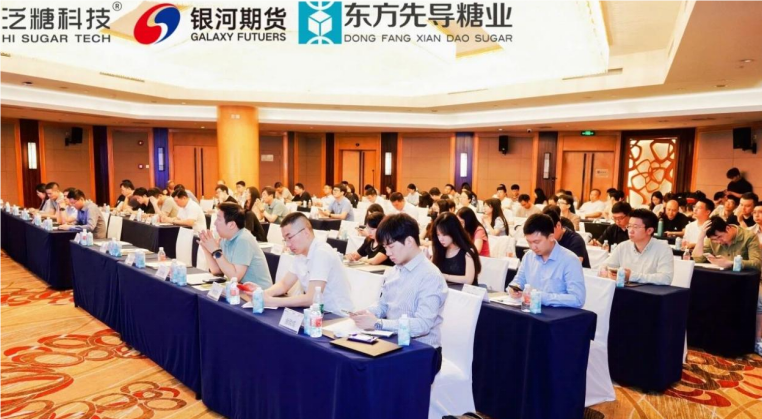
银河期货携手多方举办“稳企安农 护航实体——白糖期货期权护航实体企业稳健经营培训会”
Qi Huo Ri Bao Wang· 2025-07-17 07:48
Core Insights - The conference focused on the application of futures and options tools in risk management within the sugar industry, aiming to provide new strategies for enterprises to cope with market volatility and achieve stable operations [2][5] Group 1: Conference Overview - The "Steady Enterprises, Safe Agriculture" training conference was successfully held in Shanghai, organized by Galaxy Futures in collaboration with Dongfang Xiandao and Fan Sugar Technology, gathering nearly a hundred industry representatives [2] - Key attendees included executives from major sugar companies and research institutions, emphasizing the importance of futures and options in the sugar supply chain [2] Group 2: Economic Analysis - The current macroeconomic challenges facing the sugar industry were highlighted, with increasing volatility in commodity prices and rising operational risks for enterprises [4] - Sugar prices are crucial for the profitability of various segments within the industry, linking closely to the broader development goals of "steady enterprises and safe agriculture" [4] Group 3: Training Content - The training sessions covered domestic and international sugar supply and demand dynamics, foundational knowledge of options, and practical case studies in enterprise risk management [5] - A roundtable forum featured discussions on macroeconomic cycles, sugar price valuation, and innovative applications of options tools, providing attendees with diverse market insights and strategic references [5] Group 4: Industry Collaboration - The training conference established an efficient platform for collaboration between the sugar industry and financial markets, enhancing understanding and application of financial derivatives among enterprises [5] - Galaxy Futures aims to leverage its professional expertise to support enterprises in navigating complex market environments and achieving sustainable growth [5]

黄土高原上的“金融苹果”——延长果业的期现融合实践路
Qi Huo Ri Bao Wang· 2025-07-17 00:53
Core Viewpoint - The apple industry in Yan'an, Shaanxi Province, led by the China Supply Group Yanlong Fruit Industry Co., Ltd., is integrating futures and spot markets to drive local economic development and create unique growth opportunities [1][2]. Group 1: Company Overview - Yanlong Fruit Industry was established in 2017 as a key player in the apple industry, focusing on a "warehousing + trade" model to create a comprehensive service platform that includes online and offline sales, logistics, sorting, and supply chain services [2]. - In May 2021, Yanlong Fruit Industry obtained the qualification for apple futures delivery warehouses, marking its entry into the national financial market [2]. - For the 2024 fruit season, the company stored 20,836.81 tons of apples, achieving a sales revenue of 1.414 billion yuan [2]. Group 2: Futures Market Integration - Yanlong Fruit Industry has successfully provided delivery services for 230 futures contracts (2,300 tons) to 27 clients, establishing itself as a benchmark for futures delivery services in the region [3]. - The company has implemented a high-standard construction of futures delivery warehouses to ensure proper storage conditions, reducing disputes and risks associated with futures delivery [2][3]. Group 3: Risk Management Strategies - The company has faced challenges from price volatility due to increased production and decreased consumption, leading to a proactive approach in risk management through real-time inventory monitoring and futures market hedging [4][5]. - In 2024, approximately 60% of the company's annual operating volume was covered by hedging strategies, effectively stabilizing operational profits despite market fluctuations [5]. Group 4: Community and Agricultural Support - Yanlong Fruit Industry participated in a pilot project combining "order purchasing + insurance + futures + delivery," successfully purchasing 1,973.67 tons of apples at a minimum price of 5 yuan per kilogram, benefiting local farmers [5][6]. - The project addressed issues such as "high yield but low income" for farmers and "difficulties in order fulfillment" for companies, enhancing collaboration between the company and local agricultural producers [6]. Group 5: Educational Initiatives - As a part of the Zhengzhou Commodity Exchange's production and finance base, Yanlong Fruit Industry has taken on the role of educating farmers and businesses about futures knowledge and delivery standards through workshops and one-on-one guidance [7]. - The company aims to increase awareness and understanding of financial tools in the apple industry, promoting high-quality development through financial empowerment [7].
技术革命重塑光伏行业生态
Qi Huo Ri Bao Wang· 2025-07-17 00:53
Core Insights - The photovoltaic industry is undergoing a profound transformation driven by policy innovation, enterprise breakthroughs, and technological empowerment, moving from "low-price competition" to "value competition" [1][2][3] Policy Framework - The current policy shift represents a transition from "passive regulation" to "active restructuring," with a focus on long-term institutional frameworks rather than short-term crisis responses [1][2] - Policies are now anchored in "top-level design" and "supply-demand collaboration," emphasizing a "cost-based sales" bottom line and strict standards for energy consumption and quality [1] Industry Collaboration - Under the guidance of the policy framework, industry collaboration has emerged as a core vehicle for releasing benefits, with leading companies voluntarily limiting production and uniting to stabilize prices [2] - The concentration of the industry has exceeded 70%, contrasting sharply with the fragmented competition seen before 2015 [2] Technological Empowerment - The deep release of institutional benefits is closely linked to technological revolutions, with AI technology accelerating transformation across the entire supply chain [2] - AI applications are enhancing production efficiency and driving a shift in labor structure towards high-tech positions, reflecting a broader trend of innovation spurred by policy changes [2] Global Impact - The transformation led by institutional benefits extends beyond the industry itself, providing a "Chinese solution" for global energy transition as China's photovoltaic industry practices address supply-demand imbalances [3] - The continuous release of institutional benefits is expected to enable the photovoltaic industry to write a more magnificent chapter, with companies that seize policy advantages and technological opportunities poised to redefine the next decade of the industry [3]
纯碱企业可关注高位套保良机
Qi Huo Ri Bao Wang· 2025-07-17 00:49
从日度高频数据来看,纯碱产能利用率持续上升。据钢联数据,截至7月14日,纯碱产能利用率为 84.76%,相较7月2日的低点79.2%增加5.56个百分点。前期检修装置逐步复产,预计本周供应大幅增 加,可能导致库存进一步积累。 近期,纯碱价格在"反内卷"预期下,出现了一波连续的上涨行情,市场重点交易未来落后产能退出、供 应下降的预期,远月合约涨幅明显大于近月。 纯碱行业暂无"反内卷"政策落地 7月1日,中央财经委员会第六次会议提出"依法依规治理企业低价无序竞争,引导企业提升产品品质, 推动落后产能有序退出",市场解读为"反内卷"释放新信号,甚至预期新一轮供给侧改革将启动,前期 超跌的商品大幅反弹。 但具体到落实阶段,目前仅有光伏行业宣布从7月开始减产30%,并有头部企业开始堵窖减产,光伏玻 璃日熔量持续下降。其他行业暂无具体跟进措施,中国纯碱工业协会声明"尚未收到任何部门关于防内 卷的工作指示",以防止市场有人冒用协会名义散布谣言。 供应充足,现货疲弱 从供需来看"反内卷"的影响 自中央财经委员会第六次会议提出"推动落后产能有序退出",市场就有声音将其类比2015年供给侧改 革。但本次"反内卷"与当时的供给侧改 ...
美股怎么了? 三大“灰犀牛”正在逼近
Qi Huo Ri Bao Wang· 2025-07-17 00:46
Group 1: Market Reactions and Economic Indicators - On July 7, Trump announced a new round of tariff measures, leading to a muted reaction in financial markets, with the S&P 500 and Nasdaq indices down by only 0.79% and 0.92% respectively [1] - The U.S. stock market rebounded in the first half of the year due to factors such as TACO trading, fiscal expansion, resilient job market, and stock buybacks, despite facing four instances of simultaneous declines in stocks, bonds, and currencies [1] - Historical data suggests that U.S. monetary tightening or economic stagflation poses the greatest threat to the stock market, although the potential for the Federal Reserve to restart rate cuts may provide support [1] Group 2: Liquidity and Debt Issuance - The U.S. Treasury's resumption of debt issuance in Q3 is expected to create a "drain" effect on dollar liquidity, potentially forcing the Federal Reserve to release liquidity by slowing down quantitative tightening or cutting rates [2] - The net debt issuance by the U.S. Treasury is projected to be around $1 trillion in Q3, partly to refinance maturing debt and meet other financing needs [2] Group 3: Inflation and Tariff Impact - Recent tariff threats from the Trump administration could raise the effective tariff rate from 13.4% to 14.9%, with a potential increase to 18%-20% in a "no deal" scenario, raising concerns about stagflation risks in the U.S. economy [5][6] - There are indications that inflationary pressures from tariffs are beginning to manifest, with a survey showing the highest percentage of small businesses planning to raise prices since March 2024 [6] Group 4: Corporate Earnings and Market Volatility - The second quarter earnings season for U.S. stocks has begun, with expectations of a significant slowdown in profit growth, largely influenced by tariff uncertainties [9] - According to FactSet, S&P 500 companies are expected to see only a 5% profit growth in Q2, marking the slowest growth since Q4 2023, with six out of eleven sectors projected to grow year-over-year [9] - The technology sector, particularly large tech companies, is expected to drive earnings growth, but any decline in tech stock performance could lead to increased pressure on the broader market [9][10]
多重力量驱动下的欧元走势大逆转
Qi Huo Ri Bao Wang· 2025-07-17 00:46
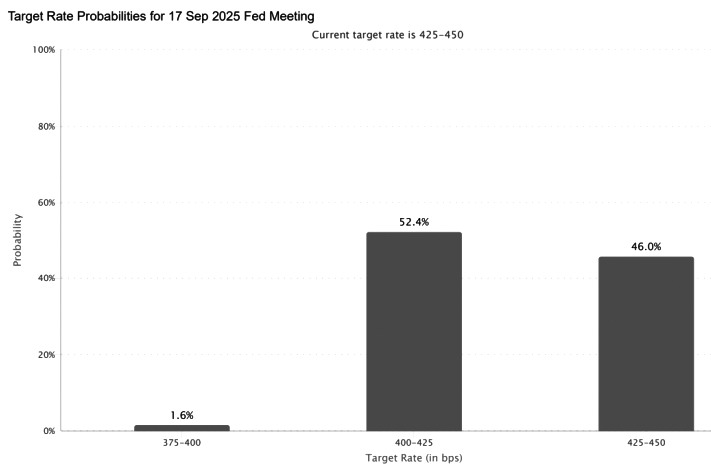
Group 1: Euro's Initial Decline and Challenges - The euro faced significant depreciation, with the exchange rate against the dollar dropping below 1.0177, marking a 20-year low due to a "triple pressure" scenario [2] - The eurozone economy, particularly Germany, is experiencing structural weaknesses, with the manufacturing PMI remaining below the growth threshold for 12 consecutive months, indicating severe economic challenges [4] - Political instability in Germany, including significant divisions over fiscal policy, has raised concerns about the eurozone's fiscal discipline [5] Group 2: Dollar's Strength and Capital Flows - The Federal Reserve's high interest rates (4.25%-4.5%) have increased the dollar's attractiveness, leading to a surge in capital inflows into the U.S. market, with $1.2 trillion entering U.S. stocks and bonds in Q4 2024, 35% of which came from the eurozone [3] - German and French institutional investors have reduced their holdings in local bonds in favor of U.S. Treasuries, further exerting downward pressure on the euro [3] Group 3: Euro's Recovery and Driving Factors - In March 2025, the euro began a strong rebound, characterized by a "V" shaped recovery, driven by changes in monetary policy expectations, fiscal stimulus measures, and a crisis of confidence in the dollar [6] - The European Central Bank's interest rate cuts and the narrowing of the interest rate differential between the U.S. and Europe have led to a reallocation of global capital towards eurozone bonds, supporting the euro's recovery [8] Group 4: Structural Issues and Long-term Challenges - Despite the euro's rebound, structural issues such as industrial hollowing and an aging population continue to pose long-term challenges for the eurozone economy [20][19] - The eurozone's energy transition and fiscal coordination difficulties hinder effective economic policy, impacting the euro's stability [21] Group 5: Geopolitical and Market Sentiment Influences - Geopolitical events and market sentiment significantly affect the euro's exchange rate, with trade tariffs and central bank policy shifts amplifying volatility [16][17] - The eurozone faces external competition from the U.S. and China, which poses additional challenges to its economic position in the global market [22]
中国将做全球产业链供应链互利共赢的推动者 何立峰出席第三届中国国际供应链促进博览会开幕式指出
Qi Huo Ri Bao Wang· 2025-07-16 17:13
Core Points - The third China International Supply Chain Promotion Expo opened in Beijing, emphasizing the importance of global industrial and supply chain cooperation for mutual development [1][2] - China is recognized as a crucial part of the global supply chain, actively ensuring its stability and contributing to global economic recovery [1] - The event highlighted the role of artificial intelligence in transforming industries, with Chinese companies making significant contributions to AI innovation [2] Group 1: Event Overview - The expo is hosted by the China Council for the Promotion of International Trade from July 16 to 20, with the theme "Linking the World, Creating the Future" [4] - It features six major supply chains: advanced manufacturing, smart automotive, green agriculture, clean energy, digital technology, and healthy living, showcasing new technologies, products, and services [4] - A total of 651 enterprises and institutions from 75 countries and regions are participating, with 35% of exhibitors being from overseas, an increase from 32% last year [4] Group 2: Key Initiatives and Proposals - The Beijing Initiative was launched, focusing on maintaining global supply chain stability, promoting innovation, and accelerating the development of smart supply chains [2][3] - Emphasis on leveraging new technologies such as AI, IoT, and blockchain to enhance supply chain digitalization and collaboration [3] - A commitment to developing a green low-carbon economy through sustainable practices and technologies, particularly in agriculture and energy sectors [3]
为推进金融强国战略持续输送专业人才 中国农业大学、郑商所合作共建“校外人才培养基地”
Qi Huo Ri Bao Wang· 2025-07-16 16:32
Group 1 - The core viewpoint of the news is the collaboration between Zhengzhou Commodity Exchange (郑商所) and China Agricultural University (中国农业大学) to establish an "off-campus talent training base," marking a significant milestone in the deep cooperation between the futures industry and higher education [1][3] - The establishment of the training base is part of a broader initiative to integrate investor education into the national education system, as outlined in a memorandum by the China Securities Regulatory Commission and the Ministry of Education [1][3] - Zhengzhou Commodity Exchange has achieved notable success in promoting futures knowledge through various activities, including the "Zhengzhou Commodity Exchange Cup" and collaborations with universities to develop educational materials [1][3] Group 2 - China Agricultural University is recognized as a key institution in China's higher education landscape, with strong research capabilities and a commitment to cultivating high-quality, interdisciplinary talent in the field of futures and financial derivatives [2] - The university has actively participated in investor education activities organized by Zhengzhou Commodity Exchange, receiving awards for its contributions, including the "Zhengzhou Commodity Exchange Cup" and the "Demonstration Award for Teaching Achievements in Futures Industry-Academia-Research" [2] - The collaboration aims to enhance the financial practical skills, risk awareness, and professional competitiveness of university faculty and students, while also fostering the development of skilled professionals for the futures industry [3]
丙烯品种基础知识专栏(五)丙烯期货合约与交割细则简析
Qi Huo Ri Bao Wang· 2025-07-16 16:32
经郑商所对丙烯行业进行深入研究,在认真分析了丙烯生产、贸易、储运、质检等现货特性,以及与行 业协会、产业企业、会员单位及投资者等多方市场主体反复论证的基础上,最终完成了对丙烯期货和期 权合约规则的设计。 丙烯期货合约规则要点 最小变动价位:1元/吨。与丙烯的原料LPG、甲醇及主要下游聚丙烯最小变动价位一致。 合约交割月份:1—12月。贴合丙烯行业全年连续产销特点,与郑商所化工品规定一致。 丙烯期权合约规则要点 交易单位:1手丙烯期货合约,方便投资者对冲期货头寸风险,有利于投资者熟悉和掌握。 报价单位:元(人民币)/吨。与丙烯期货合约相同。 期权最小变动价位:0.5元/吨。期权最小变动价位是指期权合约单位价格涨跌变动的最小值。从国内期 权市场运行情况来看,Delta值在0.2至0.5之间的虚值、平值期权合约较为活跃,即期权价格波动约为期 货的1/5至1/2。丙烯期权与期货最小变动价位(1元/吨)之比为1/2,在此范围内可以较好满足丙烯期权 与期货对冲的需要。 涨跌停板幅度:与标的期货涨跌停板幅度相同。这里的相同是指绝对数相同,即期权合约的涨跌停板幅 度是按标的期货合约的结算价和价幅比例计算的绝对数值。当期权权利 ...