Di Yi Cai Jing Zi Xun

Search documents
黄金、内存条,二手平台交易创新高
Di Yi Cai Jing Zi Xun· 2026-01-19 12:14
Core Insights - The second-hand trading market is becoming a window into consumer trends, with gold, memory bars, digital cameras, women's bags, and luxury watches identified as "hard currencies" for 2025 [2] - The platform expects gold, memory bars, and certain luxury items to remain in the top five preservation list this year [2] Group 1: Gold Recovery Business - The gold recovery business of the platform has seen a significant increase, with a 120% rise in consultation volume and a 150% increase in transaction orders since October last year [2][4] - A notable transaction involved a customer selling approximately 5 kilograms of gold bars for a total price of 4.51 million yuan, indicating a strong market for high-value transactions [4] - Customers are motivated to sell gold due to rising prices, with some reporting returns of nearly 2.5 times their initial investment if purchased three years ago [4] Group 2: Future Market Trends - The gold recovery market is expected to remain hot in the short term, with predictions of continued growth over the next six months to a year [5] - The platform plans to maintain service standards and ensure sufficient capital reserves to meet future recovery demands [5] Group 3: Memory Bar Market - The overall trading price of memory bars on the platform is projected to increase by 200% year-on-year by 2025, with DDR5 and DDR4 memory bars seeing price increases close to three times [5] - The second-hand market is experiencing a rapid growth in young consumers, particularly those born after 2005, who are driving a shift towards interest-driven consumption [5]

保时捷,股价大跌
Di Yi Cai Jing Zi Xun· 2026-01-19 11:27
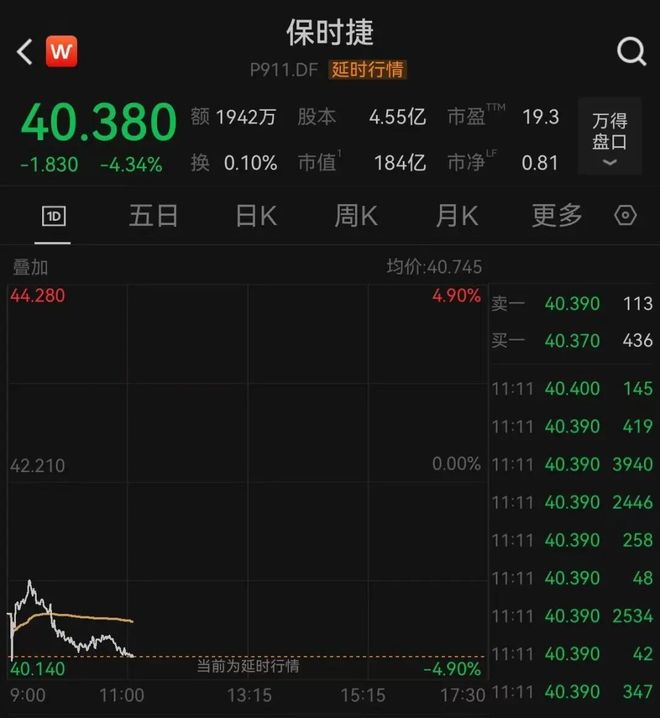
1月19日截至发稿,保时捷股价大跌4.34%。该公司上周(1月12日-1月16日)股价已跌去超10%。 近日,保时捷公布数据称,2025年该公司全球销量约27.9万辆,同比下滑10%,这是该公司自2009年全 球金融危机以来的最大跌幅。其中,中国市场销量约4.2万辆,同比下滑26%,较2021年高点跌去近 60%。 记者|武子晔、莫一格(实习记者) 编辑|钉钉 ...
多省份公布金融数据:居民储蓄高增,浙江人均存款超17万元
Di Yi Cai Jing Zi Xun· 2026-01-19 11:20
Core Insights - The financial data from five provinces in China reveals a significant increase in household deposits, with growth rates between 8% and 9%, indicating a strong saving mentality among residents. However, there is a contrasting decline in household loans, particularly short-term loans, suggesting a lack of confidence in consumption and home buying [1][2][6]. Group 1: Household Deposits - The total balance of household deposits in the five provinces has shown a growth rate of 8% to 9%, reflecting a surge in residents' saving enthusiasm [2][4]. - Guangdong province reported a household deposit balance of 15.12 trillion yuan, an increase of 1.29 trillion yuan from the previous year, with a growth rate of 9.34% [2]. - Zhejiang province's household deposits reached 11.85 trillion yuan, with a year-on-year growth of nearly 10%, indicating a robust increase in saving behavior [2][3]. Group 2: Per Capita Savings - The national household deposit balance reached 167 trillion yuan, with a year-on-year growth of 9.71%, translating to an average per capita savings of 118,900 yuan [4]. - In Guangdong, the per capita savings stood at 118,300 yuan, reflecting an increase of 10,100 yuan from the previous year [4]. - Zhejiang's per capita savings significantly exceeded Guangdong's at 177,700 yuan, marking an increase of 16,100 yuan year-on-year [4]. Group 3: Loan Trends - Both Guangdong and Zhejiang experienced a contraction in household loans, with Guangdong's household loans decreasing by 471.8 million yuan, while Zhejiang's saw a slight decline of 60.49 million yuan [6][7]. - The overall loan balance in Guangdong increased to 29.92 trillion yuan, but the household loan segment showed a negative growth trend, particularly in short-term loans [6]. - In contrast, corporate loans in Guangdong and Zhejiang showed significant growth, with Guangdong's corporate loan balance increasing by 1.34 trillion yuan, reflecting a strong demand for business financing [7][8].
IMF上调2026年全球增长预期至3.3%
Di Yi Cai Jing Zi Xun· 2026-01-19 10:27
Core Viewpoint - The International Monetary Fund (IMF) released its first World Economic Outlook (WEO) update for 2026, indicating that despite facing multiple headwinds such as trade policy volatility, geopolitical tensions, and fiscal pressures, the global economy demonstrates resilience and adaptability [2]. Global Growth Expectations - The global economic growth forecast for 2026 is set at 3.3%, an increase of 0.2 percentage points from the previous prediction in October 2025 [3]. - Advanced economies are expected to grow by 1.8% in 2026, also up by 0.2 percentage points from last year's forecast [3]. - The United States is projected to grow by 2.4% in 2026, reflecting a 0.3 percentage point increase due to better-than-expected growth in Q3 2025 and tax incentives from the One Big Beautiful Bill Act [3]. Regional Performance - The Eurozone's growth is forecasted at 1.3% for 2026, a slight increase of 0.1 percentage points, hindered by high energy prices and lower AI investment benefits compared to the US and Asia [4]. - Emerging markets and developing economies are expected to grow by 4.2% in 2026, with significant upward revisions for China and India [5]. Trade, Technology, and Inflation - The report highlights a "temporary easing" in trade tensions, with the effective US tariff rate slightly reduced to 18.5%, supporting a recovery in global trade volumes [7]. - AI is recognized as a macroeconomic driver, enhancing productivity and impacting sectors beyond the tech industry, particularly in semiconductor and high-tech equipment exports [7]. - Global headline inflation is projected to decrease from 4.1% in 2025 to 3.8% in 2026, with varying rates of return to target levels across different countries [7]. Financial Stability and Fiscal Vulnerability - Global financial conditions remain accommodative, but market concentration is increasing, particularly among major tech stocks [9]. - The IMF warns that if expectations regarding AI-driven productivity gains are not met, it could lead to significant market corrections [9]. - Global sovereign debt is expected to exceed 100% of GDP by the end of 2030, particularly affecting economies with systemic importance [9]. Policy Recommendations - The IMF advises policymakers to utilize the current growth window to rebuild fiscal buffers and adopt flexible monetary policies where inflation is near targets [9]. - Strengthening multilateral cooperation to alleviate trade tensions and accelerate structural reforms to harness AI potential is deemed essential for enhancing long-term growth prospects [9].

中加经贸互利多赢,共谋发展新篇章|专家热评
Di Yi Cai Jing Zi Xun· 2026-01-19 09:47
Group 1 - The core viewpoint of the articles highlights the significance of the recent formal visit of Canadian Prime Minister Carney to China, marking the first visit in eight years, and the signing of the "China-Canada Economic and Trade Cooperation Roadmap," which signifies a new phase in bilateral relations [1] Group 2 - China and Canada have strong economic complementarity, with China being the world's second-largest economy and Canada known for its rich natural resources and advanced technology. The signed roadmap includes 28 specific cooperation measures across eight key areas, promoting resource optimization and market opportunities for both countries [3] Group 3 - The upgrade of the China-Canada Economic and Trade Joint Committee from a vice-ministerial to a ministerial level signifies a commitment to deepen economic relations, enhancing dialogue on intellectual property and trade remedies, and providing a solid foundation for stable bilateral trade [4] Group 4 - Canada will grant China an annual quota of 49,000 electric vehicles, exempting them from high additional taxes, reflecting recognition of Chinese electric vehicle technology and strong demand in the North American market [5] Group 5 - In agricultural trade, Canada’s high-quality products align with China's vast consumer market. Preliminary agreements were reached to adjust anti-dumping measures on canola seeds, responding to Canada's concerns and meeting the growing demand for quality agricultural products in China [6][7] Group 6 - The cooperation between China and Canada serves as a template for bilateral economic relations amid rising global trade protectionism, emphasizing multilateralism and free trade principles, which enhances both countries' international influence and contributes positively to global economic stability [8]

浙江证监局:“金浤”操纵证券市场,对其采取3年禁入措施
Di Yi Cai Jing Zi Xun· 2026-01-19 09:41
2026.01.19 本文字数:510,阅读时长大约1分钟 来源 |证监会浙江证监局 证监会浙江证监局发布行政处罚决定书,2024年9月2日至2025年4月16日,金永荣知晓其荐股行为具有 影响力,在其雪球"金浤"账号公开发文评价、推荐"启迪环境""路维光电""光华科技"等32只股票,并控 制账户组在荐股后的当日或次日进行大量反向卖出交易。按当日及次日卖出口径计算,交易金额合计 630,594,337.30元,违法所得合计41,623,864.21元。 金永荣对证券、发行人公开作出评价、推荐并进行反向证券交易,影响或意图影响证券交易价格或者证 券交易量,违反《证券法》第五十五条第一款第六项规定,构成《证券法》第一百九十二条所述违法行 为。 证监会浙江证监局决定对金永荣采取3年证券市场禁入措施,自宣布决定之日起,在禁入期间内,不得 直接或者以化名、借他人名义在证券交易场所交易上市或者挂牌的所有证券。 微信编辑| 苏小 第一财经持续追踪财经热点。若您掌握公司动态、行业趋势、金融事件等有价值的线索,欢迎提供。专 用邮箱:bianjibu@yicai.com (注:我们会对线索进行核实。您的隐私将严格保密。) ...

德意志银行董事总经理穆勒:资金正在更换配置方式
Di Yi Cai Jing Zi Xun· 2026-01-19 09:00
Core Insights - The World Economic Forum (WEF) 2026 annual meeting opened in Davos, Switzerland, with the International Monetary Fund (IMF) projecting a global economic growth rate of 3.1% amid increasing trade tensions and policy uncertainties [2] - The focus of discussions has shifted from broad consensus statements to specific mechanisms and bottlenecks that can guide investment decisions [2] Group 1: AI and Investment Trends - AI is now being discussed within the framework of real economic constraints, with its impact extending beyond software to energy, infrastructure, and natural resources [4] - The expansion of AI and data centers is driving early investments in power grid infrastructure, with European utility companies reallocating funds towards transmission and distribution network upgrades [4][5] - Water management is identified as a long-term investment opportunity, with projects focusing on water reuse, leakage control, and smart networks gaining traction [4] Group 2: Investment Strategy Adjustments - There is a pragmatic re-adjustment in the market regarding green investments, with no systemic return differences between sustainable and non-ESG investments, influenced by macroeconomic conditions [6] - Investors are shifting from concentrated bets on single themes to more goal-oriented portfolio construction, integrating sustainability as a tool for managing long-term transition risks alongside AI and infrastructure [6] - The evaluation of AI investments should focus on specific application improvements rather than relying solely on macro narratives, as these improvements may lead to profitability and cash flow over time [6][7] Group 3: Policy Signals and Funding Flows - The effectiveness of discussions at the Davos Forum in influencing policy and funding flows hinges on the clarity of actionable signals rather than mere statements [8] - Key indicators include alignment of policy dynamics with existing official roadmaps, specific commitments to market infrastructure, and the connection of financing paths to real economic bottlenecks [8]


腾讯控股“五连阴”,多家投行发报告看好却连跌三天
Di Yi Cai Jing Zi Xun· 2026-01-19 08:58
Core Viewpoint - Tencent Holdings has experienced a downward trend in stock price after reaching a peak of 639 HKD on January 13, 2026, with a significant drop below 610 HKD recently, indicating a potential profit-taking phase by investors [2][3]. Group 1: Stock Performance - Tencent's stock price has shown a "lower high" pattern since reaching 683 HKD on October 2, 2025, with subsequent peaks at 662 HKD and 639 HKD, reflecting a technical downtrend [2]. - Despite a cumulative increase of over 200% in stock price since October 2022, recent performance has lagged behind the Hang Seng Index, suggesting a short-term consolidation phase [2][5]. - The stock has faced selling pressure even after positive reports from multiple investment banks, indicating a cautious market sentiment [3][4]. Group 2: Business Developments - On January 15, 2026, Tencent reported significant growth in its WeChat mini-programs, with usage exceeding 5 billion times globally, and a 320% increase in transaction volume for WeChat stores from August to December 2025 [3]. - Investment banks like CICC and UBS have maintained positive ratings for Tencent, with target prices set at 700 HKD and 780 HKD respectively, reflecting confidence in the company's long-term growth prospects [3][4]. - UBS highlighted Tencent's unique advantages in AI applications due to its large user base and robust mini-program ecosystem, bolstered by the recent hiring of a new AI head from OpenAI [4]. Group 3: Share Buybacks - Tencent has been actively repurchasing shares, with over 40 million shares bought back at a cost exceeding 25 billion HKD since November 2025, signaling confidence in its long-term value [5]. - The company's buyback strategy is viewed favorably by international investors, who prefer buybacks over dividends to avoid tax costs, aligning with Tencent's shareholder return policies [6].


i茅台”连续19天秒空,代抢软件出现了
Di Yi Cai Jing Zi Xun· 2026-01-19 08:27
Core Viewpoint - The "iMoutai" app has experienced a phenomenon where popular products sell out within seconds, creating a lucrative business for resellers due to the price arbitrage between retail and market prices [2][3]. Group 1: Sales Dynamics - The "iMoutai" app's hot-selling products have been sold out for 19 consecutive days, with the new zodiac Moutai bottle having a premium exceeding 700 yuan [2]. - The retail price of the Flying Moutai is set at 1499 yuan, but it also sells out quickly after multiple attempts [2]. - Consumers have expressed frustration on social media after participating in the purchasing process for over ten days without success [2]. Group 2: Reseller Strategies - Resellers utilize both manual experience and automated scripts/software to increase their chances of securing purchases [3]. - Some software claims to allow users to "enter early" into the purchasing process, significantly improving their chances of buying popular items [3]. - Videos shared by resellers show multiple phones executing scripts to automatically refresh the purchase page and secure products [3]. Group 3: Market Pricing and Arbitrage - Recent market prices for Moutai have stabilized around 1550 yuan per bottle, with limited arbitrage opportunities, while the zodiac Moutai still presents significant profit potential [4]. - The wholesale price for the basic zodiac Moutai is approximately 2600 yuan per bottle, and the premium version reaches 5400 yuan, doubling its initial retail price of 2499 yuan [4].

包钢爆炸板材厂生产的稀土钢是什么
Di Yi Cai Jing Zi Xun· 2026-01-19 08:07
2026.01.19 本文字数:1763,阅读时长大约3分钟 作者 |第一财经 陈姗姗 封图 | 央视新闻 1月19日,包钢股份(600010.SH)公告称,1月18日下午15点03分,公司控股子公司下属的板材厂炼钢 作业部一个650m3饱和水、蒸汽球罐发生爆炸,造成2人死亡、8人失联、84人受伤在院治疗。 包钢股份是我国西部最大的钢铁上市公司,钢铁产品主要有冷热轧卷板、镀锌钢板、中厚板、无缝管、 重轨、型钢、建筑用钢材等,拥有从采矿、选矿、焦化、烧结、球团、炼铁、炼钢到轧钢完整的生产工 艺系统。 据央视新闻,发生爆炸事故的是包钢股份的稀土钢板材厂,在消防救援人员拍摄的画面中,爆炸事故波 及范围较大,现场建筑受损严重,各类装备设备散落,整体环境复杂严峻。 揭秘稀土钢 上述"稀土钢"在国内钢材市场并不多见,属于较前沿的新材料,是指添加了镧、铈等稀土元素的特种钢 材,稀土含量通常低于0.001%至0.004%。通过在炼钢过程中引入稀土元素,可实现净化钢液、变性夹 杂物及微合金化作用,从而提升钢材的耐腐蚀性、耐磨性和力学性能,广泛应用于高铁轨钢、风电主 轴、海洋工程及军工装备等领域。 就在不久前,中钢协刚刚披露成立 ...