Hu Xiu

Search documents
双面柬埔寨
Hu Xiu· 2025-09-22 02:26
Core Viewpoint - Cambodia is portrayed as a land of both opportunity and peril, where many Chinese individuals seek wealth but often face dire consequences, including kidnapping and death [1][3]. Group 1: Economic Landscape - Cambodia's economy has seen a significant influx of Chinese investment, particularly in sectors like real estate and dining, with reports of substantial profits, such as a restaurant potentially earning 2-3 million RMB annually [4]. - The local currency, the Riel, is used alongside the US dollar, with a notable disparity in income levels; local workers earn around 300-400 USD per month while foreign goods and services are priced in dollars [4]. - The real estate market in Sihanoukville has experienced explosive growth, with property prices soaring to over 20,000 RMB per square meter during peak times, although a significant decline has been observed since then [10][11]. Group 2: Online Fraud and Human Rights Issues - Cambodia has become synonymous with online scams, with estimates suggesting that 100,000 to 150,000 individuals are held against their will to participate in fraudulent activities, primarily affecting foreign nationals [3][14]. - The online fraud industry is estimated to generate between 12.5 billion to 19 billion USD annually, accounting for approximately 40% of Cambodia's GDP [14]. - The U.S. government has imposed sanctions on several telecom fraud groups operating in Southeast Asia, highlighting the severity of the issue and its implications for human rights [15]. Group 3: Societal Dynamics - The Cambodian populace is characterized as both innocent and easily swayed, with a history of turmoil that has left many vulnerable to manipulation [25]. - The decline in tourism, particularly from Chinese visitors, has had a significant impact on local livelihoods, with reports indicating a 70% drop in Chinese tourists, affecting local businesses and employment [22][23]. - The historical context of Cambodia, including the devastating effects of the Khmer Rouge regime, has contributed to a population that is often naive and susceptible to external influences [25].


揽佬:我就是个打工人,不是什么艺术家
Hu Xiu· 2025-09-22 01:53
Core Insights - The article highlights the rise of rapper Lan Lao as a significant cultural phenomenon in the Chinese music scene, particularly in 2025, driven by his unique blend of local culture and innovative music styles [1][7][26] Group 1: Music and Cultural Impact - Lan Lao's songs "Da Zhan Hong Tu" and "Ba Fang Lai Cai" have gained immense popularity, with "Ba Fang Lai Cai" surpassing 31.87 million views on YouTube [2] - On Spotify, Lan Lao achieved 5 million monthly listeners, surpassing renowned artists like Jay Chou, marking him as the top Chinese artist on the platform [3] - His music reflects a vibrant and unfiltered representation of Guangdong culture, resonating with audiences both locally and globally, thus facilitating cultural exchange [6][11] Group 2: Musical Style and Innovation - Lan Lao's music incorporates a mix of local dialects and traditional melodies, such as sampling from Cantonese opera, creating a unique sound that appeals to a broad audience [12][14] - He has transitioned to Memphis rap, blending this style with local cultural elements, which has garnered significant attention and acclaim [13][14] - The production style remains raw and authentic, emphasizing simplicity and real-life experiences over polished commercial sounds [15][18] Group 3: Social Context and Audience Connection - The lyrics of Lan Lao's songs express a collective desire for wealth and success, resonating with the economic sentiments of contemporary youth [17][20] - His rise to fame is attributed to the changing landscape of music distribution, particularly the impact of social media and short video platforms in promoting his work [18][26] - Lan Lao's approach to music reflects a grassroots connection to his audience, emphasizing relatability and authenticity over commercialism [19][28]

美团新Agent,懒人福音?
Hu Xiu· 2025-09-22 01:53
美团最近上线了新Agent"小美",主打对话框操作,帮懒人快捷点外卖。打开位置和数据权限后,小美 会结合时间和口味推荐产品,所有门店信息、价格、配送细节一目了然。Agent"小美",它真的省事儿 吗?本期视频我们实测了一下。 文章链接:https://www.huxiu.com/article/4782315.html 阅读原文:美团新Agent,懒人福音?_虎嗅网 文章标题:美团新Agent,懒人福音? ...

《哈利波特》同人文卖出300万美元版权,亚文化再次加速“上桌”
Hu Xiu· 2025-09-22 01:28
Core Insights - The article discusses the evolution of fan fiction, particularly focusing on the commercial success of works like "Fifty Shades of Grey" and the recent acquisition of the film rights for "Alchemised," a fan fiction based on "Harry Potter" characters [3][4][10] - It highlights the shift in perception of fan fiction from a niche subculture to a mainstream market, with significant financial transactions indicating its growing acceptance [5][10][88] Group 1: Commercialization of Fan Fiction - Legendary Pictures acquired the film rights for "Alchemised" for over $3 million, marking one of the highest transactions in book-to-film rights [3][5] - The success of "Fifty Shades of Grey" paved the way for the commercialization of fan fiction, leading to increased interest from publishers and agents in fan-created works [8][44] - The article notes that fan fiction has transitioned from being viewed with disdain to being actively sought after by major publishers, indicating a significant cultural shift [10][44][88] Group 2: Impact on Fan Communities - The fan community is divided, with some celebrating the success of their favorite characters while others express concern over copyright issues and the commercialization of their creative expressions [6][12][88] - The rise of illegal sales and unauthorized merchandise related to fan works has created tension within the community, as creators struggle to maintain control over their intellectual property [11][28][34] - The article emphasizes the fear among fans that the commercialization of fan fiction may dilute the original spirit of creativity and community that defines fan culture [88][89] Group 3: Evolution of Fan Fiction - The article traces the history of fan fiction, noting that works like "Alchemised" have gained immense popularity, with "Manacled" receiving nearly 16 million downloads before its removal [13][19] - The pandemic accelerated the popularity of fan fiction, with platforms like TikTok contributing to its visibility and engagement among a broader audience [20][22] - The transformation of fan fiction into commercially viable products has led to a new set of challenges, including the need for authors to navigate copyright laws and the expectations of traditional publishing [72][75][88]

在藏区炸山,公众愤怒背后的两本经济账
Hu Xiu· 2025-09-22 00:57
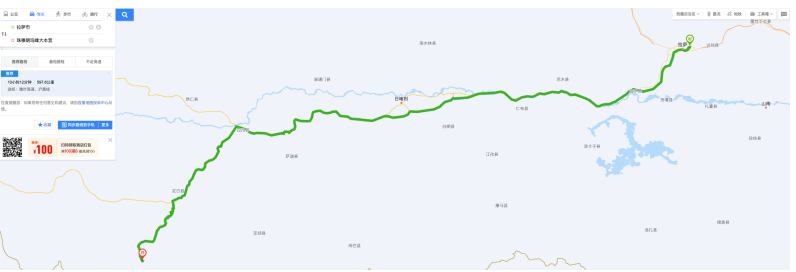
Group 1: Cultural Tourism Industry - The event in Shigatse aimed to create a third notable tourist attraction beyond Mount Everest Base Camp and Tashilhunpo Monastery, highlighting the local government's efforts to boost tourism revenue [3][6] - Tashilhunpo Monastery attracted approximately 120,000 visitors in 2024, generating an estimated revenue of around 10 million yuan, which is significantly lower than the peak daily ticket sales of Shanghai Disneyland [2][6] - The challenge of developing cultural tourism sites in China is exacerbated by the saturation of easily developed attractions, leading to a reliance on educational recognition and historical significance for brand establishment [6][7] Group 2: Environmental and Economic Interaction - The relationship between environmental protection and economic development is complex, often requiring compromises and long-term strategies [10][12] - The environmental industry typically involves high investment and long payback periods, often necessitating government involvement and public-private partnerships (PPP) for funding [13] - The historical evolution of China's environmental governance has shifted from end-of-pipe solutions to more comprehensive approaches, including source control and new financial concepts like ESG [13][14] Group 3: Public Perception and Policy - The moral framing of environmental issues can lead to oversimplified solutions, as real change requires internalizing environmental costs rather than relying solely on ethical appeals [12][14] - The environmental protection discourse often overlooks the economic implications and the need for a balanced approach that considers both ecological and economic sustainability [10][12] - The difficulty in implementing effective waste management and recycling policies reflects the broader challenges of aligning consumer behavior with environmental goals [14][15]
三家3D虚拟世界平台,是如何各显神通的?
Hu Xiu· 2025-09-22 00:49
Core Perspective - The article discusses the differences between various companies' approaches to creating 3D virtual worlds, specifically focusing on Meta's metaverse, Li Feifei's Marble, and Google's Genie 3 [1] Group 1: Meta's Metaverse - Meta is positioning itself as a leader in the development of a comprehensive metaverse, emphasizing social interaction and immersive experiences [1] - The company aims to integrate various technologies to create a seamless virtual environment for users [1] Group 2: Li Feifei's Marble - Li Feifei's Marble focuses on leveraging AI to enhance user experiences in the 3D virtual world [1] - The platform aims to create more personalized and intelligent interactions within its virtual environment [1] Group 3: Google's Genie 3 - Google's Genie 3 is designed to provide a more accessible and user-friendly 3D experience, targeting a broader audience [1] - The company emphasizes the integration of its existing services and technologies to enhance the virtual experience [1]
AI是中小企业最后的机会
Hu Xiu· 2025-09-22 00:42
Core Viewpoint - AI represents the last opportunity for small and medium-sized enterprises (SMEs) to enhance their business efficiency and cash flow, especially as larger companies leverage AI to eliminate their operational disadvantages [4][5][52]. Group 1: AI's Impact on SMEs - SMEs have a lower organizational complexity, shorter decision-making chains, and lighter IT burdens, making them more agile in transforming AI capabilities into business efficiency [4]. - The introduction of AI allows SMEs to potentially outpace larger companies in specific niches before those companies can adapt [29][52]. - The current technological wave favors SMEs as the barriers to entry have shifted from technology to organizational adaptability [10][20]. Group 2: Strategic Recommendations for SMEs - SMEs should focus on restructuring their operations to make AI the default executor, with human roles limited to decision-making and exceptions [16][50]. - Prioritizing end-to-end automation is crucial, moving beyond isolated applications to fully integrated processes [16]. - SMEs should aim for deep specialization in niche markets, leveraging their understanding of data and processes rather than solely relying on the most powerful models [16]. Group 3: Competitive Landscape - Once large enterprises fully integrate AI into their processes, their scale advantages will extend into previously inaccessible areas, leading to increased market concentration [25][26]. - The risk for SMEs lies in their reliance on low-value-added processes, which AI and automation can easily disrupt [27][28]. - SMEs must either establish a stronghold in niche markets or risk being outpaced by larger firms that have streamlined their operations through AI [29][52]. Group 4: Implementation Roadmap - A phased approach is recommended for SMEs, starting with pilot projects and gradually moving towards full automation [42][44]. - Key performance indicators (KPIs) should be established to measure automation coverage, service costs, and resolution rates to ensure continuous improvement [38][39][40]. - The transition to an "intelligent native" organization requires minimizing friction between data and processes, and rethinking business structures to fully leverage AI capabilities [50][51].
美联储降息如期而至,为何黄金还跌?
Hu Xiu· 2025-09-22 00:23
Core Viewpoint - The Federal Reserve has announced a 25 basis point interest rate cut, which has led to a decline in spot gold prices despite the recent surge to historic highs [1] Group 1: Federal Reserve Actions - The Federal Reserve's interest rate cut of 25 basis points was confirmed on September 18 [1] - The announcement was made shortly after a significant rise in spot gold prices, which had exceeded $3700 per ounce on September 17 [1] Group 2: Gold Market Reaction - Following the interest rate cut announcement, spot gold prices experienced a decline of 1% [1] - The video aims to explore the reasons behind the drop in gold prices despite the rate cut and to analyze the potential peak for gold prices [1]
我们为什么无法停止“内卷”?
Hu Xiu· 2025-09-22 00:04
Core Viewpoint - The article discusses the phenomenon of "involution" in society, where individuals feel compelled to compete relentlessly despite changing economic conditions and diminishing returns on effort [3][17][28]. Group 1: Economic Context - China's economic growth from 1978 to 2022 averaged approximately 9.5% annually, with urban residents' disposable income increasing from 343 yuan to 49,283 yuan, a growth of over 140 times [6]. - The real estate sector saw significant price increases, with average housing prices per square meter rising from about 2,112 yuan in 2000 to 9,860 yuan in 2020, particularly in first-tier cities like Beijing, where prices surged from 4,000 yuan to 60,000 yuan per square meter [7]. - Housing assets accounted for 59.1% of urban residents' total assets, indicating that homeownership is not just for living but also a core component of wealth accumulation [8]. Group 2: Social Dynamics - The societal consensus has been that hard work leads to success, with young people saving for down payments and families upgrading properties to increase asset value [9]. - The rise of the internet economy post-2010 created numerous wealth opportunities, exemplified by significant bonuses in tech companies like Baidu and Tencent [10][11][12]. - Despite the decline in the marginal benefits of hard work since 2020, the ingrained survival logic from decades of competition continues to drive individuals to "roll" [17]. Group 3: Educational and Career Structures - The article highlights the need for a diversified education system to support a slower-paced lifestyle, emphasizing the importance of individual stability and a reformed vocational education system to alleviate societal pressures [19][20]. - Germany's education system exemplifies a stable social structure where vocational training is respected, and skilled workers can earn competitive salaries without stigma [22][23]. - A significant portion of German youth (over 70%) express willingness to pursue technical education, indicating a shift towards valuing practical skills over traditional academic routes [24]. Group 4: Cultural Perspectives - The article notes that many young people still believe in traditional success narratives, such as "studying changes fate" and "working in big companies equals success," with 52% feeling pressured to compete due to others' efforts [26]. - The pressure to conform to competitive norms makes it challenging for individuals to adopt a slower lifestyle, as they face financial and familial pressures [27]. - The article concludes that true societal progress involves allowing individuals to slow down rather than perpetually compete, suggesting a need for a cultural shift away from the current "involution" mindset [29][30].
“一页纸”吃透人形机器人产业链
Hu Xiu· 2025-09-21 23:51
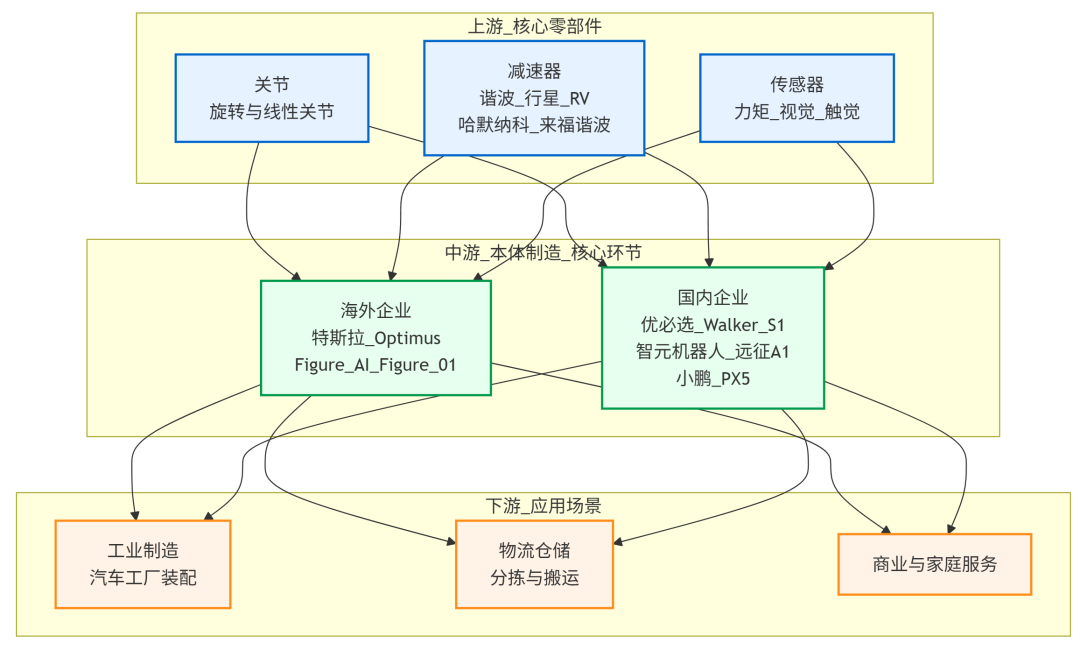
Core Insights - The humanoid robot industry is at a critical turning point, transitioning from research and demonstration to mass production [2][3] - The period of 2025-2026 is seen as a key window for scaling and accelerating commercialization, driven by leading companies like Tesla and Figure AI [3][4] Industry Overview - The humanoid robot sector is characterized by simultaneous advancements in "hardware cost reduction" and "software intelligence enhancement," primarily driven by B-end industrial applications, especially in automotive manufacturing [4][5] - Global competition is forming, with overseas giants like Tesla and Figure AI leading in AI algorithms and system integration, while domestic companies leverage China's robust automotive and 3C supply chains for cost control and rapid iteration [6][7] Industry Structure - The humanoid robot industry chain can be divided into three main segments: upstream core components, midstream body manufacturing, and downstream application scenarios [7][8] - Midstream body manufacturers play a central role, akin to "OEMs" in the automotive industry, responsible for technology integration and large-scale production [8] Upstream Components - The value in upstream components is highly concentrated in three key parts: joints, reducers, and sensors [10][12] - Joints are essential for movement, while reducers ensure precision, with mainstream options including harmonic and planetary reducers [11] Midstream Manufacturing - Both domestic and international companies are accelerating their layouts, leading to a competitive technological landscape [13][14] - Notable domestic players include UBTECH and ZhiYuan Robotics, while companies like Xiaomi and XPeng are also entering the market [14] Downstream Applications - Current commercialization focuses on B-end applications, particularly in industrial manufacturing, with robots like UBTECH's Walker S1 already in use in automotive factories [15][39] - Logistics and warehousing are emerging as significant markets, with future expansion expected into commercial services and home scenarios [16][39] Challenges and Solutions - The humanoid robot industry faces challenges in hardware and software, including high costs, insufficient mass production capabilities, and limited battery life [20][21][24] - Solutions are being pursued through supply chain collaboration, core component localization, and innovations in large model architectures [36] Market Size and Projections - The humanoid robot market is on the brink of commercialization, with 2025 anticipated as the "year of mass production," marking a pivotal shift from prototypes to large-scale deployment [38] - Long-term projections suggest a global shipment of over 70 million units and a market size exceeding 10 trillion yuan [38] Key Players - The industry features a diverse competitive landscape, categorized into four main groups: overseas giants, domestic startups, cross-industry automotive companies, and technology giants [42] - Notable overseas leaders include Tesla and Figure AI, while domestic leaders like UBTECH and ZhiYuan Robotics are rapidly emerging [43][44] Future Outlook - The humanoid robot industry is expected to follow a progression from industrial manufacturing to commercial services and eventually to household applications [39] - The market is projected to see significant growth, with advancements in technology and cost reductions enabling broader adoption [38][39]