Xin Lang Ji Jin

Search documents
滞涨券商随市转弱,杠杆资金出手,东方财富净买入额创3个月新高!华林证券盘中两连板
Xin Lang Ji Jin· 2026-01-07 06:10
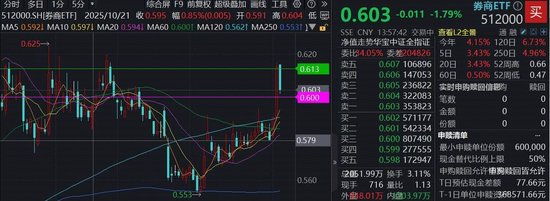
Core Viewpoint - The A-share market experienced a rise and subsequent decline, with the Shanghai Composite Index approaching 4100 points before all three major indices turned negative in the afternoon [1] Group 1: Market Activity - The brokerage sector saw significant activity, with Huayin Securities achieving two consecutive trading limits, although the sector weakened in the afternoon [1] - On the previous day, the brokerage sector experienced a notable increase, with a total of 14.549 billion yuan in net inflows, leading all secondary industries in the Shenwan classification [3] - Major brokerages such as Dongfang Caifu, Guotai Junan, Huazhang Securities, and CITIC Securities each received over 1 billion yuan in inflows [3] Group 2: Investment Opportunities - According to Galaxy Securities, the government's policies aimed at "stabilizing growth and the stock market" will continue to influence the brokerage sector's future trajectory, supported by a moderately loose liquidity environment and improved investor confidence [3] - Founder Securities noted that the brokerage sector is poised for offensive opportunities due to trends such as the migration of household deposits, active market trading, and regulatory support for top-tier brokerages [3] - The brokerage ETF (512000) is highlighted as an efficient investment tool that tracks the CSI All Share Securities Companies Index, encompassing 49 listed brokerage stocks [3] Group 3: Performance Indicators - The brokerage ETF (512000) has an average daily trading volume exceeding 1 billion yuan this year, positioning it among the top liquid ETFs in the A-share market [3]


豪涨4.2%!有色ETF华宝(159876)续创历史新高!钛白粉行业联合涨价函引爆市场,安宁股份、钒钛股份涨停
Xin Lang Ji Jin· 2026-01-06 11:27
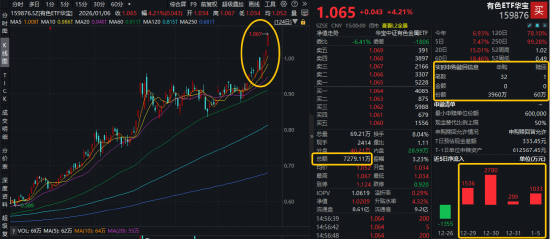
Group 1 - The non-ferrous metal sector is leading the market, with Zijin Mining's market capitalization surpassing 1 trillion yuan for the first time, and Luoyang Molybdenum reaching a historical high [1][3] - The popular non-ferrous metal ETF, Huabao (159876), saw a maximum intraday increase of 4.4%, closing up 4.21%, marking four consecutive days of gains [1] - The ETF experienced a significant increase in trading volume, with a total turnover of 72.79 million yuan, a 47% increase compared to the previous period [1] Group 2 - The titanium dioxide industry has seen a joint price increase announcement, leading to a surge in stocks such as Anning Co. and Vanadium Titanium Co. [3] - As of January 5, 2025 earnings forecasts for four leading companies in the non-ferrous metal sector predict double-digit growth in net profits year-on-year, with Zijin Mining expected to achieve a net profit of 51 to 52 billion yuan, a growth of 59% to 62% [3][4] - Longjiang Securities anticipates that the price increase and liquidity will create a favorable environment for precious metals, while industrial metals like copper and aluminum are expected to see a strong performance due to economic recovery and supply-demand optimization [4][6] Group 3 - The Huabao non-ferrous metal ETF and its linked funds cover a wide range of sectors including copper, aluminum, gold, rare earths, and lithium, allowing for better capture of the sector's beta performance [4] - The ETF has seen a net subscription of 39 million units in a single day, following a total net inflow of 56.48 million yuan over the previous four days, indicating strong market interest [1][3] - The overall sentiment in the non-ferrous metal sector is optimistic, with expectations of a "super cycle" driven by various market dynamics [4]




梦回巅峰!医药疯涨,医疗ETF、港股通创新药ETF罕见暴拉逾5%!脑机接口概念批量20CM,创新药产业链全线上扬
Xin Lang Ji Jin· 2026-01-05 11:34
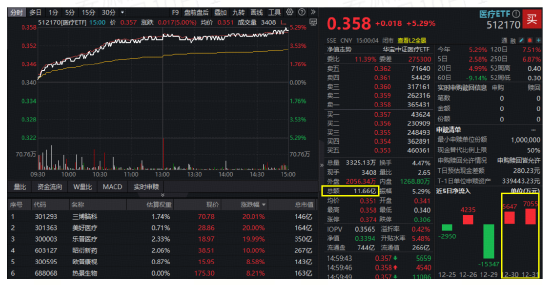
Group 1 - The A-share medical sector experienced a significant rally on January 5, 2026, led by the brain-computer interface concept, with key stocks like Sanbo Brain Science, Meihao Medical, and Lepu Medical hitting the 20% daily limit up [1] - The largest medical ETF in the market, tracking the medical index, surged by 5.29% to reach its highest point since October 9, 2024, with a trading volume of 1.166 billion yuan, an increase of over 211% compared to the previous trading day [1] - In the Hong Kong market, the medical sector also performed strongly, particularly in innovative drugs, with the Hong Kong Innovation Drug ETF rising by 5.42%, marking its largest single-day increase since its launch in July 2025 [2] Group 2 - Elon Musk announced on social media that his brain-computer interface company, Neuralink, will begin mass production of brain-computer interface devices in 2026, indicating a significant advancement in the technology [3] - According to CITIC Securities, China's research in brain-computer interface technology is relatively advanced globally, which is expected to enhance the valuations of related listed companies and stimulate financing in the primary market [3] - The National Medical Products Administration reported that 76 innovative drugs were approved for market in 2025, setting a historical record, with total licensing transactions exceeding $130 billion [5] Group 3 - The Hong Kong medical sector saw a collective rise in various concepts, including brain-computer interfaces and internet healthcare, with stocks like Microneuro Science and Brain Dynamics-B increasing by 19.73% and 15.74%, respectively [5] - The upcoming listing of the Hong Kong medical ETF Huabao (159137) is anticipated to attract attention, as it tracks the medical theme index [5] - Long-term strategies in the medical sector remain focused on innovation, with expectations for strong performance in 2026, particularly in innovative medical devices and drugs [5]
沪指11连阳收官!商业航天狂欢,有色一举夺冠!高“光”创业板人工智能ETF(159363)年涨105%晋级翻倍基
Xin Lang Ji Jin· 2025-12-31 09:59
Core Viewpoint - The A-share market has shown strong performance in 2025, with significant gains in various sectors, particularly in the non-ferrous metals and military industries, indicating a positive outlook for 2026. Non-Ferrous Metals Sector - The non-ferrous metals sector achieved the highest annual growth rate in 2025, with the non-ferrous ETF Huabao (159876) rising by 91.67%, significantly outperforming major indices like the Shanghai Composite Index, which rose by 18.41% [10][19]. - Key stocks in the non-ferrous sector, such as Zijin Mining, Jiangxi Copper, and Luoyang Molybdenum, saw substantial price increases, with Zijin Mining up by 133.09% and Jiangxi Copper up by 176.92% [10][6]. - The sector's strong performance is attributed to a combination of global capital expenditure cycles, manufacturing recovery, and improved domestic macroeconomic expectations [8][10]. Military Industry - The military sector, particularly the commercial aerospace segment, has gained significant traction, with the military ETF Huabao (512810) rising over 32% in 2025, marking its second-best annual performance since its inception [13][16]. - Major stocks in the military sector, including GuoBo Electronics and China Satellite, experienced notable gains, with several stocks hitting the daily limit [14][13]. - The military industry is expected to continue its upward trajectory in 2026, driven by increased military demand and advancements in commercial aerospace [16][13]. Chemical Sector - The chemical sector also performed well, with the chemical ETF (516020) showing a 41.09% increase in 2025, outperforming major indices [20][19]. - The lithium battery supply chain has seen a significant rise in both price and demand, with prices for lithium carbonate reaching 116,000 yuan per ton, indicating a robust market outlook [22][20]. - The sector is expected to benefit from ongoing macroeconomic recovery and supply-side policy advancements, with a focus on key areas such as phosphates and semiconductor materials [22][20].

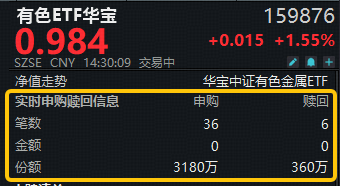
云铝股份、天山铝业齐创新高!电解铝概念震荡走强,有色ETF华宝(159876)盘中拉升2.2%,获净申购2820万份
Xin Lang Ji Jin· 2025-12-30 06:42
Core Viewpoint - The recent performance of the Huabao ETF (159876) indicates strong investor confidence in the non-ferrous metals sector, with significant net subscriptions and notable price increases among key stocks in the industry [1][6]. Group 1: ETF Performance - The Huabao non-ferrous metals ETF saw an intraday increase of 2.27%, currently up by 1.55%, with a real-time net subscription of 28.2 million shares [1]. - The ETF attracted 15.36 million yuan in investments yesterday, reflecting positive market sentiment towards the non-ferrous metals sector [1]. Group 2: Key Stocks Performance - Major stocks such as Yun Aluminum and Tianshan Aluminum reached new highs, while Hai Liang, China Aluminum, and Huayou Cobalt saw increases of over 4% [1][2]. - Other stocks like Yahua Group, Luoyang Molybdenum, and Guocheng Mining also experienced upward movements [1]. Group 3: Industry Insights - The National Development and Reform Commission has encouraged large-scale mergers and restructuring in the aluminum and copper smelting sectors to enhance competitiveness [2]. - The aluminum market is evolving, with aluminum now seen as a core carrier of energy value, potentially leading to independent upward momentum driven by the copper-aluminum ratio and increased demand for aluminum as a substitute for copper [3]. Group 4: Investment Opportunities - The current phase of the non-ferrous metals industry is characterized by a reversal in fundamentals, with traditional cyclical industries showing signs of recovery and long-term investment potential [3]. - The "anti-involution" policy is expected to guide industry development towards more efficient investment strategies, focusing on upgrading and cost reduction rather than inefficient expansion [3]. - The rise of AI is creating new opportunities in the non-ferrous sector, particularly in materials used for advanced packaging and electronic components, which are expected to see increased demand [4]. Group 5: Investment Strategy - A diversified investment approach through the Huabao ETF and its associated funds is recommended to capture the overall beta performance of the non-ferrous metals sector, mitigating risks associated with investing in single metal industries [6].

A股新纪录!商业航天牛气冲天,512810再突破!数字人民币大消息,金融科技逆袭!港股通汽车ETF华宝首秀收涨
Xin Lang Ji Jin· 2025-12-29 11:54
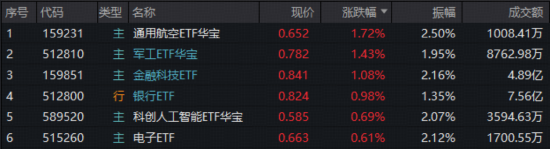
Market Overview - The A-share market showed mixed results on December 29, with the Shanghai Composite Index achieving a nine-day consecutive rise, marking the longest streak since 2025, while the Shenzhen Component and ChiNext Index fell by 0.49% and 0.66% respectively [1] - Market sentiment remained high with a trading volume of 2.16 trillion yuan, surpassing 2 trillion yuan for two consecutive days [1] Sector Performance - The commercial aerospace sector continued to perform strongly, with stocks like China Satellite, Aerospace Electronics, and Aerospace Development consistently ranking among the top ten in trading volume [1] - The General Aviation ETF (159231) rose by 1.72%, reaching a historical high, while the Military Industry ETF (512810) increased by 1.69%, setting a new three-year high [1] - The digital currency concept saw fluctuations, with financial technology and banking sectors rebounding quickly. The Financial Technology ETF (159851) surged by 1.08%, marking its fourth consecutive rise, while the Bank ETF (512800) gained 0.98% [1] ETF Highlights - The Military Industry ETF (512810) recorded a net inflow of over 8.1 billion yuan, leading the industry [7] - The Financial Technology ETF (159851) showed a strong upward trend, with significant gains in stocks like Lakala, which surged over 12% [12] - The Science and Technology Innovation Artificial Intelligence ETF (589520) rose by 0.69%, driven by strong demand for AI-related chips, with a notable increase in trading volume [16] Key Stocks - China Satellite saw a four-day consecutive rise, with its market capitalization surpassing 100 billion yuan [9] - Lakala led the financial technology sector with a significant increase, while other stocks in the sector also performed well [12] - Chip manufacturer Chipone Technology reported a record high in new orders, contributing to the strength of the AI chip sector [16][18] Future Outlook - Analysts suggest that the Hong Kong stock market may benefit from the recovery expectations in mainland China and potential interest rate cuts by the Federal Reserve, indicating a positive outlook for 2026 [4] - The digital yuan is set to launch a new framework and management system on January 1, 2026, which is expected to create new opportunities for the financial technology sector [14]

商业火箭资本化加速!高人气军工ETF华宝(512810)频刷阶段新高纪录!中国卫星四连板,市值突破千亿
Xin Lang Ji Jin· 2025-12-29 11:44
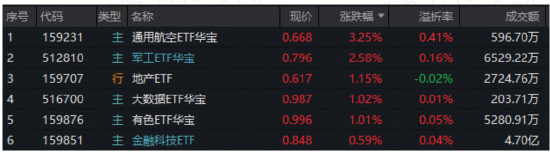
12月29日,商业航天带飞军工,主力资金高歌猛进,全天净买入国防军工行业逾81亿元,再度霸居全行 业(申万)首位! | 序号 | લ્લ્લ્લ | 名称 | 估算权重 | 现价 | 涨跌幅 ▼ | 成交额 | | --- | --- | --- | --- | --- | --- | --- | | 1 | 300699 | 光威复材 | 1.36% | 40.05 | 14.86% | 54.18亿 | | 2 | 002465 | 海格通信 | 1.72% | 15.35 | 10.04% | 32.99亿 | | 3 | 000547 | 航天发展 | 2.19% | 30.98 | 10.01% | 102.99亿 | | 4 | 600118 | 中国卫星 | 2.59% | 88.00 | 10.00% | 133.56 Z | | 5 | 688629 | 华丰科技 | 1.26% | 103.86 | 6.91% | 38.73亿 | | 6 | 300777 | 中简科技 | 0.71% | 38.78 | 5.99% | 19.42亿 | | 7 | 601698 | 中国 通 | 1. ...


关注现金流价值!红利低波ETF(512890)交投与资金双活跃:日成交5.7亿居同类首位 近60个交易日吸金59亿!
Xin Lang Ji Jin· 2025-12-29 08:29
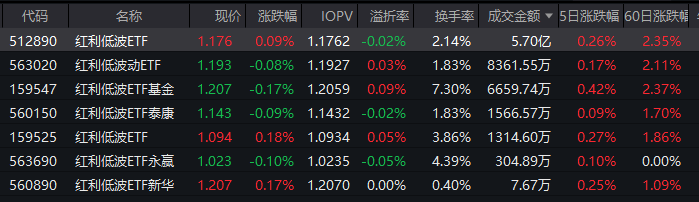
Market Overview - On December 29, the three major A-share indices showed mixed results, with the Shanghai Composite Index slightly rising, achieving a "nine consecutive days of gains" [1] - The ChiNext Index experienced a decline of over 1% at one point during the day [1] ETF Performance - The Dividend Low Volatility ETF (512890) closed up 0.09% at 1.176 CNY, with a turnover rate of 2.14% and a trading volume of 570 million CNY, leading among similar ETFs [1][3] - Over the past 20 trading days, the ETF accumulated a total trading volume of 12.2 billion CNY, averaging 610 million CNY per day; since the beginning of the year, the total trading volume reached 116.1 billion CNY, averaging 482 million CNY per day [2] Fund Inflows - The ETF has seen consistent net inflows, with 3.8 million CNY over the last 5 trading days, 14.7 million CNY over the last 10 days, and 58.6 million CNY over the last 60 days [2] - The current overall circulation scale of the ETF is 26.6 billion CNY [2] Top Holdings - As of September 30, 2025, the top ten holdings of the Dividend Low Volatility ETF include major companies such as COFCO Sugar, Nanjing Bank, and Agricultural Bank of China, with a total market value of approximately 5.5 billion CNY, accounting for 27.47% of the total stock market value and 27.29% of the fund's net value [4] Investment Strategy - Current market conditions suggest a phase of "solidifying the bottom before preparing for the pre-Spring Festival market," with investors adopting a strategy of "buying on dips and structural switching" rather than aggressive accumulation at high levels [5] - The Dividend Low Volatility ETF, established in December 2018, has shown a robust historical performance with a return of 135% since inception, significantly outperforming its benchmark [5]
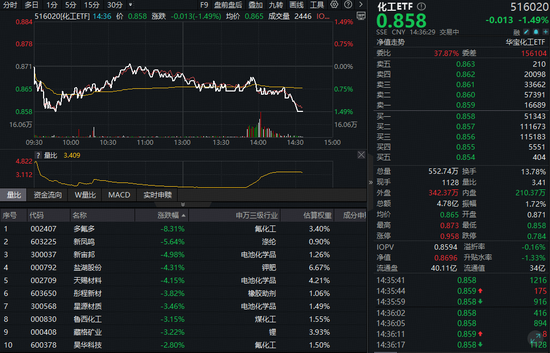
化工板块意外回调,是风险还是机遇?化工ETF(516020)跌超1%!机构仍乐观
Xin Lang Ji Jin· 2025-12-29 06:50
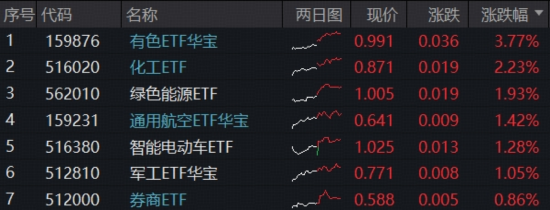
Group 1 - The chemical sector experienced a pullback on December 29, with the chemical ETF (516020) showing a decline of 1.49% during the day [1] - Key stocks in the sector, including fluorine chemicals, lithium batteries, and potash fertilizers, saw significant declines, with companies like Duofuduo dropping over 8% and Xin Fengming over 5% [1] - Despite today's decline, the chemical sector has performed well this year, benefiting from the "anti-involution" trend, with the chemical ETF's index showing a cumulative increase of 40.35% year-to-date, outperforming major A-share indices [3][4] Group 2 - The current decline in the chemical sector is viewed as a normal correction following a period of continuous growth, with no significant negative news impacting the sector [3] - Analysts from Huazhang Securities noted that the "anti-involution" trend is likely to enhance self-discipline among chemical companies, leading to a rational return of chemical prices and profit levels [5] - Looking ahead, China Galaxy Securities anticipates a negative growth in capital expenditure for the chemical industry in 2024, with supply-side contractions expected to improve the supply-demand balance, potentially marking a cyclical turning point for the industry by 2026 [5][6] Group 3 - Dongxing Securities highlighted that the chemical industry's outlook for 2026 is positive, with expected improvements in supply-demand dynamics and a reduction in cost pressures from raw materials like crude oil and coal [6] - The chemical ETF (516020) is recommended as an efficient way to invest in the sector, covering various sub-sectors and concentrating nearly 50% of its holdings in large-cap leading stocks [6]
沪指年末站稳4000点?机构高呼当下不宜犹豫,有色领涨两市,锁定年度冠军!军工续刷阶段新高
Xin Lang Ji Jin· 2025-12-28 11:33
Market Overview - The three major indices continued to rise, with the Shanghai Composite Index recording an 8-day winning streak, potentially returning to 4000 points by year-end [1] - The total trading volume in the two markets reached 2.18 trillion yuan, setting a new high for December [1] Sector Performance - The non-ferrous metals sector led the market, with the Non-ferrous ETF Huabao (159876) surging by 3.77%, reaching a new high since its listing [2][5] - Non-ferrous metals have outperformed all 31 Shenwan primary industries this year, with an annual increase of nearly 94% [2] - The lithium battery supply chain saw significant gains, with the main contract for lithium carbonate breaking through 130,000 yuan per ton, marking a new high since November 2023 [3] Investment Outlook - Institutions remain optimistic about the non-ferrous metals and precious metals sectors, predicting they will be part of the "first tier" of upward trends by 2026 [3][7] - Factors supporting the strong performance of non-ferrous metals include increased geopolitical uncertainty, a weakening dollar, rising demand due to AI and energy transitions, and supply constraints [7] - The military industry continues to show strong performance, with the Military ETF Huabao (512810) reaching a new high, driven by active commercial aerospace developments [11][13] Specific Stocks and ETFs - Key stocks in the non-ferrous metals sector, such as Yuxing Materials and Jiangxi Copper, saw significant price increases, with several stocks hitting their daily limit [8] - The Military ETF Huabao (512810) has a significant weight in commercial aerospace stocks, which have been performing well [14] - The brokerage sector, represented by the Broker ETF (512000), has shown signs of recovery, with a slight increase of 0.86% and a trading volume of 18.3 billion yuan [18][20] Future Catalysts - The brokerage sector is expected to benefit from increased market activity and capital inflows, with predictions of a more favorable environment for earnings growth in 2026 [22][23] - The military sector is anticipated to enter a configuration cycle, supported by new policies and increased contributions from commercial aerospace and low-altitude economies [16][17]