Xin Lang Ji Jin

Search documents
又一款基金投资利器!它被誉为赋能投资决策“最强大脑”
Xin Lang Ji Jin· 2025-11-19 06:24
Core Insights - The article highlights the emergence of Sina Finance APP as a smart decision-making center for investors, leveraging AI and a comprehensive ecosystem to enhance user experience in fund selection [1][10]. Group 1: Data Advantage - Sina Finance APP integrates data from 163 fund companies, covering 98% of market fund products and monitoring over 10,000 funds in real-time [2]. - The app boasts a refresh speed of 0.03 seconds, significantly faster than the industry average, providing critical decision-making time during market volatility [2]. - During a market crash in May 2025, Sina Finance maintained its update speed while competitors faced delays of 1-2 seconds due to traffic overload [2]. Group 2: Intelligent Tools - The "Xina AI Assistant" received a high score of 9.6 in smart tool evaluations, capable of summarizing 5,000-word annual reports into 300-word core abstracts, highlighting risk and opportunity points [3]. - The AI tool enhances efficiency in processing complex information, achieving an 8-fold improvement over manual analysis [3]. - The app's intelligent investment feature adjusts investment amounts based on market conditions, encouraging increased investment during market lows [3]. Group 3: Ecosystem Integration - The app offers a one-stop experience by integrating information retrieval and fund purchasing through its built-in trading functionality [4]. - Collaborating with 60 fund companies, the platform provides access to over 3,000 fund products, covering mainstream public fund offerings [4]. Group 4: Personalized Services - The modular workspace of the app allows users to customize over 200 functional components, tailoring their interface to individual investment habits [7]. - The intelligent alert system monitors 12 types of conditions, achieving an accuracy rate of 98.2% in alert notifications [8]. - Unique features for HarmonyOS users include lock screen cards and voice broadcasting, enhancing the overall user experience [9].
外资“力挺”中国资产!A500ETF华泰柏瑞(563360)半日成交额突破35亿元
Xin Lang Ji Jin· 2025-11-19 06:21
Group 1 - The core focus of the market has shifted towards the CSI A500 Index, which has gained attention as a tool for diversified investment amidst increasing uncertainties and competition among major powers [1][2] - The A500 ETF by Huatai-PB (563360) has shown significant trading activity, with a half-day trading volume reaching 3.589 billion yuan, making it the only ETF in the market to surpass 3.5 billion yuan in half-day trading volume [1] - Foreign institutional investors have increased their holdings in Chinese stocks, with the total number of investigations into A-share listed companies approaching 1,300, indicating a positive outlook on the value of Chinese assets [2] Group 2 - The A500 ETF closely tracks the CSI A500 Index, which employs a "sector-neutral + market capitalization selection" method, covering 35 secondary sectors and 91 tertiary sectors, thus representing the overall performance of core A-share assets [3] - The A500 ETF has a low fee structure, with management and custody fees at 0.15% and 0.05% per year, respectively, making it one of the lowest in the A-share market [3][5] - As of November 18, 2025, the A500 ETF has achieved a cumulative net asset value of 1.2264 yuan, making it one of the few ETFs tracking the CSI A500 Index to exceed 1.22 yuan [4]
金融科技ETF(159851)下探2%反复磨底,神州信息逼近跌停,资金午后反向净流入!
Xin Lang Ji Jin· 2025-11-19 06:08
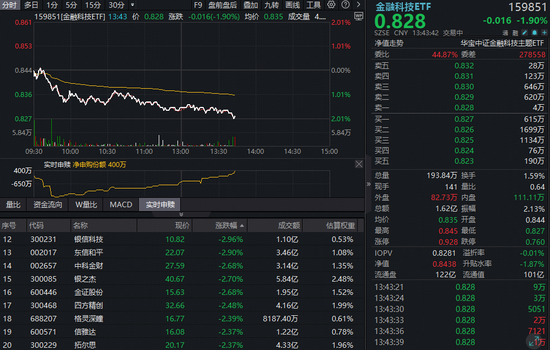
Group 1 - The core viewpoint of the news highlights the volatility in the fintech sector, with only a few stocks like Digital Certification, Tax Friend Co., and Star Ring Technology showing gains, while others, including Shenzhou Information, approached their daily limit down [1] - The financial technology ETF (159851) experienced a nearly 2% decline, with a trading volume exceeding 150 million yuan, indicating a shift to net subscriptions in the afternoon [1] - The investment strategy for the fintech sector in 2026 is driven by policy support, market growth, active capital markets, and technological changes led by AI and innovation [2][3] Group 2 - The investment opportunities are focused on two main lines: short-term market activity and mid-term performance elasticity of financial IT companies, with expectations of continued performance release from internet brokerages in 2025 and 2026 [2] - The fintech ETF (159851) has a scale exceeding 10 billion yuan, with an average daily trading volume of 800 million yuan over the past six months, indicating strong liquidity compared to other ETFs tracking the same index [3]


长城基金曲少杰:港股的“估值洼地”效应与结构优势不断吸引全球资本
Xin Lang Ji Jin· 2025-11-19 06:04
Group 1 - The core driving factors for the continuous growth of Hong Kong stock funds are identified as the "valuation gap" effect, structural advantages, and the increasing attractiveness of Chinese assets [2][3] - The Hang Seng Index's price-to-earnings ratio (TTM) is 11.97 times, significantly lower than major global indices like Germany's DAX (18.44 times) and the UK's FTSE 100 (20.23 times), indicating a favorable valuation for investors [2] - The dividend yield of Hong Kong stocks stands at 3.05%, which is more attractive compared to the S&P 500's 1.11%, further enhancing the appeal of Hong Kong stocks [2] Group 2 - Hong Kong's stock market offers a dual allocation strategy, catering to both defensive and growth needs, with blue-chip stocks providing around 6% dividend yield for defensive positioning and sectors like technology, biomedicine, and new consumption representing growth opportunities [2][3] - The market is seen as a key platform for high-quality Chinese enterprises, attracting both domestic and foreign investments, especially as China's economy recovers and the high-tech sector continues to innovate [2][3] - Key investment areas in the Hong Kong market include high-dividend stocks, technology internet, biomedicine, and new consumption, which are gaining attention from investors seeking stable returns and growth potential [3]
苹果10月在华销量激增,果链或迎景气周期!果链含量44%的电子ETF(515260)宽幅溢价,买盘资金强势!
Xin Lang Ji Jin· 2025-11-19 05:47
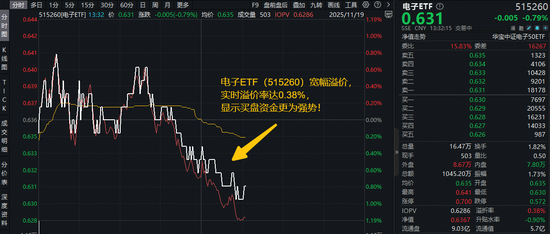
Group 1 - The electronic ETF (515260) experienced a market pullback with a decrease of 0.79%, but it showed a strong buying interest with a premium rate of 0.38% [1] - Key components of the ETF include companies like Rockchip, Huadian, Lingyi, Cambricon, and Luxshare, which all performed positively despite the market downturn [1] Group 2 - Counterpoint Research reported that Apple's smartphone sales in China surged by 37% year-on-year in October, with a market share increase to 25%, marking the first time since 2022 that Apple's monthly market share exceeded a quarter [3] - The iPhone 17 series has been a significant growth driver, with sales nearly doubling compared to the previous generation, attributed to its enhanced features and competitive pricing [3] - The upcoming China International Semiconductor Expo (IC China 2025) is set to take place from November 23 to 25, aligning with the "14th Five-Year Plan" to strengthen technological innovation and ensure supply chain stability [3] Group 3 - AI demand is driving a supply shortage and price increases in storage chips and certain passive components, indicating a strong market trend that is currently underestimated [4] - The electronic ETF (515260) tracks the electronic 50 index, focusing on semiconductor and consumer electronics sectors, with significant holdings in PCB, AI chips, automotive electronics, and 5G industries [4] - The ETF's composition shows that 44.63% of its holdings are in Apple's supply chain, highlighting the importance of the iPhone 17's success for the sector [4] - Government policies are supporting the semiconductor industry, aiming for self-sufficiency and innovation in consumer electronics, which is expected to benefit the electronic sector [4]

碳酸锂期货突破10万大关!锂矿股大涨,赣锋锂业涨逾3%!有色龙头ETF(159876)拉升2%,近3日狂揽1.96亿元
Xin Lang Ji Jin· 2025-11-19 05:20
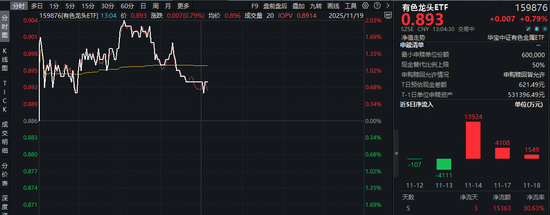
Core Viewpoint - The active performance of the Nonferrous Metal Industry Leader ETF (159876) indicates strong market interest and investment in the sector, with significant capital inflow over the past three days totaling 196 million yuan, reflecting optimism about future market conditions [1][3]. Group 1: ETF Performance - The Nonferrous Metal Industry Leader ETF (159876) saw an intraday increase of 2.03% and is currently up by 0.79% [1]. - The ETF has attracted a total of 196 million yuan in capital over the last three days, suggesting that large investors are actively entering the market [1]. Group 2: Component Stocks - Key component stocks include Tianqi Lithium, which rose over 4%, and Ganfeng Lithium and Xingye Silver, which both increased by more than 3% [3]. - Other notable stocks such as Zhongjin Gold and Zijin Mining also saw gains exceeding 2%, indicating a broad-based rally among leading companies in the sector [3]. Group 3: Market Drivers - Lithium prices are experiencing upward momentum, with the main futures contract for lithium carbonate breaking the 100,000 yuan mark, reflecting a nearly 6% increase and reaching a new high since June 2024 [4]. - Gold is expected to see a valuation increase due to liquidity resonance and a trend towards de-dollarization, with potential for prices to exceed 5,000 USD per ounce if current trends continue [4]. - Demand for copper is projected to rise significantly, driven by increased capital expenditure in AI by major tech companies, with expectations that global demand for copper in the new energy sector will reach 18% by 2025 [4]. Group 4: Investment Strategy - The Nonferrous Metal Industry Leader ETF and its linked funds provide comprehensive coverage across various metals, including copper, aluminum, gold, rare earths, and lithium, making it a suitable option for diversifying risk within investment portfolios [5].

市场降息预期回落,美股震荡
Xin Lang Ji Jin· 2025-11-19 05:16
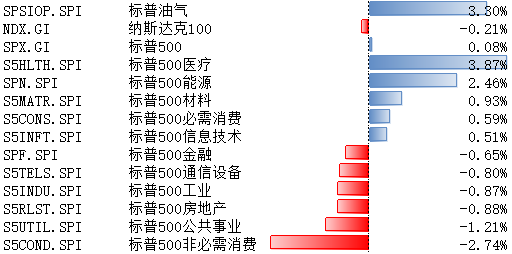
Group 1: Macroeconomic Overview - In October, the NFIB Small Business Optimism Index in the U.S. fell to 98.2%, below the expected 98.3% and the previous value of 98.8%, indicating a deterioration in small business owners' expectations for profits and economic growth [1] - President Trump signed a temporary funding bill on November 12, ending the longest government shutdown in U.S. history, which lasted 43 days. Following the shutdown, a backlog of economic data will be released starting November 20, including September non-farm payrolls and Q3 GDP data [1] Group 2: Market Performance - For the week of November 10-14, the S&P Oil & Gas Index rose by 3.30%, while the Nasdaq 100 Index fell by 0.21%. The S&P 500 Index saw a slight increase of 0.08%, with five of its eleven sectors rising, led by the S&P 500 Healthcare sector, which increased by 3.87%, and the S&P 500 Consumer Discretionary sector, which fell by 2.74% [2][3] - As of last week, 92% of S&P 500 companies had reported Q3 earnings, with 81% exceeding expectations. The market is particularly focused on Nvidia's upcoming quarterly report [2] Group 3: Investment Products - The Bosera S&P 500 ETF (513500) is designed to track the U.S. S&P 500 Index, which includes over 500 representative companies across 11 sectors, accounting for approximately 80% of the total market capitalization of U.S. stocks [4] - The Bosera Nasdaq 100 ETF (513390) tracks the Nasdaq 100 Index, with the Information Technology sector making up 57.87% of the index, indicating a strong focus on high-tech companies [4]
创金合信基金魏凤春:积极地等待
Xin Lang Ji Jin· 2025-11-19 03:30
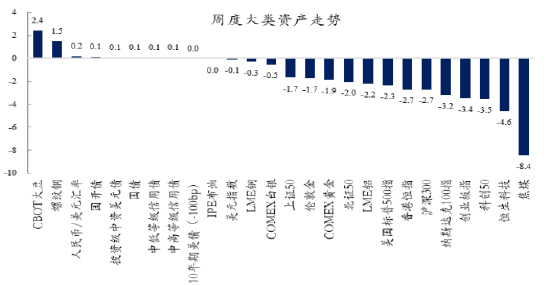
Group 1: Market Overview - The macroeconomic fundamentals in China show a weak recovery, with fixed asset investment declining by 1.7% year-on-year from January to October, worsening from a 0.5% decline in the previous period [9] - The real estate sector continues to struggle, with a 14.7% year-on-year drop in real estate development investment, and 70 cities experiencing a continuous decline in new home prices for 28 months [10] - The overall economic recovery remains fragile, with structural pressures from both domestic and external factors, necessitating targeted policy tools to address supply and demand imbalances [10] Group 2: Policy and Economic Strategy - The upcoming "15th Five-Year Plan" emphasizes the importance of expanding domestic demand and revitalizing the agricultural economy, with a focus on enhancing agricultural productivity and rural modernization [12] - The central government's approach to local governance will prioritize stimulating consumption, particularly in services, as a means to support income and employment, especially for migrant workers [11] - The structural characteristics of central bank policies indicate a need for a balanced approach that does not blindly follow external monetary policy changes, focusing instead on domestic economic recovery [6][7]
红利情报局:港股红利低波风格受关注,煤炭供需格局再变
Xin Lang Ji Jin· 2025-11-19 03:20
Core Insights - The article highlights the increasing attention on the low volatility dividend style in the Hong Kong stock market, particularly in the context of changing coal supply and demand dynamics [1][5]. Group 1: Dividend Low Volatility Style - The low volatility dividend style index has shown superior risk-return ratios this year, with a median Sharpe ratio and Calmar ratio indicating strong performance [4]. - The annualized return of the low volatility dividend style index is the highest this year, with a maximum drawdown recovery time of only 21 days, suggesting a favorable holding experience [5]. - The index has constraints on individual stock weights (0.05% to 5%) and industry weights (not exceeding 30%), leading to a high degree of asset risk diversification [5]. Group 2: Coal Industry Dynamics - The coal industry is experiencing a tightening supply side, which is becoming a key investment theme, with coal prices expected to rise further due to increased demand in the fourth quarter [5]. - The State-owned Assets Supervision and Administration Commission (SASAC) has prioritized "stabilizing electricity prices" alongside "stabilizing coal prices," providing policy support that may enhance the valuation of high-dividend companies [5]. - The top five sectors by dividend yield over the past 12 months include: - Commercial Banks: 5.45% - Coal Mining: 4.95% - White Goods: 4.59% - Rural Commercial Banks: 4.20% - Shipping and Ports [5].

港股AI走势分化,小米绩后重挫3%,阿里涨超2%!百亿港股互联网ETF(513770)半年线下方溢价揽筹
Xin Lang Ji Jin· 2025-11-19 03:13
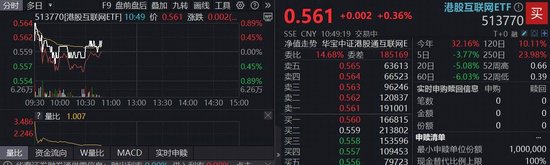
Core Insights - The Hong Kong stock market showed mixed performance among tech giants, with Alibaba-W rising over 2% and Xiaomi Group-W dropping more than 3% after its earnings report [1] - The Hong Kong Internet ETF (513770) saw a price increase of 0.36%, indicating strong buying interest, with a net inflow of 23.77 million CNY over the last three days and a cumulative net inflow of 1.315 billion CNY over the past 20 days [1] Group 1: Company Performance - Xiaomi Group reported a strong Q3 earnings with revenue reaching 113.1 billion CNY, a year-on-year increase of 22.3%, and an adjusted net profit of 11.3 billion CNY, up 80.9% year-on-year, marking a historical high [2] - The company achieved profitability in its automotive and AI sectors for the first time, with a profit of 700 million CNY in the quarter [2] Group 2: AI and Internet Sector Outlook - The launch of Alibaba's Qianwen app has gained significant traction, ranking fifth in the Apple App Store's free apps category shortly after its public beta [3] - The Hong Kong Internet sector is expected to benefit from the acceleration of AI integration across various applications, with significant potential for growth in domestic AI companies [3] - Citic Securities highlighted the substantial earnings elasticity of domestic AI firms, suggesting that the model and application sectors may experience explosive growth opportunities [3] Group 3: ETF and Index Performance - The Hong Kong Internet ETF (513770) tracks the CSI Hong Kong Internet Index, which heavily weights leading internet companies like Alibaba-W, Tencent Holdings, and Xiaomi Group, accounting for over 73% of the top ten holdings [4] - The index has shown higher elasticity this year, outperforming the Hang Seng Tech Index, with a year-to-date increase of 40.81% compared to 32.23% for the Hang Seng Tech Index [6] - The current price-to-earnings ratio of the Hong Kong Internet Index is 24.44, significantly lower than that of the NASDAQ 100 and the ChiNext Index, indicating a potentially undervalued market [6]