Tai Mei Ti A P P

Search documents
80%企业明年会消失,AI玩具的生死线不是“套娃”Labubu
Tai Mei Ti A P P· 2025-07-31 02:08
Core Insights - The AI hardware market is experiencing a surge in new products, particularly in the AI companionship sector, which is seen as a promising area due to emotional companionship needs and AI's interactive capabilities [2][3] - The global AI companionship robot market is projected to grow from $13.4 billion to between $70 billion and $150 billion by 2030, with a compound annual growth rate (CAGR) of 200%-236% [3][5] - The entry of major players like Musk's xAI and OpenAI into the market indicates strong interest and investment in AI companionship products [3][5] Market Dynamics - The AI toy market in China is expected to reach 60 billion yuan, accounting for 30% of the global market [5] - The demand for personalized companionship products has surged, driven by changing consumer psychology and emotional satisfaction needs [3][9] - The market is currently undergoing a "de-bubbling" phase, where the focus is shifting towards more humanized technology and practical products [3][8] Investment Landscape - Nearly 100 investment firms are now involved in the AI toy sector, indicating a growing interest in this emerging market [7] - The entry of various companies, including traditional toy manufacturers and startups, has created a diverse landscape with different product interpretations [12][14] Consumer Behavior - The rise of the "loneliness economy" is a significant driver for AI companionship products, with over 13 million individuals in China diagnosed with autism, highlighting a growing need for emotional support [7][9] - AI toys are perceived as more attractive than real pets due to lower costs and fewer responsibilities, making them appealing to consumers seeking emotional companionship [9][11] Challenges and Criticisms - The AI toy market faces skepticism regarding its long-term viability, with concerns about the quality and effectiveness of AI companionship products [8][11] - High return rates for AI toys, similar to those seen in other AI hardware sectors, raise questions about consumer satisfaction and product performance [11][17] - The industry must balance the integration of AI technology with the traditional toy market to create products that meet emotional companionship needs effectively [14][16]


瞄准重卡客车三电难题,福田发布爱易科新能源重型超级电驱动
Tai Mei Ti A P P· 2025-07-31 02:03
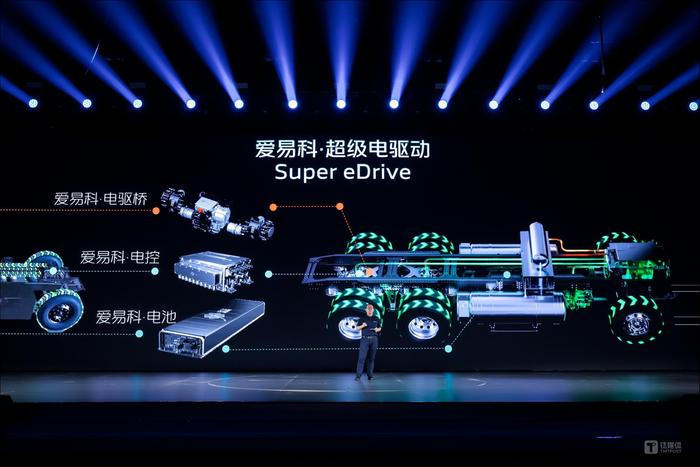
在新能源商用车激烈角逐的赛道上,核心技术突破正成为改写行业格局的关键变量。尤其对于承载高强 度运输任务的重卡与肩负公共出行使命的客车而言,其严苛的运营环境对三电系统提出了近乎极限的要 求。 7月28日,福田汽车发布了爱易科新能源重型超级电驱动。爱易科包含"智·生态"与"电·驱动"两大板块。 自去年年末发布以来,已经在轻卡产品上应用。此次发布的爱易科超级电驱动,主要应用于重卡和客车 平台,补齐了福田在三电领域的市场覆盖。 福田汽车试图通过底层技术的系统性创新,为行业痛点提供解决方案。 商用车电池系统面临着多重压力 重卡与客车作为商用车领域的"重劳力",其新能源化进程远比乘用车更为艰难,核心痛点集中在电池与 电驱动系统两大命脉上。 电池系统面临着多重压力。首要且持续的挑战是安全焦虑:搭载超大电量的电池包长期暴露于高强度振 动、复杂路况及剧烈温度变化中,单体电芯故障引发的热失控连锁反应风险如影随形,是行业普遍且首 要的痛点。与此同时,厂商深陷能量密度与成本的拉锯战:满足长续航,尤其是重卡的需求,必须使用 大容量电池,但高能量密度电芯成本高昂,还需在有限的底盘空间内兼顾轻量化以降低无效能耗,平衡 能量密度、成本、重量 ...

科股早知道:AI赋能后交互性大幅提升,目前产业链正加速将传统产品AI化
Tai Mei Ti A P P· 2025-07-31 00:31
Group 1: AI Integration in Industries - SenseTime and the Shantou government signed a strategic cooperation agreement to establish the first "AI + Toy" industrial base in China, enhancing the integration of AI with traditional toy industries [2] - AI toys significantly improve interactivity, fun, and playability, with demand expected to span all age groups, positioning AI as a core catalyst in the toy market [2] - The penetration rate of AI toys is projected to reach 29% by 2026, 41% by 2028, and 47% by 2030, with the domestic market potentially nearing 85 billion yuan by 2030 [2] Group 2: Stablecoin Regulation in Hong Kong - The Hong Kong Monetary Authority implemented a regulatory framework for stablecoin issuers, effective August 1, allowing institutions to apply for licenses [3] - This regulatory move is expected to facilitate discussions on business models and ensure compliance with minimum standards [3] - The stablecoin market is expanding from cryptocurrency trading to broader payment applications, with significant growth anticipated following the establishment of regulatory frameworks in both the U.S. and Hong Kong [3] Group 3: High-End PCB Demand Surge - The PCB industry is experiencing improved market conditions, particularly for high-end products, driven by hardware upgrades in AI servers and high-speed switches [4] - There is a notable demand for high multi-layer boards and high-density interconnect (HDI) PCBs, with prices increasing due to a supply-demand gap in high-end products [4] - PCB order visibility is expected to extend until 2027, with AI computing power driving rapid growth in demand for high-end PCBs [4][5] Group 4: Brain-Computer Interface (BCI) Pricing in Jiangsu - Jiangsu Province announced pricing for brain-computer interface medical services, with non-invasive adaptation fees set at 966 yuan per session and invasive procedures priced at 6,600 yuan for insertion and 3,200 yuan for removal [6] - The global market for neuropharmaceuticals is valued at over 100 billion dollars, indicating significant potential for BCI technology in both medical and non-medical applications [6] - The commercialization of BCI technology is expected to accelerate with supportive policies and established pricing, presenting investment opportunities in this sector [6]

【钛晨报】中央政治局会议重磅定调!事关宏观政策、资本市场;A股年内首只“10倍股”上纬新材今起停牌核查;京东三个月内完成五家机器人企业投资
Tai Mei Ti A P P· 2025-07-30 23:23
【钛媒体综合】据新华社报道,中共中央政治局7月30日召开会议,研究当前经济形势,部署下半年经 济工作。 会议表示,今年以来,我国经济运行稳中有进,高质量发展取得新成效。主要经济指标表现良好,新质 生产力积极发展,改革开放不断深化,重点领域风险有力有效防范化解,民生兜底保障进一步加强,我 国经济展现强大活力和韧性。同时会议指出,当前我国经济运行依然面临不少风险挑战。因此会议强 调,做好下半年经济工作,要保持政策连续性稳定性,增强灵活性预见性,着力稳就业、稳企业、稳市 场、稳预期。 会议指出,宏观政策要持续发力、适时加力。要落实落细更加积极的财政政策和适度宽松的货币政策, 充分释放政策效应。加快政府债券发行使用,提高资金使用效率。兜牢基层"三保"底线。货币政策要保 持流动性充裕,促进社会综合融资成本下行。用好各项结构性货币政策工具,加力支持科技创新、提振 消费、小微企业、稳定外贸等。支持经济大省发挥挑大梁作用。强化宏观政策取向一致性。 会议强调,要扩大高水平对外开放,稳住外贸外资基本盘。帮助受冲击较大的外贸企业,强化融资支 持,促进内外贸一体化发展。优化出口退税政策,高水平建设自贸试验区等开放平台。 会议指出,要 ...

得物求“全”,背水一战
Tai Mei Ti A P P· 2025-07-30 10:31
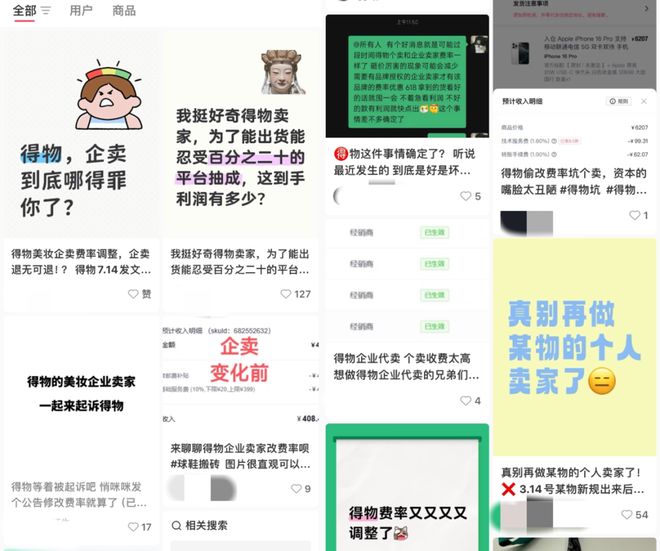
Core Insights - The article discusses the challenges faced by the company "Dewu" as it attempts to transition from a niche platform focused on trendy products to a comprehensive e-commerce platform, highlighting the impact of frequent policy changes on seller trust and platform stability [1][2][3]. Group 1: Frequent Adjustments in Seller Fees - Dewu has shifted its seller fee structure multiple times, initially lowering fees to attract more sellers but later raising them again, causing confusion and distrust among sellers [3][4][6]. - The company aims to expand its product categories beyond trendy items, moving towards a full-category e-commerce model, which requires attracting more brand and merchant sellers [3][4]. - The recent fee adjustments have disproportionately affected individual sellers, who struggle to compete with enterprise sellers benefiting from lower fees [4][6]. Group 2: Challenges of Free Traffic - Dewu promotes its platform by emphasizing "billions in free traffic," appealing to traditional e-commerce sellers who are wary of high marketing costs [7][8]. - However, the reality of "free traffic" may not align with seller expectations, as long-term success will likely require investment in content promotion and influencer partnerships [8]. - The company’s current strategy of leveraging community-driven content for traffic may face challenges as competition increases and the cost of customer acquisition rises [8][9]. Group 3: Community and Transaction Paradox - Dewu is attempting to activate its community through various initiatives, but the platform's strong transactional nature may undermine genuine user engagement [9][11]. - The community's focus on commercial content rather than authentic sharing raises concerns about trust and user experience, potentially alienating users [11][12]. - The inherent conflict between community-driven content and commercial interests poses a significant challenge for Dewu as it seeks to build a trustworthy platform [12][13]. Group 4: Ambitions in Comprehensive E-commerce - Dewu's ultimate goal is to establish itself in the competitive landscape of comprehensive e-commerce, which requires addressing its current shortcomings [13]. - The transition from a niche to a broad-based platform is fraught with risks, as the company must compete with established players that have more robust operational capabilities [13].
君亭酒店还要再找多少个“合伙人”?
Tai Mei Ti A P P· 2025-07-30 09:15
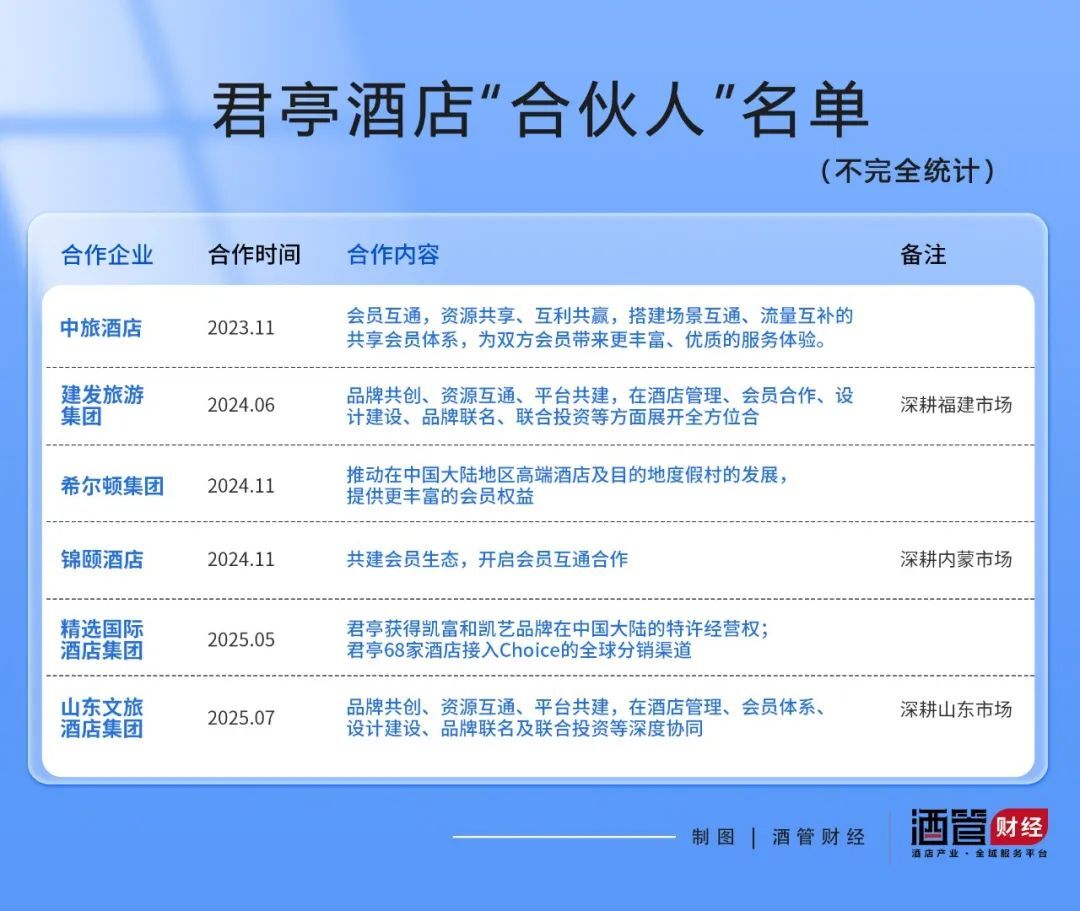
Core Viewpoint - Junting Hotel is actively seeking partnerships to expand its market presence and enhance its brand recognition through strategic collaborations with various hotel groups [1][3][8]. Group 1: Strategic Partnerships - Junting Hotel has signed a strategic cooperation framework agreement with Shandong Cultural Tourism Hotel Group, focusing on brand co-creation, resource sharing, and platform building [3][4]. - Previous partnerships include collaborations with China Travel Hotels, Jianfa Tourism Group, and Hilton Group, all emphasizing similar themes of resource sharing and brand development [5][6][7]. - The cooperation with Shandong Cultural Tourism Hotel Group aims to enhance user experience and asset value through integrated advantages in investment, operation, and design [3][8]. Group 2: Market Expansion Strategy - Junting Hotel's partnerships are strategically aimed at complementing its market presence, particularly in regions where it has limited brand recognition, such as Fujian and Inner Mongolia [8][9]. - The collaboration with Select International Hotel Group will allow Junting's hotels to access a global distribution channel, enhancing visibility for inbound tourists [8][9]. - The company is also looking to expand its membership base and enhance member benefits through these partnerships, which is crucial for its growth strategy [9][10]. Group 3: Growth Pathways - Junting Hotel's expansion strategy is summarized as "three axes": forming alliances, establishing a franchise model, and leveraging equity investments for growth [11][14]. - The company aims to become one of the top three brands in the domestic mid-to-high-end hotel sector within three years, targeting over 1,000 hotels [13][14]. - Junting Hotel has established a joint venture to manage its franchise operations, which will help address challenges related to customer acquisition and operational efficiency [13][14]. Group 4: Competitive Positioning - Junting Hotel currently ranks 21st among the top 60 hotel groups in China, indicating a need for further growth to improve its competitive standing [20][22]. - The company is under pressure to narrate a compelling growth story as it navigates its expansion strategy, especially following a leadership change [22][23]. - The recent strategic moves reflect Junting Hotel's ambition to explore the growth path of high-end domestic hotel brands, with a focus on both partnerships and internal development [23].

京西智行陈伟刚:让搭载在路虎揽胜上的技术适配更多车型
Tai Mei Ti A P P· 2025-07-30 08:43
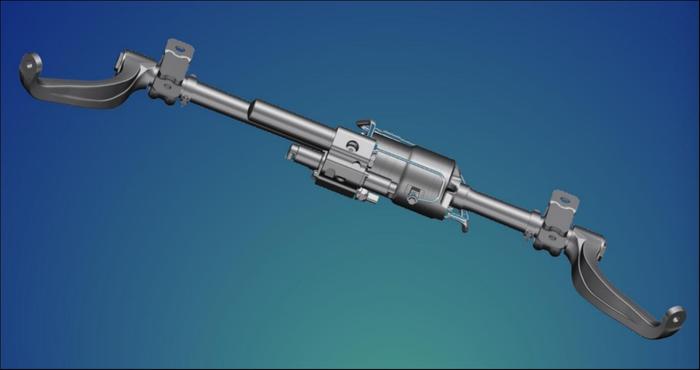
京西智行可断开式主动稳定控制系统(R-SARC) 近年来,国内越野车型市场呈现出增长趋势,无论是传统车企还是新势力品牌,纷纷加码这一赛道。 那些曾被视为传统高端越野车"专属"的核心技术,正悄然"下放"至国内新能源越野车型中,比如可断开 式稳定杆、适应极端路况的悬挂调校逻辑等,这些经过时间检验的成熟技术,正与新能源动力系统深度 融合。 作为一家全球化汽车悬架与制动系统一级供应商,京西智行是全球少数掌握可断开式主动稳定系统研发 量产能力的供应商之一,其已将可断开式稳定系统(R-SARC)实现了广泛应用,产品表现与适配能力 已历经多平台验证。 那么,这项在越野车上非常重要的技术到底是什么?如何帮助越野车大幅度提升脱困能力、改善通过性 和舒适性?在国内市场,其又是如何实现降本?供应商与主机厂之间又是如何联合研发? 什么是R-SARC? 京西智行可断开主动稳定控制系统(R-SARC)是什么?其实R-SARC是一个英文的缩写,是Rotary Semi-active Road Control,字面意思是可扭转的、半自动的侧倾控制。 京西智行全球工程副总裁、悬架产品CTO陈伟刚在讲解时表示,R-SARC最核心的优势就是帮助越 ...
对话无问芯穹CEO夏立雪:模型和芯片是两条驱动路径,不可能分开发展|独家
Tai Mei Ti A P P· 2025-07-30 04:42
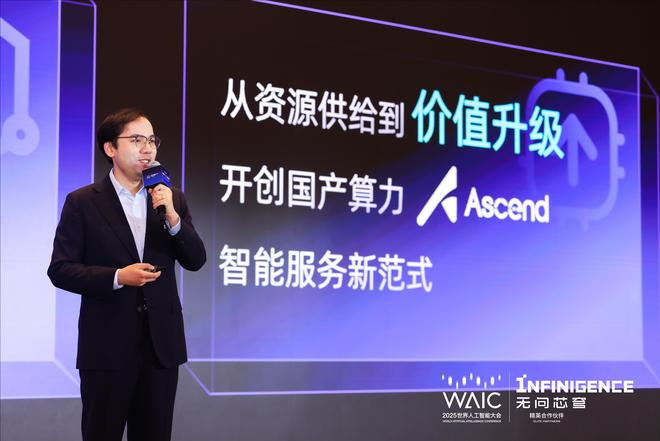
Core Insights - The company, Wunwen Xinqiong, launched a comprehensive AI efficiency enhancement solution during the WAIC 2025, introducing three core products: Wunqiong AI Cloud, Wujie Intelligent Computing Platform, and Wuyin Terminal Intelligence [2][3] - The Wunqiong AI Cloud targets global computing networks ranging from 10,000 to 100,000 cards, while the Wujie Intelligent Computing Platform is designed for large computing clusters of 100 to 1,000 cards, and the Wuyin Terminal Intelligence focuses on limited computing terminals from 1 to 10 cards [2][3] - The company aims to create a "universal language" for the industry to enable seamless communication and collaboration between different chip architectures, thereby enhancing the efficiency of AI technology deployment [3][4] Product Offerings - Wunwen Xinqiong's product ecosystem spans from infrastructure to industry applications, supporting AGI technology's large-scale implementation [6] - The company reported that its AI cloud platform provides a one-stop service for enterprises and developers, including cloud management, foundational cloud products, and large model development platforms [5][6] - The company has achieved significant performance optimization for over ten types of domestic AI chips, enhancing their performance by 50% to 200% through algorithm and compilation optimizations [5][6] Market Position and Growth - Wunwen Xinqiong completed nearly 500 million yuan in Series A financing in 2024, setting a record for the largest single financing in domestic AI infrastructure [5] - The company has raised over 1 billion yuan since its establishment in May 2023, indicating strong investor confidence and market potential [5] - The company serves the world's largest AI incubator, Shanghai Mosu Space, which has surpassed 10 billion daily token calls, supporting over 100 innovative AI applications [6] Strategic Vision - The CEO emphasized the importance of creating a closed-loop ecosystem for chip and model development to guide future advancements in the industry [4][8] - The company aims to achieve its ultimate vision of "limitless intelligence and precise computing" by harmonizing scene scale, computing resources, and intelligent efficiency [9]
英飞凌潘大伟:AI与机器人将带来新的增长机会
Tai Mei Ti A P P· 2025-07-30 04:10
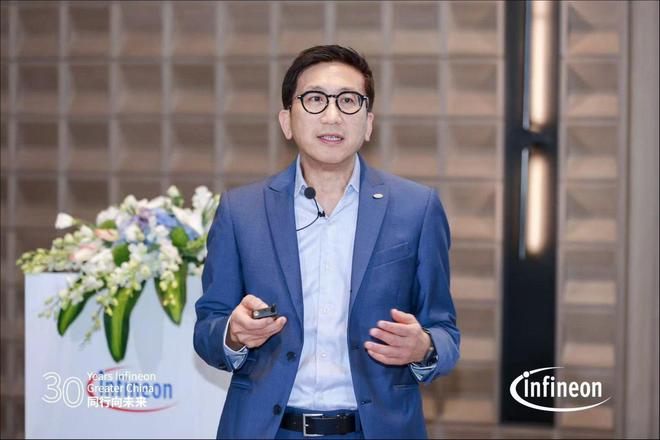
英飞凌科技全球高级副总裁及大中华区总裁、英飞凌科技消费、计算与通讯业务大中华区负责人潘大伟 2025年最火的是什么?那一定是AI与机器人。 在近日英飞凌年度媒体日活动上,英飞凌科技全球高级副总裁及大中华区总裁、英飞凌科技消费、计算 与通讯业务大中华区负责人潘大伟多次提到"AI与机器人这两个增长点将会给各个领域带来巨大的机 遇"。 潘大伟透露,AI与机器人这两个市场都非常庞大,英飞凌也面临着很多机会。2025财年,英飞凌AI相 关业务的营收预计将达到6亿欧元;2026财年,这一数字预计将达到10亿欧元。 作为一家全球半导体公司,英飞凌在华发展已有三十年,面对国内半导体产业高速发展带来的竞争,潘 大伟直言,面对这样一个比较"卷"的市场,英飞凌尽管需要面对挑战,但更多的是面临着不同的机遇, 比如在中国市场非常火热的AI、自动化,包括工业自动化、机器人等,以及很多来自家电市场的发展 机遇。 聚焦AI与机器人业务 在市场表现方面,2024年,英飞凌汽车电子的全球市场占有率为13.5%,位列榜首,中国市场占有率更 高,为13.9%。在功率分立器件和模块领域,2024年英飞凌的全球市场占有率为17.7%,连续多年保持 份额 ...


推动AI落地,最不能忽视的10个问题是什么?
Tai Mei Ti A P P· 2025-07-30 03:57
Core Insights - Nearly 60% of AI projects globally fail before implementation, highlighting significant challenges in successfully deploying AI technologies [1][2] - Only 41% of generative AI pilot projects successfully transition to production, indicating a gap between expectations and reality in AI adoption [2][5] Group 1: Challenges in AI Implementation - The current phase of AI deployment is chaotic, lacking a clear roadmap or methodology, leading organizations to struggle in adapting successful external AI applications to their own contexts [3][5] - A lack of a universally accepted ROI evaluation framework complicates value benchmarking across different enterprises and industries [5] - 85% of industrial data remains unutilized, indicating a significant barrier to unlocking AI's potential value [5] Group 2: Talent and Organizational Structure - 53% of executives identify the lack of talent capable of integrating AI with business operations as the primary obstacle to successful AI implementation [5] - Nearly 50% of companies find their existing organizational structures and decision-making processes inadequate for scaling and optimizing AI projects [5] Group 3: Upcoming Event - 2025 ITValue Summit - The 2025 ITValue Summit will take place from September 11 to 14 in Sanya, focusing on the ten critical issues surrounding AI deployment [6][10] - The summit will feature a six-hour annual presentation addressing the urgent problems of AI implementation, with insights from industry leaders and practitioners [7][10] - The event aims to create a deep, continuous, and focused environment for discussing AI challenges, moving away from fragmented information exchange [3][7]