Tai Mei Ti A P P

Search documents
「荆华密算」宣布完成数千万种子轮融资,推动高性能密态计算产业落地 | 融资首发
Tai Mei Ti A P P· 2025-10-14 02:34
Core Insights - Beijing Jinghua Misan Technology Co., Ltd. has completed a seed round financing of several tens of millions, led by Inno Venture Capital, with Guangyuan Capital serving as the incubator and exclusive financial advisor [1] - The funding will primarily be used for the development of high-performance homomorphic inference and training engines, as well as recruitment of productization talent [1] - The company has gained significant recognition, winning the national championship at the "Innovation China 2025 DEMO CHINA" competition shortly after its establishment, with its founder Lin Xiuchun receiving the prestigious "DEMO GOD" title [1][3] Industry Context - The rise of AI has created a "privacy paradox," where users are hesitant to share sensitive data with cloud-based models due to data leakage risks, despite the need for AI in privacy-demanding scenarios [2] - High-performance homomorphic computing is viewed as a potential solution to this paradox, allowing computations to be performed without decrypting data, but traditional methods suffer from performance losses of up to 1000 times or more [2][5] - There is a pressing need for a viable high-performance solution in the market to address these challenges [2] Technological Breakthrough - Jinghua Misan has achieved a significant breakthrough, reducing the performance loss of homomorphic computing from over 1000 times to approximately 3 times, making it applicable for AI computations [5] - The company’s solution is based on novel cryptographic principles and does not rely on specific hardware, ensuring compatibility with various domestic GPUs and NPUs while maintaining security [5][8] - This innovation is expected to facilitate the large-scale application of homomorphic technology in the AI sector [5] Product Launch Plans - Jinghua Misan plans to launch two core products next year: a high-performance homomorphic inference engine and a high-performance homomorphic training engine [6] - The inference engine addresses the "10 minutes of privacy" need for both individual and enterprise users, ensuring data security during transmission and computation [7] - The training engine aims to protect the rights of data-owning enterprises, allowing them to lease data assets while ensuring zero leakage, thus creating a sustainable revenue stream [7] Market Potential and Support - The company’s technology is seen as having significant commercial potential, addressing privacy concerns in AI applications and ensuring data owners' rights in data transactions [8] - Inno Venture Capital and Guangyuan Capital express strong confidence in the long-term development of AI and data circulation, highlighting Jinghua Misan's role in defining the next generation of data security and AI applications [8]


情绪价值,天价账单,首形科技卖「情感」能成吗?
Tai Mei Ti A P P· 2025-10-14 02:27
Core Viewpoint - The article discusses the rapid advancements and significant investments in Shouxing Technology, a company specializing in emotional robots, highlighting the shift in investor focus from efficiency to emotional value in the robotics industry [3][6][20]. Group 1: Investment and Financing - Shouxing Technology completed three rounds of financing between June and September 2025, with significant investments from major players like Ant Group, indicating strong market confidence in its technology [4][6]. - The funds raised are primarily aimed at iterating the emotional base model and applying it across various scenarios, showcasing a clear strategic direction [4][6]. Group 2: Emotional Value vs. Efficiency - The company represents a shift in the robotics industry, where emotional robots are seen as creating new market spaces, contrasting with traditional efficiency-focused robots [7][20]. - Investors are increasingly valuing emotional robots for their potential to establish human-robot emotional connections, which is viewed as a critical element for the next generation of human-machine interaction [6][7]. Group 3: Technological Advancements - Shouxing Technology's emotional base model integrates multimodal information, allowing robots to recognize and predict human emotions, thus overcoming the "uncanny valley" effect [8][10]. - The company has developed a bionic facial system driven by 26 micro-motors, enhancing the robot's ability to interact naturally with humans [10]. Group 4: Commercialization Challenges - Despite a reported gross margin of 61.99%, this figure is based on small-batch custom production, raising concerns about the company's long-term profitability as it scales [12][16]. - The company faces significant challenges in defining a sustainable business model, particularly in the consumer market, where emotional value is difficult to quantify [18][20]. Group 5: Market Dynamics and Competition - The emotional robot market is under pressure from virtual alternatives that offer similar emotional support at a lower cost, challenging the pricing strategy of physical robots [18][19]. - Historical examples of failed high-end tech products serve as cautionary tales for Shouxing Technology, emphasizing the need for a balance between artistic value and functional performance [15][19]. Group 6: Future Outlook - The financing success of Shouxing Technology reflects a broader market reassessment of the value of emotional robots, but the company must prove its technology can deliver sustainable returns to maintain investor confidence [20].
【生态环境周观察】中国对锂电池、稀土等实施出口管制;中科院团队在固态锂电池研究领域取得突破
Tai Mei Ti A P P· 2025-10-13 10:23
Group 1: Export Controls and Regulations - China will implement export controls on lithium batteries and rare earth materials starting November 8, 2023, requiring specific export licenses for certain items [3] - The export controls include lithium-ion batteries with a weight energy density of 300 Wh/kg or more, as well as equipment used for manufacturing these batteries [3] Group 2: Green Factory Initiatives - The Ministry of Industry and Information Technology has launched the 2025 Green Factory recommendation work, focusing on energy conservation and carbon reduction [4] - The initiative supports 53 key industries, including steel, petrochemicals, non-ferrous metals, building materials, machinery, light industry, textiles, and electronics [4] Group 3: Solid-State Battery Research - A research team from the Chinese Academy of Sciences has made breakthroughs in solid-state battery technology, addressing issues like interface impedance and ion transport efficiency [5] - The new material developed shows high ion transport capability and can switch between ion transport and storage behaviors, enhancing energy density by 86% when used in composite cathodes [5] Group 4: Strategic Partnerships - Maersk and CATL have signed a global strategic cooperation memorandum to promote low-carbon transformation in global supply chains [6] - The partnership will focus on electrifying key supply chain segments, including container fleets and port ecosystems, leveraging CATL's expertise in battery technology [6] Group 5: Hydrogen Equipment Export - Shanghai Hydrogen Technology Co., Ltd. has exported China's first MW-level PEM hydrogen production equipment to South Africa, marking a significant advancement in industrial applications [7] - The equipment is designed for photovoltaic hydrogen production and features high integration, automation, and low energy consumption [7] Group 6: Nuclear Power Developments - Chubu Electric Power Company has begun the dismantling of the No. 1 reactor at the Hamaoka Nuclear Power Plant, marking Japan's second commercial nuclear reactor to enter the actual dismantling phase this year [8] - The complete dismantling is planned to be finished by the fiscal year 2042 [8]


【产业互联网周报】《时代》公布年度发明榜单,宇树、DeepSeek上榜;AI相关债券已达1.2万亿美元,超越银行成投资级市场最大板块;AMD和OpenA...
Tai Mei Ti A P P· 2025-10-13 08:01
Group 1: AI Models and Technologies - Tencent's Hunyuan-Vision-1.5-Thinking ranks third globally and first in China in the latest LMArena visual model rankings, showcasing advanced multi-language and multi-modal understanding capabilities [2] - Alibaba's Lin Junyang announces the establishment of a small team focused on robotics and embodied intelligence, indicating a shift towards foundational intelligent agents capable of long-horizon reasoning [2] - Xiaopeng Motors announces significant breakthroughs in "physical AI," with a new model aimed at enhancing L4 autonomous driving capabilities [5] Group 2: Strategic Partnerships and Collaborations - Silicon-based Flow and China Mobile's Guizhou branch sign a strategic cooperation agreement focusing on collaborative operations and AI infrastructure development [3] - Sairus's subsidiary signs a framework agreement with Volcano Engine to collaborate on embodied intelligence technologies [3] - Worth Buying Technology and Weimeng establish a strategic partnership to develop integrated AI e-commerce services [4] Group 3: Investments and Financial Developments - AMD's CFO states that the partnership with OpenAI is expected to generate hundreds of billions in revenue, with a significant investment in AI infrastructure [12] - Didi Autonomous Driving secures 2 billion yuan in D-round financing to enhance AI research and L4 autonomous driving applications [24] - SoftBank's Graphcore plans to invest 1 billion pounds in India over the next decade to establish an AI engineering park [18] Group 4: Industry Trends and Market Insights - Morgan Stanley reports that AI-related bonds have reached $1.2 trillion, becoming the largest segment in the investment-grade market [26] - The Chinese government aims to establish over 30 new national and industry standards for cloud computing by 2027 [27] - The Ministry of Industry and Information Technology emphasizes the need for enhanced new-type information infrastructure and AI integration in manufacturing [30]





中国移动欲建国内规模最大智算基础设施,2028年底前AI投入翻倍
Tai Mei Ti A P P· 2025-10-13 04:11
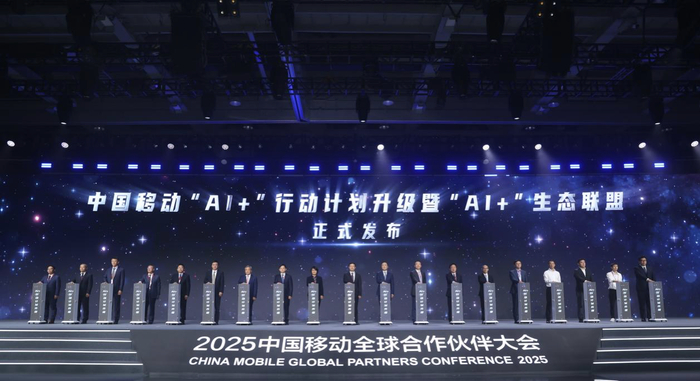
Group 1 - The competition in the large model industry has shifted from computing power, model size, and data quality to the effectiveness and efficiency of industrial ecosystem implementation [1] - The Chinese government's "AI+" action plan outlines goals for the widespread adoption of new intelligent terminals and agents, aiming for over 70% adoption by 2027 and over 90% by 2030 [1] - The plan emphasizes the need for government and state-owned enterprises to lead by example, support technology implementation, and optimize the AI innovation ecosystem [1] Group 2 - During the 2025 China Mobile Global Partner Conference, China Mobile announced an upgraded "AI+" action plan and ecosystem alliance, focusing on collaboration in computing power, models, and data to accelerate AI implementation [3] - China Mobile's chairman highlighted the importance of enhancing AI capabilities, advancing 5G-A and 6G technologies, and building a robust cloud-intelligent computing resource system [3] - The "AI+" action plan aims to create a new industrial ecosystem with a market scale of hundreds of billions, with significant investments in AI infrastructure and a target of exceeding 100 EFLOPS in national intelligent computing power by the end of 2028 [4] Group 3 - China Mobile plans to elevate its "Jiutian" model to an internationally competitive level, providing ubiquitous "model as a service" and enhancing the supply of high-quality data sets across 15 industries [5] - The company aims to achieve a user base of over 200 million for its Lingxi intelligent agent and implement over 3,000 AI+DICT projects across various sectors, including new industrialization and agriculture [5] - The focus of the large model era has shifted from technological leadership to ecosystem symbiosis and industrial implementation, with China Mobile actively building an AI ecosystem [5]

AI时代,重做ERP
Tai Mei Ti A P P· 2025-10-13 02:37
Core Insights - The ERP industry is facing significant disruption due to the rise of AI technologies, which are reshaping its structure, value, and competitive landscape [2][3][4] - ERP vendors must decide whether to adapt their existing systems or completely overhaul them to remain competitive in the AI era [2][6] ERP Challenges and Evolution - Traditional ERP systems are built on relational databases, leading to inefficiencies in handling unstructured data and a lack of agility [3][4] - The shift to cloud-native architectures and low-code/no-code platforms is seen as a solution to enhance flexibility and responsiveness to business changes [3][4] AI Integration in ERP - AI technologies are being integrated into ERP systems to enhance predictive analytics, automate process optimization, and improve data handling [4][5] - The introduction of AI is expected to transform ERP from a passive system to an active collaborator in business processes [7][8] AI-Native ERP Trends - AI-native ERP is emerging as a key trend, emphasizing an "AI-first" approach that integrates AI throughout the product architecture [6][7] - This approach allows for dynamic adaptation to changing business scenarios and enhances the overall user experience [6][7] Different AI Implementation Strategies - Major ERP players like SAP and Oracle are adopting a platform-empowerment strategy, embedding AI as an enhancement layer within existing architectures [8] - In contrast, companies like Kingdee and Yonyou focus on scenario-based AI integration, targeting specific business pain points for quick returns [9][10] Industry-Specific AI Applications - Vertical-focused ERP solutions, such as those from Dingjie and Infor, aim to integrate AI deeply into industry-specific processes, addressing unique decision-making challenges [10] - This specialization can create barriers to entry but may limit scalability across different industries [10] Future Competitive Landscape - The ability to manage and govern metadata effectively will be crucial for ERP vendors to support AI applications [12][13] - Companies that can translate management insights into actionable AI-driven decision-making will have a competitive edge [14] - The rise of domestic ERP solutions in China presents an opportunity for local vendors to capture market share as international firms adjust their strategies [14]

立项只是FIC,已经不够用了?
Tai Mei Ti A P P· 2025-10-13 02:37
Core Insights - The article emphasizes that being the "first" in the biopharmaceutical industry does not guarantee long-term commercial success, as evidenced by the rapid evolution and competition in the market [1][3] - There is a growing recognition that "Best in Class" (BIC) products, which are iterations of existing drugs, may offer better commercial viability compared to "First in Class" (FIC) products [1][5] - The article highlights the importance of strategic innovation, particularly in the context of established mechanisms and pathways, to meet clinical needs and market demands [1][7] Group 1: Innovation Dynamics - The rapid iteration of drugs is compressing their lifecycle, forcing companies to maximize the value of new drugs within limited timeframes [1][9] - The success of atorvastatin, which became a blockbuster despite being a later entrant in the statin class, illustrates that FIC advantages can diminish over time as BIC products emerge [3][4] - Companies like Eli Lilly have successfully adopted a strategy focused on "me better" drugs, which are improvements on existing therapies rather than entirely new innovations [5][6] Group 2: Market Trends - The trend towards BIC products is evident in various therapeutic areas, including oncology and autoimmune diseases, where companies are focusing on improving established targets rather than pursuing new ones [7][9] - The competitive landscape is shifting as more Chinese pharmaceutical companies leverage their advantages in speed and cost-effectiveness to innovate rapidly, challenging established players [10] - The urgency to fill gaps left by patent expirations is leading to a preference for iteratively developed products based on validated mechanisms [9][10]

中美AI芯片杀疯了!AMD叫板英伟达,寒武纪华为绑定DeepSeek绝地反击
Tai Mei Ti A P P· 2025-10-13 00:48
Group 1 - AI chips have become a crucial "trump card" in the US-China tech competition, with significant investments from companies like Nvidia and AMD towards OpenAI [2][5] - Nvidia plans to invest up to $100 billion in OpenAI over the next decade, while AMD has entered a multi-billion dollar supply agreement with OpenAI [2][5] - The domestic AI chip market in China is experiencing rapid growth, with companies like Cambricon and Huawei making significant advancements and investments [5][14] Group 2 - The US has expanded export controls on AI chips to China, which may result in Nvidia missing out on a $50 billion market opportunity [6][9] - Competition in the AI chip market is intensifying, with both foreign and domestic companies developing cost-effective AI computing products [7][19] - OpenAI has spent $7 billion on computing power in the past year, indicating a growing demand for AI infrastructure [8] Group 3 - Nvidia's market share in China has dropped from 95% to 50% over the past four years, highlighting the increasing competition from domestic firms [11][13] - The Chinese AI chip market is facing a supply-demand imbalance, with significant orders for domestic chips from major internet companies [14][19] - The DeepSeek model has significantly reduced training costs compared to leading US AI models, further enhancing the competitiveness of Chinese AI chips [10][17] Group 4 - The global semiconductor industry is projected to reach record sales of $697 billion by 2025, driven by advancements in AI and 5G technologies [8] - The demand for AI infrastructure is expected to reach $3 trillion to $4 trillion over the next five years, presenting substantial opportunities for chip manufacturers [13][18] - The Chinese AI server market is projected to exceed $140 billion by 2029, with domestic chips gaining a larger market share [19][29] Group 5 - The need for new architectures, storage solutions, and communication technologies is critical for the advancement of AI chips [20][24] - The current semiconductor manufacturing landscape is facing challenges, with rising costs and limitations in advanced process technologies [22][23] - Companies are exploring innovative solutions such as reconfigurable computing architectures to enhance AI chip performance [25][28]


【钛晨报】推动服务型制造创新发展,七部门最新部署;美方宣布将对中方加征100%关税,商务部回应;市场监管总局就对高通公司立案调查事答记者问
Tai Mei Ti A P P· 2025-10-12 23:32
【钛媒体综合】工业和信息化部、人力资源社会保障部、商务部、市场监管总局等七部门今日联合印发 《深入推动服务型制造创新发展实施方案(2025—2028年)》。 《实施方案》提出的发展目标是:到2028年,服务型制造在制造业高质量发展中的作用进一步增强。完 成20项标准制定,打造50个领军品牌,建设100个创新发展高地。 《实施方案》提出多项主要任务。其中包括:发布服务型制造关键共性技术清单,发展科技服务业、工 业设计、生产性金融等服务。加快建设统一融合、先进适用、覆盖全面、协调配套的标准体系。加强新 型信息基础设施建设,深化"5G+工业互联网"融合应用,按需布局算力基础设施,提升工业数据要素供 给,推动人工智能技术与服务型制造融合创新,提升网络和数据安全保障能力。 《实施方案》还提出,开展共享制造培育提升行动,推动建设共享制造平台、共享工厂,开放检验检测 资源共享。实现"平台接单、按工序分解、多工厂协同"。鼓励有条件的制造企业参与检验检测公共服务 平台建设,提升在线化、数字化、智能化检验检测能力。 钛媒摘声: 目前最紧迫的风险就是AI滥用,例如用AI生成虚假信息、操纵选举、制造恐慌等。为应对 这一风险,需要通过 ...
撕开铁幕裂缝:国产手术机器人的千亿逆袭
Tai Mei Ti A P P· 2025-10-12 10:47
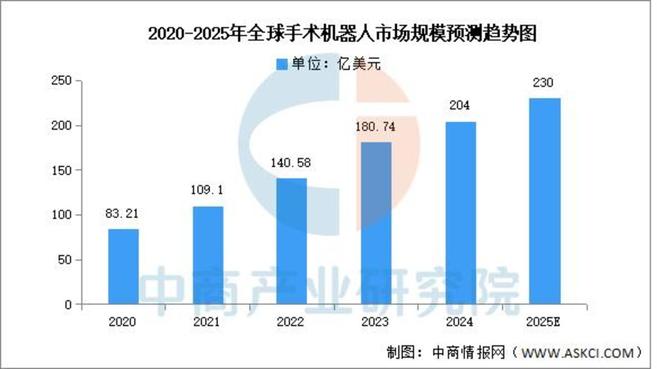
Core Insights - The article discusses the shift in the surgical robot market in China from being dominated by foreign brands to a more competitive landscape with domestic companies making significant advancements in technology and clinical applications [1][2][3]. Market Overview - The global surgical robot market is projected to grow from approximately $18.074 billion in 2023 to $20.4 billion in 2024, with a compound annual growth rate (CAGR) of 23.75% over the next five years [1]. - The Chinese surgical robot market is expected to reach approximately 9.59 billion yuan in 2024, with a CAGR of 34.5%, and is projected to grow to 11.03 billion yuan by 2025 [2]. Competitive Landscape - Currently, the domestic surgical robot market is characterized by a "foreign dominance, domestic pursuit" trend, with the top eight brands in sales being evenly split between imported and domestic brands [3]. - As of 2025, the market share of domestic brands in the surgical robot sector is approximately 29.82%, while imported brands hold 70.18% [4]. Brand Performance - Intuitive Surgical's Da Vinci system maintains a leading position in the laparoscopic surgical robot market with a market share of 53.8% as of Q2 2025, generating revenue of $2.44 billion (approximately 17.5 billion yuan) with a year-on-year growth of 21.4% [5][7]. - Domestic brands are gaining traction, with a significant increase in the number of Da Vinci robots installed in China, rising from a 42% market share to 62% [7]. Growth of Domestic Brands - From January to May 2025, the number of domestic surgical robots awarded contracts increased by 82.9%, indicating a strong competitive push against foreign brands [9]. - The domestic market for laparoscopic surgical robots has seen a domesticization rate of approximately 44.4% in Q1 2025, meaning nearly 4.5 out of every 10 new installations are from domestic brands [9]. Pricing Dynamics - Domestic surgical robots are priced significantly lower than their foreign counterparts, with prices for domestic laparoscopic robots typically ranging from 12 million to 18 million yuan, compared to the Da Vinci system's price range of 14.99 million to 24.92 million yuan [13][14]. - The price competition has intensified, with some domestic brands offering robots at prices as low as 5.38 million yuan, while the Da Vinci system averages around 23 million yuan [25]. Challenges and Opportunities - Despite rapid growth, domestic surgical robot manufacturers face challenges such as reliance on imported core components, which account for 70-80% of the total cost [17]. - The technological gap between domestic brands and international leaders like Intuitive Surgical remains significant, with the latter holding over 700 patents that create a strong barrier to entry [20]. Future Directions - To succeed, domestic surgical robot companies must innovate through technology upgrades and business model transformations, such as integrating 5G and AI technologies to enhance operational efficiency and reduce costs [38][40]. - The Chinese government has introduced supportive policies, including insurance coverage for surgical robots, which could facilitate market penetration and adoption [44][45]. Conclusion - The future of domestic surgical robots hinges on achieving technological independence, leveraging AI and 5G, and establishing sustainable business models to transition from merely entering the operating room to securing a stable presence within it [46].