理想TOP2

Search documents
对理想25年10月交付31767辆的分析
理想TOP2· 2025-11-01 04:42
Core Insights - The delivery figure of 31,767 units for October 2025 is considered low, with specific model expectations to be clarified by November 10 [1] - The i8 model faces production capacity issues due to low configuration selection rates, which are only around 2% [2] - The L series orders are underperforming, attributed to various hypotheses including competition, product iteration speed, and economic conditions [7] Group 1: Delivery and Production Issues - The October 2025 delivery number is low, with expectations for model-specific data to be available later [1] - The i8's production capacity is constrained by its low configuration selection rate, which is significantly lower than other models [2][5] - The i6 model will not be delivered with the Xinwanda battery version in 2025, further complicating production capacity issues [6] Group 2: Model Configuration and Market Dynamics - The configuration distribution for various models shows significant differences, with the i8 having a much lower low configuration rate compared to the L series [5] - The L series model distribution indicates a varied preference among consumers, with specific configurations being more popular [3] - The underperformance of L series orders may be linked to multiple factors, including competitive pressures and market conditions [7] Group 3: Future Expectations and Strategic Decisions - There is speculation that the i6's order volume may exceed expectations, suggesting potential adjustments in production strategy [6] - The company may consider a joint venture with Xinwanda for battery production to address future supply chain challenges [6] - The overall sentiment indicates a need for improved product strength and value communication to enhance market performance [7]


价值观让理想选择召回2024款MEGA以及对应的处理风格
理想TOP2· 2025-10-31 09:31
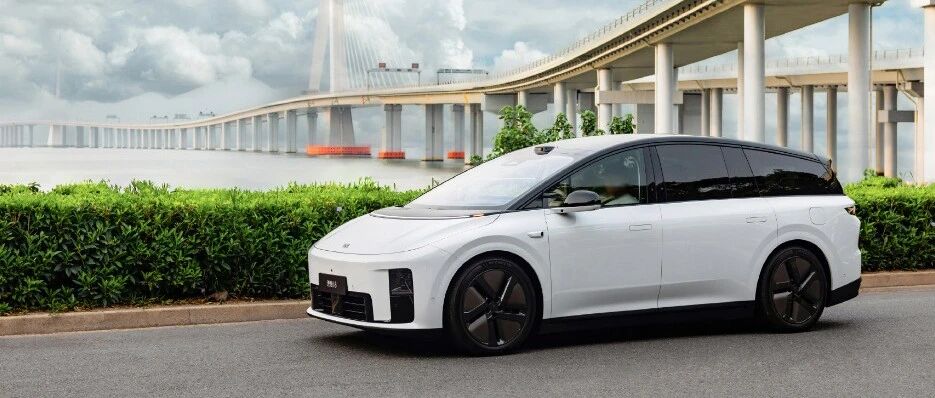
2025年10月31日理想微博表示: 与此同时,我们也立即展开内部调查与分析,并对云端预警系统记录和专项验证数据进行了复核。结 果显示,与事故车同批次的理想MEGA 2024款车辆中,由于该批次冷却液防腐性能不足,特定条件 下会导致冷却回路中动力电池和前电机控制器的冷却铝板腐蚀渗漏,导致车辆出现故障灯点亮、动力 受限及无法上电的情形,极端情况下会造成动力电池热失控,存在安全隐患。 2025年10月23日晚,上海发生了一起理想MEGA 2024款车辆起火事件,引发用户、媒体和社会的密 切关注。在此,我们首先向车主表示诚挚的歉意,并对广大用户的担忧和关切表示理解。 事件发生后,我们第一时间与车主取得联系,积极配合相关部门开展调查工作。由于事故车辆需要用 户、消防及相关机构共同完成勘验与检测, 这一过程必须遵循严格的程序,耗时较长。截至目前, 尚未形成最终的技术结论。 安全始终摆在理想汽车的首位。 本着对用户安全高度负责、对潜在隐患零容忍的原则, 我们已主动 向国家市场监督管理总局备案召回计划, 对事故车同批次所有的理想MEGA 2024款车辆进行安全检 测与更换维修。我们将全力以赴排查并消除每一处风险,确保隐患清 ...

李想聊如何看待理想被当作汽车公司估值
理想TOP2· 2025-10-30 06:34
Core Viewpoint - The company is positioned as an artificial intelligence terminal company, but its performance is still heavily reliant on vehicle sales, which raises questions about the correlation between AI development and sales performance [1][2]. Group 1: AI Development and Business Model - The company aims to achieve Level 4 autonomous driving, emphasizing that the true value of AI will be realized when users can engage in other activities during their commutes [1]. - The company is exploring the potential to generate $100 billion in revenue with a significantly reduced workforce, indicating that successful AI implementation could validate its strategic direction [2]. Group 2: Product and Technology Strategy - The company is diversifying its operations by developing operating systems, chips, and foundational models, similar to Apple's early product ecosystem, suggesting that such expansion is reasonable given its revenue scale [2]. - The company believes that investments in technology will lead to substantial cost savings, making the diversification strategy financially beneficial [2]. Group 3: Risk Factors and Organizational Capability - The company identifies three critical factors that could lead to its failure: failure to understand user needs, lack of superior products and technology, and significant organizational capability issues [3]. - These factors are interrelated, and a comprehensive assessment of all three is necessary for effective risk management and strategic planning [3].

理想詹锟ICCV'25讲世界模型从数据闭环到训练闭环PPT
理想TOP2· 2025-10-28 15:18
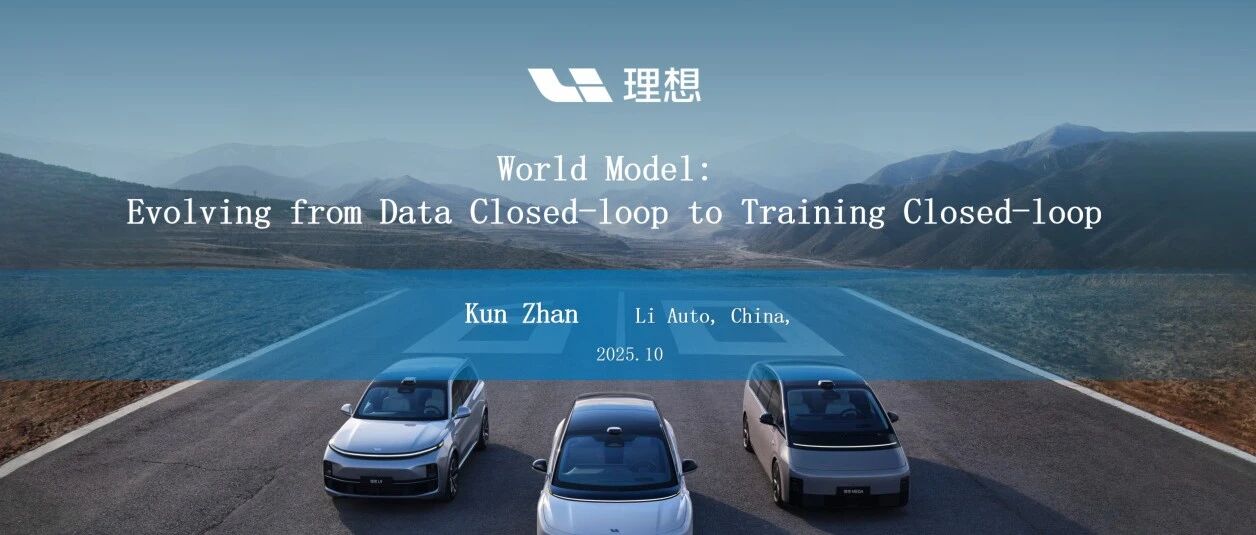
Core Insights - The article discusses the evolution of autonomous driving technology, emphasizing the transition from data closed-loop systems to training closed-loop systems, which focus on real-world utility and evaluation of progress [13][14]. Group 1: Data and Infrastructure - The company has accumulated 1.5 billion kilometers of driving data, which is crucial for training autonomous systems [8]. - A closed-loop data system is in place, utilizing over 200 trigger data points for training datasets, with clips ranging from 15 to 45 seconds [8]. - The data scaling law indicates a significant increase in the number of clips used for training, with projections showing up to 600 million clips by 2025 [10]. Group 2: Technology Stack - The key technology stack for autonomous driving includes regional-scale simulation, synthetic data, reinforcement learning, and multimodal generation [18]. - The focus is on enhancing simulation quality through advanced techniques like scene reconstruction and traffic agent modeling [18][19]. - The transition from reconstruction to generation in simulation is highlighted, utilizing diffusion models for improved scene generation [19]. Group 3: Training and Evaluation - The article emphasizes the importance of building a training closed-loop that integrates various models, including VLA (Vision-Language Alignment) and reinforcement learning [15]. - The evaluation environment and reward systems are critical for assessing the performance of autonomous driving systems [14][35]. - Interactive agents are identified as a key challenge in the training closed-loop, necessitating accurate feedback and generalization ability [38][40]. Group 4: Future Directions - The company is working on various projects aimed at enhancing both reconstruction and generation capabilities, with milestones set for 2024 and 2025 [21][24]. - The application of generated data includes scene editing, scene transfer, and scene generation, which are essential for improving the realism of simulations [27][33].
地平线HSD的确值得理想留意
理想TOP2· 2025-10-27 13:50
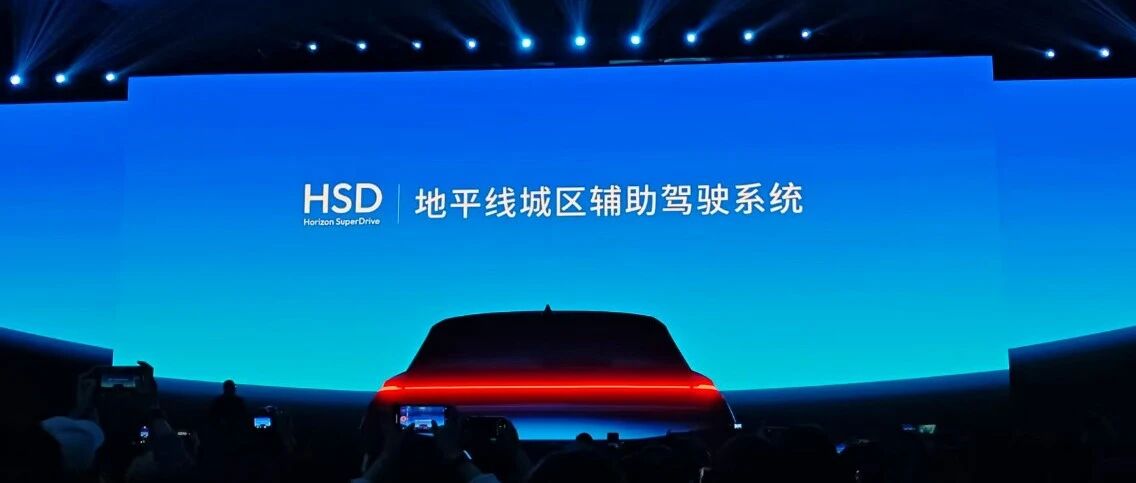
Core Viewpoint - The article discusses the comparative performance of Horizon's HSD technology and Li Auto's VLA system, highlighting the strengths and weaknesses of both in terms of autonomous driving capabilities and user experience [1][2]. Group 1: Performance Comparison - Horizon's HSD engineering vehicle demonstrated superior auxiliary driving capabilities compared to Li Auto's L7 VLA as of October 2025, although there is a possibility that mass production vehicles may not perform as well as engineering prototypes [1]. - During a 1.5-hour test drive around West Lake in Hangzhou, the HSD vehicle showed high levels of comfort and smoothness, with no need for manual speed adjustments, contrasting with the frequent adjustments required in the Li Auto VLA [2]. - Feedback from multiple testers indicated that the A model of Horizon's HSD performed well, while the B model was considered average, attributed to differences in chip computing power and collaboration between the two companies [2]. Group 2: Limitations and Challenges - Horizon's team acknowledged that the HSD system performs poorly in extreme weather, non-standard scenarios, and complex situations, indicating that it is not yet fully reliable for autonomous driving [3]. - The team also noted that the transition from auxiliary driving to full autonomy can sometimes lead to subpar experiences, particularly in scenarios requiring navigation adjustments [3]. - The integration of HUD and vehicle interfaces is crucial for the overall driving experience, with some design choices being counterintuitive, which could affect user satisfaction [3]. Group 3: Community Engagement - There is an invitation for deeper discussions regarding Li Auto's operational status and long-term fundamentals, emphasizing a focus on practical business insights rather than technical discussions [4].
理想对打破部门墙是如何思考的?
理想TOP2· 2025-10-26 10:06
Core Viewpoint - The article discusses the evolution of collaboration between departments within the company, emphasizing the transition from isolated data handling to a shared data language and co-creation, ultimately leading to a more efficient and integrated approach to problem-solving and product development [4][5][10]. Group 1: Challenges of Departmental Silos - Departmental silos create barriers that hinder effective communication and collaboration, leading to conflicts in objectives and a lack of a unified approach to problem-solving [3]. - The division of responsibilities among departments, while enhancing specialization, results in a fragmented view of issues, making it difficult to establish a cross-departmental mechanism for addressing problems [3]. Group 2: Initial Collaboration and Data Sharing - The initial collaboration between the Ideal Lianshan team and the thermal management team began with addressing poor cloud signal data quality, leading to the development of a common analytical framework [4]. - The shift from a "data request-result" model to a shared data language allowed both teams to engage in meaningful dialogue using the same data and metrics [4][5]. Group 3: Evolution of Collaborative Methods - The collaboration evolved from merely sharing data to co-creating solutions, focusing on common goals and fostering trust through transparency [5][6]. - The implementation of automated testing processes helped alleviate the burdens faced by engineers during extreme conditions, showcasing the practical benefits of this collaborative approach [5]. Group 4: Productization of Collaboration - Over three years, the company expanded its collaborative model to include supply chain and production line processes, developing AI-driven solutions to intercept quality issues at the source [9]. - The establishment of a standardized, replicable methodology for data science projects has transformed the collaboration into a sustainable and scalable productized approach [10]. Group 5: Achievements and Future Aspirations - The company has accumulated significant achievements, including 83 data science projects, 3545 warning models, and extensive monitoring capabilities across production lines and suppliers [10]. - The goal is to promote this collaborative model further, enabling seamless cooperation among individuals, AI, and across departments to address real business challenges [11].

VLA/世界模型/WA/端到端是宣传分歧, 不是技术路线分歧
理想TOP2· 2025-10-25 05:21
Core Viewpoints - Many people are unaware that there is no universally accepted definition of VLA/world model/end-to-end [1] - Leading autonomous driving companies share more commonalities in their exploration of autonomous driving than the differences portrayed online, with the core being promotional divergence rather than technical route divergence [1][2] - Language plays a significant role in autonomous driving, particularly in long reasoning, user interaction value alignment, and understanding the world [1] - Those who believe that predicting the next token is more than just a probability distribution are more likely to accept that language can understand the world [1] Group 1: VLA/World Model/End-to-End - VLA, world model, and end-to-end all require the ability to generate road video data that appears real, focusing on visual information input and ultimately controlling vehicle actions [2] - The distinction lies in the involvement of language, its depth of participation, and the architectural form it takes, with future language-related tokens potentially being LLM's text tokens or photon tokens [2] - The narrative that VLA and world models represent different technical routes is misleading, as both need to generate a world model and understand the physical world [4] Group 2: End-to-End Definitions - The definition of end-to-end is often debated, with some believing it requires a core framework where input and output are clearly defined [5] - Tesla's approach, which involves visual input and outputting trajectory rather than direct control signals, raises questions about the true nature of their end-to-end definition [5][6] - The output of precise trajectories is preferred over direct control signals, suggesting a more effective design approach [6] Group 3: Tesla's Approach and Future Directions - Tesla's historical context and style suggest that their approach to end-to-end definitions may not have a universally accepted exclusivity [7] - Long-term predictions indicate that AI model inputs and outputs may predominantly involve photons, which could significantly reduce computational loads [10] - The ideal VLA model is defined as having visual or multimodal input, language participation, and ultimately directing actions in a broad sense [11] Group 4: Understanding Language and AI Potential - There are fundamental differences in views regarding LLM, particularly concerning the understanding of predicting the next token [12] - Those who see predicting the next token as more than mere statistics are more inclined to recognize the potential of LLM and AI [12][19] - The ability to predict the next token effectively implies an understanding of the underlying reality that generates the token, which is a deeper question than it appears [18]
理想智驾是参考特斯拉, 不是跟随特斯拉已经有了很强的证据
理想TOP2· 2025-10-24 04:48
Core Viewpoint - The article discusses the evolution of Li Auto's autonomous driving technology from following Tesla to referencing Tesla, highlighting original innovations made by Li Auto that Tesla has not publicly addressed [2][3]. Group 1: Development Line of Li Auto's Autonomous Driving - Initially, Li Auto's autonomous driving was considered to be following Tesla, but after the introduction of VLM, it transitioned to a reference model, showcasing original innovations not mentioned by Tesla [2]. - The core innovation of Li Auto's VLA is at the DeepSeek MoE level, which is lower than the DeepSeek MLA innovation level [2]. - During the V10-11 period, it was acceptable to say Li Auto was following Tesla, but from V12 onwards, the extent of following has significantly decreased [2]. Group 2: Ashok's Presentation at ICCV 2025 - Ashok Elluswamy discussed Tesla's shift to a single, large end-to-end neural network that directly generates control actions from sensor data, eliminating explicit perception modules [4]. - The reasons for this shift include the difficulty of encoding human values into code, poor interface definitions between traditional perception, prediction, and planning, and the need for scalability to handle real-world complexities [5]. - Key challenges in learning from pixels to control include the curse of dimensionality, interpretability and safety guarantees, and evaluation [6]. Group 3: Solutions to Challenges - To address the curse of dimensionality, Tesla utilizes extensive data from its fleet and employs complex data collection methods to extract valuable corner case data [7]. - For interpretability, end-to-end models can be prompted to predict auxiliary outputs for debugging and safety assurance, with the main focus being on control actions [8]. - The evaluation challenge is addressed through a neural network closed-loop simulator that allows for comprehensive testing and performance assessment [10]. Group 4: Comparison with Li Auto - The article argues that Li Auto's prior announcements on natural language processing and 3D Gaussian representation predate Ashok's presentation, indicating that Li Auto is not merely following Tesla [13]. - The discussion highlights that Ashok's concepts lack groundbreaking ideas, suggesting that Li Auto's innovations are leading rather than following [13]. - The article also notes that Tesla's potential adoption of a VLA-based solution aligns with Li Auto's previously published architecture [16].

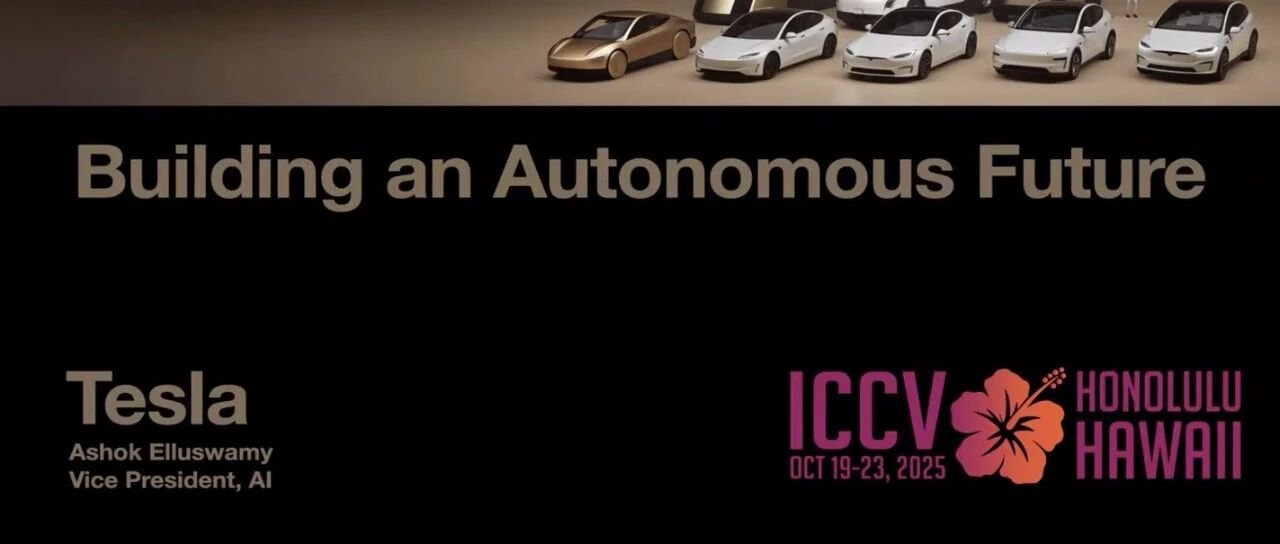
特斯拉Ashok ICCV'25讲FSD与QA|952字压缩版/完整图文/完整视频
理想TOP2· 2025-10-23 15:33
Core Viewpoint - Tesla is shifting to a single, large end-to-end neural network that directly generates control actions from pixel and sensor data, eliminating explicit perception modules [1][34]. Group 1: Reasons for Transition to End-to-End Neural Networks - Integrating human values (like driving smoothness and risk assessment) into code is extremely challenging [3]. - Poor interface definitions between traditional perception, prediction, and planning can lead to information loss [4]. - The end-to-end approach is easier to scale for handling long-tail problems in the real world [5]. - It allows for homogeneous computation with deterministic latency, which is crucial for real-time systems [6]. Group 2: Challenges in Learning "Pixel to Control" - The primary challenges include the curse of dimensionality, interpretability and safety guarantees, and evaluation [7][8][9]. - The input context can be extensive, with a 30-second window potentially reaching 2 billion tokens [10][49]. - Tesla leverages its vast fleet data to extract valuable corner case data through complex, trigger-based data collection methods [11][51][56]. Group 3: Solutions to Challenges - For the curse of dimensionality, Tesla refines its extensive driving data to ensure the right correlations are captured [51][56]. - Interpretability is addressed by prompting the end-to-end model to predict various auxiliary outputs for debugging and safety assurance [12][60]. - Evaluation challenges are tackled by creating a neural network-based world simulator that can generate consistent video streams from multiple cameras [19][79]. Group 4: Future Developments - The next step involves the Cyber Cab, a next-generation vehicle designed specifically for robotaxi services, utilizing the same neural network technology [25][83]. - The technology developed for autonomous driving is also being adapted for humanoid robots, such as Optimus [26][86].
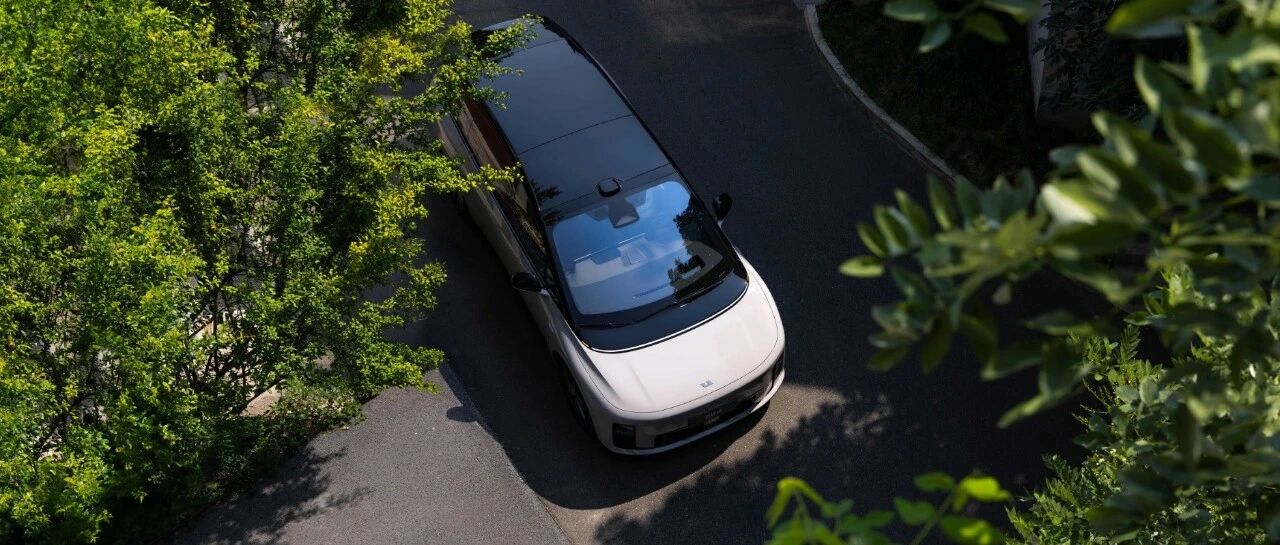
理想i8提车40天的深度测评
理想TOP2· 2025-10-23 01:33
Core Insights - The article provides a detailed user experience of a new electric vehicle (EV) over a 40-day period, focusing on various aspects such as driving, interior space, charging efficiency, and smart features [2][3]. Driving Experience - The vehicle's exterior design is described as unique, with a mix of positive and negative aspects regarding its appearance [4]. - The interior is noted for its simplicity and high-quality feel, significantly better than a previous model [6]. Charging Efficiency - The total distance driven is 1470.3 km with a total energy consumption of 234.4 kWh, resulting in an average energy consumption of 15.9 kWh/100 km [7]. - The vehicle's energy consumption aligns with the manufacturer's claims, with a theoretical range of 656 km based on the battery capacity [8]. - Charging times at different charging stations are documented, showing that 5C charging stations are faster than 4C stations by approximately 6 minutes [10][11]. Space and Comfort - The vehicle offers ample space for six passengers, with comfortable seating even in the third row [13]. - The driving experience is enhanced by the vehicle's comfort, allowing for long drives without significant fatigue [13]. Advanced Driver Assistance Systems (ADAS) - The vehicle's ADAS is evaluated as subjective, with both strengths and weaknesses noted in its performance [16]. - The system performs well in recognizing traffic conditions and executing smooth maneuvers, but has limitations in predicting side traffic and making quick decisions [19]. Smart Features - The vehicle's smart cockpit and user interface are praised for their functionality, particularly the customizable desktop feature that simplifies access to various functions [22]. - Voice recognition capabilities are highlighted as strong, accommodating different accents effectively [22]. Overall Assessment - The overall user experience exceeds expectations in terms of passenger space and comfort, with charging efficiency and ADAS being prioritized features [23].