半导体芯闻

Search documents
高功率DC-DC应用设计新方案:DFN3.3x3.3源极朝下封装技术
半导体芯闻· 2025-06-18 10:09
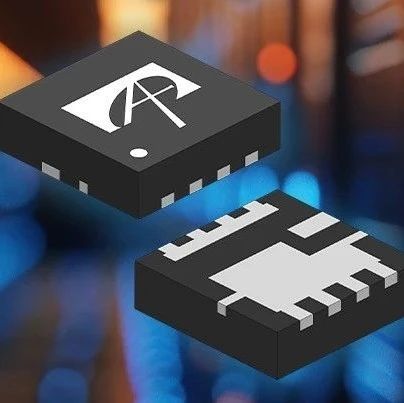
Core Viewpoint - Alpha and Omega Semiconductor Limited (AOS) has launched the AONK40202 25V MOSFET, designed for high power density applications, particularly in AI servers and data center power systems, utilizing innovative Source Down packaging technology to enhance thermal and electrical performance [2][3]. Group 1: Product Features - The AONK40202 MOSFET features a DFN3.3x3.3 Source Down packaging, which simplifies PCB layout and optimizes heat dissipation and electrical performance [2][3]. - This MOSFET can handle a continuous current of up to 319A and operates at a maximum junction temperature of 175°C, significantly improving system-level performance and power density [2]. - Compared to traditional Drain Down packaging, the Source Down design reduces power loss and enhances thermal performance, providing engineers with key advantages in optimizing PCB space utilization [3]. Group 2: Company Overview - AOS specializes in the design, development, production, and global sales of power semiconductors, including Power MOSFETs, SiC, IGBTs, and power ICs [4]. - The company has accumulated extensive intellectual property and technical expertise, enabling it to launch innovative products that meet the complex power demands of advanced electronic devices [4]. - AOS's product portfolio targets high-demand applications such as portable computers, graphics cards, data centers, AI servers, smartphones, and various power supply needs across consumer and industrial sectors [4].


HBM,三星制定新目标
半导体芯闻· 2025-06-18 10:09
Core Viewpoint - Samsung Electronics is facing significant challenges in its semiconductor business, particularly in the memory and system semiconductor sectors, with the success of the next-generation HBM (High Bandwidth Memory) commercialization being crucial for its performance [2][4]. Group 1: Semiconductor Business Strategy - Samsung Electronics is planning its semiconductor business strategy for the second half of the year, with a global strategy meeting scheduled to address the performance of various business units and discuss strategies to cope with macroeconomic uncertainties [2]. - The meeting will focus on overcoming the current downturn in the semiconductor business, which is divided into three main pillars: DRAM and NAND memory semiconductors, foundry services, and system LSI [2]. Group 2: Memory Business Challenges - The success of Samsung's memory semiconductor business in the second half of the year largely depends on the commercialization of HBM, which is essential for AI data centers [4]. - Samsung failed to deliver HBM3E products to its major client NVIDIA last year, prompting a redesign of the DRAM used in HBM3E and a renewed effort to supply NVIDIA [4]. - The company aims to start mass production of the next-generation 1c DRAM and HBM4 by the end of the year, with expectations of obtaining production approval in the third quarter [4][5]. Group 3: Foundry Business and Market Position - Samsung's foundry division is struggling to attract major clients like Apple, NVIDIA, and Qualcomm in the 3nm and smaller process nodes, leading to a decline in market share from 8.1% to 7.7% in Q1 [6]. - TSMC continues to lead in the foundry market, with plans to enter mass production of 2nm technology, while Samsung is in discussions with potential clients for its own 2nm process [6][8]. - Samsung is investing $37 billion in a new foundry in Taylor, Texas, but faces pressure to expand domestic investments due to U.S. government policies [8][9]. Group 4: Investment and Operational Challenges - The construction of the new foundry in Texas is progressing, with the first factory nearly completed, but Samsung must navigate the complexities of U.S. investment regulations and market demand [8]. - The company is cautious about expanding capacity at the Taylor facility without ensuring long-term customer demand, which could lead to significant financial risks [9].

中国汽车芯片,国产化加速
半导体芯闻· 2025-06-18 10:09
Core Viewpoint - The article discusses China's push for automotive chip localization amid increasing US-China tech competition, aiming for 100% self-developed chips by 2027 [1][3]. Group 1: Government Initiatives and Industry Response - The Chinese government, through the Ministry of Industry and Information Technology (MIIT), is leading the initiative for automotive chip localization, with a target to increase the domestic chip usage rate from 25% in 2024 to 100% by 2027 [1]. - Major Chinese automotive brands, such as Geely and BYD, have expressed willingness to prioritize the use of domestic chips, reflecting a strong commitment to this initiative [1][2]. - Despite the lack of a mandatory requirement for 100% localization, the automotive industry is actively collaborating with domestic wafer manufacturers like SMIC to explore the feasibility of domestic alternatives [1][2]. Group 2: Challenges and Strategic Adjustments - The automotive chip localization faces significant challenges, particularly in the autonomous driving sector, where there is still heavy reliance on US suppliers like Nvidia and Qualcomm [1]. - Chinese automotive manufacturers are adopting flexible strategies by using consumer-grade chips for non-core functions, which reduces costs and shortens testing and certification times to 6-9 months, compared to several years for European manufacturers [2]. - Chinese chip companies, such as SemiDrive, are beginning to expand into international markets, indicating a new phase for Chinese chip manufacturers [2]. Group 3: Market Dynamics and Future Outlook - The global demand for automotive chips is surging, making automotive chip manufacturing a crucial strategic direction for China's semiconductor industry [3]. - The rapid expansion of China's mature process nodes is creating price pressure in markets for microcontrollers and analog chips, although the overall self-sufficiency rate in semiconductors remains low, with only 17.5% of domestic demand expected to be met by 2025 [2][3]. - The shift towards automotive chip localization is not only a part of national technology strategy but also signifies a fundamental change in the global automotive supply chain, potentially altering the competitive landscape in the automotive market [3].

EUV,不再重要?
半导体芯闻· 2025-06-18 10:09
如果您希望可以时常见面,欢迎标星收藏哦~ 来源:内容来自 technews 。 外媒报导,一位英特尔(Intel) 的主管预期,未来的晶体管设计将使高阶微影曝光设备在先进半 导体制造中的重要性有所降低。此一观点,最初发表在投资研究平台Tegus 上,并在X 平台上被分 享。 Wccftech 报导指出,目前阿斯麦(ASML) 的极紫外光(EUV) 微影曝光设备是现代高阶芯片 制造的关键核心,这使得台积电等领先半导体制造企业能够在硅晶圆上蚀刻出极其微小的电路图 案。在高阶半导体制程当中,藉由微影曝光设备将复杂的设计图案转移到晶圆上。之后,这些图案 随后透过沉积(deposition) 和蚀刻(etching) 等后续技术得以固化。沉积是将材料附着到晶圆 上,而蚀刻则是选择性地移除这些材料,最终形成芯片内部的晶体管和电路。过去,EUV 微影曝 光设备因其能够转移,或列印微小电路设计的能力,在制造7 纳米及更高阶技术的芯片中扮演了举 足轻重的角色。 然 而 , 该 英 特 尔 主 管 认 为 , 随 着 晶 体 管 设 计 的 持 续 演 进 , 特 别 是 导 入 了 环 绕 闸 极 场 效 晶 体 管 (GAA ...


存储双雄,豪赌4F² DRAM
半导体芯闻· 2025-06-18 10:09
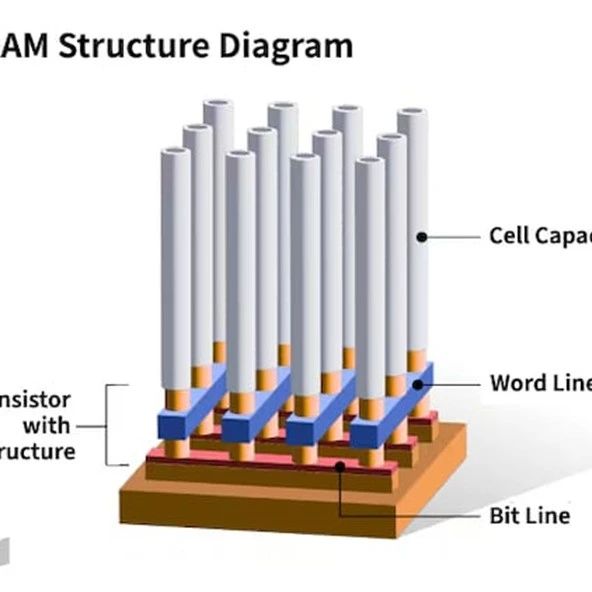
Core Viewpoint - Samsung Electronics and SK Hynix are accelerating the development of the next generation of 3D DRAM, specifically the vertical structure "4F² DRAM," aiming to complete and test early prototypes by the end of this year [1][2]. Group 1: Development and Technology - The 4F² DRAM architecture differs significantly from traditional planar DRAM, utilizing a vertical stacking method to overcome miniaturization limitations, which is expected to enhance performance, data transfer rates, and energy efficiency [1]. - Both companies plan to validate the commercial viability of the 4F² DRAM prototype before fully launching into 3D DRAM development, while Micron Technology is reportedly skipping the 4F² DRAM stage to directly enter 3D DRAM development [2]. - The transition to vertical design is seen as essential due to the increasing challenges of miniaturizing planar DRAM, with the latest products being based on the 10nm process node [5]. Group 2: Market Impact and Future Projections - The anticipated performance improvement of 4F² DRAM is nearly 50% compared to existing models, with mass production expected within the next three years if development proceeds as planned [5]. - The architectural shift is expected to reshape manufacturing processes, materials, and equipment requirements, with both companies collaborating with global semiconductor equipment manufacturers to develop advanced processes for 4F² DRAM production [6]. - The transition to vertical DRAM architecture is viewed as the only viable path forward, despite the significant challenges posed by the scale of structural changes in development and manufacturing processes [6].
芯片巨头,裁员近万人
半导体芯闻· 2025-06-18 10:09
Core Viewpoint - Intel plans to lay off 15% to 20% of its factory workforce, affecting over 8,170 to 10,890 employees globally, in response to cost challenges and financial conditions [1][2]. Group 1: Layoff Details - The layoffs are set to begin in mid-July, with the decision based on business priorities, individual assessments, and funding for ongoing projects [1]. - As of December 28, 2024, Intel's total workforce is approximately 108,900, down from about 124,800 the previous year [1]. - Intel's Oregon factory previously laid off around 3,000 employees but retained about 20,000 [1]. Group 2: Employee Impact - Approximately 50% of Intel's employees are involved in wafer fabrication, translating to about 54,450 individuals, with layoffs affecting a range of positions from factory workers to technical support [2]. - Key positions, such as engineers working on advanced process technologies, are less likely to be affected, while redundant roles due to automation may be targeted [2]. Group 3: Financial and Government Support - Intel received $7.9 billion from the CHIPS Act and $1 billion last year, but future funding is uncertain due to government reviews [3]. - Oregon has pledged $115 million in public funds, contingent on meeting future hiring and tax targets, with potential withdrawal if targets are not met [3].

618福利!全站所有IC课程6.8折封顶
半导体芯闻· 2025-06-18 10:09
朋友们,6月不囤课亏大了啊! 6月10号到20号 , E课网全站IC课程直接打6.8折!( 课表传送门→→ ) 不管是刚入门的小白,还是想涨薪的在职IC工程师,超过200多门课随你挑—— 数字设计、模拟设计、 EDA工具、基础课程、实操项目练习、高阶课程…全都有! 微信扫码领张券就可以省一笔,这波羊毛不薅真说不过去! 课多到挑花眼?这就给你盘明白! 想学数字IC的,前端设计、验证通关、后端实现、DFT测试一条龙安 排;搞模拟电路的,从设计思路到版图布局再到工艺原理,步步拆解;要用EDA工具的,三大家主流工具 企业级实战手把手教;玩点不一样的?RISC-V定制课、低功耗设计管够!还有先进工艺FinFET、BCD实 训课、Redhawk后端实训课、图像信号ISP技术课在等你!甚至TCL语言、Python这些加餐小课… 总有 一款戳中你! 零基础别慌,基础课+工具课带你轻松上路;应届生看过来,岗位技能+项目实战直接给简历贴金;在职的 老铁们,专题突破课专治工作痛点,学了就能用! 对了!E课网的 【6大就业班】也参加大促! 就业班适合零基础转行和应届生冲刺—— 数字前端、验证、后端、DFT、模拟版图、模拟设计 六大热 ...

EUV光刻机,七个难关
半导体芯闻· 2025-06-17 10:05
Core Insights - The article discusses advancements in EUV lithography technology by ASML, focusing on the efficiency and effectiveness of their systems in producing advanced chips for major companies like Nvidia, Apple, Samsung, and Intel [1][2][4]. Group 1: EUV Technology and Research - ASML has collaborated with Cymer for over 20 years to enhance EUV technology, which is crucial for producing high-performance chips with extremely fine patterns [1][2]. - ARCNL, established in collaboration with Amsterdam University, plays a significant role in researching the fundamental principles of lithography, with a budget of approximately €4 million annually [2][4]. - The primary challenge for ASML is the economic viability of their machines, which must generate profits for chip manufacturers to be marketable [4][5]. Group 2: Performance and Efficiency Improvements - The latest EUV systems can print lines with a spacing of 8 nanometers, but the rate of size reduction in chip components is slowing down, now at about 20% compared to historical rates of 70% [6][7]. - ASML is developing a new high numerical aperture (Hyper-NA) system that will improve imaging capabilities and speed, potentially allowing for clearer and faster printing of chip designs [7][8]. - The power output of EUV lithography machines is expected to increase from 500 watts to 1000 watts, significantly enhancing system efficiency [8][9]. Group 3: Optical System Enhancements - The optical systems in EUV machines are being improved to increase light utilization, with current systems reflecting about 70% of light, and efforts are underway to enhance this further [10][11]. - Research is ongoing to address issues such as bubble formation on EUV mirrors, which emerged after power increases, by adding new materials to the mirror coatings [11][12]. Group 4: Future Directions and Challenges - ASML is exploring shorter wavelengths for lithography, such as 6.7 nanometers, but faces challenges with lower reflectivity and increased error rates at these wavelengths [13][14]. - The company is also investigating alternative light sources, such as free electron lasers, but these present logistical challenges for integration into chip manufacturing environments [19][20]. - There is a growing interest from companies like Huawei in developing their own EUV lithography technology, which could impact ASML's market position [20].
Nordic Semiconductor 宣布收购 Neuton.AI
半导体芯闻· 2025-06-17 10:05
Core Viewpoint - Nordic Semiconductor has announced the acquisition of Neuton.AI's intellectual property and core technology assets, aiming to enhance its capabilities in edge AI solutions by integrating Neuton.AI's TinyML technology with Nordic's low-power wireless SoCs [1][2]. Group 1: Acquisition Details - The acquisition includes all intellectual property and certain assets of Neuton.AI, along with a team of 13 skilled engineers and data scientists [3]. - Neuton.AI's brand and platform will continue to operate during the initial integration phase to ensure uninterrupted service for existing users and partners [3]. Group 2: Technological Advancements - Neuton.AI specializes in creating ultra-small machine learning models that are typically less than 5 KB, which is ten times smaller than other methods, and can be deployed quickly on 8-bit, 16-bit, and 32-bit MCUs without manual tuning [1][2]. - The combination of Neuton.AI's advanced machine learning technology with Nordic's nRF54 series is expected to redefine the possibilities for ultra-efficient machine learning applications [2]. Group 3: Market Opportunities - The demand for edge intelligence is accelerating, with projections indicating that TinyML chip shipments will reach $5.9 billion by 2030 [2]. - Nordic aims to leverage this opportunity by providing developers with powerful and scalable AI/ML toolkits for applications such as predictive maintenance, smart health monitoring, process automation, gesture recognition, next-generation consumer wearables, and IoT devices [2].

“芯”动测试 | 电路与半导体前沿技术论坛—厦门站
半导体芯闻· 2025-06-17 10:05
Core Viewpoint - The article emphasizes the importance of digitalization and electrification in driving technological advancements, highlighting their roles in reshaping industries and presenting new challenges for engineers [4]. Group 1: Event Overview - The upcoming seminar will focus on high-speed serial transmission and power and semiconductor testing solutions, aimed at helping engineers navigate the current technological landscape [4]. - The event is scheduled for June 20, 2025, from 10:00 AM to 3:15 PM at the Xiamen Baixiang Software Park Hotel [6]. Group 2: Agenda Highlights - The agenda includes sessions on power integrity and Tek's comprehensive power testing solutions, as well as testing solutions for power management integrated circuits (PMIC) and wide bandgap (WBG) semiconductors [7]. - Other topics will cover high-speed signal design and measurement fundamentals, semiconductor physical parameter characterization, and popular high-speed bus testing solutions such as USB, Ethernet, and MIPI D-PHY [7]. Group 3: Engagement Opportunities - Attendees will have the chance to participate in a lottery for prizes during the event [6][8].