半导体芯闻

Search documents
两大半导体设备巨头,再次投资印度
半导体芯闻· 2025-06-20 10:02
Core Viewpoint - Applied Materials plans to establish a semiconductor manufacturing equipment R&D center in Bangalore, India, with an expected investment of over $2 billion [1][2]. Group 1: Applied Materials Initiatives - The R&D center, named "Semiconductor Manufacturing Innovation Center (ICSM)," aims to attract over $2 billion in investments and create high-tech opportunities while accelerating semiconductor innovation [1][2]. - The facility will involve an investment of $400 million over the next four years and is expected to create 1,500 jobs [2]. - The center will collaborate with top academic institutions like the Indian Institutes of Technology (IITs) to address high-value semiconductor challenges and foster innovation [2]. Group 2: Lam Research Developments - Lam Research will establish two units in Karnataka: an advanced R&D lab with an investment of ₹67.9 billion and a semiconductor silicon component manufacturing plant with an investment of ₹91.1 billion, creating 1,400 jobs [1][2]. Group 3: Other Semiconductor Projects - Bharat Semi Systems plans to build an integrated design manufacturing (IDM) semiconductor factory in Mysore with a total investment of ₹23.42 billion, focusing on silicon carbide and gallium nitride semiconductors, expected to create over 620 jobs [4].


Marvell,主导定制芯片市场
半导体芯闻· 2025-06-20 10:02
Core Insights - Marvell is rapidly emerging as a strong player in the application-specific integrated circuit (ASIC) market, planning to collaborate with TSMC on advanced processes below 3nm [1][2] - TSMC holds over 60% market share in the foundry market and is targeting the emerging application-specific semiconductor manufacturing market driven by AI growth [1] - Application-specific semiconductors are designed for specific functions, offering lower costs, reduced power consumption, and less overall investment compared to general-purpose GPUs, making them attractive in AI data centers, automotive, and IoT markets [1] Group 1 - Marvell's next-generation AI application-specific chips will utilize TSMC's 3nm and 2nm processes, with production of 3nm chips already underway [2] - The company aims to enhance performance through silicon photonics technology, which can increase data transmission speeds by over ten times [2] - Marvell's revenue reached $5.76 billion last year, with AI-related revenue exceeding $1.5 billion, expected to surpass $2.5 billion this year [2] Group 2 - TSMC currently provides over 70% of the production foundry for Broadcom's chips and is increasing collaboration with Marvell to capture the growing application-specific semiconductor market [3] - The application-specific semiconductor market was valued at approximately $20.29 billion last year and is projected to grow to $32.84 billion by 2031 [3] - Marvell has launched data center chips manufactured using TSMC's 3nm process and plans to expand collaboration to include 2nm processes [3] Group 3 - TSMC's global foundry market share reached 67.6% in Q1 this year, significantly outpacing competitors, while Samsung's market share was only 7.7% [4] - Samsung is also collaborating with Broadcom and Marvell on advanced processes but needs to improve yield and performance to enhance its competitive edge [4]



TMC 2025 直击:从碳化硅降本到氧化镓首秀,汽车功率半导体进入 “多技术路线混战” 时代
半导体芯闻· 2025-06-19 10:32
Core Viewpoint - The automotive industry is undergoing a significant transformation driven by new energy, intelligence, low-carbon transitions, and global supply chain restructuring, with a focus on "efficient, zero-carbon, and intelligent" systems [1] Group 1: Event Overview - The 17th International Automotive Power System Technology Conference (TMC 2025) was held in Nantong, attracting over 2,750 professionals and over 800,000 online viewers, indicating high industry interest in power technology integration and innovation [1] - Key figures from the China Society of Automotive Engineers and local government attended and spoke at the opening ceremony [1] Group 2: Technological Focus - Experts discussed various cutting-edge topics including electric drive systems, hybrid systems, drive motors, power semiconductors, and commercial vehicle power systems [2] - Power semiconductors emerged as a major focus, showcasing rapid advancements from traditional silicon-based devices to silicon carbide (SiC), gallium nitride (GaN), and the debut of gallium oxide [2] Group 3: Silicon Carbide (SiC) - SiC has seen a price drop of over 70% in the past three years, with an expected penetration rate of over 35% by 2030, reflecting the rapid maturation of the SiC supply chain [3] - The evolution of chip structures and manufacturing processes is driving down costs, with strategies like "mixed main drive" proposed to optimize efficiency and cost [3] Group 4: Gallium Nitride (GaN) - GaN technology was highlighted as a surprise at TMC, with innovations like the ultra-thin "Ice Blade" module addressing cost, energy consumption, and size challenges in hybrid systems [5] - The cost of carrying current with GaN devices is approximately 40% of that of silicon devices, potentially redefining industry standards for component selection [5] Group 5: Gallium Oxide (Ga2O3) - The introduction of gallium oxide technology showcased China's capabilities in emerging semiconductor materials, with over 90% of gallium oxide powder resources concentrated in China [6] - The compatibility of gallium oxide with existing silicon processing equipment lowers the barriers for industry adoption [6] Group 6: Packaging Technology - Packaging technology has gained prominence, shifting from a supporting role to a critical factor in device performance and reliability [7] - Innovations in embedded packaging and direct cooling technologies are providing opportunities for Chinese companies to excel in this area [8] Group 7: Industry Competition - The deep involvement of vehicle manufacturers in power semiconductor development is reshaping traditional supply chain dynamics, with companies like BYD leading in defining technology routes [9] - BYD's introduction of a 1500V system exemplifies a strategy of vertical integration, combining modules, battery cells, and charging networks [9] Group 8: Diverse Technological Paths - The conference highlighted a diversification in technological approaches, with multiple semiconductor technologies coexisting, including silicon, SiC, GaN, and Ga2O3 [10] - Application-specific device selection is becoming a new optimization strategy, reflecting the complexity of system-level enhancements [10] Group 9: Challenges and Opportunities - Chinese companies have demonstrated significant technical strength in power semiconductors, but challenges remain in high-end packaging, system integration, and establishing industry standards [11] - The rapid growth of the electric vehicle market presents a substantial opportunity for power semiconductors, with China positioned as a market leader [12] Group 10: Future Directions - The TMC conference underscored the importance of integrating technology innovation with ecosystem building and supply chain control as key factors for success in the semiconductor industry [13] - The future of China's power semiconductor industry hinges on leveraging market advantages to enhance technological capabilities and build a robust industrial ecosystem [12][14]


特斯拉FSD新芯片,花落台积电
半导体芯闻· 2025-06-19 10:32
Group 1 - The next-generation FSD chip AI5/HW5 from Tesla has entered mass production, with TSMC as the primary foundry [1] - The AI5/HW5 chip boasts a computing performance of 2,000 to 2,500 TOPS, which is five times that of the current HW4 chip at approximately 500 TOPS [1] - The AI5/HW5 chip will utilize a 3nm N3P process, with Samsung as a backup foundry, and is expected to be used in mass production vehicles by 2026 [1] Group 2 - Tesla plans to enhance the FSD hardware suite with upgraded lenses, including weather-resistant lenses from Samsung that can melt ice and snow in one minute [2] - A pilot program for Robotaxi was launched in Austin, with the first 12 Model Y vehicles equipped with HW4 hardware for testing autonomous driving [2]


0.7nm芯片会用的晶体管
半导体芯闻· 2025-06-19 10:32
Core Viewpoint - Leading foundries and IDM manufacturers are advancing towards the production of 2nm (or equivalent) technology nodes, with GAA (Gate-All-Around) nanosheet transistors playing a crucial role in this transition [1][2]. Group 1: GAA Nanosheet Technology - GAA nanosheet devices are designed to further reduce the size of SRAM and logic standard cells by vertically stacking two or more nanosheet-like conductive channels [1]. - The configuration allows designers to minimize the height of logic standard cells while enhancing gate control over the channel, even at shorter channel lengths [1]. - GAA nanosheet technology is expected to last at least three generations before transitioning to CFET (Complementary FET) technology, with the A10 node anticipated to have a cell height as low as 90nm [2]. Group 2: Forksheet Device Architecture - Forksheet device architecture, introduced by imec, offers greater scalability compared to conventional GAA nanosheet technology [4][5]. - The inner wall forksheet structure allows for tighter n-to-p spacing, enabling further reduction in cell area while still providing performance improvements [5]. - imec demonstrated the manufacturability of the 300mm inner wall forksheet process flow, confirming its potential to extend the roadmap for logic and SRAM nanosheets to the A10 node [6]. Group 3: Challenges and Improvements - Despite successful hardware demonstrations, concerns regarding the manufacturability of the inner wall forksheet architecture led imec to reconsider its design [6][8]. - The outer wall forksheet design, presented at VLSI 2025, aims to reduce process complexity while maintaining performance and area scalability [9][11]. - The outer wall forksheet allows for a thicker dielectric wall (up to 15nm) without affecting the 90nm cell height, simplifying the integration process [11][16]. Group 4: Performance and Power Advantages - The outer wall forksheet is expected to provide significant advantages over the inner wall design in five key areas, including improved gate control and reduced parasitic capacitance [14][18]. - A benchmark study indicated that the area of SRAM cells based on the outer wall forksheet is reduced by 22% compared to A14 nanosheet architecture [25]. - The ability to achieve full channel strain in the outer wall forksheet design is anticipated to enhance performance, particularly in driving current [19][25]. Group 5: Future Outlook - imec is currently exploring the compatibility of the outer wall forksheet design with CFET architecture and the potential PPA benefits that could arise from this innovative scaling booster [27].
SK海力士,再度领先
半导体芯闻· 2025-06-19 10:32
外媒报导,SK 海力士近期再次在高频宽记忆体(HBM)市场中取得领先地位,成为首家向英伟达 (NVIDIA) 供应下一代HBM4 模组的厂商。这些记忆体将用于英伟达的Rubin AI GPU 的样品测 试。这代表着SK 海力士在HBM 领域的持续主导地位,并在与美光和三星的竞争中脱颖而出。 Wccftech 报导表示,因为预计HBM4 在未来的AI 市场中扮演着至关重要的角色。其中,它的一 大创新在于首次将记忆体和逻辑元件整合到单一封装之中,这对于提升AI 工作执行的处理能力和 效率进一步提升。 SK 海力士不仅领先供应,更已公开展示其HBM4 技术的显著进展,包括全球 首创的16 层堆叠HBM4 技术、达成了高达2.0 TB/s 的频宽,这对于处理大量资料的AI 应用至关 重要。另外还整合了晶圆代工龙头台积电的逻辑芯片,可带来更高的性能和效率。 而除了16 层堆叠的HBM4 之外,SK 海力士也已开始提供全球首款12 层堆叠HBM4 样品,这些样 品也具备高达36 GB 的记忆体容量与2 TB/s 的资料传输速率,进一步巩固了其在HBM4 技术领域 的领先地位。 根据韩国媒体DealSite 的报导,SK ...



芯片的大难题
半导体芯闻· 2025-06-19 10:32
Core Viewpoint - The semiconductor industry faces unprecedented challenges in power delivery and thermal management due to the increasing complexity and power demands of AI workloads, necessitating innovative design and manufacturing approaches [1][2][20]. Power Delivery Challenges - AI-specific chips are pushing transistor density to new limits, leading to significant power demands, with NVIDIA's Blackwell consuming between 700W to 1400W [1]. - Dynamic power consumption, primarily influenced by data movement between memory and computation units, dominates power usage, creating design constraints from memory hierarchy decisions to power delivery networks [1][2]. Thermal Management Issues - The transition to 3D stacking and localized heat generation complicates thermal dissipation, increasing challenges like electromigration and localized hotspots [2]. - Advanced packaging techniques are essential for effective thermal management, with materials like indium alloy TIM being effective due to their high thermal conductivity [8]. Vertical Power Delivery Innovations - The semiconductor industry is exploring vertical power delivery techniques to overcome limitations of traditional horizontal power delivery, which suffers from significant power loss and overheating [4]. - By embedding power rails directly beneath chips, vertical delivery reduces voltage drop and noise while freeing up space for critical signal transmission [4][5]. Material Innovations - Molybdenum is emerging as a key alternative to tungsten and copper for interconnects, offering lower contact resistance and better performance in densely packed chip designs [11][12]. - The shift to molybdenum aligns with industry efforts to mitigate electromigration risks associated with high current densities in AI workloads [12][13]. Backside Power Delivery Networks (BSPDN) - BSPDN represents a transformative shift in chip architecture, separating power and signal routing to enhance efficiency and layout flexibility [15][16]. - This approach allows for dual-side cooling strategies, although it introduces new challenges in terms of mechanical reliability and yield optimization [16]. System-Level Design Optimization - The integration of power delivery, thermal distribution, and mechanical stress modeling is becoming crucial for next-generation AI chips, requiring collaboration across design teams [18][19]. - Enhancing power delivery efficiency directly correlates with reduced heat generation and cooling costs, which is vital for large-scale data centers [20]. Conclusion - The future of AI chip power delivery will require deep interdisciplinary collaboration, with innovations like BSPDN, molybdenum interconnects, and vertical integration paving the way for improved performance and scalability [20].

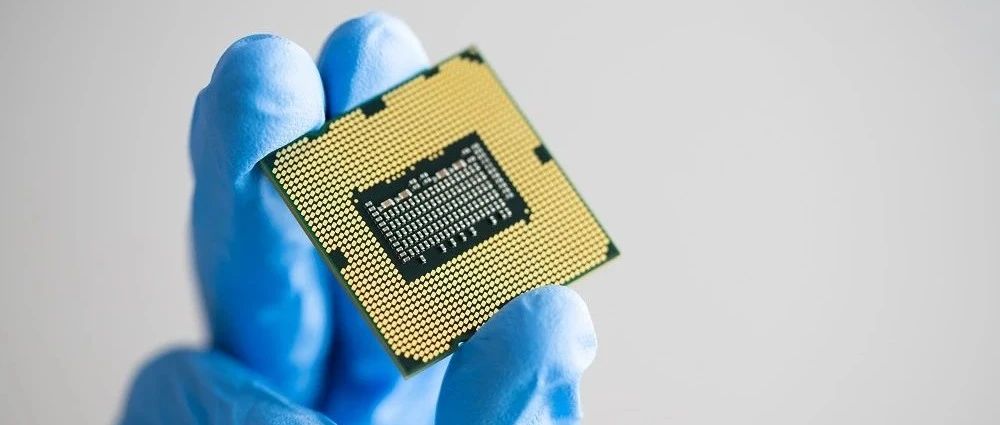
苹果高管:AI将改变芯片设计
半导体芯闻· 2025-06-19 10:32
Core Viewpoint - Apple aims to leverage generative artificial intelligence to accelerate the design of its custom chips, as stated by its top hardware technology executive [1][2]. Group 1: Chip Design and Technology - Apple has learned the importance of using advanced tools for chip design, including the latest electronic design automation (EDA) software from leading companies like Cadence Design Systems and Synopsys [1][2]. - Generative AI technology has the potential to significantly enhance productivity by completing more design work in a shorter time frame [2]. Group 2: Strategic Decisions - The transition of Mac computers from Intel chips to Apple’s own silicon was a significant gamble for the company, undertaken without a backup plan, demonstrating a bold approach to innovation [2].


事关英伟达芯片,马来西亚发起调查
半导体芯闻· 2025-06-19 10:32
Core Viewpoint - The Malaysian government is verifying reports regarding a Chinese company using servers equipped with NVIDIA AI chips in Malaysia to train large language models, while ensuring compliance with domestic laws and international trade regulations [1][2]. Group 1: Government Actions and Regulations - The Ministry of Investment, Trade and Industry of Malaysia is currently checking whether the use of NVIDIA chips violates any local laws or regulations [1]. - The ministry stated that servers using NVIDIA or AI chips are not classified as controlled items under the 2010 Strategic Trade Act of Malaysia [1]. - Malaysia opposes any evasion of export controls or illegal trade activities and will continue to enforce international trade regulations [1]. Group 2: Context of AI Chip Usage - A Chinese AI company reportedly rented 300 servers equipped with advanced NVIDIA chips in a Malaysian data center to input data for training AI models, which were then brought back to China [2]. - Since 2022, the U.S. has increased restrictions on the export of advanced AI chips to China, citing national security concerns [2]. - The Biden administration had previously proposed limiting the sale of advanced chips to Southeast Asia and the Middle East to prevent Chinese companies from acquiring these chips through third parties [2].

三星痛失芯片大客户?
半导体芯闻· 2025-06-19 10:32
Group 1 - Google's recent decision to shift its Tensor chip production from Samsung to TSMC represents a significant blow to Samsung's foundry business, prompting internal discussions on addressing fundamental issues within its semiconductor operations [1] - Samsung's foundry division is undergoing internal inspections following Google's transition, which is expected to last until the Pixel 14 series, indicating concerns over Samsung's mobile division's security [1] - The loss of major clients like Qualcomm and NVIDIA, alongside Google's departure, has led to a decline in Samsung's semiconductor market share from 8.1% to 7.7%, while TSMC's market share has risen to 67.6% [2] Group 2 - Despite investing billions over the past five years, Samsung's goal to surpass TSMC by 2030 appears increasingly unattainable, with TSMC continuing to gain market share [2] - Samsung is collaborating with Synopsys to improve yield rates and is diversifying its focus beyond AI and mobile chips to include automotive and robotics applications [2] - The success of Samsung's first 2nm chip, Exynos 2600, is critical for regaining lost clients, including NVIDIA and Qualcomm, provided it avoids overheating and performance issues [2]