半导体芯闻

Search documents
又一个芯片巨头,要抢HBM,SK海力再创新高
半导体芯闻· 2025-06-17 10:05
Core Viewpoint - AWS is becoming a key customer for SK Hynix's HBM business, as the company invests heavily in global AI data centers and seeks to strengthen its collaboration with SK Group [1][2]. Group 1: AWS Investments - AWS plans to invest AUD 20 billion (approximately KRW 17.6 trillion) to expand its data centers in Australia from this year until 2029 [1]. - AWS has also committed to investing USD 10 billion in North Carolina, USD 20 billion in Pennsylvania, and USD 5 billion in Taiwan [1]. - This year, AWS's investment in AI infrastructure is expected to reach USD 100 billion, representing a 20% increase compared to the previous year [1]. Group 2: Collaboration with SK Group - AWS is set to collaborate with SK Group to build a large AI data center in the Ulsan National Industrial Complex, targeting an operational capacity of 103 MW by 2029, with an investment of USD 4 billion [2]. - SK Hynix is preparing to supply 12-layer HBM3E products to AWS, responding to the growing interest in HBM as AWS expands its AI semiconductor production [4]. Group 3: HBM Demand and Technology - The demand for HBM is expected to rise due to AWS's investments in AI data centers, as HBM significantly enhances data processing performance compared to existing DRAM [2]. - AWS is projected to account for 7% of the total demand for Nvidia's GB200 and GB300 chips this year [2]. - AWS is designing its own machine learning chip, "Trainium," which incorporates HBM, with the latest version, "Trainium 2," featuring HBM3 and HBM3E products [2]. Group 4: Upcoming Chip Developments - AWS plans to release the next-generation chip "Trainium 3" by the end of this year or next year, which will double the computing performance and improve energy efficiency by approximately 40%, with a total memory capacity of 144 GB [3].


华为中芯被拉入黑名单,外交部回应
半导体芯闻· 2025-06-17 10:05
如果您希望可以时常见面,欢迎标星收藏哦~ 来源:内容来自半导体芯闻综合 。 6月17日,外交部发言人郭嘉昆主持例行记者会。 有记者提问,有报道称,台湾当局迫于美国的压力,已将华为和中芯国际(SMIC)列入台湾版的 实体名单。中方对此有何回应? 点这里加关注,锁定更多原创内容 *免责声明:文章内容系作者个人观点,半导体芯闻转载仅为了传达一种不同的观点,不代表半导体芯闻对该 观点赞同或支持,如果有任何异议,欢迎联系我们。 | | 推荐阅读 | | --- | --- | | 10万亿,投向半导体 | | | 芯片巨头,市值大跌 | | | 黄仁勋:HBM是个技术奇迹 Jim Keller:RISC-V一定会胜出 | | 全球市值最高的10家芯片公司 郭嘉昆表示,中方一贯反对美方将科技和经贸问题政治化,泛化国家安全概念,滥用出口管制和长 臂管辖,对中国进行恶意封锁打压,民进党当局"跪美媚美",只会害台毁台。 华为中芯国际被加入黑名单 台湾经济部国际贸易署週日(6月15日)发声明证实,上週二(10日)把601个实体纳入了出口管 制名单,其中包含华为、中芯等中资企业。 声明指出,若台湾企业欲出口给实体名单内的企业,应事 ...

三巨头竞逐面板级封装
半导体芯闻· 2025-06-17 10:05
Core Viewpoint - FOPLP (Fan-Out Panel Level Packaging) is gaining attention as an advanced packaging technology, with major competitors like TSMC, Powertech, and ASE adopting distinct names for their versions to differentiate in the market [1][2]. Group 1: FOPLP Technology Overview - FOPLP technology has been promoted by domestic packaging and testing companies for about 9 years, but significant end-user applications have been limited due to initial yield issues and a cautious client attitude [1]. - The technology's initial applications were primarily in RF IC and PMIC sectors, but there is a recent shift towards consumer electronics and AI applications, spurred by TSMC's leadership [1]. Group 2: Company Developments - Powertech has officially named its FOPLP technology PiFO, having achieved mass production as early as 2019, and claims to be the only company with large-scale FOPLP production capabilities [2]. - TSMC plans to establish its first CoPoS (Chip-on-Panel-on-Substrate) experimental line by 2026, with large-scale production expected between late 2028 and 2029, targeting NVIDIA as its first customer [2]. - ASE is utilizing the previously announced FoCoS name for its panel-level packaging technology, with a current production line for 300x300 panel-level packaging aimed at power management and automotive applications [2]. Group 3: Market Outlook - Industry experts believe that the focus of TSMC, Powertech, and ASE on high-end product applications in panel-level packaging will be crucial for the success of FOPLP technology [3]. - The future success of FOPLP as a next-generation advanced packaging solution will depend on resolving yield issues related to chip manufacturers' product positioning and warpage, as well as ensuring overall performance and cost-effectiveness for clients [3].
本田也要投资晶圆厂
半导体芯闻· 2025-06-17 10:05
Core Viewpoint - Honda plans to invest in Rapidus, a semiconductor startup aimed at revitalizing Japan's semiconductor industry, signaling a strategic shift in the automotive semiconductor landscape [1][2]. Group 1: Strategic Considerations for Honda - Honda's partnership with Rapidus is driven by three strategic considerations, including the need for supply chain stability and the potential for self-sufficiency in semiconductor production [1]. - The automotive industry is increasingly reliant on semiconductors, with their value in vehicles rising annually, prompting manufacturers to strengthen their control over chip production [1][2]. Group 2: Challenges and Opportunities for Rapidus - Rapidus aims to develop 2nm GAA technology, bypassing mature processes like 28nm, which reflects both technological ambition and governmental support for Japan's semiconductor industry [2][3]. - The current stage of Rapidus is still in prototype development, with significant technical and manufacturing challenges ahead before achieving mass production by 2027 [2][3]. Group 3: Implications for the Japanese Automotive and Semiconductor Ecosystem - If Rapidus successfully achieves stable mass production of its 2nm technology, it could reduce Honda's reliance on overseas foundries and enhance its competitive edge in specific applications like autonomous driving and edge computing [3]. - The collaboration between Honda and Rapidus represents a shift from policy-driven initiatives to industry-driven demands, potentially establishing a robust domestic semiconductor ecosystem in Japan [2][3].

美国芯片,减免30%税
半导体芯闻· 2025-06-17 10:05
Core Viewpoint - The article discusses the proposed increase in investment tax credits for semiconductor manufacturers from 25% to 30% as part of a Senate tax bill aimed at encouraging spending on new facilities before the credits expire at the end of 2026 [1]. Group 1: Tax Credit Proposal - The Senate tax bill aims to temporarily raise the investment tax credit for semiconductor manufacturers to 30% from the current 25% [1]. - This measure is intended to incentivize chip manufacturers to increase their spending on new facilities before the tax credits expire [1]. - The tax credit is a significant component of the CHIPS and Science Act signed by President Biden in 2022, which also includes $39 billion in grants and up to $75 billion in loans [1]. Group 2: Beneficiaries and Legislative Process - Major beneficiaries of the CHIPS Act include Intel, TSMC, Samsung, and Micron, with tax credits being a crucial part of their incentive packages [1]. - The tax bill is expected to be submitted to President Trump before the July 4 holiday, requiring modifications in the Senate and approval in the House to become law [1]. Group 3: Trump Administration's Actions - As part of efforts to repeal the CHIPS Act, former President Trump has urged lawmakers to eliminate the act, raising concerns about funding for Intel's investments in Ohio [2]. - U.S. Commerce Secretary Howard Lutnick indicated that the government is reviewing certain semiconductor subsidies from the Biden administration, suggesting that some may be revoked [2]. - Lutnick highlighted that TSMC has increased its initial U.S. investment commitment from $65 billion to $165 billion, indicating a significant shift in investment strategy [2].



光掩模的关键挑战与突破方向
半导体芯闻· 2025-06-16 10:13
Core Viewpoint - The article discusses the evolving challenges and innovations in photomask manufacturing, particularly focusing on the shift towards curved mask designs and the implications for lithography technology [2][3][4]. Group 1: Innovations in Photomask Technology - The use of curved masks is identified as a significant innovation that enhances the capabilities of current writing technologies, allowing for more complex shapes that were previously unattainable [3]. - Advanced computational tools, such as Mask Process Correction (MPC) and high-level simulations, are increasingly utilized in the mask design process, reducing the need for expensive experiments and pushing technological boundaries [3][5]. - The transition to curved mask designs is seen as a way to improve device performance without the need for new exposure equipment, even in older wafer fabs [3][4]. Group 2: Challenges in Implementation - The industry faces substantial infrastructure challenges when transitioning from rectangular to curved designs, as the complexity of defining and adjusting curved shapes is significantly higher [6][7]. - Measurement techniques need to evolve to accommodate the full 2D profiles of curved masks, requiring higher resolution and faster measurement tools [9]. - The current reliance on CPU-based workflows in many mask shops limits the adoption of GPU-based processes that are essential for curved mask technology [7][8]. Group 3: EUV Masking Issues - EUV masks face durability challenges, requiring frequent replacements that add to costs and complexity, with some needing replacement weekly [10][11]. - The performance of EUV protective films is currently suboptimal, leading to significant wafer throughput losses due to energy loss during the masking process [10][12]. - The balance between using protective films and the associated costs is contingent on the specific application, with larger, high-value chips benefiting more from protective measures compared to smaller, redundant designs [11][13]. Group 4: Future Directions - The industry is exploring alternative materials, such as carbon nanotube films, to address the limitations of current DGL films used in EUV applications, although these alternatives still face challenges [14]. - Continuous research and development are necessary to improve the performance and durability of EUV masks, as well as to streamline the processes involved in their maintenance and replacement [12][14].
三星发力玻璃技术
半导体芯闻· 2025-06-16 10:13
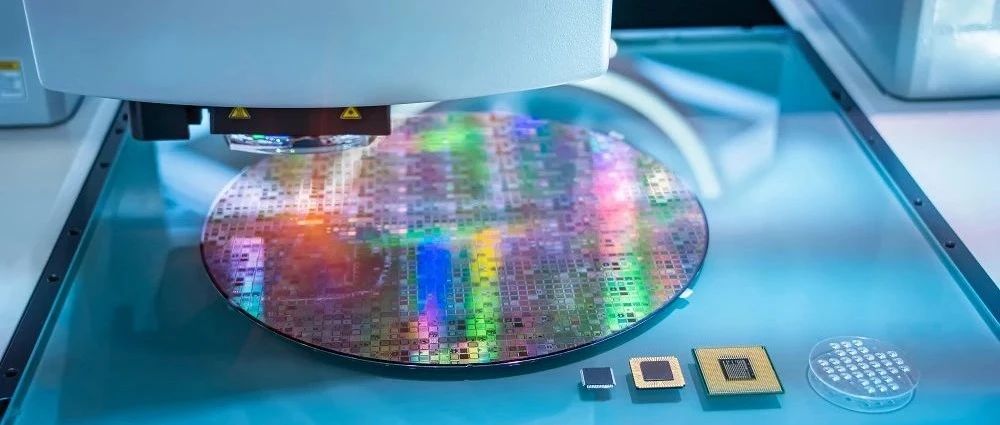
Core Viewpoint - Samsung Electronics is developing a new glass substrate aimed at enhancing advanced semiconductor packaging, with a significant breakthrough expected by 2028 to meet the growing demand for AI chips [2][6]. Group 1: AI Chip Glass Interlayer Advances - Samsung is accelerating the development of prototypes using glass substrates as interlayers for AI chips, moving away from traditional 2.5D packaging layouts that utilize silicon interlayers [4]. - The glass interlayer allows for more advanced 3D stacking, embedding chips within the substrate and stacking additional chips above, enhancing area, signal integrity, power efficiency, and thermal management [4]. - Samsung focuses on smaller units under 100×100 mm, contrasting with competitors like Intel and AppSolix, which use larger 510×510 mm glass panels [4]. Group 2: Competitive Landscape in Semiconductor Manufacturing - TSMC is also working on glass substrates, developing 300×300 mm glass panels on a trial line in Taiwan, with plans to start production by 2027 using its fan-out panel-level packaging (FOPLP) technology [6]. - The competition indicates a significant shift in semiconductor manufacturing practices, with both Samsung and TSMC leading the trend towards glass-based solutions [6]. Group 3: Future Impact on AI Chip Technology - The transition to glass substrates may profoundly impact the AI chip market, enabling manufacturers to produce more efficient and cost-effective chips to meet the growing demand for AI technology [8]. - Advancements in glass substrate technology are expected to usher in a new era of semiconductor design prioritizing performance and efficiency, benefiting various industries from consumer electronics to automotive and healthcare [8]. - Continuous innovation from Samsung and TSMC is set to transform the semiconductor landscape, with glass substrates playing a crucial role in the future of AI chip technology [8].

马斯克:摄像头和激光雷达不能共用!
半导体芯闻· 2025-06-16 10:13
Core Viewpoint - The optimal solution for intelligent driving, according to Elon Musk, combines artificial intelligence, digital neural networks, and cameras, rather than relying on laser radar technology [2][6]. Group 1: Perspectives on Sensor Technology - Musk emphasizes that the global road systems are designed for biological neural networks and vision, not for laser-based systems, which can lead to conflicts between different sensor types [6]. - In contrast, domestic companies like Huawei advocate for the necessity of laser radar, citing safety concerns and limitations of camera-only systems, especially in adverse weather conditions [6][11]. - Huawei's executive, Yu Chengdong, argues that life is invaluable, and thus, safety features like laser radar are essential for reliable vehicle operation [7]. - Xiaopeng Motors supports a vision-based approach, with their senior director stating that the idea of laser radar being superior for long-distance detection is misleading [8][9]. Group 2: Limitations of Laser Radar - Laser radar, as an active sensor, has several drawbacks, including reduced signal strength and point cloud density at longer distances, making it less effective for identifying distant objects [10]. - The technology is also sensitive to weather conditions, with laser radar struggling in rain and fog, while millimeter-wave radar performs better in such scenarios [11]. - Overall, laser radar is characterized as having low information density and being prone to interference, making it unsuitable as the primary sensor for advanced driving systems [12].


ADI全面布局人形机器人
半导体芯闻· 2025-06-16 10:13
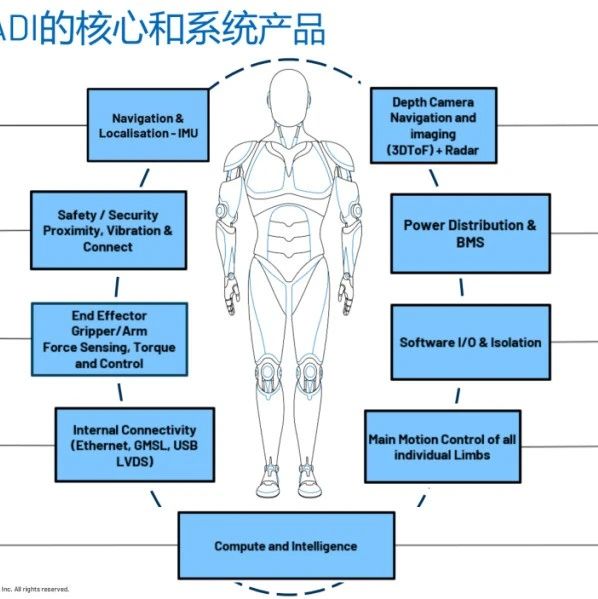
Core Viewpoint - The rise of humanoid robots has gained significant attention following a performance at a Spring Festival gala, highlighting advancements in embodied intelligence and the need for improved hardware, particularly chips, to overcome existing challenges [1] Group 1: Humanoid Robot Development - Humanoid robots are increasingly compared to upright vehicles, requiring perception systems, high-performance chips, and effective power management for extended operation [2] - The execution capabilities of humanoid robots differ from cars, as they must also manipulate objects with dexterity, particularly through their hands [2] Group 2: ADI's Role in Humanoid Robotics - ADI has been involved in the robotics market for years and is now accelerating its offerings, including traditional chips and subsystems to facilitate product design and implementation [4] - ADI provides a range of products for humanoid robots, including sensors, internal connection systems, motor control modules, and power management solutions [5] Group 3: Connection Technologies - GMSL (Gigabit Multimedia Serial Link) is highlighted as a key technology for internal connections in humanoid robots, offering efficient data transmission and improved performance [9] - ADI's GMSL solution supports real-time transmission of video, sensor data, and power, making it suitable for the complex requirements of humanoid robots [10] Group 4: Isolation and Control Solutions - ADI offers isolation devices to protect sensitive electronics in humanoid robots from electrical interference, ensuring reliable operation in challenging environments [10] - The ADMT4000 solution provides precise joint control for robotic arms, enabling memory of positions even after power loss, thus enhancing operational reliability [12][14] Group 5: Challenges in Dexterous Manipulation - The development of dexterous hands, referred to as "smart hands," is a critical challenge in the humanoid robotics industry, requiring advanced sensors and AI algorithms [15] - Simplifying internal connections within these dexterous hands is also a significant focus for developers [15]

半导体设备市场,风云突变
半导体芯闻· 2025-06-16 10:13
Core Viewpoint - The global semiconductor equipment market is projected to grow by 21% year-on-year in Q1 2025, reaching $32.05 billion, despite a 5% quarter-on-quarter decline, indicating resilience in the industry amidst geopolitical uncertainties and supply chain adjustments [1][35]. Regional Summaries China Mainland - In Q1 2025, the revenue from the Chinese mainland reached $10.26 billion, maintaining its position as the largest single market globally, but showing a 14% quarter-on-quarter and 18% year-on-year decline, reflecting a "double drop" trend [4][5]. - The market share of the Chinese mainland in the overall semiconductor equipment sales shrank from 47% in the same period last year to 32% [5]. South Korea - South Korea's semiconductor equipment market saw a robust performance in Q1 2025, with revenues of $7.69 billion, marking a 24% quarter-on-quarter and 48% year-on-year increase, driven by a recovery in memory chips and significant investments from major manufacturers [8][10]. - The Korean government has implemented the "K-Semiconductor Strategy," providing substantial tax incentives and subsidies to boost the industry [9]. Taiwan - Taiwan's semiconductor equipment market experienced a remarkable growth of 203% year-on-year in Q1 2025, reaching $7.09 billion, fueled by expansion plans from leading companies like TSMC and UMC [11][14]. - TSMC's advanced process development and capacity expansion significantly contributed to the surge in equipment demand, with a focus on cutting-edge technologies [11][12]. North America - North America's equipment market revenue reached $2.93 billion in Q1 2025, reflecting a 41% quarter-on-quarter decline but a 55% year-on-year increase, indicating a "pulse-like" expansion pattern influenced by concentrated procurement in the previous quarter [15][16]. - The CHIPS Act's funding and Intel's production ramp-up are expected to support continued growth in the region [16]. Japan - Japan's semiconductor equipment market saw a 20% year-on-year increase in Q1 2025, driven by government subsidies and capacity expansions, despite an 18% quarter-on-quarter decline due to seasonal fluctuations [18][19]. Europe - Europe's semiconductor equipment market faced a significant downturn, with a 54% year-on-year and 11% quarter-on-quarter decline, attributed to ineffective policy execution and reduced capital expenditures [20][21]. - The region's lack of competitive semiconductor manufacturing capabilities has exacerbated its market challenges, leading to a systemic decline in the industry [22][23]. Industry Trends - The semiconductor equipment market is undergoing structural changes, with high-end chip demand driven by AI applications maintaining price resilience, while mature process segments face oversupply issues [37][39]. - The overall industry is expected to enter an expansion phase in the latter half of 2025, supported by increased demand for advanced chips and a recovery in capacity utilization [38][39].