半导体芯闻

Search documents
安谋科技All in AI,引领中国迈入智算时代
半导体芯闻· 2025-11-29 03:09
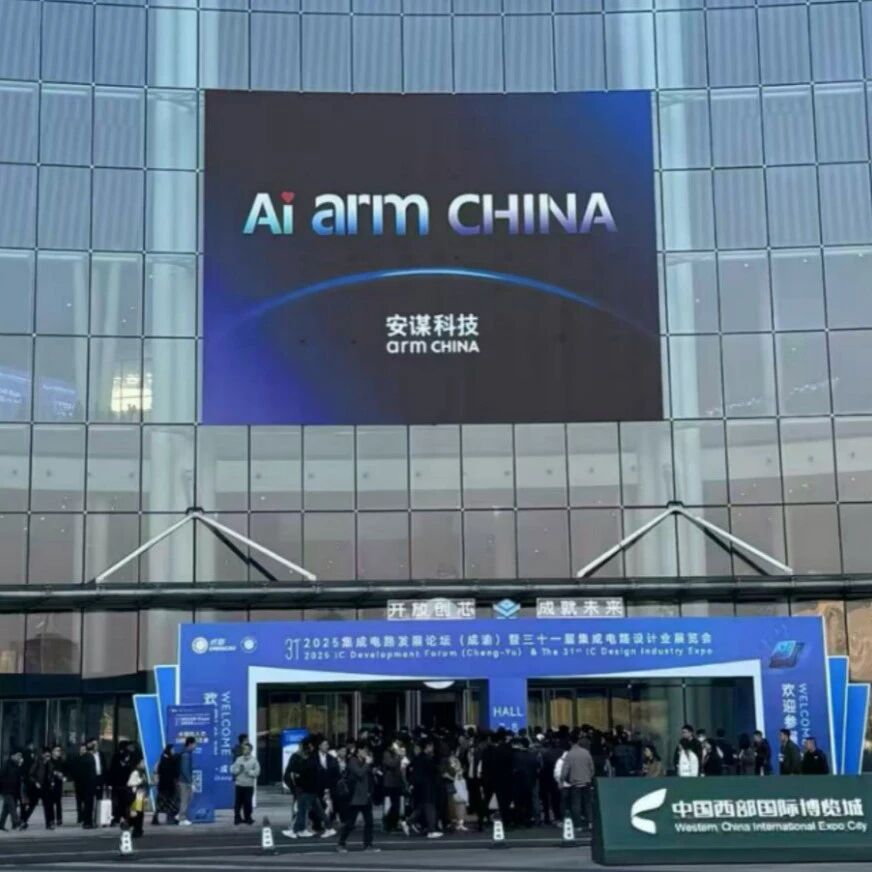
如果您希望可以时常见面,欢迎标星收藏哦~ 日前,一年一度的集成电路行业盛会ICCAD 2025在成都隆重举行。除了络绎不绝的人流量印证了 这个产业的火热以外,安谋科技高挂在展会门口的"AI Arm CHINA"海报也成功吸引了参观者驻 足。 公司日前全新发布的"周易"X3,正是这些长期技术积累的集大成者。通过采用专为大模型而生的 全新DSP+DSA架构,从定点转向浮点计算,"周易"X3 NPU IP在Tensor计算、Vector可编程性等 方面实现了全面优化,使其能灵活应对各类复杂AI算法,能为多种应用场景提供广泛的支持。 诚 然 , 在 产 业 链 的 共 同 推 动 下 , 人 工 智 能 这 些 年 已 经 彻 底 点 燃 。 无 论 是 英 伟 达 的 五 万 亿 还 是 AMD、博通等的高歌猛进,都证明了这一点。但正如大家所看见,人工智能并不仅仅局限于云 端,端侧人工智能也大有可为。 安谋科技CEO陈锋先生在ICCAD 2025高峰论坛演讲中也指出,AI已经无处不在,无论是在手机、 PC、汽车、机器人还是物联网中,都已经出现了AI的身影。有见及此,承继了Arm深厚技术积累 和丰富生态的安谋科技做出 ...

纽创信安:让天下没有不安全的芯片
半导体芯闻· 2025-11-29 03:09
如果您希望可以时常见面,欢迎标星收藏哦~ 虽然少被提及,但安全问题无疑是芯片的头等大事。尤其是在在集成电路全球化与处理器架构快速演进的当下,芯片微架构层面的隐私与安全问题 已然成为硬件系统设计中的关键挑战。 本土硬件安全领先供应商纽创信安副总裁范长永在此前举办的ICCAD 2025现场与半导体行业观察等交流的时候也指出,当下信息安全面临越来越 多的威胁,随之而来的挑战也给纽创信安这些硬件安全供应商提出更多的需求。 "作为领先的IP供应商,纽创信安聚焦于硬件安全领域并耕耘多年。公司团队有着雄厚的理论技术积累,也对前端应用有深刻的理解,形成了独特的 技术优势和市场优势。"范长永说。他进一步指出,正是基于这些积累,纽创信安面向云、管、端等全部应用领域打造了极具竞争力的硬件安全解决 方案。 芯片硬件,挑战重重 在过去,我们谈到芯片的挑战的时候,很多时候谈的是他们的性能、面积、功耗和成本等方面。但正如文章开头所说,其实安全早已成为不可或缺 的重要一环。 以热门的物联网为例,范长永指出,当前物联网安全最大的痛点是安全需求与低成本安全方案之间的矛盾。如他所说,物联网安全点多、面广,同 时物联网设备通常对成本、功耗等比较敏感 ...

汽车芯片龙头,英飞凌全面出击
半导体芯闻· 2025-11-28 10:46
Core Insights - Infineon has established a strong position in the automotive chip market, achieving a global market share of 32% in automotive MCUs, 29.2% in power devices, and leading in various other segments, resulting in an overall market share of 13.5% in the automotive chip industry as of 2024 [1][3][4]. Group 1: Market Position and Product Lines - Infineon holds the top position in the automotive MCU market with a 32% share and leads in power devices with a 29.2% share [1]. - The company has developed six major product lines for automotive applications, including low-voltage power devices, microcontrollers, high-voltage power devices, analog mixed-signal products, sensors, and memory devices [1][3]. - Infineon's automotive chip market share has been consistently high since 2019, reflecting its leadership in the industry [1]. Group 2: Localization Strategy - Infineon has adopted a "In China, For China" localization strategy to better meet the needs of Chinese customers and adapt to the changing global competitive landscape [3][4]. - The company is expanding its local production capabilities in China, utilizing its own facilities and collaborating with local partners to enhance its manufacturing footprint [3][4]. - By 2027, a significant portion of Infineon's sales in the Greater China region is expected to come from locally produced products [4]. Group 3: RISC-V and MCU Development - Infineon is transitioning to RISC-V architecture for its next-generation automotive MCUs, aiming to meet the evolving demands of the automotive industry [7][12]. - The RISC-V architecture is chosen for its open-source nature, which accelerates hardware development and product iteration, and its modular design that can cater to a wide range of automotive applications [12][13]. - Infineon is actively developing a unified platform based on RISC-V to support various automotive applications, with the first virtual prototype already in place for ecosystem partners [12][13]. Group 4: Sensor Technology and Advanced Driving - Infineon is focusing on millimeter-wave radar technology, which is crucial for advanced driving applications, particularly in challenging weather conditions [16][17]. - The company is enhancing its radar systems to meet new standards, including upgrading configurations to improve detection capabilities [16][17]. - Infineon has developed two technical routes for radar solutions, aiming to improve performance and reduce system costs [20]. Group 5: Ecosystem and Collaboration - Infineon emphasizes building a robust ecosystem through partnerships with universities and industry leaders, enhancing its competitive edge in the automotive semiconductor market [19]. - The company has established "Innovation Application Centers" in China to foster collaboration with OEMs and Tier-1 suppliers [19]. - Infineon is actively engaging with local partners to develop RISC-V based solutions, aiming to create a strong automotive RISC-V ecosystem [21]. Group 6: Future Outlook - Infineon is preparing for the future of the automotive industry, focusing on electric vehicles (eVTOL) and other emerging technologies, with a significant semiconductor content value in these applications [22][24]. - The company is well-positioned to leverage advancements in artificial intelligence and other technologies to enhance its product offerings [24].


这波建厂潮,太热了
半导体芯闻· 2025-11-28 10:46
Core Viewpoint - The global semiconductor industry is engaged in a strategic competition centered around the establishment of 2nm wafer fabs, which are seen as critical for AI-era computing sovereignty [1][20]. Group 1: TSMC's Expansion Plans - TSMC plans to increase its 2nm fab count from seven to ten, with an estimated cost of approximately NT$300 billion (US$80-100 billion) per fab, totaling around NT$900 billion for the additional three fabs [2][3]. - TSMC's strategy focuses on serving top-tier clients in AI GPU, high-end CPUs, and mobile SoCs, ensuring long-term capacity even amid macroeconomic fluctuations [2][3]. - The company emphasizes that the most advanced nodes must remain in Taiwan, with overseas fabs primarily serving political and customer relationship needs [3][4]. Group 2: Intel's 18A Technology - Intel's 18A process technology is positioned to compete with TSMC's 2nm, with recent reports indicating a steady improvement in yield rates [6][8]. - The U.S. government has become Intel's largest single shareholder, converting subsidies into equity, which strengthens Intel's capital structure [8][9]. - Intel's success in the 2nm race will depend not only on the 18A technology but also on its ability to establish itself as a true foundry company [9]. Group 3: Samsung's Progress - Samsung's 2nm process yield has improved to 55-60%, with plans to increase monthly production from 8,000 wafers in 2024 to 21,000 by the end of 2025 [10][12]. - The company secured a significant contract with Tesla for AI6 chip production, valued at US$16.5 billion over eight years, which is crucial for enhancing Samsung's position in the U.S. foundry market [11][12]. - Samsung aims to regain profitability in its foundry business within two years while targeting a 20% market share [12][13]. Group 4: Japan's Rapidus Initiative - Rapidus, a smaller player, is focused on establishing domestic 2nm production capacity with government support, aiming for mass production by the second half of the 2027 fiscal year [15][17]. - The company plans to build a second factory in Hokkaido, with significant investment expected from the Japanese government and private sector [17][18]. - Rapidus's approach involves a unique single-wafer processing method, which may lead to higher capital expenditures but aims for better yield control [18]. Group 5: Market Dynamics and Geopolitical Implications - The 2nm node is viewed as a critical infrastructure for AI, with significant implications for capital expenditure and industry dynamics [20][21]. - The construction of 2nm fabs is heavily influenced by government policies and partnerships with major clients, making it a tool for national industrial policy [21][22]. - The concentration of 2nm production capacity in Taiwan and a few allied nations raises concerns about supply chain resilience and geopolitical risks [22]. Group 6: Potential Beneficiaries - Semiconductor equipment manufacturers are expected to benefit significantly from the construction of 2nm fabs, as these facilities require advanced equipment for production [24]. - Major clients like NVIDIA, Apple, and AMD will gain more bargaining power with multiple 2nm suppliers, but risks remain if AI demand declines or yields do not meet expectations [25][26].


三星存储,成立新部门
半导体芯闻· 2025-11-28 10:46
如果您希望可以时常见面,欢迎标星收藏哦~ 喜欢我们的内容就点 "在看 " 分享给小伙伴哦~ DRAM开发团队负责人(执行副总裁)黄相俊将领导该组织。此举旨在通过整合组织运营,提升 高带宽内存(HBM)、DRAM和NAND闪存的存储半导体解决方案和封装能力。 高带宽内存(HBM)开发团队将并入DRAM开发团队下属的设计团队。三星电子此前于2024年7 月通过组织架构调整成立了新的HBM开发团队。当时,在HBM市场被SK海力士超越后,三星电子 此举旨在创建一个专门的组织,集中相关人员,以提升其技术竞争力。 然而,经过此次组织架构调整,HBM相关人员在大约一年后被重新调至存储器开发部门。分析表 明,这反映出公司对自身在HBM4(第六代)等下一代产品方面拥有强大的技术实力充满信心。据 报道,此前领导HBM开发团队的执行副总裁孙英洙已被任命为设计团队负责人。 三星电子全球制造基础设施事业部下新成立了数字孪生中心。数字孪生技术可以将现实世界的物 体、系统和流程映射到虚拟空间。此举被解读为为建立半导体"人工智能工厂"做准备。三星电子此 前曾宣布计划建设一座人工智能工厂,将人工智能应用于半导体设计和所有流程,并引进英伟达提 ...
AI浪潮下的算力新变量:RISC-V正在改写产业路径
半导体芯闻· 2025-11-28 10:46
Core Viewpoint - RISC-V is gaining global recognition due to its open-source and customizable nature, with a market penetration rate of 25% and projected shipments exceeding 21 billion units by 2031, generating $2 billion in revenue [1][3][26] Group 1: RISC-V's Role in the Industry - RISC-V is positioned as a crucial technology foundation in the AI era, reshaping global innovation dynamics and driving a comprehensive reconstruction of the underlying software and hardware systems [3][5] - The integration of RISC-V with AI is seen as an unstoppable trend, with RISC-V expected to serve as the backbone of digital infrastructure [5][17] Group 2: Industry Initiatives and Collaborations - The RISC-V community is encouraged to maintain an open approach, deepen global collaboration, and collectively establish future-oriented open standards [5][24] - The industry is urged to leverage the opportunity of software and hardware ecosystem reconstruction, integrating RISC-V deeply into the AI wave [5][24] Group 3: Product Innovations and Applications - The company is developing competitive RISC-V chips and solutions for various scenarios, including human-computer interaction and intelligent applications [6][10] - RISC-V-based products are being introduced for smart home applications, enhancing connectivity and AI capabilities [10][12] - In the automotive sector, RISC-V is being utilized for various applications, including motor control and intelligent cockpit systems [12][14] Group 4: Software and Talent Development - The company is actively contributing to the RISC-V software ecosystem, including the development of GCC toolchains and open-source contributions [18][20] - Addressing the talent shortage in the semiconductor industry, the company is implementing a comprehensive RISC-V talent cultivation system [23][24] Group 5: Future Outlook - The company aims to continue its focus on RISC-V and AI integration, promoting technological innovation and industry convergence for a self-innovative intelligent future [27]
安世荷兰,急了
半导体芯闻· 2025-11-28 10:46
如果您希望可以时常见面,欢迎标星收藏哦~ Nexperia BV 在官方网站表示,多次尝试通过传统渠道建立直接沟通后,发表了这封公开信。 Nexperia持续寻求与中国境内实体开展建设性合作,并一直要求进行公开对话,以寻求恢复正常 货物供应的途径。Nexperia BV已多次尝试通过正式和非正式的方式,包括电话、电子邮件和提议 会面等直接沟通,提出各种合作方案以寻求互利共赢的解决方案,甚至发出正式函件要求其履行权 利,以期与中国境内实体重建对话。 遗憾的是,Nexperia并未收到任何实质性回复。我们敦促您积极回应Nexperia的沟通,并以建设 性的态度参与其中,以期恢复供应链,因为这符合所有相关方的利益,尤其是我们的客户。 鉴于此,我们不得不公开沟通,以强调此事的紧迫性。 Nexperia始终致力于保持透明度,确保业务连续性,并维护全球客户、供应商、员工和利益相关 者的利益。我们欢迎中国政府承诺为Nexperia中国工厂及其分包商恢复出口提供便利,从而保障 我们的产品能够持续供应全球市场。 然而,各行各业的客户仍然反映即将停产。 这种情况不能再继续下去了。因此,我们敦促Nexperia在华实体领导层立即采 ...

谷歌芯片带来的新机会
半导体芯闻· 2025-11-28 10:46
如果您希望可以时常见面,欢迎标星收藏哦~ 随着谷歌凭借其张量处理单元在人工智能硬件领域崛起成为一股强大的新力量,人们越来越期望对 高带宽内存的激增需求能够使三星电子和SK海力士等韩国半导体巨头受益。 据业内人士周五透露,谷歌正积极寻求向其他大型科技公司供应其TPU芯片——该芯片已应用于其 自主研发的AI模型Gemini 3——其中包括Facebook和Instagram的母公司Meta。据悉,Meta正在 考虑在其计划于2027年投入运营的数据中心采用谷歌的TPU芯片。 由谷歌和美国芯片制造商博通联合开发的TPU旨在高效快速地处理AI工作负载,使其成为英伟达 主流图形处理器的有力竞争者。据报道,谷歌的TPU无需依赖英伟达的硬件,即可提供媲美甚至超 越英伟达的AI性能。 预计人工智能数据中心的蓬勃发展也将推动对传统 DRAM 产品(如 DDR5 和 LPDDR5)的需求 增长,这些产品与 GPU、TPU 和中央处理器一起使用,从而进一步提升内存销量。 与此同时,随着全球晶圆代工巨头台积电不断提高先进工艺的价格,三星晶圆代工凭借近期在3纳 米和2纳米节点良率方面的提升,正逐渐成为一种可行的替代方案。三星能够提供包 ...



三安碳化硅,成功上车
半导体芯闻· 2025-11-28 10:46
Core Viewpoint - The successful launch of Hunan Sanan's silicon carbide (SiC) chips marks a significant milestone in the collaboration with Li Auto, indicating a new phase of deep and large-scale cooperation in the electric vehicle sector [1][2]. Group 1: Hunan Sanan's Achievements - Hunan Sanan's SiC chips have gained market recognition for their performance, reliability, and mass delivery capabilities, showcasing the company's vertical integration model's advantages in ensuring product quality and supply chain stability [1]. - The company aims to continue its development strategy focused on "automotive-grade, platform-based, high efficiency, and fully autonomous" solutions, providing advanced power semiconductor solutions for leading companies like Li Auto [1][3]. Group 2: Li Auto's Perspective - Li Auto's Vice President of Powertrain R&D, Dr. Liu Qiang, emphasized that the collaboration with Hunan Sanan is a critical step in the strategic layout of their core electric drive system supply chain, providing solid technical support for the development and rapid iteration of their pure electric models [2]. - The partnership is expected to deepen further, exploring cutting-edge technology applications to drive innovation and transformation in the electric vehicle industry [2]. Group 3: Future Plans and Goals - Hunan Sanan plans to increase R&D investment in automotive-grade SiC MOSFET and GaN manufacturing service platforms over the next three to five years, aiming to enhance the capacity and yield of its 8-inch production line [3]. - The successful integration of SiC chips is seen as a significant delivery milestone and the beginning of a new journey towards achieving the vision of becoming a well-known semiconductor R&D, manufacturing, and service platform [3].


联发科,23年最佳
半导体芯闻· 2025-11-28 10:46
Group 1 - Media reports indicate that MediaTek has partnered with Alphabet's unit to design Tensor Processing Units (TPUs), which are seen as potential competitors to NVIDIA's chips in the AI application field [1] - MediaTek is known for smartphone chips, but faces pressure on gross margins due to uncertain demand, intense competition, and high R&D costs; however, AI-related news has provided some relief for its stock price, which has still declined by approximately 1.4% this year [1] - Morgan Stanley analysts upgraded MediaTek's rating from "Equal Weight" to "Overweight," citing that the growth of Google TPUs should offset headwinds in the smartphone market in the long term [1] Group 2 - UBS analysts raised their 2027 sales forecast for MediaTek's TPUs from $1.8 billion to $4 billion, predicting that these chips will account for 20% of the company's operating profit by 2028, contingent on MediaTek's execution with Google [2] - Recent interest has been fueled by reports that Meta is discussing the adoption of Google TPUs in data centers by 2027; UBS believes MediaTek has further growth potential in additional ASIC projects with Meta [2] - Overall, foreign investors remain optimistic about MediaTek, with 23 firms maintaining a "Buy" rating and 10 firms a "Hold" rating, while no firms have issued a "Sell" rating; analysts from Macquarie Group express a preference for investing in MediaTek and other Google partners over NVIDIA's supply chain [2]