半导体芯闻

Search documents
马斯克爆建晶圆厂原因
半导体芯闻· 2025-11-19 10:32
Core Viewpoint - Elon Musk indicated that Tesla may require "100 to 200 billion AI chips" annually, expressing concerns over the production speed of TSMC and Samsung Electronics [2]. Group 1: Production Capacity Concerns - Musk emphasized that the current pace of chip production by TSMC and Samsung is insufficient for Tesla's needs, stating that building a new wafer fab would take five years, which he considers too long [2]. - He mentioned that if TSMC and Samsung could expedite their production to meet the demand of 100 to 200 billion AI chips per year, it would be ideal [2]. - The semiconductor industry supplied 1.5 trillion semiconductor devices in 2023, but this figure is misleading due to the variety of chip types involved [3]. Group 2: AI Chip Specifications - Musk believes that the AI5 processor consumes only 250W, significantly less than Nvidia's B200 GPU, which consumes 1,200W, suggesting that the AI5 is much smaller in size [3]. - If Musk's statement about needing 200 billion AI processors is accurate, it would exceed the annual production capacity of the entire semiconductor industry, primarily manufactured by TSMC [3]. Group 3: Potential Collaborations and Future Plans - Musk is exploring the possibility of collaborating with Intel to address chip production challenges, noting that even in the best-case scenario, supplier chip output would still be insufficient [4]. - Tesla's potential wafer fab could initially produce 100,000 silicon wafers per month, with a possible expansion to 1 million wafers, while TSMC's projected annual output for 2024 is 17 million wafers, averaging 1.42 million per month [4].



三星DRAM,重返第一
半导体芯闻· 2025-11-19 10:32
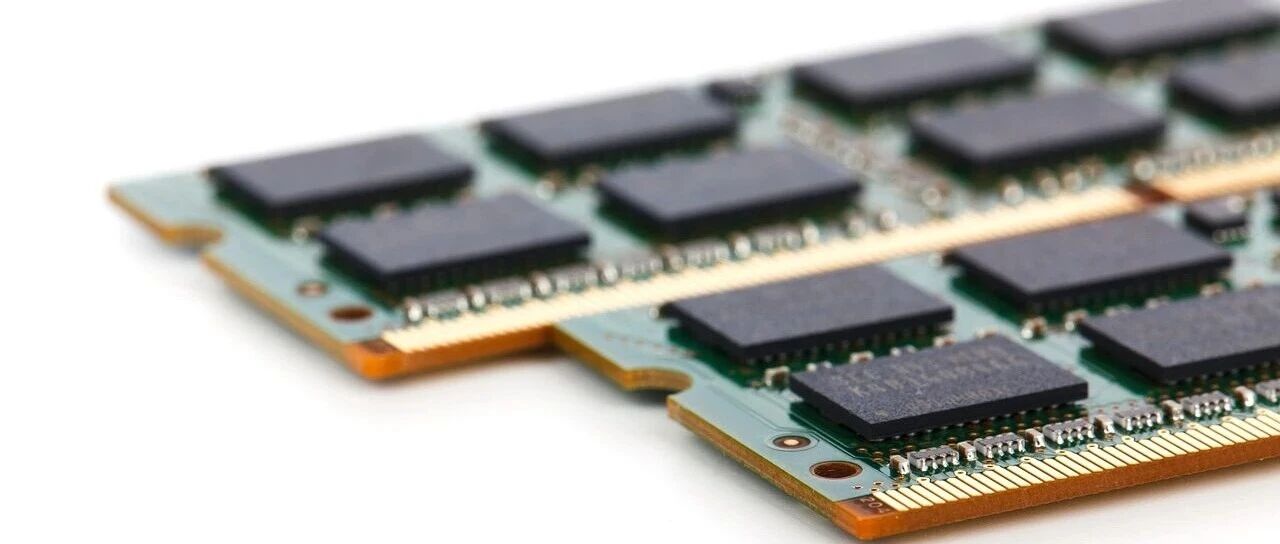
如果您希望可以时常见面,欢迎标星收藏哦~ 来 源 : 内容 编译自 businesskorea ,谢谢 。 CFM指出,三星电子扩大HBM供应量以及通用DRAM价格坚挺是推动性能反弹的关键因素。该公 司第三季度HBM位单元出货量较上一季度激增85%。这主要归功于向NVIDIA开始交付第五代 HBM3E。人工智能数据中心对内存需求的激增导致PC和智能手机等消费级IT设备对DRAM的供应 短缺,推高了价格。 自数据统计开始以来,整体内存市场规模也创下新高。第三季度全球DRAM市场总销售额达到 400.37亿美元(约合58.6万亿韩元),环比增长24.7%。与去年同期相比,增幅高达54%。NAND 闪存市场也录得184.22亿美元(约合26.9万亿韩元)的销售额,环比增长16.8%。 三星电子进一步巩固了其在NAND闪存市场的领先地位。该公司以53.66亿美元(约合7.8万亿韩 元)的NAND闪存销售额继续保持第一的位置,市场份额达到29.1%。紧随其后的是SK海力士 (19.2%)、铠侠(16.5%)、西部数据(12.5%)和美光(12.2%)。 预计存储器市场繁荣势头将在第四季度延续。CFM预测,由于各应用领域 ...
英伟达引爆内存新需求
半导体芯闻· 2025-11-19 10:32
Group 1 - The core viewpoint of the article is that Nvidia's shift to using LPDDR memory chips in AI servers may lead to a doubling of server memory prices by the end of 2026, impacting the supply chain and increasing costs for cloud service providers and AI developers [2][3]. - Counterpoint Research indicates that the global electronics supply chain is currently facing shortages of traditional memory chips due to manufacturers focusing on high-end storage chips for AI applications [2]. - The transition to LPDDR memory chips, which are typically used in smartphones and tablets, is expected to create a sudden demand that the industry may struggle to meet, as each AI server requires significantly more memory chips than a smartphone [2][3]. Group 2 - The tension in the low-end market may spread upwards as chip manufacturers consider reallocating more factory capacity to LPDDR chips to meet Nvidia's demand [3]. - Counterpoint warns that Nvidia's shift to LPDDR means they have become a major customer for smartphone manufacturers, representing a significant change for the supply chain that may not easily absorb such large-scale demand [3]. - Rising server memory prices will add pressure to data center budgets, which are already strained due to record spending on GPUs and power upgrades [3].

就在明天 | ICCAD-Expo 2025核心亮点抢先看!
半导体芯闻· 2025-11-19 10:32
各位半导体行业同仁: 备受期待的集成电路设计行业年度盛会—— 2025集成电路发展论坛(成渝)暨三十一届集成电路设计业展览会 (ICCAD-Expo 2025) 即将于 明天 ( 11月20 日 ) 在 成都西博城 盛大开幕! 这是一场真正意义上的"三高"并举的IC行业盛宴,您准备好了吗? 展商级别高 01 产业核心力量,一站式汇聚 台积电、西门子EDA、安谋科技、芯原股份、华大九天、概伦电子、锐成芯微、UMC、华力微电子、成都华微电子、日月光、Globalfoundries、长电科技、海光信 息 等300余家国内外领军企业已集结完毕,覆盖 EDA、IP、设计、制造、封测 全产业链。您所熟知的名字,都将在现场与您相见! ICCAD-Expo 参展厂商 观众级别高 01 各路精英荟萃,高效决策对接 预计 超8000名 行业精英、 2000余家 IC设计企业共赴盛会。其中, 80%以上 为 经理级及以上 职级人员, 30% 为 总监、副总裁及以上 企业核心决策者。 这意味着每一个交流都可能是一次价值千金的合作契机,与想见的人,谈想做的合作,交流更高效! 大会亮点抢先看 点击查看最新 ICCAD-Expo 2025 ...

芯片行业,一桩收购
半导体芯闻· 2025-11-19 10:32
Group 1 - Taiwan's semiconductor giant Panjit has approved the acquisition of 95% of Torex Vietnam Semiconductor, a subsidiary of Japan's Torex, to expand its product line and enhance its capabilities in automotive-grade power semiconductor packaging and testing [2] - The investment is aimed at strengthening Panjit's manufacturing base in Southeast Asia, enhancing production flexibility and supply chain resilience amid geopolitical uncertainties and global supply chain restructuring [2] - Torex Vietnam, established in 2008, specializes in semiconductor component packaging and testing services, utilizing patented Ultra Small Package (USP) technology [2] Group 2 - Vietnam aims to establish its first semiconductor manufacturing plant by 2026, highlighting its ambition to secure a position in the global chip supply chain [3] - The country has launched a national semiconductor industry development strategy for 2030, along with a talent cultivation plan and a list of 11 strategic technologies and products, including chips [3] - As of August 2025, Vietnam has approximately 170 foreign direct investment projects in the semiconductor and high-tech sectors, with a total registered capital of nearly $11.6 billion [3]

芯片市场,1454亿美元
半导体芯闻· 2025-11-19 10:32
Group 1 - The chip market is expected to reach a size of $9.2 billion in 2024 and grow at a compound annual growth rate (CAGR) of 29.1% from 2026 to 2035, reaching $145.4 billion by 2035 [2] - The Japanese chip market is projected to grow at a CAGR of 30.3%, driven by factors such as the domestic IoT ecosystem, aging population leading to increased medical device usage, and the development of robotic infrastructure for AI applications [2] - The chip group market is expanding as chipsets can produce small, independent functional modules, becoming a viable alternative to large single chips, which require significant capital investment and have lower yields [2] Group 2 - CPU chips will dominate the market as the core of computing systems, with 2.5D/3D packaging expected to hold approximately 48% market share [3] - The North American market is experiencing steady growth, primarily due to its leadership in AI cloud infrastructure and high-performance computing [3] - The Asia-Pacific region holds the largest market share at 42% and leads the market with a CAGR of 28.9%, driven by demand for modular chip architectures in consumer electronics, IoT, automotive electrification, and 5G/6G deployment [3]
DisplayPort,加速走向汽车
半导体芯闻· 2025-11-18 10:29
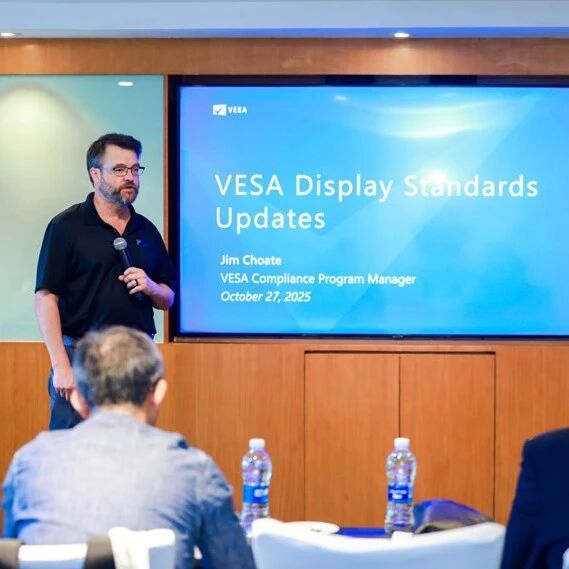
Core Points - VESA has been dedicated to establishing and promoting universal and compatible solutions for the video and electronics industry for over 30 years, with the DisplayPort standard becoming a key alternative to DVI, LVDS, and VGA [1] - The automotive sector is emerging as a new focus for DisplayPort, driven by the increasing number of high-resolution displays in vehicles that provide critical information for safe driving [4][5] - The introduction of the DP AE compliance testing model in May 2025 aims to standardize the verification of data integrity between display devices and sources, addressing previous industry gaps [4][5] Summary by Sections VESA and DisplayPort - VESA is an international non-profit organization that includes over 340 manufacturers in the hardware, software, and electronics sectors, focusing on video standards [1] - The DisplayPort standard is recognized for its advanced digital protocol and scalability, enhancing digital display experiences across various devices [1] Automotive Display Technology - The rise of smart and connected vehicle technologies has led to an increase in the number of in-car high-resolution displays [4] - Most automotive displays currently utilize DisplayPort or eDP for video data transmission from the central vehicle computer [4] - The DP AE standard, set to be released in May 2025, will provide a comprehensive compliance testing model to ensure data integrity and security in automotive displays [4][5] DP AE Standard Features - The DP AE standard is compatible with the latest DisplayPort 2.1a and eDP 1.5a versions, ensuring functional and information security for automotive displays [5] - It supports both compressed and uncompressed video, allowing for multi-stream transmission of up to 16 display regions [5] - The standard aims to meet the highest safety requirements (ISO 26262 ASIL-D) for automotive display interfaces [5] Industry Collaboration and Future Directions - VESA's DP AE standard incorporates critical safety protocols to enhance data integrity and prevent unauthorized access [10] - Industry leaders emphasize the importance of advanced, safe, and reliable display interfaces in the automotive sector, encouraging collaboration among silicon IP providers and automotive suppliers [10][11]
韩国打造第二个HBM
半导体芯闻· 2025-11-18 10:29
Core Viewpoint - The article discusses the strategic involvement of SK Group in South Korea's power semiconductor development project, which is part of the government's initiative to enhance the semiconductor industry and compete globally in the next-generation chip market [2][3]. Group 1: Government Initiatives and Industry Response - SK Group is leading the government's power semiconductor development project, marking the first participation of a major South Korean company in this initiative under the current administration [2]. - The government plans to support domestic semiconductor companies in participating as leading enterprises in the power semiconductor development project, forming a team with relevant companies, ministries, and experts to ensure global competitiveness [2][3]. - The power semiconductor market, particularly silicon carbide (SiC) semiconductors, is expected to grow at an annual rate of 20%, reaching $10.3 billion by 2030 [2]. Group 2: Market Dynamics and Competitive Landscape - The competition in the next-generation chip development field is expected to intensify with SK Group's entry into the power semiconductor market [3]. - The government aims to create a complete value chain from raw materials like silicon carbide wafers to packaging and post-processing, while also establishing an integrated ecosystem connecting SMEs with universities and research institutions [3]. - The power semiconductor market is projected to reach $68.5 billion by 2030, highlighting the importance of optimizing both data (chips) and energy (power semiconductors) for survival in the global chip competition [4]. Group 3: Technological Advancements and Industry Challenges - Power semiconductors are crucial for the stable operation of future industries such as humanoid robots, electric vehicles, and data centers, as they help reduce heat generation and power loss [2][4]. - South Korea currently lags in the SiC-based power semiconductor market, with a significant gap compared to global leaders like STMicroelectronics, ON Semiconductor, and Infineon [5]. - The government plans to enhance the domestic technology autonomy rate for SiC power semiconductors from 10% to 20% by 2030, with specific development tasks to be outlined following a review by the National Science and Technology Advisory Committee [5][6].
玻璃基板,过热了?
半导体芯闻· 2025-11-18 10:29
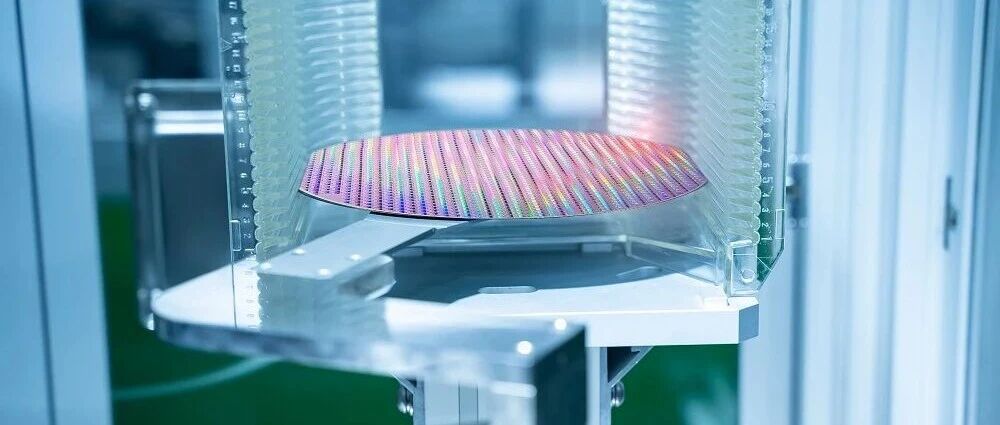
Core Viewpoint - Major South Korean electronics companies, including Samsung, SK, and LG, are competing to commercialize next-generation semiconductor glass substrates, facing significant challenges such as technical difficulties and market uncertainty [2][4]. Group 1: Market Dynamics - The glass substrate technology aims to replace traditional PCB materials to enhance power efficiency and thermal resistance, with a notable advantage in reducing warping [2][3]. - The demand for glass substrates is expected to rise due to the increasing size of AI semiconductors, which are more sensitive to warping [2][3]. - Samsung Electro-Mechanics has established a trial production line for glass substrates and plans to deliver initial samples to a global tech giant [3]. - SKC's Absolix is constructing a glass substrate factory in Georgia, with an initial capacity of 12,000 square meters and a future expansion to 72,000 square meters [3][4]. - LG Innotek is also building a trial production line, aiming to produce prototypes by the end of the year and start mass production by 2027 or 2028 [4]. Group 2: Technical Challenges - The processing of glass substrates is more complex than traditional materials, with risks of micro-cracks during cutting and drilling that can lead to overall substrate failure [4][5]. - Issues with reliability and compatibility of glass substrates remain unresolved, leading to skepticism in the packaging industry regarding their exclusive use [4][5]. - The lack of clear demand sources for glass substrates is a concern, as major tech companies are still in the sample testing phase without formal commercialization announcements [4][5]. Group 3: Market Potential and Predictions - Opinions on the market potential for glass substrates vary, with some predicting explosive growth driven by AI semiconductors, while others believe demand will be limited to ultra-high-performance applications [6][7]. - The semiconductor packaging market is estimated to be worth between 10 trillion to 20 trillion KRW, with glass substrates potentially capturing 10% of this market, equating to a value of 1 trillion KRW [6]. - Yole Group forecasts that the high-performance IC substrate market will reach approximately 40 trillion KRW by 2028, with glass substrates accounting for only 58 billion KRW, or 0.14% [6][7]. - A representative from a glass substrate equipment company acknowledges skepticism but suggests that rapid adoption could occur with technological advancements and market changes, estimating a 50% chance of success for glass substrates [7].
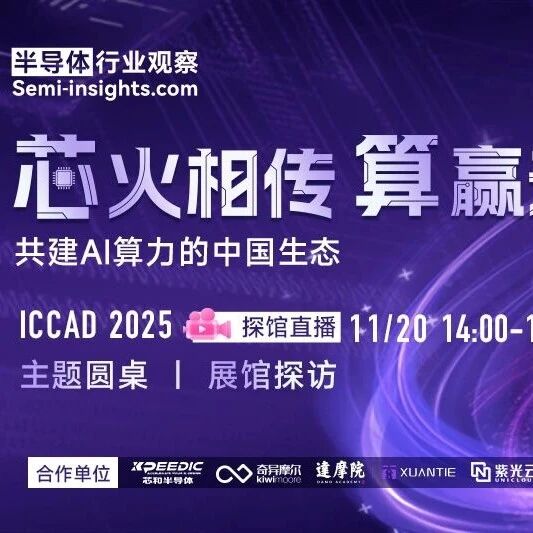
倒计时2天 | ICCAD 2025,六大厂商共话AI算力的中国生态
半导体芯闻· 2025-11-18 10:29
Core Viewpoint - In the era of accelerated AI large models, computing power is becoming the "first productive force" for innovation, with China's intelligent computing power scale expected to grow by 74.1% year-on-year in 2024, while energy consumption and cost curves for AI training, inference, and deployment are rising significantly [2]. Group 1: Challenges in AI Computing Power Ecosystem - The industry faces multiple challenges in building a self-controlled AI computing power ecosystem, including issues from tools to architecture and from computing power integration to ecological collaboration [2]. - The three major bottlenecks identified are the "memory wall," "process wall," and "interconnect wall," prompting rapid advancements in technologies such as Chiplet advanced packaging, heterogeneous computing, RISC-V architecture innovation, and distributed clusters [2]. Group 2: Event Overview - The semiconductor industry observation, in collaboration with ICCAD 2025, is organizing a live forum and exhibition titled "Building the Chinese Ecosystem for AI Computing Power," featuring six major companies: Chip and Semiconductor, EDA, Damo Academy Xuan Tie, Unisoc Cloud, Arm China, and Silicore Technology [2]. - The event aims to explore solutions for the challenges faced in the AI computing power ecosystem through in-depth discussions on various dimensions including EDA, IP, Chiplet, RISC-V, cloud services, and 2.5D/3D stacking technology [2]. Group 3: Key Discussion Topics - The forum will address critical topics such as how to build a self-controlled computing power system, the starting point for breakthroughs, constructing an evolving computing architecture from Chiplet to systems, and fostering collaborative innovation and ecological co-construction to enhance competitiveness in the global AI landscape [8][11]. - Notable technologies to be showcased include Chip and Semiconductor's "Born for AI" strategic layout, EDA processes for 2.5D/3D stacked chips by Silicore Technology, and Damo Academy's RISC-V technology for full-scene empowerment [11]. Group 4: Event Participation - ICCAD 2025 is expected to gather over 8,000 industry elites, 2,000 IC companies, and 300+ service providers from the IC industry supply chain in Chengdu, providing a significant platform for industry collaboration and innovation [9].