半导体行业观察

Search documents
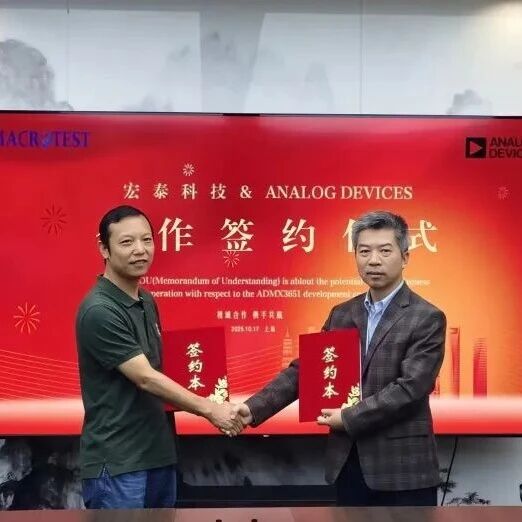
宏泰科技与ADI签署合作备忘录,共同推动精密信号测量领域创新
半导体行业观察· 2025-11-26 00:39
Core Viewpoint - Nanjing Hongtai Semiconductor Technology Co., Ltd. (Hongtai Technology) has signed a memorandum of cooperation with Analog Devices, Inc. (ADI) to enhance collaboration in semiconductor testing and precision signal measurement, aiming to drive technological innovation and market application in high-performance testing systems [1][2]. Group 1: Cooperation Details - Hongtai Technology will integrate ADI's high-performance measurement chip, a six-and-a-half digit voltage measurement module, into its new generation high-precision power board, AVI32, for the SoC testing platform MS8000 [2]. - The six-and-a-half digit voltage measurement module is compact, supports three voltage settings (10V, 1V, and 0.1V), offers a data rate of 1KSPS, and ensures accurate measurements through UART control and SCPI protocol [2]. - This collaboration marks a significant step in strategic cooperation between Hongtai Technology and ADI in the field of precision signal measurement, with plans for further exploration in high-performance signal chain optimization, system-level verification, and joint product development [2][6]. Group 2: Company Insights - Hongtai Technology is a high-tech enterprise specializing in the research, development, production, and sales of semiconductor testing equipment, covering semiconductor testing systems, sorting systems, and related spare parts [7]. - The company's main products include SoC testers, analog testers, discrete and power device testers, and various sorting machines, providing comprehensive testing solutions for mainstream chip testing and fully automated sorting [7]. - ADI is a leading semiconductor company focused on bridging the gap between the real and digital worlds, offering solutions that combine analog, digital, and software technologies to drive advancements in various sectors, including digital factories and automotive applications [8].

高通的焦虑,藏在收购中
半导体行业观察· 2025-11-26 00:39
Core Insights - The article expresses concern over Qualcomm's seemingly erratic behavior and strategic decisions, particularly regarding its acquisitions and partnerships in the semiconductor industry [1][6]. Group 1: Qualcomm's Strategic Moves - Qualcomm's partnership with NVIDIA and its acquisition of Alphawave Semi raise questions about its long-term strategy, especially as it attempts to expand into the server market [1][13]. - The acquisition of Arduino is viewed as puzzling, as it may not significantly enhance Qualcomm's product offerings in the IoT space [11][12]. Group 2: Comparison with Intel - Qualcomm's current situation is likened to Intel's challenges around 2013-2014, where Intel was heavily reliant on its x86 architecture and faced declining margins [2][3]. - Intel's experience with acquisitions under CEO Brian Krzanich, which totaled approximately $33.7 billion, serves as a cautionary tale for Qualcomm as it navigates its own acquisition strategy [4][5]. Group 3: Financial Performance - Qualcomm's financial performance shows a steady revenue stream, with projected sales of $27.79 billion from mobile business and $3.96 billion from automotive by 2025, indicating growth in non-mobile sectors but still heavily reliant on mobile [9][10]. - The failure of the NXP acquisition is highlighted as a significant setback for Qualcomm, impacting its ability to diversify its revenue streams effectively [10]. Group 4: Market Dynamics - The server market is evolving, with a shift towards hybrid GPUs, and Qualcomm's previous attempts to enter this market have not been successful, raising doubts about its current strategy [1][13]. - The article notes that many companies have attempted to penetrate the server market but have failed, suggesting that Qualcomm's current approach may face similar challenges [15][16]. Group 5: Future Outlook - The acquisition of Alphawave Semi is seen as a potential misstep, as it may not align with Qualcomm's core competencies and could complicate its server business ambitions [17][18]. - The article concludes with skepticism about Qualcomm's ability to leverage its acquisitions effectively without a clear growth strategy, echoing concerns about its future direction [18].

大股东抛售KIOXIA
半导体行业观察· 2025-11-26 00:39
Group 1: Investment and Shareholding Changes - Bain Capital plans to sell approximately 350 billion yen (2.24 billion USD) worth of shares in Kioxia Holdings, while remaining the largest shareholder with a reduced stake of 44% from 51% [1] - Goldman Sachs will act as the lead underwriter for the sale of 36 million shares of Kioxia, which will be settled through block trading [1] Group 2: Financial Performance - Kioxia reported a 62% year-on-year decline in net profit for the second quarter of fiscal year 2025, amounting to 40.7 billion yen, falling short of market expectations of 47.4 billion yen [3] - The decline in profit is attributed to a shift in product mix, with low-margin smart device products comprising 35% of sales, despite a surge in demand for memory driven by AI data centers [3] Group 3: Future Outlook - Kioxia remains optimistic about future quarters, projecting a significant recovery in profits driven by rising average selling prices and strong demand for NAND flash memory due to AI [3] - The company anticipates a 12% to 23% increase in revenue for the third quarter of fiscal year 2025, with expected revenue ranging from 500 billion to 550 billion yen [3] - Kioxia forecasts that NAND flash demand will exceed supply by 2025, with a projected annual growth rate of around 20% driven by AI data center needs [4] - The company is ramping up production at its Fab2 facility in Iwate, Japan, to meet this anticipated demand [4]
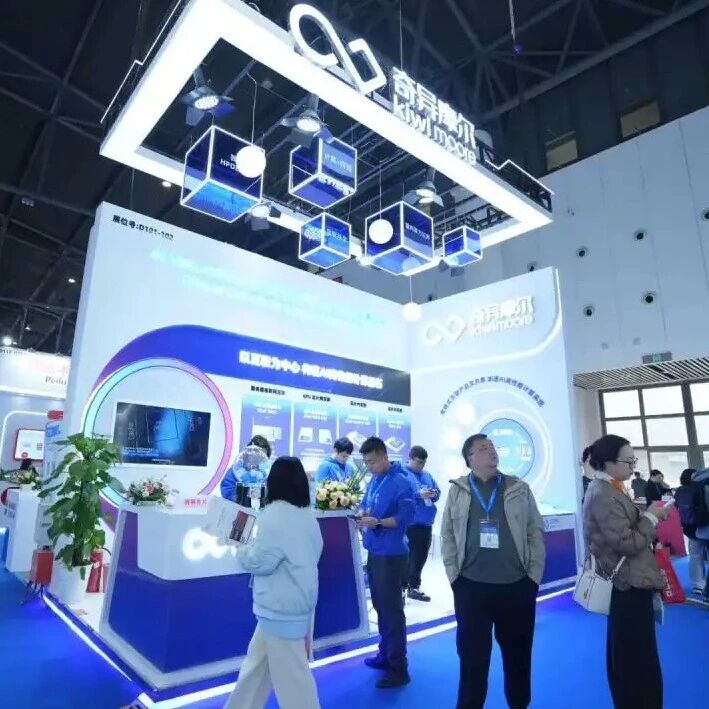
从 Chiplet 到超节点:奇异摩尔正在塑造中国 AI 算力的“互联底座”
半导体行业观察· 2025-11-26 00:39
Core Viewpoint - The competition in computing power is shifting from single GPU performance to cluster-based systems, emphasizing the importance of chiplet, packaging, and interconnect technologies as the foundation of the new computing ecosystem [1][3]. Group 1: Interconnect as a Key Component - Interconnect and scheduling are essential for realizing the full potential of cluster computing, as AI models demand higher computational scales [3][4]. - The current state of domestic AI network cards lags behind international standards, with the most advanced being 200G compared to 800G or even 1.6T abroad, highlighting the need for significant improvements in interconnect architecture [3][4]. Group 2: Challenges of Supernode Architecture - The emergence of supernode architecture is reshaping system models and presents significant challenges, particularly in achieving high bandwidth and low latency interconnects [4][5]. - The lack of established standards for supernodes has led to a proliferation of protocols, indicating a diverse and evolving landscape in this area [5][6]. Group 3: Chiplet Implementation and Standardization - The supernode chiplet concept is seen as a solution to the challenges of chiplet implementation, allowing for shared R&D costs and faster product development [6][8]. - The HPDE architecture enables programmability and compatibility with multiple standards, facilitating the transition to unified supernode standards [6][8]. Group 4: Importance of Heterogeneous Computing - The future of computing may involve heterogeneous integration at the chip level, necessitating high interconnect bandwidth and effective task scheduling across different architectures [7][8]. - Both interconnect and scheduling are critical for optimizing performance, as they are interdependent in the context of heterogeneous computing [7][8]. Group 5: Industry Trends and Product Development - The AI sector is witnessing increased participation from various companies, indicating a collective shift towards AI-focused solutions across the semiconductor industry [12][14]. - The company has developed a comprehensive product lineup, including high-performance interconnect chiplets and AI-native network products, aimed at establishing a robust interconnect infrastructure for the AI computing industry [12][14]. Group 6: Future Goals and Market Positioning - The company aims to collaborate with clients to integrate new technologies into their products and expand into larger markets over the next one to two years [14][15]. - The focus on interconnect solutions positions the company as a key player in the evolving landscape of AI networking, striving for performance breakthroughs and industry standardization [15].
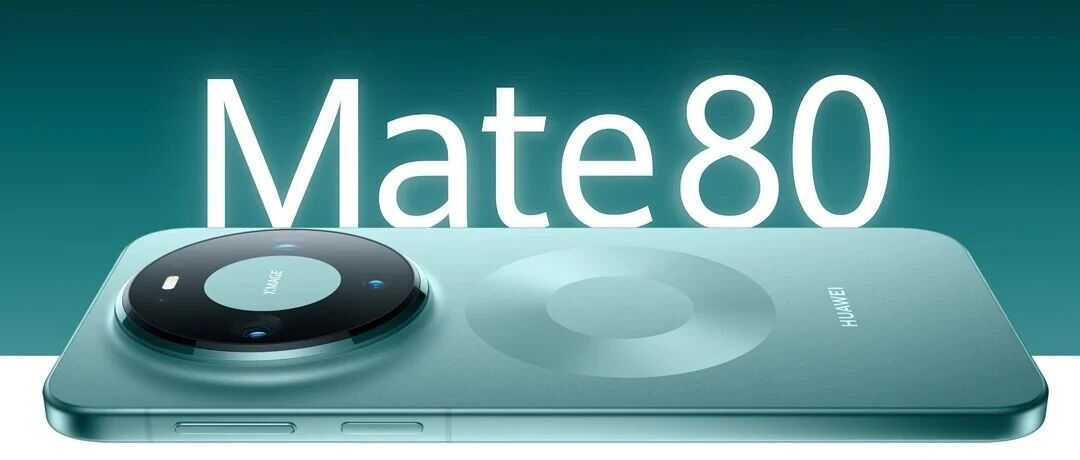
首发搭载麒麟9030芯片:华为Mate80系列正式发布
半导体行业观察· 2025-11-25 08:32
Core Viewpoint - Huawei officially launched the new Mate 80 series, which includes Mate 80, Mate 80 Pro, Mate 80 Pro Max, and Mate 80 RS, all equipped with HarmonyOS 6 and set to be available for sale on November 28 [1] Performance Enhancements - The Mate 80 series features significant performance improvements over the Mate 70 series, with the Mate 80 showing a 35% performance increase with the Kirin 9020 chip, while the Mate 80 Pro with 12GB RAM also shows a 35% increase with the Kirin 9030 chip, and the Mate 80 Pro with 16GB RAM shows a 42% increase with the Kirin 9030 Pro [14][15] - The software enhancements include a 45% improvement in operating smoothness and a 34% increase in loading speed compared to the Mate 70 series, along with support for 3DGS rendering acceleration and ray tracing hardware acceleration [15] Imaging System - The Mate 80 series introduces the second-generation Red Maple imaging system, which enhances light intake by 96% and dynamic range by 300% [50] - The camera specifications include a 50MP main camera with variable aperture, a 12MP periscope telephoto lens, and a 40MP ultra-wide camera for the Mate 80, while the Mate 80 Pro features a 50MP main camera, a 48MP macro telephoto lens, and a 40MP ultra-wide camera [50][51] Design and Display - The Mate 80 series adopts a dual-ring design with a full metal body and offers four color options. The devices are equipped with second-generation Kunlun glass, enhancing drop resistance by 20 times and scratch resistance by 2 times [34] - The display features a 6.75-inch OLED screen with a resolution of 2832×1280, supporting adaptive refresh rates from 1-120Hz and a peak brightness of 8000 nits for the Mate 80 Pro Max [35][38] Communication and Battery - The Mate 80 series supports various communication technologies, including satellite communication and emergency communication capabilities, with a maximum range of 13 kilometers [56] - The battery specifications include a 5750mAh capacity with fast charging options, supporting both wired and wireless charging [56] Pricing and Availability - The pricing for the Mate 80 series starts at ¥4699 for the base model and goes up to ¥12999 for the Mate 80 RS Ultimate Master version, with all models set to be available for purchase on November 28 [57]
KeySight股票狂飙14.2%
半导体行业观察· 2025-11-25 01:20
Core Viewpoint - Keysight Technologies reported better-than-expected earnings, with a stock surge of 14.2% post-announcement, indicating strong market demand and growth potential in various sectors [3][4]. Financial Performance - Adjusted earnings per share for Q4 reached $1.91, surpassing analyst estimates of $1.82, with revenue of $1.42 billion, exceeding the consensus of $1.39 billion and showing a 10% year-over-year growth from $1.29 billion [3]. - For FY2025, Keysight expects revenue to grow to $5.37 billion, an 8% increase from FY2024's $4.98 billion, with adjusted earnings per share projected at $7.16, up from $6.27 the previous year [4]. Business Segments - The Communications Solutions Group generated $990 million in revenue, an 11% increase year-over-year, driven by investments in AI data center infrastructure and defense modernization [3]. - The Electronic Industrial Solutions Group saw a 9% revenue growth to $429 million [3]. Strategic Initiatives - Keysight announced a $1.5 billion share repurchase plan effective immediately, reflecting confidence in its financial health [4]. - The company is advancing its software-centric solutions strategy through acquisitions, including Spirent, Synopsys Optical Solutions Group, and Ansys PowerArtist [5]. Market Trends - The demand for AI infrastructure and technology stack upgrades is driving significant growth in design, simulation, and testing across multiple sectors [6]. - The company is actively collaborating with industry leaders to shape the future of AI infrastructure, showcasing its solutions at major industry events [7]. Semiconductor Sector - Keysight's semiconductor business experienced robust growth, supported by stable demand for wafer testing and photolithography solutions, as well as AI-driven capacity expansion [9]. - The company is working closely with leading foundries and IDMs to meet end-to-end needs from early R&D to wafer manufacturing [9]. Automotive and Defense - In the automotive sector, Keysight is addressing network compliance and security concerns, while also expanding opportunities in grid modernization [10]. - The company reported a new high in orders and revenue in the aerospace, defense, and government sectors, with an 8% growth year-over-year [8].

可怕的台积电,建10座2nm工厂
半导体行业观察· 2025-11-25 01:20
Core Viewpoint - The competition in the semiconductor foundry market is intensifying as companies like Samsung and Intel challenge TSMC's dominance in 2nm technology, with significant investments and advancements in production capabilities being reported [1][2][3]. Group 1: TSMC's Expansion Plans - TSMC is planning to invest in three additional 2nm fabs in Taiwan due to surging demand for AI chips, with an estimated total investment of NT$900 billion (approximately US$30 billion) [1][2]. - The company has already begun mass production of 2nm chips and anticipates rapid growth in capacity, with the 2nm family expected to significantly contribute to its operations [2][3]. - TSMC's chairman emphasized that the demand for advanced processes driven by AI customers exceeds current production capacity by three times [3]. Group 2: Intel's Progress - Intel announced a monthly improvement of 7% in the yield of its 18A process, which has been ongoing for 7-8 months, positioning it to mass-produce the Panther Lake processor without increasing costs [5][6]. - The company is set to unveil its first product based on the 18A process at CES 2026, indicating strong confidence in its technology [6]. - Intel has received substantial support from Nvidia and the U.S. government, which has acquired a 10% stake in the company, aiding its recovery efforts [6]. Group 3: Samsung's Developments - Samsung's 2nm process yield has reportedly improved to 55-60%, with plans to double its production capacity by the end of next year [8][9]. - The company aims to achieve profitability within two years by enhancing its 2nm process yield and establishing long-term relationships with lucrative clients [9]. - Samsung's first 2nm SoC, the Exynos 2600, is expected to validate its advanced manufacturing capabilities, particularly in the challenging sub-10nm processes [8][9]. Group 4: Rapidus' Ambitions - Rapidus, backed by the Japanese government, plans to invest ¥100 billion (approximately US$700 million) to develop 2nm technology, with a goal of mass production by the second half of the 2027 fiscal year [10][11]. - The company aims to achieve positive cash flow by 2029 and is collaborating with major partners like IBM to enhance its technological capabilities [11][12]. - Rapidus is targeting a significant market gap in the 2nm semiconductor supply, with plans to focus on custom semiconductors for AI data centers and expand into automotive and robotics sectors [12].

卫星通信,这颗芯片很重要
半导体行业观察· 2025-11-25 01:20
Group 1: Industry Overview - The global focus on low-altitude development is driven by advancements in Low Earth Orbit (LEO) satellite technology and the rising demand for satellite communication (SATCOM) in various challenging environments [1] - The "low-altitude economy" is emerging, with projections indicating that China's market size will reach 1.5 trillion yuan by 2025 and 3.5 trillion yuan by 2035 [1] Group 2: Low-altitude Communication - Low-altitude communication can be divided into two categories: LEO satellite communication and ensuring eVTOL connectivity for real-time data transmission [3] - There is a growing demand for reliable, cost-effective, and scalable deployment solutions in satellite communication, necessitating advancements in components such as RF power amplifiers and beamforming ICs [3][4] Group 3: Technology and Components - Active phased array antennas are crucial for satellite communication, allowing for rapid signal tracking between satellites [6] - Beamforming ICs (BFIC) are essential for controlling the amplitude and phase of antenna elements, enabling precise RF beam steering [8] Group 4: Qorvo's Role - Qorvo provides high-performance components for satellite communication systems, leveraging its extensive experience in RF products [9] - The company has introduced new silicon-based BFICs that support Ku and Ka frequency bands, offering advantages such as improved link budgets and lower deployment costs [9][10] - Qorvo's BFICs are designed to be compatible with various satellite systems, significantly reducing the number of required terminal chips and enhancing overall system efficiency [10][11] Group 5: Government Support and Future Outlook - China's commitment to the low-altitude economy has been reinforced through national planning and government reports, indicating a strong push for development in this sector [13] - The integration of various technologies into compact designs is expected to enhance connectivity capabilities for both ground and space applications [13]


长江存储辟谣
半导体行业观察· 2025-11-25 01:20
Core Viewpoint - The article discusses the recent developments regarding Yangtze Memory Technologies Co., Ltd. (YMTC), including a false announcement about production line closures and the company's response to it, as well as its recent corporate restructuring and funding activities [2][5]. Group 1: False Announcement and Response - A screenshot claiming that YMTC would temporarily close production lines for certain products due to rising raw material costs circulated widely, but the company denied the authenticity of this information, labeling it as malicious fabrication [2]. - YMTC emphasized that all official information regarding its products and operations should be verified through its official website [2]. Group 2: Corporate Developments - In September, YMTC's parent company, Changjiang Storage Technology Holdings Co., Ltd. (Changchun Group), held a meeting to establish its first board of directors, marking the completion of its shareholding reform [5]. - According to the Hurun Research Institute, YMTC is valued at 160 billion yuan, ranking ninth among China's top ten unicorns [5]. - In April, a subsidiary of Yangyuan Beverage invested 1.6 billion yuan in Changchun Group, acquiring a 0.99% stake, which raised the company's valuation to 161.6 billion yuan [5]. - The company has also seen significant investments from various institutions, with total financing exceeding 10 billion yuan in recent months [5]. Group 3: Market Position - NAND Flash remains a dominant storage medium, with foreign manufacturers holding a significant market share, while domestic manufacturers, including YMTC, are increasing their market presence [6].
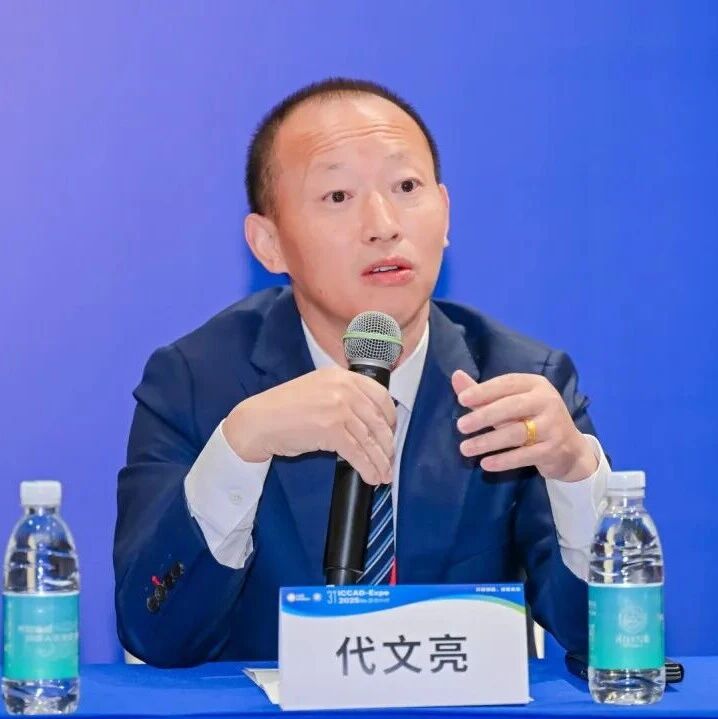
芯和代文亮博士:AI时代,要把EDA 这条“脖子”练粗
半导体行业观察· 2025-11-25 01:20
Core Viewpoint - The EDA industry is undergoing a methodological reconstruction due to the exponential increase in AI model scale and computing power requirements, transitioning from a "design tool" to the underlying operating system of AI computing systems [1][3]. Group 1: Challenges in EDA - The main challenge for domestic EDA in ensuring the autonomy of AI computing systems lies in the need to consider the entire system rather than just the chip, especially as Moore's Law becomes less applicable [3]. - The evolution of computing architecture from single chips to multi-chiplets and supernodes presents new challenges in maintaining flexibility, scalability, and high-bandwidth interconnects [4]. Group 2: Chiplet Architecture - The Chiplet design requires new verification and collaboration processes, with a two-phase approach: the first phase focuses on integrating computing and storage through a 2.5D structure, while the second phase involves hybrid bonding for 3D stacking [4]. - The integration of various components such as sensors, storage, and RF devices into a compact design necessitates multi-physical field collaborative analysis, which increases the complexity of simulation across different scales [4][6]. Group 3: System-Level Simulation - System-level simulation differs significantly from traditional EDA, as it must account for multi-physical field interactions and the potential for issues arising from high current and impedance fluctuations [5]. - Chiplet architecture offers advantages in system-level considerations, allowing for a more comprehensive approach to design and integration [5]. Group 4: AI Integration in EDA - The strategy of "EDA for AI" focuses on providing comprehensive solutions from chip design to system integration, addressing the challenges posed by AI's increasing computational demands [10]. - The "AI + EDA" strategy aims to integrate AI models into the design and simulation processes, significantly enhancing efficiency and enabling a shift from rule-driven to data-driven design approaches [12]. Group 5: Future Outlook - The future of EDA in the AI era is characterized by cross-scale, cross-physical, and cross-system engineering, with expectations for more domestic design tools to become practical and for system-level issues to be resolved during the simulation phase [14]. - The company is positioned as a key player in this transformation, leveraging advancements in Chiplet technology, supernodes, and AI factories to enhance the stability and power of AI computing infrastructure [14].