半导体行业观察

Search documents
HBM4争霸战:美光开发受挫、SK 海力士领跑、三星急追
半导体行业观察· 2025-11-07 01:00
公众号记得加星标⭐️,第一时间看推送不会错过。 来 源: 内容来自钜亨网。 根据南韩媒体报道,美光科技(的HBM4 产品,难以满足英伟达严苛的性能和能源效率要求,可能迫 使该公司重新设计HBM4 芯片架构。如果消息属实,这将导致美光的量产计划延迟长达9 个月, HBM4 的上市时间推迟到2026 年,并使其无法按时完成英伟达的订单。 SK 海力士:独步全球率先量产 与此同时,SK 海力士持续巩固其在HBM 市场的独步地位,并于9 月率先宣布完成全球首条HBM4 量产体系的建置。 HBM4 是为应对AI 产业及数据中心市场对极高频宽和电力效率的要求而设计的尖 端半导体。 SK 海力士的HBM4 产品展现出惊人性能:不仅将频宽(HBM 封装单次处理的总数据容量)扩大两 倍,同时将电耗效率提升了超过40%。业界预期,将该产品导入系统后,AI 服务性能有望提高多达 69%,能有效从根本上解决数据瓶颈问题,并大幅降低数据中心的电力成本。 据报导,SK 海力士的HBM4 已通过主要客户辉达的验证,并计划于2025 年第四季开始供货。 三星电子:加速竞争脚步 竞争对手三星电子也已完成HBM4 产品开发,并积极准备投入市场竞 ...


罗姆总裁:台积电退出是重大打击
半导体行业观察· 2025-11-07 01:00
Core Insights - TSMC's decision to exit the GaN foundry business by July 2027 has significantly impacted ROHM, as stated by ROHM's president, who described it as a "huge blow" [2][3] - ROHM is currently in discussions with Vanguard International Semiconductor (VIS), a subsidiary of TSMC, and is exploring various options for future development, including in-house and collaborative approaches [2][3] Group 1 - TSMC's exit from the GaN foundry business is attributed to market dynamics and long-term business strategy, with increasing price pressure from Chinese GaN wafer manufacturers being a contributing factor [2] - Navitas Semiconductor announced a strategic partnership with Power Integrations following TSMC's decision, with plans for mass production of 100V products starting in the first half of 2026 [2] - ROHM plans to maintain and deepen its collaboration with partners while exploring future production structures post-2027 [3] Group 2 - ROHM's president emphasized the importance of TSMC's technology integration with their own, highlighting the ongoing discussions with VIS for 8-inch model production [3] - The company is considering various possibilities for future operations, including the potential transition of processes back in-house and seeking new partners [3]

1万亿美元年薪,Elon Musk创纪录
半导体行业观察· 2025-11-07 01:00
Core Viewpoint - Tesla's shareholders approved Elon Musk's largest compensation package, potentially worth $1 trillion over 10 years, contingent on achieving specific milestones, including selling 1 million humanoid robots [2][3]. Group 1: Compensation Package Details - Over 75% of shareholders voted in favor of Musk's compensation plan during the annual meeting, which was conducted both online and offline [2]. - The compensation agreement requires Musk to serve as CEO for 7.5 years to earn any shares from the new package, while he can continue leading SpaceX and xAI [3]. - The plan includes milestones such as delivering 20 million Tesla vehicles and achieving 1 million active subscriptions for the "Full Self-Driving" service [5]. Group 2: Shareholder Reactions and Concerns - Some investors, including the Norwegian sovereign wealth fund, expressed concerns about the total scale of the rewards, share dilution, and lack of risk mitigation measures [4]. - Supporters of the compensation plan argue that Musk will not benefit unless he significantly increases the company's value [3]. Group 3: Current Company Performance and Future Plans - Tesla's vehicle deliveries for 2024 are projected at 1.79 million, a decrease from 1.81 million in 2023 [5]. - Musk is focusing on developing robots for household services and deploying autonomous taxis, although these initiatives have not yet materialized [3].


顶级资本罕见联手押注光互连,光联芯科加速AI算力底层革命
半导体行业观察· 2025-11-06 01:17
Core Viewpoint - The article emphasizes the transformative potential of Optical Input/Output (OIO) technology in the optical interconnect chip sector, particularly through the rapid advancements and funding received by Guanglian Xinke, which is seen as a pivotal player in redefining AI computing infrastructure [1][3][20]. Group 1: Industry Trends - The optical module industry is poised for significant growth by 2025, with companies like Zhongji Xuchuang, Xinyi Sheng, and Tianfu Communication gaining market attention due to the demand for 800G optical modules [3]. - OIO technology is positioned as a key leap from electrical to optical connections, addressing the inefficiencies in data transport that currently consume over 90% of energy in large model training [3][6]. - The shift from copper to optical interconnects is expected to yield breakthroughs in energy consumption, bandwidth density, latency, and distance, thus enhancing overall computational efficiency [3][6][10]. Group 2: Guanglian Xinke's Position - Guanglian Xinke has rapidly progressed from inception to securing multiple rounds of funding, indicating strong market confidence in its OIO technology and its commercialization potential [1][3]. - The company aims to create a "light-speed highway" for AI chips, enhancing inter-chip connectivity and potentially surpassing competitors like NVIDIA in system-level performance [3][19]. - Guanglian Xinke's strategy focuses on optimizing system-level performance rather than just individual chip capabilities, which is crucial for overcoming current limitations in the semiconductor industry [12][19]. Group 3: Investment and Market Dynamics - The investment landscape reflects a strong belief in the potential of Guanglian Xinke's technology, with top-tier capital backing its growth, indicating a broader trend towards investing in foundational technologies for AI infrastructure [20][21]. - The deep incubation model employed by Zhenzhi Venture Capital has been instrumental in supporting Guanglian Xinke, highlighting the importance of strategic partnerships in fostering innovation [21][22]. - The article suggests that the focus on optical interconnects is not merely a technological shift but a strategic move aligned with national AI development goals, emphasizing the importance of self-sufficiency in China's semiconductor landscape [20][26]. Group 4: Future Outlook - The vision for Guanglian Xinke includes establishing a nationwide optical interconnect network that could redefine the competitive landscape of AI computing in China by 2030 [27]. - The company is positioned to leverage its technological advancements to create a scalable and open ecosystem for domestic GPU enterprises, contrasting with NVIDIA's closed model [19][27]. - The anticipated impact of Guanglian Xinke's technology on the AI industry is significant, with the potential to drive a new era of computational efficiency and capability in China [26][27].
硅光,到底是个啥?
半导体行业观察· 2025-11-06 01:17
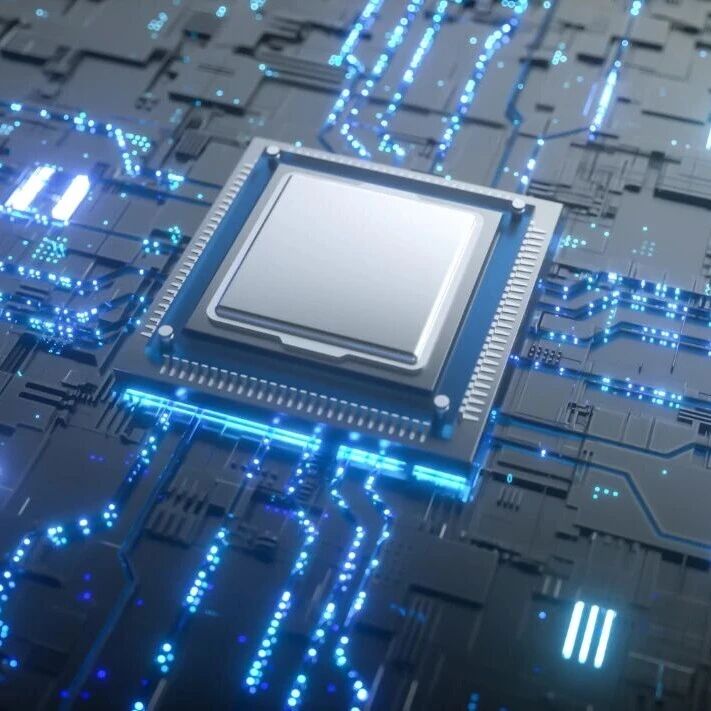
Core Insights - Silicon photonics is emerging as a key technology in optical communication, with major tech companies like Nvidia, Intel, and Cisco pushing its development [2][3]. - The integration of silicon-based optical devices is expected to revolutionize data transmission, particularly in high-bandwidth applications driven by AI [17][19]. Overview of Silicon Photonics - Silicon photonics combines silicon semiconductor technology with optical communication, enabling the manufacturing of integrated optical devices on silicon wafers [19]. - The technology aims to replace traditional electrical communication methods with optical channels to enhance speed and reduce energy consumption [10][12]. Technical Comparison - Traditional optical modules consist of multiple discrete components, while silicon photonic modules integrate these components into a single chip, reducing size by approximately 30% [66]. - Silicon photonic modules utilize CMOS manufacturing processes, which are more cost-effective compared to traditional III-V semiconductor materials [68]. Advantages of Silicon Photonics - High integration density allows for more compact designs, which is beneficial for AI computing clusters that require high port density [67]. - Cost advantages arise from using silicon substrates, which are significantly cheaper than InP substrates, leading to lower overall production costs [68]. - Power consumption is reduced by about 40%, with 800G modules consuming around 14W compared to over 18W for traditional modules [69]. Market Potential - The silicon photonics market is projected to exceed $6 billion by 2025, with a compound annual growth rate (CAGR) of over 40% [79]. - By 2030, the global silicon photonics market is expected to reach $7.86 billion, with a CAGR of 25.7% [79]. Applications - The primary application of silicon photonics is in optical communication, particularly in high-speed data transmission for AI-driven data centers [75][76]. - Other notable applications include solid-state LiDAR for autonomous driving, optical computing for AI algorithms, and biosensing technologies for medical diagnostics [80][84][87]. Industry Dynamics - Major tech companies are heavily investing in silicon photonics, leading to rapid advancements and increased competition in the sector [91]. - While the industry is growing, challenges such as standardization and integration of packaging processes remain [73].



一家初创公司,颠覆传统芯片检测
半导体行业观察· 2025-11-06 01:17
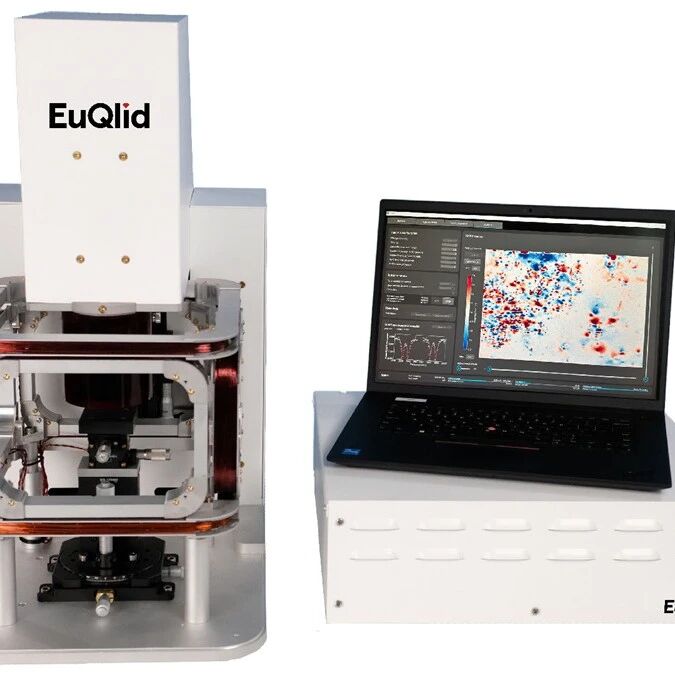
公众号记得加星标⭐️,第一时间看推送不会错过。 来 源: 内容 编译自 tomshardware 。 一家由哈佛大学、耶鲁大学、马里兰大学、Cadence 和德州仪器等众多专家创立的初创公司,结束了 隐秘运营,推出了一款突破性的设备,用于对半导体和电池进行非侵入式、非破坏性的 3D 成像。 EuQlid 的 Qu-MRI 平台结合了基于金刚石的量子传感、先进的信号处理和机器学习技术,能够以无 损 方 式 快 速 扫 描 芯 片 , 甚 至 在 生 产 线 上 也 能 发 现 隐 藏 的 缺 陷 。 EuQlid 通 过 电 子 邮 件 向 Tom's Hardware解释说,这项创新有望"为芯片代工厂节省数十亿美元"。 Qu-MRI技术 EuQlid 将其新型扫描仪描述为一种利用量子磁力测量硬件提供"具有高通量和纳安级灵敏度的埋藏电 流图"的设备。 Qu-MRI 依靠 EuQlid 的第一代产品量子金刚石显微镜 (QDM),并结合先进的信号处理和 AI 驱动的 分析技术,来理解这款新产品所针对的复杂半导体材料和器件。 投资者纷纷涌入这家 已经取得成功的初创公司 EuQlid 的第一代量子点磁体 (QDM) 已 ...
NXP领投了一家芯片公司
半导体行业观察· 2025-11-06 01:17
Core Insights - RAAAM Memory Technologies has completed an oversubscribed $17.5 million Series A funding round, led by NXP Semiconductors, with total funding exceeding $24 million [3][4] - The funding will support the comprehensive certification of RAAAM's patented on-chip memory technology, GCRAM, at leading foundries [4] - GCRAM technology aims to reduce area by up to 50% and power consumption by up to 10 times compared to high-density SRAM, while being compatible with standard CMOS processes [4] Funding and Investment - The Series A funding round attracted various strategic and financial investors, indicating strong confidence in RAAAM's revolutionary technology [4] - RAAAM's CEO highlighted the importance of this funding in accelerating collaborations with leading semiconductor companies and aligning with customer product roadmaps [4] Technology and Market Impact - GCRAM is designed to address memory bottlenecks in advanced AI chips by significantly increasing memory density and reducing power consumption [4] - The technology can be manufactured using standard CMOS processes, allowing chip manufacturers to adopt it without costly redesigns [4] - The European Innovation Council Fund supports RAAAM's breakthroughs in on-chip memory, addressing a critical challenge in the semiconductor value chain [5]

英伟达黄仁勋:中国将击败美国
半导体行业观察· 2025-11-06 01:17
Core Viewpoint - Nvidia's CEO Jensen Huang warns that China may surpass the US in the AI race, emphasizing the need for the US to attract global developers to maintain its lead in AI technology [2][3]. Group 1: Nvidia's Market Position - Nvidia's market share in China has plummeted from 95% to 0%, highlighting the impact of US policies on its ability to operate in the Chinese market [4][5]. - The company has not applied for US export licenses to sell chips in China due to the Chinese government's stance [3][6]. Group 2: US-China Technology Competition - Huang stresses that the US must adopt a nuanced approach to regulations affecting China's access to critical AI technologies, as overly aggressive policies could harm US interests [5][6]. - The competition for advanced AI chips, particularly those produced by Nvidia, is central to the tech rivalry between the US and China [2][4]. Group 3: Future Outlook - Huang expresses hope for a change in US policies that would allow Nvidia to re-enter the Chinese market, which he views as a significant opportunity given its size and vibrant ecosystem [6].

台积电将退出成熟制程
半导体行业观察· 2025-11-06 01:17
Core Viewpoint - TSMC is shifting its focus towards advanced processes and packaging, gradually outsourcing some 40-90nm orders to its subsidiary, World Advanced, while discontinuing low-margin businesses like GaN foundry services [2][3]. Group 1: Strategic Shifts - TSMC's strategy reflects a clear move away from low-margin process nodes, concentrating resources on high-value processes, particularly in response to strong AI demand [3]. - The company aims to maintain a long-term gross margin target of 53%, indicating a commitment to enhancing profitability through advanced process price increases [2][3]. - TSMC has announced the shutdown of its 6-inch wafer fab in Hsinchu and plans to exit GaN foundry services within two years, reallocating resources to higher-margin businesses [2]. Group 2: Financial Implications - TSMC's gross margin is expected to be diluted by 2-3 percentage points annually due to the ramp-up of overseas fabs, potentially increasing to 3-4 percentage points in the coming years [3][4]. - Despite a reported gross margin of 59.5% in Q3, future margins are likely to be impacted by the shift to overseas production, necessitating a focus on higher-margin advanced processes [3]. Group 3: Revenue Composition - The revenue share from advanced processes (7nm and below) increased from 65% in Q1 2024 to 73% in Q1 2025, indicating a significant shift towards advanced technology [3]. Group 4: Pricing Strategies - TSMC plans to raise prices for chips using processes below 5nm starting January 2026, with expected increases of 3-4%, and potentially up to 10% for the most advanced nodes [7]. - The price for 2nm process nodes is projected to rise annually for four years, with cumulative increases potentially reaching double digits by 2030 [7]. Group 5: Operational Adjustments - TSMC is reallocating manpower and equipment from older process nodes to advanced ones, which may lead to bottlenecks in 6nm and 7nm processes, affecting customers who do not require cutting-edge technology [8]. - The company is also encouraging clients to transfer some mature process orders to World Advanced, ensuring minimal disruption while meeting specific customer demands [5].
日本厂商,争霸2nm
半导体行业观察· 2025-11-06 01:17
Core Viewpoint - Japanese semiconductor giants are intensifying capacity expansion to prepare for the upcoming demand for advanced chip processes from 2025 to 2030, aiming to counter competitors like Samsung and SK Hynix [2][4]. Group 1: Investment Plans - Tokyo Ohka Kogyo (TOK), JSR Corporation, and ADEKA have announced multi-billion yen investment plans to enhance their production capabilities in the semiconductor supply chain [2]. - TOK is investing 200 billion yen to build a photoresist plant in Korea, with production expected by 2030, and an additional 120 billion yen for a high-purity chemical plant [2]. - JSR's aggressive timeline includes the production of MOR-type photoresist in Korea by the end of next year, ahead of TOK's schedule [3]. Group 2: Market Dynamics - Japan holds a dominant position in the photoresist market, with over 91% global market share, and TOK alone controls 25.1% of the market, with 45.9% in advanced EUV photoresist [2]. - The demand for high-end photoresists is expected to surge due to the rapid growth in AI chip requirements, with SK Hynix's capital expenditure increasing by 75% this year [3][4]. Group 3: Strategic Importance of MOR Photoresist - MOR (Metal Oxide Resist) has become a core choice for EUV lithography, offering advantages such as 33% lower material costs compared to traditional resists, excellent performance in resolution and edge roughness, and reduced material waste [6]. - SK Hynix has confirmed the use of MOR for its 1x nm DRAM process, indicating its commercial viability [6]. Group 4: Long-term Industry Forecast - The global semiconductor market is projected to reach $1 trillion by 2030, with advanced process chip demand hitting record highs [8]. - Japanese companies are expected to maintain their monopoly on EUV photoresists until at least 2030, despite emerging competitors from China [8]. Group 5: Impact on Industry Ecosystem - Japan's investment in photoresist production will strengthen Korea's position as a global semiconductor manufacturing hub, enhancing the competitiveness of Samsung and SK Hynix [10]. - The localization of high-end materials will improve cost structures and reduce reliance on single-country supply chains, while also increasing Japan's influence in the semiconductor materials value chain [10]. Group 6: Conclusion and Outlook - The current wave of investment by Japanese photoresist giants signifies a shift in the semiconductor industry towards competition over upstream material supply chains rather than just manufacturing processes [12]. - This trend serves as a warning to emerging players, emphasizing the necessity of breakthroughs in material technology to avoid being constrained by upstream supply issues [12].