半导体行业观察

Search documents
中国恢复安世芯片出口,荷兰将放弃控制权
半导体行业观察· 2025-11-08 02:10
Core Viewpoint - The ongoing battle over semiconductor manufacturer Nexperia between the Netherlands and China poses a significant threat to the European automotive supply chain, with recent developments indicating a potential resolution as China eases export restrictions on Nexperia's chips [2][5]. Group 1: Developments in the Semiconductor Supply Chain - The Dutch Prime Minister confirmed that China has relaxed export restrictions on Nexperia, paving the way for the Dutch government to reconsider its previous decision made in late September [2]. - Multiple automotive manufacturers have confirmed that critical power control chips have resumed shipments from Nexperia's factories in China, with Aumovio SE beginning shipments after receiving export permits from China [3]. - The Dutch Minister of Economic Affairs expressed optimism about the economic recovery and indicated that the Netherlands would closely monitor and support these developments, suggesting a possible withdrawal of restrictions [3][5]. Group 2: Government and Industry Reactions - The German Federal Ministry for Economic Affairs welcomed the easing of tensions between the Netherlands and China, indicating ongoing negotiations at high levels [4]. - The Dutch government is prepared to suspend a ministerial order that allowed it to block or alter key decisions of Nexperia if China reopens critical chip exports [5]. - Nexperia's parent company, Wingtech Technology, saw a 9.7% increase in stock price following the news of resumed shipments, reflecting positive market sentiment [6]. Group 3: Impact on the Automotive Industry - The dispute over Nexperia's ownership and control has led to a chip shortage, disrupting the global automotive supply chain and forcing some clients to temporarily lay off employees [6]. - Major automotive manufacturers, including Volkswagen and Honda, have confirmed the resumption of chip supplies from Nexperia, indicating a potential recovery in production capabilities [6].

Yole:先进封装材料,增速显著
半导体行业观察· 2025-11-08 02:10
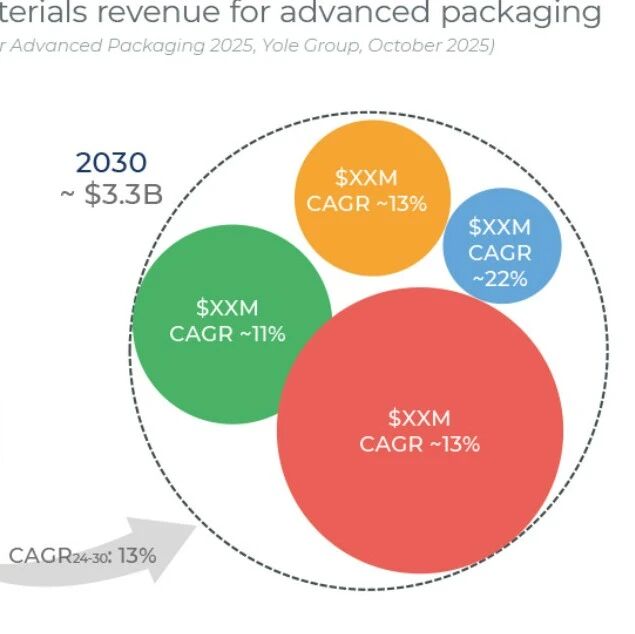
Core Insights - The advanced packaging polymer materials market is projected to reach $1.6 billion by 2024, with a compound annual growth rate (CAGR) of 13% [3] - The semiconductor industry trends, including automotive/ADAS, high-performance computing (HPC), generative AI, AR/VR, mobile and edge AI, and IoT, are reshaping advanced packaging and increasing material requirements for high-performance devices [3] - The revenue from polymer materials for advanced packaging is expected to grow to approximately $3.3 billion within five years, with a CAGR of 13.2% [3] - The mobile and consumer electronics sectors lead in sales and revenue, while the telecom and infrastructure sectors are experiencing the fastest growth due to the demand for high-performance packaging driven by HPC and generative AI [3] - System-in-package (SiP) remains the dominant platform for polymer materials, with 2.5D and 3D packaging being the fastest-growing segments, projected to achieve a CAGR of 35% in sales and 28% in revenue from 2024 to 2030 [3] Material Requirements - Advanced materials are essential for achieving finer spacing, higher reliability, and sustainable packaging [7] - The demand for higher computing power, faster I/O, improved energy efficiency, and superior thermal management is reshaping semiconductor and advanced packaging technologies [7] - Key materials such as polyimide (PI), PBO, BCB, epoxy, and acrylic resin composites are widely used in advanced packaging as dielectric materials, molding compounds, underfill materials, and temporary bonding materials [7] - A significant challenge for materials is to reduce the coefficient of thermal expansion (CTE) mismatch, as polymers expand more than silicon, leading to stress, warping, and defects [7] - Solutions require developing specific formulations tailored to particular applications to balance performance trade-offs for each customer and packaging architecture [7] Market Dynamics - The advanced packaging polymer materials market has a diverse yet highly concentrated supply chain, with the top five manufacturers (Resonac, Henkel, Panasonic, Sumitomo, and HD Microsystems) accounting for over 50% of global revenue [10] - Japan dominates the market, holding approximately 80% of total revenue in dielectric materials, molding compounds, underfill materials, and temporary bonding solutions [10] - Germany follows with a market share of about 10%, primarily driven by Henkel, while the U.S. holds around 5% market share led by 3M (temporary bonding materials) and Qnity (DuPont) (dielectric materials) [10] - The Chinese market accounts for approximately 4%, mainly led by Huahai Chengke (molding compounds) and Sanxin (temporary bonding materials) [10] - Suppliers are adjusting their product portfolios to meet AI/high-performance computing-driven packaging demands while adhering to requirements for PFAS-free materials [10] - Collaboration among material, equipment, and packaging suppliers is crucial for driving innovation in the advanced semiconductor packaging sector [10]
晶圆代工,为何对英特尔如此重要?
半导体行业观察· 2025-11-08 02:10
Core Viewpoint - The article discusses Intel's future prospects, particularly focusing on its wafer foundry business and the recent mass production of the 18A process node, which marks the completion of Intel's "Four Nodes in Five Years" strategy aimed at regaining process technology leadership and revitalizing its foundry business [2]. Group 1: Intel's 18A Process Node - The mass production of the 18A process node signifies a critical milestone for Intel, enabling the production of both client and edge computing products, as well as data center processors [2]. - The transition from TSMC manufacturing to in-house production of CPU and GPU chips is expected to enhance Intel's scale, reduce costs, and improve profit margins while delivering competitive products [2]. Group 2: Advanced Packaging Technologies - Chiplet technology is gaining traction in the semiconductor industry, with Intel leveraging its advanced packaging techniques, such as Foveros and EMIB, to enhance chip design and performance [3]. - Foveros technology allows for flexible chip configurations based on application needs, while EMIB technology interconnects multiple 18A chips in the new Clearwater Forest processors [3]. Group 3: Ecosystem Impact - The introduction of 18A chips and products like Panther Lake is anticipated to benefit the entire ecosystem by providing competitive products that enhance battery life and performance while lowering costs for OEM manufacturers [4]. - A healthy and competitive PC chip ecosystem is expected to deliver higher quality products at more competitive prices to consumers [5]. Group 4: Opportunities in Mobile Industry - Intel's foundry success could extend to the smartphone industry, presenting opportunities for cost reduction and supply chain diversification, despite the current dominance of TSMC in this market [5]. - Major smartphone manufacturers, including Apple, rely heavily on TSMC, which produces approximately 90% of global smartphone SoC chips [5]. Group 5: Competitive Landscape - Intel's foundry services could provide a competitive alternative to TSMC, especially with the anticipated introduction of the 14A process node, potentially curbing TSMC's price increases [6]. - TSMC has raised prices significantly over the past five years, and Intel's competitive offerings could alleviate cost pressures on chip suppliers and OEMs [6]. Group 6: Future Prospects for Intel's Foundry - Intel's foundry is actively seeking new clients to utilize its advanced capabilities, with the success of Panther Lake and Clearwater Forest products likely to attract more companies [7]. - The demand for cheaper, low-power chips and the desire for geopolitical supply chain diversification are expected to drive more business towards Intel's foundry services in the future [7].

英伟达暴跌,市值蒸发8000亿刀
半导体行业观察· 2025-11-08 02:10
Core Viewpoint - Nvidia's stock has experienced a significant decline, losing over 16% in just four trading days, resulting in a market cap drop of approximately $800 billion, raising concerns about the sustainability of the AI-driven tech stock rally [2][3][4] Group 1: Stock Performance and Market Reaction - Nvidia's market cap plummeted from nearly $5 trillion to about $4.47 trillion, losing around $530 billion in a matter of days, marking one of the largest market cap reductions in U.S. corporate history [2][5] - The stock's decline is attributed to valuation pressures and profit-taking after its market cap exceeded $3 trillion, indicating a market entering a "perfect pricing" phase where even minor concerns trigger significant sell-offs [4][5] - Despite the drop, Nvidia remains the third-highest company by market cap globally, following Apple and Microsoft [3][5] Group 2: Impact of U.S. Export Restrictions - U.S. government restrictions on semiconductor exports have raised concerns about Nvidia's short-term growth prospects, particularly affecting its high-end chips like the H100 and the upcoming Blackwell series [3][7] - Analysts estimate that the inability to sell advanced AI chips in China could lead to a quarterly revenue loss of around $8 billion, as China historically accounted for about 12.5% of Nvidia's total revenue and 20-25% of its data center revenue [7][8] Group 3: Economic and Market Sentiment - The macroeconomic environment, including rising interest rates and signs of economic slowdown, is pressuring Nvidia's stock price, as high-growth stocks become less attractive [8][9] - Market sentiment has shifted from enthusiasm to caution regarding AI stocks, with traders reassessing Nvidia's potential for sustained exponential growth in the short term [6][8] Group 4: Technical Analysis and Future Outlook - Nvidia's stock has breached key support levels, raising warnings for short-term traders, although analysts maintain a long-term optimistic outlook due to strong demand for AI infrastructure [10][11] - Upcoming earnings reports and product launches are critical for determining whether the recent decline is a temporary setback or indicative of a larger trend [12]


越南首个芯片制造厂,即将建成
半导体行业观察· 2025-11-08 02:10
Core Viewpoint - Vietnam aims to establish its first semiconductor manufacturing plant by 2026, highlighting its ambition to secure a position in the global chip supply chain [2][4]. Group 1: Government Initiatives - The Vietnamese government has set a long-term vision to become a high-income economy by 2045, with the semiconductor industry as a strategic pillar for this model [4]. - A national semiconductor industry development strategy has been released, targeting 2030 and looking ahead to 2050, alongside a talent cultivation plan [4][5]. - The government plans to establish a national one-stop investment office to streamline administrative processes for foreign investors [5]. Group 2: Industry Development - Vietnam currently has over 50 chip design companies employing around 7,000 engineers, with approximately 15 companies involved in chip packaging and testing [5]. - As of August 2025, Vietnam has about 170 foreign direct investment projects in the semiconductor and high-tech sectors, with a total registered capital of nearly $11.6 billion [6]. Group 3: Education and Workforce - There are 166 universities offering semiconductor-related programs, with over 6,300 undergraduate students majoring in this field and an additional 12,000 students studying related areas [6]. - The country has developed standardized semiconductor education curricula to support workforce development [6]. Group 4: International Collaboration - The government seeks international support in funding, human resource training, technology transfer, and administrative management to establish the semiconductor production base [5]. - SEMI leaders have urged the Vietnamese government to accelerate reforms and simplify administrative procedures to foster a technology-driven growth path [5].

eNVM,发展现状
半导体行业观察· 2025-11-07 01:00
Core Insights - The article emphasizes that we are in the era of artificial intelligence, where data is crucial for innovation, and embedded non-volatile memory (eNVM) is a foundational technology that retains information without power [2][6] - By November 2025, the eNVM market is expected to grow rapidly, driven by the surge in edge data and the increasing application of AI functionalities in microcontrollers (MCUs) and system-on-chips (SoCs) [2][6] Market Growth and Projections - The embedded emerging NVM market, including MRAM, RRAM, and PCM, is projected to exceed $3 billion by 2030, indicating strong demand as eFlash becomes less applicable in certain areas [2][3] - The automotive industry remains a core market for eNVM, with significant growth expected in secure integrated circuits (ICs) and industrial MCUs by 2025 [4] Technological Advancements - Advanced nodes are pushing MRAM, ReRAM, and embedded PCM to the forefront, with manufacturers expanding embedded solutions from 28/22 nm to 10-12 nm platforms [3][4] - Companies like TSMC, Samsung, and STMicroelectronics are actively developing and mass-producing these technologies, with TSMC preparing for 12 nm FinFET ReRAM/MRAM by 2025 [3][4] Applications and Use Cases - eNVM is being recognized as a practical alternative to EEPROM/OTP in analog, power management, and mixed-signal designs, especially where cost, durability, and data retention are critical [4] - The role of eNVM is expanding from mere storage to being part of computing architectures, particularly in low-power edge AI inference applications [5][6] Challenges and Solutions - Challenges include integrating eNVM at advanced logic nodes while balancing durability and data retention to meet automotive reliability standards [5] - The availability of PDK/IP is improving, and production capacity is gradually increasing, addressing these challenges [5]
中国芯片设计,已经超越韩国
半导体行业观察· 2025-11-07 01:00
Core Viewpoint - The necessity for South Korean companies to invest more actively in semiconductor production to maintain global competitiveness in the AI sector is emphasized [3][4]. Group 1: Importance of In-House Semiconductor Production - Companies must predict and design future chip specifications to succeed in the AI semiconductor market [3]. - The speed of chip manufacturing and integration into products is crucial for success [3]. - Relying on external chip suppliers will result in a secondary position in the market; self-production is essential for leading the industry [3][4]. Group 2: Competitive Landscape - China's semiconductor industry has rapidly grown, with the number of fabless companies increasing from 1,780 in 2019 to 3,626 by 2024 [3]. - South Korea currently has around 150 fabless companies, a number that is declining [3]. - China has transitioned from a fast follower to a design leader in the semiconductor field, establishing a self-sufficient ecosystem [4]. Group 3: Recommendations for South Korea - A triangular cooperation structure between system demand companies, fabless companies, and foundries is necessary for maintaining competitiveness [4]. - Establishing a complete AI platform that integrates hardware design and system software is vital for product differentiation [3].
特斯拉将建一座晶圆厂
半导体行业观察· 2025-11-07 01:00
Core Insights - Tesla's CEO Elon Musk announced the need for a large semiconductor fabrication plant to meet the growing computational demands of autonomous driving and robotics, indicating potential collaboration with Intel [2] - The production of Tesla's AI5 chips will be shared between TSMC and Samsung, marking a significant development for Samsung's foundry business [3][4] - The decision to allocate AI5 chip orders to both TSMC and Samsung is seen as a strategic move to ensure sufficient supply amid increasing competition in the AI infrastructure sector [5] Group 1: Tesla's Semiconductor Strategy - Musk emphasized that relying solely on external suppliers is insufficient for the long-term development of Tesla's AI and autonomous driving technologies, necessitating the construction of an "ultra-large wafer factory" [2] - Tesla is currently heavily investing in chip research and development, with Musk expressing a strong interest in chip technology [2] - The collaboration with Intel is still in discussion, with no contracts signed yet, but it is deemed necessary for future chip supply [2] Group 2: Samsung's Foundry Business - The production of AI5 chips by both TSMC and Samsung signifies a revival of Samsung's foundry technology, which had faced challenges with yield and performance issues [3][4] - Samsung's shift in focus from speed to technology improvement has led to an increase in the yield of its 2nm process to 55%-60%, with plans to reach 70% by year-end [4] - The partnership with Tesla is expected to help Samsung utilize its idle wafer production capacity, especially as TSMC is currently overwhelmed with orders [5] Group 3: Market Dynamics - The semiconductor industry is experiencing a race to invest in AI infrastructure, with TSMC and Samsung being the only reliable suppliers capable of producing chips below 3nm [4] - The recent price hikes by TSMC may benefit Samsung, as companies like Qualcomm are considering Samsung as an alternative for wafer fabrication [5] - Tesla's strategy to secure AI chip supply is crucial as the demand for AI capabilities continues to rise across various sectors [5]

MEMS,中国势不可挡
半导体行业观察· 2025-11-07 01:00
Core Viewpoint - The MEMS (Micro-Electro-Mechanical Systems) industry in the Greater China region is projected to reach a global revenue of $1.7 billion in 2024, with a year-on-year growth of 8.4%, driven by the convergence of AI, IoT, and automotive electronics [2]. Group 1: Market Dynamics - The MEMS market is expected to have a compound annual growth rate (CAGR) of 3.6% from 2024 to 2030, with sales reaching 6.6 billion units and revenue hitting $2 billion by 2030 [2]. - Consumer electronics remain the largest application segment, particularly in TWS earbuds, smartwatches, and AR glasses, where demand for inertial sensors, microphones, and pressure sensors is strong [4][5]. Group 2: Chinese Manufacturers' Role - Chinese companies such as Silan Microelectronics, AAC Technologies, Goermicro, MiraMEMS, and MEMSensing are becoming key drivers in the MEMS market, leveraging advantages in performance, reliability, and cost [5]. - The domestic MEMS microphone industry has achieved nearly complete localization, forming a complete ecosystem from wafer to packaging, with performance metrics approaching international standards [12]. Group 3: Technological Advancements - MEMS acoustic sensors are set to undergo significant upgrades in technical specifications, particularly in signal-to-noise ratio, creating new market opportunities [6]. - The automotive and industrial sectors are seeing increased demand for high-reliability MEMS products, with applications in safety-related systems and device health monitoring [7]. Group 4: Emerging Markets - The medical market is anticipated to be one of the fastest-growing segments for MEMS, especially with the opening of the OTC hearing aid market in the U.S. and China [8]. - The demand for MEMS in communication and AI infrastructure is also rising, driven by the surge in data traffic and AI training scales [8]. Group 5: Manufacturing and Supply Chain - The MEMS foundry sector in Greater China is expected to grow by 14.3% in 2024, with companies like Chipone, Silex, and Huazhong University of Science and Technology leading the charge [17]. - The transition from 8-inch to 12-inch wafer production lines is underway, which will significantly reduce costs and increase output [19][21]. Group 6: Future Outlook - Chinese MEMS companies are positioned to seize unprecedented growth opportunities, benefiting from their proximity to key markets and the ability to respond quickly to customer needs [14][15]. - The next decade will be crucial for achieving breakthroughs in high performance, intelligence, and system integration within the MEMS industry [24].



英伟达最强对手,来了
半导体行业观察· 2025-11-07 01:00
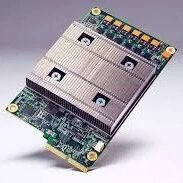
Core Insights - Google’s TPU v7 accelerators demonstrate significant performance improvements, with Ironwood being the most powerful TPU to date, achieving 10 times the performance of TPU v5p and 4 times that of TPU v6e [4][11] - The TPU v7 offers competitive performance against Nvidia's Blackwell GPUs, with Ironwood providing 4.6 petaFLOPS of dense FP8 performance, slightly surpassing Nvidia's B200 [3][4] - Google’s unique scaling approach allows for the connection of up to 9216 TPU chips, enabling massive computational capabilities and high bandwidth memory sharing [7][8] Performance Comparison - Ironwood TPU has a performance of 4.6 petaFLOPS, compared to Nvidia's B200 at 4.5 petaFLOPS and the more powerful GB200 and GB300 at 5 petaFLOPS [3] - Each Ironwood module can connect up to 9216 chips with a total bidirectional bandwidth of 9.6 Tbps, allowing for efficient data sharing [7][8] Architectural Innovations - Google employs a unique 3D toroidal topology for chip interconnects, which reduces latency compared to traditional high-performance packet switches used by competitors [8][9] - The optical circuit switching (OCS) technology enhances fault tolerance and allows for dynamic reconfiguration in case of component failures [9][10] Processor Development - In addition to TPU, Google is deploying its first general-purpose processor, Axion, based on the Armv9 architecture, aimed at improving performance and energy efficiency [11][12] - Axion is designed to handle various tasks such as data ingestion and application logic, complementing the TPU's role in AI model execution [12] Software Integration - Google emphasizes the importance of software tools in maximizing hardware performance, integrating Ironwood and Axion into an AI supercomputing system [14] - The introduction of intelligent scheduling and load balancing through software enhancements aims to optimize TPU utilization and reduce operational costs [14][15] Competitive Landscape - Google’s advancements in TPU technology are attracting attention from major model builders, including Anthropic, which plans to utilize a significant number of TPUs for its next-generation models [16][17] - The competition between Google and Nvidia is intensifying, with both companies focusing on enhancing their hardware capabilities and software ecosystems to maintain market leadership [17]