
半导体行业观察

Search documents
2026年芯片预测,极为谨慎
半导体行业观察· 2025-12-01 01:27
Group 1 - The core viewpoint of the articles indicates a cautious outlook for the electronic components supply network, with expectations of revenue decline due to various global trade issues and high inventory levels among customers [1][2] - ECSN's market analysts report that internal inventories are being consumed to lower stock levels, but customers remain reluctant to place long-term orders [1] - Predictions for 2025 suggest a revenue decline of 2% to 4.9%, with indications that actual revenue could drop by 9% due to weak component demand and industry-wide inventory buildup [1] Group 2 - Factors limiting growth include a downturn in manufacturing, particularly in German automotive production, although the connector market shows signs of growth, especially in electric vehicles [2] - Strong demand for electronic components persists in the military and aerospace markets, but this segment represents a small portion of the overall market [2] - The semiconductor industry is expected to see robust revenue growth driven by the demand for specialized storage products like GPUs, essential for AI applications [2]


联电的突围之道
半导体行业观察· 2025-12-01 01:27
Core Viewpoint - The article discusses UMC's strategic transformation in response to the competitive landscape in the mature process foundry market, focusing on high-value applications such as silicon photonics and advanced packaging to create new growth opportunities [1][2]. Group 1: UMC's Strategic Initiatives - UMC is accelerating its transformation by leveraging its existing special process capabilities to enter high-value applications like silicon photonics and advanced packaging [1]. - The company has reported successful developments in advanced packaging, with its self-developed high-end interposer achieving electrical validation from Qualcomm and entering trial production, with mass production expected by Q1 2026 [1]. - UMC is expanding its overseas packaging capabilities, with its Singapore facility now utilizing 2.5D processes and wafer-to-wafer technology, which is critical for 3D IC manufacturing [1]. Group 2: Collaboration and Market Position - UMC is reportedly interested in collaborating with Intel to challenge the 6nm process, while emphasizing its ongoing collaboration with Intel on the 12nm FinFET process, set for mass production in 2027 [2]. - The company’s diversification into silicon photonics and advanced packaging is seen as a way to create new opportunities in the mature foundry market [2]. Group 3: Silicon Photonics Development - UMC is entering the silicon photonics field in collaboration with IMEC, aiming for trial production next year and mass shipments by 2027, capitalizing on the growing demand driven by AI applications [4][6]. - The company has a natural advantage in silicon photonics due to its reliance on mature processes, which predominantly use 28nm and 22nm platforms, allowing it to expand into higher-margin product lines [4][5]. - The collaboration with IMEC provides UMC with access to advanced design rules and significantly shortens the time to commercialize silicon photonics products [6]. Group 4: Industry Trends and Advantages - The demand for silicon photonics is expected to surge, particularly with NVIDIA's next-generation AI platform Rubin incorporating silicon photonics components, which will drive significant market growth [4][6]. - Silicon photonics technology offers substantial advantages, including over tenfold reductions in power consumption and improvements in latency, making it a consensus technology for next-generation data centers [5].

一个七万亿美元的芯片机会
半导体行业观察· 2025-12-01 01:27
Core Insights - The article emphasizes that artificial intelligence (AI) is reshaping the global technology landscape through an unprecedented hardware-driven investment supercycle, with capital expenditures for AI-optimized data centers expected to exceed $7 trillion by 2030 [1][36] - This surge is attributed to two structural transformations: the industrialization of generative AI models and the physical construction of hyperscale computing facilities capable of training trillion-parameter systems [1] - Major hyperscale data center operators are projected to account for over $320 billion of this investment, with significant contributions from companies like Amazon, Microsoft, Google, and Meta [1] AI Infrastructure Investment - The current wave of AI investment marks a structural breakthrough compared to traditional cloud computing cycles, focusing on throughput density rather than just computational elasticity [4] - The semiconductor market for data centers is expected to grow significantly, with a 44% year-over-year increase in Q2 2025 and a further 33% growth in 2026 [4] - The AI supercycle is leading to a "computational economy," where every dollar spent on AI directly translates into downstream demand for semiconductors, power infrastructure, and specialized cooling systems [4] Semiconductor Industry Dynamics - The AI revolution is altering the growth trajectory of the semiconductor industry, making it the foundational layer of the global computational economy [5] - NVIDIA reported Q3 revenue of $57.01 billion, exceeding market expectations, with data center revenue growing 66% year-over-year [5] - Major cloud service providers are expected to increase their AI spending by 34% to $440 billion over the next 12 months, highlighting the concentration of AI demand among hyperscale operators [5] Custom Chip Trends - The adoption of custom chip designs is accelerating among hyperscale data centers, marking a significant shift in the semiconductor industry [20] - Companies like Amazon, Google, Microsoft, and Meta are transforming chip design into a core competitive strategy, with Amazon's Trainium2 and Inferentia2 chips offering better cost-performance ratios than NVIDIA's offerings [20][23] - This shift allows hyperscale data centers to better control costs, enhance energy efficiency, and improve supply chain resilience [20] Power and Cooling Innovations - The rapid growth of AI infrastructure is pushing power and cooling constraints to the forefront, with global data center power demand expected to exceed 1,000 terawatt-hours by 2026 [16] - Companies are securing long-term power agreements to ensure energy supply, with significant investments in nuclear and renewable energy sources [16] - Cooling management is becoming critical, with over 40% of new GPU clusters expected to adopt advanced cooling systems by the end of 2026 [17] Strategic Collaborations - Notable collaborations between major players are shaping the AI infrastructure landscape, including NVIDIA's $5 billion investment in Intel to develop next-generation AI infrastructure [27] - Microsoft has secured a $17.4 billion multi-year agreement with Nebius for dedicated GPU computing capacity, while AMD and OpenAI have established a supply agreement for up to 6 gigawatts of Instinct GPUs [28][29] - These partnerships are indicative of a broader trend where hyperscale operators are becoming active architects in the semiconductor ecosystem [27][29] Future Outlook - By 2030, the semiconductor industry is expected to evolve into a geopolitical and industrial competition centered around capacity control and ecosystem dominance [32] - The AI infrastructure investment is projected to exceed $7 trillion, fundamentally altering the power dynamics within the semiconductor supply chain [32] - The industry's future will depend on integrating energy efficiency, supply chain resilience, and ecosystem coordination to navigate geopolitical challenges and ensure sustainable growth [37][41]





硅光取代铜缆?
半导体行业观察· 2025-12-01 01:27
Core Viewpoint - The article discusses the growing application of silicon photonics technology as a potential replacement for copper wire in data transmission, particularly in data centers, while highlighting the current limitations and future prospects of this technology [1][2]. Group 1: Current State of Transmission Technologies - Currently, silicon photonics is primarily used for long-distance transmission in data centers, while copper wire is still dominant for medium and short distances due to its high speed of up to 200 Gbit per second [1][2]. - The advancements in copper wire technology have exceeded initial expectations, achieving speeds of 200 Gbit per second, which matches the current capabilities of silicon photonics [1][2]. Group 2: Advantages and Future Developments of Silicon Photonics - Silicon photonics has the potential for significant cost reductions and efficiency improvements in the future, especially as technology advances [2]. - Future developments aim to integrate optical engines directly with switch chips on the same substrate, potentially allowing for transmission speeds of up to 400 Gbit per second per fiber [2]. - The integration of multiple optical engines could lead to a total transmission capacity of 25.6 terabits per second, significantly enhancing data transfer capabilities [2]. Group 3: Challenges and Market Dynamics - Despite the advantages of silicon photonics, challenges remain in terms of production costs and the complexity of integrating optical components, which currently limits its market share compared to copper wire [2]. - The co-packaged optics (CPO) industry is highlighted as a part of the silicon photonics manufacturing process, with many Taiwanese manufacturers focusing on contract manufacturing and backend processes [2]. Group 4: Industry Context and Demand - The demand for data transmission is rapidly increasing, driven by the explosion of generative AI and the need for higher computational power, which exposes the limitations of traditional copper wire [5][6]. - Data centers are projected to consume vast amounts of electricity, with the energy demands potentially increasing twentyfold, underscoring the need for more efficient transmission technologies [6].
美光斥资96亿美元,在日建厂
半导体行业观察· 2025-11-30 04:53
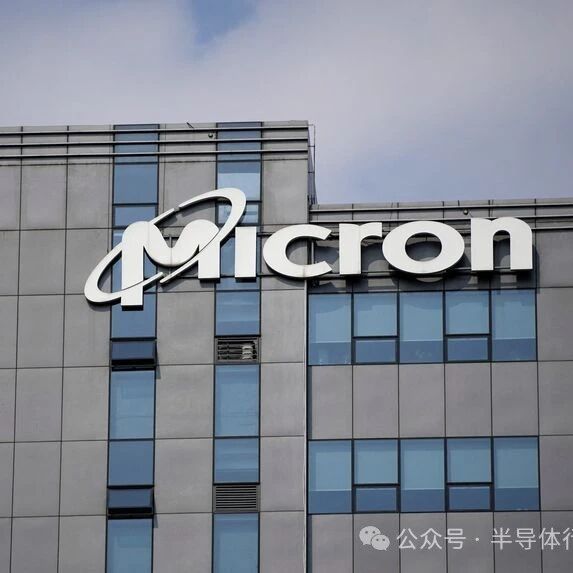
Core Insights - Micron Technology plans to invest 1.5 trillion yen (approximately 9.6 billion USD) to build a next-generation memory chip production facility in western Japan, focusing on high bandwidth memory (HBM) chips essential for AI computing [1][2] - The new factory is expected to start construction in May 2026 and aims for mass production of HBM chips by around 2028, with the Japanese government providing subsidies up to 500 billion yen [1][2] - This investment marks Micron's first new production base since 2019 and aims to enhance its competitive position against South Korea's SK Hynix in the HBM technology space [2] Investment and Production Plans - The new facility will be located in the Hiroshima factory area and will utilize extreme ultraviolet (EUV) lithography systems, which are crucial for advanced chip production [1] - Micron has planned a total investment of 2 trillion yen in the Hiroshima factory since 2023, with total subsidies from the Japanese Ministry of Economy, Trade and Industry potentially reaching 774.5 billion yen [2] Market Position and Competition - Micron is currently the third-largest DRAM manufacturer globally and acquired Elpida Memory in 2013, taking over its production base in Hiroshima [2] - According to Counterpoint data, SK Hynix holds a 64% market share in the global HBM chip market as of Q2 2025, while Micron ranks second with a 21% share [2]

内存告急,云巨头狂锁 2 年产能
半导体行业观察· 2025-11-30 04:53
Core Viewpoint - The explosive demand for artificial intelligence is accelerating a historic shortage of memory chips globally, with major cloud service providers (CSPs) signing long-term agreements to secure supply for 2027 and 2028 [1][3]. Group 1: Server Shortage Driven by AI - The unprecedented shortage of servers is primarily driven by a surge in demand for AI, making servers the largest deployment platform for applications [2][3]. - Major telecom service providers are reserving more servers for 2026-2027, with procurement volumes far exceeding actual demand [3]. - Memory manufacturers' expansion plans for 2026 cannot keep pace with demand, leading to nearly all production capacity being booked for the year [3]. Group 2: Pricing Dynamics - Sellers have gained unprecedented pricing power, ensuring that prices will continue to rise throughout 2026 without any declines in the second half of the year [3]. - Server suppliers are willing to pay premiums to secure capacity, becoming priority customers for suppliers [3]. - Some telecom service providers may offer better terms, such as prepayments or equipment financing, to lock in capacity for 2027-2028 [3]. Group 3: Long-term Agreements and Market Access - Most telecom service providers are actively seeking contracts longer than one year, but only a few are likely to secure long-term agreements [6][7]. - Approximately 30% of telecom service providers have managed to sign long-term agreements, while 90% have not [7]. - Current spot prices are "abnormally high," and while they may decline, contract prices remain significantly lower than spot prices, with expectations of a 50% increase in the next 6-9 months [7]. Group 4: NAND Flash Memory Constraints - The shortage issue is not limited to DRAM; NAND flash prices are also rising rapidly, with some suppliers increasing prices even in the face of shortages [5]. - Server OEMs confirm stable output and yield for AI GPUs, but memory shortages remain a critical bottleneck in the supply chain [5]. Group 5: Manufacturer Focus and Capacity Expansion - SK Hynix plans no expansion of NAND wafer production in 2026, focusing instead on high bandwidth memory (HBM) and DRAM [8]. - New wafer fabs from Samsung and Micron are unlikely to contribute to capacity growth until after the second half of 2027 [8].

苹果首颗2nm芯片,重大突破!
半导体行业观察· 2025-11-30 04:53
Core Insights - The article discusses Apple's upcoming A and A Pro chipsets, which will be the first to utilize TSMC's nm process technology, promising significant performance and efficiency improvements [1][2]. Chip Packaging Transition - The transition from InFO (Integrated Fan-Out) to WMCM (Wafer-Level Multi-Chip Module) packaging technology is highlighted as a major difference for A and A Pro, allowing multiple independent dies to be integrated into a single package [2]. - This change offers several advantages, including enhanced design flexibility, improved scalability for product variations, and better energy efficiency through tighter integration of components [2]. Manufacturing Process Improvements - The adoption of Molded Underfill (MUF) technology in WMCM is expected to simplify the manufacturing process, reduce material consumption, and improve yield rates, thereby offsetting increased costs associated with TSMC's nm technology [3]. Cache Capacity Enhancements - The article notes significant improvements in cache capacity for A and A Pro, with the flagship chip's system-level cache (SLC) increasing from MB to MB, and the performance core L cache bandwidth for A Pro rising from GB/s to GB/s [5]. - Predictions for next year's cache capacities include A with a total of MB and A Pro with a range of MB to MB [5]. Energy Efficiency Innovations - Apple's advancements in energy efficiency cores are emphasized, with A Pro's energy core frequency showing a modest increase, yet achieving substantial performance gains in integer and floating-point benchmarks without increasing power consumption [6]. GPU Dynamic Cache Technology - The introduction of third-generation dynamic cache technology in A Pro allows for real-time memory allocation based on workload demands, enhancing performance and efficiency [8]. - This technology aims to reduce memory waste and improve GPU utilization, with expectations for further optimization in memory allocation granularity and speed [8]. iPhone 18 Series Integration - The A and A Pro chipsets are set to debut in the iPhone 18 series, with A Pro expected to be featured in iPhone 18 Pro, iPhone 18 Pro Max, and iPhone Fold, while the A chipset will be used in the iPhone 20 series in 2027 [9].


马斯克:代工厂不给 2000 亿颗芯片?我自己造!
半导体行业观察· 2025-11-30 04:53
Core Viewpoint - Elon Musk is building a comprehensive semiconductor ecosystem in Texas, aiming to meet the chip demands of Tesla's AI systems, autonomous driving technology, and SpaceX's Starlink project, challenging the existing global chip supply chain [1][2]. Group 1: Semiconductor Ecosystem Development - Musk's plan includes three core components: PCB production, advanced packaging technology development, and ultimately, establishing a wafer fabrication plant [2]. - The initiative is driven by the need for control over chip supply amid global shortages and capacity constraints faced by major foundries like TSMC and Samsung [1][3]. Group 2: Market Impact and Stock Performance - Following Musk's announcement of self-developed AI chips, Tesla's stock price increased by 6% [3]. - Musk's dissatisfaction with traditional chip manufacturing's slow response times has led him to pursue in-house chip production [4]. Group 3: Production Timeline and Capacity Goals - A PCB factory has already been established in Texas, with plans for an advanced packaging facility managed by SpaceX [5]. - The construction timeline for the new facility includes equipment installation by early 2026 and full-scale production by Q1 2027, with an initial monthly capacity of 2,000 high-performance packages [6]. Group 4: Long-term Goals and Partnerships - Musk's ultimate goal is to build a wafer fabrication plant with an initial monthly capacity target of 100,000 wafers, potentially scaling to 1 million wafers per month [7]. - Intel is expected to become a key partner in Musk's chip empire, providing local manufacturing capabilities and engineering talent [8]. Group 5: Talent Acquisition and Challenges - Musk is actively recruiting top engineers in AI chip design, offering competitive salaries and incentives to attract talent [9]. - Despite the significant challenges in building a semiconductor supply chain from scratch, analysts remain optimistic about Musk's potential to succeed based on his past achievements in other industries [10].


台积电,暗流涌动
半导体行业观察· 2025-11-30 04:53
Core Viewpoint - The recent departure of TSMC's former senior vice president, Luo Wei-ren, to Intel has raised significant concerns within the semiconductor industry, particularly regarding internal personnel dynamics and potential impacts on TSMC's competitive edge [1][2][6]. Group 1: Luo Wei-ren's Departure - Luo Wei-ren, a key figure at TSMC, allegedly copied 20 boxes of confidential data before joining Intel, prompting TSMC to file a lawsuit against him [2][9]. - The primary reason for Luo's departure appears to be dissatisfaction with personnel arrangements, particularly after his request for an extension of retirement was denied [2][8]. - TSMC has faced similar issues in the past, where high-level executives left for competitors due to internal personnel disputes, indicating a recurring challenge in management succession [2][10]. Group 2: Internal Succession Challenges - TSMC is currently navigating a complex internal power struggle between two potential successors, Wang Ying-lang and Zhang Zong-sheng, which could have more severe implications than Luo's departure [3][10]. - Wang Ying-lang, who was expected to be promoted, faces strong competition from Zhang Zong-sheng, who oversees advanced process development, a critical area for TSMC's market leadership [3][4]. - The advanced process technology is crucial for TSMC, accounting for 74% of the company's total revenue as of Q3 this year, highlighting the importance of effective leadership in this domain [4][5]. Group 3: Industry Implications - The semiconductor industry is closely monitoring the situation, as Luo's move to Intel, while significant, may not have a profound impact on TSMC's operations due to the complexity of its technology and the need for team collaboration [6][10]. - TSMC's ability to maintain its competitive edge relies heavily on its internal talent management and succession planning, especially in light of recent high-profile departures [10].


448Gbps,要来了?
半导体行业观察· 2025-11-30 04:53
Core Insights - The article discusses the exponential growth in demand for high-speed data transmission in data centers driven by advancements in AI, cloud computing, and autonomous driving, necessitating a fundamental iteration of interconnect architectures [1][3]. Group 1: Industry Trends and Requirements - AI/ML data centers represent a complex "network of networks," requiring low power, low latency, and high density in data transmission, which presents unprecedented interconnect bandwidth challenges [3][4]. - By 2025, training models with hundreds of billions to trillions of parameters will require exabyte-level data processing capabilities, with current interconnect solutions facing limitations [3][4]. - The transition from 400G to 448G interconnect technology is critical to meet the next generation's bandwidth, latency, and scalability demands [3][4]. Group 2: Technological Evolution - The evolution of data transmission rates has been a continuous process over the past two decades, with OIF leading the development of standards from 0G to 448G [6][7]. - The article outlines the historical progression of interconnect speeds, highlighting key milestones such as 6Gbps in 2004, 56Gbps in 2017, and the upcoming 112Gbps in 2024 [6][7][8]. - Innovations in modulation technology, such as PAM (Pulse Amplitude Modulation), have significantly reduced bandwidth requirements while increasing data rates [8][11]. Group 3: Industry Collaboration and Standardization - Global standard organizations and industry players are actively collaborating on the research and standardization of 448Gbps/lane interconnect technology to push the limits of current computing infrastructure [4][14]. - The OIF has initiated the CEI-G framework project to establish a solid foundation for 448G technology, with a formal standard expected by 2026 [12][39]. - Industry events, such as the ODCC and OCP Global Summit, are facilitating discussions among key players like Tencent, Huawei, and Google to explore the technical pathways for 448G [15][19][23]. Group 4: Technical Challenges and Solutions - The article highlights the dual pressures of power efficiency and density in the 448Gbps era, with OIF identifying pJ/bit as a critical metric for power consumption [42][43]. - Solutions for thermal management are evolving, with companies like Ciena and Huawei developing liquid cooling technologies to address high thermal densities [42][43]. - The complexity of system optimization is underscored by the need for consensus on modulation schemes and the balance between electrical and optical transmission [43][46]. Group 5: Future Outlook - The successful commercialization of 448Gbps technology is seen as essential for overcoming data transmission bottlenecks and reducing communication overhead in AI training [39][40]. - The article concludes that the collaborative efforts across the industry will be crucial in achieving scalable commercialization of 448Gbps technology within the next 2-3 years, supporting the next wave of AI and digital economy growth [47][48].

