半导体行业观察

Search documents
射频行业大变局:写在Qorvo与Skyworks合并后
半导体行业观察· 2025-12-02 01:37
Core Viewpoint - The merger between Skyworks Solutions and Qorvo is a strategic response to market pressures, creating a new RF industry giant valued at up to $22 billion with annual sales of approximately $7.7 billion, aiming to save over $500 million in operating costs annually [2][5][53]. Group 1: Merger Details - The merger is structured as a "cash and stock" transaction, allowing the new entity to continue operating under the Skyworks Solutions name with the same NASDAQ ticker symbol SWKS [2][5]. - This merger marks a significant shift in the RF front-end industry, potentially restructuring the competitive landscape and signaling the end of an era for the two leading companies [5][6]. Group 2: Market Context - Skyworks and Qorvo have maintained a dominant position in the RF front-end market, particularly in China, despite larger competitors like Qualcomm and Broadcom having different business models [4][5]. - The RF industry has seen multiple mergers and acquisitions that have reshaped market dynamics, with this merger being particularly impactful due to its strategic focus on efficiency rather than competition [6][8]. Group 3: Industry Dynamics - The RF front-end industry is characterized by a high degree of order and stability, with a projected market size of approximately $15.4 billion by 2025, indicating significant growth potential [14]. - The industry has evolved through three stages: initial technological barriers, design capabilities, and now market strategies, with the current phase focusing on efficiency and cost reduction [19][51]. Group 4: Competitive Pressures - The RF front-end market is facing saturation, with global smartphone shipments plateauing around 1.2 billion units annually, leading to increased competition and reduced growth opportunities for major players [55][59]. - Both Skyworks and Qorvo have experienced declining profit margins due to rising competition from Chinese manufacturers and the need to maintain pricing power in a saturated market [60][66]. Group 5: Future Opportunities - The merger is seen as a strategic move to consolidate resources and enhance bargaining power within the supply chain, allowing the new entity to better navigate the competitive landscape [80]. - The restructuring of the RF industry presents a unique opportunity for Chinese manufacturers to transition from being technology followers to active participants in shaping industry standards [75][79].



Intel联手Amkor,剑指台积电
半导体行业观察· 2025-12-02 01:37
Core Viewpoint - Intel is advancing its AI semiconductor packaging technology at the Amkor factory in Incheon, South Korea, marking the first time it has outsourced this process, which was previously developed exclusively in its own fabs [1][2]. Group 1: AI Semiconductor Packaging Technology - Intel has established the advanced packaging technology "EMIB" at the Amkor K5 factory, which was chosen for its advanced equipment and infrastructure to support major North American tech companies like Nvidia and Apple [1][2]. - EMIB is a 2.5D packaging technology that connects different semiconductors, enhancing performance and cost-effectiveness compared to traditional silicon interposers [1][2]. - The next-generation EMIB technology, "EMIB-T," is set to enter mass production next year, integrating through-silicon vias (TSV) to improve speed and performance, which is crucial for AI semiconductor applications [2][4]. Group 2: Advanced Packaging Techniques - Intel has introduced several breakthroughs in chip packaging technology, including EMIB-T, which enhances power delivery efficiency and communication speed between chips [3][4]. - The new EMIB-T technology supports larger chip package sizes up to 120x180 mm and can accommodate over 38 bridges and more than 12 rectangular photoresist sizes [6]. - Intel's new decoupled heat sink technology aims to address thermal management challenges associated with increasing chip power consumption, improving the thermal interface material coupling by reducing gaps by 25% [6][7]. Group 3: Competitive Positioning and Market Strategy - Intel's wafer foundry aims to leverage advanced packaging technologies to provide comprehensive chip production solutions, allowing integration of various chip types from multiple suppliers [8]. - The company is also offering packaging services that do not require any Intel-manufactured components, which helps attract new customers and expand its foundry business [8]. - Contracts for packaging services are becoming a significant revenue stream for Intel's foundry business, with clients including major industry players like AWS and Cisco [8].

从芯粒到机柜:聊聊大模型浪潮下的开放互连
半导体行业观察· 2025-12-02 01:37
Core Insights - The article emphasizes the importance of open interconnect standards like UCIe, CXL, UAL, and UEC in the AI infrastructure landscape, highlighting their roles in enhancing hardware ecosystems and addressing the challenges posed by large model training and inference [2][10]. Group 1: Background and Evolution - The establishment of the CXL Alliance in March 2019 aimed to tackle challenges related to heterogeneous XPU programming and memory bandwidth expansion, with Alibaba being a founding member [4]. - The UCIe Alliance was formed in March 2022 to create an open Die-to-Die interconnect standard, with Alibaba as the only board member from mainland China [4]. - The UEC Alliance was established in July 2023 to address the inefficiencies of traditional Ethernet in AI and HPC environments, with Alibaba joining as a General member [4]. - The UAL Alliance was formed in October 2024 to meet the growing demands for Scale-up networks due to increasing model sizes and inference contexts, with Alibaba also joining as a board member [4]. Group 2: Scaling Laws in AI Models - The article outlines three phases of scaling laws: Pre-training Scaling, Post-training Scaling, and Test-time Scaling, with a shift in focus towards Test-time Scaling as models transition from development to application [5][8]. - Test-time Scaling introduces new challenges for AI infrastructure, particularly regarding latency and throughput requirements [8]. Group 3: UCIe and Chiplet Design - UCIe is positioned as a critical standard for chiplet interconnects, addressing cost, performance, yield, and process node optimization in chip design [10][11]. - The article discusses the advantages of chiplet-based designs, including improved yield, process node optimization, cross-product reuse, and market scalability [14][15][17]. - UCIe's protocol stack is designed to meet the specific needs of chiplet interconnects, including low latency, high bandwidth density, and support for various packaging technologies [18][19][21]. Group 4: CXL and Server Architecture - CXL aims to redefine server architectures by enabling memory pooling and extending host memory capacity through CXL memory modules [29][34]. - Key features of CXL include memory pooling, unified memory space, and host-to-host communication capabilities, which enhance AI infrastructure efficiency [30][35]. - The article highlights the challenges CXL faces, such as latency issues due to PCIe PHY limitations and the complexity of implementing CXL.cache [34][35]. Group 5: UAL and Scale-Up Networks - UAL is designed to support Scale-Up networks, allowing for efficient memory semantics and reduced protocol overhead [37][43]. - The UAL protocol stack includes layers for protocol, transaction, data link, and physical layers, facilitating high-speed communication and memory operations [43][45]. - UAL's architecture aims to provide a unified memory space across multiple nodes, addressing the unique communication needs of large AI models [50][51].


台积电美国厂,真成功了?
半导体行业观察· 2025-12-02 01:37
Core Viewpoint - TSMC is recognized as a crucial player in the semiconductor industry, with significant efforts to expand its manufacturing capabilities overseas, particularly in the U.S., Japan, and Germany. However, challenges related to cost, efficiency, and supply chain integration remain a concern for TSMC's international operations [1][12][28]. Group 1: TSMC's Global Expansion - TSMC has established joint ventures in the U.S., Japan, and Germany to promote advanced semiconductor manufacturing, but the economic viability of these overseas fabs is questioned [1]. - The company’s founder, Morris Chang, expressed skepticism about the U.S. efforts to boost domestic semiconductor manufacturing, stating that the financial investment is insufficient and may lead to costly failures [1][12]. - TSMC's Arizona facility is part of a broader strategy to mitigate geopolitical risks, but it faces challenges in achieving the same operational efficiency as its Taiwanese counterparts due to a less integrated local supply chain [12][17]. Group 2: Workforce and Talent Pool - TSMC employs over 83,000 people globally, with nearly 90% being Taiwanese, highlighting the company's reliance on local talent [2]. - The company has partnered with 17 universities in Taiwan to offer 57 semiconductor-related courses, ensuring a steady supply of skilled engineers [4]. - Despite global expansion, Taiwan remains TSMC's primary talent reservoir, which is crucial for maintaining its competitive edge [4][12]. Group 3: Operational Efficiency and Supply Chain - TSMC's operational success is attributed to its "one-hour semiconductor ecosystem" in Taiwan, which allows for rapid communication and resource sharing among suppliers [13][15]. - The Arizona facility currently relies heavily on its established Asian supply chain, limiting its potential output until local suppliers can scale up [17]. - The integration of local suppliers in Arizona is still in progress, and the lack of a mature semiconductor ecosystem poses significant challenges for TSMC's operations there [17][18]. Group 4: Economic Impact and Strategic Importance - TSMC's role is critical, with eight of the top ten global companies relying on its products, which account for over one-third of their revenue [26][27]. - The U.S. government recognizes the strategic importance of TSMC in the semiconductor supply chain and is providing subsidies to encourage domestic production [28]. - The semiconductor shortage in 2021 highlighted the economic risks associated with dependency on TSMC, leading to increased efforts to localize production [26][28].

HBM市场格局,或被重塑
半导体行业观察· 2025-12-02 01:37
Core Viewpoint - The expansion of Google's TPU ecosystem is reshaping the HBM market, consolidating competition primarily between Samsung and SK Hynix, while Micron has effectively exited the ASIC market due to capacity constraints [1][2][4]. Group 1: Market Dynamics - Google's TPU ecosystem is reducing the global HBM supply chain competition to Samsung and SK Hynix, as Micron's capacity limitations hinder its participation [1][2]. - Micron's monthly wafer-level HBM production capacity is approximately 55,000 wafers, significantly lower than Samsung's 150,000 and SK Hynix's 160,000, making it unable to meet the demands of major clients like Google and NVIDIA [2][6]. - The competition in the HBM market is intensifying as Google's TPU challenges NVIDIA's dominance, which has historically controlled 90% of the AI accelerator market [4][5]. Group 2: Future Projections - Analysts predict that the situation will change with the mass production of Google's TPU starting next year, with Samsung expected to double its supply to Google compared to this year [3][6]. - The demand for HBM is anticipated to surge due to the increasing competition between GPU and ASIC industries, with projections indicating a supply shortage by 2027 [6]. - Micron plans to build a new factory in Hiroshima, Japan, to produce next-generation HBM, aiming to catch up with SK Hynix technologically [7].



2025集成电路特色工艺与先进封装测试产业技术论坛暨电子科技大学集成电路行业校友会年会在蓉举行
半导体行业观察· 2025-12-01 09:39
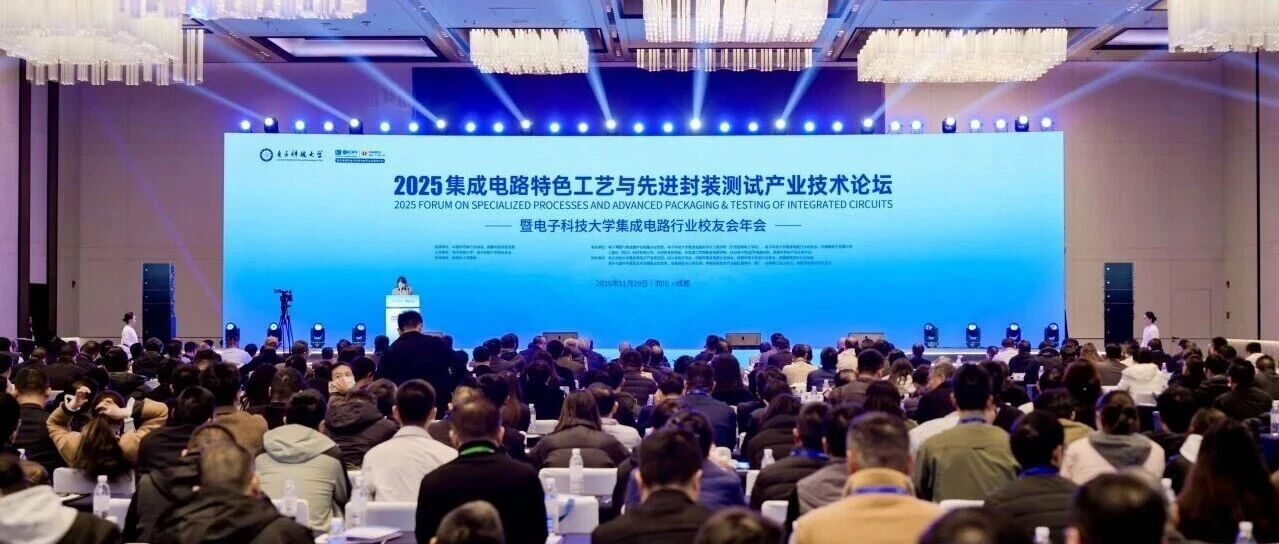
Core Viewpoint - The forum focused on the integration of industry, academia, and research in the semiconductor sector, emphasizing the importance of collaboration for innovation and ecosystem development in the integrated circuit industry [2][28]. Group 1: Forum Overview - The "2025 Integrated Circuit Specialty Process and Advanced Packaging Testing Industry Technology Forum" was held in Chengdu, attracting over 600 representatives from more than 200 companies in the integrated circuit field [2]. - The forum was guided by various governmental and academic institutions, aiming to create a platform for deep integration of production, learning, research, and application [2][28]. Group 2: Key Events and Activities - A council appointment ceremony for the Integrated Circuit Alumni Association of the University of Electronic Science and Technology was held, with new members from various sectors of the industry being recognized [6]. - The Advanced Packaging and System Integration Pilot Platform was officially launched, enhancing public service capabilities in the advanced packaging sector [9]. Group 3: Main Forum and Discussions - The main forum featured six experts discussing topics such as "Technology Routes in the Post-Moore Era" and "Power Integration Specialty Processes," showcasing the intersection of innovation and industrial application in integrated circuits [11]. - Three specialized sub-forums and a roundtable forum were conducted, focusing on cutting-edge semiconductor materials and technologies, advanced packaging, and the construction of an alumni ecosystem [14][20]. Group 4: Investment and Development Insights - A roundtable discussion highlighted the semiconductor industry's transition to a 2.0 phase, emphasizing the importance of early and stable investments, as well as the pursuit of synergistic effects in mergers and acquisitions [22]. - The Chengdu-Chongqing region was identified as a strategic area for semiconductor development, leveraging local talent and manufacturing capabilities to enhance the industry [22]. Group 5: Future Outlook - The focus on AI inference chips and 3D packaging was emphasized, with a call for local governments to support educational institutions like the University of Electronic Science and Technology to foster innovation [23].


三星半导体,挺过来了
半导体行业观察· 2025-12-01 01:27
Core Viewpoint - Samsung is expected to achieve an operating profit of 90 to 100 trillion KRW (approximately 2.14 trillion TWD) next year, driven by improvements in 2nm GAA process yields and a significant increase in HBM4 and DRAM prices by 56% [1][2]. Group 1: Financial Projections - Analysts predict Samsung's operating profit could reach 100 trillion KRW next year, reflecting a 129% year-on-year increase, supported by the growth in HBM4 market share and rising DRAM prices [2][5]. - Samsung's revenue is anticipated to rise significantly due to the increase in NAND flash memory prices and new orders from cryptocurrency mining equipment manufacturers [1][4]. Group 2: Market Dynamics - The demand for high-bandwidth memory (HBM) chips is accelerating, particularly in the context of artificial intelligence, which is expected to drive Samsung's stock price upward [3][5]. - Samsung's stock price has recently surpassed 100,000 KRW (68 USD), with several brokerages raising their target prices to 150,000 KRW, indicating strong market confidence [3][4]. Group 3: Competitive Positioning - Samsung is expected to capture 40% of the HBM4 supply chain for NVIDIA, with projections indicating a 2.5 times increase in HBM shipments by 2026 compared to this year [4][5]. - The company is also positioned to benefit from the growing demand for AI memory semiconductors, with supply shortages expected to persist until 2026 [5][6].
欧洲豪赌钻石芯片
半导体行业观察· 2025-12-01 01:27
Core Viewpoint - The article emphasizes the transition from silicon to diamond as a key material in the semiconductor industry, highlighting the advantages of diamond in power electronics and its potential for industrial applications [1][4][10]. Group 1: Company Overview - DIAMFAB, a French company derived from the CNRS, focuses on the industrialization of synthetic diamond technology for high-demand electronic applications [1][4]. - The company is currently in the early stages of product promotion, primarily providing prototype products to customers and partners [7]. Group 2: Market Trends and Investments - The investment landscape is shifting, with significant funding for diamond-based semiconductor technologies, including a reported €2.35 billion investment for a new microchip manufacturing plant in Spain [2]. - The diamond semiconductor market is gaining traction, with companies like Diamond Foundry and Ookuma Diamond Device securing substantial investments for expansion [1][2]. Group 3: Technical Advantages of Diamond - Diamond exhibits superior properties compared to silicon and silicon carbide, including three times the pressure resistance of silicon carbide and thirteen times that of silicon, along with excellent thermal conductivity [5][6]. - The use of diamond can lead to more compact, lightweight, and energy-efficient semiconductor devices, making it valuable for applications in electric vehicles, aerospace, and radiation-resistant systems [6][8]. Group 4: Industrialization Challenges - One of the main challenges for DIAMFAB is convincing customers to adopt this cutting-edge technology, as many industrial companies have outdated perceptions of diamond's capabilities [7][8]. - The company aims to integrate into existing supply chains, leveraging standard semiconductor processing equipment once diamond substrates are sufficiently large [9]. Group 5: Future Outlook - The article suggests that the diamond power electronics technology represents an emerging opportunity for the European semiconductor industry, which is well-positioned to build a new industrial ecosystem around this technology [10].
告别“中低端”,国产车规MCU吹响高端突围号角
半导体行业观察· 2025-12-01 01:27
Core Viewpoint - The automotive industry is undergoing a transformative change driven by electrification and intelligence, evolving from mere transportation tools to "super mobile intelligent terminals" that integrate smart computing, real-time perception, and complex control [1] Group 1: Evolution of Automotive Electronics - The traditional distributed architecture of automotive electronics is inadequate for the data processing and cross-domain collaboration required by software-defined vehicles (SDV), leading to the emergence of a new "central computing + regional control" architecture [1] - Major manufacturers like XPeng, Leapmotor, and GAC have begun mass production of new generation EE architecture vehicles, with quasi-central and central + regional control architectures becoming mainstream for optimizing costs and improving efficiency [1] Group 2: Demand for High-Performance MCUs - The limitations of traditional MCUs in computing power, storage, peripherals, and security are becoming increasingly apparent, creating a rising demand for high-performance automotive MCUs to support complex control tasks in cross-domain scenarios [4] - The global evolution of the smart automotive industry presents significant opportunities for domestic chip manufacturers, allowing them to transition from followers to innovators, particularly in the high-end automotive MCU sector [4] Group 3: Market Dynamics and Challenges - The automotive-grade MCU chip market is characterized by a "strong outside, weak inside" dynamic, with domestic high-end MCU self-sufficiency below 5%, dominated by international giants like Infineon, Renesas, NXP, and STMicroelectronics [5] - These international companies maintain a competitive edge not only through chip technology but also by building ecological barriers with long-term partnerships with Tier 1 suppliers and OEMs, complicating market entry for domestic firms [5] Group 4: Domestic MCU Breakthroughs - Domestic MCU companies have historically focused on lower-end applications but are now advancing towards higher-end markets, leveraging accumulated design experience and supply chain management capabilities [6] - The emergence of companies like Chipsea Technology, which is redefining high-end automotive MCUs, marks a significant shift in the domestic market [8] Group 5: Chipsea Technology's Innovations - Chipsea Technology's E3650 MCU, produced using a 22nm process, offers significant energy efficiency advantages over competitors using 28-40nm processes, and features an 8-core Arm Cortex-R52+ architecture with a frequency of 600MHz [9] - The E3650 MCU meets ISO21434 standards for information security, addressing specific market needs in China, and provides over 350 I/Os for flexible integration in regional control applications [12] Group 6: Future Market Outlook - The domestic automotive MCU market is projected to reach 29.4 billion yuan by 2025, with the localization rate of automotive-grade MCUs increasing from under 5% to 18% [8] - The rise of domestic MCUs is reshaping industry value logic, moving from being seen as "cheap alternatives" to becoming key players that offer rapid market responses and tailored services to meet local automotive manufacturers' needs [20]

SiC或将迎来涨价潮
半导体行业观察· 2025-12-01 01:27
Core Insights - The silicon carbide (SiC) supply chain is entering a phased market, with rising raw material prices and significant price pressure on 6-inch device substrates [1] - SiC is increasingly being utilized in artificial intelligence accelerators and high-performance computing platforms, reshaping the cost structure for power and automotive designers [1] Group 1: Market Dynamics - Bulk SiC powder and particle prices have been rising, with recent trading prices around 6,271 RMB per ton, reflecting a 0.21% increase [1] - The price increase is attributed to strong raw material costs, expanding downstream demand, and supply adjustments related to environmental inspections and capacity constraints [1] - In contrast, the 6-inch SiC wafer substrate market is experiencing a "price war," with prices expected to drop below $500 per wafer by mid-2024, a decline of over 20% [1] Group 2: Technological Advancements - SiC is becoming a critical thermal management material for AI and high-performance computing (HPC) platforms, with a thermal conductivity of 500 W/mK [2] - NVIDIA plans to introduce SiC technology in its Rubin AI platform around 2025, utilizing TSMC's CoWoS advanced packaging technology [2] - TSMC is collaborating with suppliers to develop 12-inch single-crystal SiC substrates to replace traditional ceramic substrates in HPC systems [2] Group 3: Strategic Opportunities - European integrated device manufacturers (IDMs) and module manufacturers may seize opportunities to secure more competitive wafer contracts, particularly in automotive-grade production lines [3] - The shift towards 12-inch SiC substrates and advanced packaging structures for AI accelerators may push process technology and investments further upstream in the value chain [3] - SiC is increasingly recognized as a strategic material not only for high-voltage power devices but also for AI thermal management and advanced optical applications [3]