混沌学园

Search documents
长沙人凭什么敢当 AI 先锋?混沌AI商业实战全国巡讲首站完美落幕
混沌学园· 2025-07-06 03:44
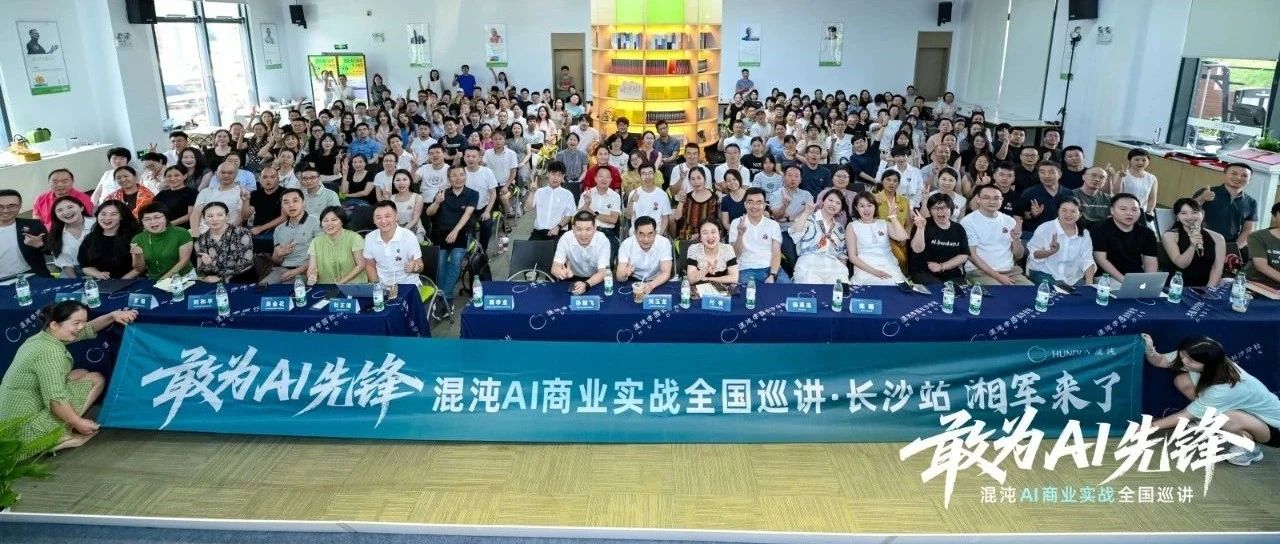
2025 年的春天,某网红茶茶门店里,有位女老板盯着后台数据发呆。 这个曾经靠奶茶日销过万的品牌,如今会员续费率从 60% 跌落到 15% ,群发的促销短信被三成用户标注为骚扰。 同样,有位家居老板正对着短视频后台叹气:投了五十万广告费,请了二十个探店博主,那句" 引领家居潮流" 的 slogan 下,转化率始终在 1% 以下徘 徊。 这不是两个老板的困局,而是一个时代的阵痛。 当中国中小企业的平均寿命跌破 3 年,当流量成本十年涨了 30 倍,传统的 " 爆款思维" 渠道依赖" 早已失灵。 这两个案例,均来自于 混沌AI商业实战全国巡讲 的首站长沙中的分享。 巡讲现场展示的数据触目惊心:制造业企业从 10 人扩张到 100 人时,平均人效下降 53% ,管理成本占比却从 8% 飙升至 22% 。 规模不再是优势,反而成了枷锁。 这些数字背后,是中国中小企业正在经历的一场静默革命。 这场始于长沙的 混沌AI商业实战全国巡讲 ,不聊玄虚的技术名词,只解具体的商业困局。 混沌· AI 创新院想做的,是帮企业把 "AI" 这两个字母,变成车间里的流水线、货架上的周转率、客户手机里的复购提醒,是从岗位提效到业务重构, ...

雷军,为何又成了?
混沌学园· 2025-07-05 07:35
Core Viewpoint - Xiaomi's resilience in the automotive market is highlighted by the successful launch of its first SUV model, YU7, which received 290,000 orders within an hour despite previous controversies and challenges [2][6][7]. Group 1: Sales Performance and Market Response - The YU7 model garnered 200,000 orders within just 3 minutes of its launch, and nearly 290,000 orders in one hour, achieving a lock-in rate exceeding 60% [2][6]. - This remarkable sales performance occurred despite a backdrop of negative publicity following a tragic accident involving the SU7 model, which had severely impacted Xiaomi's reputation [3][4][5]. Group 2: Trust and Brand Loyalty - Xiaomi's success can be attributed to a decade-long effort in building a trust "moat" with its users, who are familiar with its ecosystem of products, creating a strong emotional connection [8][9]. - The trust established through consistent product quality and user experience allowed customers to view the YU7 as a reliable investment, akin to a high-yield financial product [10]. Group 3: Leadership and Public Perception - Lei Jun's personal credibility plays a crucial role in Xiaomi's brand image, as he has effectively engaged with the public through social media, amassing a significant following [11][12]. - Despite facing backlash from previous incidents, Lei Jun's relatable persona has helped maintain user trust, as many customers see him as more than just a businessman [13]. Group 4: Crisis Management - In response to the negative publicity from the SU7 accident, Xiaomi's legal team acted swiftly to counter misinformation, while the technical team provided detailed vehicle data to address safety concerns [16]. - The company also managed subsequent controversies regarding product features by offering compensation and clarifying miscommunications, which helped mitigate backlash [20][21]. Group 5: Market Strategy and Consumer Insights - Xiaomi identified a key market opportunity by focusing on user comfort and convenience for family vehicles, rather than solely competing on technical specifications with brands like Tesla and NIO [24]. - Research indicates that younger consumers, particularly women, prioritize vehicle aesthetics, which aligns with Xiaomi's design approach for the YU7 [25][26]. Group 6: Production Challenges - Despite the initial sales success, Xiaomi faces significant production challenges, as the existing factory is already operating at full capacity, leading to potential delivery delays for YU7 orders [28][30]. - The company has initiated the construction of a second factory to alleviate capacity constraints, but it will not be operational until mid-2024, raising concerns about meeting demand [31][32][33]. Group 7: Future Outlook - The long-term success of Xiaomi in the automotive sector will depend on its ability to convert initial market enthusiasm into sustained brand loyalty, which hinges on resolving production bottlenecks and maintaining product quality [39].


Perplexity挑战谷歌:苹果想高价收购的AI搜索新物种,到底什么来头?
混沌学园· 2025-07-04 10:12
Core Viewpoint - Perplexity, an AI search startup, is being considered for acquisition by Apple for up to $30 billion, indicating its potential to disrupt traditional search engines like Google [1][36]. Group 1: Company Overview - Perplexity is a two-year-old startup with fewer than 100 employees, challenging the conventional search engine model by focusing on providing direct answers rather than links [2][8]. - The company aims to address user frustrations with traditional search engines, which often prioritize advertisements over genuine information [3][5]. Group 2: Product Philosophy - Perplexity's product philosophy emphasizes delivering direct answers to user queries, contrasting with Google's link-centric approach [9][10]. - The platform encourages users to ask questions in natural language, simplifying the search process and enhancing user experience [11][12]. Group 3: Competitive Strategy - Perplexity does not aim to directly compete with Google but instead targets a different user base by focusing on complex queries that require deeper understanding [16][23]. - The company has identified a niche in providing solutions for "cognitive users" who seek high-quality, efficient information retrieval [16][17]. Group 4: Organizational Culture - The founder, Aravind Srinivas, promotes a culture of accountability and user-centricity, ensuring that the team remains focused on delivering value rather than merely chasing growth [25][31]. - Perplexity's commitment to transparency is evident in its answer generation mechanism, which includes source citations, fostering user trust [30][33]. Group 5: Future Outlook - Perplexity is exploring partnerships with major tech companies like Apple and Samsung to integrate its AI search capabilities into devices, which could significantly enhance user growth [22][36]. - The startup represents a shift in the search engine paradigm, moving from content distribution to becoming a cognitive collaboration partner for users [36][37].


人均1亿美元年薪挖人;机器狗售价1299美元,会踢球会聊天;小米1999元AI眼镜,深夜放大招…… |混沌 AI 一周焦点
混沌学园· 2025-07-04 10:12
Core Trends - Meta's aggressive recruitment of OpenAI talent highlights a talent monopoly crisis in the AI industry, with a focus on building a "super-intelligent team" to compete against OpenAI [2][4] - The rise of open-source models is expected to accelerate, providing more opportunities for smaller companies as major players face talent shortages and competition [3][4] - Gartner warns that 40% of AI agent projects may fail due to cost overruns and unclear value propositions, indicating a potential bubble in the AI sector [8][17] Company Developments - Meituan launched an AI decision-making assistant, "Kangaroo Consultant," leveraging data from 4 million stores to reshape the restaurant industry [5][6] - Hengbot introduced a consumer-grade AI robot dog, Sirius, priced at $1,299, aiming to revolutionize the smart pet market [7] - Xiaomi unveiled its first AI glasses at a competitive price of $1,999, enhancing the smart wearable ecosystem [15] Model Capabilities - Black Forest Labs released an open-source image editing model, FLUX.1 Kontext, with 12 billion parameters, challenging major players like Google and GPT-4o [10][11] - Zhiyu AI's 9B model achieved 23 state-of-the-art results in evaluations, while Kuaishou's Keye-VL model excelled in video understanding tasks [12][13] Investment and Financing - Siro secured $50 million in Series B funding to enhance its AI sales coaching platform, indicating strong investor confidence in AI sales technology [16][18]


拥抱 AI,CEO 必须做的 10 件事
混沌学园· 2025-07-03 09:34
Core Viewpoint - The article emphasizes that AI is no longer a future concept but has already transformed the present and will reshape the future at an unprecedented speed, presenting both opportunities and challenges for business leaders [1][2]. Group 1: AI's Impact on Business - AI is not merely a tool iteration but a survival revolution that requires a cognitive restructuring among CEOs [2]. - Over 70% of companies that have adopted AI report significant improvements in operational efficiency, with cost reductions ranging from 20% to 50% [9]. - Companies like Amazon have increased sales through AI-driven recommendation algorithms, improving accuracy by 30% [11]. Group 2: Course Introduction - The course titled "Embrace AI: 10 Things CEOs Must Do" aims to provide actionable steps for leaders to integrate AI into their decision-making processes [3][32]. - The course will help CEOs transition from being mere observers of AI to becoming active participants in their companies' AI transformations [33]. Group 3: Practical AI Exercises - The article outlines ten practical exercises for CEOs to engage with AI, starting with simple actions like replacing traditional apps with AI tools on their phones [19]. - It encourages leaders to utilize AI for deep research, automate repetitive tasks, and analyze meetings for insights [20][22]. - The exercises aim to enhance leaders' understanding of AI and its applications in their daily operations [26]. Group 4: Target Audience - The course is designed for CEOs, managers, and HR/COO roles who are looking to implement AI culture and organizational change within their companies [33]. - Participants will learn to build their own AI toolchains and systems to support decision-making and execution [33].

当 AI 遇上企业战略:如何用智能工具破解增长困局?
混沌学园· 2025-07-02 11:37
Core Insights - The article discusses the struggle of many companies to adapt to AI tools like ChatGPT and DeepSeek, highlighting issues such as decision-making rigidity, delayed user demand perception, and inefficient cross-department collaboration [1][2][3] - It emphasizes that the transformation driven by AI is not merely a technological upgrade but a fundamental restructuring of corporate strategic logic [3] Strategic Framework - Strategy is defined not as a lofty vision but as a practical system that can be implemented [4][5] - Successful strategists must understand AI tools, akin to generals needing to grasp new weaponry [5] - Leading companies have transitioned from ad-hoc decision-making to a fully integrated AI-driven process for business diagnosis and strategic execution [6] Misconceptions in Strategy - The article debunks three common misconceptions: - Strategy should be systematic, consistent, and executable, as demonstrated by Huawei's transition from low-end to high-end products [7] - AI should be viewed as a mindset rather than just a tool, utilizing a triadic model of assistant, advisor, and coach to maximize its potential [7] - Growth should be a predictable outcome rather than a random occurrence, employing the "131 principle" and MVP (Minimum Viable Product) for validation [7] Understanding Business Essence - A deep understanding of business essence is crucial for identifying hidden growth engines [8] - A case study of a pet food company illustrates how shifting the focus from "pet food" to "family health management" led to a 300% increase in customer spending [10] Methods for Clarifying Business Essence - Three key methods are proposed: 1. Diagnosing core issues through a vicious cycle diagram to identify root causes of performance challenges [11] 2. Employing the "Five Questions" method to clarify business essence [13] 3. Utilizing dual-driven market insights combining VOC (Voice of Customer) and JTBD (Jobs To Be Done) theories to accurately capture user needs [13] Ensuring Strategic Execution - The article addresses the critical question of how to determine annual key battles for effective strategy execution [15] - It suggests that short-term efficiency relies on tools while long-term success depends on cognitive upgrades [16] - Three practical steps are outlined: 1. Understanding why consumers pay and questioning the underlying assumptions [16] 2. Identifying the annual key battle with clear direction and quantifiable goals [18] 3. Building a human-AI collaborative organization to enhance productivity and focus on unique human capabilities [19] Organizational Transformation in the AI Era - The future organization will consist of "super individuals" and "intelligent agents," where the rarity lies in discernment rather than mere individual skills [21] - The goal is to leverage AI to enhance work efficiency and employee value [21][22]

报名倒计时|混沌创新院25级仅余少量席位,速速锁定!
混沌学园· 2025-07-01 12:42
我们始终坚持: 只为那些开放进取、求新求变、希望企业在AI时代仍能长足发展的同学开放名额。 目前 已有来自飞鹤、旺旺、华住、柠萌影视、传音控股、方里 等各行业先锋企业创始人、一号位及核心 高管加入! AI时代,对企业既是挑战也是机会。 站在技术变革与商业重构的交汇点,唯有持续学习与认知跃迁,才能抓 住下一轮增长的红利。 混沌创新院25级,将系统讲授AI时代的底层思维和方法论——从第一性原理出发,到AI实战落地,帮助企 业和创业者穿越周期,找到10x增长的引擎。 开学倒计时,报名将在8天后截止,目前仅余少量席位,扫码报名锁定! ...

混沌AI商业实战全国巡讲,躬身入局即刻出发!
混沌学园· 2025-06-30 11:48
Core Viewpoint - The article emphasizes the launch of the "Chaos AI Business Practical National Tour," aimed at empowering businesses to effectively apply AI in various operational scenarios, highlighting the importance of hands-on experience and real-world application in the AI landscape [1][7]. Group 1: Event Overview - The "Chaos AI Business Practical National Tour" will cover 20 innovative cities across the country, focusing on practical applications of AI in business [1]. - The event is designed for core decision-makers in innovative businesses, entrepreneurs seeking AI opportunities, and CEOs or business leaders [2]. Group 2: Target Audience - The tour specifically invites "practitioners" who are actively involved in AI applications rather than mere observers [1][10]. - Participants include top business school professors and experienced AI practitioners who have successfully implemented AI for business efficiency [12]. Group 3: Practical Approach - The event promises immersive, hands-on training led by AI practical coaches, focusing on real business challenges faced by participants [5][13]. - The goal is to co-create actionable strategies, content, and solutions in collaboration with AI, moving beyond theoretical demonstrations [5]. Group 4: Key Application Areas - The six core application areas for AI in business highlighted in the article are: 1. Sales and Customer Value Enhancement 2. Product Innovation 3. Business Strategy 4. Brand Marketing 5. Full-Scale Operations 6. Organizational Efficiency [8].

蔡澜:我没有死过,但我活过
混沌学园· 2025-06-28 02:05
Core Viewpoint - The article highlights the multifaceted life and entrepreneurial journey of Cai Lan, emphasizing his unique approach to food, culture, and personal philosophy, which transcends traditional boundaries and creates a distinctive personal brand in the culinary industry [3][10][28]. Group 1: Personal Philosophy and Attitude - Cai Lan's life philosophy revolves around enjoying life and embracing diverse lifestyles, as he believes in living fully and not being confined by traditional norms [32][34]. - He maintained a positive outlook on life, even in the face of personal losses and health challenges, continuing to explore food and writing [33][35]. Group 2: Culinary Influence and Brand Development - Cai Lan's culinary entrepreneurship is rooted in his personal brand, leveraging his extensive knowledge and cultural insights to create unique dining experiences [16][18]. - He established brands like "Cai Lan Hong Kong Dim Sum" and "Cai Lan Vietnamese Noodles," focusing on high-quality, culturally rich dining options that resonate with consumers [19][20]. - The brands emphasize authenticity and storytelling, with a commitment to quality ingredients and traditional preparation methods [19][22]. Group 3: Cultural Integration in Business - Cai Lan integrates cultural elements into his dining establishments, using his literary works and calligraphy to enhance the dining atmosphere, making it a cultural experience [25][27]. - His approach to food as a cultural vehicle allows consumers to connect with deeper meanings and philosophies while enjoying their meals [26][27]. Group 4: Cross-Industry Innovation - Cai Lan's career exemplifies cross-industry innovation, blending elements from film, literature, and culinary arts to create a unique business model that challenges conventional industry boundaries [12][14][28]. - His ability to navigate and merge different fields has opened new avenues for cultural and culinary entrepreneurship, providing fresh perspectives on business development [14][28].

从工具到伙伴:一场关于"AI与我"的深度探索即将开启
混沌学园· 2025-06-27 11:41
Core Viewpoint - The article emphasizes the need to redefine the relationship between humans and AI, shifting from merely using AI tools to coexisting and collaborating with AI in a meaningful way [2][6][12]. Group 1: AI Evolution - AI has evolved from a simple search engine and content generation tool to a sophisticated entity capable of mimicking human thought processes [2][3]. - This evolution signifies the arrival of a new era where the interaction with AI requires a fundamental change in mindset [3]. Group 2: Educational Approach - The course led by Wei Yao (欧爷) focuses on a humanistic perspective of AI, highlighting the importance of collaboration over mere usage [4][7]. - It aims to help individuals transition from a mindset of anxiety about AI tools to one of partnership and co-creation with AI [9][10]. Group 3: Learning Outcomes - Participants will learn to establish a long-term collaborative relationship with AI, moving away from a tool-centric approach [10]. - The course introduces a unique framework called "Human Sensitivity Five Steps" to facilitate meaningful dialogue with AI, fostering genuine insights [10]. - It encourages individuals to recognize and cultivate their unique human capabilities that AI cannot replicate, positioning them as "cognitive mutants" in the AI era [10][12].