
美股研究社

Search documents
AI日报丨特斯拉官网罕见刊出卖方分析师预期汇总,AI耳机销量涨超600%
美股研究社· 2025-12-31 11:25
整理 | 美股研究社 在这个快速 变 化的 时代, 人工 智能技术正以前所未有的速度发展,带来了广泛的机会 。 《AI日 报 》致力于挖掘和分析最新的AI概念股公司和市场趋势,为您提供深度的行 业 洞察和 价 值 分析。 A I 快 报 【AI耳机销量涨超600%,智能穿戴设备功能持续提升】 实时翻译的AI耳机、一键拍摄的AI眼镜、实时监测身体数据的智能手表……从体验尝鲜到健康 生活的"数字伙伴",AI可穿戴设备功能持续提升。 一家AI耳机相关负责人表示,伴随着大语言模型推出,推理成本下降,AI耳机的人机交互能力 大幅提升。 2025年上半年,AI耳机市场线上销量增长636%。机构数据预测,2025年,中国智能穿戴设 备市场规模有望突破3000亿元,出货量预计突破7100万台,其中智能手表、手环贡献超80% 份额。 【亚马逊:将为美国政府机构AI系统投资高达500亿美元】 日前,亚马逊网络服务(AWS)宣布了一项计划,即首次为美国政府构建并部署专门用于人工 智能和高性能计算的系统,该计划承诺将投入高达500亿美元,以增强该公司为美国联邦政府 客户提供的人工智能和超级计算能力。 【AI公司MiniMax寻求通过 ...



一盎司白银罕见贵过一桶油!商品市场的“新霸主”来了?
美股研究社· 2025-12-30 10:49
Core Viewpoint - Silver prices have surpassed a 45-year record and are expected to double, creating a rare phenomenon in the commodity market where the price of silver exceeds that of crude oil [3]. Group 1: Silver Price Dynamics - As of December 29, COMEX silver prices reached $74.79 per ounce, while WTI crude oil was at $57.68 per barrel, marking a rare occurrence since the launch of WTI futures in 1983 [3]. - The strong rise in silver prices is driven by both investment and industrial demand, with silver being used as a wealth preservation tool and a hedge against currency devaluation [5][9]. - Industrial applications, particularly in clean energy sectors like solar panels and electric vehicles, have significantly increased silver consumption, providing robust long-term demand support [5][9]. Group 2: Supply Constraints - The supply constraints in the silver market are becoming a key structural factor supporting its price, as global pure silver deposits are nearly exhausted, leading to silver being produced as a byproduct of other metals [13]. - The current gold-silver ratio is around 60, indicating potential for silver prices to rise relative to gold, with arguments suggesting that silver prices need to exceed $200 per ounce to surpass inflation-adjusted historical peaks [13]. - Despite the bullish sentiment, there are cautious views in the market, with some analysts predicting a potential price correction for silver to around $42 per ounce by the end of next year [13]. Group 3: Oil Market Challenges - The global oil market is facing dual pressures of oversupply and structural demand transformation, with international oil prices having dropped 21% since 2025, reaching low levels post-pandemic recovery [6][14]. - Analysts suggest that restoring the historical price relationship between oil and silver may require a significant correction in silver prices rather than a strong rebound in the oil market [14]. - U.S. crude oil production has surged to approximately 13.5 million barrels per day, contributing to the ongoing supply imbalance, and unless major oil-producing countries coordinate substantial production cuts, the oversupply situation is likely to worsen [14].

竞争加剧 + 估值承压,Palantir 的故事还能延续吗?
美股研究社· 2025-12-30 10:49
Core Viewpoint - The market's optimism towards Palantir (PLTR) is primarily driven by the anticipation of its Artificial Intelligence Platform (AIP), which is expected to deliver secure, reliable, and resilient AI solutions [1]. Market Expectations - The market expects Palantir's AIP to dominate the enterprise AI market, significantly contributing to the company's stock price increase over the past year [1]. - Analysts express concerns that the current market optimism may be excessive, posing risks to the company's valuation [3][4]. Competitive Landscape - Palantir faces increasing competition from major cloud computing companies like Microsoft, Amazon, and Databricks, which are rapidly developing their own AI platforms [3][7]. - Databricks, valued at $134 billion, poses a significant threat by entering Palantir's core markets with its unique data lake architecture [7]. - The rise of self-developed tools by potential clients represents a fundamental shift in the competitive landscape, as companies may prefer to develop their own solutions rather than rely on Palantir [10][11]. Financial Metrics and Valuation - Palantir's current non-GAAP P/E ratio stands at 260.61, significantly higher than the industry average of 24.55, indicating a premium valuation that reflects high investor expectations [11]. - Analysts warn that the company's growth may not justify such a high valuation, especially as competition intensifies and product differentiation diminishes [11][12]. Risks and Concerns - The company is at risk of losing pricing power as competitors' products become more comparable to Palantir's offerings, which could lead to downward pressure on prices and margins [10][11]. - Any signs of growth slowdown or reduced order sizes could trigger a reevaluation of the company's valuation, given the current high price levels [12][15]. Strategic Partnerships - Palantir has formed strategic partnerships with major cloud providers like Amazon to enhance its market position, aiming to leverage these collaborations for scaling its AIP [13]. - Despite these partnerships, analysts remain skeptical about Palantir's ability to maintain a competitive edge in a rapidly evolving market [14]. Conclusion - Analysts maintain a "hold" rating on Palantir's stock, citing the current "perfect pricing" state and the potential for significant downside risks if market conditions change [14]. - The company faces a challenging environment with increasing competition and evolving market dynamics, necessitating a cautious approach from investors [14][15].


从 CPU 逆袭到 GPU 争霸,3500亿的AMD能否颠覆英伟达?
美股研究社· 2025-12-30 10:49
Core Viewpoint - AMD has significantly expanded its scale as a GPU company, currently valued at approximately $350 billion, but analysts still believe it may struggle to generate substantial investment returns despite its stock performance tripling compared to the S&P 500 index [1][2]. Financial Performance - AMD's revenue grew by 36% year-over-year, increasing from $6.8 billion to $9.2 billion, primarily driven by demand from large enterprise customers, particularly in the data center and server business [10][16]. - The annualized revenue for AMD is nearing $37 billion, indicating a substantial business scale [11]. - The diluted earnings per share (EPS) rose from $0.47 to $0.75, reflecting a 60% year-over-year increase [16]. Product and Market Position - AMD has built a competitive product matrix leveraging its Ryzen processors and AI technology, enhancing its market competitiveness [4]. - The company's strength is evident in its support for global supercomputers, showcasing its advanced GPU products and leading CPU technology [7]. - AMD's data center business is a core segment, contributing nearly 50% of total revenue with quarterly earnings reaching $4.3 billion [18]. Strategic Partnerships - AMD announced a significant collaboration with OpenAI, involving a $6 billion agreement linked to GPU deployment, which may prioritize AMD's products in future computational needs [19]. Market Challenges - Despite the growth, AMD's non-GAAP gross margin remained flat at 54%, indicating limited pricing power amidst increasing competition [14]. - Analysts express concerns over the potential profit margin squeeze due to the unique partnership structure with OpenAI, which could impact AMD's profitability [20]. - The competitive landscape is intensifying with alternatives like Google's TPU, posing challenges to AMD's future growth [24]. Future Outlook - AMD's revenue forecast for the next quarter is approximately $9.6 billion, with a projected gross margin of around 54.5%, indicating a slowdown in growth momentum [23]. - The GPU industry is currently in a multi-player expansion phase, but AMD may require more time to achieve sufficient profit growth as the market transitions to a cost-sensitive phase [26]. - Analysts highlight the risk of a "one-stop replacement" scenario, where AMD's ability to produce competitive chips could lead to significant revenue growth, especially as Intel faces challenges [27].


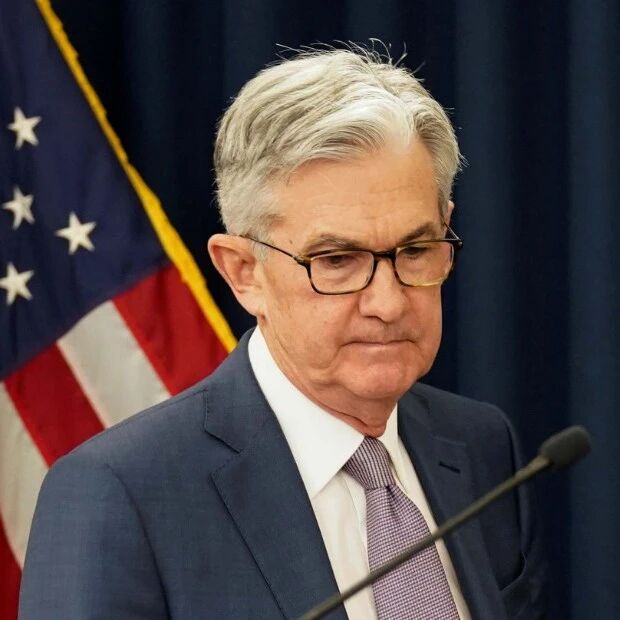
鲍威尔又危险了!特朗普:仍可能解雇,甚至考虑起诉
美股研究社· 2025-12-30 10:49
Core Viewpoint - The article discusses President Trump's potential plans regarding the next Federal Reserve Chair, indicating his dissatisfaction with current Chair Jerome Powell and hinting at possible changes in leadership [5][6][8]. Group 1: Trump's Intentions - Trump has a preferred candidate for the next Federal Reserve Chair but is not in a hurry to announce it, stating he will do so at the appropriate time [6][8]. - He has expressed a desire for Powell to resign and has considered firing him, reflecting ongoing criticism of Powell's leadership [6][9]. - The selection process for the new Chair includes candidates such as Kevin Hassett, Kevin Warsh, Christopher Waller, Michelle Bowman, and Rick Rieder, with Hassett being viewed as a leading contender [8]. Group 2: Federal Reserve's Current Situation - The Federal Reserve has lowered interest rates in its last three meetings, but officials indicated that only one rate cut might occur by 2026 [9]. - Trump is contemplating legal action against Powell for "serious misconduct" related to a current renovation project at the Federal Reserve [9]. - Powell's term as Chair ends in May 2026, but his term as a board member lasts until 2028, complicating Trump's ability to appoint a new member if Powell chooses to remain [10].
AI日报丨Meta收购AI智能体初创企业Manus;软银斥资40亿美元助力AI业务推进
美股研究社· 2025-12-30 10:49
Group 1 - The article highlights the rapid development of artificial intelligence (AI) technology, presenting significant opportunities in the market [3] - SoftBank has agreed to acquire DigitalBridge for $4 billion as part of its AI strategy, with the deal approved by the board [5] - Elon Musk discussed AI and autonomous driving collaboration with Israeli Prime Minister Netanyahu, indicating ongoing cooperation with Tesla and legislative progress in Israel [6] Group 2 - Meta has acquired AI startup Manus for several billion dollars, marking its third-largest acquisition since its inception [8] - Prior to the acquisition, Manus was valued at $2 billion during a new funding round, with the negotiation process completed in a very short timeframe [9] - NVIDIA has completed a $5 billion stock purchase from Intel, acquiring 214,776,632 shares at a price of $23.28 per share, as part of a plan to jointly develop PC and data center chips [10]




巴菲特谢幕、OpenAI搅动万亿市值、谷歌强势崛起......2025全球十大商业事件盘点
美股研究社· 2025-12-29 12:13
Group 1 - The core theme of the article revolves around significant business events in 2025 that have reshaped the technology landscape, capital logic, and the direction of the era, highlighting the rise of AI competition and strategic alliances among major players [3][5][6]. - The U.S. government announced a $500 billion investment in AI infrastructure through the "Stargate" project, aiming to build 20 large-scale AI data centers, although the project faced delays and funding challenges [7][9]. - CoreWeave's IPO marked a pivotal moment for AI computing power rental, with its valuation soaring to approximately $230 billion, demonstrating the market's recognition of AI as a service [10][12][14]. - NVIDIA became the world's first company to reach a market capitalization of $5 trillion, driven by the surging demand for GPUs in AI applications, with its stock price increasing by about 90% over six months [29][31][32]. Group 2 - The article discusses the strategic partnership between NVIDIA and Intel, where NVIDIA invested $5 billion to strengthen its position in the CPU market, indicating a shift from competition to collaboration in the AI era [15][17][19]. - OpenAI, despite not being publicly listed, emerged as a significant market influencer, with its activities causing substantial fluctuations in stock prices across the AI sector [21][23][26]. - Germany's decision to revise its 2035 ban on internal combustion engines reflects the tension between aggressive transformation goals and market realities, allowing traditional industries more time to adapt [4][44][45].

亚马逊无所不能?
美股研究社· 2025-12-29 12:13
Core Viewpoint - Despite the acceleration of growth in Amazon Web Services (AWS) and the expansion of its most profitable commercial business, Amazon's stock performance has lagged behind the overall tech market due to concerns over projected capital expenditures reaching $125 billion in 2025 and potentially increasing in 2026 [1][5] Group 1: Business Model and Strategy - Amazon is positioning itself as a low-cost computing provider by focusing on customized chips (Trainium3) and transitioning to a service-led revenue structure, with service revenue currently accounting for 60% of total sales [1] - The company's long-term strategy prioritizes infrastructure investment in AWS, with a remaining performance obligation of $200 billion and an average remaining term of 3.8 years, indicating strong demand visibility [5] - The shift towards service-oriented revenue, particularly from third-party sellers, enhances profit margins and reduces capital requirements compared to self-operated retail [11][12] Group 2: Competitive Landscape and AI Strategy - AWS aims to become one of the most efficient AI token producers globally, with the launch of the EC2 Trn3 super server based on the Trainium3 chip, which offers 4.4 times the performance and 40% lower energy consumption compared to its predecessor [7][8] - The focus is shifting from peak training performance to throughput and unit token cost, as McKinsey predicts that by 2030, inference workloads will dominate AI workloads, comprising over 50% of total AI computing [7][8] Group 3: Financial Performance and Valuation - In Q3 2025, Amazon's total net sales reached $180.2 billion, with service net sales of $106.1 billion, representing 59% of total sales, highlighting the significant shift towards higher-margin service revenue [11][16] - Advertising revenue grew to $17.7 billion in Q3, up 24% year-over-year, and is closely tied to actual purchasing behavior, providing a high-margin revenue stream that supports AWS's capital expenditures [15][16] - Current stock price is approximately $232 per share, with a market capitalization of $2.48 trillion, reflecting a reasonable valuation given the company's transition towards high-margin service businesses and a 16% year-over-year increase in operating cash flow [16][17] Group 4: Long-term Investment Appeal - Amazon's potential lies in its ability to monetize demand across multiple business segments (AWS consumption, third-party fees, subscription services, and advertising) while reducing unit token costs through vertical integration [22] - The company is expected to maintain a 35% operating margin in AWS while accelerating growth, making it an attractive opportunity for long-term investors focused on core profitable businesses amid a significant technological transformation [22]
黄金与白银:2025 年的“刺激支票”
美股研究社· 2025-12-29 12:13
Core Viewpoint - The article emphasizes the significant increase in the value of precious metals, particularly gold and silver, over the past two years, leading to substantial gains for consumers and households in the U.S. and globally [7][9][29]. Group 1: Precious Metals Market Overview - The most apparent trading opportunity is to buy gold and silver before 2025, as this is widely recognized and expected to yield high returns [9][10]. - Costco has been selling approximately $200 million worth of gold and silver bars each month in 2024, indicating strong consumer demand [11]. - Millions of consumers globally are holding unrealized gains in their investments in gold, silver, platinum, and other precious metals [12]. Group 2: Consumer Gains from Precious Metals - Costco has potentially sold around $2 billion worth of gold bars to U.S. consumers, with gold prices rising from an average of $2,400 per ounce in 2024 to $4,500 per ounce, resulting in a gain of $1.425 billion for American households [13][17]. - Approximately 11% of Americans own gold, and 12% own silver, with the average American household holding about 0.7 ounces of gold [17]. - The increase in gold prices has contributed to a net worth increase of approximately $181 billion for U.S. households over the past year [20]. Group 3: Silver Market Dynamics - In 2022, Americans purchased about 43 million ounces of silver bars and coins, with the current silver price rising from $29 per ounce to $79 per ounce, leading to a total gain of $635 billion for households if each holds an average of 10 ounces [21][27]. - The total increase in household net worth from gold and silver price appreciation could exceed $500 billion, based on conservative estimates [29]. Group 4: Global Demand and Strategic Implications - The demand for physical silver has surged, with Shanghai silver prices reaching $85 per ounce, indicating a premium over U.S. prices [30][34]. - China is set to implement export restrictions on silver, highlighting its strategic importance in various industries, which may influence U.S.-China trade relations [31][32]. Group 5: Future Market Expectations - The article suggests that many consumers may take the opportunity to sell jewelry for significant profits, benefiting from the strong market performance of precious metals [36]. - Investors are advised to consider the end of the year as a critical time for potential profit-taking, which may create short-term selling pressure but will not diminish the long-term fundamentals supporting precious metals [37][40].

AI日报丨分析师质疑英伟达与Groq的交易规避监管,亚马逊暂停意大利无人机送货计划
美股研究社· 2025-12-29 12:13
Group 1 - The article discusses the rapid development of artificial intelligence (AI) technology, highlighting the broad opportunities it presents in the current fast-changing era [3] - Nvidia's $20 billion deal with Groq is characterized as a "non-exclusive licensing agreement," which analysts suggest may be a strategy to avoid regulatory scrutiny [5][6] - Analysts from Bernstein and Cantor emphasize that this deal helps Nvidia expand its technology stack and solidify its leadership position in the AI market, with Bank of America describing the transaction as "surprising, expensive but strategically significant" [6] Group 2 - Beijing has launched three AI+ education applications, including a large model for basic education and a data space for educational data, aimed at enhancing personalized teaching and data utilization [7][8] - A white paper states that Artificial Intelligence Data Centers (AIDC) have evolved from backend systems to become "frontier sources" driving innovation, indicating a significant shift in their role [9] - Nvidia is leading a major infrastructure transformation in global data centers by shifting power standards from traditional AC to 800V DC, preparing for high-density computing environments [11] Group 3 - Amazon has suspended its commercial drone delivery plans in Italy due to the country's regulatory environment, despite positive discussions with local aviation authorities [12]
