美股研究社

Search documents
AI日报丨有道AI答疑笔销售额破亿;查诺斯警告AI投资面临泡沫风险
美股研究社· 2025-12-17 14:47
Group 1 - The article highlights the rapid development of artificial intelligence (AI) technology, presenting significant opportunities in the market [3] - NetEase Youdao's AI product, the "Youdao AI Answer Pen," has achieved over 100 million yuan in sales within less than a year, indicating a successful market entry and a shift towards sustainable commercialization in domestic AI hardware [5] - Alibaba's Qianwen APP has launched a new video generation model, Wanxiang 2.6, which supports character role-playing and offers features like audio-visual synchronization and multi-angle generation, marking a significant advancement in AI-driven video content creation [6] Group 2 - Investor Jim Chanos is increasing his short position on data centers, warning that both traditional and AI-focused data centers have low capital returns and high capital intensity, likening the current situation to a potential "Bubble 2.0" similar to the 2000 internet bubble [7][8] - Major tech companies, including OpenAI, Meta, and Microsoft, are advocating for legislative reforms to streamline federal approval processes for AI infrastructure and semiconductor production projects in the U.S., with a key vote on the SPEED Act expected soon [9] - Apple plans to expand its iPhone lineup to at least seven models by fall 2027, including its first foldable iPhone and a 20th-anniversary edition, aiming to cater to a broader range of consumer budgets [11] - The UK Competition and Markets Authority is investigating Google for potential anti-competitive behavior in the advertising technology sector [12] - Tesla aims to produce complete batteries at its Berlin-Brandenburg factory by 2027, with an annual production target of up to 8 GWh, supported by a nearly 1 billion euro investment to enhance supply chain resilience in Europe [13] - OpenAI is reportedly in talks with Amazon to secure at least $10 billion in funding, potentially utilizing Amazon's proprietary AI chips, which would compete with Nvidia's AI accelerators [14][15]



Visa高管:2026年将是“AI导购”元年
美股研究社· 2025-12-16 10:11
Core Viewpoint - The article discusses the anticipated mainstream adoption of AI-assisted shopping by 2026, driven by collaborations between payment giants and AI companies [6][8]. Group 1: AI-Assisted Shopping - Oliver Jenkyn, President of Visa's Global Market Group, predicts that AI-assisted shopping will become a part of everyday life by 2026, with interactive shopping through platforms like ChatGPT transitioning from niche to mainstream [6][8]. - The shift from "AI-assisted decision-making" to "Agentic Commerce," where AI fully manages payments and purchases, will take time due to consumer psychological barriers [8]. Group 2: Consumer Behavior - Current obstacles to adopting AI for shopping are not technological but rather stem from consumer habits, as many users prefer to maintain control over final payment decisions [8]. - Standardized and frequently purchased items, such as laundry detergent and coffee creamer, are expected to be the first categories where AI can successfully manage orders autonomously [8]. Group 3: Payment Giants' Strategies - In response to the upcoming paradigm shift, global payment giants are accelerating their positioning to capture consumer attention as they transition to chatbots as new entry points [10]. - Visa is engaging with all major industry players, while Mastercard has partnered with Microsoft, and PayPal has signed an agreement with OpenAI to integrate its digital wallet into OpenAI's chatbot [10].

做空英伟达的13个理由
美股研究社· 2025-12-16 10:11
在此需说明,分析师并非认为人工智能本身缺乏发展持续性,相反, 分析师 预计它将继续保 持高速增长。 真正面临风险的,是那些投入到数据中心、图形处理器、冷却系统、供电及布线等领域高达数 千亿美元的人工智能资本开支 —— 未来的人工智能技术,根本无需如此庞大的硬件投入规 模。 在数据中心支出缩减的潜在风险面前,没有哪家企业比英伟达受到的冲击会更大。 如今,该公司的绝大部分营收和利润都来源于为数据中心提供相关产品。 人 工 智 能 资 本 开 支 增 长 难 以 为 继 的 原 因 以下 13 点,正是 分析师 认为当前人工智能资本开支增长无法持续的核心依据: 1. 未来人工智能的能耗将显著降低。 deepseek公司以及即将落地的脉冲神经网络就是有力例 证,这类神经网络在闲置时可自动停机以实现节能。深度求索公司,即便未采用英伟达的图形 处理器,也研发出了具备竞争力的大型语言模型。 7. 新技术落地周期远超预期。 自动驾驶领域的案例表明,这类技术要熟练应对复杂任务,所 需时间往往比预想中更长。 关键在于技术要能真正成熟可用。马斯克等人十年前就承诺推出自动驾驶汽车,而谷歌旗下的 自动驾驶公司Waymo出行,直至如今才 ...

AI日报丨英伟达收购SchedMD;Skild AI采购星动纪元灵巧手
美股研究社· 2025-12-16 10:11
Group 1 - The article highlights the rapid development of artificial intelligence technology, presenting significant opportunities in the market [3] - Skild AI, a US-based robotics company valued at $14 billion, has adopted a Chinese company's advanced dexterous hand technology, marking a significant entry of Chinese components into the global humanoid robot supply chain [5] - Ant Group has upgraded its AI health application AQ to "Antifufu," focusing on a "health+" strategy with new features for health companionship, inquiries, and services [6] Group 2 - SenseTime has launched the Seko 2.0, the first multi-episode generative AI agent, showcasing significant advantages in consistency for multi-episode video generation [7][8] - NVIDIA has acquired SchedMD, a leading developer of open-source workload management systems for high-performance computing and AI, planning to continue the development of the Slurm software [10] - NVIDIA has introduced the Nemotron 3 open model family, aimed at providing an efficient platform for building agent-based AI applications, with the first model already available and larger models expected in 2026 [11]
甲骨文:估值泡沫退去后的机会来了
美股研究社· 2025-12-16 10:11
市场钟摆的摆动往往会走过头,且在两个方向上皆是如此。眼下,这种情况似乎正发生在甲骨 文公司(ORCL)身上。 在与 OpenAI 敲定巨额合作订单后,甲骨文的曾一度陷入非理性繁荣,众多投资者也纷纷上调 评级、转为看涨。 但分析师认为,经历此番下跌后,股价已充分反映了相关执行风险,因此重申对甲骨文的 强力 买入 评级。 【如需和我们交流可扫码添加进社群】 甲骨文最新季度财报显示,营收同比增长 14.2%,达到 161 亿美元,但这一数据未达 16% 的预期增速。 值得肯定的是,云计算业务营收同比大增 34%,超额完成 "增幅超 30%" 的业绩指引,目前 该业务营收占比已接近公司总营收的 50%。 | | | | | | Fiscal 2025 | | | | | | | | | Fiscal 2026 | | | | | --- | --- | --- | --- | --- | --- | --- | --- | --- | --- | --- | --- | --- | --- | --- | --- | --- | --- | | | Q1 | | Q2 | | Q3 | | Q4 | | TOTAL ...

美联储主席争夺战风云突变:沃什崛起是特朗普的烟雾弹吗?
美股研究社· 2025-12-16 10:11
Core Viewpoint - The competition for the next Federal Reserve Chair has intensified, with Kevin Hassett and Kevin Warsh emerging as the leading candidates, influenced by recent endorsements and market predictions [5][6]. Group 1: Candidates and Predictions - Kevin Warsh has recently gained traction, with prediction markets showing his chances at 48% on Kalshi and 49% on Polymarket, while Kevin Hassett stands at 41% and 43% respectively [6]. - The shift in the competition dynamics follows Trump's indication of choosing between the two Kevins and support from influential figures like Jamie Dimon, CEO of JPMorgan [6][7]. Group 2: Concerns and Analysis - Concerns have been raised about Hassett's suitability due to his overt support for Trump's policies, which could undermine the Fed's independence and potentially disrupt the bond market [6][12]. - Analysts suggest that Warsh's candidacy may be exaggerated, as much of the support appears to come from external sources rather than Trump's inner circle [7]. Group 3: Background on Kevin Warsh - Warsh, a former Fed governor, has been a vocal critic of the Fed's involvement in social issues and has held various prestigious positions, including at Stanford University and as a partner in an investment firm [9]. - His background includes significant ties to influential financial and academic institutions, which may bolster his candidacy [9]. Group 4: Fed Independence and Policy Implications - The next Fed Chair is expected to maintain independence and credibility, especially regarding inflation, with analysts skeptical about significant policy shifts following the leadership transition [12]. - Hassett has countered concerns about his potential partisanship, suggesting that leadership roles can lead to changes in perspective [13].

“太空数据中心”成AI必争之地?马斯克与贝佐斯互掐,Altman也想插一脚
美股研究社· 2025-12-12 11:07
Core Viewpoint - The article discusses the emerging competition in the space of AI data centers, driven by tech billionaires like Elon Musk and Jeff Bezos, who are exploring the potential of deploying AI computing capabilities in orbit to address the growing energy consumption challenges on Earth [4][6]. Group 1: Industry Trends - The trend of moving data centers to space aims to overcome physical limitations on Earth, particularly the significant power requirements for AI model training and inference [6]. - Supporters envision a future where satellites equipped with AI chips operate in orbit, powered by abundant solar energy, and transmit processed data back to Earth [6]. - The potential for space-based data centers is highlighted by the fact that satellites can harness solar energy at a rate 30% stronger and up to six times more total energy than on Earth, while also benefiting from near-zero temperatures for cooling [7]. Group 2: Key Players - Elon Musk's SpaceX plans to utilize upgraded Starlink satellites for AI computing, potentially valuing the company at $800 billion [4]. - Jeff Bezos's Blue Origin is also developing technology for orbital AI data centers, with significant progress on the New Glenn rocket project [8]. - Other tech leaders, including OpenAI's Sam Altman and Google's executives, are exploring opportunities in this space, with Google planning to deploy test satellites carrying AI chips by early 2027 [9][10]. Group 3: Challenges and Considerations - Despite the promising outlook, there are significant engineering challenges and cost-effectiveness questions regarding the deployment of data centers in space [5][11]. - Technical hurdles include temperature management, radiation protection, and the transmission of large data volumes back to Earth without delays [11]. - The skepticism surrounding the feasibility of space-based data centers is rooted in concerns about whether they can compete with terrestrial facilities, especially as ground-based power limitations are alleviated [12].

Adobe:下一个PayPal还是下一个谷歌?
美股研究社· 2025-12-12 11:07
Core Viewpoint - Adobe has delivered strong quarterly performance with double-digit revenue growth and a steady increase in Annual Recurring Revenue (ARR), yet the market perceives it as a mature company facing growth stagnation, leading to declining valuation multiples [1][2][6]. Financial Performance - In Q4 of FY2025, Adobe's revenue reached $6.19 billion, a 10% year-over-year increase, with non-GAAP earnings per share of $5.50, up 14% [4]. - The company generated over $10 billion in operating cash flow and completed nearly $12 billion in stock buybacks, reducing the number of outstanding shares by over 6% [5]. - The subscription business remains the core growth engine, with AI-driven revenue now accounting for over one-third of total business [5][15]. AI Integration and Growth - Adobe has fully integrated AI technology into its product suite, with a significant increase in the usage of generative credits, maintaining an ARR growth rate above 10% [2][5]. - The number of large customers with over $10 million in ARR has grown by over 25%, exceeding 150, and new order volumes have reached historical highs [5]. Market Position and Valuation - Adobe is compared to PayPal, as both companies hold leading positions in their respective fields and generate stable cash flows, yet both have seen valuation multiples contract due to competitive pressures [8][11]. - Adobe's ARR growth rate is projected at approximately 11% for FY2025 and 10.2% for FY2026, down from previous rates of 15%-20%, which supported higher growth valuations [11][12]. Competitive Landscape - Adobe faces intense competition from platforms like Canva and Figma, as well as Microsoft's Copilot and various large language models, which threaten its market position [11][12]. - The market's perception of Adobe has shifted from a "structural winner" to a "potentially disrupted traditional giant" [12]. Future Outlook - If Adobe can maintain an ARR growth rate above 10% and continue to commercialize AI effectively, its valuation could shift from a "stagnant growth software company" with a 15x P/E ratio to an "AI-enabled compounding business" with a 20-22x P/E ratio [17]. - The current P/E ratio relative to growth is below 1, indicating that Adobe is an attractive investment opportunity [18]. Strategic Direction - Adobe's strategy focuses on controlling the entire workflow and content supply chain rather than just providing one-off services, which is seen as a correct direction [20]. - The success of this strategy will ultimately determine whether Adobe can expand its competitive moat or if it will diminish [20]. Conclusion - Labeling Adobe as the "new PayPal" reflects an overly pessimistic market sentiment, while its core business fundamentals remain strong [23]. - If management executes its strategy effectively, maintaining a 10% ARR growth and a 45% profit margin, the current valuation may appear highly attractive in hindsight [24].

AI日报丨马斯克宣布xAI将在萨尔瓦多推出全球首个全国性AI教育项目,迪士尼与OpenAI达成合作
美股研究社· 2025-12-12 11:07
Group 1 - Disney has entered a three-year licensing agreement with OpenAI, allowing the use of over 200 characters and environments from Disney, Marvel, Pixar, and Star Wars for generating social short videos on the Sora platform. Disney will invest $1 billion in OpenAI and will utilize OpenAI's API and ChatGPT for new product development [5] - Elon Musk's xAI has partnered with the Salvadoran government to launch the world's first national AI education program, aiming to implement personalized AI tutoring across public schools in El Salvador over the next two years [6] - Eight leaders in the AI industry, including NVIDIA's CEO Jensen Huang and OpenAI's CEO Sam Altman, were named as "Persons of the Year" by Time magazine, highlighting their influence on the future of AI [7] Group 2 - SoftBank is exploring potential acquisitions, including data center operator Switch, with discussions ongoing regarding a valuation of approximately $50 billion for Switch [8] - Apple lost an appeal in its long-standing dispute with Epic Games, with the court ruling that Apple violated a lower court's order by charging developers a 27% commission on transactions outside the App Store [10] - OpenAI launched its advanced AI model GPT-5.2, which is expected to enhance user experience in various applications, while Google shares fell over 2% following the announcement [11][13] - NVIDIA plans to host a private summit addressing power shortages affecting data centers, indicating the impact of energy constraints on AI development [14] - Tesla's U.S. sales dropped to a near four-year low in November, despite the introduction of cheaper versions of its popular electric vehicles, with total sales declining nearly 23% year-over-year [15]
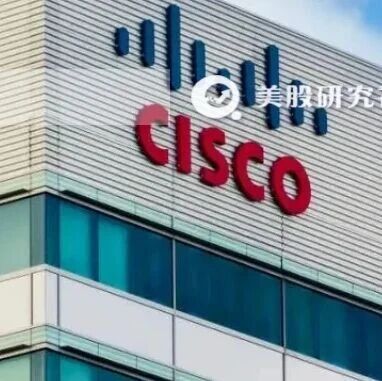
思科重返互联网泡沫鼎盛时期
美股研究社· 2025-12-12 11:07
Core Viewpoint - Cisco has reached a historical high for the first time in over 25 years, closing at a price that surpasses its previous peak during the internet bubble [1]. Group 1: Cisco's Performance - Cisco's current market capitalization is $317 billion, significantly lower than its peak market cap of $550 billion in 2000 [2]. - Investors who bought Cisco stock at the 2000 peak are finally seeing a profit, although the current valuation is much lower than it was at that time [2]. Group 2: Comparison with Other Companies - General Electric (GE) also recently surpassed its historical high, reaching $314.28 in October before stabilizing around $280 [6]. - GE's current market cap has decreased by several hundred billion dollars compared to its 2000 valuation, and the company has undergone significant restructuring and asset divestitures over the past two decades [6]. - The current GE is focused on the aerospace sector, making it difficult to directly compare with its 2000 counterpart, which was a large diversified industrial group [6]. Group 3: Historical Context - The peak of the internet bubble occurred in March 2000, with the Nasdaq index reaching its highest point [6]. - Among the top ten companies by market capitalization in the Russell 1000 index at that time, only Microsoft has maintained a strong performance, with a cumulative increase of over 700% since its peak in late 1999 [7]. - Cisco and GE are the only two companies from that era that have recently returned to their historical highs, while Intel and Nokia have not yet recovered to their 1999-2000 peak prices [7].