美股研究社

Search documents
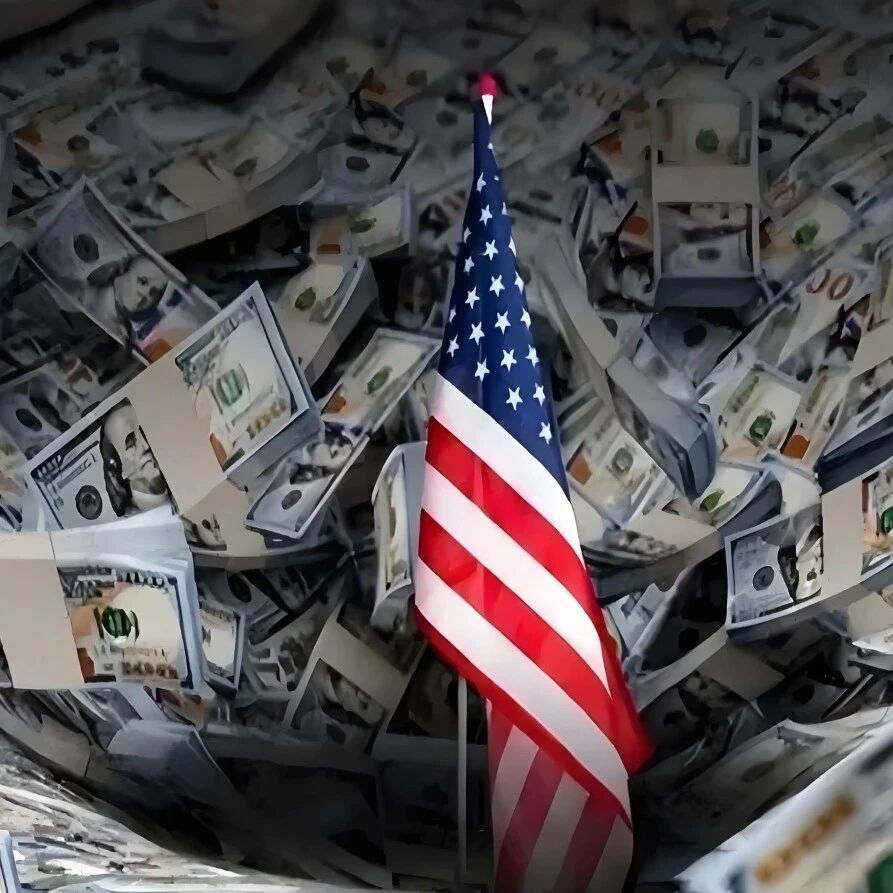
120 万人丢了饭碗,美股涨了 17 万亿:AI 正在把美国撕成两半
美股研究社· 2025-12-10 12:06
Core Viewpoint - The article highlights a paradox in the U.S. economy where significant layoffs and a perceived recession coexist with a booming stock market, particularly driven by AI and technology investments [5][20][36]. Group 1: Employment and Layoffs - Since 2025, U.S. companies have announced approximately 1.2 million layoffs, with the scale of layoffs expected to match levels seen during the 2008 financial crisis [5][7]. - In November alone, 71,321 jobs were announced for elimination, marking the third-highest monthly layoff figure on record [9]. - The manufacturing sector has been particularly hard hit, with a reduction of 18,000 jobs in November, continuing a trend of job losses in this sector [11][12]. Group 2: Economic Sentiment - A survey by Affirm indicates that 60% of Americans believe the economy is in a recession, primarily citing inflation and rising living costs as key factors [20][21]. - Despite the negative sentiment, market pricing suggests a low probability (33%) of a recession occurring before 2027, reflecting a disconnect between public perception and market performance [21][27]. Group 3: Stock Market Dynamics - The S&P 500 index has seen a significant increase, with a total market value rise of approximately $17 trillion since April, approaching historical highs [5][22]. - The current market rally is heavily concentrated among a few tech giants, with the top 10% of stocks accounting for about 76% of the market's total value, a record high [37][41]. - The article notes that the growth in GDP is largely driven by AI-related investments, which accounted for about 63% of the GDP increase in Q2 2025 [26][30]. Group 4: Economic Disparities - There is a growing divide between financial assets and the real economy, with private sector financial assets relative to GDP at historically high levels, indicating a "Wall St vs Main St" disparity [38][40]. - The article emphasizes that the ongoing economic conditions favor asset holders, suggesting that individuals without assets may face significant challenges in the current economic landscape [40].


SpaceX+空中数据中心,马斯克AI的下一个宏大叙事?
美股研究社· 2025-12-10 12:06
Core Viewpoint - The article discusses the potential of SpaceX's valuation reaching $800 billion, driven by the concept of "orbital data centers" as a new AI infrastructure narrative, which could significantly enhance its market position and capabilities [5][7][11]. Group 1: SpaceX Valuation and Market Position - SpaceX is reportedly initiating a secondary stock sale with a valuation of $800 billion, doubling its previous valuation of $400 billion from July [7]. - This valuation would position SpaceX as the highest-valued private unicorn, surpassing OpenAI, and would rank it 13th in the S&P 500 index, between JPMorgan and Oracle [7]. - The valuation of SpaceX alone exceeds the combined market capitalization of the six largest U.S. defense contractors [9]. Group 2: Orbital Data Center Concept - Elon Musk is promoting the idea of SpaceX entering the orbital data center market, which aims to address physical limitations on Earth [13]. - Key advantages of moving data centers to space include extreme cooling capabilities, unlimited energy from solar sources, and zero operational costs [14]. - Musk envisions launching 1 million tons of payload annually to deploy a satellite constellation capable of providing 100 GW of AI computing power [14]. Group 3: Competitive Landscape - Despite SpaceX's leading position, other companies are also actively pursuing the orbital data center space [16]. - Starcloud, a startup from Redmond, Washington, has raised over $20 million to develop orbital data centers utilizing solar energy and passive cooling [16]. - Axiom Space is developing an orbital data center product line, planning to launch two nodes by the end of 2025, with over $700 million raised [16]. - Google is advancing Project Suncatcher, aiming to build a satellite constellation with custom TPU hardware for space-based AI and computing [16].

iRobot 财报解读:债务危机下的生存困局
美股研究社· 2025-12-09 10:53
Core Viewpoint - iRobot has experienced a significant decline in its business trajectory over the past few years, with the downturn becoming evident even before the pandemic stimulus measures that temporarily masked the issues [1][2]. Group 1: Market and Financial Performance - iRobot's Q3 revenue dropped to $145.8 million, a decline of approximately 25% from $193.4 million in the same period last year [10][12]. - Sales in the U.S. market plummeted by 33%, while the EMEA market saw a 13% decline. Japan's market remained stable when excluding currency effects, but reported a 9% drop [10]. - The company's gross margin under GAAP decreased from 32.2% to 31.0%, and non-GAAP gross margin fell from 32.4% to 31.2% [12]. - Operating expenses increased by about 15% year-over-year, reaching $62.9 million under GAAP, despite a significant drop in revenue [10][12]. - iRobot's operating profit turned into a loss of $17.7 million, with an operating margin plummeting from 3.8% to -12.1% [13]. Group 2: Debt and Cash Flow Situation - iRobot's balance sheet shows signs of deterioration, with cash and cash equivalents shrinking from $134.3 million at the end of last year to $24.8 million [13]. - The company has $205.3 million in term loans classified as current liabilities, and shareholders' equity has fallen to -$26.9 million [15]. - The company is currently in a negative cash flow situation, making traditional valuation metrics like P/E ratio irrelevant [17]. Group 3: Market Sentiment and Valuation - Analysts have assigned a "sell" rating to iRobot, citing a combination of factors including a 33% drop in revenue, negative profit margins, and a lack of available financing options [19]. - The company's market capitalization is approximately $117 million, with an enterprise value of about $323 million, reflecting a significant discount compared to industry averages [17]. - The sales-to-enterprise value ratio stands at 0.59, indicating a more than 55% discount compared to the average in the non-essential consumer goods sector [17].


Adobe财报前瞻:目前“最佳”的机会
美股研究社· 2025-12-09 10:53
Core Viewpoint - Both Adobe and Salesforce have lost favor on Wall Street, yet their fundamentals continue to strengthen, presenting a dilemma: they could either be the most attractive stocks in the software sector or companies in decline whose downturn has not yet reflected in financial data [1]. Adobe Financial Performance - Adobe is set to release its Q4 FY2025 earnings report on December 10, which will provide insights into its performance for the fiscal year and expectations for the next fiscal year [3]. - The company's success over the past decade is attributed to its transition to a subscription-based business model, with nearly 97% of revenue coming from subscriptions. The revenue breakdown includes approximately 74% from digital media, 25% from digital experience, and 1% from publishing and advertising [4]. - For FY2024, Adobe's revenue target is set at no less than $23.65 billion, with expectations of quarterly revenue surpassing $6 billion for the first time [4][7]. - The projected net profit margin for the current fiscal year is expected to exceed 30%, with earnings per share (EPS) estimated between $16.53 and $16.58, leading to a trailing P/E ratio of approximately 20.5 [4][7]. Revenue Guidance and Growth - Adobe's revenue guidance has been consistently raised throughout the year, with the latest targets exceeding earlier projections made in March [8]. - Over the past decade, Adobe's core financial metrics have shown steady improvement, with no signs of adverse impacts from AI on its business. The average annual revenue growth rate for its products from 2021 to 2024 is projected to be no less than 12%, with Document Cloud experiencing a compound annual growth rate of 23% [8]. AI Integration and Market Perception - Concerns about AI disrupting Adobe's business model may be overstated, as the management has emphasized that AI presents significant growth opportunities [10]. - Adobe's professional user base requires high-quality tools, and while AI can enhance content production efficiency, it also increases the demand for post-processing, which could drive growth for Adobe [10][11]. - The integration of AI into Adobe's core products, such as Photoshop and Illustrator, is being executed through Adobe Firefly, which uses authorized datasets to mitigate legal risks [11]. - The adoption of AI features has led to a 70% penetration rate among eligible customers using Adobe Experience Platform's AI assistant, indicating that AI is becoming a growth driver rather than a threat [13][14]. Valuation and Stock Buyback - Adobe's current P/E ratio stands at 20, with a forward PEG ratio of 1.16, suggesting it is undervalued compared to typical tech valuations. The forward EV/EBITDA ratio is 12.4, and the forward P/FCF ratio is 15.34 [14]. - If Adobe maintains a 12% net profit growth rate, its forward P/E could drop to 14.9 by 2026, indicating a valuation more typical of industrial companies despite its tech-level profitability [15]. - The company has been actively repurchasing shares, with a total buyback of nearly $12 billion over the past four quarters, reflecting confidence in its undervalued stock [15][16]. Investment Outlook - Analysts view Adobe as an attractive investment opportunity, likely to yield substantial returns in the coming years, as the divergence between market narratives and the company's fundamentals becomes more pronounced [18]. - A comparison is drawn to Google's previous undervaluation, suggesting a similar turnaround could occur for Adobe by 2026 [19].


AI日报丨阿里成立千问C端事业群;谷歌将于2026年推出AI智能眼镜
美股研究社· 2025-12-09 10:53
【阿里成立千问C端事业群】 12月9日,阿里已成立千问C端事业群,由阿里巴巴集团副总裁吴嘉负责。据悉,该事业群由 原智能信息与智能互联两个事业群合并重组而来,包含千问APP、夸克、AI硬件、UC、书旗 等业务。 【美国FDA批准首个AI工具帮助加快肝病药物开发】 整理 | 美股研究社 在这个快速 变 化的 时代, 人工 智能技术正以前所未有的速度发展,带来了广泛的机会 。 《AI日 报 》致力于挖掘和分析最新的AI概念股公司和市场趋势,为您提供深度的行 业 洞察和 价 值 分析。 A I 快 报 此次开源意味着硬件厂商、手机厂商和开发者均可基于AutoGLM,在自己的设备或系统中复 现一个能"看懂"屏幕、并模拟真人进行点击、输入、滑动的AI助手。目前,AutoGLM已支持 微信、淘宝、抖音、美团等超过50个高频中文应用的核心场景。 【OpenAI:ChatGPT目前每周服务超过8亿用户】 OpenAI表示,过去六个月,国际API客户增长超过70%,日本是美国以外企业API客户数量最 多的国家。员工报告称使用AI带来了可衡量的价值,在受访企业中,75%的员工表示,工作中 使用AI提升了产出速度或质量。员工报告每 ...

所有商品都将“像黄金一样”!美银Hartnett:做多大宗商品是明年最佳“火热交易”
美股研究社· 2025-12-09 10:53
Group 1 - The core view is that by 2026, going long on commodities will be the best trading theme, with all commodity price trends expected to rise similarly to gold [2][3] - The shift in global economic policy from "monetary easing + fiscal tightening" to "fiscal easing + de-globalization" post-pandemic is a key factor driving this outlook [2][6] - The report highlights that the current environment favors commodities, particularly oil and energy, as the best contrarian investment opportunity due to anticipated economic policies and geopolitical changes [3][9] Group 2 - The report indicates that the structural opportunity for commodities arises from the paradigm shift in global economic policies, which has changed the performance dynamics between bonds and commodities [6][11] - Latin American stock markets have shown significant growth, up 56% year-to-date, indicating a broader market trend towards natural resources and metals [7][9] - Historical patterns suggest that bond markets are cautious about "hot" economic policies, with a tendency for yields to rise following the nomination of a new Federal Reserve Chair [10][13] Group 3 - The report notes that while commodities are favored, there is caution regarding the bond market, particularly with the potential for rising yields due to economic interventions and labor market weaknesses [11][17] - The stock market is experiencing a complex differentiation, with liquidity peaks corresponding to credit spread lows, indicating a shift in investment focus towards AI capital expenditures [19][21] - Specific sectors such as cyclical stocks related to "Main Street" (housing, retail, transportation) are viewed as having the best relative upside potential, driven by expected economic stimulus policies [22]

最高法院或赋权特朗普撤换理事,美联储独立性临大考
美股研究社· 2025-12-09 10:53
以下文章来源于金十财经 ,作者金十小金 金十财经 . 美国最高法院周一似乎倾向于扩大总统解雇众多监管机构负责人的权力,尽管一位关键大法官表达了保护美联储免受政治压力的意愿。 在长达两个半小时的口头辩论中,大法官们探讨了特朗普声称拥有几乎不受限制的撤职权力的边界,虽然联邦法律保护相关机构领导人不会 因政策分歧而被解雇。 大法官布雷特·卡瓦诺(Brett Kavanaugh)直接询问副检察长D.约翰·绍尔(D. John Sauer), 经济学家们担心特朗普在此案中大获全胜 会危及美联储理事会的独立性。 作为特朗普任命的大法官,卡瓦诺表示:"我也有同样的担忧。" 尽管如此,正如预期的那样, 卡 瓦诺和其他五位保守派大法官大多接受了政府的论点,即总统有权对行政分支内数十个监管机构(如联邦贸 易委员会和国家劳工关系委员会)的负责人拥有更多控制权。 这些机构的负责人由总统任命,经参议院批准,任期交错,并且通常对同一政党可同时任职的官员人数有限制。但同样由特朗普任命的大法 官尼尔·戈萨奇(Neil Gorsuch)提出,这些机构在实践中可能构成了一个不恰当的"政府第四分支",由未经选举的官僚管理,他们既不对 总统直接负责 ...

93.3%暴涨之后:奇梦岛在潮玩赛道站稳了吗?
美股研究社· 2025-12-08 11:18
Core Viewpoint - The article discusses the transformation of HERE (formerly known as Quantum Song) from an adult education company to a pure-play trendy toy company, highlighting its financial performance and strategic direction in the competitive market of emotional consumption and cultural assets [3][5][7]. Financial Performance - In the first quarter of fiscal year 2026, HERE achieved revenue of 127 million RMB, a 93.3% increase quarter-over-quarter, surpassing the previous guidance of 100-110 million RMB [5][6]. - The company raised its revenue guidance for the second quarter to 150-160 million RMB, indicating confidence in short-term growth [5]. - The company reported a net loss of approximately 25.8 million RMB for the quarter, which has widened compared to the previous quarter [13]. IP Portfolio - As of September 30, HERE owns 17 IPs, including 11 proprietary IPs, 4 exclusive licensed IPs, and 2 non-exclusive licensed IPs [5]. - The top three performing IPs are WAKUKU, generating approximately 89.73 million RMB in revenue, ZIYULI with 20.76 million RMB, and SIINONO contributing 12.89 million RMB [5][6]. Market Dynamics - The global collectible toy market reached 57.1 billion USD in 2023 and is expected to grow to 69.6 billion USD by 2028, with the Chinese IP toy market projected to grow from 57.8 billion RMB in 2025 to 91.1 billion RMB by 2028, reflecting a compound annual growth rate of over 17% [9][10]. - The market is highly fragmented, with nearly 80% of the Chinese market being occupied by numerous small brands, presenting both opportunities and competitive risks for new entrants like HERE [9][10]. Strategic Approach - HERE's strategy involves a dual approach of online and offline channels to enhance brand visibility and IP recognition, leveraging social media platforms for marketing [11][12]. - The company has expanded its offline presence with flagship stores and pop-up events in major cities, aiming to create an immersive brand experience [12]. Production and Supply Chain - HERE's plush blind box production exceeded 1 million units in August, marking a more than 20-fold increase since the beginning of the year, indicating a robust and flexible production system [6][13]. - The rapid scaling of production capacity is crucial for responding to market demands and supporting the launch of popular products [6]. Challenges Ahead - Despite initial success, HERE faces challenges in maintaining profitability and managing operational costs, which have significantly increased during its expansion phase [13]. - The company must evolve from creating a single hit product to establishing a sustainable system capable of consistently producing successful products [13].

债市“叛逆者”无视美联储降息,华尔街激辩谁对谁错
美股研究社· 2025-12-08 11:18
以下文章来源于金十财经 ,作者金十小金 金十财经 . 每日8点,为您呈上金融投资行业的国际动态、财经数据和市场观察。 来源 | 金十财经 债券市场对美联储降息的反应极不寻常。从某些指标来看,这种央行降息而美债收益率却攀升 的脱节现象,自上世纪90年代以来就未曾出现过。 这种背离意味着什么,已成为一场激烈的辩论。 各方观点不一:乐观者视之为经济将避免衰退 的信心标志;中性观点认为这是市场向2008年金融危机前的常态回归;而所谓的"债券义 警"们则倾向归咎于投资者正对美国能否控制住不断膨胀的国债失去信心。 但有一件事是清楚的: 债券市场并不买特朗普的账 。特朗普认为加快降息步伐将压低债券收 益率,进而降低抵押贷款、信用卡及其他各类贷款的利率。 随着特朗普很快将能够提名自己的人选取代现任美联储主席鲍威尔, 另一个风险浮出水面:美 联储可能因屈从于更激进放松政策的政治压力而损害其信誉——这可能会适得其反,助长本已 高企的通胀并推高收益率。 "特朗普2.0时代的一切都关乎压低长期收益率," 伦敦渣打银行G10策略主管史蒂文·巴罗 (Steven Barrow)表示。"在美联储安排政治人物并不会让债券收益率下降。" 美联 ...
AI日报丨英伟达推出CUDA 13.1 与 CUDA Tile,百度旗下昆仑芯拟赴港上市
美股研究社· 2025-12-08 11:18
Group 1 - Baidu's AI chip company Kunlun is preparing for an IPO in Hong Kong, having previously considered listing on the STAR Market, with a pre-investment valuation exceeding 25 billion RMB [5] - SoftBank is in talks to acquire DigitalBridge Group Inc., a private equity firm focused on data centers, to capitalize on the surge in AI-driven computing demand, with a potential deal to privatize DigitalBridge valued at approximately 1.8 billion USD [6] - NVIDIA has launched CUDA 13.1 and CUDA Tile, which CEO Jensen Huang describes as the largest upgrade in 20 years, introducing a virtual instruction set for modular parallel programming [8] Group 2 - Meta Platforms has postponed the release of its "Phoenix" mixed reality glasses from late 2026 to early 2027 to refine details and ensure a polished user experience [8] - Apple is facing significant talent loss, with around 40 engineers leaving for OpenAI in the past month, as speculation grows about CEO Tim Cook's potential departure next year [9] - Tesla plans to increase the number of electric vehicle charging ports in Japan by 40% to 1,000 by 2027, expanding its network from major cities to other regions [10][11]