是说芯语

Search documents
中芯国际设备供应商冲刺IPO!
是说芯语· 2025-06-22 10:02
Core Viewpoint - The article highlights the recent IPO progress of several semiconductor companies in China, indicating a growing trend in the semiconductor industry and potential investment opportunities. Group 1: IPO Progress of Semiconductor Companies - Multiple semiconductor companies, including equipment manufacturers and material suppliers, have announced their IPO advancements, such as Zhongke Instrument, Chengdu Super Pure, and Xinshi Technology [1] - Zhongke Instrument has completed its IPO counseling report and plans to list on the Beijing Stock Exchange after previously attempting to list on the Shanghai Stock Exchange [2] - Chengdu Super Pure has initiated its IPO counseling with Huatai United Securities, focusing on semiconductor etching devices and high-power laser devices [5][6] - Xinshi Technology's IPO application has been accepted by the Shanghai Stock Exchange, aiming to raise 785 million yuan for two major projects [8][12] Group 2: Company Profiles and Market Position - Zhongke Instrument specializes in dry vacuum pumps and vacuum instruments, essential for semiconductor manufacturing processes [3] - Chengdu Super Pure is recognized for its advanced surface treatment processes and high-purity materials, contributing to the semiconductor etching device market [5] - Xinshi Technology is a leading domestic manufacturer of semiconductor-grade perfluoroether rubber seals, breaking the monopoly of foreign companies in this sector [9][11] Group 3: Financial Performance and Projections - Xinshi Technology projects revenues of 130.47 million yuan and 207.55 million yuan for 2023 and 2024, respectively, with a net profit of 32.81 million yuan and 63.09 million yuan [12] - Zhongke Instrument's IPO journey reflects its strategic adjustments and readiness for the capital market, indicating strong governance and compliance [2] Group 4: Industry Trends and Competitive Landscape - The semiconductor industry in China is witnessing a shift towards domestic production capabilities, with companies like Xinshi Technology achieving significant market share and technological advancements [11][24] - The competitive landscape is evolving, with domestic firms increasingly challenging foreign dominance in critical components and technologies [11][19]


牛!东方理工大学2025级本科生实际学费为0!
是说芯语· 2025-06-22 04:23
Core Viewpoint - Ningbo Oriental University of Technology has set the tuition fee for the 2025 undergraduate program at 96,000 yuan per student per year, but offers a four-year scholarship that effectively makes the tuition fee zero for the 2025 cohort, aiming to attract high-quality students and alleviate financial burdens [1]. Group 1: Tuition and Scholarships - The university's tuition fee is 96,000 yuan per student per year, but the scholarship policy allows the 2025 cohort to have an effective tuition fee of zero [1]. - The scholarship is designed to attract outstanding students, particularly in the context of a limited intake of 70 students from Zhejiang Province for the Computer Science and Technology program [1]. Group 2: Institutional Goals - The university aims to position itself as a "high-level, innovative, and international" research-oriented institution, focusing on cultivating various high-end innovative talents [1]. - The non-profit educational model reflects the university's commitment to social contributions rather than economic returns, with a total investment of 46 billion yuan from the founder [1]. Group 3: Accommodation and Living Conditions - The accommodation fee is set at 2,000 yuan per student per year, which is considered moderate compared to other universities, ensuring a comfortable living environment for students [1].

兆易创新赴港 IPO,一年狂卖 43 亿颗芯片
是说芯语· 2025-06-21 01:55
Core Viewpoint - The article highlights the growth and strategic positioning of Zhaoyi Innovation, a leading domestic storage chip company in China, as it transitions from a niche player to a comprehensive semiconductor platform through its upcoming "A+H" listing and diverse product offerings [1][11]. Group 1: Company Overview - Zhaoyi Innovation plans to list on the Hong Kong Stock Exchange, aiming for a dual capital platform strategy [1]. - The company is projected to sell 4.362 billion chips and generate revenue of 7.356 billion yuan in 2024, with a cumulative revenue exceeding 21.2 billion yuan from 2022 to 2024 [2]. Group 2: Product Segments - Zhaoyi Innovation ranks second globally and first domestically in NOR Flash, sixth globally and first domestically in SLC NAND Flash, seventh globally and second domestically in niche DRAM, and eighth globally and first domestically in MCU [4]. - The company has developed a comprehensive product matrix covering NOR Flash, SLC NAND Flash, niche DRAM, MCU, and sensor chips [1]. Group 3: Market Position and Strategy - The company has established a distribution network covering over 40 countries, with the top five customers being distributors, accounting for 33.3% of sales [7]. - Zhaoyi Innovation's supply chain strategy includes a dual cooperation model with suppliers, where the top five suppliers account for over 70% of procurement [7]. Group 4: Technological Advancements - Zhaoyi Innovation is the first global manufacturer to mass-produce RISC-V core 32-bit MCUs, with a market share of 1.2% in 2024, ranking first among domestic manufacturers [5]. - The company has a strong focus on R&D, with a total investment exceeding 3.4 billion yuan and a projected R&D expense of 1.122 billion yuan in 2024, representing 15.3% of revenue [2][10]. Group 5: Future Growth and Market Trends - The company aims to leverage the growing demand for edge computing and AI, with plans to use IPO proceeds for advanced process R&D and automotive-grade product certification [11]. - Zhaoyi Innovation's automotive electronics revenue is expected to increase from 5% in 2022 to 12% in 2024, with NOR Flash entering the supply chains of major automotive manufacturers [12].

突发!美国拟撤销在华晶圆厂“豁免”!
是说芯语· 2025-06-21 01:09
Core Viewpoint - The U.S. plans to revoke the waivers that allow major semiconductor manufacturers like Samsung, SK Hynix, and TSMC to use American technology in their Chinese operations, which could significantly impact their production capabilities and competitiveness in the market [1][2][3]. Group 1: U.S. Policy Changes - The U.S. Department of Commerce has communicated to major semiconductor manufacturers about the potential revocation of their waivers for using American technology in China, which could escalate trade tensions [1][2]. - In October 2022, the U.S. imposed semiconductor export controls, initially granting a one-year waiver to these companies, which was later extended to an indefinite waiver in October 2023 [1][5]. - The potential withdrawal of these waivers would complicate the approval process for introducing advanced equipment and technologies, hindering technological upgrades and capacity expansion for these companies [3][5]. Group 2: Impact on Semiconductor Manufacturers - Samsung, SK Hynix, and TSMC are key players in the semiconductor industry, with significant operations in China that produce essential components for various sectors, including smartphones and automotive electronics [2][3]. - The loss of waivers could severely disrupt their technological upgrade processes, as they may face complex approval procedures or outright bans on using American technology [3]. - Increased operational costs may arise as these companies seek alternative technologies and equipment, which could be less mature and more expensive, potentially squeezing profit margins and affecting global competitiveness [3]. Group 3: Market Reactions - Following the news, shares of major U.S. semiconductor equipment manufacturers fell, with KLA Corp down 2.4%, Lam Research down 1.9%, and Applied Materials down 2% [4]. - The decline in stock prices reflects market concerns over reduced demand for semiconductor equipment if these manufacturers face operational restrictions in China [4]. - Conversely, Micron Technology's stock rose by 1.5%, as the potential limitations on Samsung and SK Hynix could provide Micron with opportunities to capture market share in the storage chip sector [4]. Group 4: Historical Context - The U.S. has frequently altered its semiconductor policies regarding China, with significant changes occurring over the past year, including the initial one-year waiver and its subsequent indefinite extension [5]. - The current situation reflects a reversal in policy, adding uncertainty to the future trajectory of the semiconductor industry and its global supply chain stability [5].


全球主流算力芯片参数汇总、整理、对比
是说芯语· 2025-06-20 13:38
Core Viewpoint - The article discusses the advancements and competitive landscape in the semiconductor industry, particularly focusing on the latest chip technologies from major players like NVIDIA, Intel, AMD, and various domestic manufacturers in China [1][3]. Group 1: Major Chip Manufacturers - NVIDIA has introduced several high-performance chips, including the H100-SXM with 80 billion transistors and a transistor density of 98 million/mm², and the upcoming H200 series [5][6]. - Intel is set to release the Gaudi2 and Gaudi3 chips, with Gaudi3 featuring a 5nm process technology [6][8]. - AMD's MI300 series, including MI300X and MI300A, showcases significant transistor counts of 1.53 billion and 1.46 billion respectively, with MI300X having a transistor density of 15 million/mm² [5][7]. Group 2: Domestic Chip Developments - Chinese manufacturers are also making strides, with chips like the MLU370-X4 featuring 39 billion transistors and a 7nm process technology [5][6]. - The article highlights various domestic chips, including the MLU290-M5 and MLU270 series, which are designed for specific applications and show competitive specifications [6][8]. - The development of specialized chips, such as the 推理专用芯片 (Inference Dedicated Chips), indicates a growing focus on tailored solutions within the domestic market [9]. Group 3: Performance Metrics - The article provides detailed performance metrics for various chips, including power consumption and arithmetic intensity, with NVIDIA's GB200 achieving an arithmetic intensity of 2500 BF16 [7][8]. - The efficiency of these chips is highlighted, with some achieving significant performance per watt, indicating advancements in energy efficiency alongside processing power [7][8]. - The memory bandwidth and capacity of these chips are also discussed, with NVIDIA's H200-SXM featuring a memory bandwidth of 4.8 TB/s, showcasing the high-performance capabilities of modern chips [8][9].



华为:昇腾芯片,盘古大模型5.5发布
是说芯语· 2025-06-20 09:59
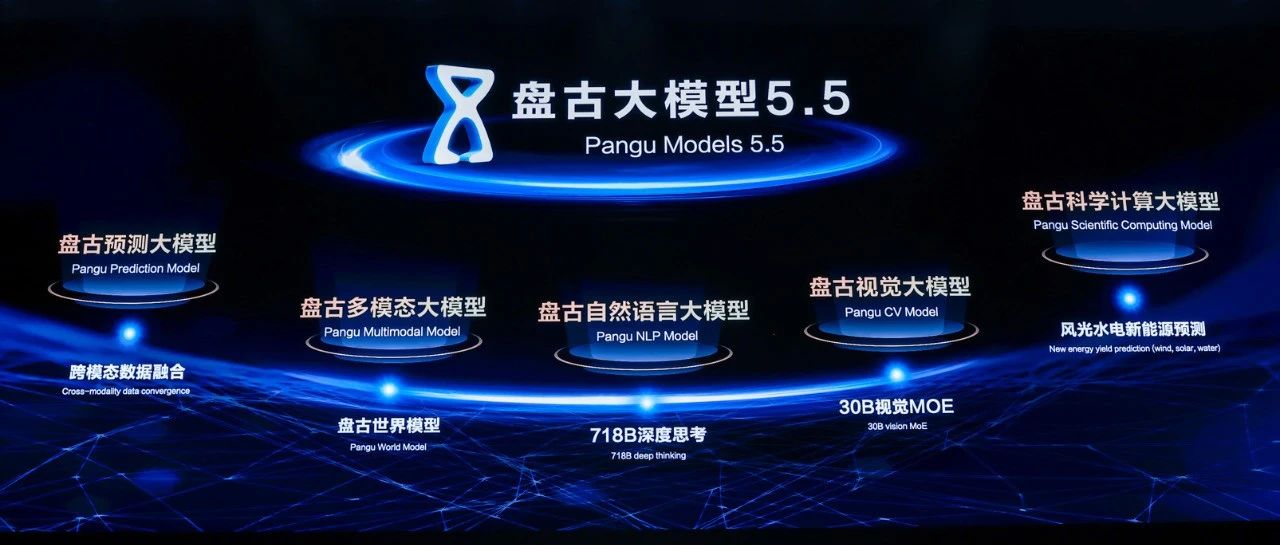
盘古CV大模型升级为业界最大的300亿参数MoE视觉大模型,并支持多维度泛视觉感知、分析和决策。 中国石油"昆仑大模型"在装备制造领域攻克亚毫米级缺陷识别难题,效率提升约40%。 盘古科学计算大模型加速拓展与更多科学应用领域的结合,如基于盘古大模型的深圳气象局"智霁"实现 AI集合预报,重庆气象局"天资·12h"强化灾害预警,能源企业通过盘古大模型提升风光水发电预测精 度。 "一年以来,盘古大模型深入行业解难题,在30多个行业、500多个场景中落地。"6月20日下午,在华为 开发者大会2025上,华为常务董事、华为云计算CEO张平安分享了盘古大模型在工业、农业、科研等领 域的丰富创新应用和落地实践,并重磅发布盘古大模型5.5,自然语言处理、多模态等5大基础模型全面 升级,加速重塑千行万业。 △盘古大模型5.5正式发布 在自然语言处理方面,盘古NLP大模型发布718B MoE混合专家模型,在知识推理、工具调用等领域达 到业界第一梯队,在高效长序列、低幻觉、快慢思考融合、Agent等特性上进行升级,提升用户体验。 盘古大模型基于昇腾云的全栈软硬件训练,这标志着基于昇腾可以打造出世界一流大模型。 基于盘古多模态大模 ...
重磅!蔚来拆分芯片!安徽神玑技术公司成立!
是说芯语· 2025-06-20 03:14
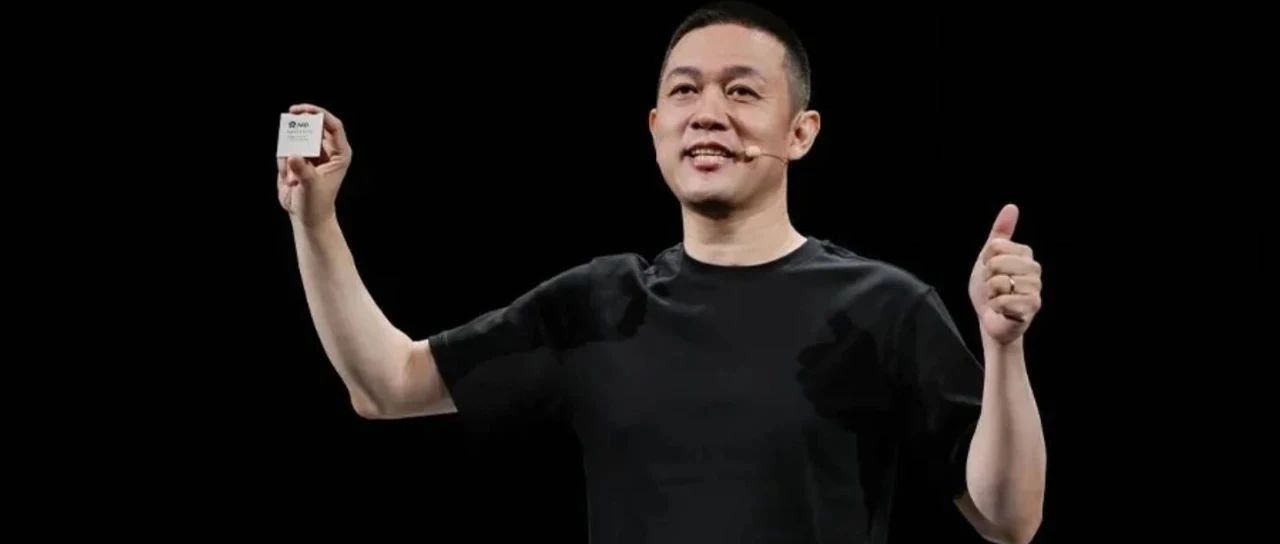
Core Viewpoint - NIO plans to establish an independent entity for its chip-related business, named Anhui Shenji Technology Co., Ltd, and is seeking strategic investors to support this initiative [1][3]. Group 1: Company Structure and Strategy - Anhui Shenji Technology Co., Ltd was registered on June 17, 2025, with a registered capital of 10 million RMB, focusing on technology services, integrated circuit design, and software development [1]. - The company is led by Bai Jian, who has experience in chip development from Xiaomi and currently oversees NIO's chip and smart hardware departments [1]. - NIO's chip business aims to not only meet its own needs but also to accept orders from other automakers, indicating a strategy to expand its market influence [2]. Group 2: Chip Development and Market Position - NIO has been investing in chip development since 2021, launching the "Yang Jian" lidar control chip and the "Shenji NX9031" smart driving chip, which is manufactured using 5nm technology and features over 50 billion transistors [2][4]. - The "Shenji NX9031" chip has already begun mass production and is designed to outperform generic industry chips, potentially reducing costs for NIO [4]. - NIO's founder, Li Bin, has publicly stated that the company's chips and operating systems are open to the industry, suggesting a willingness to collaborate and sell to other manufacturers [2]. Group 3: Financial Implications and Future Goals - The introduction of strategic investors is seen as a way to inject capital into NIO's chip division, which could accelerate technological advancements and help the company achieve its goal of profitability in the fourth quarter [4]. - There are speculations regarding the equity structure post-funding, which may involve either external funding only or an employee stock ownership plan [3].

国内RISC-V CPU设计公司大全,已经超过60家!
是说芯语· 2025-06-19 13:15
Core Insights - The domestic RISC-V industry has established a complete chain from IP design to system integration, with over 60 companies involved, covering technologies from low-power IoT to high-performance computing, and is expected to accelerate development under the trends of open-source ecology and self-control [1] Group 1: IP Design Companies - Companies like Xinlai, Saifang, and Xinyuan focus on processor IP development and promote ecological standardization [2] - Xinlai Technology is the first professional RISC-V processor IP company in mainland China, with self-developed IP series covering IoT, automotive electronics, and AI, and its NA900 series has achieved ASIL-D certification [4] - Saifang Technology is a leader in RISC-V technology in China, providing full-stack chip solutions and high-performance RISC-V CPU IP for AIoT and edge computing [5] - Jingxin Technology specializes in low-power RISC-V processor IP, with applications in embedded systems and SoC platforms [6] Group 2: Integrated Design Companies - Companies like Zhaoyi Innovation, Lexin, and Ruisi Xinke integrate RISC-V into products such as MCUs, communication chips, and servers, covering consumer electronics, automotive, and data centers [2] - Zhaoyi Innovation has produced the world's first RISC-V core MCU GD32VF103, with cumulative shipments exceeding 1 billion units [33] - Lexin Technology integrates RISC-V processors into ESP32-C3/C6 series chips, which support IoT applications and have received security certifications [35] Group 3: Vertical Scene Focused Companies - Other companies like Zhongke Haixin and Jiangxin Chuang focus on vertical scenarios such as automotive-grade chips or industrial control [3] - Zhongke Haixin specializes in automotive-grade RISC-V chip development and has completed nearly 100 million A-round financing [11] Group 4: Emerging Players - New companies such as Yisiwei and Zhi Xing Wu Jie focus on RISC-V core and SoC development, with applications in smart terminals and automotive electronics [12][29] - Companies like Kunlunxin and ZTE Microelectronics are also developing RISC-V cores while working on ARM architecture for server CPUs [15][18] Group 5: Notable Developments - The Beijing Open Source Chip Research Institute has developed the third-generation "Xiangshan" open-source high-performance RISC-V core, which competes with ARM N2 in performance [13] - Ruisi Xinke has released China's first fully self-developed high-performance RISC-V server chip "Lingyu," supporting DDR5 and PCIe 5.0, suitable for large model inference and all-flash storage [39]


半导体设备市场:中外冰火两重天!
是说芯语· 2025-06-19 12:02
Core Viewpoint - The global semiconductor equipment market is projected to grow by 21% year-on-year in Q1 2025, reaching $32.05 billion, despite a 5% quarter-on-quarter decline, indicating resilience in the industry amid geopolitical uncertainties and supply chain adjustments [1][37]. Regional Summaries Chinese Mainland - In Q1 2025, the revenue was $10.26 billion, maintaining its position as the largest single market globally, but experienced a 14% quarter-on-quarter and 18% year-on-year decline, reflecting a "double drop" trend [5][6][25]. - The market share of the Chinese mainland shrank from 47% in the previous year to 32% due to significant investments in semiconductor equipment in Taiwan and Korea [6]. Korea - The Korean semiconductor equipment market saw a robust performance in Q1 2025, with revenues of $7.69 billion, marking a 24% quarter-on-quarter and 48% year-on-year increase, driven by a recovery in memory chips and substantial investments from major companies [9][10]. - The Korean government’s "K-Semiconductor Strategy" includes significant tax incentives and subsidies, further boosting the market [10][11]. Chinese Taiwan - Taiwan's semiconductor equipment market experienced a remarkable growth of 203% year-on-year in Q1 2025, reaching $7.09 billion, fueled by major manufacturers' expansion plans and advanced packaging technologies [12][15]. - TSMC's aggressive investment in advanced processes, including a significant capital expenditure directed towards new technologies, has been a key driver of this growth [12][14]. North America - North America's equipment market revenue reached $2.93 billion in Q1 2025, reflecting a 41% quarter-on-quarter decline but a 55% year-on-year increase, indicating a "pulse-like" expansion pattern influenced by concentrated procurement in the previous quarter [16][17]. - The market is expected to rebound in Q2 2025, driven by ongoing investments in advanced manufacturing processes and local production initiatives [17]. Japan - Japan's semiconductor equipment market reported a 20% year-on-year increase in Q1 2025, reaching $2.18 billion, supported by government subsidies and local production expansions, despite an 18% quarter-on-quarter decline [19][20]. Europe - The European semiconductor equipment market faced a significant downturn, with revenues dropping 54% year-on-year and 11% quarter-on-quarter to $0.87 billion, attributed to ineffective policy execution and reduced capital expenditures [21][22]. - The lack of competitive local semiconductor manufacturing capabilities has exacerbated the market's decline, leading to increased supply chain risks [23][24]. Industry Dynamics - The global semiconductor equipment market is characterized by a structural differentiation, with high-end chips driven by AI demand maintaining price resilience, while mid-range chips face downward pressure due to overcapacity [39][42]. - The industry is currently in a recovery phase, with Q1 2025's decline attributed to seasonal fluctuations and geopolitical factors rather than a complete cycle shift [40][42]. - Future growth is anticipated as capacity expansion and demand recovery are expected to lead the industry into an expansion phase in the latter half of 2025 [42].

摩尔线程完成上市辅导,国产 GPU 第一股呼之欲出
是说芯语· 2025-06-19 06:37
Core Viewpoint - The progress of Moer Thread's IPO counseling status to "counseling acceptance" indicates a significant step towards its potential listing, marking a milestone for the domestic GPU chip industry in China [1][3]. Company Overview - Moer Thread, founded in 2020 by former NVIDIA executive Zhang Jianzhong, focuses on developing domestic full-function GPU chips aimed at providing computing power for AI training, graphics rendering, and scientific computing [1][2]. - The company has completed six rounds of financing, raising over 4.5 billion yuan, with investments from over 40 notable institutions including Sequoia China, Tencent, and ByteDance [1]. Product Development - Moer Thread's self-developed GPU chip utilizes the MUSA architecture, integrating four major engines: AI computing acceleration, graphics rendering, video encoding/decoding, and physical simulation, showcasing strong competitiveness [2]. - In December 2023, the company launched the fully domestic thousand-card billion model training platform, Moer Thread KUAE, highlighting its capabilities in large model training [2]. - The MTT S4000 computing card successfully passed evaluation by the China Academy of Information and Communications Technology, enhancing its market recognition [2]. Market Reaction - Following the news of Moer Thread's IPO progress, shares of its affiliated company, Heertai, surged nearly 7%, positively impacting related concept stocks [2]. - Analysts believe that if Moer Thread successfully lists, it could leverage capital market resources to expand production capacity and increase R&D investment, thereby enhancing market share [2]. Competitive Landscape - The domestic GPU market is experiencing rapid growth due to explosive AI computing demand and supportive policies for domestic alternatives, but it also faces intense competition from companies like Cambricon and Birun Technology [3]. - Despite Moer Thread's technological advancements, it still lags behind international giants like NVIDIA in terms of technology maturity and market share, posing a significant challenge for profitability post-IPO [3]. Industry Significance - The completion of Moer Thread's IPO counseling is a crucial milestone for the domestic GPU industry, with implications for both the company and the broader domestic computing chip sector [3].