傅里叶的猫

Search documents
华为产业链分析
傅里叶的猫· 2025-08-15 15:10
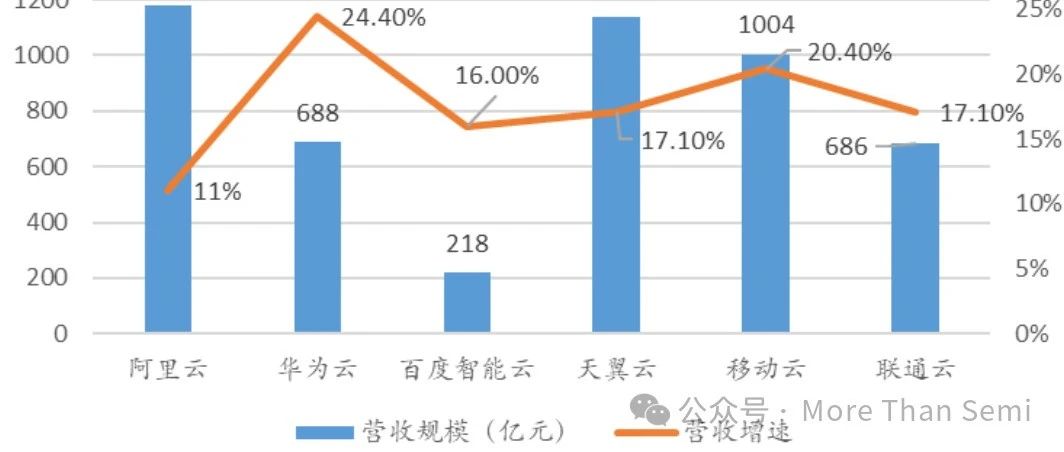
Core Viewpoint - Huawei demonstrates strong technological capabilities in the semiconductor industry, particularly with its Ascend series chips and the recent launch of CM384, positioning itself as a leader in domestic AI chips [2][3]. Group 1: Financial Performance - In 2024, Huawei achieved a total revenue of RMB 862.072 billion, representing a year-on-year growth of 22.4% [5]. - The smart automotive solutions segment saw a remarkable revenue increase of 474.4%, while terminal business and digital energy businesses grew by 38.3% and 24.4%, respectively [5]. - Revenue from the Chinese market reached RMB 615.264 billion, driven by digitalization, intelligence, and low-carbon transformation [5]. Group 2: Huawei Cloud - The overall public cloud market in China is projected to reach USD 24.11 billion in the second half of 2024, with IaaS accounting for USD 13.21 billion, representing a year-on-year growth of 14.4% [6]. - Huawei Cloud holds a 13.2% market share in the Chinese IaaS market, making it the second-largest cloud provider after Alibaba Cloud [6]. - Huawei Cloud's revenue growth rate reached 24.4%, the highest among major cloud vendors in China [6]. Group 3: Ascend Chips - The CloudMatrix 384 super node integrates 384 Ascend 910 chips, achieving a cluster performance of 300 PFLOPS, which is 1.7 times that of Nvidia's GB200 NVL72 [10]. - The single-chip performance of Huawei's Ascend 910C is approximately 780 TFLOPS, which is one-third of Nvidia's GB200 [10][11]. - The Ascend computing system encompasses a comprehensive ecosystem from hardware to software, aiming to meet various AI computing needs [15][20]. Group 4: HarmonyOS - HarmonyOS features a self-developed microkernel, AI-native capabilities, distributed collaboration, and privacy protection, distinguishing it from Android and iOS [12]. - The microkernel architecture enhances performance and fluidity, while the distributed soft bus technology allows seamless connectivity among devices [12][13]. Group 5: Kirin Chips - The Kirin 9020 chip has reached high-end processor standards, comparable to a downclocked Snapdragon 8 Gen 2 [23]. - The Kirin X90 chip, based on the ARMv9 instruction set, features a 16-core design with a frequency exceeding 4.2GHz, achieving a 40% improvement in energy efficiency [25][26]. Group 6: Kunpeng Chips - Kunpeng processors are designed for servers and data centers, focusing on high performance, low power consumption, and scalability [27]. - The Kunpeng ecosystem strategy emphasizes hardware openness, software open-source, enabling partners, and talent development [29].

CoWoS产能分配、英伟达Rubin 延迟量产
傅里叶的猫· 2025-08-14 15:33
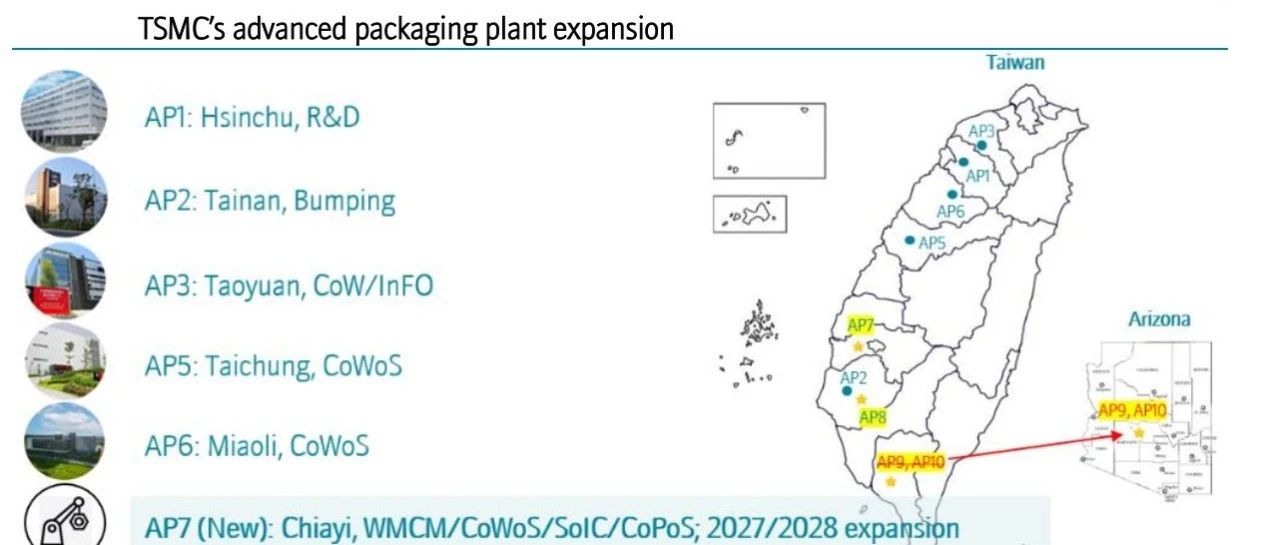
Core Viewpoint - TSMC is significantly expanding its CoWoS capacity, with projections indicating a rise from 70k wpm at the end of 2025 to 100-105k wpm by the end of 2026, and further exceeding 130k wpm by 2027, showcasing a growth rate that outpaces the industry average [1][2]. Capacity Expansion - TSMC's CoWoS capacity will reach 675k wafers in 2025, 1.08 million wafers in 2026 (a 60% year-on-year increase), and 1.43 million wafers in 2027 (a 31% year-on-year increase) [1]. - The expansion is concentrated in specific factories, with the Tainan AP8 factory expected to contribute approximately 30k wpm by the end of 2026, primarily serving high-end chips for NVIDIA and AMD [2]. Utilization Rates - Due to order matching issues with NVIDIA, CoWoS utilization is expected to drop to around 90% from Q4 2025 to Q1 2026, with some capacity expansion plans delayed from Q2 to Q3 2026. However, utilization is projected to return to full capacity in the second half of 2026 with the mass production of new projects [4]. Customer Allocation - In 2026, NVIDIA is projected to occupy 50.1% of CoWoS capacity, down from 51.4% in 2025, with an allocation of approximately 541k wafers [5][6]. - AMD's CoWoS capacity is expected to grow from 52k wafers in 2025 to 99k wafers in 2026, while Broadcom's capacity is projected to reach 187k wafers, benefiting from the production of Google TPU and Meta V3 ASIC [5][6]. Technology Developments - TSMC is focusing on advanced packaging technologies such as CoPoS and WMCM, with CoPoS expected to be commercially available by the end of 2028, while WMCM is set for mass production in Q2 2026 [11][14]. - CoPoS technology offers higher yield efficiency and lower costs compared to CoWoS, while WMCM is positioned as a cost-effective solution for mid-range markets [12][14]. Supply Chain and Global Strategy - TSMC plans to outsource CoWoS backend processes to ASE/SPIL, which is expected to generate significant revenue growth for these companies [15]. - TSMC's aggressive investment strategy in the U.S. aims to establish advanced packaging facilities, enhancing local supply chain capabilities and addressing global supply chain restructuring [15]. AI Business Contribution - AI-related revenue for TSMC is projected to increase from 6% in 2023 to 35% in 2026, with front-end wafer revenue at $45.162 billion and CoWoS backend revenue at $6.273 billion, becoming a core growth driver [16].


从组织架构看腾讯的AI发展策略
傅里叶的猫· 2025-08-13 12:46
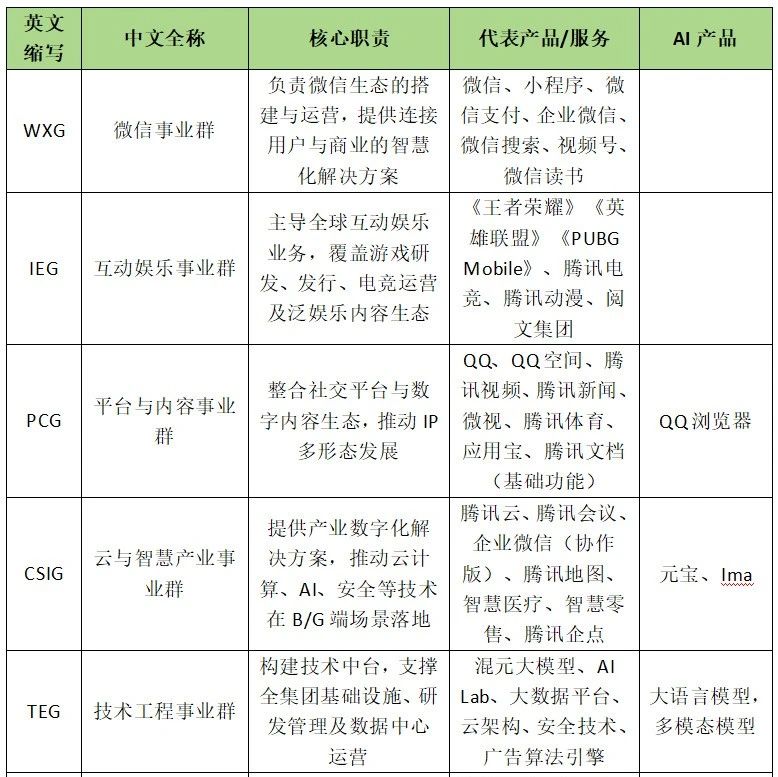
Core Viewpoint - Tencent's upcoming Q2 financial report is expected to highlight AI as a significant driver of performance, indicating its growing importance in the company's strategy [2]. Group 1: Organizational Structure and AI Strategy - Tencent's organizational structure includes several key business groups, each with distinct responsibilities and AI product offerings, such as WXG (WeChat), IEG (Interactive Entertainment), PCG (Platform and Content), CSIG (Cloud and Smart Industries), TEG (Technology Engineering), and CDG (Corporate Development) [3]. - TEG is identified as the core technology support group for Tencent, focusing on the development of large language models and multi-modal models, which are crucial for the company's AI advancements [3][4]. - The current core AI products, Yuanbao and Ima, are under CSIG, while the QQ Browser, which has seen significant AI investment, falls under PCG, suggesting a decentralized approach to AI product development [4]. Group 2: Market Position and Future Prospects - Tencent's management allows product divisions to independently choose whether to use self-developed or third-party models, fostering a competitive environment that may enhance TEG's model capabilities [4]. - Despite the perception that Tencent's self-developed large models may lag behind competitors like Alibaba and ByteDance, the company possesses unique advantages in AI commercialization [5]. - Anticipation exists for significant developments across Tencent's business groups in leveraging AI to enhance existing products or launch new ones [5].

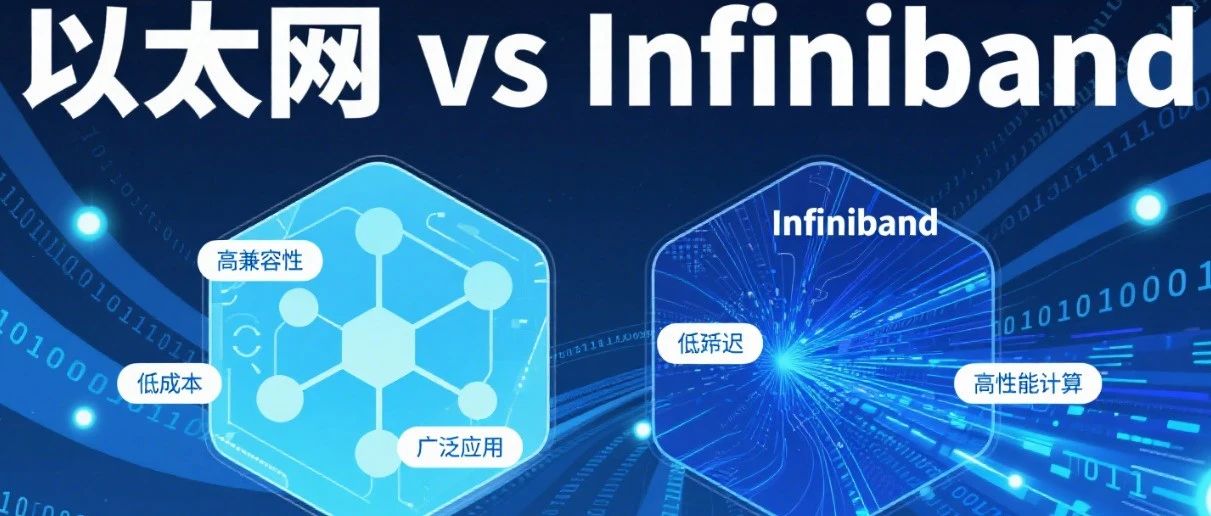
以太网 vs Infiniband的AI网络之争
傅里叶的猫· 2025-08-13 12:46
Core Viewpoint - The article discusses the competition between InfiniBand and Ethernet in AI networking, highlighting the advantages of Ethernet in terms of cost, scalability, and compatibility with existing infrastructure [6][8][22]. Group 1: AI Networking Overview - AI networks are primarily based on InfiniBand due to NVIDIA's dominance in the AI server market, but Ethernet is gaining traction due to its cost-effectiveness and established deployment in large-scale data centers [8][20]. - The establishment of the "Ultra Ethernet Consortium" (UEC) aims to enhance Ethernet's capabilities for high-performance computing and AI, directly competing with InfiniBand [8][9]. Group 2: Deployment Considerations - Teams face four key questions when deploying AI networks: whether to use existing TCP/IP networks or build dedicated high-performance networks, whether to choose InfiniBand or Ethernet-based RoCE, how to manage and maintain the network, and whether it can support multi-tenant isolation [9][10]. - The increasing size of AI models, often reaching hundreds of billions of parameters, necessitates distributed training, which relies heavily on network performance for communication efficiency [10][20]. Group 3: Technical Comparison - InfiniBand offers advantages in bandwidth and latency, with capabilities such as high-speed data transfer and low end-to-end communication delays, making it suitable for high-performance computing [20][21]. - Ethernet, particularly RoCE v2, provides flexibility and cost advantages, allowing for the integration of traditional Ethernet services while supporting high-performance RDMA [18][22]. Group 4: Future Trends - In AI inference scenarios, Ethernet is expected to demonstrate greater applicability and advantages due to its compatibility with existing infrastructure and cost-effectiveness, leading to more high-performance clusters being deployed on Ethernet [22][23].
为什么Agent Sandbox会成为下一代AI应用的基石?
傅里叶的猫· 2025-08-11 14:32
Core Viewpoint - The emergence of AI Agent Sandbox technology marks a new era in AI capabilities, particularly with the introduction of OpenAI's Code Interpreter, which allows AI to execute code and perform data analysis, raising significant security concerns [1][13]. Group 1: Traditional Sandbox Era - The concept of sandboxing originated in the 1990s to safely analyze malicious software without risking system infection [2]. - Cuckoo Sandbox became a notable example, allowing researchers to observe malware behavior in a controlled environment [2]. - Virtualization technologies like VMware and Xen enhanced sandbox capabilities but introduced performance issues due to resource consumption [2][3]. Group 2: Cloud-Based Programming Revolution - The late 2010s saw a shift towards cloud-based development environments, exemplified by CodeSandbox, which provided a complete IDE in the browser [6]. - Replit focused on simplifying programming for beginners by offering a zero-configuration environment, addressing common pain points in coding education [7][9]. - AWS Lambda introduced serverless computing, allowing developers to upload code without managing infrastructure, which laid the groundwork for future innovations [10][11]. Group 3: AI Agent Sandbox Era - The release of ChatGPT in late 2022 and the subsequent Code Interpreter feature in 2023 represented a significant advancement in AI capabilities, enabling AI to not only generate but also execute code [13][14]. - AI-generated code presents unique challenges, including unpredictability and susceptibility to injection attacks, necessitating specialized sandbox solutions [15][16]. - E2B emerged to provide a simplified API for sandboxing, utilizing Firecracker technology to ensure rapid and secure code execution [18][22]. Group 4: Rise of Domestic Agent Sandboxes - PPIO Agent Sandbox, built on Firecracker MicroVM, offers a tailored environment for AI Agents, ensuring secure code execution while being cost-effective [22][24]. - PPIO's compatibility with E2B protocols allows for seamless integration into existing frameworks, enhancing its utility for AI applications [23]. - The rapid development of both E2B and PPIO indicates a growing ecosystem around AI Agent sandbox technologies, driven by market demand [30].

直播PPT分享
傅里叶的猫· 2025-08-11 14:32
Group 1 - The recent live broadcasts covered three main topics: domestic GPU shipment volumes, comparison of GPU chip parameters between domestic and international markets, and the hardware architecture of GB200, including the use of light and copper in GB200 [1] - The PPT content from the live broadcasts is sourced from the "Star Planet" platform, which also features financial models for SMIC and analyses of earnings reports from Amazon, Meta, and Google [3] - There is a growing demand for NVIDIA's ConnectX cards, and there are domestic alternatives available [4] Group 2 - The "Star Planet" platform is updated daily with industry information, foreign investment bank data, and selected analysis reports, with key information organized in a cloud drive for continuous updates [7]
一文搞懂数据中心的线缆AOC、DAC、ACC、AEC
傅里叶的猫· 2025-08-10 14:34
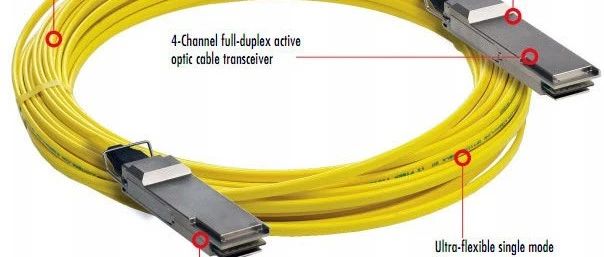
Core Viewpoint - The article discusses the different types of cables used in data centers, particularly focusing on Active Optical Cables (AOC) and their advantages over traditional copper cables, as well as the specific cable choices made in the GB200 architecture. Group 1: Active Optical Cables (AOC) - AOC is defined as a cable technology that uses optical fibers between connectors while maintaining compatibility with standard electrical interfaces, enhancing speed and transmission distance [2][10] - AOC components consist of four functional parts, including high-density connectors and embedded optical transceivers for optical-electrical and electrical-optical conversion [4][5] - AOC offers various types, such as 10G SFP AOC, 25G SFP28 AOC, and 100G QSFP28 AOC, catering to different data rates [8] - The advantages of AOC include longer transmission distances, higher bandwidth, lower electromagnetic interference, and reduced size and weight compared to copper cables [11][12] Group 2: Copper Cables - Direct-Attached Cables (DAC) are copper cables designed for direct connections between devices, available in both passive and active types [17] - Passive DACs are cost-effective and consume little power, making them suitable for short-distance connections, but have limited transmission distances [20][21] - The drawbacks of passive copper cables include limited transmission distance (typically under 7 meters), bulkiness, and sensitivity to electromagnetic interference [21][24] Group 3: GB200 Architecture - In the NVL72 interconnect scheme, NVIDIA opted for 5,184 copper cables instead of optical ones, which are more cost-effective and reliable [36] - Each GPU in the NVL72 has a unidirectional bandwidth of 900GB/s, requiring 72 differential pairs for bidirectional transmission, leading to the total of 5,184 cables [36] - The GB200 architecture utilizes optical connections for GPU-GPU inter-rack communication due to the distance limitations of copper cables, while copper cables are used for cost savings in certain deployments [38]
AEC 市场在“替代与扩张”的交汇点
傅里叶的猫· 2025-08-09 11:39
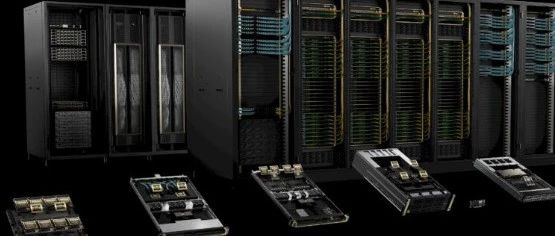
Core Viewpoint - The global AEC market is experiencing significant growth, with demand projected to reach 6.5 million units by 2025, up from 5.5 million units previously estimated, driven primarily by increased demand from Nvidia and AWS [1] Market Demand and Customer Breakdown - By 2026, global AEC demand is expected to rise to the tens of millions, with major clients including Amazon, Microsoft, Meta, and Google, primarily for 800G standard products [2] - Specific customer demand estimates for 2026 include: Google increasing from 300,000 to 600,000-800,000 units, AWS growing over 40% from 2.5 million units, and Meta's demand around 1.3 million units [2] Pricing and Profit Margins - Nvidia's pricing for 400G AEC is $140 per unit with a 40% gross margin, while 800G is priced at $230 with a 43% margin; Meta's pricing exceeds $270 with margins over 50% [3] - Marvell chips are approximately 20% cheaper than Credo chips, but Credo offers better performance and signal integrity [3] Technical Comparisons - AEC is more cost-effective than AOC, with AEC costing about 30% less and being 1/7 the size of DAC for the same transmission rate [4] - The longest transmission distance for AEC is currently 7 meters, with potential improvements to 100 meters under development [4] Cost Structure and Production Capacity - In 800G AEC, retimer components account for 45%-50% of costs, with cables at 20% and connectors at 25%; costs are expected to decrease by less than 15% next year [5] - The total production value for the company is nearing $5 billion, with significant contributions from overseas factories [6] Other Business Segments - The company's traditional business is projected to generate around $2.7 billion this year, with a 35% growth expected next year, driven by overseas clients [7] - The power line business has entered Nvidia's supply chain, with expected revenues of $700 million to $800 million next year [7] Competitive Landscape - The company utilizes Marvell chips, while competitors like Bochuang use different wiring solutions, allowing for better cost management and profit margins [8] - AEC's application in ASICs is currently lower than in GPUs, with a ratio of 1:0.5 in Meta's Minerva project [8]

半导体AI报告/数据库推荐
傅里叶的猫· 2025-08-09 11:39
Group 1 - The article emphasizes the importance of data collection in the semiconductor and AI sectors, highlighting that the data is sourced from reports by foreign investment banks [1] - The platform "Global Semi Research" provides updates on selected articles from foreign investment banks, Seeking Alpha, Substack, and stratechery, which can enhance investment decisions and industry research [1] - A subscription to the platform is available for 390 yuan, offering daily access to curated reports and data, which is deemed valuable for both personal investment and deeper industry analysis [1]
半导体关税、Intel、GPT-5
傅里叶的猫· 2025-08-08 11:30
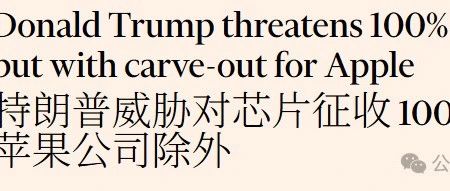
Group 1: Semiconductor Tariffs - The core viewpoint is that companies building factories in the U.S. can be exempt from tariffs, benefiting firms like Apple, Nvidia, and TSMC, which have committed to expanding capacity in the U.S. [5][6] - Apple emerges as a significant winner as the tariffs help alleviate major supply chain uncertainties, despite its ongoing challenges in AI breakthroughs [6]. - In the analog chip sector, U.S. companies like Texas Instruments and Microchip may benefit, while European firms like Infineon and STMicroelectronics, with only about 15% of their business in the U.S., may face competitive disadvantages [6]. - In the foundry sector, TSMC and Samsung are expected to maintain growth momentum if they can strategically navigate the tariff impacts, while UMC, with a 15%-20% U.S. market share and lacking domestic production, may be pressured [6]. - U.S. firms like Corning and Coherent in the optical communication sector are likely to gain market share from Chinese competitors [7]. - Applied Materials, due to its significant domestic production and involvement in Apple-related projects, may benefit, while Lam Research's limited U.S. presence puts it at a relative disadvantage [7]. - The current market sentiment favors semiconductor hardware companies over software companies, reflecting a shift in investment preferences [7]. Group 2: Intel and Leadership Concerns - Former President Trump called for Intel CEO Pat Gelsinger to resign, citing conflicts of interest due to Gelsinger's extensive ties with Chinese companies, which could pose national security risks [8][9]. - Gelsinger's investments in China, reportedly exceeding $200 million, have raised concerns, especially given Intel's critical role in the U.S. semiconductor industry [9]. - The recent legal issues faced by Cadence, linked to Gelsinger's previous role as CEO, may further complicate Intel's situation if Gelsinger were to step down, potentially impacting Cadence's business prospects [9]. Group 3: AI Developments - The release of GPT-5 has not met high expectations, with users reporting no significant improvements over the previous version in text processing and search capabilities [14]. - The perceived overhype surrounding GPT-5's capabilities has led to a reassessment of the limitations of scaling laws in AI development [14].