傅里叶的猫

Search documents
液冷供应链格局
傅里叶的猫· 2025-11-13 04:21
Core Insights - The article discusses the liquid cooling market, which is projected to be worth hundreds of billions, and highlights a recent order received by a liquid cooling company from a major overseas tech firm [1] Liquid Cooling Supply Chain - Liquid cooling solutions are not fully customized but are flexibly adapted based on customer needs, with cold plate technology being a standardized core component [3][4] - Different customer requirements lead to system-level adjustments, such as variations in CDU configurations and manifold designs, necessitating tailored solutions for each project [3][4] Collaboration with Major Companies - The article analyzes partnerships between leading liquid cooling companies and major CSPs, emphasizing the importance of collaboration to ensure stable supply chains [5][6] - The partnership with Meta focuses on providing a complete liquid cooling solution, including cold plates and integrated systems, with a significant emphasis on collaboration with manufacturers like 天弘 [5][6] - Google, having more experience in liquid cooling technology, has specific requirements for CDU and is working with 天弘 and 富士康 to develop solutions [6] - Major companies are diversifying their supplier base to mitigate risks associated with relying solely on Taiwanese manufacturers, ensuring timely delivery of critical components [6][7] Technical Trends - The mainstream technology in the liquid cooling industry remains single-direction cold plate design, favored by companies like Meta and Google for its superior temperature control and reliability [9] - Alternative technologies, such as large-area cold plates and phase change cooling, are not yet widely adopted due to their inherent challenges [9] - Specific product configurations vary, with examples including Meta's ASIC chip project, which features a cabinet containing 64 ASIC cards, highlighting the increasing demand for efficient cooling solutions [9]

千亿的液冷赛道
傅里叶的猫· 2025-11-12 12:27
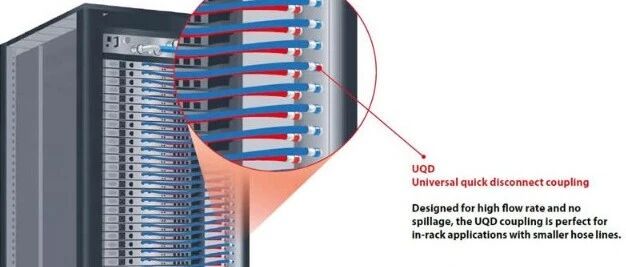
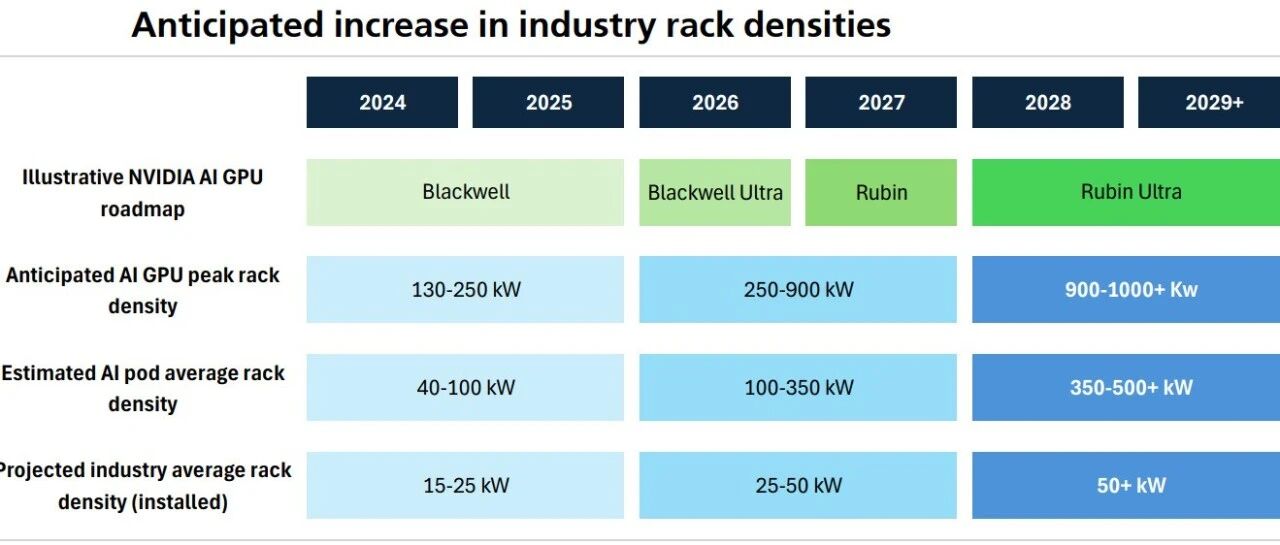
Core Insights - The liquid cooling market is expected to experience significant growth, with a projected global market size of approximately $6.5 billion in 2024 and over $17.6 billion by 2027, reflecting a compound annual growth rate (CAGR) exceeding 50% [2][3] - The rapid expansion of the liquid cooling market is driven by increasing power density in data centers, the rising proportion of AI ASICs, and the expansion of global data center capacity [3][10] Market Growth Projections - According to Goldman Sachs and IDC, the global liquid cooling market is forecasted to reach $6.5 billion in 2024 and exceed $17.6 billion by 2027, with a CAGR of over 50% [2] - By 2030, the liquid cooling components market could reach $25 billion, while the system market may surpass $50 billion, primarily driven by AI computing demand [2] Factors Driving Market Expansion - Power density is expected to increase significantly, with average rack density projected to rise from 15-25 kW in 2024-2025 to over 50 kW by 2028-2029, making liquid cooling essential for managing heat [3] - The share of AI ASICs in the global cloud accelerator semiconductor market is anticipated to grow significantly, with the market expected to exceed $300 billion by 2027, facilitating a more open supply chain ecosystem [8] - Global data center capacity is projected to grow at a CAGR of 20% from 2026 to 2028, further increasing the value of liquid cooling solutions [9] Regional Insights - The current total addressable market (TAM) for liquid cooling globally is approximately ten times that of China, which is expected to grow from $1.6 million in 2024 to $13.8 million by 2028 [10] - The Chinese government mandates that national computing hub data centers achieve a Power Usage Effectiveness (PUE) of less than 1.20 by the end of 2025, accelerating the adoption of liquid cooling technologies [10] Market Dynamics - The liquid cooling market is characterized by increasing competition, with domestic manufacturers striving to break into a market currently dominated by foreign and Taiwanese companies [12] - The liquid cooling value is shifting towards "white space," with the proportion of liquid cooling solutions expected to rise from 40-50% during the air cooling era to 70-90% in the future [12] Product and Technology Insights - The liquid cooling solutions offered by leading companies include cold plate modules, quick disconnects, manifolds, and in-rack liquid to liquid CDU systems, supporting various server platforms and cooling capacities [13]
美光晶圆厂延期--存储产业大周期持续升温
傅里叶的猫· 2025-11-11 04:17
Core Viewpoint - The memory industry is experiencing a super cycle driven by supply-demand imbalances, particularly in DRAM and NAND markets, with significant price increases expected through 2026 [2][5]. Group 1: Market Dynamics - Samsung anticipates a supply-demand imbalance in the DRAM and NAND markets by 2026, with demand exceeding supply, and is focusing on optimizing existing capacity [2]. - Micron's HBM supply is sold out for 2026, but the New York super factory's production is delayed by 2-3 years, limiting short-term DRAM supply expansion [2]. - The entire storage industry is currently at historical low inventory levels, with module manufacturers holding only 2 months of inventory, significantly below the normal 4-month cycle [4]. Group 2: Demand Drivers - The explosive growth of AI servers is a major demand driver, with high-end AI servers requiring 5-10 times the storage capacity of regular servers, leading to increased demand for HBM, enterprise DRAM, and SSDs [4][5]. - The shift from HDD to SSD in data storage is accelerating due to the AI inference era, with SSDs expected to increase their share in servers from 55% to 70% [5]. Group 3: Price Trends - Price increases for various memory products are projected, with significant price hikes expected in Q4 2025 across all categories, particularly for high-capacity products [5]. - Specific projected price increases include: - DRAM - mainstream DDR5: 25%-30% - DRAM - server DRAM: 28%-33% - DRAM - 96GB server RDIMM: 70% - NAND - eSSD: 25%-30% - NAND - 3D NAND wafers (TLC/QLC): 65%-70% [5]. Group 4: Strategic Responses - Module manufacturers are adopting conservative inventory strategies and proactive inventory management to navigate the current pricing environment [3][4]. - Major cloud service providers are seeking long-term agreements with suppliers to secure capacity amid rising prices [6].
储能增长逻辑分析--两部委最新储能政策解读
傅里叶的猫· 2025-11-10 12:48
Core Insights - The article emphasizes the importance of new energy consumption and regulation, with a focus on establishing a multi-level consumption regulation system by 2030 and a new power system by 2035 to support carbon peak goals [1][3]. New Energy and Storage - The document highlights new energy sectors, particularly wind and solar power, which are expected to see moderate growth rates due to established development targets from 2025 to 2035 [3]. - New energy storage is identified as a critical growth area, transitioning from a mere "auxiliary adjustment tool" to an essential infrastructure for high-quality new energy consumption, impacting various scenarios including centralized and distributed energy projects [3][5]. - The disparity between the distribution of new energy generation and consumption necessitates robust storage support to achieve the outlined consumption goals [3]. Market Dynamics - The U.S. energy market is experiencing a surge in demand for storage solutions due to regulatory changes, with all new solar projects required to enter market transactions starting January 1, 2026, leading to real demand for storage [5][6]. - In China, the current surge in installations is seen as a correction of historical underinvestment, with a conservative estimate suggesting a need for at least 2000 GWh of storage capacity to stabilize the power system [6][10]. Regional Profitability - Economic conditions for storage projects in Inner Mongolia have improved significantly due to policy changes and industry scaling, with market dynamics allowing for greater profitability through various revenue models [7][10]. - The profitability logic varies by region, with eastern provinces benefiting from significant peak-valley price differences, while western regions rely on capacity compensation [10][11]. Long-term Industry Outlook - The storage market is expected to grow at an annual installation rate of 40%-50% over the next five years, driven by inherent market demand rather than subsidies [10][13]. - The relationship between storage and new energy is characterized as a one-way support system, where storage provides flexibility and energy time-shifting capabilities to complement generation [12][13]. - The article concludes that the growth of the storage industry is essential for the energy transition, with storage becoming a critical component in stabilizing the grid as renewable energy sources expand [13].
国产超节点推陈出新,性能+生态壁垒双双攻克!
傅里叶的猫· 2025-11-09 23:53
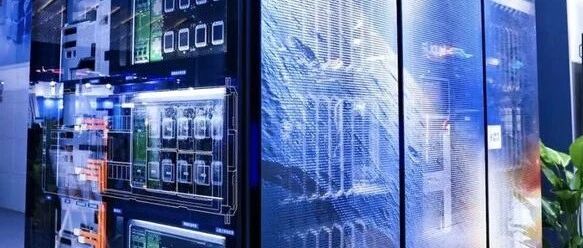
Core Viewpoint - The year 2025 is anticipated to be a breakthrough year for domestic supernodes, with major companies like Inspur, ZTE, Huawei, Alibaba, and Sugon making significant advancements in computing cluster construction, enhancing computing power integration, density, and ecosystem compatibility [2]. Group 1: Product Developments - Huawei's Ascend 384 has set a new industry standard as the largest high-speed bus interconnected supernode, featuring 32 cards per cabinet across 12 cabinets, showcasing Huawei's comprehensive capabilities in communication and computing [2]. - Alibaba's Panjiu AL128 supernode has achieved a record of supporting 128 accelerator cards in a single cabinet, with a computing power integration level four times that of the Ascend 384, demonstrating rapid advancements in software and hardware optimization [2]. - The Sugon scaleX640 supernode is the world's first single-cabinet 640-card supernode, achieving 20 times the computing power integration of the Ascend 384, designed on an open AI computing architecture to ensure compatibility with mainstream intelligent computing ecosystems [2]. Group 2: Performance Comparison - Domestic supernodes have undergone three significant leaps, overcoming barriers in performance and ecosystem, with the scaleX640 showing core advantages over NVL72 in comprehensive performance metrics [3]. - The scaleX640 has implemented advanced immersion phase change liquid cooling technology, achieving a minimum PUE of 1.04 and providing 1.72MW of cooling capacity for high-caliber computing units, validated through over 30 days of reliability testing [3]. - Despite a gap in single-card computing power compared to NV, the engineering characteristics of computing clusters present systemic opportunities for domestic manufacturers to catch up, with ongoing innovations in integration, compatibility, and reliability [3].
【20+演讲探索】高速光互连、OCS、光模块热管理、空心光纤、光接口等技术
傅里叶的猫· 2025-11-09 11:57
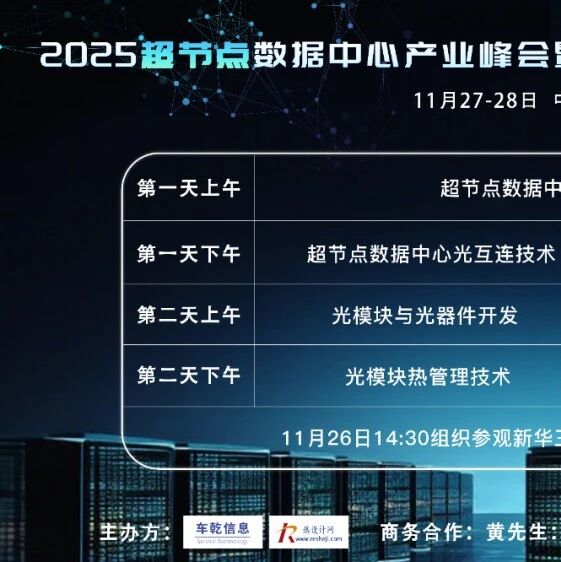
Core Insights - The "2025 Super Node Data Center Industry Summit and High-Density Data Center Developer Forum" will be held from November 26-28 in Hangzhou, Zhejiang, focusing on topics such as super node data center architecture design, interconnection technology, optical module packaging trends, liquid cooling technology, and high thermal conductivity materials [2] - The forum is expected to attract over 500 industry experts and 40+ speakers from major companies including Nvidia, Huawei, Alibaba Cloud, and China Mobile [2] Group 1: Forum Overview - The event will feature one main conference and two specialized sessions for in-depth discussions [2] - Key topics include innovations in AI chip interconnection protocols and the evolution of super node optical interconnection [3][4] Group 2: Technical Presentations - Presentations will cover high-speed optical interconnection systems for AI clusters and the opportunities and challenges of hollow-core optical fibers in data centers [4][5] - Discussions will also focus on thermal management materials for optical modules and the application of graphene in thermal management [4][5] Group 3: Schedule Highlights - The first day will include keynotes on super node data centers and liquid cooling acceleration plans by Intel [9][10] - The second day will address optical module development and thermal management technologies [11][12] Group 4: Participation and Sponsorship - Various participation formats are available, including theme reports and sponsorship opportunities [16][19] - Registration for the event is priced at 2500 per participant [16]




美国超过45GW的数据中心总览--缺电仍是主线
傅里叶的猫· 2025-11-09 11:57
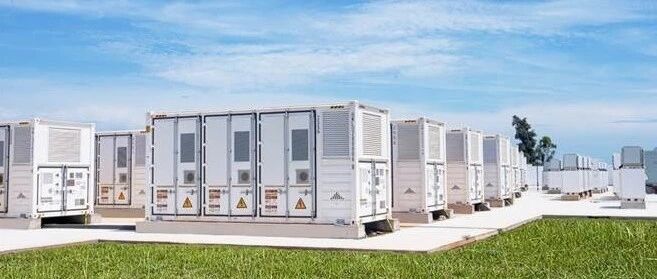
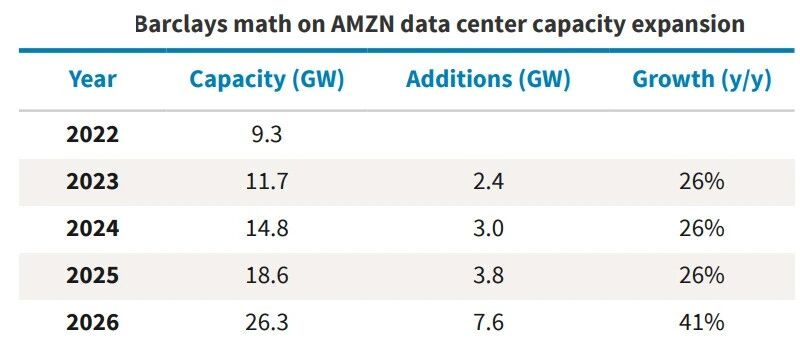
Core Insights - The article highlights three main themes in the market: electricity shortages in the US, chip shortages in China, and global storage shortages, with a focus on the US electricity shortage as the best investment opportunity in A-shares [1] - The Stargate project is expected to reach a capacity of 10 GW and an investment of $500 billion by the end of 2025, contributing to the overall growth of data center projects in the US [1][4] - Major tech companies like Meta and Amazon are significantly increasing their data center capacities, with Meta planning for a total of 7 GW and Amazon doubling its capacity over the past year [1][4][8] Data Center Capacity Growth - The US data center capacity is projected to grow from 9.3 GW in 2022 to 37.0 GW by 2027, with annual growth rates of 26% for 2023-2025 and 41% for 2026-2027 [2] - Specific capacity additions include 2.4 GW in 2023, 3.0 GW in 2024, and 10.8 GW in 2027 [2] Major Projects and Investments - The Stargate project has commitments of 7 GW and $400 billion towards the 10 GW target by the end of 2025, with various phases and partners involved [6] - Microsoft is expanding its capacity in Wisconsin with a new 900 MW facility and plans to replicate similar projects across the US [4][9] - Amazon is investing over $20 billion in Pennsylvania for data center infrastructure and has plans for additional investments in Mississippi, Ohio, Georgia, and Indiana [8] Power Supply and Technology - The article discusses the challenges of power supply for data centers, particularly in relation to AI training, which causes significant power fluctuations [14] - Companies are adopting a mix of energy sources, including gas turbines, diesel engines, and renewable energy, to ensure reliability and efficiency [12][14] - The supply chain for heavy gas turbines is under pressure, leading to increased costs and longer delivery times [15] Future Trends and Opportunities - The demand for new technologies such as Solid State Transformers (SST) and Solid Oxide Fuel Cells (SOFC) is expected to rise significantly from 2026-2027, presenting investment opportunities [16] - The supply side is facing bottlenecks, particularly in gas turbines and electrical equipment, which may lead to sustained price increases [17]
数据中心SST的核心配件--固态断路器
傅里叶的猫· 2025-11-07 03:35
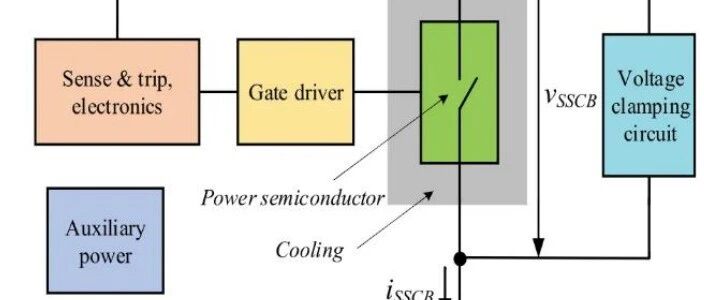
Core Insights - The article discusses the rapid advancements in HVDC (High Voltage Direct Current) and SST (Solid State Transformer) technologies, highlighting the increasing interest in power export and the implications of recent developments in the industry [1][2]. Group 1: SST Developments - NVIDIA has indicated that the SST penetration rate is expected to reach 15-20% by 2027, urging suppliers to accelerate technological advancements [1]. - Meta has reversed its previous stance against SST solutions, providing SST architecture parameters (3MW) to various manufacturers, with Eaton expected to deliver samples in Q1 next year and another domestic SST company in Q2 [1]. Group 2: Solid State Breakers - The progress of SST is faster than anticipated, with expectations for solid-state circuit breakers to significantly increase in value [2]. - Solid-state circuit breakers can achieve rapid fault current interruption in microseconds, minimizing the impact on the power grid and enhancing safety and reliability [6][7]. - When solid-state breaker technology matures and costs decrease, it will become an ideal choice for DC power system protection, offering high-speed response, long electrical lifespan, and reduced maintenance costs [7]. Group 3: Comparison of DC Protection Devices - A comparison of different types of DC protection devices shows that solid-state breakers outperform traditional mechanical breakers in terms of speed, reliability, and maintenance [6]. - Solid-state breakers do not produce electric arcs, which further reduces the risk of damage to power sources and loads [6]. Group 4: Industry Trends - The article notes the ongoing trend of power export, particularly in the context of the US power system and the recent trade framework established between China and the US [1]. - The acquisition of Power Distribution by Eaton and the introduction of liquid cooling solutions for SST are also highlighted as significant industry movements [1].
1GW算力成本拆解,HVDC/SST最新进展
傅里叶的猫· 2025-11-06 04:58
Core Viewpoint - The article discusses the increasing concern over the electricity shortage in the United States, highlighting the growing demand for expert consultations and the positive market performance in the related sectors [1][2][4][5]. Group 1: Electricity Shortage in the U.S. - The topic of electricity shortage in the U.S. has gained significant attention, with major North American companies discussing the issue [2]. - There is a noticeable increase in expert consultation requests related to the electricity sector, indicating heightened interest from institutions and brokerages [4]. - The related market sectors have shown strong performance, indicating a favorable investment climate [5]. Group 2: HVDC/SST Developments - Eaton's solid-state transformer (SST) products are currently in a small-scale pilot testing phase, with three units supplied to Century Interconnect for testing [6]. - The product specifications are customized to meet local grid standards, such as the 13.8 kV for the U.S. market compared to 10 kV in China [6]. - Future research and development will focus on expanding product lines to accommodate various voltage specifications and enhancing functionalities to integrate renewable energy [7]. Group 3: Market Projections and Financial Estimates - A detailed financial projection for the HVDC and SST market indicates a potential market space of 735 billion yuan for HVDC and 504 billion yuan for SST in North America [10]. - The estimated revenue from HVDC contract manufacturing is projected to be around 36.75 billion yuan, with a profit margin of 10% [10]. - The overall market valuation for SST and SOFC components is estimated at 239.4 billion yuan, excluding certain option-based businesses [10]. Group 4: Cost Breakdown for Data Center Operations - The cost of establishing 1 GW of computing power in data centers is estimated to be between 35 billion to 60 billion USD, with a detailed breakdown provided in a Bernstein report [11].
Anthropic vs OpenAI:ToB企业级服务与个人订阅,谁将主导AI未来?
傅里叶的猫· 2025-11-06 04:58
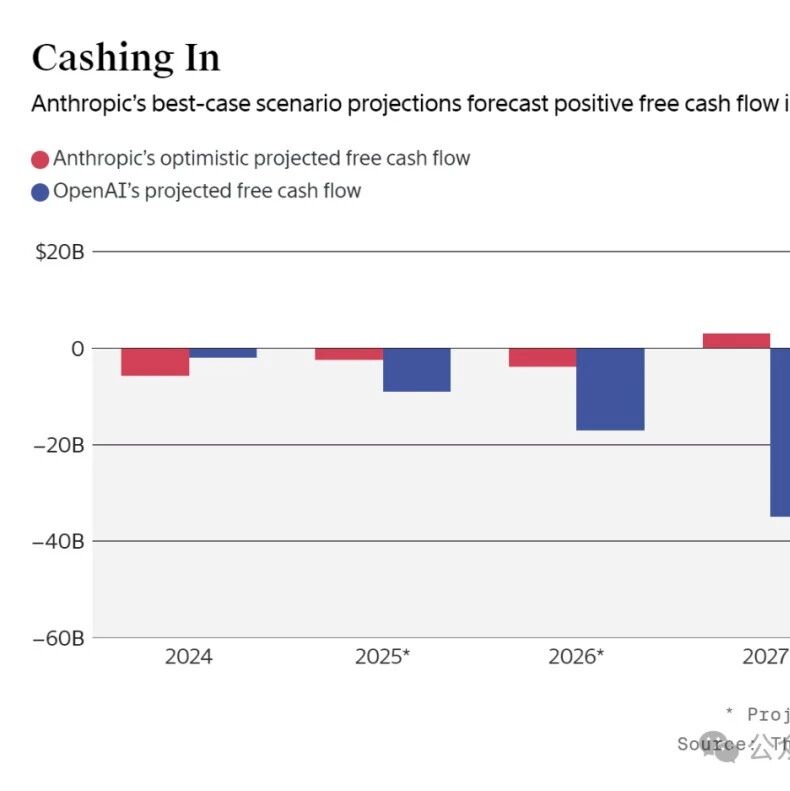
Core Insights - The article focuses on the comparison between OpenAI and Anthropic, highlighting their revenue sources and business models. OpenAI primarily relies on individual user subscriptions, while Anthropic focuses on B2B (business-to-business) services [2]. Revenue - Anthropic's revenue forecast for 2025 is projected at $4.7 billion, with an optimistic scenario suggesting it could reach $70 billion by 2028, reflecting an annual growth rate of approximately 28% over the next three years. The company's revenue last year was about $381 million [4]. - OpenAI is expected to achieve a revenue of $13 billion this year, which is nearly three times Anthropic's most optimistic forecast of $4.7 billion [7]. Profit Margin - Anthropic's gross margin is expected to improve significantly from a loss of -94% last year to a maximum of 50% this year, and it could reach 77% by 2028. This margin reflects the profitability after deducting production-related costs from revenue [7]. - If non-paying user costs are included, Anthropic's gross margin would decrease, with the most optimistic predictions showing -109% last year, 47% this year, and 75% by 2028 [10]. Cash Flow - Anthropic is expected to achieve positive cash flow as early as 2027, which is sooner than OpenAI, projected to reach positive cash flow by 2030. Despite OpenAI's larger revenue scale, its cash consumption this year is expected to be over three times that of Anthropic [10]. - In 2027, OpenAI's cash consumption is estimated to be around $35 billion, while Anthropic is projected to generate $3 billion in free cash flow. By 2028, Anthropic anticipates generating up to $17 billion in cash flow, while OpenAI's cash consumption is expected to approach $47 billion [13]. Valuation - Prior to the recent $13 billion funding round, Anthropic's valuation was approximately $170 billion, nearly three times its valuation from March of this year. If a new funding round is initiated, its target valuation could range between $300 billion and $400 billion [3]. - OpenAI's valuation has reached $500 billion in recent employee stock sale transactions [13]. Business Model Comparison - Anthropic, founded by former OpenAI executives, primarily sells its Claude series AI models to enterprise clients through APIs. Its business model is more focused compared to OpenAI, which has broader ambitions across various sectors including advertising and e-commerce [14]. - Anthropic's API and related business revenue is expected to be around $3.8 billion this year, surpassing OpenAI's previous estimate of $1.8 billion for API revenue. By 2028, API and enterprise application sales are projected to contribute over 80% of Anthropic's revenue [14]. - OpenAI's growth is expected to be driven mainly by subscription revenue from ChatGPT, with Microsoft providing OpenAI's API services through its Azure cloud platform [15].