CHINA RES BEER(00291)

Search documents
破局“内卷” 开拓蓝海——企业界人士建言全国统一大市场建设
Jing Ji Ri Bao· 2025-12-14 22:34
Core Viewpoint - The letter from the chairman of Guangdong Youkai Technology highlights the detrimental effects of vicious competition in the detergent industry, where low-quality products with less than 5% active ingredients are capturing market share through low prices, putting quality products at a disadvantage [1] Group 1: Industry Challenges - The phenomenon of "involution" is causing severe price wars across various industries, leading to compressed profit margins, reduced innovation investment, and increased quality and safety risks [1][2] - Over 20 national and local industry associations have publicly called for a "counter-involution" approach, addressing issues in sectors such as steel, automotive, photovoltaic, catering, finance, and logistics [3] Group 2: Market Efficiency and Fair Competition - The construction of a unified national market aims to eliminate barriers to fair competition, addressing the imbalance between supply and demand and enhancing overall market stability [3] - Companies are encouraged to abandon the outdated "scale supremacy" mindset and focus on creating value through quality products and brands, as demonstrated by China Resources Beer, which closed 40 factories and reduced over 5 million tons of redundant capacity [3] Group 3: Innovation as a Key Driver - Traditional manufacturing must break free from path dependence and scale bottlenecks by leveraging technology and innovation, as emphasized by Weiqiao Chuangye Group's collaboration with research institutions and the establishment of an industrial technology research institute [4] - New Hope Group has utilized cold chain logistics and AI to innovate in the dairy industry, achieving same-day production and delivery to over 1 million stores [4] Group 4: Brand Value and Consumer Trust - In a market characterized by information asymmetry, low-quality products often mislead consumers, necessitating a shift towards rebuilding trust in high-quality products and enhancing user experience [5] - The home appliance industry has maintained a rational approach due to years of systemic development, with a focus on creating emotional and meaningful connections with consumers [5] Group 5: Global Expansion and Market Opportunities - The unified national market is seen as an open market that encourages companies to expand globally, alleviating domestic competition pressures and enhancing competitiveness in international markets [6] - Companies like Jack Technology and Miniso are adopting global strategies that integrate local insights and cultural fusion, demonstrating the importance of global perspectives in business expansion [6] Group 6: Future Directions for Companies - Companies are urged to focus on innovation, brand building, and global outreach to escape internal competition and contribute to high-quality economic development in China [7]


华润啤酒携手歪马送酒推出“雪花全麦白啤” 加码即时零售新赛道
Zheng Quan Ri Bao Wang· 2025-12-12 10:16
Core Insights - The launch of "Snowflake Whole Wheat White Beer" marks a significant collaboration between China Resources Beer and the instant retail platform Yima Songjiu, indicating a shift from traditional supply and sales relationships to deep integration and value co-creation [1][2] Group 1: Product Launch - "Snowflake Whole Wheat White Beer" is the first customized product developed through the strategic agreement signed in March 2025 between China Resources Beer and Yima Songjiu [1] - The product is priced competitively at 7.5 yuan per can (500ml) and 74.9 yuan per box (12 cans), aiming to penetrate the market with a strong value proposition [1] - The product was launched on December 5, available exclusively through Yima Songjiu's network of over 2,000 terminals, offering an average delivery time of 15 minutes [1] Group 2: Strategic Collaboration - The partnership addresses the long-standing challenge of disconnection between traditional beer companies and end consumers, utilizing consumer data from instant retail platforms to guide product development [2] - The launch exemplifies the ability of traditional beer companies and emerging instant retail platforms to collaborate effectively, responding quickly to market demands and creating popular products [2] - The ongoing strategic collaboration is expected to foster a more agile, efficient, and personalized beer consumption ecosystem, benefiting the entire beverage industry [2]
侯孝海谈新时代最大挑战:市场进入“分而化之”时代,大单品打天下的时代已终结
Xin Lang Cai Jing· 2025-12-10 09:22
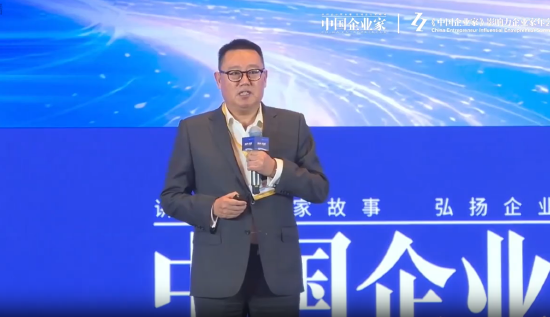
Core Insights - The core theme of the conference is "Emergence·Infinity - Co-creating a New Form of Intelligent Business" [1][7] - The speaker, Hou Xiaohai, emphasizes the challenges and opportunities in the current business landscape, particularly in the beer industry [3][5] Group 1: Challenges - The first challenge identified is differentiation, which is seen as the biggest challenge in the new era, affecting demand, products, and consumer experiences [3][9] - The second challenge is the restructuring of the commercial foundation, where traditional distribution channels are being disrupted by instant retail, changing the entire industry chain [3][9] - The third challenge is internal competition (involution), which arises from supply-demand imbalances and has led to significant capacity reductions in the beer industry, with companies like China Resources Beer closing 40 factories and reducing over 5 million tons of capacity [4][10] Group 2: Opportunities - Opportunities arise from product iteration, driven by technology and quality improvements, which can lead to significant market advantages [5][10] - The development of digital intelligence (digitalization) is expected to play a crucial role in the recovery and growth of Chinese consumer goods companies over the next five years [5][10] - A focus on personalized strategies is necessary to meet the evolving consumer demands in the differentiation era [5][10] Group 3: New Management Concepts - The concept of co-integration and co-existence within the industry chain and value chain is emphasized, advocating for collaboration rather than competition among companies [6][11] - The "three precision management" approach—lean, streamlined, and detailed management—is recommended for companies to navigate tighter economic conditions [6][11] Group 4: Green Development - Green development should be viewed as a driving force and competitive advantage rather than a mere obligation, influencing industry structure and brand value [6][12]

侯孝海坦言科技焦虑:是机遇更是挑战,拥抱太快怕被迭代,不拥抱害怕被抛弃
Xin Lang Cai Jing· 2025-12-10 09:11
Core Insights - The event "2025 China Entrepreneur Influence Entrepreneur Annual Conference" focuses on the theme "Emergence·Infinity - Co-creating a New Form of Intelligent Business" [1][6] - Huo Xiaohai, former chairman of China Resources Beer, emphasized the concept of "New World" in his speech, reflecting on the significant changes in the beer industry and the need for transformation [3][8] Group 1: Changes in the Business Environment - The external environment for businesses has undergone significant changes, necessitating a clear understanding of these shifts to keep pace with industry developments [9] - The beer industry is experiencing a transformation where traditional products and services are being abandoned by consumers, indicating a need for companies to adapt [3][8] Group 2: Technological Advancements - Rapid technological advancements, particularly in artificial intelligence, are reshaping industries, presenting both opportunities and challenges for companies [4][9] - Huo noted that factories are increasingly automated, with a significant reduction in workforce; for instance, a factory with a capacity of 100,000 tons previously employed 500-600 people [4][9] Group 3: Changing Consumer Demographics - There has been a significant generational shift in consumer demographics over the past decade, with the current consumer base differing by over 50% from that of ten years ago [5][10] - The new generation of consumers, particularly those born after 2000, possess distinct values and consumption patterns, which companies must recognize to avoid being abandoned by their target market [5][10] - Huo emphasized the importance of appealing to younger consumers, stating that if a product is rejected by this demographic, its growth potential diminishes significantly [5][10]
华润啤酒侯孝海:啤酒消费品如果被年轻人抛弃,那就没有发展的可能性了
Xin Lang Cai Jing· 2025-12-10 09:05
Core Insights - The 2025 China Entrepreneur Influence Entrepreneur Conference emphasizes the theme "Emergence·Infinity - Co-creating New Forms of Intelligent Business" [1][6] Group 1: Changes in the Business Environment - The beer industry is undergoing significant transformation, with declining competitive capabilities and increasing pressure on business growth, leading to a need for companies to rethink their strategies [3][8] - The concept of "New World" was introduced to signify the necessity for companies to break away from outdated business models and embrace new opportunities [3][8] Group 2: Technological Advancements - Rapid technological development is a double-edged sword for businesses, presenting both opportunities and challenges, particularly with the rise of artificial intelligence [4][9] - The shift towards automation has drastically reduced the workforce in manufacturing, as exemplified by a 2016 factory that required 500-600 workers for a capacity of 1 million tons [4][9] Group 3: Changing Consumer Demographics - There has been a significant generational shift in consumer demographics over the past decade, with the current consumer base showing over 50% difference from that of ten years ago [5][10] - The new generation of consumers possesses distinct values, consumption habits, and a strong sense of individuality, which companies must adapt to in order to remain relevant [5][10] - The importance of appealing to younger consumers is highlighted, as losing their interest can jeopardize a product's future [5][10]
侯孝海强调关注消费人群的迭代:现在的消费人群,与10年前的区别度已超50%
Xin Lang Cai Jing· 2025-12-10 09:05
Core Insights - The event "2025 China Entrepreneur Influence Entrepreneur Annual Conference" focuses on the theme "Emergence·Infinity - Co-creating New Forms of Intelligent Business" [1][6] - Huo Xiaohai, former chairman and executive director of China Resources Beer, emphasized the concept of "New World" in his speech, reflecting on the significant changes in the beer industry and the need for transformation [3][8] Group 1: Changes in the Business Environment - The external environment for businesses has undergone significant changes, necessitating a clear understanding of these shifts to keep pace with industry developments [9] - The beer industry is experiencing a transformation where traditional products and services are being abandoned by consumers, indicating a need for companies to adapt [3][8] Group 2: Technological Advancements - Rapid technological advancements, particularly in artificial intelligence, are reshaping industries, presenting both opportunities and challenges for companies [4][9] - Huo noted that in 2016, a factory with a capacity of 1 million tons employed around 500-600 people, highlighting the shift towards automation and the impact of technology on workforce dynamics [4][9] Group 3: Changing Consumer Demographics - The primary consumer demographics for many products have significantly evolved over the past decade, with a notable generational shift affecting consumer preferences and behaviors [5][10] - Huo pointed out that the similarity rate between consumers from the 1960s and 1970s was around 90%, while the similarity with 1990s consumers dropped to 70%, and with post-2000 consumers, it is below 50% [10] - The new generation of consumers possesses distinct values, perspectives, and consumption habits, making it crucial for companies to engage with them to avoid being left behind [5][10]
智通港股沽空统计|12月10日
智通财经网· 2025-12-10 00:25
Group 1 - The top short-selling stocks include Sun Hung Kai Properties-R (80016), China Resources Beer-R (80291), and AIA Group-R (81299), all with a short-selling ratio of 100.00% [1][2] - The highest short-selling amounts are from Xiaomi Group-W (01810) at 2.161 billion, Alibaba-SW (09988) at 793 million, and Tencent Holdings (00700) at 733 million [1][2] - The highest deviation values are from China Resources Beer-R (80291) at 39.83%, followed by Jianfa Property (02156) at 37.09%, and AIA Group-R (81299) at 35.65% [1][2] Group 2 - The top ten short-selling ratio rankings show that all stocks listed have significant short-selling activity, with Anta Sports-R (82020) also at 100.00% [2] - The top ten short-selling amounts highlight Xiaomi Group-W leading significantly, with a short-selling ratio of 28.48% [2] - The top ten deviation values indicate that China Resources Beer-R (80291) has the highest deviation, suggesting a notable difference from its historical short-selling average [2]



绝地反击:我做春雨医生CEO的工作方法
Sou Hu Cai Jing· 2025-12-08 01:53
Core Insights - The article discusses the transformation of Chunyu Doctor under new management, highlighting its evolution from a struggling startup to a more stable entity within a public company framework. The focus is on merging the essence of healthcare with the efficiency of the internet [1][16]. Group 1: Challenges Faced - Upon taking over, Chunyu Doctor was revealed to be in a precarious financial situation, with cash flow issues leading to significant monthly losses [3]. - The company had spread itself too thin across various business lines, resulting in a lack of focus and a failure to generate sustainable revenue [3][4]. - There was a misalignment in understanding internet healthcare, with the team overly focused on online traffic rather than addressing core healthcare needs [4][5]. Group 2: Strategic Solutions - A comprehensive strategy was implemented, focusing on streamlining operations, enhancing core business areas, and controlling costs [8]. - The management shifted from a "traffic-driven" approach to a "healthcare-driven" mindset, emphasizing the importance of integrating online and offline services [8][12]. - The company adopted a strict cost control policy, including layoffs and reducing office space, to maintain cash flow during challenging times [12][10]. Group 3: Achievements - Chunyu Doctor successfully reversed its financial losses, achieving a break-even point in core business cash flow and establishing a sustainable revenue model [14]. - The brand image transformed from a "light consultation" service to a "professional and trustworthy medical service platform," enhancing customer trust and loyalty [15]. - The strategic investment from China Resources Group provided significant financial backing and resources, facilitating the integration of online and offline healthcare services [16].
华泰证券-必选消费行业2026年度策略:冬藏伺机,春归可期
Sou Hu Cai Jing· 2025-12-06 03:13
Core Insights - The report from Huatai Securities indicates that the essential consumer sector has entered a favorable left-side layout window, with expectations for a mild recovery in consumption in the second half of 2026 due to stabilizing real estate prices, increased policy stimulus, and the recovery of household balance sheets [1][2]. Industry Overview - The essential consumer sector is currently at historical low valuation levels and public fund allocation ratios, providing a high safety margin and potential upside for investors [1][2]. - Some sub-industries are showing signs of bottoming out, with leading companies shifting focus from price wars to product innovation and adapting to channel changes [1][2][6]. - Structural changes such as the rebalancing of raw milk cycles, recovery in restaurant demand, and stricter regulations on zero additives are optimizing the competitive landscape of the industry [1][2]. Investment Recommendations - The report recommends four categories of stocks: 1. Cyclical high-upside stocks, including Gujing Gongjiu, Luzhou Laojiao, China Resources Beer, Qingdao Beer, Haitian Flavoring, Anjuke Food, and Qianhe Flavoring [2][7]. 2. Companies at fundamental turning points, such as Mengniu Dairy and Master Kong [2][7]. 3. High-dividend blue-chip leaders like Yili and Shuanghui Development [2][7]. 4. Small but promising growth stocks, including Ximai Food, Baoli Food, and Yanjinpuzi [2][7]. Market Trends - The report emphasizes a three-stage market strategy from expectation recovery to performance realization for 2026 [2]. - The essential consumer sector is expected to see a gradual improvement in retail sales growth, projected to reach 4.8% in 2026 [25]. - The consumer confidence index has shown some recovery but remains in a low range, indicating cautious consumer sentiment [26]. Sub-Industry Insights - Specific sub-industries are highlighted: 1. Frozen food is showing signs of bottoming out, with expectations for a reduction in price wars in 2026 [6][10]. 2. The dairy sector is anticipated to see a rebalancing of the raw milk cycle, enhancing domestic substitution logic [6][10]. 3. The beer industry is expected to maintain profit resilience due to rational competition and a diminishing demand dividend [6][10]. 4. Traditional condiment leaders are actively adjusting strategies to capture market share [6][10]. Conclusion - The essential consumer sector is positioned for a potential recovery, with various sub-industries adapting to market changes and focusing on innovation and strategic adjustments to enhance competitiveness [1][2][6].





百威VS喜力,外资啤酒攻防战升级!
Sou Hu Cai Jing· 2025-12-05 21:43
Core Insights - The Chinese beer market is undergoing significant changes, with local brands showing resilience and international brands facing challenges in maintaining their market share [3][6][15] - The competition has intensified, leading to a shift in consumer preferences and a need for international brands to adapt their strategies to align with local market dynamics [7][29] Industry Overview - The beer industry in China has entered a phase of stock competition, with overall production capacity at about 70% of its peak [6] - The latest data from the National Bureau of Statistics indicates a 1% year-on-year decline in beer production in October, with cumulative production growth slowing to 0% for the first ten months of the year [5] Brand Performance - Domestic brands like Tsingtao, Yanjing, and Zhujiang have shown growth in revenue, profit, and sales, while international brands like Budweiser and Carlsberg are experiencing declines [6][15] - Budweiser's performance in China has been under pressure, with a two-digit decline in revenue, profit, and sales for the first three quarters of the year [15][17] Market Dynamics - The shift in consumer behavior has led to a decline in the on-premise consumption channel, with a move towards new categories and channels [9][34] - The average market price for beer has decreased, prompting Budweiser to focus on its Harbin brand to capture growth opportunities in the 8-10 yuan price range [34][37] Strategic Adjustments - Budweiser is adjusting its strategy by increasing its focus on non-drinking channels and expanding its product offerings to include larger cans and innovative flavors [38][40] - Heineken has successfully leveraged its partnership with China Resources to expand its market presence and product distribution across various channels, including retail and e-commerce [25][32] Consumer Preferences - Chinese consumers are increasingly open to innovative flavors and higher alcohol content, with tea-infused beers gaining popularity [41] - The acceptance of new beer categories is significantly higher in China compared to other markets, indicating a potential for growth in product innovation [3][41]