BYD(01211)

Search documents
“河南造”新能源汽车驶向全球
Ke Ji Ri Bao· 2026-02-11 00:43
Core Viewpoint - Henan Province is focusing on the development of the new energy vehicle (NEV) industry, aiming to establish a trillion-level advanced manufacturing cluster, with significant growth in production and exports expected in the coming years [1][8]. Group 1: Industry Growth and Achievements - In 2024, Henan's NEV production is projected to reach 681,000 units, a year-on-year increase of 117.3% [1] - By 2025, the export value of electric vehicles from Henan is expected to reach 30.87 billion yuan, representing a growth of over 253% [1] - Yutong Bus, a leading company in Henan's NEV sector, achieved sales of 49,518 buses in 2025, a 5.54% increase, with 18,356 of those being new energy buses, marking a 22.94% growth [2] - Yutong Bus has sold over 210,000 new energy buses cumulatively, maintaining a leading position in the global market [2] Group 2: Technological Innovation and Supply Chain Development - Yutong Bus invests over 5% of its annual revenue in R&D, leading to innovations such as a battery management system capable of operating in extreme temperatures [2] - The local supply chain for NEVs in Henan has reached a 41% local matching rate, with over 290 suppliers collaborating with Yutong [3] - BYD's production base in Zhengzhou has achieved an automation rate of 98%, producing over 1 million vehicles since its establishment in 2023, contributing over 170 billion yuan in output value [3] Group 3: Supporting Infrastructure and Policies - The development of Henan's NEV industry is supported by various local enterprises, including a battery production base in Luoyang in collaboration with CATL, which is one of the top global battery manufacturers [5] - Luoyang has signed contracts for 45 upstream and downstream projects with a total investment of 18.26 billion yuan, enhancing the local supply chain for NEVs [6] - The provincial government has implemented a "chief service officer" mechanism to support NEV enterprises, fostering a conducive environment for growth [7] Group 4: Strategic Vision and Future Outlook - Henan aims to transform into a strong automotive province by leveraging its full-chain thinking to build an ecosystem for the NEV industry [4][8] - The province's strategy includes integrating NEVs into seven key trillion-level advanced manufacturing clusters, with a focus on differentiated development across cities [7][8]


南宁新能源电池产业跻身中国第一梯队,全链开花激活发展新动能
Zhong Guo Xin Wen Wang· 2026-02-11 00:38
Core Insights - Nanning is rapidly developing its new energy battery industry, aiming to become a significant player in the global market by 2026 with projects like the Fudi three-module and Ningfu New Energy's second factory [1][2] - The city has attracted major companies such as BYD and DFL, establishing a complete industrial chain that includes battery cell manufacturing, materials, and components, with a cumulative output value exceeding 130 billion RMB [1][2] - The new energy battery sector is seen as a key driver for Nanning's economic growth, with plans to enhance the lithium battery supply chain and expand into new battery products [3] Industry Development - By 2025, DFL's "Fluorine Core Battery Full Industry Chain" project will add 100 GWh of battery capacity, contributing an estimated 30 billion RMB in output value [2] - The total planned capacity for DFL's Nanning base will reach 120 GWh, with an expected annual output value exceeding 36 billion RMB [2] - The Dragon Electric Huaxin project for lithium battery copper foil is set to invest 12 billion RMB, with a production capacity of 25,000 tons expected by June 2026 [2] Economic Impact - Nanning's new energy battery industry is projected to have over 200 GWh of planned capacity and more than 100 GWh of operational capacity, placing it among the top tier in China [2] - The industry is not only boosting local economic development but also supporting the broader Guangxi new energy vehicle supply chain, facilitating exports to markets in ASEAN, North America, Europe, and the Middle East [2]

神秘AI模型在海外爆火,知情人士:系智谱即将发布的GLM-5;福特汽车全球销量首次落后于比亚迪;传百度临近春节秘密启动“O计划”丨邦早报
创业邦· 2026-02-11 00:07
Group 1 - BYD has filed a lawsuit against the U.S. government to reclaim tariffs imposed on imported materials, claiming significant costs for its operations in the U.S. [2] - Over 1,000 companies, including major players like Costco and Toyota, have initiated similar lawsuits against the U.S. government regarding tariffs [2]. - NIO's CEO Li Bin emphasized the importance of optimizing the CBU mechanism to maximize efficiency and minimize costs in the company's operations [6]. Group 2 - Ford's global sales fell by approximately 2% to around 4.4 million units, while BYD's sales reached 4.6 million units, marking a significant shift in the automotive market [6]. - BYD aims to increase its export volume to 1.3 million units in 2025, following a successful year of expansion in Europe, South America, and Asia [6]. - NIO plans to implement a "store partner" program to enhance operational efficiency and market responsiveness, allowing store managers greater decision-making power [6]. Group 3 - The European Union has approved Google's acquisition of cybersecurity startup Wiz for $32 billion, marking Google's largest acquisition to date [9]. - Apollo Global Management is nearing a $3.4 billion loan agreement to finance the purchase of NVIDIA chips for Elon Musk's xAI [10]. - Alibaba's DAMO Academy has released an open-source foundational model for embodied intelligence, RynnBrain, enhancing its AI capabilities [10]. Group 4 - The Shanghai government has opened over 5,200 kilometers of autonomous driving test roads, with plans to expand the testing area further [17]. - Toyota and Nissan reported sales increases in China for January, while Honda's sales continued to decline due to delays in new electric vehicle launches [17]. - The launch of the Robotaxi ride-hailing service by Alipay indicates a growing trend towards automated transportation solutions in urban areas [15].




比亚迪“小伙伴”今日申购 汽车制造细分领域龙头上市丨打新早知道
2 1 Shi Ji Jing Ji Bao Dao· 2026-02-10 23:11
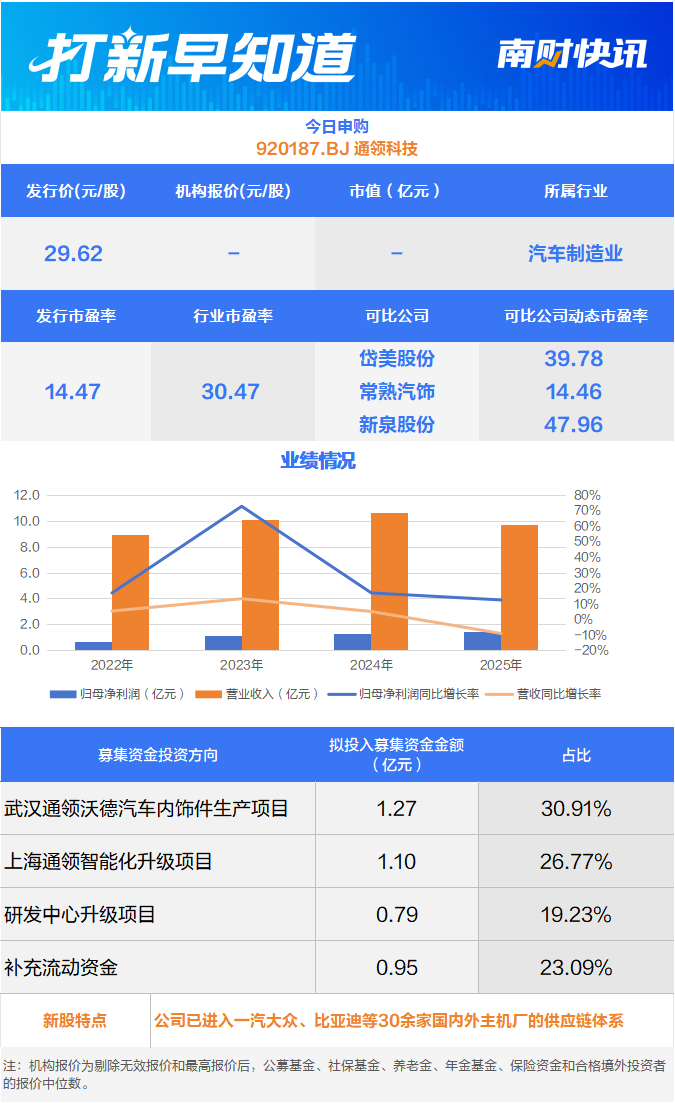
Group 1: Company Overview - Tongling Technology focuses on the research, production, and sales of automotive interior components, recognized as a national-level specialized "little giant" enterprise [1] - The main products include door trim strips, instrument panel trims, and central control trims, primarily used in passenger vehicles [1] Group 2: Financial Information - The IPO price for Tongling Technology is set at 29.62 yuan per share, with an issuance P/E ratio of 14.47, compared to the industry average of 30.47 [2] - The company plans to invest 1.27 billion yuan in the Wuhan Tongling Wode automotive interior production project and 1.10 billion yuan in the Shanghai Tongling intelligent upgrade project [2][3] Group 3: Research and Development - From 2022 to the first half of 2025, the R&D expenses were 36.68 million yuan, 39.94 million yuan, 38.34 million yuan, and 20.78 million yuan, representing 4.11%, 3.94%, 3.60%, and 4.28% of revenue respectively [3] - The company has developed a strong R&D team and accumulated numerous patents and core technologies, ensuring continuous upgrades in manufacturing processes and new product designs [3] Group 4: Market Position - Tongling Technology's market share in the domestic interior components market was 15.44%, 10.95%, 9.02%, and 9.40% from 2022 to the first half of 2025, with international market shares of 2.09%, 2.45%, 2.43% [4] - The company has established long-term relationships with over 30 domestic and international OEMs, including major brands like FAW-Volkswagen and BYD [3] Group 5: Industry Overview - Yisiwei specializes in the research, production, and sales of machine vision equipment for automotive manufacturing, becoming the leading domestic player in this field [4][7] - The company has significantly reduced costs for domestic automotive manufacturers by breaking the long-standing foreign monopoly in machine vision equipment [7] Group 6: Economic Sensitivity - The automotive manufacturing industry is highly sensitive to economic changes, affecting capital expenditure and procurement cycles for machine vision equipment [8][9] - The development of the machine vision industry is closely linked to macroeconomic cycles, with fluctuations in consumer confidence impacting upstream equipment suppliers [9]
福特汽车全球销量首次落后于比亚迪
Xin Lang Cai Jing· 2026-02-10 23:04
Core Insights - BYD's global sales surpassed Ford for the first time last year, ranking sixth globally with annual sales of 4.6 million vehicles [1] - Ford's global wholesale sales declined by approximately 2%, falling to around 4.4 million vehicles, despite growth in the U.S. market [1] - BYD has made significant inroads in Europe, South America, and Asia, with an export target of 1.05 million vehicles by 2025, aiming to increase this to 1.3 million vehicles this year [1] - Toyota maintained its position as the global sales leader for the sixth consecutive year, with a 4.6% increase in global sales, reaching 11.3 million vehicles [1] Company Performance - BYD's annual sales reached 4.6 million vehicles, marking a significant achievement in surpassing Ford [1] - Ford's sales decline indicates challenges in retaining market share, particularly in Europe and China, where competitors like BYD, Xiaomi, and Geely are gaining traction [1] Market Dynamics - The competitive landscape is shifting, with BYD leveraging high cost-performance and advanced technology in electric vehicles to capture market share from traditional automakers [1] - The growth of electric vehicle sales is evident, as BYD's expansion into new markets and increased export targets reflect a broader trend in the automotive industry [1]


欧盟汽车市场迎来电动化转型“拐点”(国际视点)
Ren Min Wang· 2026-02-10 22:51
Core Insights - The European automotive market is undergoing a significant shift towards electric vehicles (EVs), with projections indicating that by December 2025, new registrations of pure electric vehicles in the EU will reach 1.88 million, marking a 29.9% year-on-year increase and achieving a market share of 17.4% [1] - Germany is leading this transition, with a forecasted 43.2% increase in new registrations of pure electric vehicles in 2025, supported by a government subsidy program totaling €3 billion over three years [1] - Spain is also making strides, with a 77.1% increase in new registrations of pure electric vehicles in 2025, backed by a €4 billion investment plan to support EV purchases and infrastructure [2] Group 1: Market Trends - The EU automotive industry is expected to launch approximately 350 new electric vehicle models by 2032, with over 70% being pure electric vehicles, driven by supportive policies and increasing practicality of EVs [3] - The EU's automotive sector accounts for about 7% of the total economy, creating nearly 13 million jobs directly and indirectly [3] - The EU Commission has introduced a comprehensive automotive package to promote innovation and support the transition to clean mobility, including an €1.8 billion investment in battery production [4] Group 2: Technological Advancements - The EU is focusing on enhancing R&D in the automotive sector, with manufacturers and suppliers investing nearly €150 billion annually, representing about 30% of the EU's total innovation expenditure [3] - The EU is exploring bi-directional charging technology, allowing EVs to not only store energy but also return it to the grid, which aids in balancing the power system [4] - Future investments will also target key technologies such as software-defined vehicles and semiconductors to enhance competitiveness in the automotive industry [4] Group 3: International Collaboration - Recent agreements between China and Europe in the electric vehicle sector are fostering deeper cooperation in technology innovation and supply chain collaboration [5] - Chinese automotive brands are increasingly entering the European market, with a projected 60% increase in sales of Chinese electric vehicles in Europe by 2025 [5] - Chinese companies are establishing local production facilities in Europe, enhancing their integration into the local EV supply chain, with significant investments from brands like BYD and Xpeng [6] Group 4: Strategic Partnerships - Collaborative models between European vehicle technology and Chinese battery solutions are emerging, exemplified by the establishment of battery factories in Europe by Chinese firms [7] - The partnership between Envision and Renault in France highlights the growing synergy between Chinese battery manufacturers and European automakers [7] - Experts suggest that the collaboration between Chinese and German automotive companies can lead to mutual benefits, leveraging each other's strengths in battery technology and vehicle design [7]
美股三大指数收盘涨跌不一,闪迪跌超7%,中概指数涨0.87%
Ge Long Hui A P P· 2026-02-10 22:25
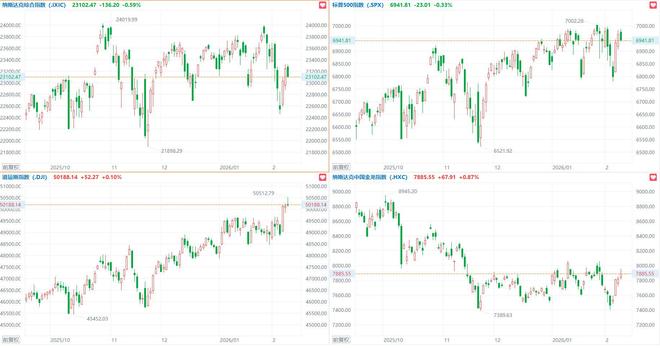
Core Viewpoint - The U.S. stock market showed mixed results with the Dow Jones increasing by 0.1%, while the Nasdaq and S&P 500 indices decreased by 0.59% and 0.33% respectively [1] Group 1: Stock Performance - Major technology stocks experienced varied performance, with Oracle rising over 2% and Tesla increasing more than 1%, while Google and Broadcom fell over 1% [1] - The residential construction, railway transportation, and tourism sectors saw significant gains, with Marriott Hotels rising over 8%, Hilton Hotels increasing over 3%, and Union Pacific up over 2% [1] - Storage and cryptocurrency-related stocks faced notable declines, with Western Digital dropping over 8%, SanDisk down over 7%, and Seagate Technology falling over 6% [1] Group 2: Chinese Stocks - The Nasdaq Golden Dragon China Index rose by 0.87%, with popular Chinese stocks such as Li Auto increasing by 2.9%, and BYD and Alibaba both rising over 2% [1] - Other Chinese companies like NIO, Xpeng, New Oriental, and JD.com saw increases of over 1%, while Tencent fell by 1.4% and Meituan dropped by 2.8% [1]


比亚迪起诉美国政府:关税争议下的权益捍卫之战
Sou Hu Cai Jing· 2026-02-10 17:57
Core Viewpoint - BYD has officially filed a lawsuit against the U.S. government, challenging the tariffs imposed by President Donald Trump and seeking a refund for all tariffs paid since April of the previous year [1]. Group 1: Legal Basis and Arguments - The Trump administration claims authority to impose tariffs under the International Emergency Economic Powers Act (IEEPA), which allows the president to regulate trade during a national emergency [2]. - In its lawsuit submitted to the U.S. International Trade Court, BYD's four U.S. subsidiaries argue that the Trump administration was not authorized to impose border taxes, asserting that the IEEPA does not mention "tariffs" or any equivalent terms [4]. - BYD cites a previous ruling from the U.S. Court of Appeals, which determined that the IEEPA does not grant the authority to impose the contested tariffs, strengthening its legal position [4]. Group 2: BYD's Claims and Current Situation - BYD is seeking compensation for both past and future tariffs, but the situation is complicated by a pending case in the U.S. Supreme Court regarding the authority of the executive branch to impose tariffs without congressional approval [5]. - The Supreme Court's ruling may only address the legality of tariffs against specific countries, not specific industries, meaning that even if the court rules against the Trump administration, BYD may only receive partial tariff relief [5]. - BYD emphasizes the necessity of this independent lawsuit to secure the right to refunds for illegally imposed tariffs, highlighting the company's determination and the challenges it faces in protecting its interests [5]. Group 3: BYD's U.S. Operations and Industry Context - Although BYD does not sell passenger vehicles in the U.S., it has a significant presence in the country, including operations in buses, commercial vehicles, batteries, energy storage systems, and solar panels [6]. - BYD North America employs 750 workers at its truck factory in Lancaster, California, contributing to local economic development [6]. - Over a thousand companies, including major players like Toyota and Costco, have filed similar lawsuits against the U.S. government, indicating widespread dissatisfaction with the tariff policies and a collective effort to defend legal rights [6].
比亚迪起诉美国
Zhong Guo Ji Jin Bao· 2026-02-10 16:39
Group 1 - BYD's U.S. subsidiary filed a lawsuit against the U.S. government on January 26, claiming that the tariff policy is illegal and seeking a refund of duties paid [1] - The company states that it designs and manufactures electric buses and trucks in the U.S. and has incurred significant tariffs on imported materials to maintain operations [1] - Over 1,000 companies, including Costco, Goodyear, Toyota, and Kawasaki Heavy Industries, have filed similar lawsuits to avoid losing eligibility for tax refunds before tariff settlements [1] Group 2 - The U.S. Supreme Court is currently reviewing the legality of Trump's tariff measures, prompting many businesses to file lawsuits [1][3] - BYD's U.S. subsidiary decided to sue separately due to concerns about not being able to secure refunds without a judgment or judicial relief in its own case [1]
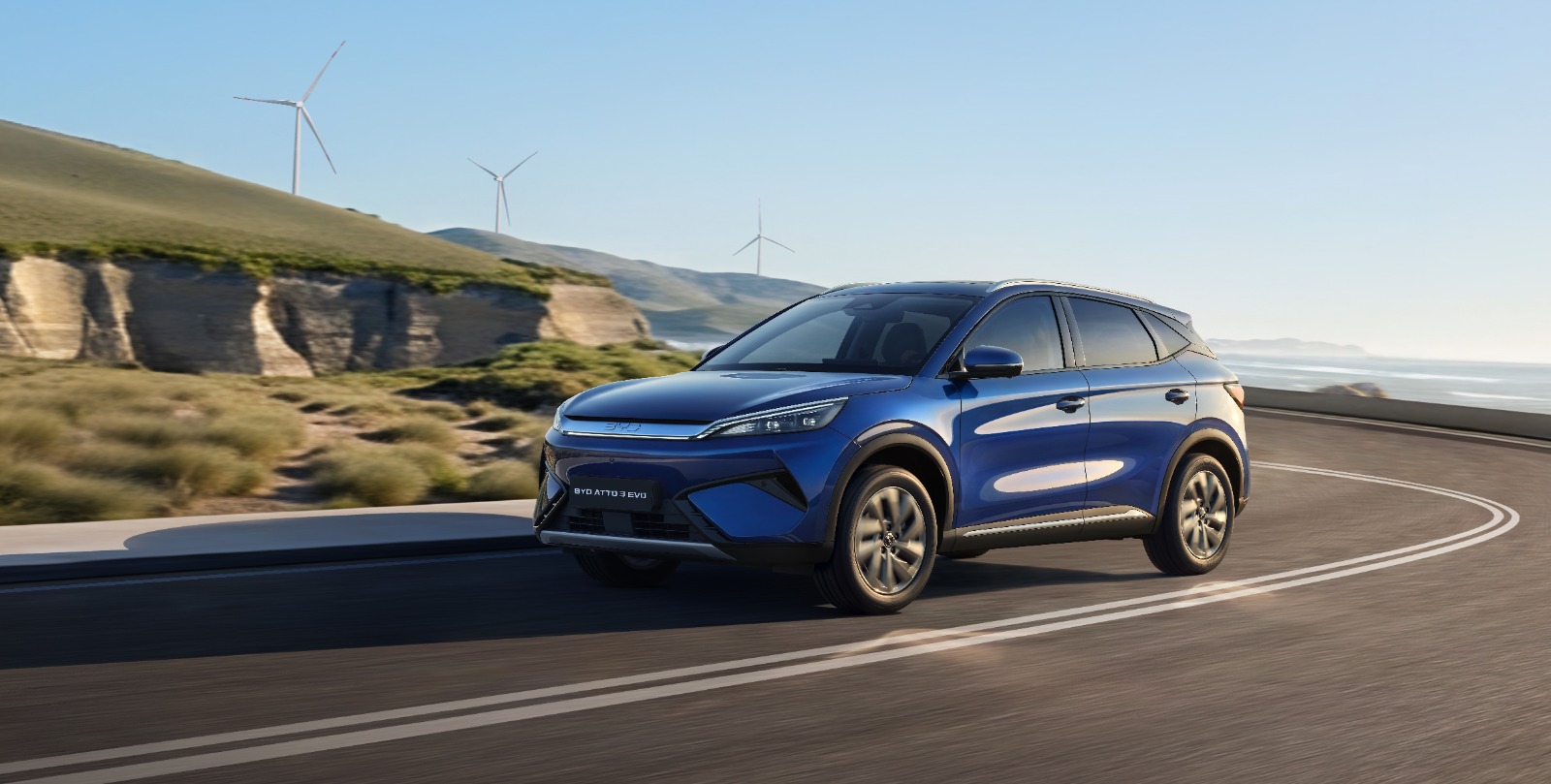
BYD presents ATTO 3 EVO, the new electric family SUV
Globenewswire· 2026-02-10 16:26
Core Insights - BYD has launched the ATTO 3 EVO, an all-electric family SUV that features enhanced power, a larger battery, extended range, and faster charging capabilities [1][7] Group 1: Product Features - The ATTO 3 EVO is equipped with a 74.8 kWh Blade Battery and utilizes BYD's latest e-Platform 3.0 along with an advanced 800V electrical architecture, enabling rapid DC charging at up to 220 kW, allowing the battery to recharge from 10% to 80% in just 25 minutes [3] - The SUV offers a WLTP combined range of up to 510 km, making it suitable for both long-distance travel and daily use [3] - The vehicle is available in both rear-wheel drive and all-wheel drive configurations, with the rear-wheel-drive version delivering 313 PS and accelerating from 0 to 100 km/h in 5.5 seconds, while the all-wheel-drive version produces 449 PS and achieves the same sprint in 3.9 seconds [4] Group 2: Design and Practicality - The ATTO 3 EVO maintains the same external dimensions as its predecessor but features improved interior packaging, with boot capacity increased to 490 litres, expandable to 1,360 litres with the rear seats folded, and a new 101-litre front trunk for additional storage [5] - The interior includes a redesigned layout with an 8.8-inch digital instrument cluster and a 15.6-inch central touchscreen, along with an updated BYD infotainment system that integrates Google services and an AI-enhanced voice assistant [6] Group 3: Market Positioning - The launch of the ATTO 3 EVO demonstrates BYD's significant advancements in electric vehicle technology within a short span of three years, reflecting the brand's commitment to innovation and customer satisfaction in the European market [2]