
BUD APAC(01876)

Search documents
新帅首考挂科,百威中国啤酒销量降超8%
Guo Ji Jin Rong Bao· 2025-08-05 07:36
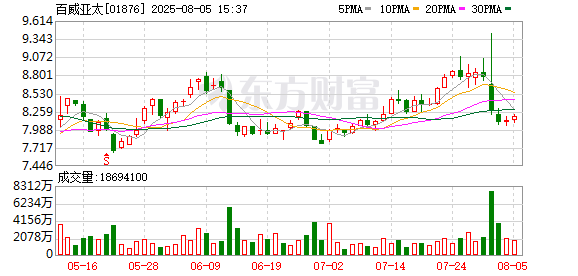
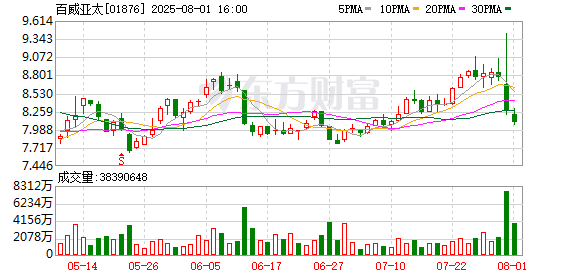
Core Viewpoint - Budweiser APAC, the largest beer company in the Asia-Pacific region, is facing significant challenges with declining revenue, profit, and sales, particularly in the Chinese market, which has historically been a key growth driver for the company [1][2]. Financial Performance - In the first half of the year, Budweiser APAC reported total revenue of $3.136 billion, a year-on-year decline of 5.6% [1]. - Shareholder profit decreased to $409 million, down 24.4% year-on-year [1]. - Total beer sales reached 4.363 billion liters, reflecting a 6.1% decline compared to the previous year [1]. Market Challenges - The decline in revenue, profit, and sales is closely linked to poor performance in the Chinese market, where beer sales fell by 8.2% and net income decreased by 9.5% [2]. - Revenue per hundred liters dropped by 1.4%, indicating a challenging market environment [2]. - The company has faced pressure from both domestic market weaknesses and the rise of local competitors like China Resources Beer and Tsingtao Brewery, which are seeking to capture higher-end market segments [2]. Historical Context - Budweiser APAC's sales in China have been on a downward trend, with a compound annual growth rate of -2.6% from 2018 to 2024, which is below the national average growth rate for large-scale beer production [2]. - Last year, the company experienced a significant decline in performance in China, with sales dropping by 11.8% and revenue falling by 13%, resulting in a market share decrease of 149 basis points [2]. Strategic Actions - In response to the declining performance, the company has implemented three key strategies: layoffs, price increases, and changes in leadership [2]. - The workforce in China was reduced from 21,181 to 18,401 employees, a decrease of 2,780 staff members [3]. - Despite reports of price increases for certain products, the financial data for the first half of this year indicates a simultaneous decline in both volume and price [3]. Leadership Changes - In February, Budweiser APAC announced the resignation of CEO Jan Craps after a seven-year tenure, with Cheng Yanjun taking over in April [4]. - Cheng, the first Chinese CEO of Budweiser APAC, is seen as having the critical task of reversing the company's fortunes in the Chinese market [5]. - However, the performance under the new leadership has not met expectations, particularly during the peak sales season in the second quarter [6].


食品饮料周观点:育儿补贴政策落地,推新积极挖掘增量-20250803
GOLDEN SUN SECURITIES· 2025-08-03 10:36
Investment Rating - The report maintains an "Increase" rating for the food and beverage industry, indicating a positive outlook for the sector [5]. Core Insights - The implementation of the childcare subsidy policy is expected to stimulate growth in the food and beverage sector, particularly benefiting the infant formula and dairy product markets [4]. - The report highlights three main investment themes in the liquor segment: strong leading brands, sustained regional advantages, and recovery-driven elastic stocks [1][2]. - In the beer and beverage segment, Budweiser faces sales pressure but is seeing price recovery, while the sugary tea category is gaining market share during peak seasons [3]. Summary by Sections Liquor Industry - Leading brands such as Moutai, Wuliangye, and Luzhou Laojiao dominate the global rankings, with Moutai valued at $58.4 billion, maintaining its position as the most valuable liquor brand globally [2]. - The liquor sector is transitioning from scale growth to high-quality development, with a focus on brand strength and market positioning [2]. Beer and Beverage Sector - Budweiser's Q2 2025 results show a revenue decline of 3.9% and a profit drop of 31.1%, with a notable 6.2% decrease in sales volume [3]. - The sugary tea segment is experiencing a resurgence, with brands like Kang Shifu and Uni-President maintaining leading positions, and sales of Yuanqi Forest's iced tea growing by 53.9% year-on-year [3]. Food Sector - The national childcare subsidy program, effective from January 1, 2025, is projected to enhance birth rates and subsequently increase demand for dairy products [4]. - New product launches by companies like Qiaqia and Ximai are aimed at expanding market presence and tapping into health-oriented consumer trends [4][7].




市场遭遇夹击!百威亚太上半年净利大跌24.4%,高端领域“腹背受敌”
Hua Xia Shi Bao· 2025-08-03 07:48
Core Insights - Budweiser APAC continues to face declining performance with no signs of recovery, as evidenced by a decrease in sales, revenue, and net profit in the first half of 2025 compared to the previous year [4][6] - The company is experiencing significant challenges in the Chinese market, where both sales and revenue have shown negative growth [6][7] - Budweiser APAC's strategy shift towards the 8-10 RMB price segment is hindered by strong competition from established players like Yanjing Beer and China Resources Beer [4][8] Financial Performance - In the first half of 2025, Budweiser APAC reported sales of 4.363 billion liters, a year-on-year decrease of 6.3%, with revenue at $3.136 billion, down 7.7%, and net profit at $409 million, down 24.4% [6] - The company's revenue from the Asia-Pacific West region, which includes China, India, and Vietnam, was $2.522 billion, a decrease of 8.3%, accounting for 80.4% of total revenue [6] Market Challenges - The Chinese market's performance remains weak, with a 8.2% decline in sales and a 10.2% drop in net revenue in the first half of 2025 [7] - The decline is attributed to a combination of overall industry demand weakness, increased competition, and over-reliance on the struggling nightlife and dining channels [7][8] - The new CEO, Cheng Yanjun, acknowledged that regional layout and channel weaknesses have impacted business performance [7] Strategic Adjustments - Budweiser APAC is shifting its focus from super-premium products to the core++ segment (8-10 RMB products) in response to changing consumer trends [8] - The company aims to enhance its presence in the non-drinking channel and strengthen its marketing efforts for brands like Harbin Beer [9] - Despite entering the 8-10 RMB market later than competitors, there are still opportunities for Budweiser APAC to capture market share through strategic brand positioning [9] Competitive Landscape - The high-end beer market in China is increasingly competitive, with brands like China Resources Beer and Qingdao Beer gaining market share [10] - Budweiser APAC plans to maintain its focus on flagship brands and invest in marketing to counteract competitive pressures [10][11] - Analysts suggest that Budweiser APAC should leverage its core brand strengths and explore new channels like e-commerce to meet consumer demands [11]
消费变化,百威中国如何让啤酒讲出新故事?
Sou Hu Cai Jing· 2025-08-02 09:12
Group 1: Event and Market Trends - The "Tomorrowland" music festival will debut its first official indoor version in Shanghai this November, marking its first appearance in China [1] - The event has generated significant buzz on social media, with nearly 300,000 discussions, and will feature a diverse lineup of international DJs and cutting-edge visual effects [1] - The collaboration between Budweiser China and the event is particularly significant amid fluctuations in the beer industry [1] Group 2: Changing Consumer Behavior - Beer consumption patterns in China are shifting, especially among younger adults, who prefer outdoor experiences like music festivals over traditional venues [3] - The role of beer has evolved into being an "emotional companion" in these new social settings [3] - The number of new beer SKUs launched in 2024's first three quarters indicates a strong trend towards craft and fresh beer concepts, accounting for over 50% of all new SKUs [4] Group 3: Competitive Landscape - The competition among major beer brands is intensifying, particularly in the price segments above 10 yuan and between 6-8 yuan [5] - Budweiser Group's strategy focuses on flagship brands, with Budweiser and Harbin Beer being the primary brands in China, aiming to create differentiation in the market [5][6] - The "flagship brand, mega platform" strategy is designed to connect major brands with globally relevant events, contributing to a projected 4.6% net profit growth for Budweiser in 2024 [5][6] Group 4: Channel and Digital Transformation - The traditional on-premise beer sales channels are declining, while non-on-premise channels like convenience stores are experiencing strong growth [11] - Budweiser China has developed a new digital model through its B2B platform "BEES," which has expanded to over 320 cities [12] - Non-on-premise channels now account for approximately 50% of Budweiser China's business, with higher profit margins compared to on-premise channels [12] Group 5: Product Innovation and Health Trends - There is a growing consumer preference for healthier beer options, with products like "0 sugar" and non-alcoholic beers gaining popularity [12] - Budweiser's new Harbin zero-sugar product saw a 70% sales increase among young consumers in the first quarter of this year [12] - The market for non-alcoholic beer is projected to reach 69.1 billion yuan by 2029, reflecting a significant trend towards health-conscious consumption [12]

百威亚太上半年净利大跌24.4%:中国市场遭遇夹击,高端领域“腹背受敌”
Hua Xia Shi Bao· 2025-08-02 08:20
Core Insights - Budweiser APAC continues to show no signs of recovery in its performance, with sales, revenue, and net profit all declining in the first half of 2025 compared to the previous year, particularly in the Chinese market [2][3][4] - The company has faced ongoing pressure from a deteriorating external consumption environment and has shifted its strategic focus towards the popular 8-10 RMB price segment, although competitors like Yanjing Beer and China Resources Beer have already established a presence in this market [2][5][6] Financial Performance - In the first half of 2025, Budweiser APAC's sales volume was 4.363 billion liters, a year-on-year decrease of 6.3%, with revenue at $3.136 billion, down 7.7%, and net profit at $409 million, down 24.4% [3][4] - The company's revenue from the Western Asia-Pacific region, which includes China, accounted for $2.522 billion, representing 80.4% of total revenue, but also saw a decline of 8.3% year-on-year [3] Market Challenges - The Chinese market remains weak, with sales down 8.2% and net revenue down 10.2% in the first half of 2025, continuing a trend of over 10% declines in 2024 [4][5] - The new CEO, Cheng Yanjun, acknowledged that the poor performance in China is due to regional layout issues and weak on-premise channels, compounded by over-reliance on coastal provinces and a lack of expansion in non-on-premise channels [4][6] Competitive Landscape - The high-end beer market in China is facing significant competition, with brands like China Resources Beer and Qingdao Beer gaining market share, while Budweiser APAC's high-end strategy has been hindered by late entry into the sub-premium segment [5][6] - Analysts suggest that while Budweiser APAC's late entry into the 8-10 RMB price segment presents challenges, there are still opportunities to leverage the Harbin brand in non-on-premise channels [6][7] Strategic Adjustments - Budweiser APAC is reallocating resources from the super-premium segment to focus on the core++ (8-10 RMB) segment, with plans to invest more in the Harbin brand and enhance marketing efforts in non-on-premise channels [5][6] - The company aims to maintain brand premium and visibility through sports/IP marketing and to innovate differentiated products to meet consumer demands in the competitive landscape [7]
百威亚太(01876.HK)2025年中报点评:延续去库 务实调整
Ge Long Hui· 2025-08-01 19:21
Core Viewpoint - The company reported a decline in revenue and profitability for the first half of 2025, with a total revenue of $3.14 billion, a normalized EBITDA of $980 million, and a normalized net profit of $470 million, reflecting year-on-year decreases of 7.7%, 10.6%, and 14.1% respectively [1] Group 1: Financial Performance - In Q2 2025, the company achieved a revenue of $1.68 billion, with a year-on-year decline of 4.6% in reported terms and 3.9% in organic terms [1] - The normalized EBITDA for Q2 2025 was $500 million, showing a year-on-year decrease of 5.7% in reported terms and 4.5% in organic terms [1] - The normalized net profit for Q2 2025 was $240 million, reflecting a year-on-year decline of 6.3% [1] Group 2: Regional Performance - In the Asia-Pacific West region, revenue declined by 2.7% year-on-year in Q2 2025, while normalized EBITDA showed a 1.4% organic growth due to a low base effect [1] - The China region continued to experience inventory reduction, with a revenue decline of 6.4% year-on-year in Q2 2025, driven by policy impacts and a focus on inventory reduction [1] - The Indian market showed strong growth in high-end and ultra-high-end products, offsetting the weak demand in China, contributing to a more stable performance in the Asia-Pacific West region [1] Group 3: Future Outlook - The company expects to continue its inventory adjustment in Q3 2025, with a potential return to normal growth in Q4 2025 due to low base effects [3] - The non-current drinking channel in China is being expanded, with high-end and ultra-high-end products gaining a larger share compared to current drinking channels [3] - The Indian region is anticipated to maintain its growth momentum, with double-digit growth in high-end and ultra-high-end products [3]
百威亚太(1876.HK)2025年半年度业绩点评:销量继续承压 吨价已止跌回升
Ge Long Hui· 2025-08-01 19:21
Core Insights - Budweiser APAC reported Q2 2025 revenue of $1.675 billion, with an organic year-on-year decline of 3.9% [1] - Normalized EBITDA for Q2 2025 was $498 million, reflecting an organic year-on-year decrease of 4.5% [1] - Net profit attributable to the parent company was $175 million, down 31.1% year-on-year [1] Revenue and Profitability - Q2 2025 sales volume reached 23.887 million hectoliters, showing an organic year-on-year decline of 6.2% [1] - Revenue per hectoliter increased by 2.4% year-on-year in Q2 2025 [1] - Gross margin for Q2 2025 was 51.8%, with an organic year-on-year increase of 0.71 percentage points [1] - Normalized EBITDA margin was 29.7%, reflecting an organic year-on-year decrease of 0.21 percentage points [1] Regional Performance - In the Western Asia-Pacific region, Q2 2025 revenue and normalized EBITDA saw organic year-on-year declines of 2.7% and increases of 1.4%, respectively, with sales volume down 5.6% [2] - In the Eastern Asia-Pacific region, Q2 2025 revenue and normalized EBITDA experienced organic year-on-year declines of 8.4% and 26.5%, respectively, with sales volume down 10.4% [2] - In South Korea, Q2 2025 sales volume saw a high single-digit decline, primarily due to early shipments, while revenue management measures led to low single-digit growth in revenue per hectoliter [2] China Market Insights - In China, Q2 2025 revenue and normalized EBITDA experienced organic year-on-year declines of 6.4% and 4.0%, respectively, with sales volume down 7.4% [3] - Despite the decline in sales volume, revenue per hectoliter increased by 1.1% year-on-year due to product mix optimization [3] - The company has focused on non-immediate consumption channels, which have shown year-on-year growth in both sales volume and revenue [3] Inventory Management and Future Outlook - The company has been actively managing inventory, achieving a reduction in inventory levels compared to the previous year and significantly below the industry average [3] - The weak performance in the immediate consumption channel is expected to continue into the second half of the year, with ongoing inventory control measures [3] - Profit forecasts for net profit attributable to the parent company have been revised down for 2025-2027 to $690 million, $737 million, and $782 million, reflecting decreases of 8%, 8%, and 7%, respectively [3]
百威亚太(01876):边际有改善,前路仍漫长
Haitong Securities International· 2025-08-01 15:10
Investment Rating - The report maintains a "Neutral" rating for Budweiser Brewing Co APAC with a target price of HK$7.90, while the current price is HK$8.09 [2][6]. Core Insights - The company is experiencing marginal improvements, but the recovery process is slower than expected, with total sales volume in 25H1 declining by 6.1% year-on-year and revenue decreasing by 5.6% year-on-year [3][10]. - The Chinese market continues to face challenges, with sales volume and revenue down by 8.2% and 9.5% respectively in 25H1, although there are signs of marginal improvement in Q2 [4][11]. - The South Korean market is undergoing structural adjustments, while the Indian market shows resilience with double-digit revenue growth in Q2 [5][12]. Financial Performance Summary - For 2024A, the company expects revenue of US$6.246 billion, with a projected decline of 8.9% year-on-year. The net profit is estimated at US$726 million, reflecting a decrease of 14.8% [2][9]. - The gross profit margin is projected to be 50.4% for 2024A, with a gradual increase to 51.1% by 2027E [2][9]. - The earnings per share (EPS) for 2025-2027 are estimated to be USD 0.05, USD 0.05, and USD 0.06 respectively [6][13]. Market Analysis - In the Chinese market, the on-premise channel remains weak, and the transformation is still in its early stages, with a focus on premium products in non-on-premise channels [4][11]. - The company has been actively managing inventory, achieving better-than-historical inventory levels by the end of Q2 2025, which supports future sales growth [4][11]. - In South Korea, the company implemented a price increase of 2.9% for core brands, but the market response was neutral, and overall performance remains under pressure [5][12]. Investment Recommendations - The report suggests that if the company can overcome challenges related to channel transformation and expense control, it may reverse the decline in market share in China, laying the groundwork for medium- to long-term recovery [6][13].
中国消费品7月价格报告:多数白酒批价回归平稳,液奶与啤酒折扣降低
Haitong Securities International· 2025-08-01 13:32
Investment Rating - The report assigns an "Outperform" rating to multiple companies in the consumer staples sector, including Guizhou Moutai, Wuliangye, Luzhou Laojiao, and others [1]. Core Insights - The report highlights that most baijiu wholesale prices have stabilized, with specific price changes noted for various brands. For instance, the price of Feitian Moutai (case) is 1915 yuan, down by 35 yuan from the previous month, and down 665 yuan year-on-year [3][9]. - Discounts on liquid milk and beer have decreased compared to previous months, indicating a shift in pricing strategies within the consumer goods market [5][22]. Summary by Sections Baijiu Pricing - Guizhou Moutai's prices for different products have shown a decline, with Feitian Moutai (case) at 1915 yuan, down 35 yuan month-on-month and 665 yuan year-on-year [3][9]. - Wuliangye's eighth-generation price is 930 yuan, stable compared to last month and unchanged year-on-year [4][9]. - Luzhou Laojiao's Guojiao 1573 remains at 860 yuan, unchanged from last month and down 40 yuan year-on-year [4][9]. Consumer Goods Discounts - The average discount rate for liquid milk has decreased to 79.1% from 73.8% at the end of June, while the median discount rate increased to 80.3% [5][22]. - Beer discounts have also seen a slight increase, with average and median rates at 83.6% and 87.0%, respectively, compared to 81.1% and 84.6% in late June [5][22]. - Discounts for infant formula and instant foods have remained stable, with average rates at 93.0% and 94.3%, respectively [7][22].



百威亚太二季度收入降幅收窄 战略调整效果待显
Zheng Quan Ri Bao Wang· 2025-08-01 11:41
Core Viewpoint - Budweiser APAC reported a decline in revenue and net profit for the first half of 2025, indicating challenges in the beer market, particularly in China, while showing signs of marginal improvement in the second quarter [1][2]. Financial Performance - For the first half of 2025, Budweiser APAC's revenue was $3.136 billion, a decrease of 5.6% year-on-year; net profit was $409 million, down 24.4%; total sales volume was 4.363 billion liters, a decline of 6.1% [1]. - The second quarter showed a smaller revenue decline of 3.9% compared to a 7.5% decline in the first quarter, indicating a trend of marginal improvement [1]. - Average revenue per hectoliter increased by 0.5% year-on-year for the first half, with a 2.4% increase in the second quarter, contrasting with a 1.5% decline in the first quarter [1]. Regional Performance - In China, sales volume decreased by 8.2% and revenue by 9.5% in the first half, with a 7.4% decline in sales volume and a 6.4% decline in revenue in the second quarter [2]. - The Indian market experienced double-digit growth in revenue and sales volume for high-end products, continuing to drive overall growth [2]. - In South Korea, sales volume showed a high single-digit decline, while revenue also decreased significantly due to reduced sales volume, although average revenue per hectoliter saw low single-digit growth [2]. Inventory Management - Inventory adjustment was a key operational focus for Budweiser APAC in the first half, with proactive measures taken to align inventory levels with market conditions [3]. - The company reported lower inventory levels and days compared to the previous year, indicating effective inventory management [3]. Strategic Focus - The new CEO and sales leadership are undergoing structural and strategic adjustments, facing challenges in channel transformation, management efficiency, and external risks [3]. - The company plans to focus on controllable areas, increasing investment in brands like Budweiser and Harbin, while expanding non-immediate consumption channels and enhancing execution [3]. - Analysts suggest that the company may see marginal recovery in the Chinese market in the second half, but emphasize the need for time to build brand influence and establish non-immediate consumption channels [3].