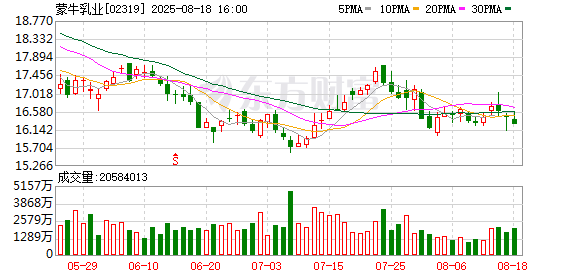
MENGNIU DAIRY(02319)

Search documents
《2025 品牌足迹》中国市场榜单:前十阵营稳定,东方树叶、三只松鼠新晋前50
凯度消费者指数· 2025-08-21 07:03
Core Insights - The article discusses the release of the "2025 Brand Footprint Report" by Worldpanel, highlighting the top 50 consumer brands in China's fast-moving consumer goods (FMCG) market, using "Consumer Reach Points (CRP)" as a key metric to measure brand penetration and purchase frequency [1][3]. Brand Rankings - The top ten consumer brands in China for 2024 are led by Yili with 1,167.2 million consumer reach points, followed by Mengniu with 968.4 million, and Kangshifu with 801.4 million [4][5]. - Other notable brands in the top ten include Haitian, Xinxiangyin, Vinda, Jinlongyu, Nongfu Spring, Wangwang, and Tongyi, all showing strong market penetration [6]. Growth Dynamics - The report indicates that the growth of brands in China is driven by a "dual engine" of penetration and purchase frequency, with 93% of growth among the top 250 brands coming from increased penetration [11]. - New entrants to the top 50 include Dongfang Shuye and Three Squirrels, both showing significant growth rates of 59% in consumer reach points [10]. Market Trends - The article emphasizes the importance of reaching new consumer households as a primary growth engine, with both penetration and purchase frequency being crucial for brand success in a complex market environment [11]. - The blurring lines between online and offline channels have amplified the need for brands to effectively reach consumers at every decision-making moment [11].





蒙牛出售新西兰雅士利工厂:一场战略性的断腕求生
Xin Lang Cai Jing· 2025-08-20 10:26
Core Insights - A2 Milk Company announced the acquisition of the Yashili International milk powder factory in New Zealand for approximately 1.2 billion RMB, marking a strategic shift for Mengniu from expansion to value focus amid financial pressures [1][2] Asset Sale: Financial Restructuring - The sale of the Yashili factory represents Mengniu's corrective action against its past aggressive expansion, which included a HKD 10 billion acquisition of Yashili in 2013 that did not yield expected results [2] - The factory became a low-efficiency asset due to underutilization and high operational costs, contributing to Mengniu's financial strain, which was evident in 2024 with a significant drop in revenue and net profit [2] - Proceeds from the sale will be used to bolster Mengniu's core business in Southeast Asia and enhance market positioning [2] Strategic Restructuring: Focus on Core Markets - Mengniu's new management initiated a "burden reduction" strategy, optimizing low-efficiency operations and reducing administrative and sales costs [3] - The company is concentrating resources on two key areas: the Southeast Asian ice cream market and organic milk powder business, with its ice cream brand, Aishue, achieving significant revenue growth [3] - This strategy contrasts with Mengniu's previous broad acquisition approach, now favoring organic growth and reduced capital expenditures [3] Industry Dynamics: Competition for Certification - A2's acquisition of the Yashili factory is a strategic move to secure a foothold in the Chinese market, where strict regulations on infant formula production limit factory capabilities [4] - A2 aims to enhance investment returns and expand market share in China by leveraging the factory's certification and aligning production standards with its product positioning [4] Future Challenges: Mengniu's Transition - Despite the strategic adjustment, Mengniu faces challenges such as sluggish growth in core categories and high capital requirements for overseas expansion [5] - The company must balance between scaling down and upgrading its brand, as its profit margins have improved mainly through cost control rather than product premium [5] - Competitors are gaining market share through technological differentiation and refined channel strategies, which Mengniu may need to adopt [5] Conclusion: Value Reconstruction - The sale of the Yashili factory signifies a transition for Mengniu towards a more focused regional brand strategy, moving away from a global factory model [7] - The future success of Mengniu will depend on its ability to lead in the Southeast Asian market and effectively translate technological advantages into brand recognition among consumers [7]
虹摹生物A轮融资在即 蒙牛合成生物布局获资本认可
Zheng Quan Ri Bao Wang· 2025-08-20 04:03
Core Insights - China Mengniu Dairy Company Limited is actively advancing the A-round financing for its synthetic biology subsidiary, Hongmo Biotechnology, with a significantly increased valuation compared to the previous round [1][2] - The strategic focus on Human Milk Oligosaccharides (HMO) and innovative product development positions Mengniu favorably in the dairy industry [2] Group 1: Financing and Valuation - Hongmo Biotechnology is undergoing A-round financing, attracting multiple investment institutions for due diligence, indicating strong market interest [1] - The company completed a Pre-A round financing of over 100 million yuan in June 2024, led by CICC Qide Fund, with funds allocated for new product development and commercialization [1][2] Group 2: Strategic Development and Innovation - Mengniu's strategic layout for HMO dates back to 2016, establishing a comprehensive innovation system from basic research to industrialization [2] - Hongmo Biotechnology won the "Best Startup Brand Award" at the 2025 World Dairy Innovation Awards, marking a significant achievement for Chinese functional nutrition technology [2] - Mengniu has successfully integrated HMO technology into various products, including the Ruibaoen series of milk powder and the Future Star HMO children's liquid formula, demonstrating a proactive response to nutritional demands in the new health era [2]
瞄准中国奶粉市场份额 a2牛奶公司收购蒙牛雅士利新西兰工厂
Xin Jing Bao· 2025-08-18 15:00
Core Viewpoint - The a2 Milk Company announced the acquisition of 100% of the Pokeno factory from Mengniu's subsidiary Yashili International for NZD 282 million, aiming to secure registration opportunities for two new Chinese standard formula milk products and expand its market access in China [2][3]. Group 1: Acquisition Details - The acquisition is based on a "debt-free, cash-free" structure, with a planned investment of approximately NZD 100 million to enhance production capacity and create over 100 new jobs at the Pokeno factory [3]. - The acquisition is part of a broader strategy to optimize the supply chain and enhance growth opportunities, with plans for a NZD 300 million fully franked special dividend post-approval from Chinese regulators [3][9]. Group 2: Mengniu's Strategy - Mengniu stated that the sale of New Zealand assets is part of its strategy to manage capital expenditures, assess inefficient assets, and optimize its asset portfolio [4][12]. - Mengniu's international business is primarily driven by its ice cream brand "Aixue" and infant formula brand "Bellamy," focusing on emerging markets in Southeast Asia and Latin America [4][12]. Group 3: Market Context - The acquisition aligns with a2 Milk Company's strategy to gain more Chinese label infant formula registrations, which are crucial for market entry in China [5][9]. - The company has been increasing its distribution efforts in China since 2014, with the Chinese market becoming its largest overseas market for infant formula [5][6]. Group 4: Financial Performance - a2 Milk Company reported a revenue increase of 13.5% to NZD 1.902 billion and a net profit increase of 21.1% to NZD 202.9 million for the 2025 fiscal year, with significant growth in the Chinese and Asian markets [10]. - The company's market share in the Chinese infant formula market rose from 7.1% in the 2024 fiscal year to 8% [10]. Group 5: Future Outlook - a2 Milk Company plans to continue executing its growth strategy in the 2026 fiscal year, focusing on maximizing potential in the Chinese market and expanding related product categories [10]. - The company aims to obtain regulatory approval for the new product registrations and initiate a multi-year capital investment plan [10].
瞄准中国奶粉市场份额,a2牛奶公司收购蒙牛雅士利新西兰工厂
Bei Ke Cai Jing· 2025-08-18 15:00
Core Viewpoint - The a2 Milk Company announced the acquisition of the Pokeno factory in New Zealand for NZD 282 million to secure registration opportunities for two new Chinese label formula milk products, aiming for broader market access in China [1][2]. Group 1: Acquisition Details - The acquisition of the Pokeno factory is based on a "debt-free, cash-free" structure, with a planned investment of approximately NZD 100 million to enhance production capacity and create over 100 new jobs [2]. - The Pokeno factory, established in 2015, has experience in producing formula milk and will utilize A2 protein source milk from New Zealand's Waikato region for a2 brand products [9]. Group 2: Strategic Implications - The acquisition and the planned divestment of Mataura Valley Milk are seen as milestones in optimizing the supply chain and providing further growth opportunities for the company [3][8]. - The company aims to obtain regulatory approval in China to register the new products under the a2 brand, potentially expanding its product offerings and market presence [9]. Group 3: Market Context - The Chinese infant formula market has undergone significant changes, with a2 Milk Company shifting focus from cross-border purchases to securing local registrations for its products [5][10]. - The company has seen a steady increase in revenue from the Chinese market, with a reported 13.9% growth in revenue from China and other Asian regions in the 2025 fiscal year [10]. Group 4: Competitive Landscape - The company has been diversifying its supply chain to reduce reliance on Synlait Milk, which has been a key partner in obtaining Chinese registration for its products [6][7]. - The divestment of the Pokeno factory by Mengniu is part of a broader strategy to manage capital expenditures and optimize asset portfolios, indicating a shift in focus towards more efficient operations [1][11].
a2牛奶公司上半年营收净利双增 拟12亿收购蒙牛乳业旗下公司
Chang Jiang Shang Bao· 2025-08-18 08:26
Group 1 - A2 Milk Company is undergoing a strategic transformation by acquiring and divesting assets, including the purchase of Yashili New Zealand Dairy Company for approximately NZD 282 million (around RMB 1.2 billion) from Mengniu Dairy's subsidiary [1] - The acquisition of the Yashili factory marks a significant milestone in A2's supply chain transformation strategy, allowing the company to gain access to more desired Chinese label registered formulas [2] - A2 Milk Company reported a 13.5% increase in revenue to NZD 1.902 billion and a 21.1% increase in net profit after tax (NPAT) to NZD 202.9 million for the fiscal year ending June 30, 2025 [2] Group 2 - Revenue growth by region includes a 13.9% increase in China and other Asian markets, a 22.5% increase in the U.S., and a 42.7% increase in Matou Valley Milk, while revenue in the Australia-New Zealand region remained flat [3] - By product category, A2 Milk Company saw a 9.9% increase in infant formula, a 3.3% increase in standard products, a 17.2% increase in English standard products, and a 14.4% increase in liquid milk [3] - A2 Milk Company achieved a record market share in the Chinese infant formula market, increasing from 7.1% in FY2024 to 8%, positioning itself among the top four brands in the world's largest infant formula market [3]
乳品业去产能,蒙牛12亿甩卖新西兰奶粉工厂
Guan Cha Zhe Wang· 2025-08-18 08:25
Core Viewpoint - Mengniu has sold its New Zealand milk powder factory to a2 Milk Company for approximately NZD 282 million (around CNY 1.2 billion), as part of its strategy to manage capital expenditures and optimize its asset portfolio [1][3]. Group 1: Transaction Details - a2 Milk Company announced the acquisition of Yashili New Zealand Dairy Company Limited from Mengniu's subsidiary Yashili International Group Limited [1]. - The deal includes a factory located in Pokeno, New Zealand, and two registered formula products for infants [1]. - The transaction has been approved by New Zealand's Overseas Investment Office and is expected to be completed by September 1 [1]. Group 2: Factory Background - The Yashili New Zealand factory was the first overseas factory built from scratch by a Chinese company in New Zealand, with an investment of no less than CNY 1.1 billion [1]. - The factory commenced construction in 2013 and began operations in November 2015, covering an area of approximately 70,000 square meters [1]. - It has an annual production capacity of 52,000 tons of base powder and 25,000 tons of finished milk powder, supplying markets in China, New Zealand, and Europe [1]. Group 3: Financial Performance - In 2024, Mengniu reported revenue of CNY 88.675 billion, a year-on-year decline of 10.09%, and a net profit of CNY 105 million, down 97.83% [3]. - The milk powder segment generated revenue of CNY 3.32 billion, accounting for 3.74% of total revenue, with a year-on-year decrease of 12.66% [4]. - Other segments, including liquid milk, ice cream, and cheese, also experienced varying degrees of decline [4]. Group 4: Industry Context - The dairy industry is facing an oversupply situation, prompting companies to reduce production capacity [6]. - Selling the factory allows Mengniu to adjust its industrial structure and invest in new product development [6]. - Despite the challenges, Mengniu's infant formula segment is showing signs of recovery, with expectations to reach nearly CNY 1 billion this year [6].

蒙牛国际化战略持续深化 艾雪和贝拉米新兴市场渗透加速
Zheng Quan Ri Bao Wang· 2025-08-18 06:16
Core Insights - In the first half of 2025, Mengniu Dairy Company has made significant progress in its internationalization strategy, with multiple brands performing well in overseas markets [1] - The company is focusing on high-growth potential markets and optimizing global resource allocation through a "one body, two wings" strategic framework [1] Group 1: International Expansion - The Aisle Ice Cream brand has maintained its leading position in Southeast Asia while gradually expanding into emerging markets such as Africa and Latin America [1] - Aisle has received over $100 million in additional investment from strategic shareholders to support its rapid expansion in Southeast Asia and other new markets [1] - Aisle's localized operational strategy has led to rapid business scale expansion since entering the Indonesian market in 2015 [1][2] Group 2: Product Development and Market Penetration - Aisle has developed a dessert series of ice cream products tailored to Indonesian consumer preferences, gaining market recognition [2] - The brand has implemented an "ice cabinet deployment plan," placing nearly 600,000 ice cabinets in rural areas, covering about 400,000 retail terminals [2] - Aisle's annual sales in Indonesia grew from 20 million to 1.2 billion yuan within three years, achieving a market share of 34% [2] Group 3: Supply Chain and Production - Aisle has established a complete localized supply chain system, including joint ventures for cold chain infrastructure and three self-built production bases in Indonesia [2] - The brand has built four production bases in Southeast Asia, creating a solid competitive barrier through its "R&D + channel + supply chain" localized operational model [2] Group 4: Global Strategy - Aisle is accelerating its global expansion by targeting Africa and Latin America, having completed the business structure setup for these regions [3] - In Africa, Aisle is forming a localized operational team and developing products suited to local consumer tastes and spending levels [3] - In Latin America, Aisle has chosen Brazil as its entry point and is building a localized marketing system [3] Group 5: Bellamy's Growth - Bellamy, as a key pillar of Mengniu's international strategy, is showing strong growth momentum in the Southeast Asian market [3] - The brand has successfully upgraded its product line in Vietnam, with new products launched in both Australia and Vietnam [4] - Bellamy's brand influence in Vietnam is increasing, supported by media coverage and visits from government representatives [4]
赞助权益与传播声量的背离:中国乳业双雄在巴黎奥运会中的赞助营销策略分析
Jing Ji Guan Cha Wang· 2025-08-18 02:41
Core Insights - The marketing performance of China's two dairy giants, Mengniu and Yili, during the 2024 Paris Olympic Games reveals that despite Mengniu being a global Olympic partner with higher sponsorship privileges, Yili significantly outperformed Mengniu in media coverage and user engagement on domestic social media platforms [2][3][6] - The analysis introduces the "Dual-Track Co-opetition Marketing Model," which consists of a "Competition Track" where brands compete for market share and a "Cooperation Track" where brands collaborate to enhance the overall image of their industry [2][3][40][41] Group 1: Sponsorship and Market Position - Mengniu and Yili are the leading companies in China's dairy industry, with Yili reporting total revenue of 125.758 billion RMB and net profit of 10.428 billion RMB in 2023, while Mengniu reported revenue of 98.624 billion RMB and net profit of 4.886 billion RMB [4] - Yili holds a market share of 26.4% compared to Mengniu's 21.6%, indicating a competitive landscape where both companies dominate the market [4][5] Group 2: Marketing Strategies and Performance - During the Olympic period, Yili's content dissemination and user discussion significantly surpassed Mengniu's, with Yili's related content volume being 4.4 times that of Mengniu, and Yili's engagement metrics being approximately double that of Mengniu [6][19] - Mengniu's marketing strategy included innovative digital advertising and emotional storytelling, aiming to connect the Olympic spirit with its brand image [19][20][22] - Yili's marketing strategy involved product innovation with Olympic-themed products, cultural marketing through a national-themed bus tour, and leveraging social media to create viral marketing moments [25][26][27][29] Group 3: Competitive Dynamics - The competitive relationship between Mengniu and Yili is characterized by Mengniu's official sponsorship status and Yili's ambush marketing tactics, which allowed Yili to capture significant market attention without being a global partner [32][33] - Yili's ambush marketing strategies included signing popular athletes, creating culturally themed products, and engaging in social media events that resonated with the audience [34][36][38] Group 4: Implications for Future Marketing - The findings suggest that both companies contribute to enhancing the global image of the Chinese dairy industry, albeit through different marketing strategies [41] - The "Dual-Track Co-opetition Marketing Model" proposed in the analysis provides a framework for understanding how brands can navigate competition and collaboration in international sports sponsorships [40][42]

乳业巨头逐鹿B端:蒙牛伊利们掀起千亿市场争夺战
东京烘焙职业人· 2025-08-17 08:33
Core Viewpoint - The Chinese dairy industry is undergoing a significant strategic transformation, shifting from a "scale expansion" model reliant on market penetration and capacity expansion to a "value enhancement" model focused on technological innovation, product differentiation, and value chain extension [5][6]. Group 1: Market Dynamics - The B-end dairy market is emerging as a new growth point, attracting major players like Mengniu and Yili, as the C-end market becomes saturated and competition intensifies [6][9]. - The total scale of the B-end dairy market has expanded to a trillion-level, driven by the rapid rise of coffee, baking, and tea industries, which have a growing demand for dairy products [9][12]. - The coffee market alone is projected to see a sales volume of 3.3 billion cups in 2023, with a growth rate of 37.5%, expected to reach 5 billion cups by 2025 [9][12]. Group 2: Domestic Market Trends - The domestic B-end market, particularly for high-end products like cream and cheese, has been dominated by international brands, with a domestic replacement rate of less than 30% [13][15]. - Domestic dairy companies are making strides in technology and production processes, which is breaking the previous dominance of foreign brands [13][15]. - The average price of fresh milk in major producing provinces has decreased, providing a cost advantage for domestic dairy companies in the B-end market [16]. Group 3: Competitive Strategies - Major dairy companies are rapidly expanding their B-end business through partnerships with restaurant chains and other strategies [20][21]. - Mengniu has launched a professional catering brand and focused on specific product lines to meet diverse professional needs [21][23]. - Yili has established a professional dairy application innovation center and expanded its B2B platform to enhance its B-end market presence [23][24]. Group 4: Challenges and Opportunities - The B-end market offers stable customer bases and large order volumes, which can lead to lower production costs and more direct market insights for dairy companies [27]. - However, competition in the B-end market is distinct from the C-end, focusing on product specialization, customization, and supply chain efficiency [29][30]. - Barriers to entry, such as technology, scale, and brand reputation, make it challenging for new entrants to compete effectively in the B-end market [32].