MENGNIU DAIRY(02319)

Search documents
天津乳制品行业专题报告:天津铸就都市型奶业产业,海河引领全国花色奶风潮
BOHAI SECURITIES· 2025-07-31 09:12
Investment Rating - The report does not explicitly state an investment rating for the industry Core Insights - The dairy industry in China is experiencing a structural adjustment due to declining milk prices and rising production costs, leading to increased losses among dairy farms and a reduction in the number of dairy cows [1][22][27] - The dairy product market is dominated by a few major players, with a notable performance in flavored milk and online sales channels, indicating potential growth areas despite overall consumption decline [2][42][61] - Tianjin is emerging as a significant urban dairy industry cluster, leveraging advanced DHI measurement technology to enhance milk production efficiency [3][67][76] Summary by Sections 1. China's Dairy Industry and Production Adjustments - Inner Mongolia is the largest milk-producing region, accounting for over 19% of national milk production in 2024 [1] - The average price of fresh milk has decreased by 11.75% year-on-year in the first half of 2024, leading to a cost-price inversion for dairy farms [22][25] - The number of dairy cows in China is projected to decrease by over 500,000 heads in 2024 compared to 2023 [27][36] 2. Dairy Product Market Dynamics - The production of dairy products from large-scale enterprises is expected to decline by 1.90% in 2024, with a total output of 29.62 million tons [2][42] - The market share of flavored milk products is increasing, with online sales channels showing significant growth potential [2][61] - The average per capita consumption of dairy products in China is only 40.5 kg/year, significantly lower than the recommended dietary intake and below levels in developed countries [54] 3. Tianjin's Dairy Industry Development - Tianjin's dairy industry has achieved an annual output value exceeding 11.68 billion yuan, with a slight increase in dairy cow inventory in 2024 [3][70] - The DHI measurement technology in Tianjin is leading nationally, with a full coverage of DHI testing for all dairy cows in the region [3][76] - The average milk yield per cow in Tianjin is significantly higher than the national average, showcasing the effectiveness of local dairy management practices [3][70]





蒙牛乳业(02319) - 刊发发售通函 - 中国蒙牛乳业有限公司 - 二零三零年到期之人民币2,0...
2025-07-31 04:01
香港交易及結算所有限公司及香港聯合交易所有限公司對本公告的內容概不負責, 對其準確性或完整性亦不發表任何聲明,並明確表示,概不對因本公告全部或任何 部份內容而產生或因倚賴該等內容而引致的任何損失承擔任何責任。 – 1 – 刊發發售通函 CHINA MENGNIU DAIRY COMPANY LIMITED 中國蒙牛乳業有限公司* (在開曼群島註冊成立之有限公司) (「本公司」)(股份代號:2319) 二零三零年到期之人民幣2,000,000,000元2.0厘之可持續發展債券 (債務股份代號:85042) 二零三五年到期之人民幣1,500,000,000元2.3厘之可持續發展債券 (債務股份代號:85043) 本公告及本公告所指的上市文件乃按香港聯合交易所有限公司證券上市規則規定僅 供參考之用,並不構成出售任何證券的邀請或要約,亦不構成購買任何證券的要約 邀請。本公告及本公告所述任何內容(包括上市文件)並非任何合約或承諾的依據。 為免生疑,刊發本公告及本公告所指的上市文件不應被視為就香港法例第32章公司 (清盤及雜項條文)條例而言由本公司(定義見下文)或其代表刊發的招股章程提出的 證券發售要約,亦不屬於香港法例 ...
国家育儿补贴制度实施方案公布 农业农村部加快奶业纾困(附概念股)
Zhi Tong Cai Jing· 2025-07-31 00:02
Group 1 - The Ministry of Agriculture and Rural Affairs has issued a notice to accelerate the relief and high-quality development of the dairy industry, emphasizing the implementation of a whitelist system for dairy farms with good credit and operational levels [1] - Financial institutions are encouraged to innovate financial products like "silage loans" to meet the funding needs for silage feed storage, and eligible projects will be included in the agricultural infrastructure financing project reserve [1] - The notice also calls for effective connections between banks, government, and enterprises, promoting credit support through extensions and renewals, and ensuring that dairy cows and facilities can be used as collateral [1] Group 2 - CITIC Securities reports that dairy prices have been at historical lows for nearly four years, leading to widespread losses in the industry, with strong de-stocking intentions [2] - The report anticipates a gradual stabilization of dairy prices in the second half of the year, driven by increased demand for silage and rising culling prices, with a positive outlook for the dairy sector's valuation [2] - Guotai Junan Securities highlights the implementation of a national childcare subsidy program, estimating an annual issuance of around 100 billion, which is expected to boost demand for dairy products, particularly milk powder [2] Group 3 - Relevant Hong Kong stocks in the dairy industry include Ausnutria (01717), H&H International Holdings (01112), Mengniu Dairy (02319), Modern Dairy (01117), China Feihe (06186), Yurun Dairy (09858), and Original Ecology Dairy (01431) [3]
港股概念追踪|国家育儿补贴制度实施方案公布 农业农村部加快奶业纾困(附概念股)
智通财经网· 2025-07-31 00:00
Group 1 - The Ministry of Agriculture and Rural Affairs has issued a notice to accelerate the relief and high-quality development of the dairy industry, emphasizing the implementation of a whitelist system for dairy farms with good credit and operational levels [1] - Financial institutions are encouraged to innovate financial products like "silage loans" to meet the funding needs for silage feed storage, and eligible projects will be included in the agricultural infrastructure financing project library [1] - The notice aims to strengthen the precise connection between banks, government, and enterprises, guiding financial institutions to provide credit support through extensions and renewals without blindly withdrawing or limiting loans [1] Group 2 - CITIC Securities reports that dairy prices have been at historical lows for nearly four years, leading to widespread losses in the industry, with a strong desire for de-stocking [2] - The demand for funding during the silage season is expected to be high, and the price of culling cows is rising, prompting weaker credit-qualified farms to accelerate de-stocking by trading cows for feed [2] - Guotai Junan Securities anticipates that the national childcare subsidy program, which is expected to distribute around 100 billion annually, will boost demand for dairy products, particularly milk powder, despite a projected decline in birth rates [2] Group 3 - Relevant Hong Kong stocks in the dairy industry include Ausnutria (01717), H&H International Holdings (01112), Mengniu Dairy (02319), Modern Dairy (01117), China Feihe (06186), Yurun Dairy (09858), and Original Ecological Dairy (01431) [3]
蒙牛乳业(02319) - 於香港联合交易所有限公司上市的通告 - 中国蒙牛乳业有限公司 - 二零三...
2025-07-30 13:26
香港交易及結算所有限公司及香港聯合交易所有限公司對本公告的內容概不負責, 對其準確性或完整性亦不發表任何聲明,並明確表示,概不對因本公告全部或任何 部份內容而產生或因倚賴該等內容而引致的任何損失承擔任何責任。 本公告僅供參考,並不構成收購、購買或認購證券的邀請或要約。 本公告並不構成或組成在美國或未根據其證券法例登記或不符合資格即提呈出售、 招攬或銷售任何證券即屬違法的任何其他司法權區提呈出售或招攬提呈收購、購買 或認購任何證券的任何要約。本公告或其任何內容並非任何合約或承諾之基礎。證 券並無亦不會根據一九三三年美國證券法(經修訂)(「證券法」)或美國任何州或其他 司法權區之證券法例登記。除非予以登記,否則證券僅可在根據證券法或任何其他 司法權區的證券法例獲豁免登記的交易中提呈發售。證券可根據證券法S規例於美 國境外提呈發售及銷售,惟不會在美國或任何其他限制或禁止此類發售的司法權區 公開發售。 – 1 – 於香港聯合交易所有限公司 上市的通告 CHINA MENGNIU DAIRY COMPANY LIMITED 中國蒙牛乳業有限公司* (在開曼群島註冊成立之有限公司) (股份代號:2319) 二零三零年到期 ...
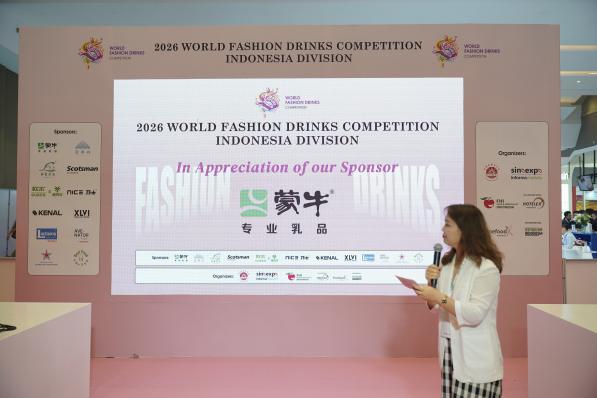
蒙牛专业乳品亮相2026世界潮饮大赛 “饮”领行业创新风潮
Zhong Guo Jing Ji Wang· 2025-07-30 09:19
Core Insights - The 2026 World Trend Beverage Competition in Indonesia successfully concluded, with Mengniu Professional Dairy as the designated dairy product sponsor, marking its first collaboration with an international event [1][3] - This event provided a platform for top beverage competitors to showcase their skills and foster industry communication and product innovation amidst the trend of beverage globalization [3][6] Company Overview - Mengniu Professional Dairy is a brand developed by Mengniu Group targeting professional dining clients, focusing on high-quality dairy products and customized solutions [5] - The brand emphasizes its commitment to quality, with products like pure milk and cream, leveraging its extensive supply chain and R&D capabilities to meet market demands [5][6] Product Highlights - Mengniu's star product, the Mengniu Catering Pure Milk, was the only designated dairy product at the competition, known for its stringent quality control and versatility in various culinary applications [7] - The product contains 3.2g of protein and 4.0g of fat per 100ml, designed specifically for diverse dining needs such as coffee and baking [7] Competitive Achievement - The competition featured skilled mixologists, with Muhammad Ipal Alpikri winning the championship with a non-alcoholic cocktail inspired by traditional Sundanese cuisine, showcasing the unique flavor profile achieved with Mengniu products [9] Strategic Direction - Mengniu Professional Dairy aims to leverage this international collaboration to enhance product innovation, global supply chain management, and partnerships with international dining enterprises [13] - The company is committed to promoting the integration and development of Chinese dairy products within the global supply chain, ensuring consumers have access to high-quality dairy [13]

港股收评:三大指数齐挫,科指5连跌!石油股逆势走高
Ge Long Hui· 2025-07-30 08:37
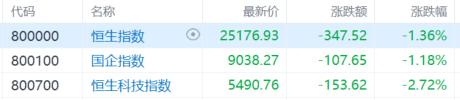
Market Overview - The Hong Kong stock market indices continued to decline in the afternoon, with the Hang Seng Tech Index dropping over 3.1% at one point, ultimately closing down 2.72%, marking five consecutive days of decline [1] - The Hang Seng Index and the State-Owned Enterprises Index saw slight increases of 1.36% and 1.18%, respectively [1] Sector Performance - Major technology stocks experienced widespread declines, with Alibaba and JD.com falling nearly 3%, and Baidu down 2% [2] - The automotive sector faced significant pressure, with July retail sales of narrow passenger vehicles reportedly down over 11% month-on-month, leading to increased selling in automotive stocks [2] - Semiconductor stocks underperformed throughout the day, with leading company SMIC dropping nearly 6% [2] - Biopharmaceutical stocks, which had been rising, saw a correction [2] - Oil prices rebounded to around $70 due to geopolitical tensions, benefiting oil stocks, with China Petroleum rising nearly 4% [2] - The "three-child" concept stocks gained momentum, while coal, electricity, and steel sectors showed relative activity as part of the "anti-involution" theme [2] Notable Stock Movements - Li Auto saw a significant drop of over 12%, while other major players like BYD, Xpeng, and NIO fell over 5% [4][9] - Semiconductor stocks led the declines, with SMIC down over 6% and other semiconductor companies also experiencing losses [5][6] - Apple-related stocks declined, with GoerTek falling over 5% and other related companies like Sunny Optical and BYD Electronics also down [7][8] - Oil stocks rose, with China Petroleum and Sinopec both increasing by over 3% [10][11] - The "three-child" concept stocks performed well, with H&H International Holdings rising over 11% [12][13] Capital Flows - Southbound funds recorded a net inflow of HKD 11.714 billion, with the Shanghai-Hong Kong Stock Connect contributing HKD 6.427 billion and the Shenzhen-Hong Kong Stock Connect contributing HKD 5.287 billion [20] Market Outlook - Analysts suggest that the Hong Kong market may continue to experience a gradual recovery driven by fundamental factors, with a focus on the Hang Seng Tech Index, biopharmaceuticals, and AI concepts [22]



国家育儿补贴落地,3600元能否破解“少育”难题?
3 6 Ke· 2025-07-30 07:40
2025年7月28日,酝酿已久的国家育儿补贴制度正式落地。政策核心清晰有力:每孩每年3,600元,直至3周岁,覆盖2025年1月1日起出生的所有合法生育 婴幼儿。该政策旨在减轻家庭养育子女的经济负担,鼓励生育。这一政策的实施不仅直接惠及家庭,还通过刺激相关消费品需求,间接支持了乳制品行 业。 一、连续三年人口下降,育儿补贴终于落地 中国正面临严峻的人口危机。根据官方数据,2024年中国人口连续第三年下降,联合国人口模型预测,到2100年,中国人口可能从14亿减少到8亿。 为应对这一挑战,2025年7月28日,中国政府宣布启动全国性《育儿补贴制度实施方案》,《育儿补贴》明确对符合法律法规规定生育的3周岁以下婴幼儿 发放补贴,至其年满3周岁。育儿补贴按年发放,现阶段国家基础标准为每孩每年3,600元。其中,对2025年1月1日之前出生、不满3周岁的婴幼儿,按应 补贴月数折算计发补贴。政策自2025年1月1日起生效,覆盖所有符合条件的家庭,不论是第一胎、第二胎还是第三胎。 该政策由国家卫生健康委员会等部门推动,被视为"重要的民生政策",旨在通过直接现金补贴减轻家庭育儿负担。根据新华社报道,该政策预计每年惠及 超过2 ...
开源证券:国家育儿补贴方案落地 关注乳业板块投资机会
智通财经网· 2025-07-30 07:05
Group 1 - The national implementation of the childcare subsidy program is a groundbreaking policy aimed at directly providing cash subsidies to families with children under three years old, starting from January 1, 2025, with an annual subsidy of 3,600 yuan per child [1][2] - The subsidy program is expected to benefit over 20 million families annually, potentially stimulating birth rates, especially in lower-tier cities, where the impact of the subsidy may be more pronounced [2][3] - The recent changes in the dairy industry, including the development of deep processing products and exploration of export potential, are expected to create new demand dynamics for the infant formula sector [3][4] Group 2 - The demand for infant formula is anticipated to improve due to the stimulus from the new policy and the expected population growth driven by the 2024 zodiac preferences, leading to a potential recovery in demand by 2025 [3][4] - The overall dairy industry is likely to benefit from the positive trends in population issues and the recovery of the raw milk cycle, which will enhance profitability across the entire industry chain [4] - Recommended companies include China Feihe, H&H International Holdings, Yili, and Mengniu Dairy, which are expected to benefit from the improving market conditions and the recovery of raw milk prices [4]
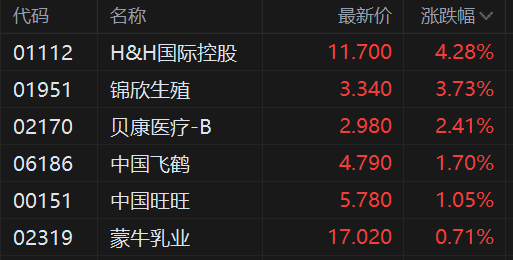
港股异动丨三胎概念股普涨 H&H国际控股涨4.28% 锦欣生殖涨3.5%
Ge Long Hui· 2025-07-30 02:46
昨日呈现高开低走的三胎概念股再起升势,其中,H&H国际控股涨4.28%,锦欣生殖涨近4%,贝康医 疗涨2.4%,中国飞鹤涨1.7%,蒙牛乳业跟涨。 | 代码 | 名称 | 最新价 | 涨跌幅 ▽ | | --- | --- | --- | --- | | 01112 | H&H国际控股 | 11.700 | 4.28% | | 01951 | 锦欣生殖 | 3.340 | 3.73% | | 02170 | 贝康医疗-B | 2.980 | 2.41% | | 06186 | 中国飞鹤 | 4.790 | 1.70% | | 00151 | 中国旺旺 | 5.780 | 1.05% | | 02319 | 蒙牛乳业 | 17.020 | 0.71% | 消息面上,7月28日,中办、国办印发《育儿补贴制度实施方案》,明确对3周岁以下婴幼儿按每孩每年 3600元标准发放补贴。浙商证券发布研究报告称,国家育儿补贴制度实施方案于2025年7月28日公布, 面向育儿家庭全国范围全面直接发放现金补贴,有助于缓解家庭养育压力。随着生育补贴政策实施落 地,有望改善市场预期,母婴消费产业链或更多获益,汽车、餐饮等领域也可能迎来 ...