GWMOTOR(02333)

Search documents
汽车行业2026一季度业绩前瞻
2026-03-24 01:27
Summary of Automotive Industry Conference Call Industry Overview - The automotive industry is facing dual pressure on volume and profit in Q1 2026, with wholesale volume expected to decline by approximately 8% year-on-year, while new energy vehicle sales are projected to slightly decrease. Exports are the only bright spot, with a year-on-year increase of 55% [1][2][3]. Key Points Performance Expectations - **Overall Industry Performance**: Q1 2026 is anticipated to be the low point for volume and profit in the passenger car sector, with most automakers expected to see profit declines exceeding 20% year-on-year due to rising costs from copper, aluminum, lithium carbonate, and the appreciation of the RMB [1][2][3]. - **Geely Auto**: Expected to report profits exceeding 4 billion yuan, with a quarter-on-quarter increase of over 10%, driven by the high profitability of the Geely 9X model and a year-on-year export growth of 140% [1][4]. - **Heavy Truck Sector**: Strong export performance with a year-on-year increase of 30% in January-February 2026. China National Heavy Duty Truck Corporation (CNHTC) is expected to see a profit increase of 60% to 500 million yuan [1][2][3]. Segment Performance - **Intelligent Vehicle Sector**: Outperforming the overall vehicle sector, with Huayang Group expected to see a nearly 20% year-on-year growth, benefiting from Xiaomi's automotive sales and new product lines [1][7]. - **Parts Sector**: Mixed performance with leading companies like Fuyao Glass and Xingyu maintaining lower pressure due to strong overseas expansion. Companies like Kingood are expected to benefit from the rising aluminum prices [1][6]. Sales and Profitability - **Sales Disparities**: Despite overall industry decline, companies like NIO and Seres are expected to show significant sales growth due to new model launches, while BYD and XPeng are facing larger declines [2][3][4]. - **Profit Expectations**: Most passenger car companies are expected to see a year-on-year profit decline of over 20%. Geely is projected to stand out with a profit of over 4 billion yuan [4][5]. Market Trends - **Two-Wheeler Sector**: The sector continues to show strong growth in large-displacement exports, with Chuanfeng Power's exports expected to increase by 60% year-on-year, although overall performance is expected to remain flat due to tariff impacts [1][10]. Additional Insights - **Investment Strategy**: The investment strategy for 2026 focuses on performance and valuation, with recommendations in areas such as AIGC-enabled "power shortage," L4-level intelligence, and robotics. Key companies recommended include Weichai Power, Xpeng Motors, and Top Group [2]. - **Challenges**: The industry faces challenges from rising raw material costs and currency fluctuations, which are expected to negatively impact profitability in Q1 2026 [3][4]. This summary encapsulates the key insights and performance expectations for the automotive industry as discussed in the conference call, highlighting both opportunities and challenges within various segments.





全球视野看电车之五:基于能源安全视角看全球新能源增长潜力
Changjiang Securities· 2026-03-23 23:30
Investment Rating - The investment rating for the automotive and automotive parts industry is "Positive" and maintained [7] Core Insights - The rise in oil prices, influenced by the Middle East situation, has raised energy security concerns, prompting South Korea to initiate a resource security crisis alert and consider implementing vehicle restrictions [2][17] - The transportation sector accounts for a significant portion of oil consumption in many countries, and the current low penetration of new energy vehicles (NEVs) globally means that reliance on traditional fuel vehicles exacerbates risks associated with energy supply constraints. Diversifying the energy structure can mitigate these risks, and rising oil prices can accelerate the transition to NEVs in the global passenger vehicle market [2][19] - The potential for domestic NEVs to expand internationally is substantial, with projected sales for EVs, PHEVs, and HEVs in regions excluding China, the US, and Japan reaching 3.54 million, 1.4 million, and 4.62 million units respectively by 2025. If domestic NEVs capture 50%-60% of the market share in these categories, it could represent a growth potential of 4.3-5.3 times [23][24] Summary by Sections Global Energy Security Perspective - The recent increase in oil prices has raised energy security issues, with Brent crude oil futures reaching $108.65 per barrel, a 70% increase over the past two months. South Korea has raised its resource security crisis alert level and is considering measures such as vehicle restrictions to manage demand [17][19] New Energy Vehicle Market Potential - The transportation sector's oil consumption is significant, with many countries having low NEV penetration rates. High oil prices can drive the shift towards NEVs, as traditional fuel vehicles' dependence on oil resources increases risks associated with supply constraints [19][20] - Major regions for NEV exports from China include Western Europe, Southeast Asia, and Latin America, where leading companies like BYD, SAIC, and Geely are currently underrepresented in market share. As NEV penetration increases, these companies are expected to capture a larger share of the market [26][29]



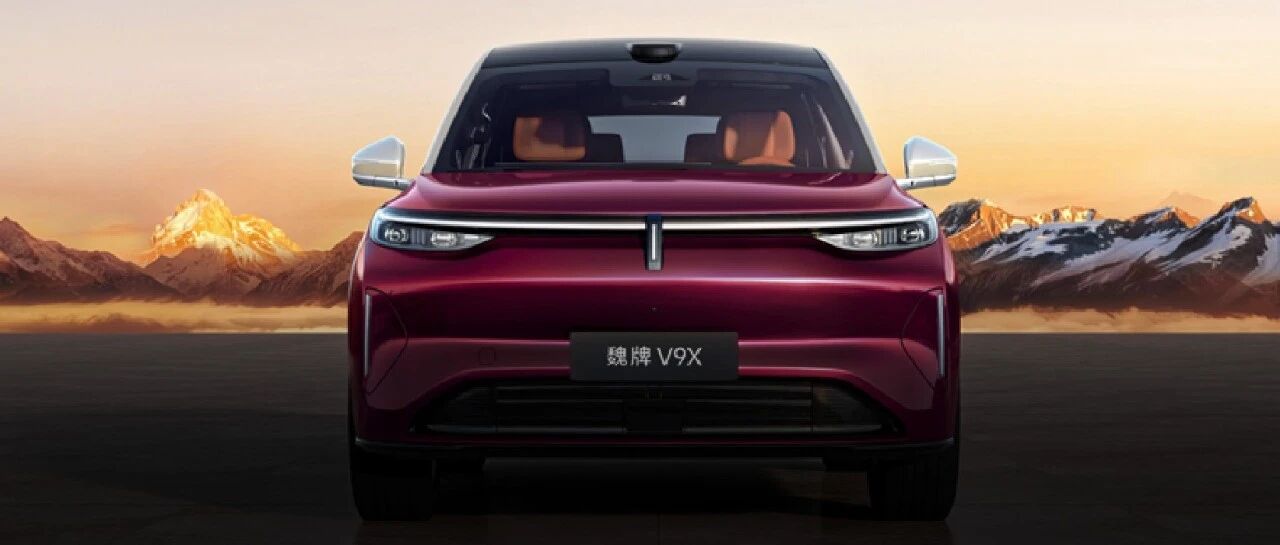
智能化后半场,魏牌V9X以AI智能体重新定义「汽车」
36氪· 2026-03-23 13:42
Core Viewpoint - The article emphasizes the transition of the Chinese automotive industry into a new era, termed the 4.0 era, driven by AI technology and the need for innovation to overcome challenges faced in the previous 3.0 era [3][6][32]. Group 1: Industry Evolution - The Chinese automotive industry has undergone three distinct phases: the 1.0 era dominated by joint ventures, the 2.0 era marked by the rise of electric and intelligent vehicles led by Tesla, and the 3.0 era where domestic brands began to drive change through innovation [3]. - The 3.0 era is showing signs of fatigue, with price wars eroding profits and leading to a decline in product quality and safety, necessitating a breakthrough to enter the 4.0 era [5][6]. Group 2: Technological Innovation - The Weipai V9X, built on the GAC's proprietary Guanyuan S platform, represents a significant leap in automotive technology, integrating AI to transform the vehicle from a mere tool to an active partner [2][10]. - The V9X features an AI assistant, "Xiao Wei," capable of proactive service through multi-modal data processing, moving beyond traditional command-response interactions [10][11]. Group 3: Performance and Quality - The V9X is equipped with a unique Super Hi4 hybrid system, combining a 2.0T engine with advanced transmission technology, ensuring high performance and efficiency across various driving conditions [18][30]. - The vehicle's design emphasizes quality, with a focus on performance metrics such as power response, chassis feel, and noise, vibration, and harshness (NVH) levels, supported by rigorous manufacturing standards [30]. Group 4: Design Philosophy - The design of the Weipai V9X reflects a commitment to user needs, featuring a spacious interior and practical elements like multiple storage spaces and advanced comfort features [26][28]. - The aesthetic approach draws from Eastern classical architecture, aiming for simplicity and elegance, which contrasts with the often flashy designs seen in the industry [25][29]. Group 5: Strategic Positioning - The article highlights the importance of a strong technological foundation and a clear understanding of automotive mechanics as essential for maintaining competitiveness in the evolving market [16][21]. - The Weipai V9X is positioned not just as a vehicle but as a representation of China's capability to create a luxury brand that embodies both cultural and technological confidence [33].

未知机构:中信汽车欧洲油电价格差异更新260323VS1月德-20260323
未知机构· 2026-03-23 02:05
Summary of Key Points from the Conference Call Industry Overview - The report focuses on the automotive industry in Europe, particularly the impact of rising fuel prices on the cost competitiveness of electric vehicles (EVs) and plug-in hybrid electric vehicles (PHEVs) [1] Core Insights and Arguments - Fuel prices in Germany, Austria, Belgium, and Spain have increased significantly, with respective rises of 15.3%, 17.9%, 15.8%, and 19.5% as of January [1] - The oil-to-electricity cost ratio in Germany is projected to be 1.5 by March 2026, indicating that the operating cost of gasoline vehicles will be 50% higher than that of electric vehicles [1] - Other European countries show varying oil-to-electricity cost ratios, with Denmark at 2.7, Belgium at 2.1, and Austria at 1.8, suggesting a growing economic advantage for BEVs and PHEVs [1] - The increasing oil prices are expected to boost the sales of PHEVs, which are seen as more fuel-efficient alternatives [1] Additional Important Insights - The sustained high prices of crude oil are anticipated to enhance the competitiveness of both pure electric and PHEV models globally [1] - Chinese automotive companies are expected to leverage their technological advantages to increase their global market share [1] - Recommended companies for investment include BYD, Geely Automobile, Chery Automobile, Great Wall Motors, Xpeng Motors, and Leap Motor, indicating a focus on firms that are well-positioned to benefit from these market dynamics [1]
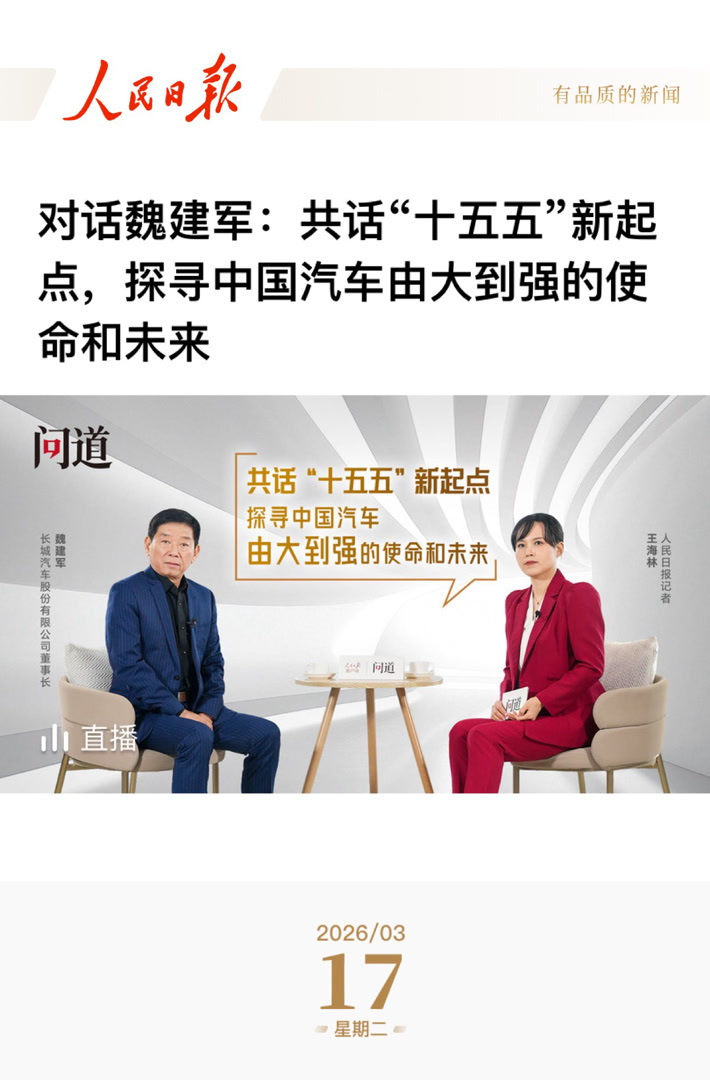
长城汽车董事长魏建军:三大路径促进行业公信力建设
Zhong Zheng Wang· 2026-03-20 11:32
Core Viewpoint - The chairman of Great Wall Motors, Wei Jianjun, emphasizes the importance of building credibility as a core strategy for the high-quality development and globalization of the automotive industry in China, which is transitioning from being a major player to a strong player in the global market [1] Industry Insights - China has established itself as the world's largest automotive producer and seller, but becoming a strong automotive nation requires excellence in technology innovation, industry globalization, product quality, and brand culture [1] - The shift in focus should be from product exports to industrial and cultural exports, aiming to build lasting trust in larger markets [1] Current Challenges - The automotive industry faces issues such as damaged trust in quality and zero-sum games within the supply chain, which pose significant credibility concerns [1] Recommendations - Companies should return to value creation by focusing on technology research and quality improvement [1] - It is essential to uphold safety and quality standards to restore consumer confidence [1] - Promoting symbiotic relationships within the supply chain is crucial for establishing a solid foundation of trust [1] - Localization of overseas operations should be prioritized to transition from merely entering markets to establishing a strong presence [1] Credibility as a Core Barrier - Credibility is identified as a key barrier to long-term industry development and a critical factor in reducing transaction costs, as technology can be caught up with, but credibility is difficult to replicate [1] Paths to Establish Credibility - Great Wall Motors proposes three main paths to build credibility: - Establishing trust with users by maintaining quality and being accountable [1] - Building trust within the industry by promoting collaboration and mutual benefit [1] - Enhancing global credibility through the localization of the entire supply chain to gain recognition from various stakeholders [1]
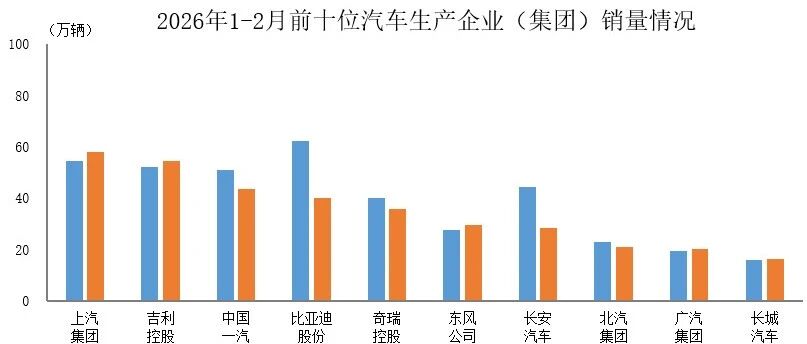
数据简报 | 2026年1-2月前十位汽车生产企业(集团)销售情况简析
中汽协会数据· 2026-03-20 07:23
Group 1 - The core viewpoint of the article highlights that the top ten automotive companies in China sold a total of 3.484 million vehicles in January and February 2026, accounting for 83.9% of the total automotive sales [2] - Among these ten companies, SAIC Motor, Geely Holding, Dongfeng Motor, GAC Group, and Great Wall Motors experienced varying degrees of sales growth compared to the same period last year [2] - In contrast, the other companies in the top ten saw a decline in sales during the same timeframe [2]


长城汽车董事长魏建军谈“立信” 中国汽车由大到强需筑牢信任基石
Zheng Quan Ri Bao Wang· 2026-03-20 05:58
Core Insights - The Chinese automotive industry is at a critical juncture, transitioning from a "big automotive nation" to a "strong automotive nation" as it approaches the start of the 14th Five-Year Plan in 2026 [1] - Wei Jianjun, Chairman of Great Wall Motors, emphasizes the need to establish credibility as a core strategy to address deep-seated challenges in the industry [1] Group 1: Industry Challenges - Four major challenges identified by Wei Jianjun include: deviation from the essence of car manufacturing by some companies, disordered competition undermining user trust, zero-sum games harming supply chain resilience, and lack of localized strategies in overseas markets [1] - Wei believes that while technology can be caught up, values and credibility are the hardest to replicate, making them essential for competitive advantage [1] Group 2: Vision for a Strong Automotive Nation - A strong automotive nation is characterized not only by leading sales but also by comprehensive success in technological innovation, global expansion, and cultural prosperity [1] - Wei proposes a twelve-character mantra: "Establish credibility through quality, convey credibility through collaboration, and establish credibility through actions" [1] Group 3: Practical Implementation of Credibility - Great Wall Motors is implementing the concept of "establishing credibility" through three main pathways: ensuring product quality and safety for users, promoting symbiotic relationships within the supply chain, and localizing operations in international markets [2] - The company advocates for a long-term vision of establishing credibility, which is seen as a core element in reducing transaction costs and serving as a competitive barrier for companies [2]
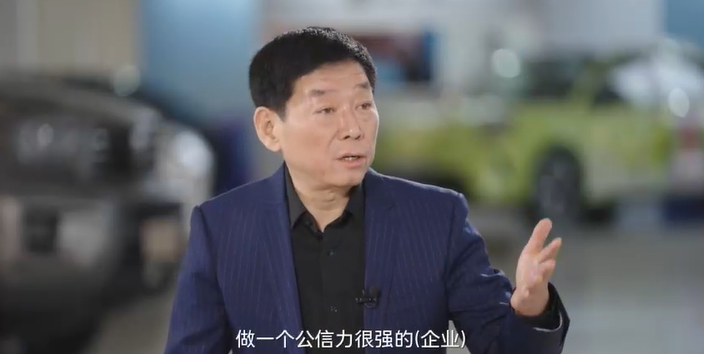
长城汽车魏建军:中国车企要对用户、产业及全球出海“立信”
Bei Ke Cai Jing· 2026-03-20 04:15
Core Viewpoint - The chairman of Great Wall Motors, Wei Jianjun, emphasizes that while technology can be caught up with, a company's values and credibility are the hardest to replicate, serving as a crucial moat for businesses. He advocates for Chinese automotive companies to establish trust in their relationships with users, the industry, and in global markets [1][3]. Group 1: Challenges in the Automotive Industry - The Chinese automotive industry faces several challenges, including excessive capital intervention and a focus on short-term profits that detracts from the essence of vehicle manufacturing [3]. - Some companies are sacrificing quality in a bid for scale, which erodes consumer trust in the industry [3]. - Zero-sum thinking among manufacturers is squeezing profit margins in the supply chain, damaging the resilience of the industry and undermining the credibility of finished vehicles [3]. - Chinese brands are still in the early stages of product export and lack deep localization, making them easily replaceable in international markets [3]. Group 2: Establishing Trust - Establishing trust with users involves a commitment to accountability and a willingness to take responsibility for product quality [3]. - Building trust within the industry requires collaborative empowerment to create a symbiotic ecosystem among manufacturers, suppliers, and dealers through standardization and capability development [3]. - For global trust, it is essential to localize operations and invest in long-term responsibilities to build lasting brand credibility, positioning Chinese brands as reliable partners in local markets [4].
长城汽车魏建军解码中国汽车的“价值回归”
Zhong Guo Qing Nian Bao· 2026-03-19 12:15
Core Insights - The fundamental path for China's automotive industry to become stronger lies in establishing "trust" rather than merely focusing on temporary technological leadership or sales figures [2][3] Group 1: Industry Challenges - The automotive industry currently faces four core challenges: returning car manufacturers to the essence of value creation, restoring user confidence in products, shifting competition from zero-sum games to symbiotic win-win scenarios, and building credit in overseas markets [2] - All these challenges fundamentally revolve around the concept of "trust" [2] Group 2: Company Practices - Great Wall Motors provides a practical example by establishing full-process production bases in countries like Thailand and Brazil, promoting an ecosystem that integrates research, production, supply, sales, and service [2] - This long-term commitment has allowed Chinese brands to become trusted partners in local markets rather than merely replaceable products [2] - On the technical side, Great Wall Motors boasts a research and development team of 23,000, with one engineer for every four employees, and leads in both total patent authorizations and new energy vehicle patent authorizations among domestic automakers [2]
长城汽车董事长魏建军谈中国汽车未来发展方向
Bei Jing Ri Bao Ke Hu Duan· 2026-03-19 08:53
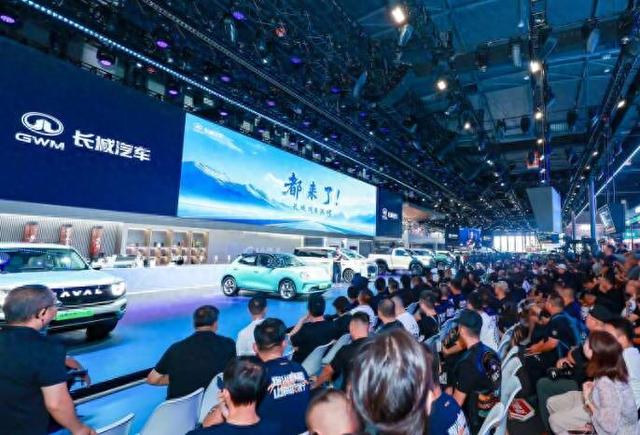
Core Viewpoint - The interview with Wei Jianjun, Chairman of Great Wall Motors, emphasizes the importance of building trust in the automotive industry as China transitions from a major automotive nation to a strong one, advocating for a comprehensive approach to quality, collaboration, and action to establish credibility [1][6]. Group 1: Industry Development - China has been the world's largest automotive producer and seller for several consecutive years [4]. - The transition from being a "big automotive country" to a "strong automotive country" requires a shift from "product export" to "industry output," integrating the entire industrial chain globally [6]. Group 2: Trust Issues - Wei Jianjun identifies four major trust concerns in the industry: 1. Returning car manufacturers to value creation 2. Restoring consumer confidence in products 3. Ensuring competition is based on real capabilities 4. Building trust in the industry for global expansion [6]. Group 3: Trust-Building Strategies - Great Wall Motors outlines three key paths for establishing trust: 1. Building trust with users by maintaining quality standards and being accountable for products 2. Building trust within the industry by promoting symbiotic relationships between manufacturers and suppliers, with independent operations of parts companies reinforcing industry credibility 3. Building global trust through "ecological outbound" strategies, localizing production and sales in countries like Thailand and Brazil to integrate deeply into local societies and earn respect in global markets [6].